
Indoor Lighting Glass Design and Manufacturing Guide
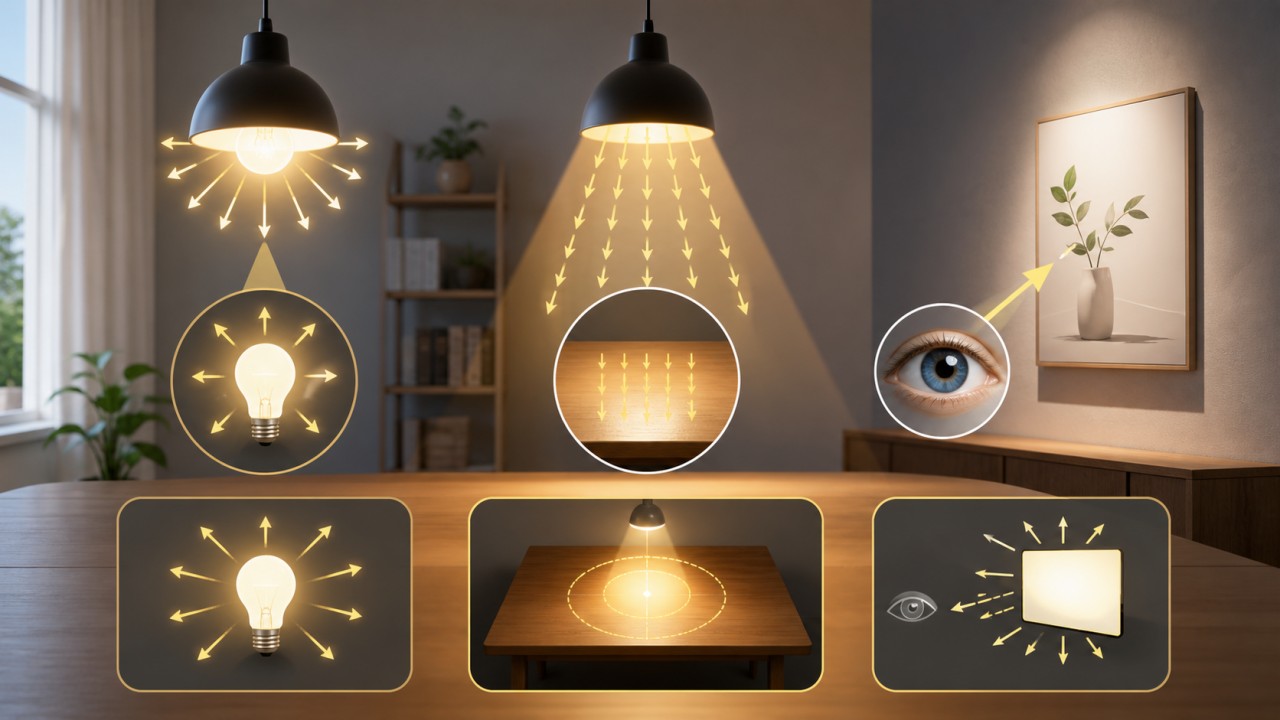
A room-by-room guide to lumens, illuminance, luminance, light and dark balance, layered lighting, color quality, and fixture placement.
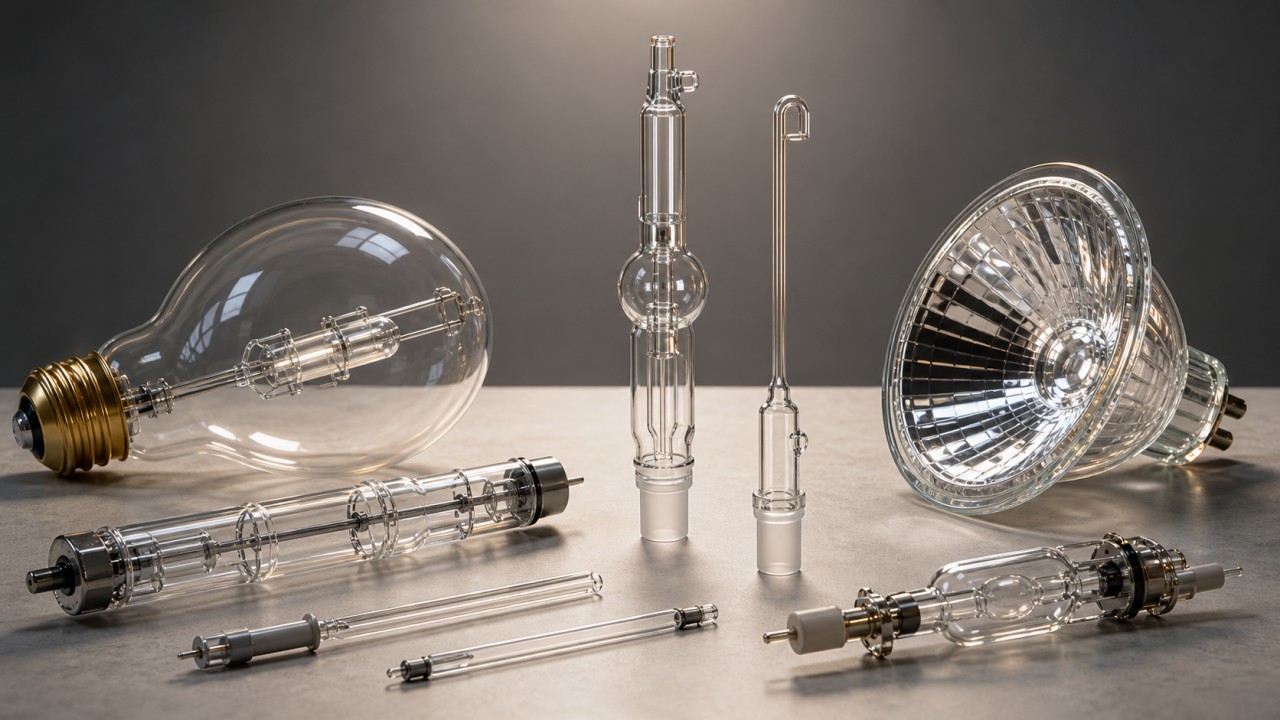
Compare soda-lime, borosilicate, low-iron, opal, crystal, clear and colored glass, together with frosted surface finishes and polymer diffusers.
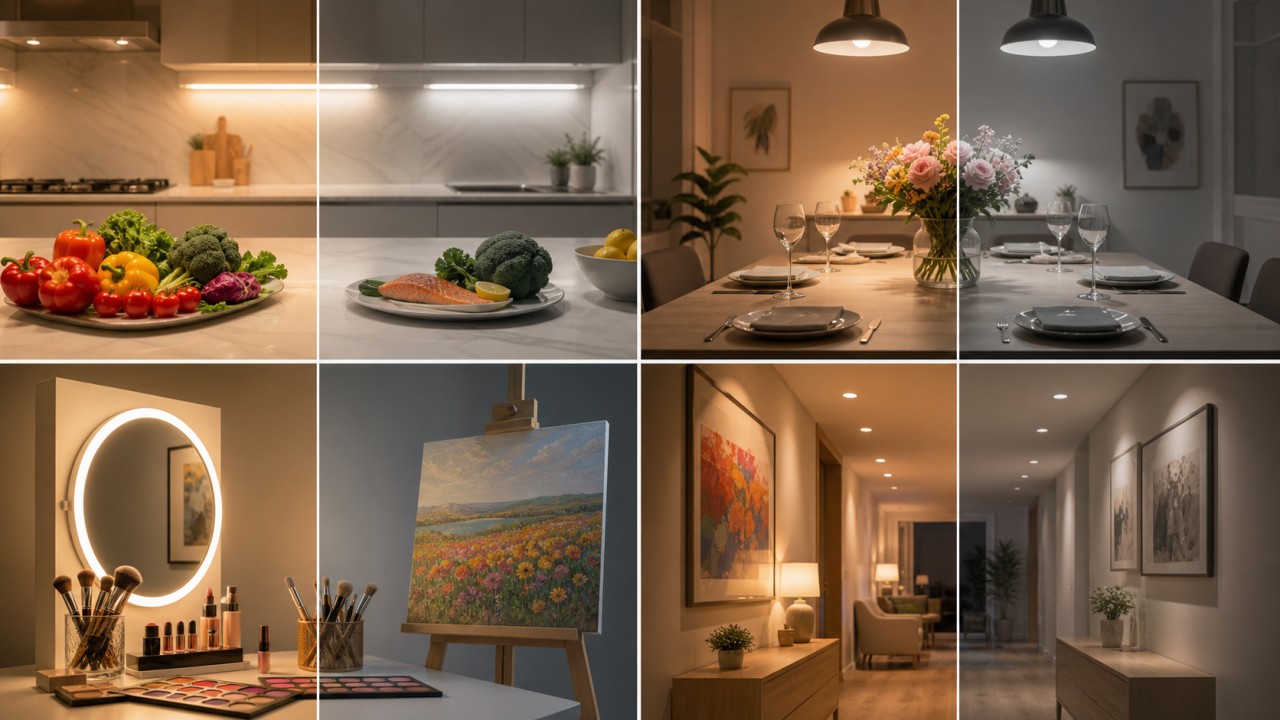
Engineer transmittance, haze, glare, beam angle, source hiding, hotspot control, color neutrality, SDCM, and lens accuracy.
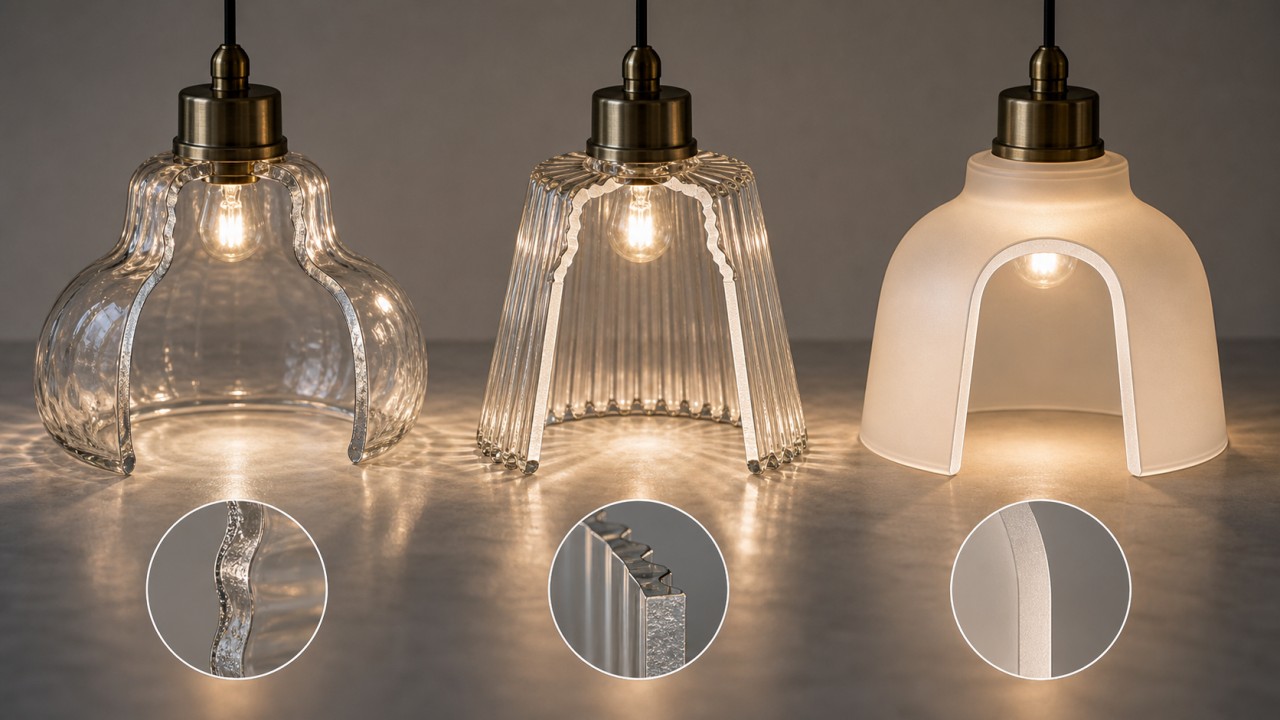
Compare blown, pressed, and centrifugal forming with sandblasting, acid etching, coating, printing, tinting, and texturing.
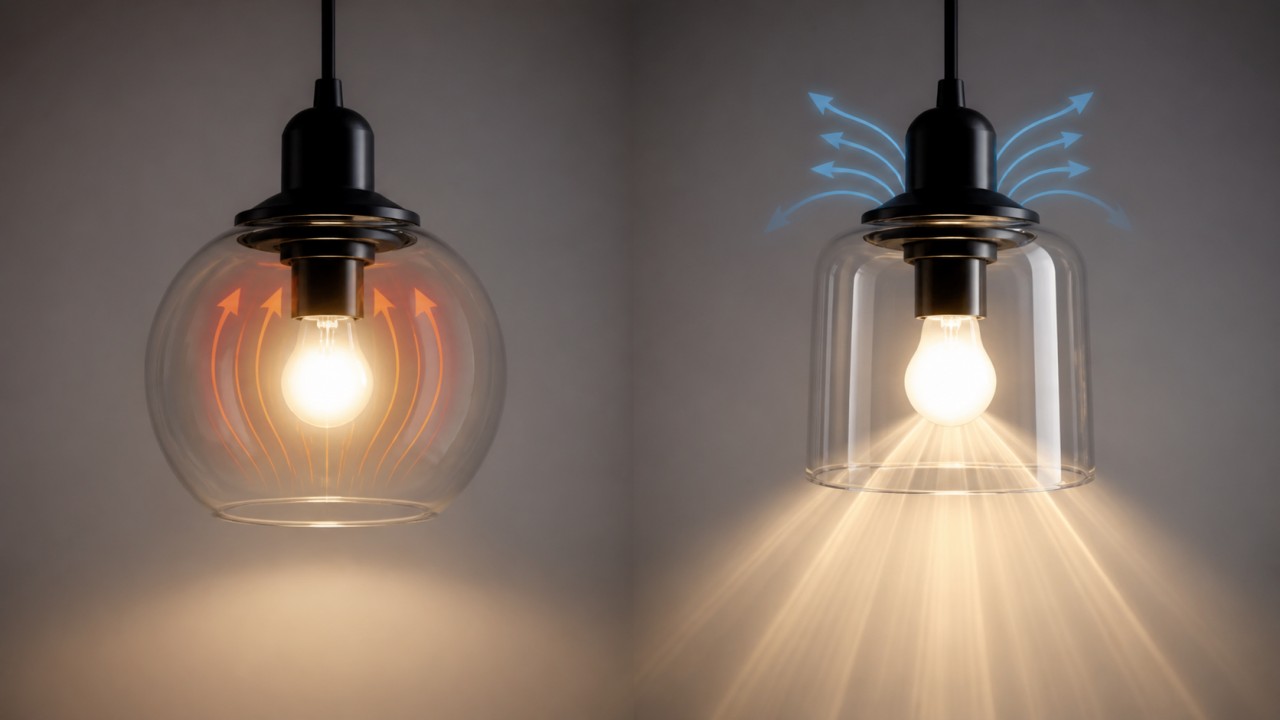
Design wall thickness, thermal-shock resistance, mounting, sealing, wet-area protection, impact resistance, and large-shade support.
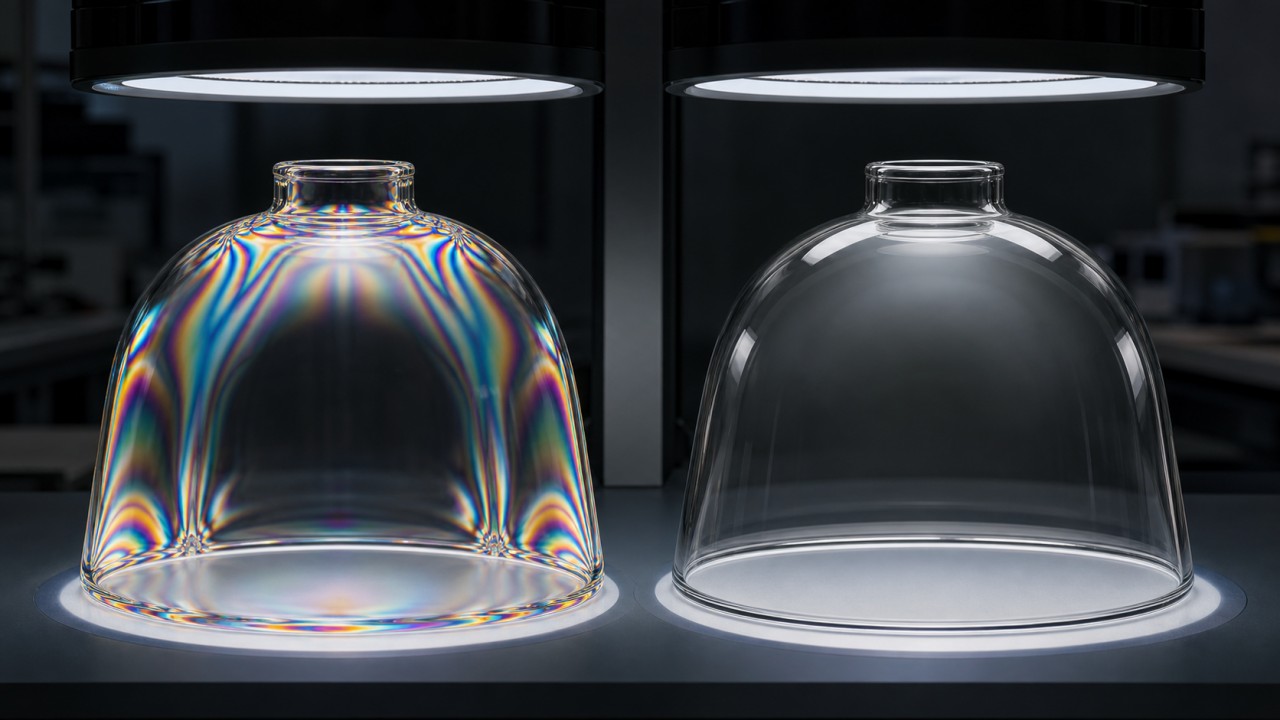
Set optical, thermal, mechanical, dimensional, batch-consistency, documentation, and RFQ requirements for lighting glass.
Quick Material Selection
| Requirement | Recommended direction | Main verification |
|---|---|---|
| General decorative shades | Soda-lime glass | Temperature, wall thickness and annealing |
| Higher thermal-shock margin | Borosilicate glass | Complete-shade thermal cycling |
| High color neutrality | Low-iron glass | Spectral transmittance and color |
| Strong source hiding | Opal glass | Transmittance, haze and luminance uniformity |
| Matte diffusion | Sandblasted or acid-etched finish | Treated side, cleanability and consistency |
| Defined beam control | Pressed or precision-molded glass lens | Beam angle, dimensions and alignment |
| Long lightweight diffuser | PC may be more suitable | Aging, impact, temperature and chemicals |
How Glass Affects Indoor Lighting
Glass is not a decorative cover added after the optical design. It changes useful output, apparent brightness, glare, beam shape, color, maintenance, and the long-term efficiency of the complete luminaire.
What does lighting glass actually control?
A glass component can transmit, scatter, redirect, absorb, reflect, or spectrally filter light. Clear glass protects the source with limited diffusion; surface-frosted glass and opal glass spread light and reduce source visibility; lenses and microstructures redirect it into a defined beam. Geometry also matters: diameter, curvature, wall thickness, and source distance can change luminance and distribution even when the glass composition is unchanged. A useful specification therefore describes the required optical result, operating temperature, mounting method, and appearance—not simply “clear,” “frosted,” or “white glass.”
How are luminous flux, illuminance, and luminance different?
Luminous flux is the total light output, illuminance is the light reaching a working surface, and luminance describes how bright a surface appears. For glass selection, transmittance affects delivered flux, distribution affects working-plane illuminance, and diffusion plus emitting area affect luminance and glare. Detailed definitions and room-lighting calculations are covered in Indoor Lighting Design Basics.
Why can two luminaires with the same LED feel very different?
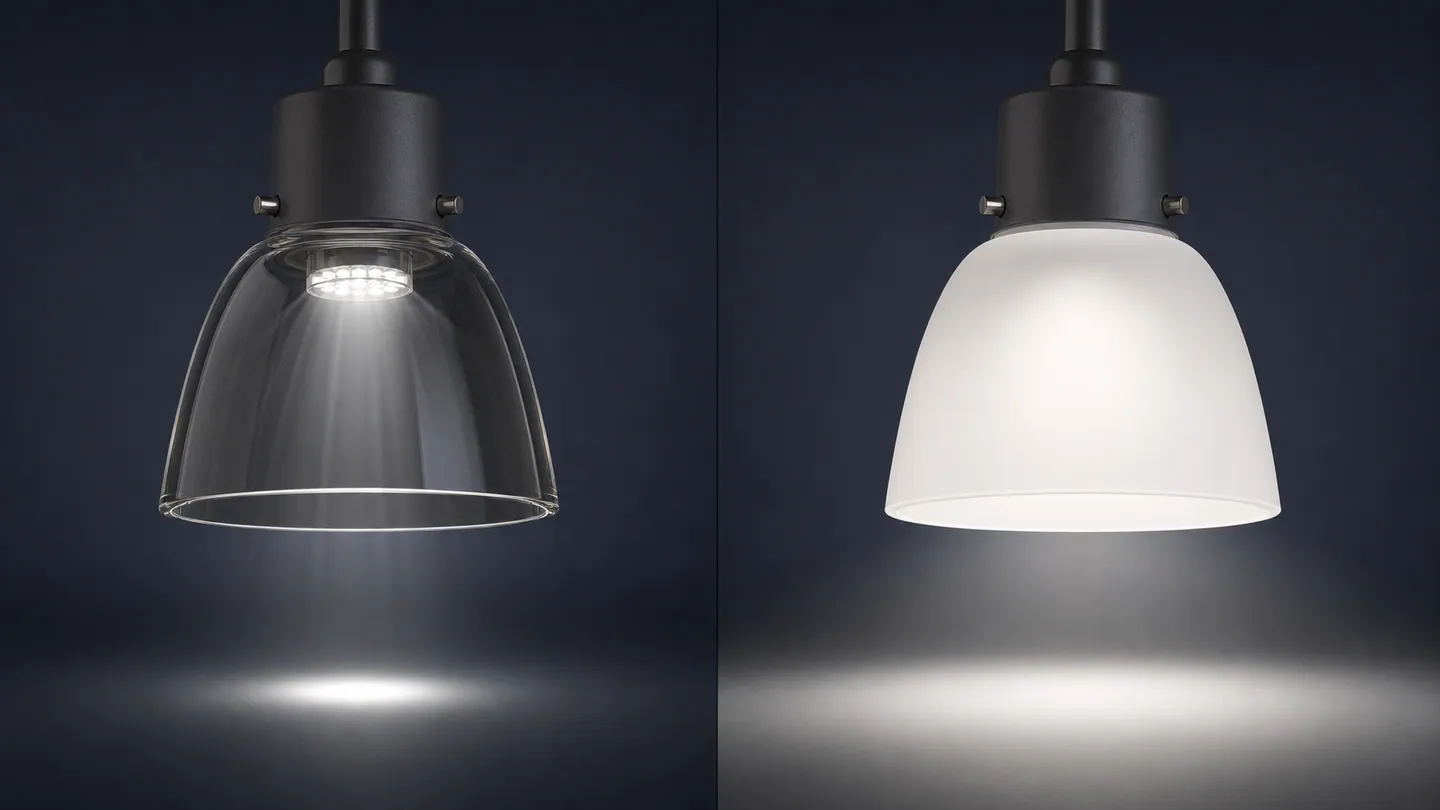
The source may be identical, but the optical path is not. Shade transmission changes delivered lumens; haze changes how widely light is scattered; geometry and spacing determine whether the source is visible; surface texture can create sparkle or secondary images; and room finishes determine how much light returns from walls and ceilings. A small clear opening can look harsh while a larger diffusing globe looks softer at the same desk illuminance. Compare complete luminaires in the intended room or reproduce the source-to-glass distance and viewing angles during sampling.
How does glass influence luminaire efficacy and energy use?
Every reflection, absorption event, coating, pigment, and surface texture can reduce the lumens leaving the luminaire. High-transmission glass can improve system efficacy when it replaces an unnecessarily absorptive shade, but transmission must not be increased at the cost of glare, hot spots, or unsafe source visibility. The right target is useful lumens delivered with acceptable comfort, not maximum transmittance in isolation. Specify system efficacy at the luminaire level, then allocate an optical-loss budget to the glass, reflector, light guide, gasket shadow, and other components.
Indoor Lighting Glass Material Selection
Composition determines forming range, optical clarity, thermal resistance, color, density, chemical durability, and cost. Select the family first, then define the visual and optical treatment.
When is soda-lime glass the right choice?
Soda-lime glass is the default for many decorative shades, globes, covers, and pressed components because it is widely available, economical, and compatible with mature forming and finishing processes. It suits moderate operating temperatures and applications where extreme thermal shock is not expected. Its natural iron content may add a green edge, especially in thick clear parts. Use low-iron variants when color neutrality and high clarity matter. Confirm wall thickness, annealing quality, source temperature, ventilation, and expected temperature gradients rather than assuming all soda-lime shades share the same thermal performance.
When should borosilicate glass be specified?
Borosilicate glass is best suited to high-temperature, enclosed, or thermally cycled luminaires when a wider thermal-shock design margin is required. Its main advantages are lower thermal expansion and good chemical stability. Important limitations are that it remains brittle and is not automatically impact-safe. Verify geometry, wall thickness, edge condition, mounting stress, and the declared thermal cycle.
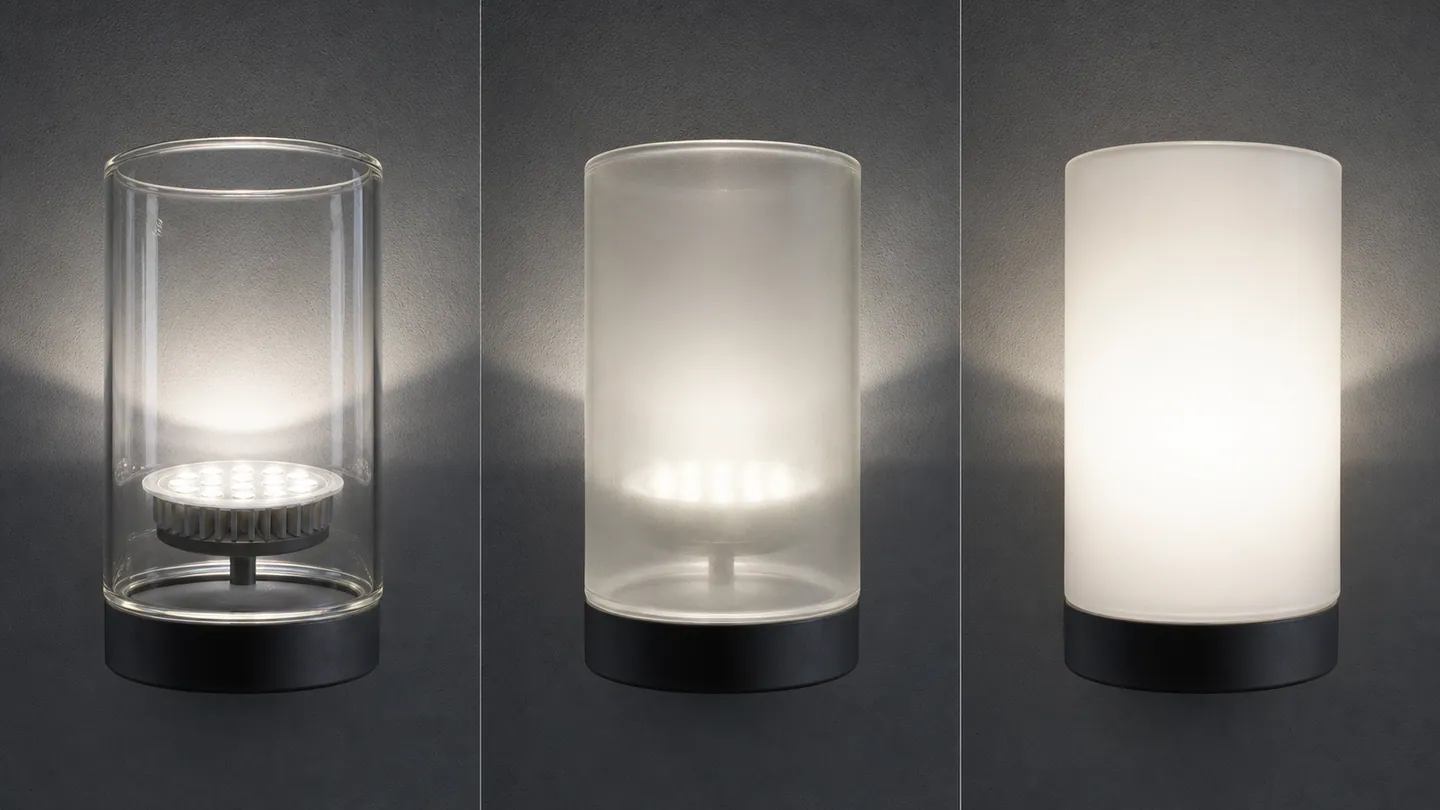
How do clear glass, a frosted surface finish, and opal glass differ optically?
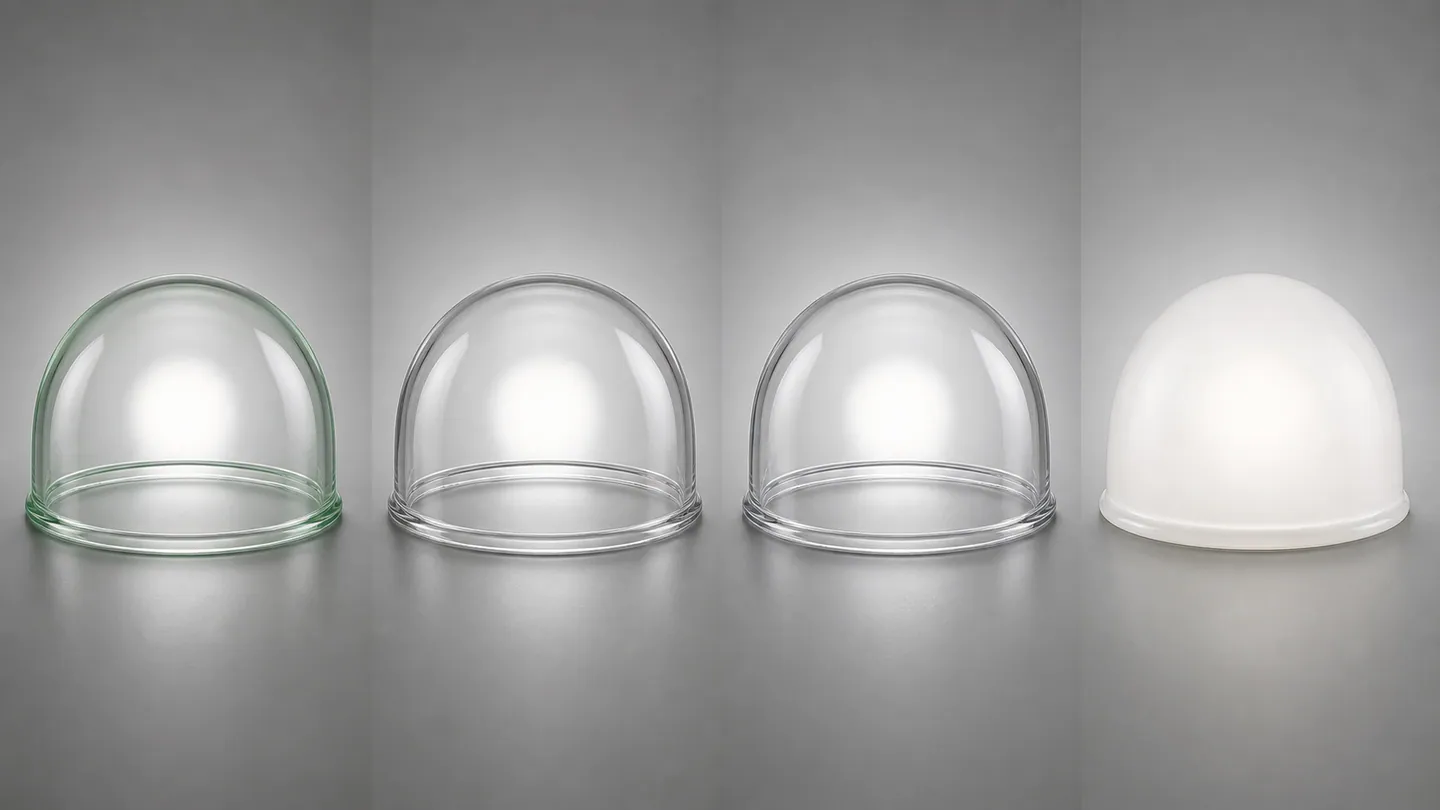
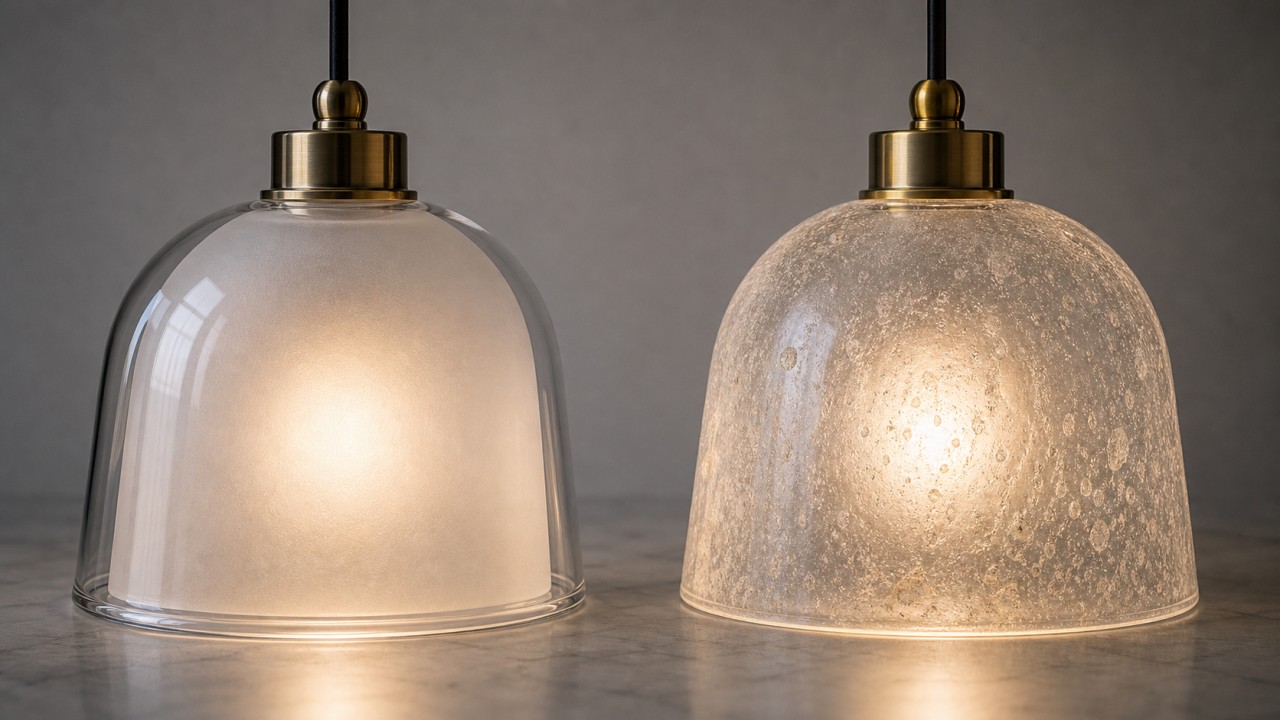
Clear glass, a frosted surface finish, and opal glass create different optical results, but they are not three equivalent glass-material categories. Clear describes a transparent optical state. Frosted describes a surface treatment—commonly sandblasting or acid etching—that adds surface scattering. Opal glass normally obtains diffusion from the glass body or an integral scattering structure. Compare transmission, haze, source hiding, luminance uniformity, treated side, cleanability, and illuminated appearance.
How does standard clear glass differ from low-iron glass?
Standard clear soda-lime glass can show a green edge or greenish transmission as thickness increases because of iron-related absorption. Low-iron glass reduces this coloration and is useful for transparent decorative shades, premium luminaires, display-oriented lighting, and applications where color neutrality matters. Low-iron does not mean borosilicate and does not establish thermal-shock or impact performance. State the glass thickness, surface condition, wavelength range, instrument, and permitted color or spectral-transmittance tolerance.
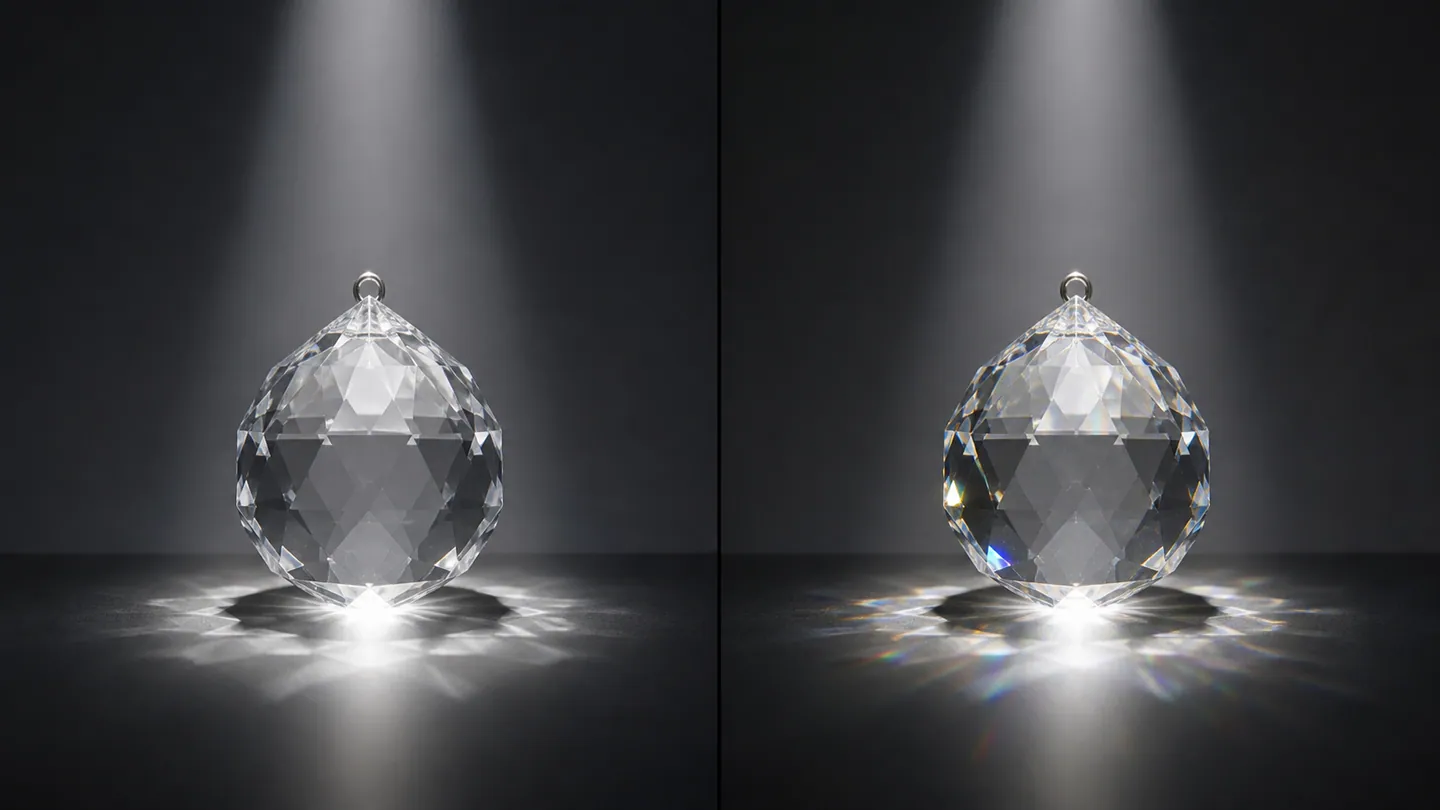
When is crystal glass appropriate for indoor luminaires?
Crystal glass is mainly selected for decorative refraction, sparkle, cut facets, and prism effects. It does not automatically provide higher luminaire efficacy and may increase weight, glare, cost, suspension load, and replacement difficulty. Lead-containing and lead-free crystal require separate composition and target-market compliance review. The term “crystal glass” should be supported by the actual composition, refractive index, density, and target-market declaration rather than used only as a decorative trade name. Crystal should not be treated as the default material for a high-temperature shade; temperature, mounting, mass, breakage risk, and optical intent must support the choice.
Transmittance, Haze and Glare Control
Optical comfort depends on how much light passes through, where it goes, and how bright the luminaire appears. These variables must be balanced as a system.
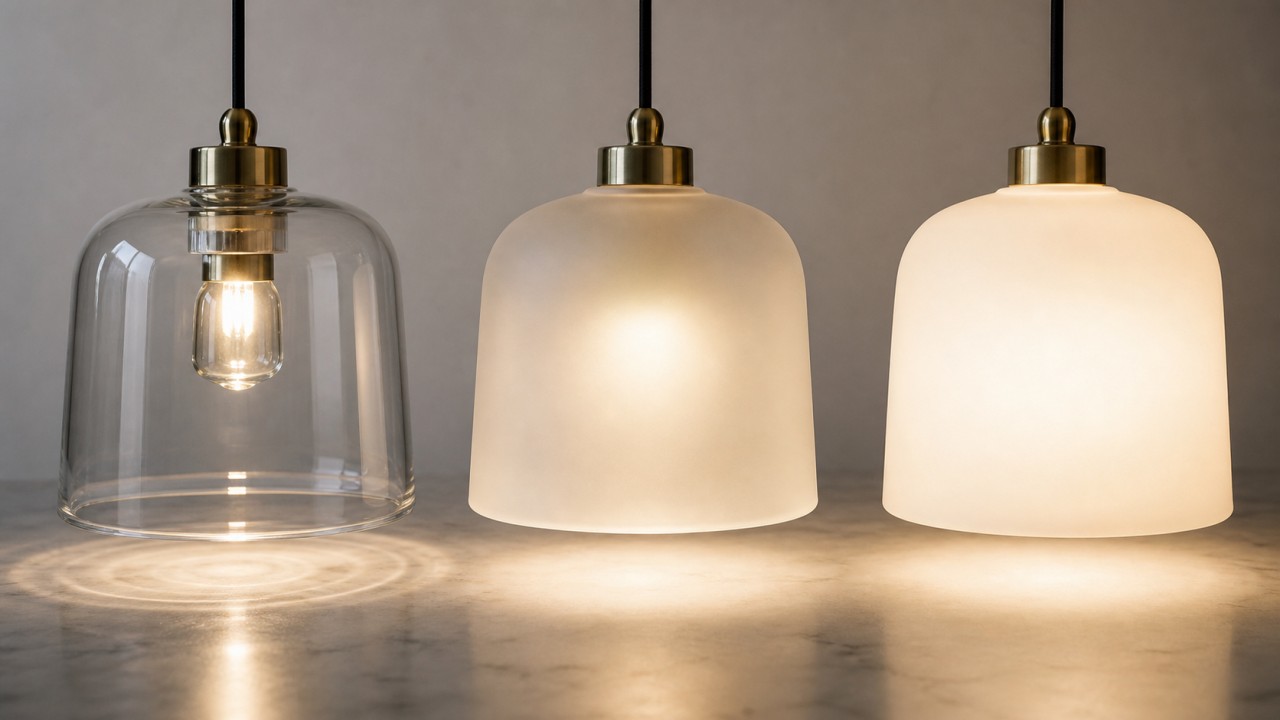
How should transmittance and haze be specified together?
Transmittance states how much incident light passes through a specimen under a defined method. Haze describes the portion scattered beyond a specified small angle. A sample can have high transmission and high haze, or lower transmission with poor source hiding, so neither number predicts the complete luminaire alone. State the instrument or standard, specimen thickness, wavelength condition, surface orientation, and acceptable range. Then verify the same glass in the intended geometry because curvature, wall-thickness variation, multiple passes, and source distance can change the visible result.
Is there a universal best ratio of transmittance to haze?
No. A decorative clear pendant, an opal globe, a linear diffuser, and an anti-glare downlight solve different problems. Ambient luminous surfaces often need strong diffusion and source hiding; task lights may accept lower haze to retain useful directional output; accent optics require controlled refraction rather than broad scattering. Set priorities for efficacy, LED hiding, uniformity, beam definition, and peak luminance. Use measured samples to establish a project window, then control production to that window. A so-called golden ratio without fixture geometry and source information is not transferable.
How does glass help control glare and UGR?
Diffusing glass can enlarge the apparent emitting area and reduce high-contrast source images, while prismatic or microstructured glass can redirect light away from critical viewing angles. However, UGR is a property of the lighting installation—not a glass coupon—and depends on luminaire luminance distribution, size, position, background, and observer geometry. A bright opal globe can still cause discomfort if it sits in the field of view. Evaluate photometric data or a representative mock-up, manage shielding and cutoff, and use glass as one element alongside reflector depth, source setback, baffles, and placement.
How are hot spots, secondary spots, and visible LED dots reduced?
Uniformity improves when light has enough mixing distance before reaching the glass, when source pitch matches the diffuser capability, and when scattering or microstructure is designed for the incident-angle range. Increasing haze alone may waste light without removing a bright center. Designers can adjust LED spacing, source-to-glass distance, reflector shape, multi-layer diffusion, wall thickness, and local texture. For linear covers, end conditions and connector shadows need separate attention. Approve samples at operating brightness and photograph or measure luminance along the complete emitting surface, including corners and ends.
Glass Forming and Surface Finishing
Forming creates the geometry; finishing creates much of the final optical character. Both processes introduce variation that must be considered in drawings and tolerances.
How do blown, pressed, and centrifugal forming compare?
Blowing is flexible for hollow, sculptural forms but naturally introduces wall-thickness and shape variation. Pressing uses molds to produce repeatable details, rims, prisms, or threads, with tooling marks and draft considerations. Centrifugal forming distributes molten glass through rotation and can suit broad rotationally symmetric shapes, but process control affects thickness and balance. The best route depends on annual volume, geometry, optical zones, tooling budget, tolerance, weight, and cosmetic expectations. Drawings should distinguish functional interfaces from decorative free-form surfaces so tolerances are applied where they matter.
What is the difference between sandblasting and acid etching?
Both create a matte, scattering surface, but their texture, uniformity, feel, cleanability, and process controls differ. Sandblasting mechanically roughens the surface and can produce a stronger texture that traps oils if left unprotected. Acid etching chemically modifies the surface and can achieve a finer, more uniform satin appearance, subject to chemical handling and wastewater controls. Optical performance depends on treatment depth and consistency, not the process name alone. Specify appearance, gloss, transmission, haze, treated area, masking edges, cleanability, and whether a protective coating is permitted.
Should the diffusing finish be inside or outside?
An internal finish is protected from touch and routine wiping, often preserving a cleaner external appearance. It can be harder to process and inspect on narrow or complex shapes. An external finish is accessible and can create a strong tactile matte effect, but it collects fingerprints, grease, and cleaning residues more easily. The optical difference depends on curvature, source direction, and whether the rough surface is encountered before or after refraction through the wall. Compare illuminated and unlit samples, then define the treated side explicitly on the drawing.
When should coating, printing, body tint, or embossing be used?
Body tint creates integral glass color; coatings add color, reflection, or optical functions; screen printing creates patterns and masks; embossing creates permanent molded texture. The processes differ in batch variation, adhesion or firing requirements, and tooling dependence.
| Process | Main purpose | Main limitation |
|---|---|---|
| Body tint | Integral glass color | Furnace and batch color variation |
| Coating | Color, reflection or optical function | Adhesion and aging verification |
| Screen printing | Patterns, masking and branding | Ink thickness and firing compatibility |
| Embossing | Permanent texture and light control | Tooling-dependent geometry |
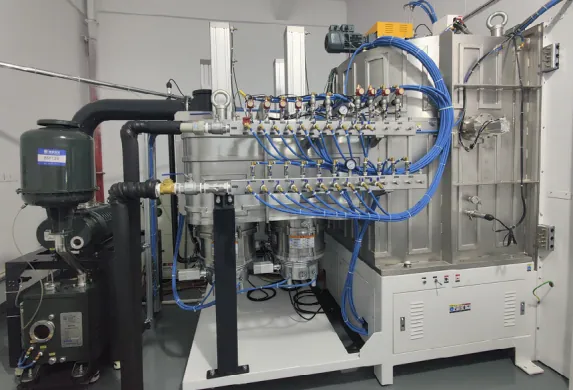
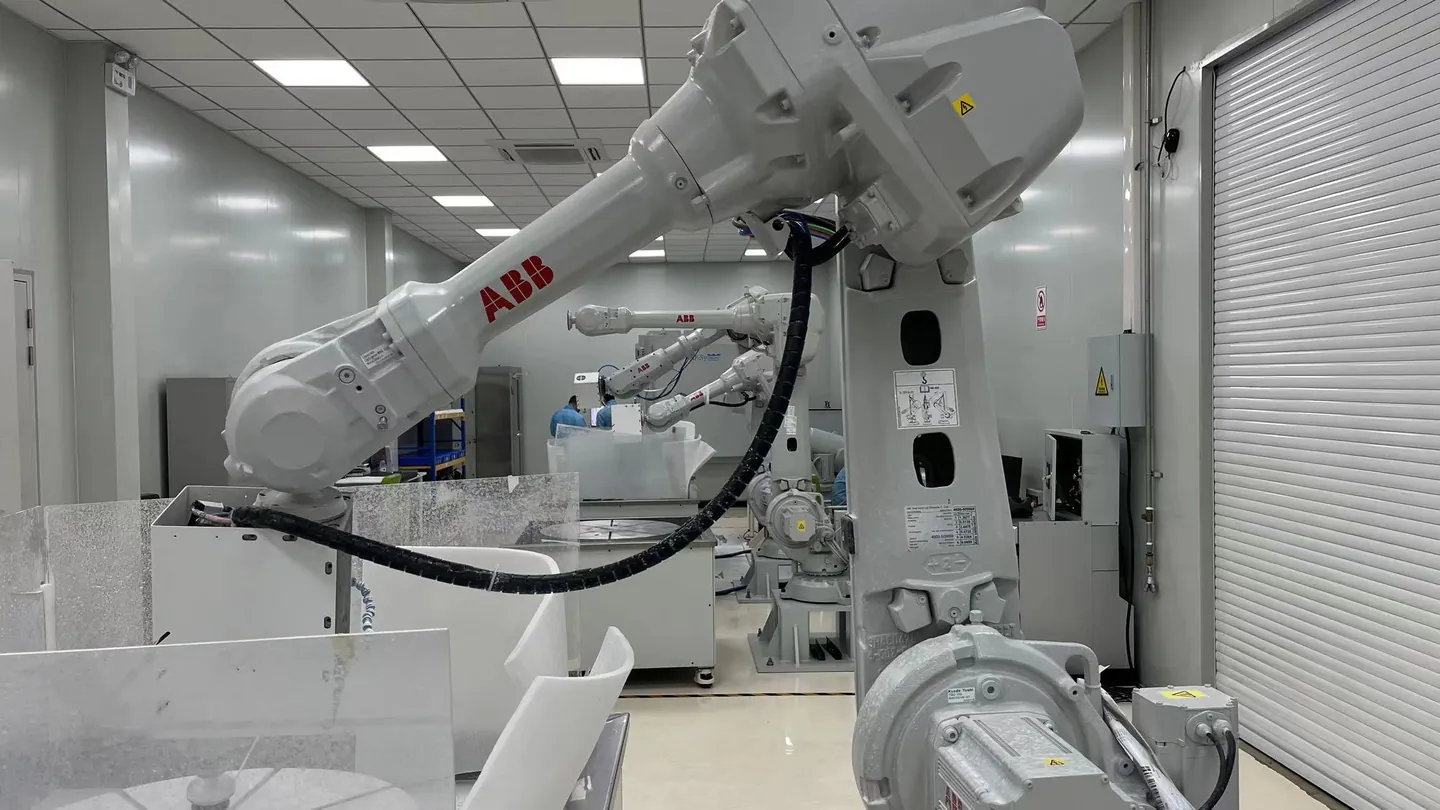
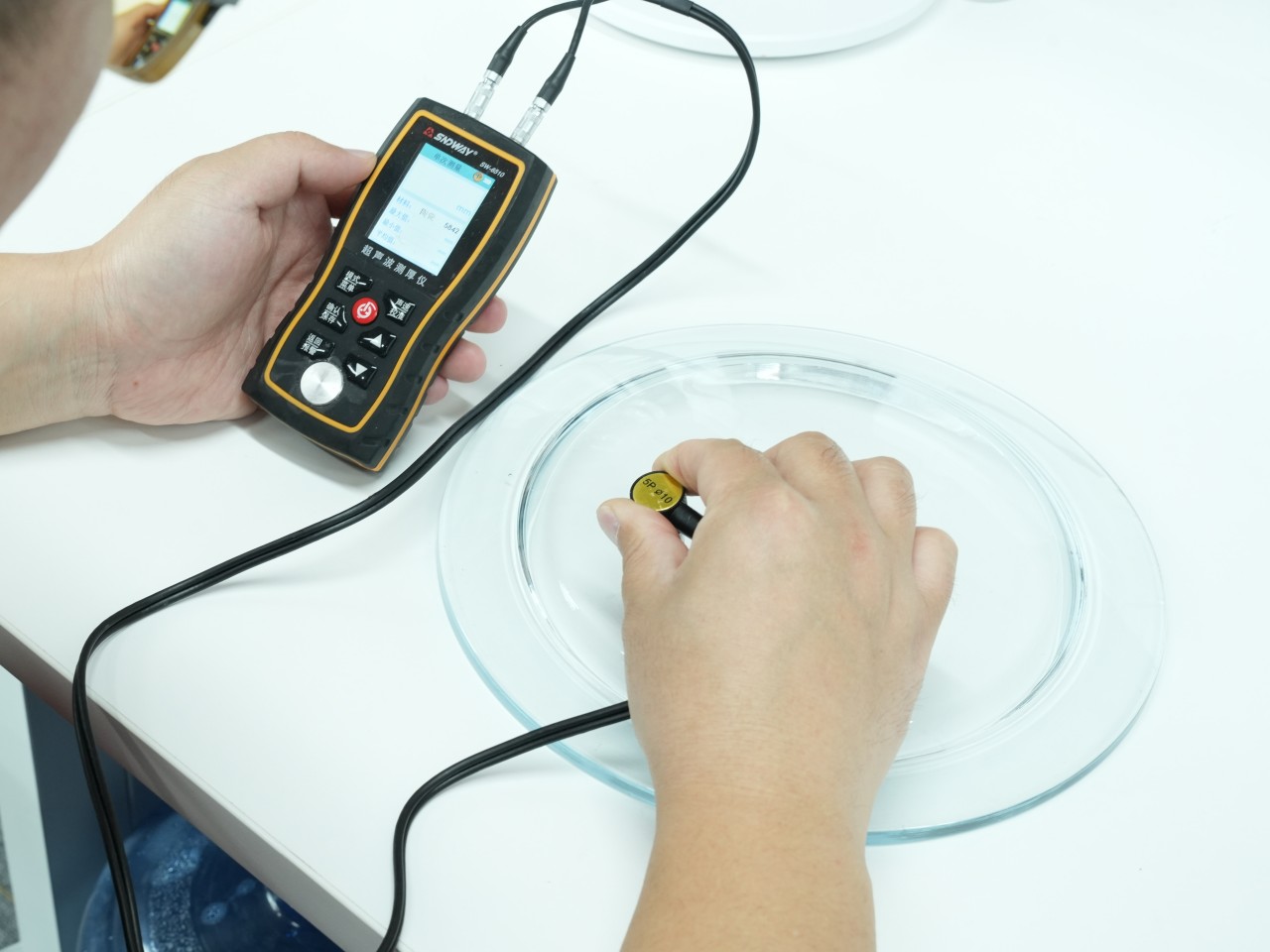
These photographs document equipment and production infrastructure. The exact process route, capability window and acceptance criteria remain project-specific.
Structural, Thermal and Safety Design
A shade must withstand forming residuals, transport, assembly, heat, cleaning, impact, and long-term mounting loads while remaining optically consistent.
How should glass wall thickness be designed?
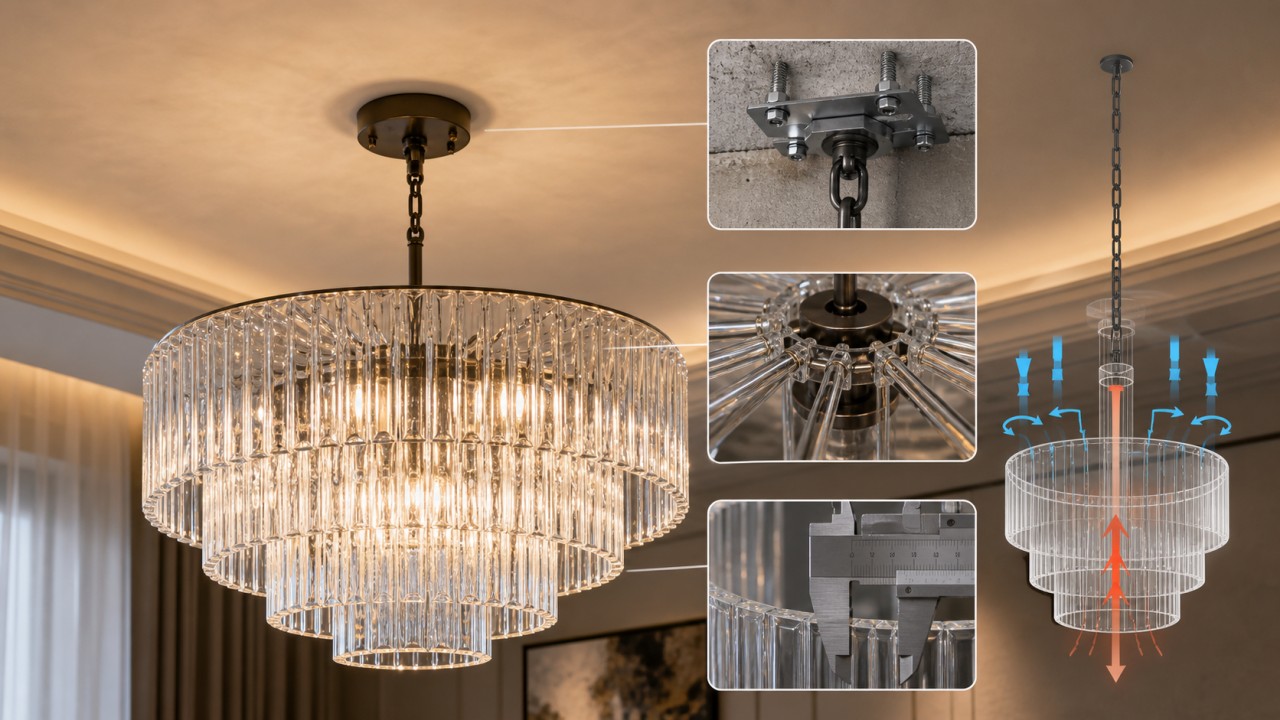
Wall thickness is a structural and optical variable. Thicker glass can increase weight, color, absorption, cooling gradients, and forming stress; thinner glass may reduce impact margin and amplify local variation. Define a nominal thickness with realistic manufacturing tolerance, plus minimum values at mounting, rim, and high-stress regions. Avoid abrupt transitions and sharp internal corners. Review the glass with the support condition, span, fixture weight, shipping method, and cleaning loads. For diffusers and lenses, measure how thickness tolerance shifts transmission, uniformity, or focal behavior.
What causes thermal-shock failure in a lampshade?
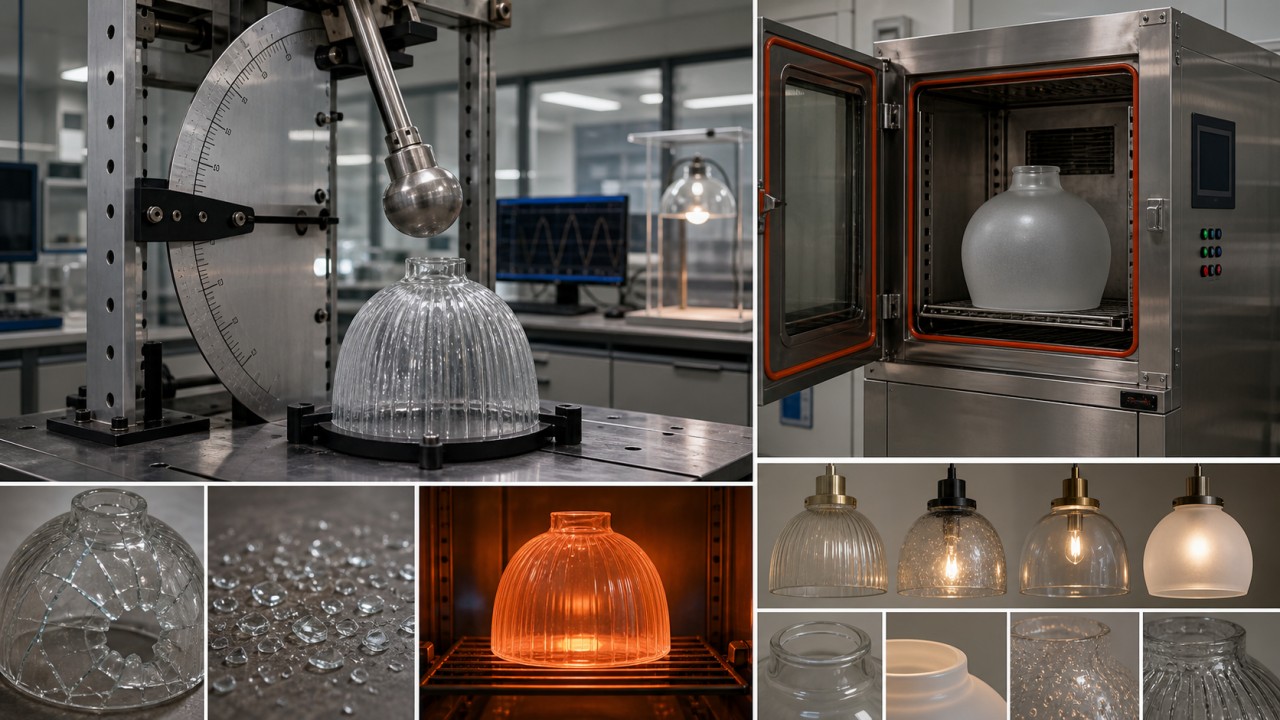
Thermal shock occurs when temperature differences create stress faster than the glass can relax or conduct heat. Compact hot sources, cold drafts, water splashes, blocked ventilation, dark printed areas, thick-to-thin transitions, and metal contact can create local gradients. Material expansion coefficient matters, but so do geometry, annealing, edge quality, mounting freedom, and heat path. Specify actual operating and abnormal temperatures, heating and cooling rates, splash or cold-air exposure, and cycle count. Test complete assemblies because gaskets and retainers can either cushion expansion or concentrate stress.
How should glass be mounted without dangerous pressure?
Glass should be located securely while retaining enough compliance for tolerance and thermal expansion. Avoid metal-to-glass point contact, sharp screws, over-tightened rings, and clips that load an uneven rim. Use compatible gaskets or pads, controlled compression, generous contact radii, and positive retention that does not rely on friction alone. Define assembly torque or gap, gasket hardness, fixture tolerances, and orientation. Large shades also need secondary retention where required. Validate worst-case glass and hardware combinations rather than testing only nominal samples assembled by expert technicians.
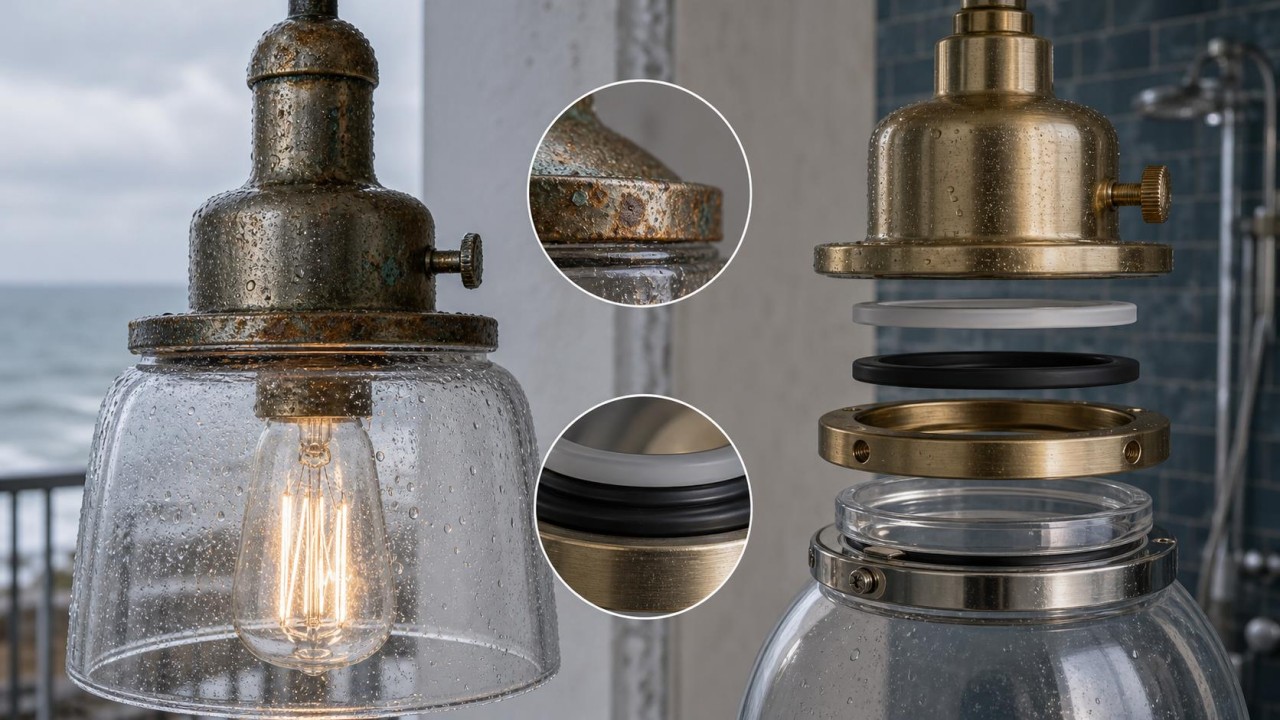
How do IP protection and wet-area safety affect glass design?
IP performance belongs to the complete enclosure. Glass can provide a stable barrier, but the rim geometry, gasket path, cable entry, fasteners, drain strategy, and assembly control determine dust and water ingress. Bathrooms and kitchens also expose surfaces to condensation, steam, grease, cleaners, and temperature change. Identify the installation zone and required rating, then test the finished luminaire in its intended orientation. Make sure sealing does not trap unsafe heat. The glass drawing should include sealing surfaces, flatness or roundness limits, edge finish, and any coating exclusions at gasket contact.
Glass Selection by Luminaire Type
The right material and finish depend on the source, distribution, viewing angle, service environment, and mounting conditions of the specific luminaire.
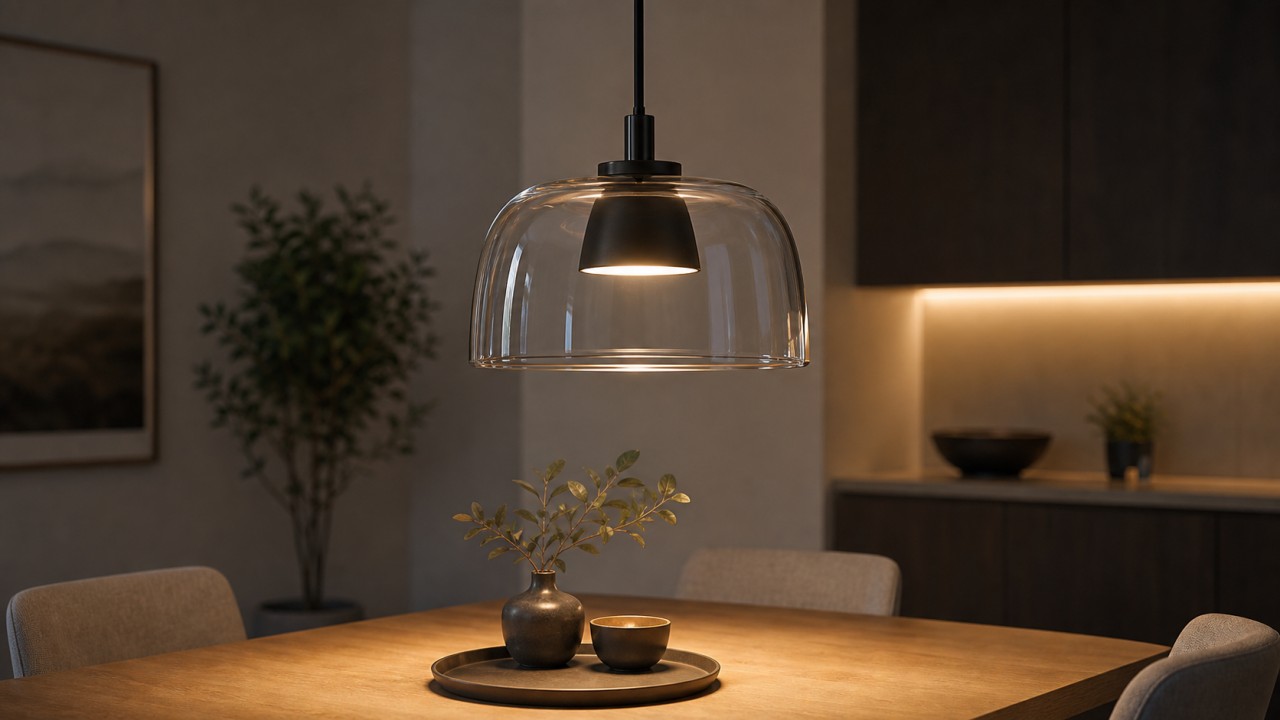
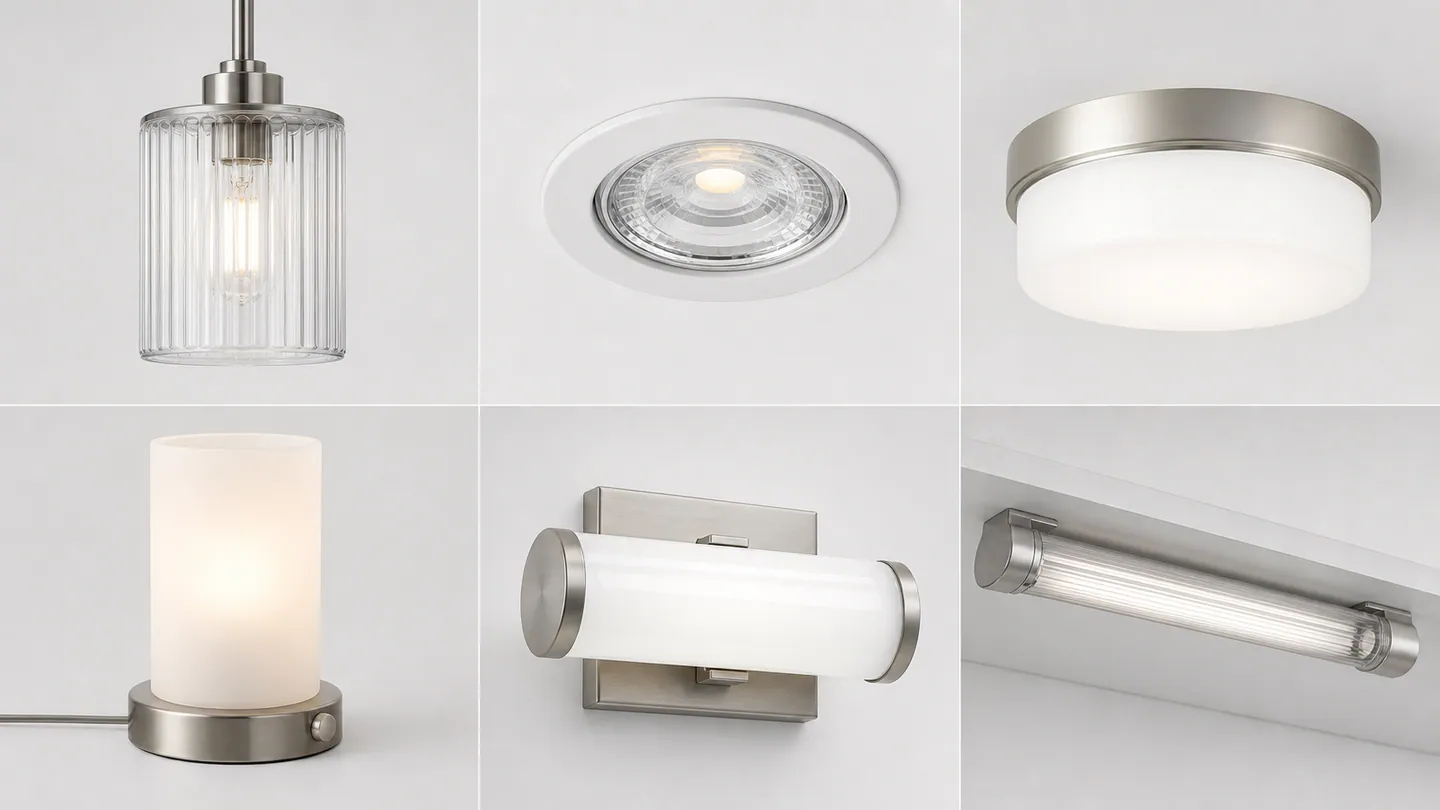
What glass works best for pendants and chandeliers?
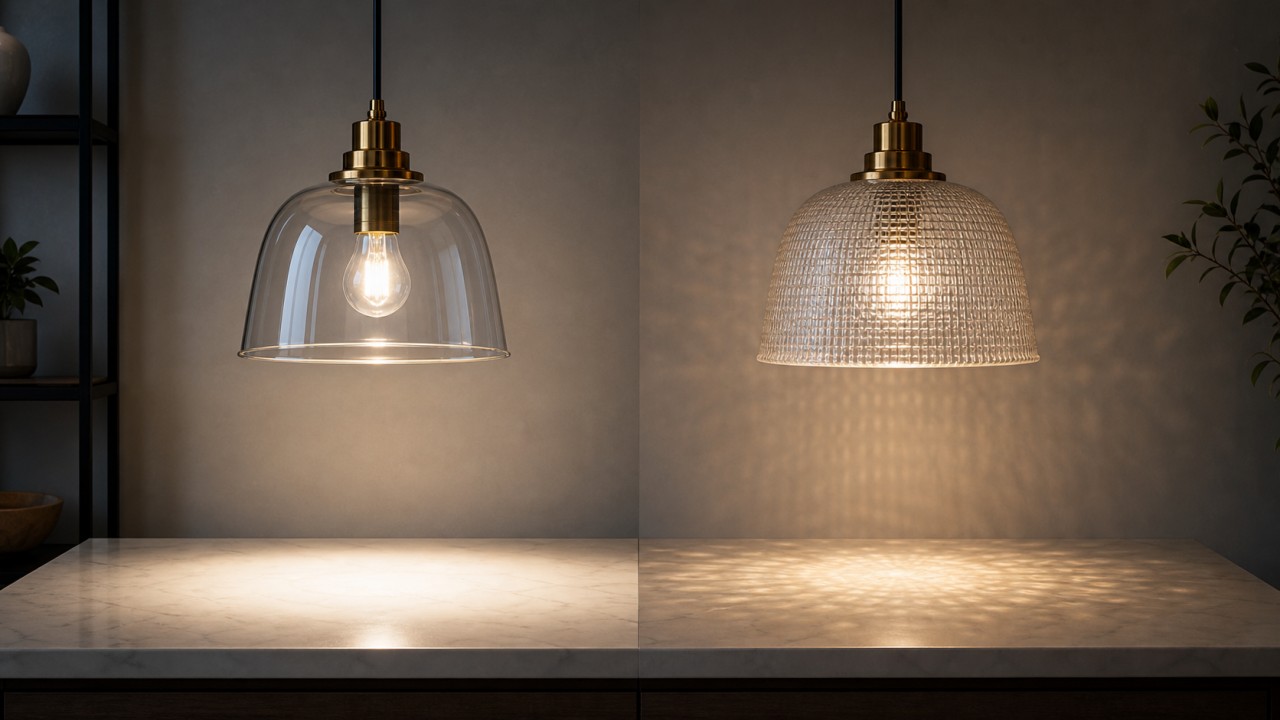
Decorative pendants may use clear, tinted, seeded, ribbed, frosted, opal, or crystal glass depending on whether sparkle, source visibility, or a soft luminous volume is desired. Check direct sightlines from seated and standing positions. Heavy or large shades need controlled rims, safe suspension, balanced weight, and retention independent of fragile decorative features. For dining pendants, coordinate shade opening and diffusion with table height and beam spread. Approve the fixture both on and off because color, bubbles, seams, and hardware reflections change dramatically under illumination.
How should glass be selected for downlights and spotlights?
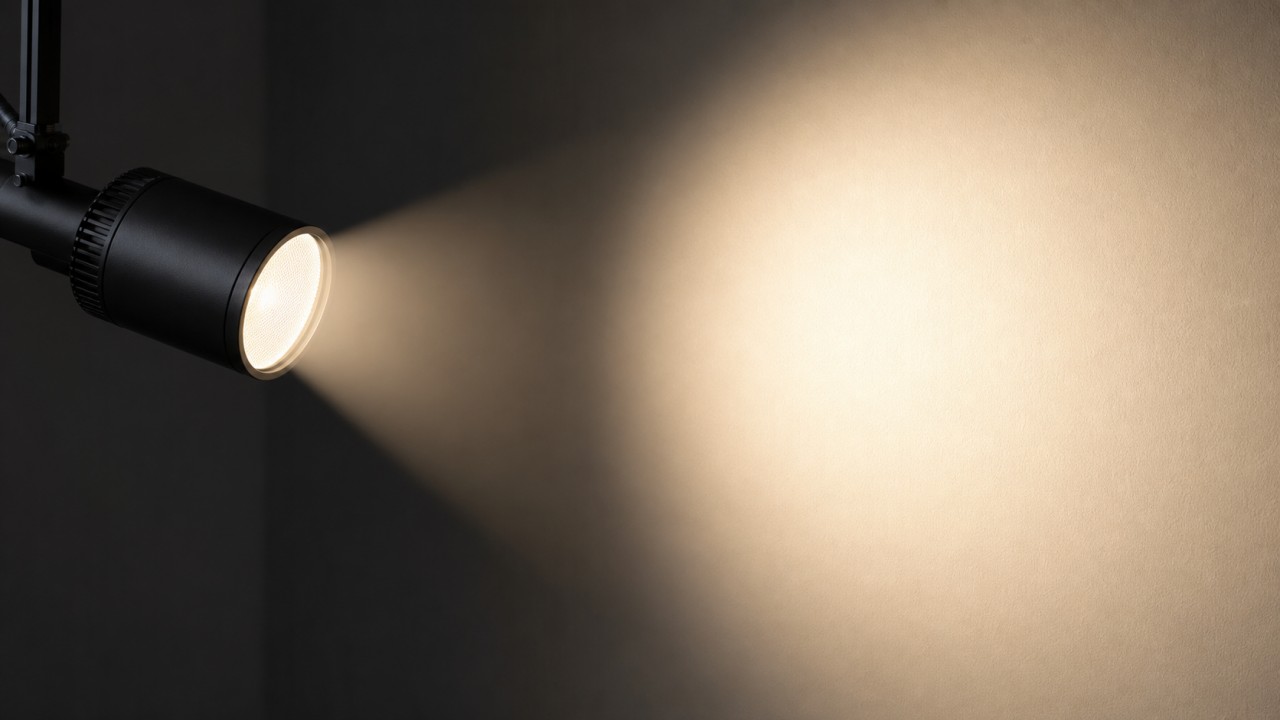
These luminaires rely on controlled beams, so optical-grade geometry, refractive-index consistency, surface quality, and source-to-lens position can be more important than broad diffusion. Protective clear glass should not introduce ghost images or unwanted reflection; prismatic or lens glass must hold focal and alignment tolerances. Anti-glare treatments can help, but cutoff, reflector depth, and source setback remain essential. Define beam angle, field angle, center-beam intensity, spill, color-over-angle, and permitted artifacts, then test the complete optical stack at production tolerances.
What matters for ceiling lights and linear luminaires?
Large ceiling covers and linear diffusers must hide sources across a wide area without becoming excessively heavy or absorptive. Control luminance uniformity, center-to-edge variation, dark ends, joint shadows, deflection, and mounting safety. Long glass parts also require realistic straightness, twist, wall-thickness, and packaging tolerances. A shallow fixture has little mixing distance, so LED pitch and diffuser capability must be developed together. For replaceable covers, define locating features and optical equivalence so field replacements do not create visible brightness or color differences.
How should glass be selected for table and wall lights?
Table and reading lights need useful task illumination without a directly visible high-luminance source. Select clear, surface-frosted, or opal solutions according to source visibility, beam direction, reading position, and adjustment range. Wall lights require control of upward and downward patterns, grazing artifacts, asymmetric mounting, reflections, impact exposure, and cleaning access. Check the illuminated shade from seated and standing eye positions.
How should glass be selected for bathroom and kitchen luminaires?
Bathroom glass must coordinate with the complete enclosure's wet-zone requirement, condensation strategy, gasket interface, corrosion-resistant hardware, and accessible temperature. Kitchen glass must tolerate grease, repeated wiping, detergents, heat, and removal for cleaning. Keep sealing and mounting features outside critical optical areas where possible, and specify cleanable surfaces, protected edges, appropriate diffusion, and production tolerances for the actual fixing method.
| Luminaire | Recommended glass direction |
|---|---|
| Pendant | Clear, tinted, ribbed or opal shade |
| Downlight | Optical lens or protective window |
| Ceiling light | Opal diffuser |
| Table lamp | Surface-frosted or opal shade |
| Bathroom light | Sealed, cleanable glass |
| Kitchen light | Heat- and cleaner-resistant surface |
Testing and Quality Control
Testing converts subjective appearance into measurable acceptance criteria and confirms that production variation remains safe and visually consistent.
What information should a lighting-glass test report include?
A useful test report identifies the specimen, method, instrument, measurement geometry, sample quantity, individual results, tolerance, and acceptance decision. The required fields depend on the test category.
| Test category | Typical information to report |
|---|---|
| Transmittance | Glass type, thickness, wavelength range, instrument and result |
| Haze | Sample geometry, treated side, method and individual values |
| Color | L*, a*, b* or chromaticity coordinates and tolerance |
| Residual stress | Inspection method, sampling and acceptance limit |
| Thermal cycling | High/low temperature, transition rate, cycles and failure criteria |
| Dimensions | Datum, gauge method, sample quantity and tolerance |
| Complete luminaire | Flux, beam distribution, surface temperature and visual uniformity |
Which safety and reliability tests are commonly required for lighting glass?
Common qualification areas include thermal cycling or shock, impact or static load, mounting and torque, edge quality, residual stress, coating or print durability, cleaning resistance, and accessible temperature. The specification should distinguish design qualification, first-article inspection, and routine lot control. For each test, state the production configuration, conditioning, sample quantity, method, acceptance limit, and failure criteria.
How should dimensional and batch consistency be controlled?
Create a critical-to-quality list from the drawing: mounting diameters, rim flatness, hole position, thread or groove geometry, overall envelope, weight, wall-thickness zones, optical alignment, and cosmetic limits. Use gauges for repetitive interfaces and measurement systems capable of resolving the tolerance. Define batch, sample size, control frequency, and traceability for glass composition, furnace, mold, cavity, operator, and finishing lot as appropriate. Retain boundary samples and illuminated masters for subjective attributes. Trend results over time so drift is corrected before parts fall outside specification.
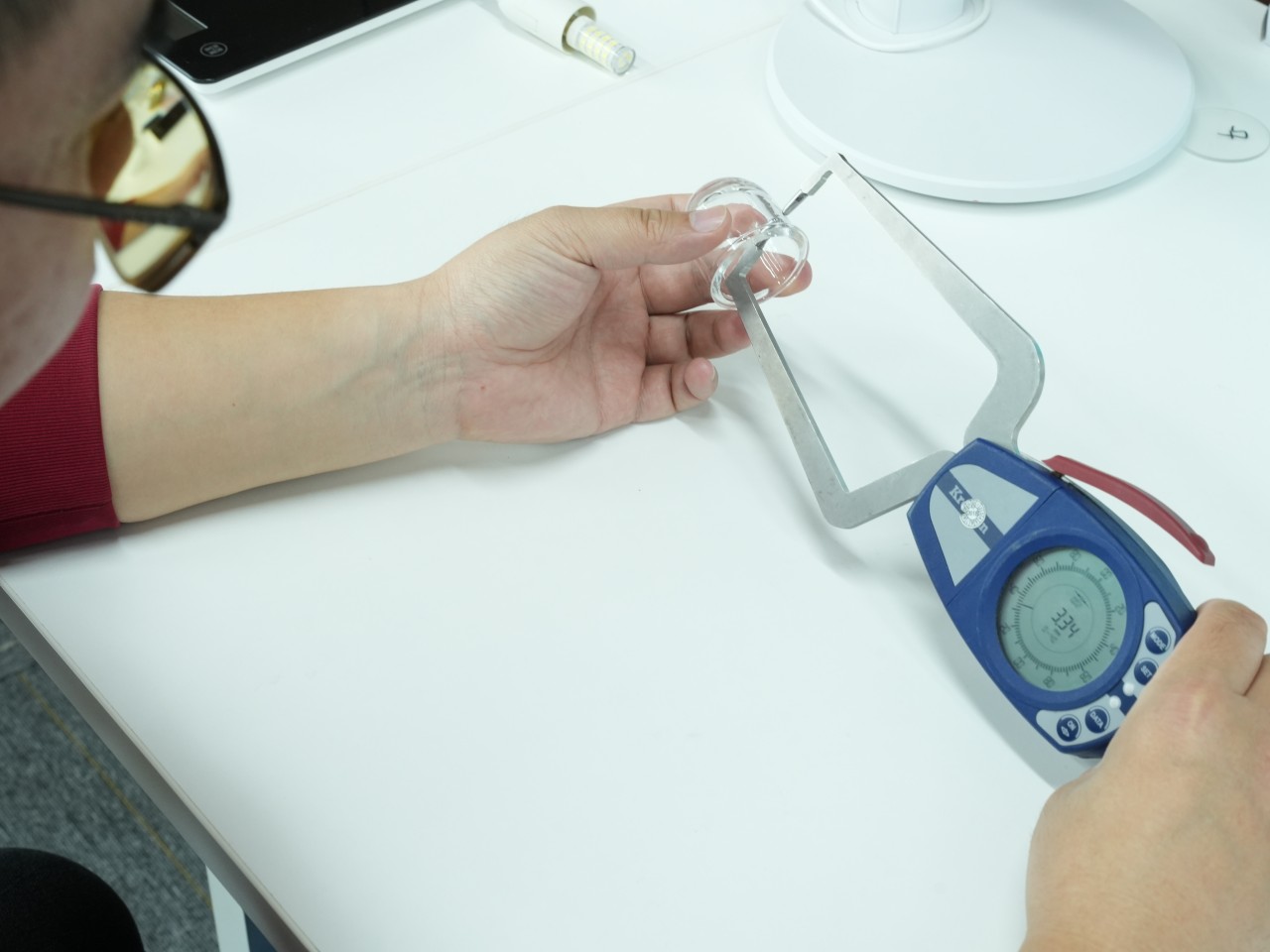
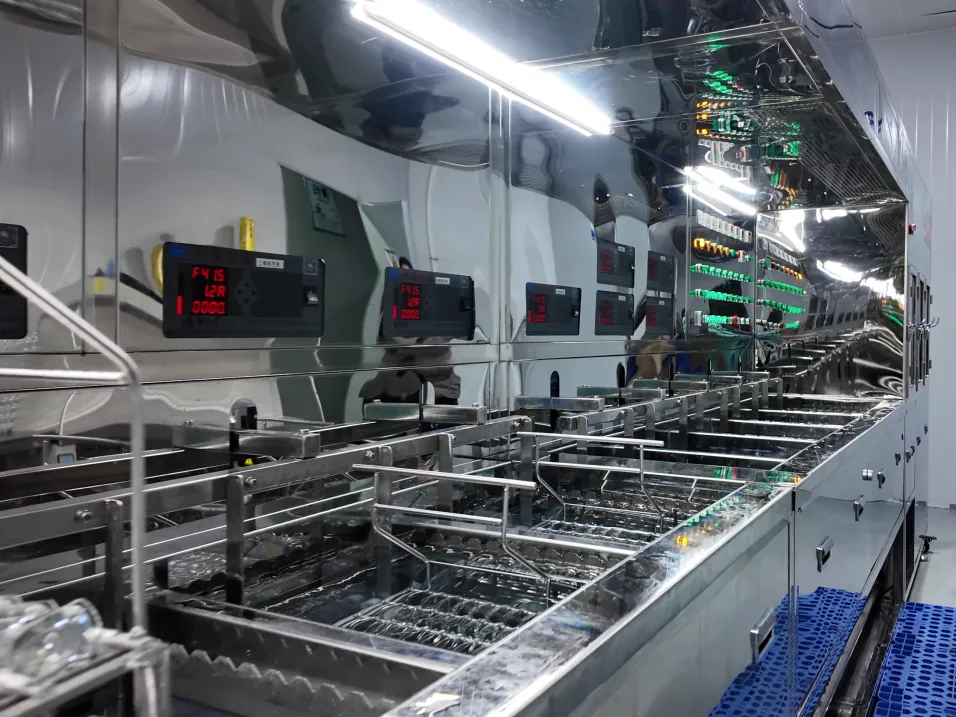
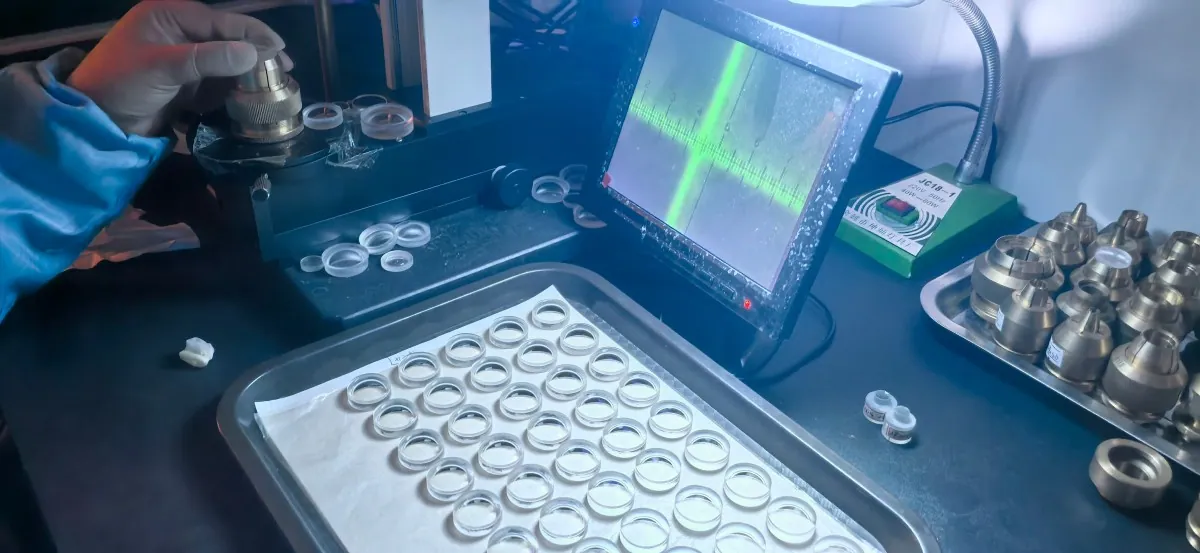
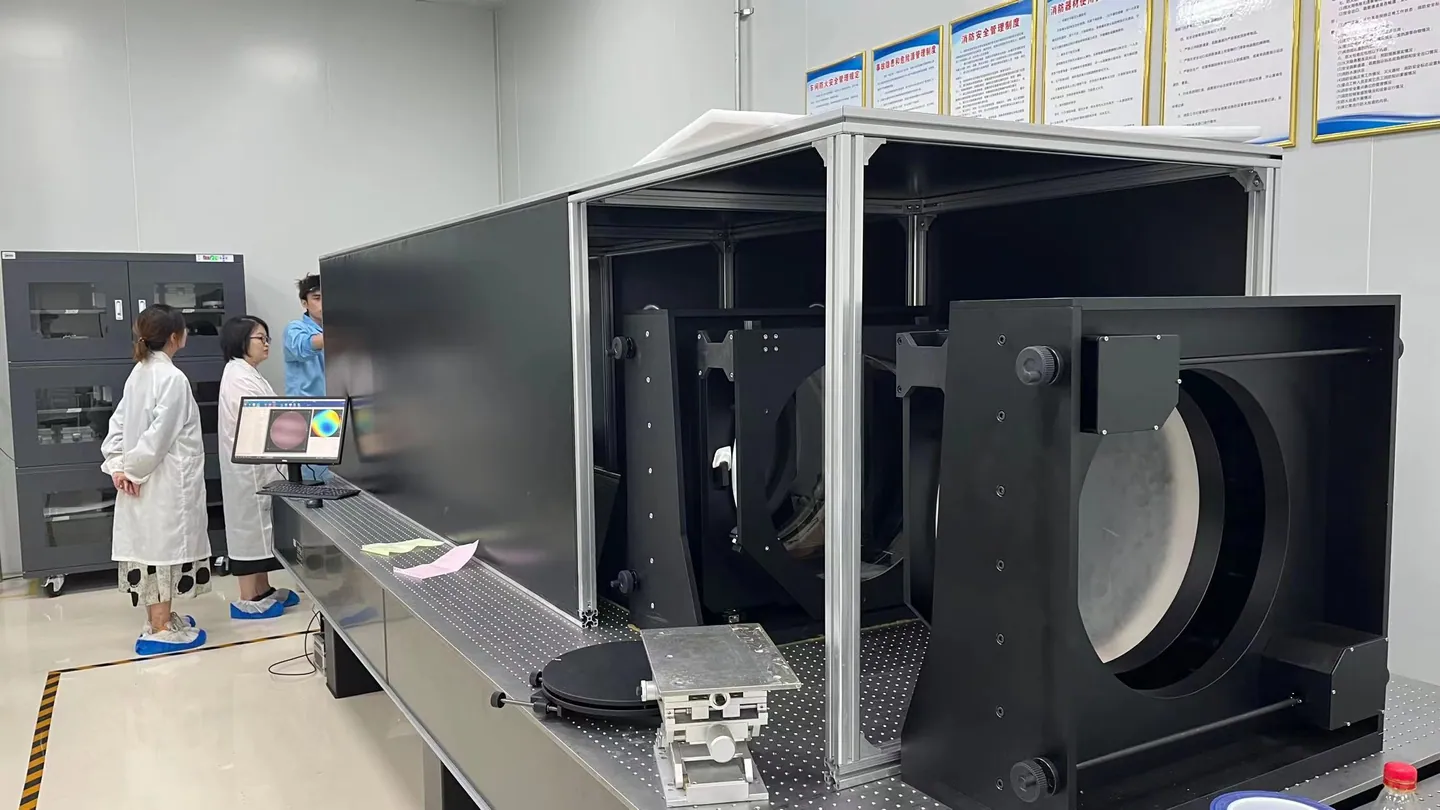
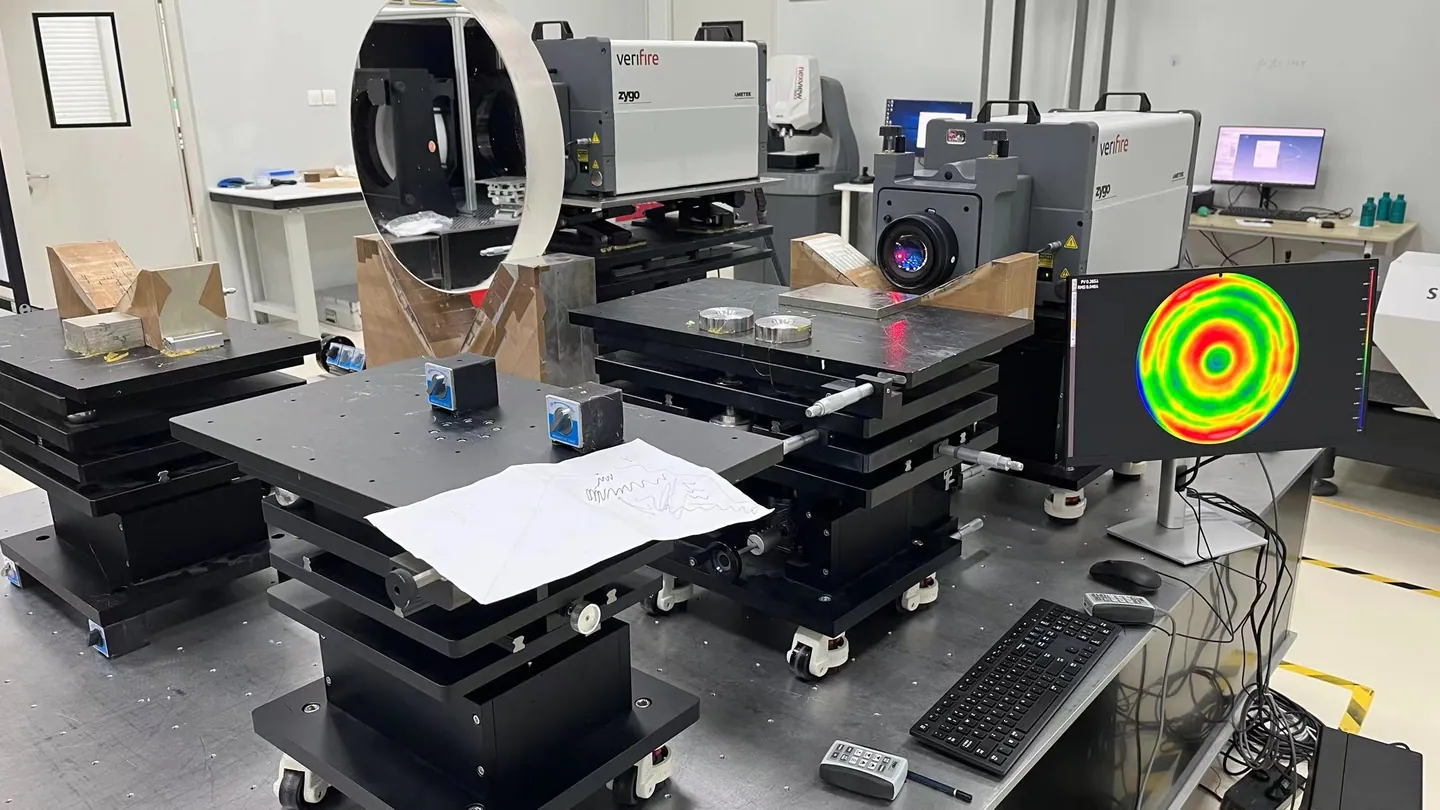
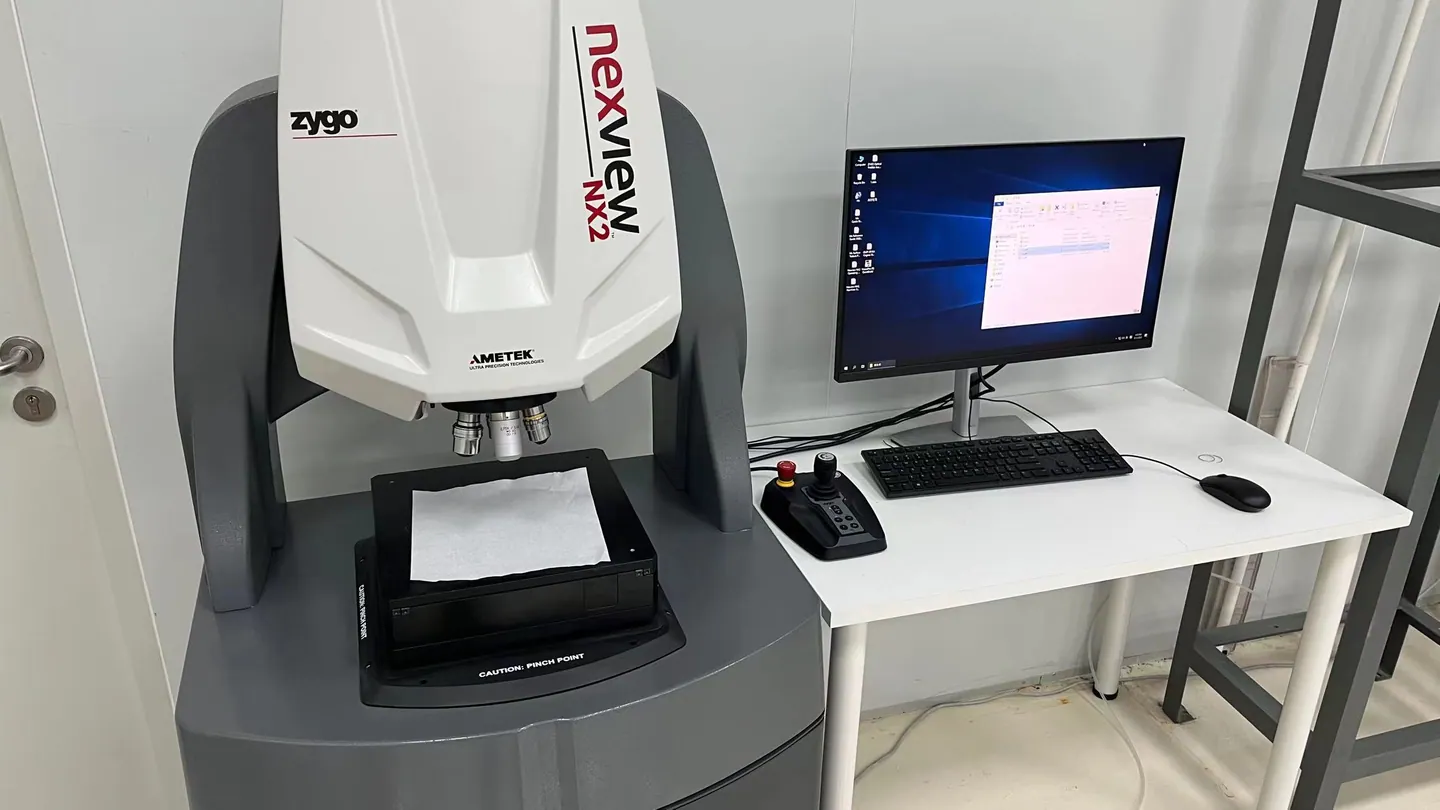
The photographs below document BO-Glass inspection equipment and production inspection activity. They do not, by themselves, establish a tolerance or test result for every lighting-glass product.
Indoor Lighting Glass RFQ Checklist
A complete request for quotation lets the supplier assess feasibility, choose the process, price tooling and inspection correctly, and identify technical risks before sampling.
What drawing and quantity information is required?
Provide a dimensioned 2D drawing and, when geometry warrants it, a 3D model. Mark mounting and sealing interfaces, datum scheme, critical optical surfaces, permitted parting lines, draft, edge finish, holes, threads, cosmetic zones, and target weight or wall thickness. State prototype, validation, first-order, and annual quantities plus the forecast schedule, service-part expectation, tooling ownership, and target life. If the design is provisional, identify dimensions that can change so the supplier can propose a more stable or economical forming solution.
Which material, appearance, and optical targets belong in the RFQ?
State the preferred glass family or the performance that should drive material selection. Include clear, low-iron, opal, colored, textured, coated, printed, or etched requirements with physical boundary samples where possible. Define transmission and haze ranges, color coordinates or tolerance, gloss, source-hiding and uniformity expectations, beam targets, and acceptable cosmetic limits. Name the measurement method and specimen condition. If targets are not yet fixed, request a sample ladder with several transmission, haze, or color levels and evaluate them in the actual luminaire.
What environment, mounting, compliance, and evidence should be stated?
Describe source power, maximum operating and abnormal temperatures, heating and cooling rates, fixture ventilation, indoor location, humidity, grease, cleaning chemicals, impact risk, and expected service life. Provide mounting drawings, contact materials, gasket specification, fastener or torque conditions, orientation, enclosure rating, and replacement method. List required markets, customer standards, restricted-substance declarations, traceability, test reports, inspection records, packaging validation, and third-party evidence. Ask suppliers to separate verified production capability from provisional design guidance and to flag every assumption in the quotation.
What sampling, packaging, approval, and change-control requirements should be included?
State prototype and first-article quantities, MOQ and annual forecast, tooling ownership, the approved golden sample, cosmetic zones, sampling level or inspection frequency, packaging and transport-drop requirements, replacement-part consistency, first-article records, and supplier change-notification rules.
BO-Glass Indoor Lighting Glass Case Studies
Use the BO-Glass case-study library to review relevant published projects. Project-specific figures should be used only when they are supported by the linked case record or an available test report.
Contact Us
Your feedback fuels our growth, and your questions drive our solutions.
We value your feedback, inquiries, and suggestions. Please feel free to get in touch with us
General inquiries
Please contact us via sales@bo-glass.com, and we will reply to you as soon as possible.
Interested to work with us
Drop your resume at info@bo-glass.com
and we will get back to you shortly.
We uses the contact information you provide to us to contact you about our relevent content, products, and services.