
Colored Glass Raw Materials -blowing glass and moten pressed glass
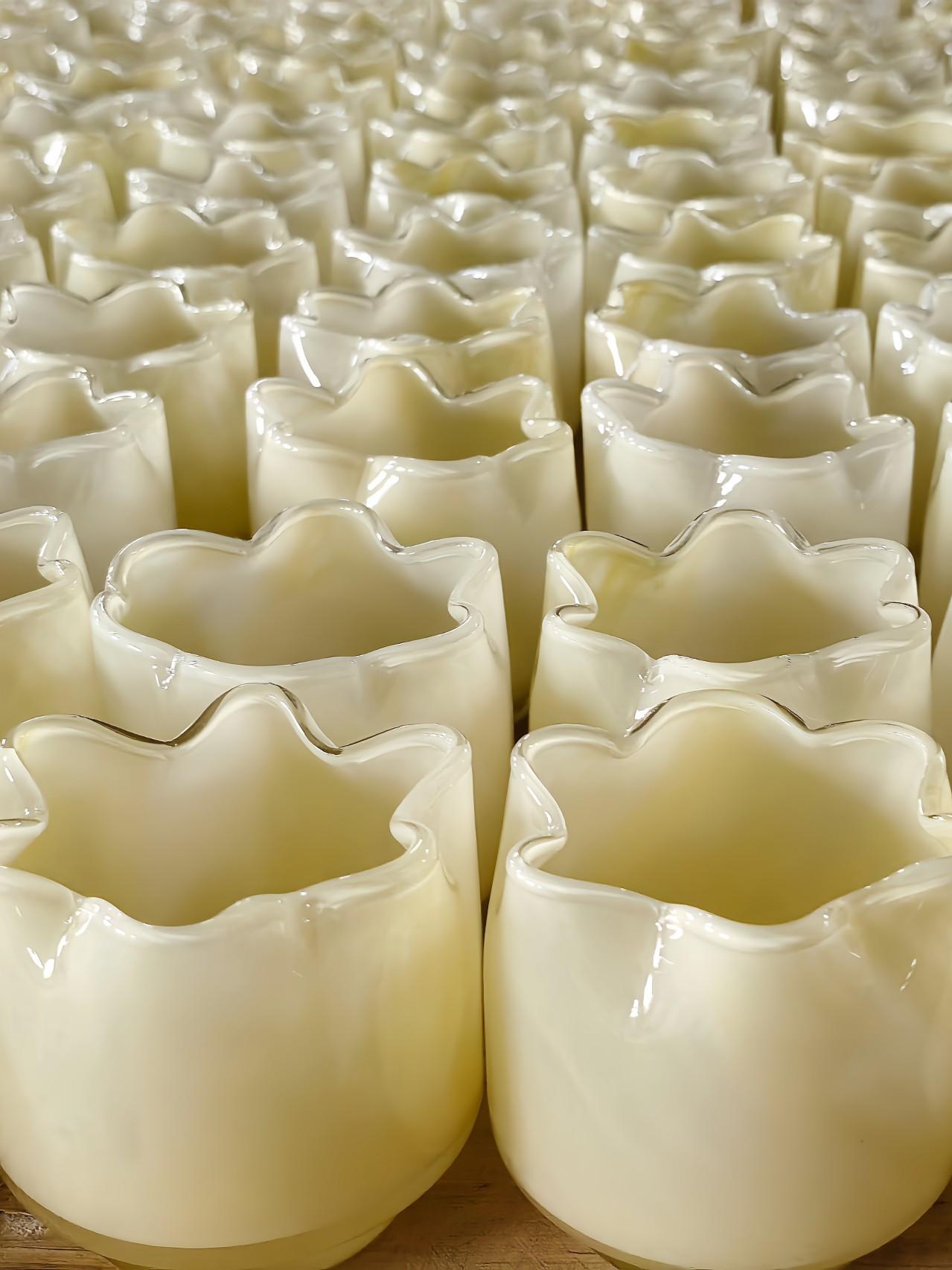

What is Colored Glass?
Max Part Size (X/Y/Z): | 300 x 300 x 300 mm |
Dimensional Tolerance: | ±0.3 mm |
Minimum Wall Thickness: | 2 mm |

Molten Float Glass for Blowing & Pressing
| Color | Primary Colorant(s) & Typical Concentration | Coloration Mechanism | Typical Hue & Notes | Key Advantage |
| Red | Gold Ruby: Au (0.001-0.03%) + SnO₂ Selenium Ruby: CdS + Se (1-2% total) | Colloidal (Surface Plasmon Resonance) | Intense ruby red (Au) Orange-red to deep red (CdSe) | Gold: Unmatched prestige & stability. Selenium: Cost-effective, tunable hue. |
| Yellow | Cadmium Yellow: CdS (0.5-2%) Silver Yellow: Ag (as low as 0.05%) | Colloidal (CdS) Colloidal (Ag nanoparticles) | Lemon to deep golden yellow Paler, greenish-yellow | Cadmium: Bright, vivid color. Silver: Lead-free, more eco-friendly. |
| Blue | Cobalt Blue: CoO (0.02-0.1%) Copper Blue: CuO (2-5%) | Ionic (Co²⁺) Ionic (Cu²⁺) | Intense, slightly violet-blue Light azure or turquoise blue | Cobalt: Extreme color strength, stable. Copper: Softer, economical turquoise hue |
| Green | Chrome Green: Cr₂O₃ (0.2-1%) Iron Green: Fe₂O₃ / FeO (1-3%) | Ionic (Cr³⁺) Ionic (Fe²⁺/Fe³⁺) | Emerald green Bluish-green to olive green | Chrome: Pure, stable green tone. Iron: Economical; common in UV-filtering glass. |
| Orange | Cadmium Orange: CdS + CdSe (1-3% total) | Colloidal (Cd(S,Se) solid solution) | A range from yellow-orange to red-orange | Excellent color saturation; hue is tunable by the S/Se ratio. |
| Violet / Purple | Manganese Violet: Mn₂O₃ / MnO₂ (1-5%) Neodymium Purple: Nd₂O₃ (2-5%) | Ionic (Mn³⁺) Ionic (Nd³⁺) | Amethyst-like purple Subtle color-shift (Alexandrite effect) under different light. | Manganese: Classic, economical purple. Neodymium: Unique optical property for special effects. |
| Black | Iron-Cobalt: Fe₂O₃ + CoO + NiO (Combined 5-15%) | Ionic Combination (Absorbs all visible wavelengths) | Neutral or slightly bluish-black | High opacity; ideal for shielding light and UV radiation. |
| Amber / Brown | Iron-Sulfur: Fe₂O₃ + S / Carbon (Fe: 0.1-1%, S: 0.1-0.5%) | Iron-Sulfur Complex (Fe³⁺-S²⁻) | Yellow-brown to deep amber | Economical; excellent UV absorption for packaging. |
Process Awareness: Colloidal colors (reds, oranges, yellows) require a precise “striking” process. This impacts production scheduling and is crucial for achieving the target hue.
Cost & Efficiency: Colorant concentration directly affects material cost. Highly potent additives like cobalt are cost-efficient even at low doses.
Compliance is Critical: Always verify material restrictions (like RoHS) for your target market. We provide compliant alternatives for regulated substances such as cadmium and lead.
Customization is Standard: Discuss your specific needs for light transmission, color tone, and physical properties. We can engineer the glass to meet your exact application requirements.
Colored Glass
Colored glass, formed by precisely adding colorants to the base glass composition or controlling process conditions, presents a series of clear advantages and corresponding trade-offs in commercial applications.
Benefits
Unmatched Aesthetic Versatility
Vibrant Color Palette: Achieve a full spectrum of colors—from rich reds and deep blues to elegant ambers and emerald greens—by incorporating specific metal oxides (e.g., Cobalt, Selenium, Neodymium).
Dynamic Visual Effects: Create stunning light interactions, including the prized Alexandrite effect with Neodymium and the brilliant transmission of colloidal gold ruby glass.
Custom Hues & Finishes: Materials can be engineered for specific shades, opacity levels (transparent to opaque), and textures to meet exact design visions.
Superior Functional Performance
Enhanced UV Protection: Specific formulations (e.g., Amber glass via Iron-Sulfur) offer excellent inherent protection, safeguarding interiors from sun damage.
Controlled Light Transmission: Effectively manage glare, reduce light intensity, and enhance privacy for architectural and automotive applications.
Tailored Physical Properties: Our expertise allows for the enhancement of properties like hardness, thermal resistance, and chemical durability alongside coloration.
Proven Technical Excellence & Stability
Exceptional Color Fastness: Inorganic colorants ensure the colors are permanent, stable, and highly resistant to fading from UV exposure or weathering.
Precision & Consistency: We guarantee precise control over colorant concentration and particle size (e.g., for colloidal colors), ensuring batch-to-batch consistency and meeting tight dimensional tolerances.
Wide Application & Regulatory Support
Broad Industry Application: Our materials are engineered for diverse uses, including architectural windows, lighting, artistic glassware, electronics, and decorative panels.
Regulatory Compliance Guidance: We provide materials compliant with international standards (like RoHS) and offer expert guidance on substance restrictions (e.g., Cadmium, Lead) and suitable alternatives.
Key Limitations to Consider
Color Consistency & Reproducibility
Precise Process Control: Colloidal colors (red, orange, yellow) require an exact “striking” heat treatment (500-650°C). Minor deviations in time or temperature can lead to significant batch-to-batch color variation.
Raw Material Purity: Impurities in the base sand or additives can cause unexpected color shifts or haze.
Inherent Process Complexity
Specialized Kiln Scheduling: The need for a secondary striking process for certain colors increases production time, complexity, and energy costs compared to clear or simple ionic-colored glass.
Stringent Melting Conditions: Some colorants require specific furnace atmospheres (oxidizing or reducing) and melting temperatures to develop the correct valence states, adding to operational complexity.
Material & Performance Limitations
Thermal Expansion Mismatch: The additives used for color can alter the glass’s coefficient of thermal expansion. If not properly formulated, this can lead to stress, cracking, or poor compatibility with other glass components in fused applications.
Bubbles & Inclusions: The chemical reactions of certain colorants (e.g., the reduction of gold or the decomposition of carbonates) can trap gases, leading to seeds and bubbles that compromise structural integrity and clarity.
Regulatory & Cost Constraints
Restricted Substances: Key colorants for brilliant reds and yellows (Cadmium, Selenium, Lead) are regulated (e.g., RoHS), limiting their use in many consumer and electronic applications and requiring costly alternative development.
High-Cost Raw Materials: The use of precious metals (e.g., Gold) or rare-earth oxides (e.g., Neodymium) makes some colors prohibitively expensive for standard applications.
Brittleness: Like all glass, colored glass is inherently brittle. This characteristic is not caused by the colorants but remains a key design limitation that must be managed in the final application.
Application Fields of color Glass
Lighting Design
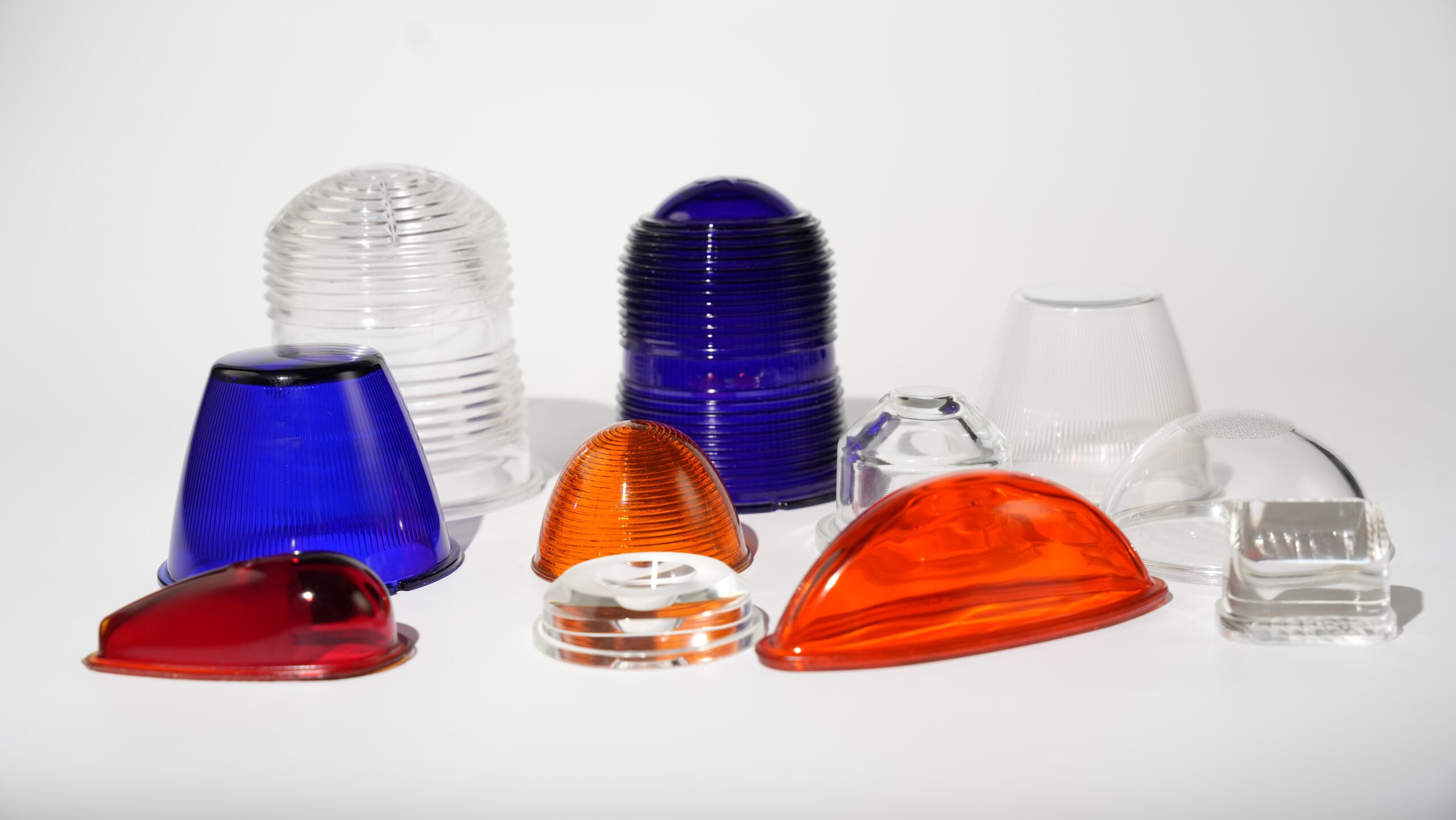
Our colored glass transforms lighting into both an art and a science. It is engineered to diffuse light evenly, create specific moods, and withstand heat from bulbs. Applications range from durable outdoor fixture lenses to intricate chandeliers and custom decorative bulbs, where color consistency and light transmission are precisely controlled.
Art & Decoration
This is the realm of pure aesthetic expression. Our glass provides the vibrant, light-catching palette for artists and designers. It is the essential material for timeless stained glass windows, dynamic glass sculptures, detailed mosaics, and high-end fused art pieces, where color stability and workability are paramount.
Technical & Industrial
Here, color serves a critical technical purpose. Our glass is formulated for specific optical and physical properties, making it ideal for optical filters, durable signal lenses in aviation and automotive industries, instrument panels, and protective windows that require precise light filtration or UV blocking.
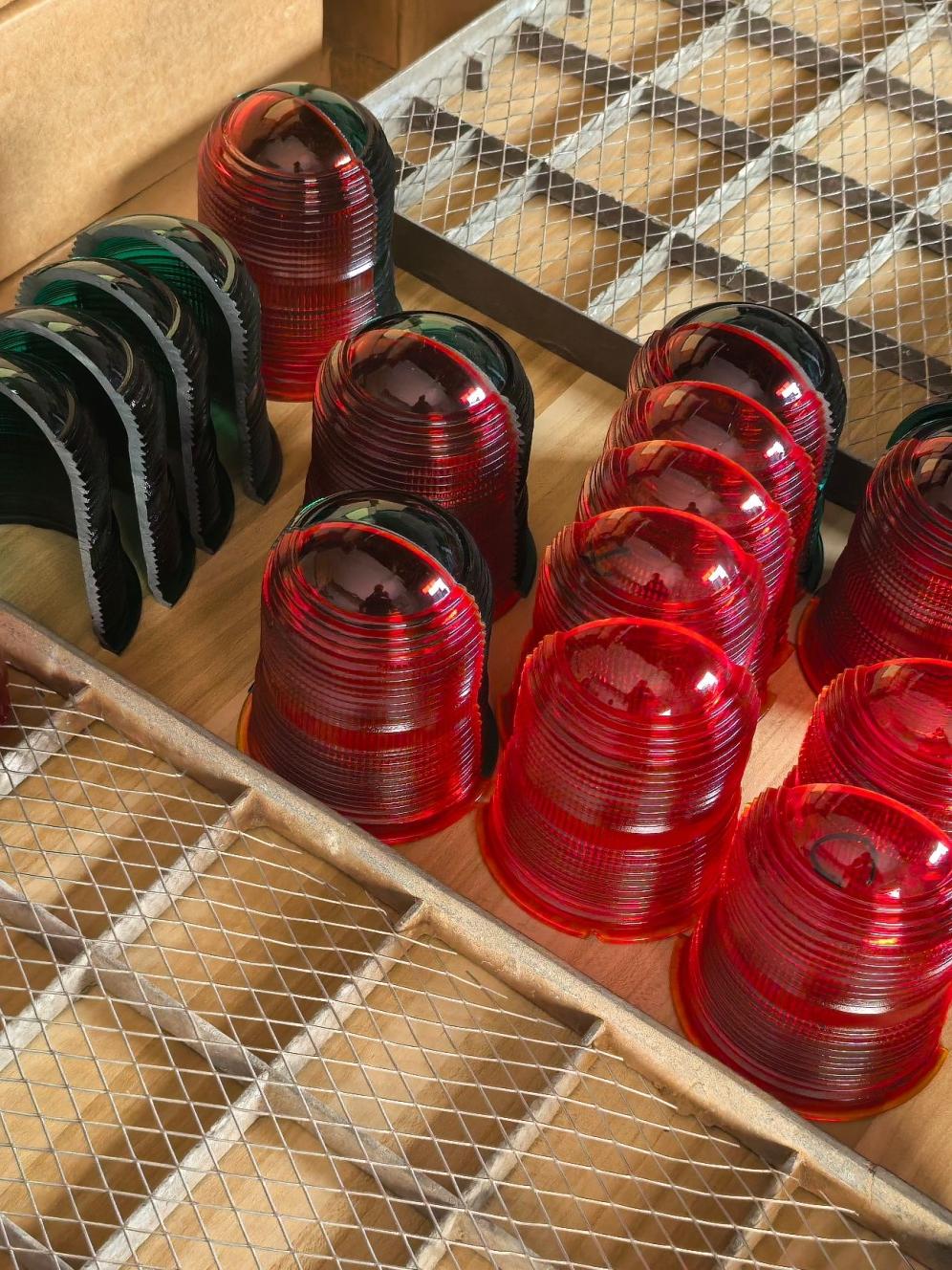
Precision-Colored Glass for Railway Signal Lighting
Engineered for critical safety and reliability, our colored glass meets the stringent optical requirements of railway signal systems. It guarantees precise color coordinates, superior light transmission, and long-term stability against weathering and UV exposure. This ensures clear, unambiguous signal communication for safe and efficient rail operations.
FAQ: Colored Glass – Common Client Questions Answered
How do you guarantee color consistency across different production batches?
Raw Material Purity: Using high-purity, consistently sourced base materials and colorants.
Precise Dosing: Automated batching systems ensure exact, repeatable colorant concentrations.
Controlled Process Parameters: For colloidal colors (reds, oranges), we strictly control the “striking” temperature (typically 500-650°C) and time profile. For ionic colors, we maintain specific melting conditions.
Can your colored glass withstand repeated thermal cycling or sudden temperature changes?
Are your colored glass materials compliant with RoHS and other environmental regulations?
Compliant Grades: We have formulations that avoid restricted substances like Cadmium (Cd) and Lead (Pb), using alternative colorant systems (e.g., Selenium-based reds instead of Cadmium).
Standard Grades: We also supply traditional, high-performance formulas where regulations allow.
We provide full Material Disclosure Sheets for verification.
What is your minimum order quantity (MOQ) for custom colors?
Standard Colors: MOQs are typically low, often starting at one standard production batch.
Custom Colors/Formulations: Require a higher MOQ to cover R&D, process calibration, and dedicated production line setup. We recommend first selecting from our extensive standard color library to minimize cost and lead time.
What is the lead time for a new custom color development project?
A typical custom color development cycle takes 8-12 weeks, broken down as:
Formulation & Lab Trials: 2-4 weeks.
Pilot Production & Sample Approval: 3-5 weeks.
Process Finalization & Full-Scale Production: 3+ weeks.
Lead time can vary with complexity.
We need a specific color and a certain level of light transmission. Can you do that?
Selecting the appropriate colorant system (ionic vs. colloidal).
Fine-tuning the concentration to hit the target color coordinates (e.g., CIE L*a*b* values).
Adjusting the base glass composition to achieve the exact Light Transmittance (LT%) or UV/IR blocking performance you require.
If a color I need contains a restricted substance, what are my options?
Direct Substitute: We will recommend and formulate a compliant colorant system that matches your target hue as closely as possible (e.g., using a mixed-metal oxide to replace a cadmium sulfide yellow).
Performance-Based Reformulation: If a perfect color match isn’t possible, we will work with you to develop an alternative that meets the core functional needs (opacity, UV protection) of your application.
What are the advantages of colored glass compared to other glasses?
Aesthetic Appeal:
Colored glass allows for creative and artistic designs in decorative items, stained glass windows, and glassware. It adds a touch of elegance, warmth, and sophistication to interiors and exteriors.
Colored glass can be easily customized to achieve different shades, opacity levels, and finishes (e.g., frosted, polished, or etched), providing greater flexibility in design.
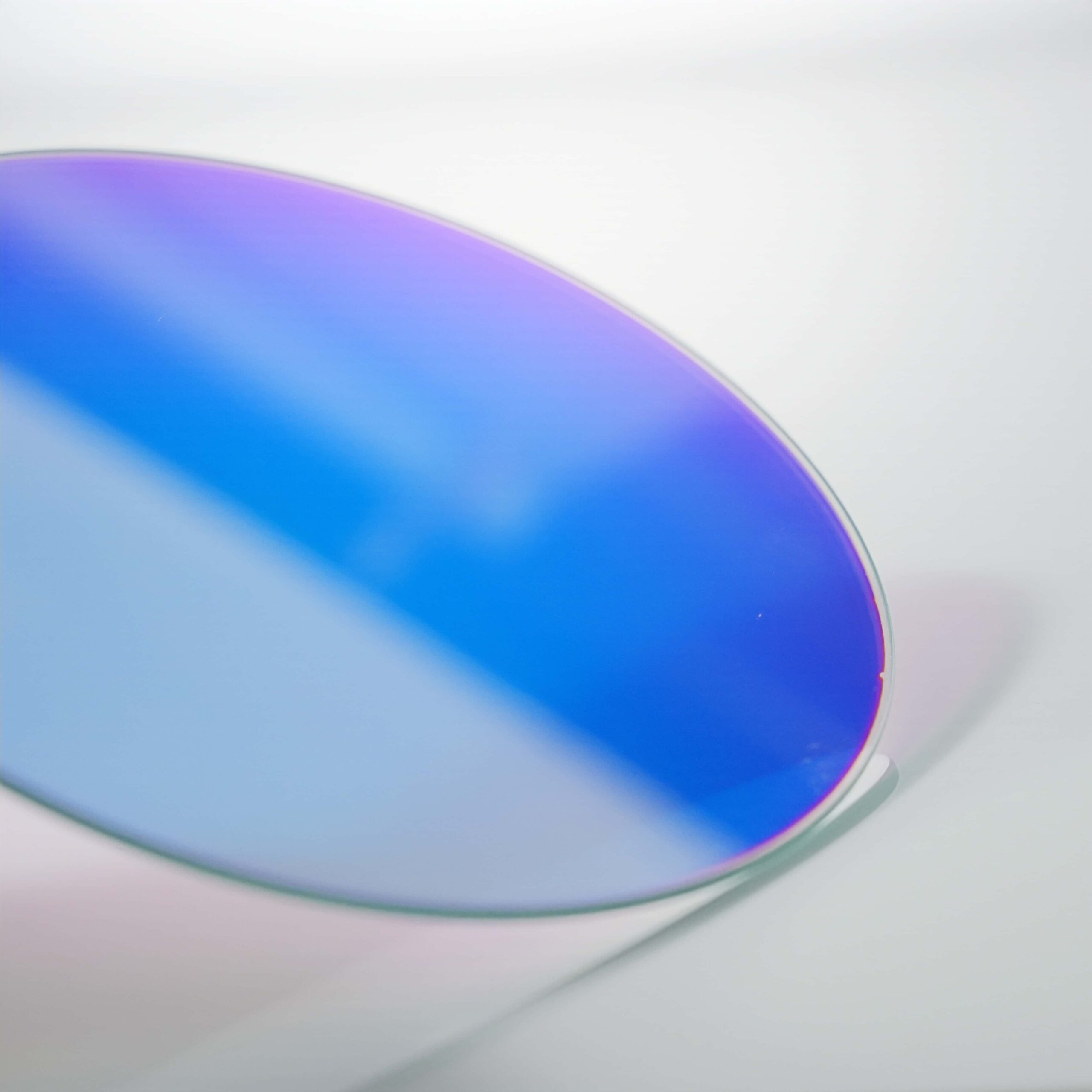
Functional Benefits:
UV Protection: Many types of colored glass, particularly dark shades like green or amber, offer excellent UV protection. This can help reduce the amount of harmful ultraviolet light that passes through windows, protecting interiors from fading and damage.
Privacy and Light Control: Colored glass can be used to control light transmission and enhance privacy. Tinted or opaque colored glass can limit the amount of light passing through, making it ideal for windows, skylights, or privacy screens.
Glare Reduction: Tinted colored glass, especially in automotive and architectural applications, can reduce glare from sunlight or artificial light, creating a more comfortable environment in spaces like offices, homes, and vehicles.
Why does stained glass have colors?
| Color | Green or Brown | Blue | Blue, Green, or Red | Green | Purple or Pink | Red or Ruby | Yellow or Green | Pink, Red, or Brown |
| Added substances | Fe₂O₃ | CoO | CuO | Cr₂O₃ | MnO | Au₂O₃ | Silver Compounds | SeO₂ |
What is the composition of stained glass?
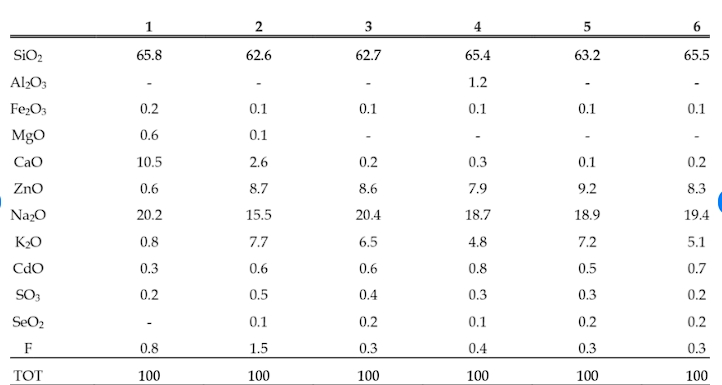
Stained glass is primarily composed of silica (sand), alkali compounds (like sodium carbonate), and calcium oxide (lime), which provide the glass with structural integrity, workability, and durability. Silica makes up the largest portion of the glass, typically around 60-75%, forming the base material. Alkali compounds, such as soda or potash, lower the melting temperature of the glass, making it easier to shape, and generally makeup about 10-15%. Calcium oxide helps to stabilize the glass and control its viscosity, contributing around 5-10%.
Contact Us
Your feedback fuels our growth, and your questions drive our solutions.
We value your feedback, inquiries, and suggestions. Please feel free to get in touch with us
General inquiries
Please contact us via sales@bo-glass.com, and we will reply to you as soon as possible.
Interested to work with us
Drop your resume at info@bo-glass.com
and we will get back to you shortly.
We uses the contact information you provide to us to contact you about our relevent content, products, and services.