
Aluminosilicate Glass Fabrication for Demanding Applications

Aluminosilicate Glass: Superior Performance for Extreme Conditions
Max. Processing Size: | Sheets over 5m in length, large-format panels |
Min. Part Size: | Precision micro-components down to 10mm. |
Cutting Tolerance: | ±0.1 mm(CNC/Waterjet),±0.05 mm(Laser) |
Drilling/Milling Tolerance: | ±0.1 mmposition &diameter) |
Edge Profile Tolerance: | ±0.1 mm |
Standard Thickness Range: | From 1.5 mm and above. |
Ultra-Thin Processing Capability: | Down to sub-1.0 mm(e.g.,0.3-0.7 mm for specialty applications) |
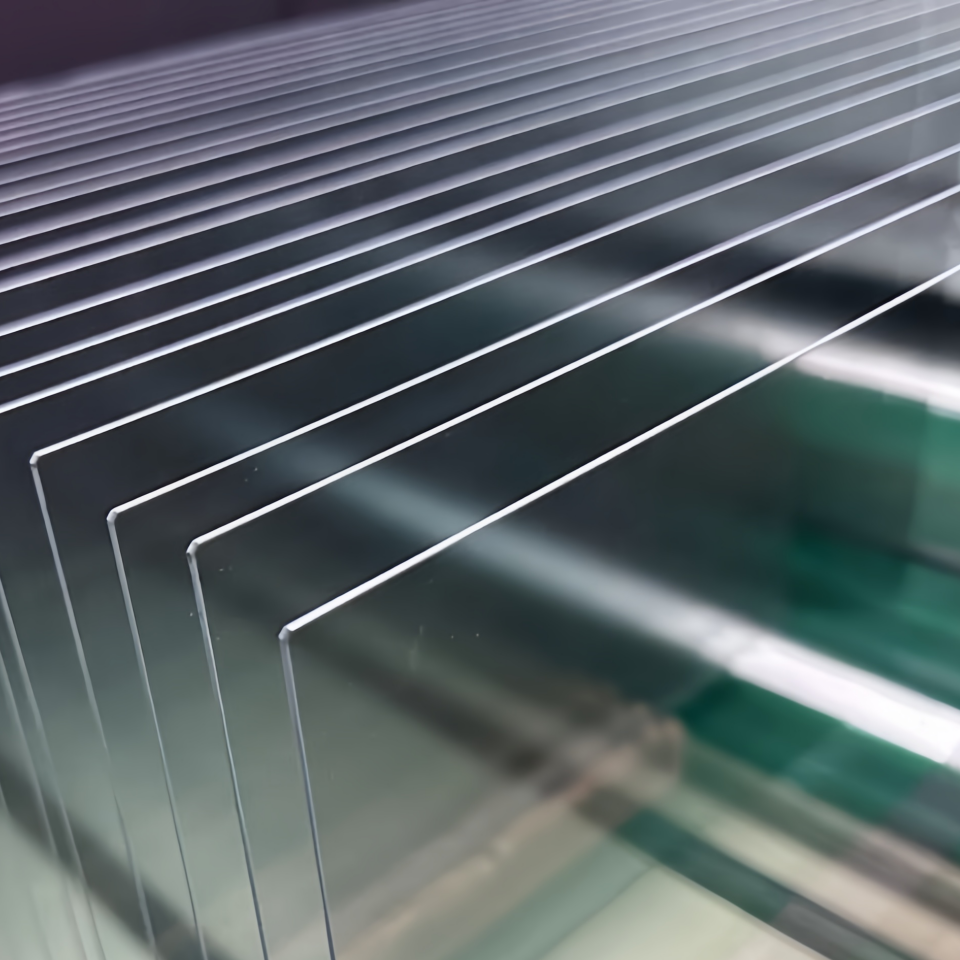
Aluminosilicate Glass for CNC machining
| Parameter / Property | Typical Value / Range | Description & Implication |
| Silicon Dioxide (SiO₂) | 55 - 65% | Forms the primary glass network. |
| Aluminum Oxide (Al₂O₃) | 15 - 25% | Key component that enhances thermal, mechanical, and chemical properties. |
| Alkali & Alkaline Earth Oxides (e.g., Na₂O, MgO, CaO) | 5 - 15% | Modifiers that influence melting point, workability, and ion exchange capability. |
| Thermal Properties | - | - |
| Coefficient of Thermal Expansion (CTE) | 4.0 - 6.0 x 10⁻⁶ /K | Very low expansion ensures outstanding dimensional stability and thermal shock resistance. |
| Strain Point | ~600 - 700 °C | Temperature at which internal stress is relieved; indicates high service temperature limit. |
| Annealing Point | ~700 - 800 °C | Temperature required for stress relief within a reasonable time. |
| Mechanical Properties | - | - |
| Density | ~2.5 - 2.7 g/cm³ | Moderate density, comparable to other technical glasses. |
| Knoop Hardness (HK) | ~500 - 650 | High surface hardness, providing excellent resistance to scratching and abrasion. |
| Young's Modulus (Modulus of Elasticity) | ~70 - 90 GPa | High stiffness, meaning it resists deformation under applied stress. |
| Bend Strength (as polished) | 50 - 150 MPa | The practical strength in application, highly dependent on surface finish and edge quality. |
| Electrical & Chemical Properties | - | - |
| Dielectric Constant (@1 MHz, 25°C) | ~6 - 7 | Good insulating properties for electronic applications. |
| Volume Resistivity (350°C) | ~10⁸ - 10¹⁰ Ω·cm | Maintains high electrical resistance at elevated temperatures. |
| Chemical Durability (Hydrolytic Class) | Class 1 (ISO 719) | Excellent resistance to water attack. Highly resistant to acids and alkalis. |
| Key Feature | Ion Exchange Capability | Surface can be chemically strengthened to dramatically increase compressive strength and crack resistance, making it suitable for durable covers and viewports. |
Surface Finishing & Secondary Processing
Screen Printing
Coating (e.g., Sputtering)
Sandblasting
Polishing / Grinding
Acid Etching
CNC Engraving
Painting / Enameling
Applies ceramic-based paint onto the surface, which is then fired at high temperature to fuse into a durable, colored coating.
Aluminosilicate Glass: Advantages & Challenges for High-Strength Applications
Aluminosilicate glass offers exceptional mechanical strength, thermal stability, and superior chemical durability, making it ideal for extreme-performance components. Key considerations for adoption include its higher material and processing costs, along with the inherent brittleness common to all glasses.
Benefits
Superior Thermal Performance: Its very low coefficient of thermal expansion (CTE) ensures exceptional dimensional stability and resistance to thermal shock, enabling reliable performance in applications involving high temperatures or rapid cycling.
Enhanced Mechanical Durability: The material’s high hardness, modulus of elasticity, and potential for ion exchange chemical strengthening allow for the design of thinner, lighter, yet highly robust components that resist scratches, abrasion, and mechanical impact.
Excellent Environmental Resistance: Outstanding chemical durability against water and corrosive agents ensures long-term functionality and clarity in harsh industrial, marine, or outdoor environments without degradation.
Design Flexibility & Precision: Excellent compatibility with precision CNC machining, drilling, and polishing processes allows for the fabrication of complex geometries, tight tolerances, and high-quality edge finishes critical for advanced assemblies.
High Electrical Insulation: Maintains high dielectric strength and volume resistivity at elevated temperatures, making it a reliable choice for insulating components in electrical and electronic housings.
Streamlined Development Cycle: Its stability and machinability support rapid prototyping and a smooth transition to volume production, reducing time-to-market for critical components.
Key Limitations to Consider
Higher Material Cost: The raw materials and manufacturing process for high-alumina content glass are more expensive than for standard soda-lime or even borosilicate glass, leading to a higher unit cost.
Increased Processing Difficulty & Cost: Its high hardness and mechanical strength require more energy, specialized tooling (e.g., diamond), and slower machining speeds for cutting, drilling, and finishing, increasing fabrication time and cost.
Limited Availability & Standardization: Compared to common glass types, it is a more specialized material with fewer suppliers and standard stock shapes/sizes, which can impact sourcing flexibility and lead times.
Design Sensitivity to Flaws: While strong, its performance is highly dependent on pristine surface and edge quality. Any micro-cracks or defects introduced during machining can significantly reduce its effective strength, necessitating meticulous post-processing like polishing.
Potential for Brittle Fracture: Like all glasses, it is inherently brittle and does not yield plastically under overload, meaning failure can be sudden if design limits are exceeded.
Aluminosilicate Glass: Applications & Products

Industrial Lighting: High heat resistance and thermal shock stability for lenses, reflectors, and viewports in ovens, furnaces, and high-power lighting systems.
Aerospace & Transport: Combines light weight with high strength for aircraft windows, armored vehicle vision blocks, and protective covers for sensors/signal lights.
Medical & Lab: Withstands autoclaving and harsh chemicals. Used in cuvettes, sight glasses for bioreactors, and durable sensor covers.
Specialty Optics: Precision-polishable substrate for durable lenses, military optics windows, and strong, thin AR/HUD displays.
FAQ: Aluminosilicate Glass for Product Development & Design
What are the primary advantages of aluminosilicate glass over standard glass?
Is this material suitable for thin, lightweight designs that still need to be durable?
How does it compare to borosilicate glass in terms of performance and cost?
Can it be precision-machined into complex shapes? What are the limitations?
How does the ion exchange chemical strengthening process work?
What are the key thermal properties for engineering calculations?
What industries or applications is it best suited for?
It is ideal for demanding applications including: consumer electronics (cover glass), aerospace/aviation (windows, sensors), industrial lighting (high-temperature lenses), medical/lab equipment (autoclavable components), and specialized optics.
Q8: What are the main cost and lead time drivers for this material?
What are the main cost and lead time drivers for this material?
Contact Us
Your feedback fuels our growth, and your questions drive our solutions.
We value your feedback, inquiries, and suggestions. Please feel free to get in touch with us
General inquiries
Please contact us via sales@bo-glass.com, and we will reply to you as soon as possible.
Interested to work with us
Drop your resume at info@bo-glass.com
and we will get back to you shortly.
We uses the contact information you provide to us to contact you about our relevent content, products, and services.