
Custom Hot bend glass Services
What is Bent Glass?
Hot-bent glass refers to the flat glass heated and formed on the curved surface blank by its weight or by adding a counterweight. The cut glass is placed on a mold designed according to the curvature, put into a heating furnace, heated to the softening temperature, softened, and then annealed to make hot-bent glass.
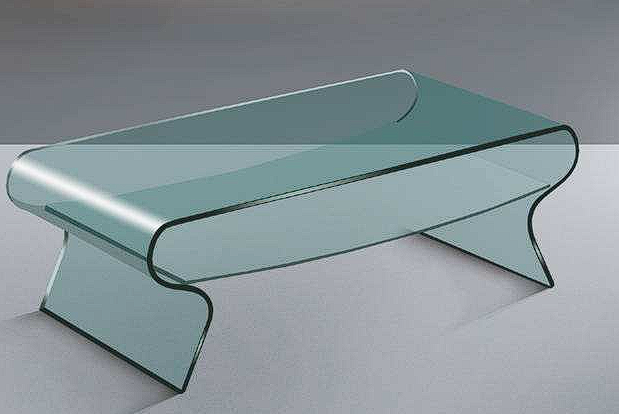
Our Bend glass fabrication capabilities
Transform flat glass into precision-curved solutions with BO-GLASS. Our advanced thermal forming technology crafts flawless, custom curves for architectural facades, automotive parts, or bespoke interiors. We handle thick borosilicate glass and multi-layer composites, ensuring structural strength and clarity.
Partner with BO-GLASS for curved glass that elevates design and performance.
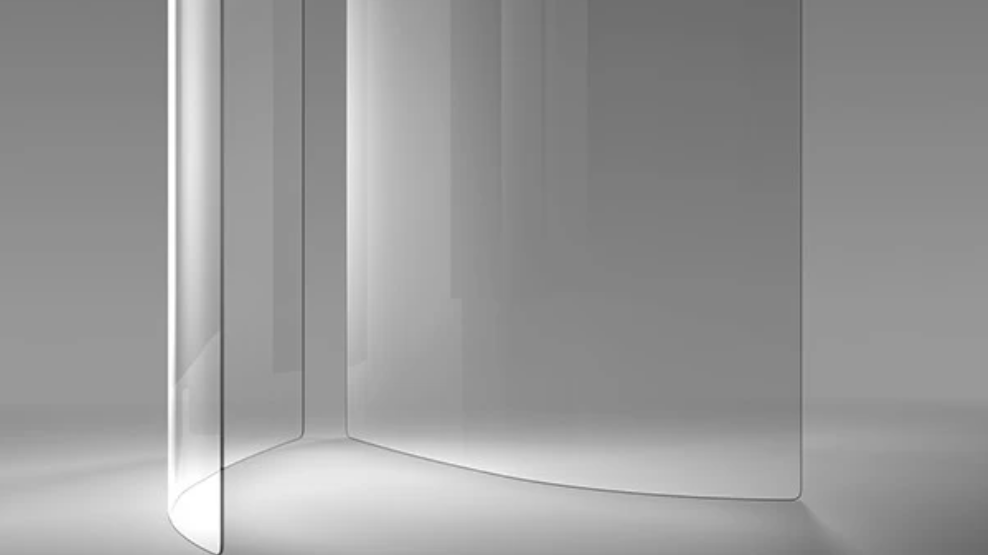
Single bent glass
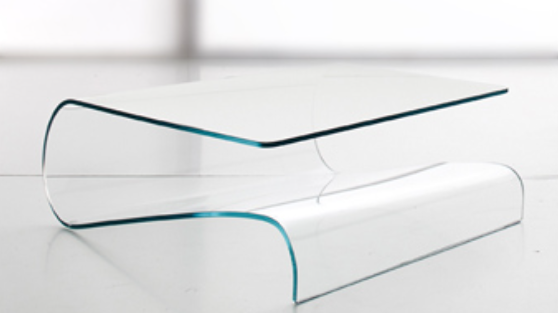
Double-bent glass
Our factory and our partner factories
BO-GLASS coordinates our core facility with a dedicated network of local specialists to deliver custom glass components. You benefit from our collective expertise while we manage all communication, quality control, and logistics for a seamless experience.


Our applications of glass processing technology
We are committed to providing our customers with one-stop solutions, from prototype development to mass production, by addressing the entire value chain of materials science, engineering design, and precision manufacturing. Our goal is to transform the ultimate performance of glass materials into a core competitive advantage for your products.

Aerospace Glass
Accelerate your aerospace projects with custom glass components, from precision prototypes to volume production.

Glass lamp shade for outdoor lighting
Custom heat-resistant glass for outdoor lighting. From precise prototypes to full-scale production, we can assist you every step of the way.

Artisan Glass Gifts & Custom-Made Decor

Glass Lampshade Manufacturing
Trustworthy expert in glass manufacturing solutions


At BO-GLASS, our quality control begins with comprehensive design review and DFM analysis to optimize manufacturability. Throughout production, we implement rigorous process controls with material certification and in-process verification.
We utilize advanced metrology equipment including CMM, spectrophotometers, polariscopes, and surface roughness testers to validate dimensional accuracy, optical properties, stress distribution, and surface quality.
Our quality assurance includes first-article inspection, dimensional verification, and functional testing. Each component undergoes final inspection by certified technicians. Certified to ISO 9001:2015, we guarantee all components meet the highest standards for precision and reliability in every delivery.
BO-GLASS Product Release Standard
Surface Quality: Smooth and uniform, free from pits or cracks. Minimal mold contact marks are acceptable.
Dimensional Integrity: Consistent contour and thickness with tight tolerances.
Material Clarity: High-quality optical materials ensure excellent clarity and uniformity.
Cleanliness: All parts are thoroughly cleaned, free from residues or visible handling marks.
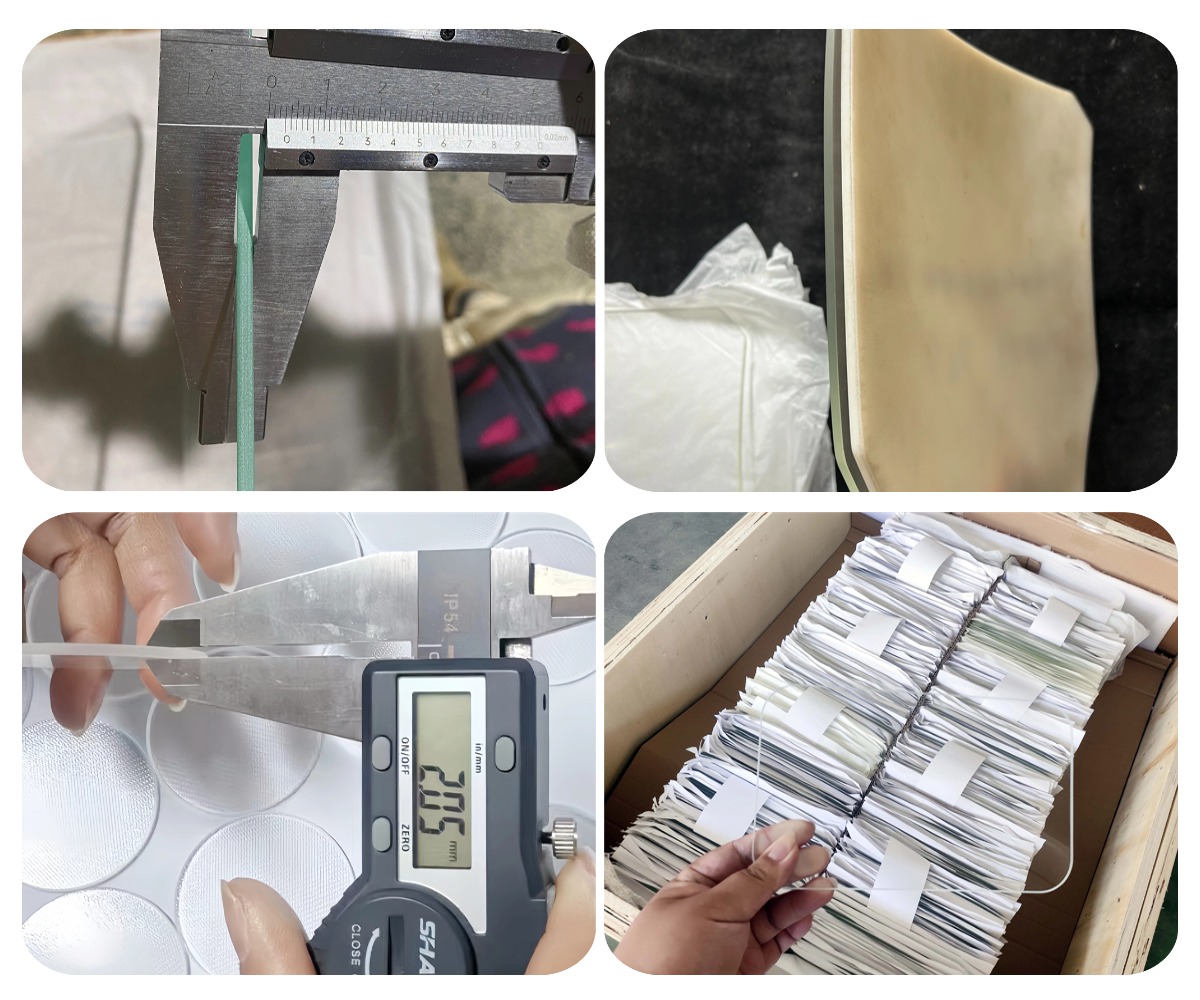
Related knowledge
- “The stuck car” phenomenon occurs in hot-bending furnace production
- The shape of the glass after thermal bending does not meet the requirements
- The fit of two pieces of glass after simultaneous heat bending is inconsistent
- The fire occurred during the hot bending process
- Glass cracking caused by heat bending
- How to operate thermal detour?
Hot-bent glass quality requirements and testing
(1) Glass sheet The original sheet of hot-bending glass should not be non-float glass (except embossed glass). The original glass should meet the following technical requirements: float glass should meet the requirements of GB 11614, tinted glass should meet the requirements of GB/T 18701, coated glass should meet the requirements of GB/T 18915.1~GB/T 18915.2, and embossed glass should meet the criteria of JC/T 511.
(2) Edge grinding The glass should be edge-grinded before hot bending.
Dimensional deviation requirements and testing methods
Glass strengthening and thermal processing technology
①The height of heat-bent glass refers to the size of a straight side of the glass perpendicular to the horizontal arc. The height deviation should comply with the provisions of the following table. Height deviation detection: Use a steel tape measure with a minimum scale of 1mm to measure and take the maximum value.
| Height C | Glass Thickness < 12 | Glass Thickness > 12 |
|---|---|---|
| C ≤ 2000 | ±3.0 | ±5.0 |
| C > 2000 | ±5.0 | ±5.0 |
| Arc Length D | Glass Thickness < 12 | Glass Thickness > 12 |
|---|---|---|
| D ≤ 1520 | ±3.0 | ±5.0 |
| D > 1520 | ±5.0 | ±5.0 |
Requirements and testing methods for fit deviation
| Arc Length D | Glass Thickness < 12 | Glass Thickness > 12 |
|---|---|---|
| D ≤ 2440 | ±3.0 | ±3.0 |
| 2440 < D ≤ 3350 | ±5.0 | ±5.0 |
| D > 3350 | ±5.0 | ±6.0 |
Arc surface bending deviation requirements and detection methods
| Height C | Glass Thickness < 6 | Glass Thickness 6–8 | Glass Thickness 10–12 | Glass Thickness > 12 |
|---|---|---|---|---|
| C ≤ 1220 | 2.0 | 3.0 | 3.0 | 3.0 |
| 1220 < C ≤ 2440 | 3.0 | 3.0 | 3.0 | 5.0 |
| 2440 < C ≤ 3350 | 5.0 | 5.0 | 5.0 | 5.0 |
| C > 3350 | 5.0 | 5.0 | 5.0 | 6.0 |
Distortion deviation requirements and detection methods
| Height C | Arc Length < 2440 | Arc Length 2440–3050 | Arc Length 3050–3660 | Arc Length > 3660 |
|---|---|---|---|---|
| C ≤ 1830 | 2.0 | 5.0 | 5.0 | 5.0 |
| 1830 < C ≤ 2440 | 5.0 | 5.0 | 5.0 | 8.0 |
| 2440 < C ≤ 3050 | 5.0 | 5.0 | 6.0 | 8.0 |
| C > 3050 | 5.0 | 6.0 | 6.0 | 9.0 |
Stress requirements and test methods
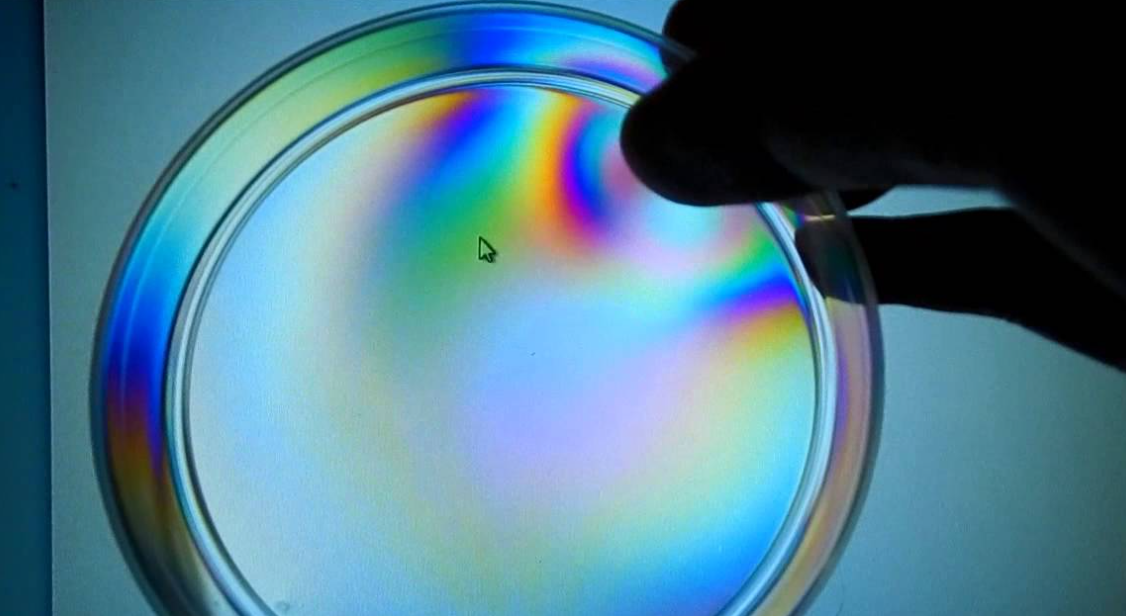
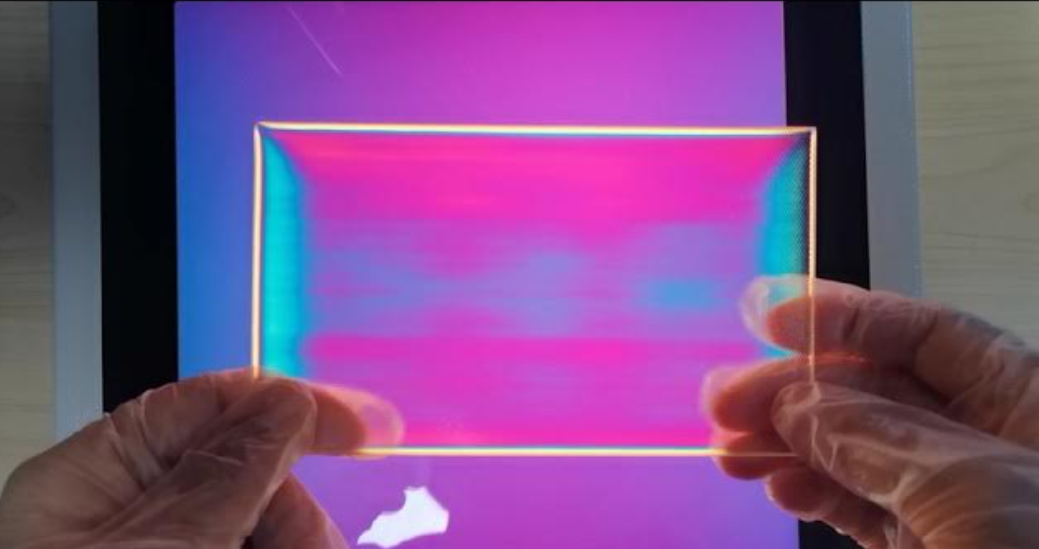
Thickness stress is the internal stress of glass caused by the temperature gradient in the thickness direction during the cooling process. The core of the plate is tensile stress and the surface is compressive stress.
Plane stress is the stress caused by the plane temperature gradient in each area of the glass plate due to factors such as shape and mold. The plane stress remains unchanged in the thickness direction of the glass.
| Glass Thickness (mm) | 3 | 4 | 5 | 6 | 8 | 10 | 12-19 |
|---|---|---|---|---|---|---|---|
| Stress Value (MPa) | 0.70 | 0.90 | 1.20 | 1.40 | 1.70 | 2.20 | 2.10 |
(3) The stress detection uses the Senarmont stress measurement method. The optical elements of the stress meter used in this method and their direction-matching relationship are shown in Figure 2-11.
The polarization directions of the polarizer and the analyzer must be 45° to the reference line, and they must be perpendicular to each other. The direction of one of the principal stresses of the sample under test must be consistent with the reference line, that is, the principal stress direction is 45° to the polarization direction.
The analyzer can be rotated, and the rotation angle is indicated by a scale. When using, first turn the analyzer to the 0 scale; then place the sample to be tested, adjust the sample direction so that the principal stress direction of the measured point is 45° to the polarization direction; then turn the analyzer until the measured point becomes the darkest; record the angle reading, each degree is equivalent to 3.14mm optical path difference. According to the rotation direction, it can be determined whether the stress consistent with the horizontal line is tensile stress or compressive stress. If turning the analyzer clockwise can make the measured point darker, it is tensile stress, otherwise, it is compressive stress.
Take the thickness stress measurement as an example: take a sample from the hot-bent glass, the size is 25mm×200mm. Place the sample upright on the instrument, the length direction of the sample is consistent with the 0°~180° scale line direction on the instrument panel, the sample is at a height of 25mm, and the light is transmitted through the upper and lower end faces of the sample. Turn the polarizer clockwise until the center of the end face just changes from blue to brown. Read the rotation angle reading on the analyzer.
FAQ: Hot-Bent Glass Manufacturing
What is the production method of heat-bent glass?
According to the shape and size of the hot-bent glass products, the shape and size of the original glass sheet required before hot bending can be accurately calculated. At present, there is a calculation software that can make a template according to the parameters such as the chord length, arc, angle, radius, etc. of the hot-bent glass, and use the conversion software and optimized cutting layout software to make a template, and then perform manual or mechanical cutting according to the template.
The cut glass needs to be edged. First, use the diamond grinding wheel to grind the sharp edge of the cut glass, and then use the resin wheel for fine grinding (fine grinding), and the zinc oxide felt wheel for polishing. According to the needs, it can be ground into an arc edge, a flat edge with chamfers, an oval edge, a flat edge with edges, etc. For special-shaped glass, special-shaped edge grinding machines, template edge grinding machines (a template is made according to the shape and size of the processed glass, and the edge grinding machine grinds and polishes the edge of the glass blank according to this template), and profiling edge grinding machines (a lever-type profiling rod is used, and a variable frequency stepless speed regulation rough grinding, fine grinding or polishing grinding wheel is used to grind and polish the periphery of the glass blank).
The glass after edge grinding needs to be cleaned, and a washing and drying machine is used for mass production. The importance of the cleaning process cannot be ignored. Oil stains and dirt on the glass surface remain on the glass surface after hot bending, which may cause waste.
The washed and dried flat glass enters the hot bending furnace for hot bending treatment and becomes a hot bent glass product after passing the inspection.
Gravity sedimentation method
The gravity sedimentation method is a method of bending glass under its weight after heating it to the softening temperature. The gravity sedimentation method can be divided into two types: mold frame self-weight softening bending method and hanging self-weight softening bending method.
Mold frame self-weight softening bending, also known as the sedimentation method, is a method in which thermoplastic glass is bent under its weight in a heating furnace and falls on a mold of a certain shape. The equipment used in this method is simple. The periphery of the glass is bent with a mold, and there will be no mold marks in the middle part. Its optical quality is often better than that of hard-surface pressed and bent products.
Hanging self-weight softening bending method: Holes are placed on both sides of the flat glass, and it is suspended with metal wire or special clamps. It is heated to above the softening temperature of the glass and bent due to its weight.
The self-weight method can produce curved glass with deep curvature on all sides and curved glass for interlayer. When using the self-weight method, the glass may be deformed during local heating. Therefore, it is necessary to pay attention to the heating amount of each part to achieve a good transition state, and strict requirements are placed on the temperature curve and time during heating and bending.
Compression bending method
The male mold softening bending method puts the glass flat on the male mold and heats it above the softening temperature, and the glass will bend along the shape of the male mold.
The female mold softening bending method puts the glass flat on the female mold, heats it above the softening temperature of the glass, and the glass bends into the shape of the female mold.
The female mold collapse bending method puts the glass flat on the female mold, heats it above the softening temperature of the glass, and the glass collapses into the female mold form. In this hot bending forming method, the glass must be heated above the softening temperature, which can also be included in the scope of hot melt glass. Generally, softening bending can only form shallow reliefs, while collapsed glass collapses in the model and can form relatively deep patterns, so the three-dimensional relief on the surface of collapsed curved glass is more substantial. When the glass completely collapses into the mold wall, a closed space layer will be formed, causing air to accumulate and enter the mold itself, causing it to break. For this reason, several small holes are drilled at the thinnest part of the bottom of the mold to facilitate the removal of air.
The compression mold bending method places the glass flat on the female mold, heats it to soften it, and uses the corresponding male mold to apply pressure. This method can accurately bend it into the required shape with high curvature accuracy.
The disadvantage of the compression mold bending method is that the compression mold cannot be made into the final shape required by the glass, and the glass is always flatter than the mold in the end. Solutions: First, after many tests, the exact mold is made to make the bent glass within the allowable error range; second, the periphery of the male and female molds is adjusted with screws so that it can be quickly adjusted to adapt to glass of different thicknesses and different working conditions; third, for glass that requires more and more refinement, such as automotive glass, a hinged female mold is used to wrap the glass around the male mold. The central part of the female mold is often a fixed part with hinges and blades at both ends. After the central part is pressurized and formed, the two blades slowly bend and wrap the glass around the male mold.
Flexural bending method
How to do hot bending annealing?
Temperature control during annealing is very important. If the annealing temperature is too high, the glass may bend or have pits; if the annealing temperature is too low, the residual stress inside the glass cannot be effectively eliminated and the strength of the glass will be affected. The most important thing to note is that during annealing, the cooling speed must be uniform and slow to achieve the effect of eliminating internal stress.
What is the minimum bending radius you can achieve?
What types of glass can be bent?
Soda-Lime Float Glass: The most common and cost-effective option.
Borosilicate Glass: For high thermal shock resistance.
Ultra-Clear Glass: For applications requiring superior clarity and color neutrality.
How do you control optical distortion in the bent glass?
Can the glass be tempered after bending?
What are your tolerances for shape consistency and radius?
Can you perform any cutting or drilling on the glass after it's bent?
What information do you need to provide a quote?
A detailed drawing with dimensions (radius, chord, arc length).
Glass type, thickness, and color.
Quantity required.
Any post-bending requirements (e.g., tempering, edge polishing).
What is the lead time for mold creation and production?
Our other manufacturing capabilities
We can provide you with a variety of glass processing techniques.
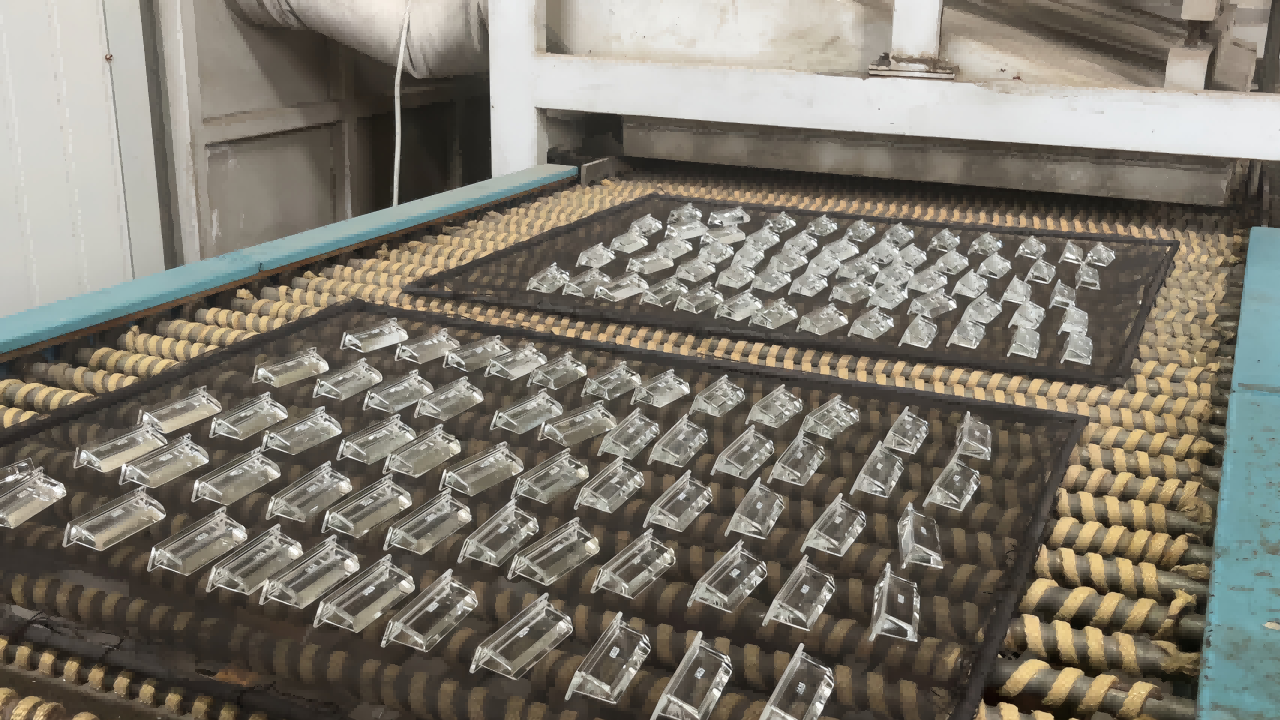
Physical Glass Tempering Services
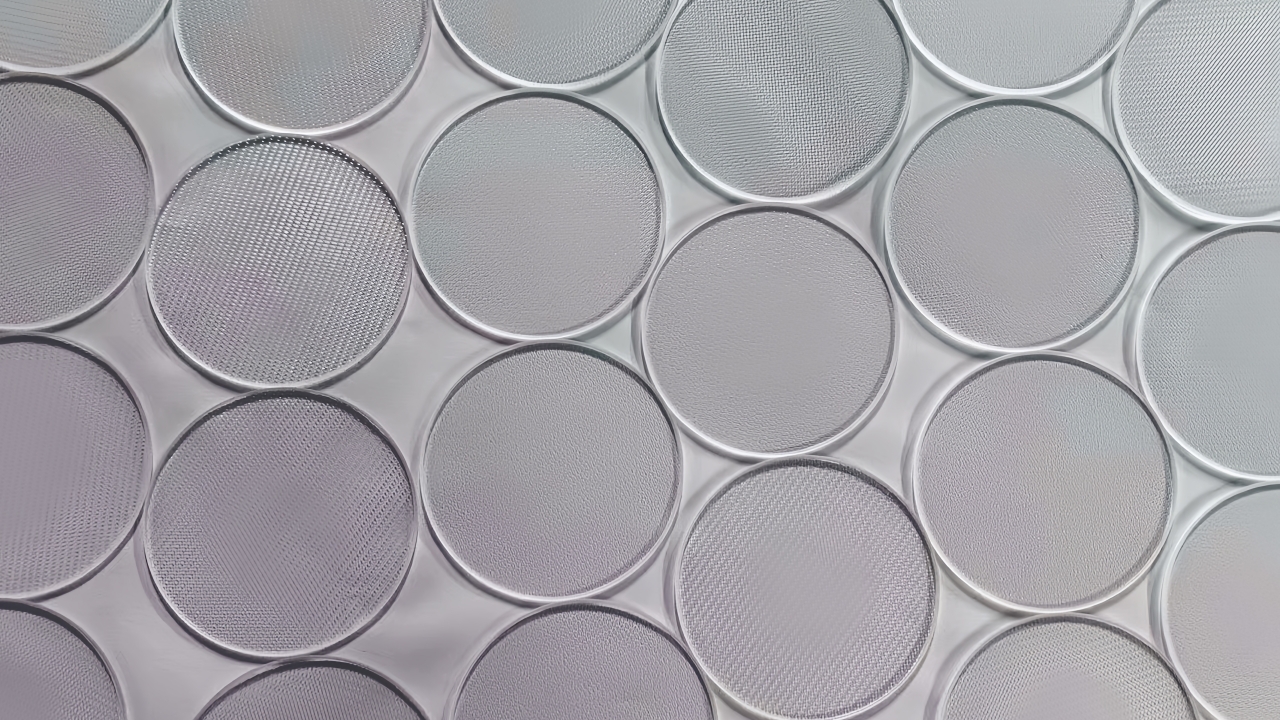
Surface Lapping & Polishing
We provide professional lapping and polishing services for specialized glass components.
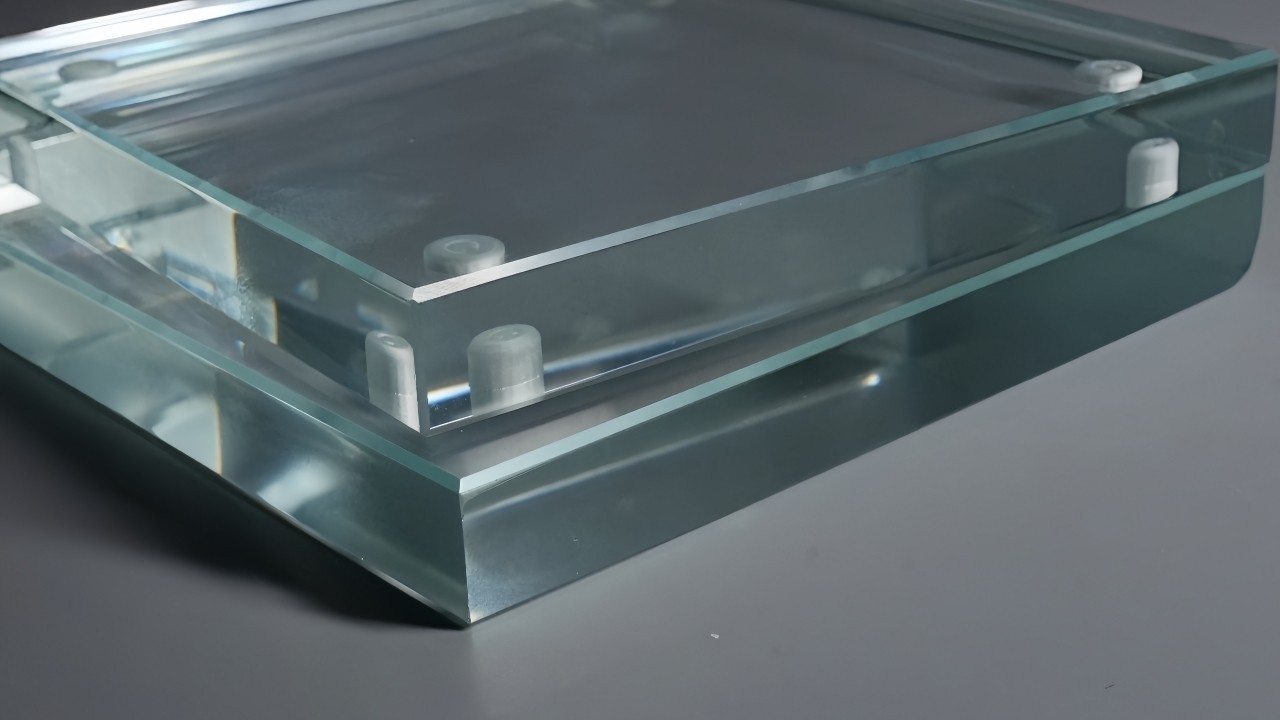
Glass Edge Grinding & Polishing Services
Precision glass edge grinding and polishing for safety, aesthetics, and flawless results in any application.

Ultrasonic Cleaning Service
Contact Us
Your feedback fuels our growth, and your questions drive our solutions.
We value your feedback, inquiries, and suggestions. Please feel free to get in touch with us
General inquiries
Please contact us via sales@bo-glass.com, and we will reply to you as soon as possible.
Interested to work with us
Drop your resume at info@bo-glass.com
and we will get back to you shortly.
We uses the contact information you provide to us to contact you about our relevent content, products, and services.