
Manufacturing and Design Guidelines
Molten Glass Blowing

This guide explains everything you need to know about Molten Glass Blowing. Understand the fundamentals of the technology and quickly learn practical design techniques to save time and reduce costs.
Molten Glass Blowing basics
Molten Glass Blowing process
Advantages and disadvantages
Technical Standards for Molten Glass Blowing
Understand our company’s standards to provide professional data guidance to our clients.
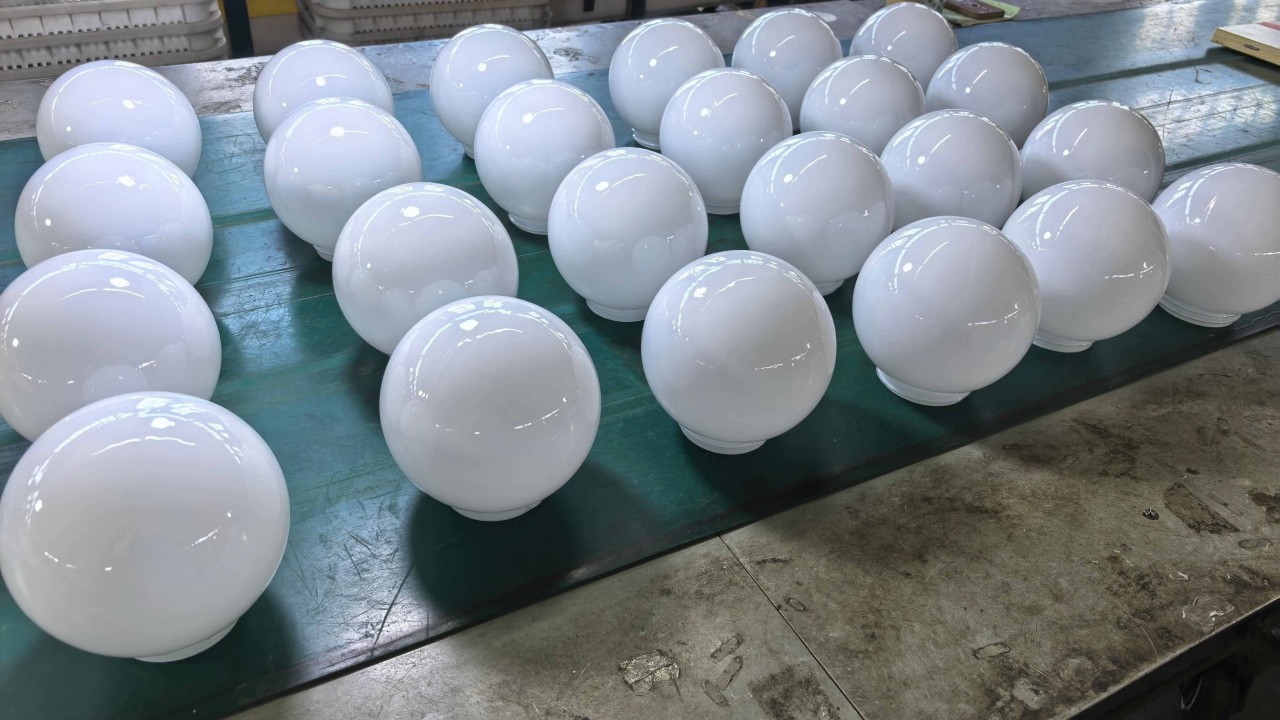
Molten Glass Pressing cost introduction
Use these 6 tips to minimize the costs of glass billet pressing technology
Part 1
Molten Glass Blowing basics
In this section, we’ll answer these questions and showcase some common precision glass molding products to familiarize you with the basic principles and applications of this technology.
What is Molten Glass Blowing?
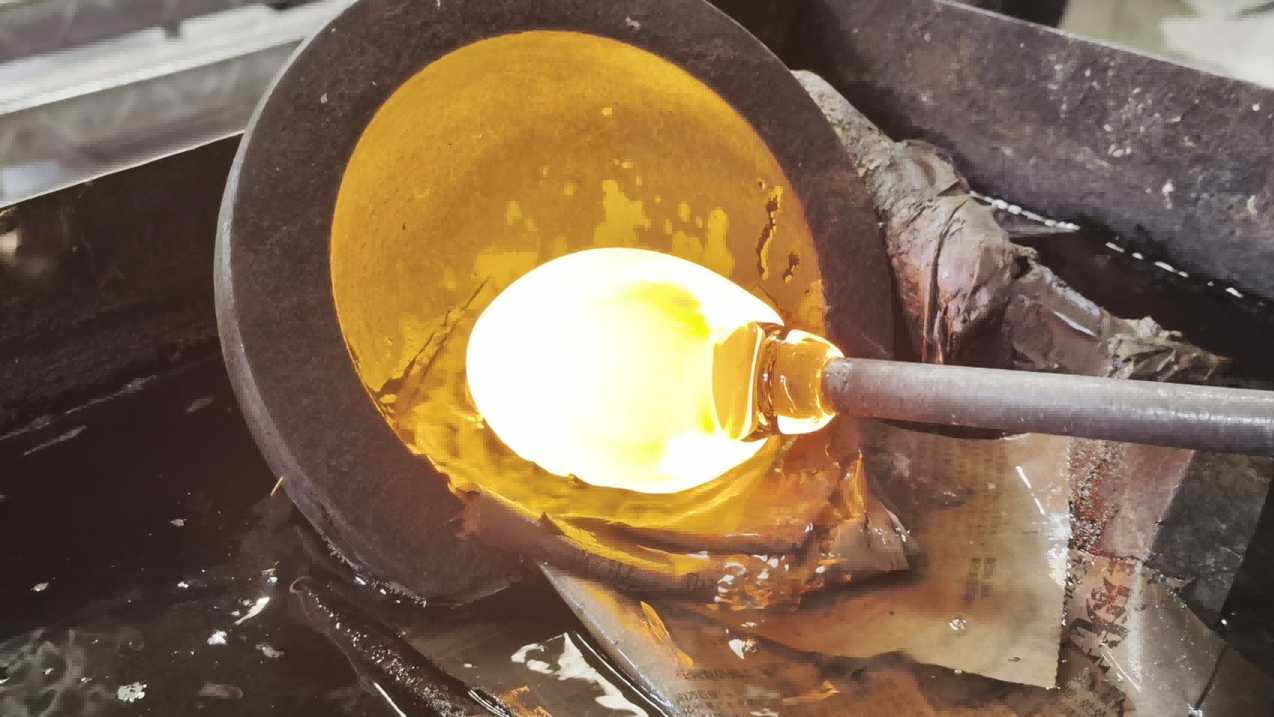
What is the Principle of Molten Glass Blowing
Part 2
Molten Glass Blowing process
1. Classical Handicraft Era (c. 1st Century BCE – 18th Century): Foundation of the Craft and Artistic Development
Core Drivers: Luxury consumption, religious rituals, and early scientific exploration.
Technological Milestones:
Invention (1st Century BCE, Syria-Phoenicia Region): Craftsmen discovered that molten glass could be gathered from the furnace using an iron blowpipe and inflated to form hollow bubbles. This replaced the time-consuming core-forming method, representing a revolutionary breakthrough in efficiency.
Mold-Assisted Blowing (Roman Empire Period): Hot glass bubbles were blown into clay or stone molds carved with decorative patterns, enabling “precise replication of surface textures.” This made standardized decoration possible, significantly enhancing production capacity and consistency.
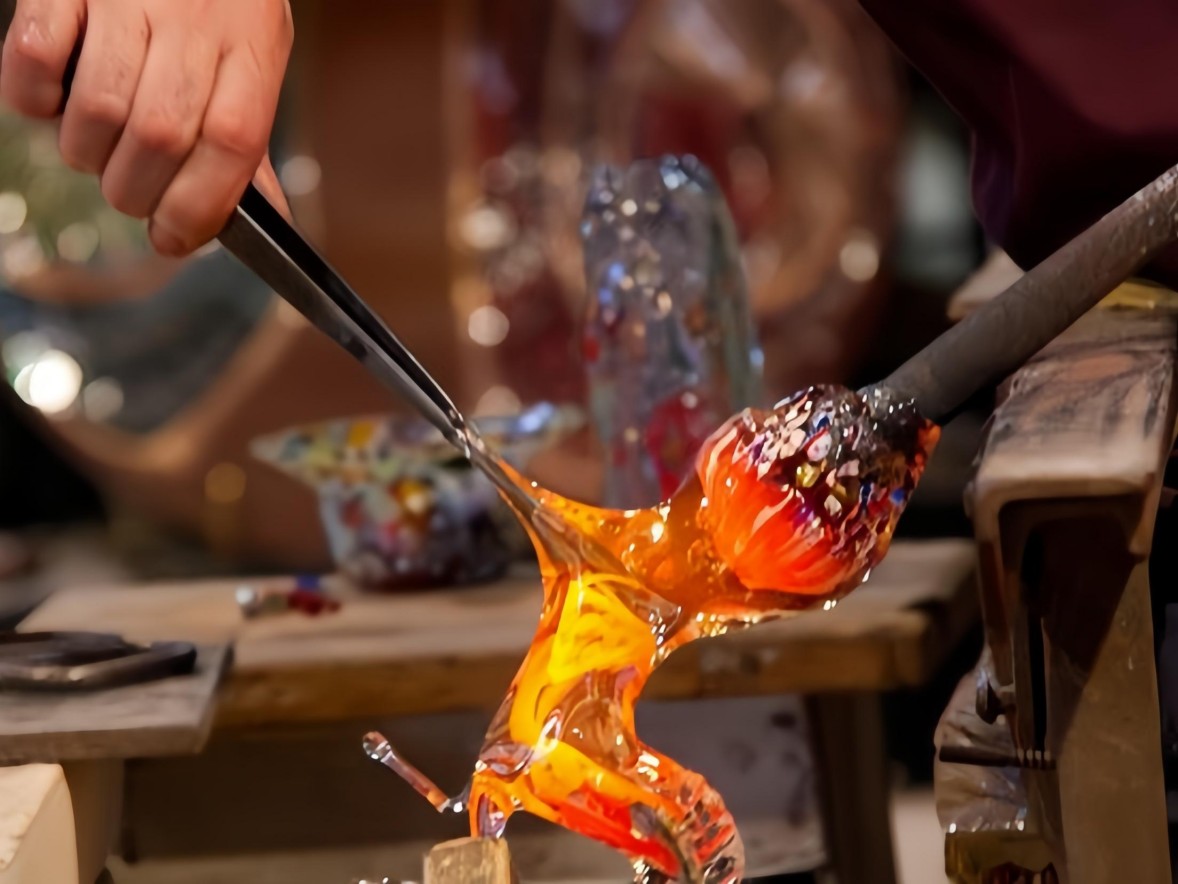
“Venetian-Style” Free Blowing (Renaissance, Murano Island): Through extremely skilled manual techniques (using tools such as pincers, shears, and molds), artisans produced extremely thin, intricately shaped art glass objects without fully enclosed molds. This represented the pinnacle of complex shaping capability in the handicraft era.
Capability Characteristics and Boundaries:
Capabilities: Enabled the creation of hollow glass vessels from scratch, producing everything from simple bottles and jars to extremely complex artistic treasures.
Boundaries: Completely dependent on individual artisan skill and physical effort. Product dimensions and wall thickness uniformity were highly inconsistent, making true standardization impossible. Production capacity was extremely low, resulting in aristocratic luxury items.
2. Mechanization Embryonic Era (19th Century): Impact of the Industrial Revolution
Core Drivers: Demands from the chemical industry, pharmaceutical standardization, and early food packaging.
Technological Milestones:
Pneumatic Semi-Automatic Bottle Blowing Machines (1820s): Mechanical bellows replaced human lung power for blowing, reducing labor intensity and providing more stable air pressure.
Key Bottleneck Breakthrough—Press-and-Blow Method Prototype (1880s): To solve the problem of uneven bottle necks in pure blowing processes, a method was invented where a glass preform with a precise neck was first pressed using a mold, then expanded by blowing. This established the core process principle of modern bottle manufacturing.
Capability Characteristics and Boundaries:
Capabilities: Began achieving standardized bottle necks, laying the foundation for sealing technologies (such as cork stoppers and crown caps). Production pace accelerated.
Boundaries: Still semi-mechanized, with many steps relying on manual labor (gathering, transferring). Improvements in production capacity and consistency were limited.
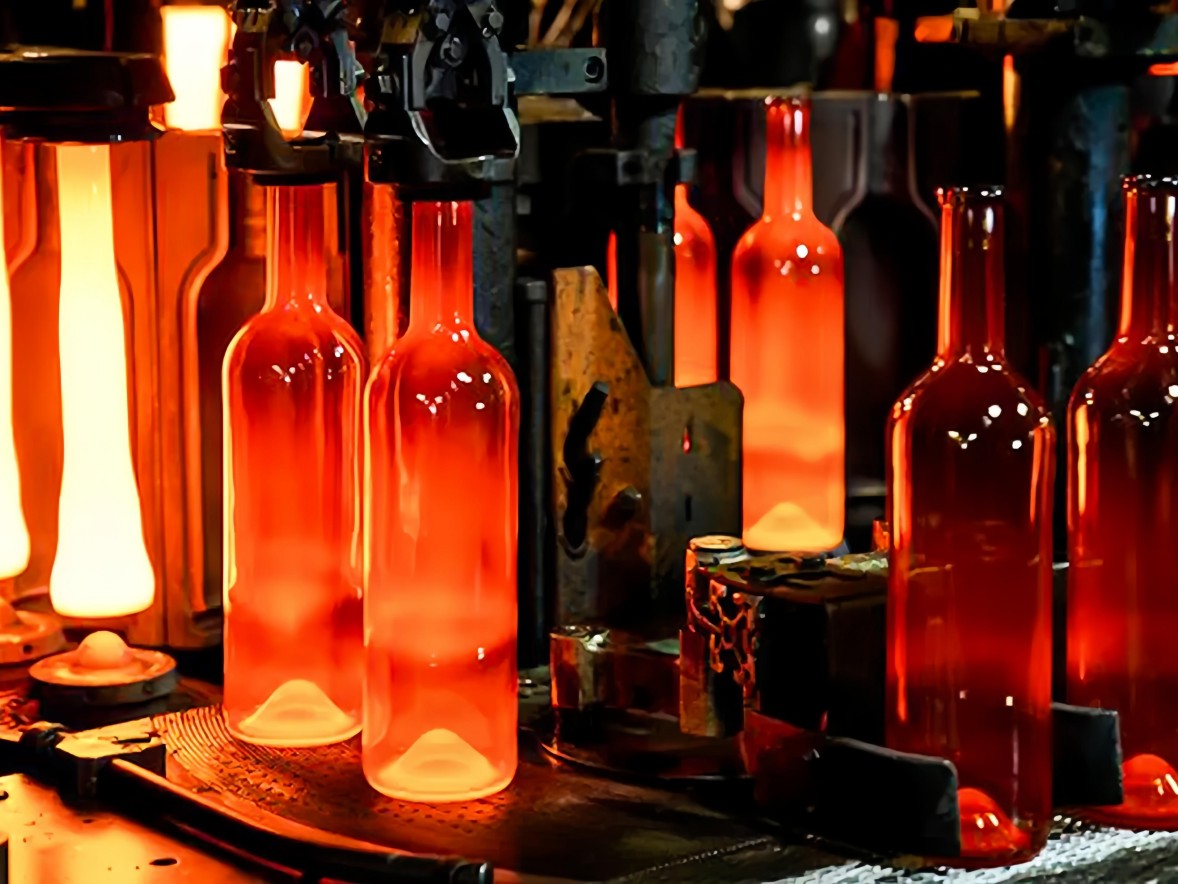
Detailed Process of Molten Glass Blowing
At its core, the process represents a dynamic balance between pressure, viscosity, and heat transfer:
Step One: Material State Preparation
The glass is heated to the “working point” temperature range (viscosity approximately 10³–10⁴ Pa·s). At this stage, the glass behaves as a non-Newtonian fluid, possessing sufficient to deform under air pressure while maintaining enough viscoelasticity to retain its shape without collapsing.
Step Two: Preform Formation and Gas Introduction
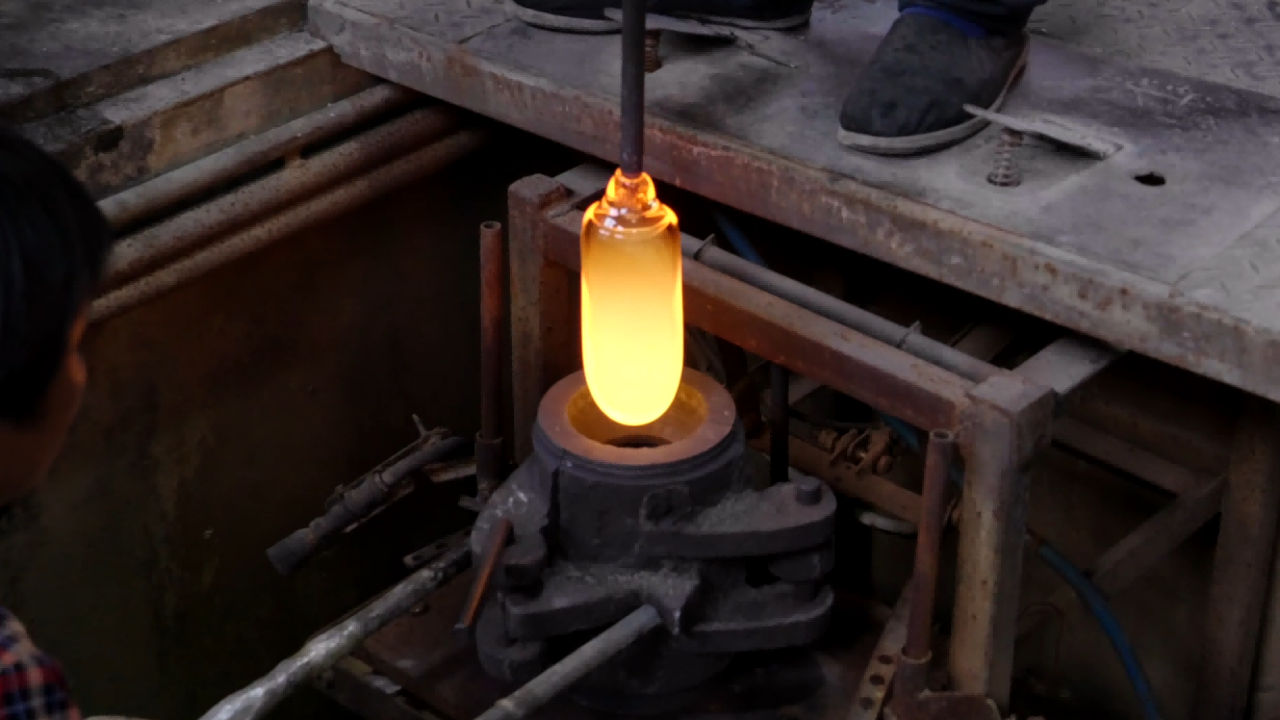
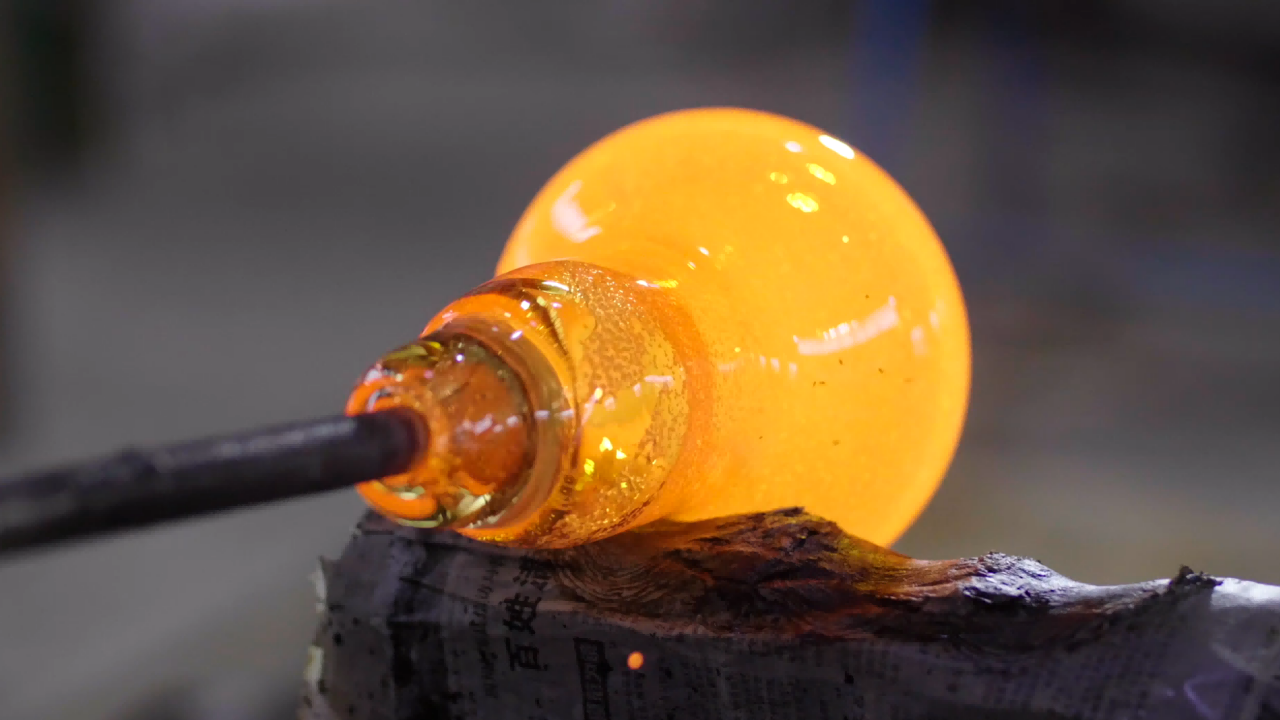
An appropriate quantity of molten glass is gathered to form a gob or lump, which is attached to a blowpipe or feeding mechanism. Compressed air is introduced into the interior of the glass through the blowpipe or a gas channel system within the mold, forming an initial air cavity. In manual blowing, this relies on the artisan’s lung pressure; in mechanical blowing, it is controlled by precision pneumatic systems.
Step Three: Viscous Expansion and Shape Constraint
Gas pressure builds within the enclosed glass interior, forcing the glass walls to expand uniformly outward. The forming path is constrained by two methods:
Free Blowing: Relies primarily on the of centrifugal force from rotation, gravity, and surface tension to create axisymmetric organic forms.
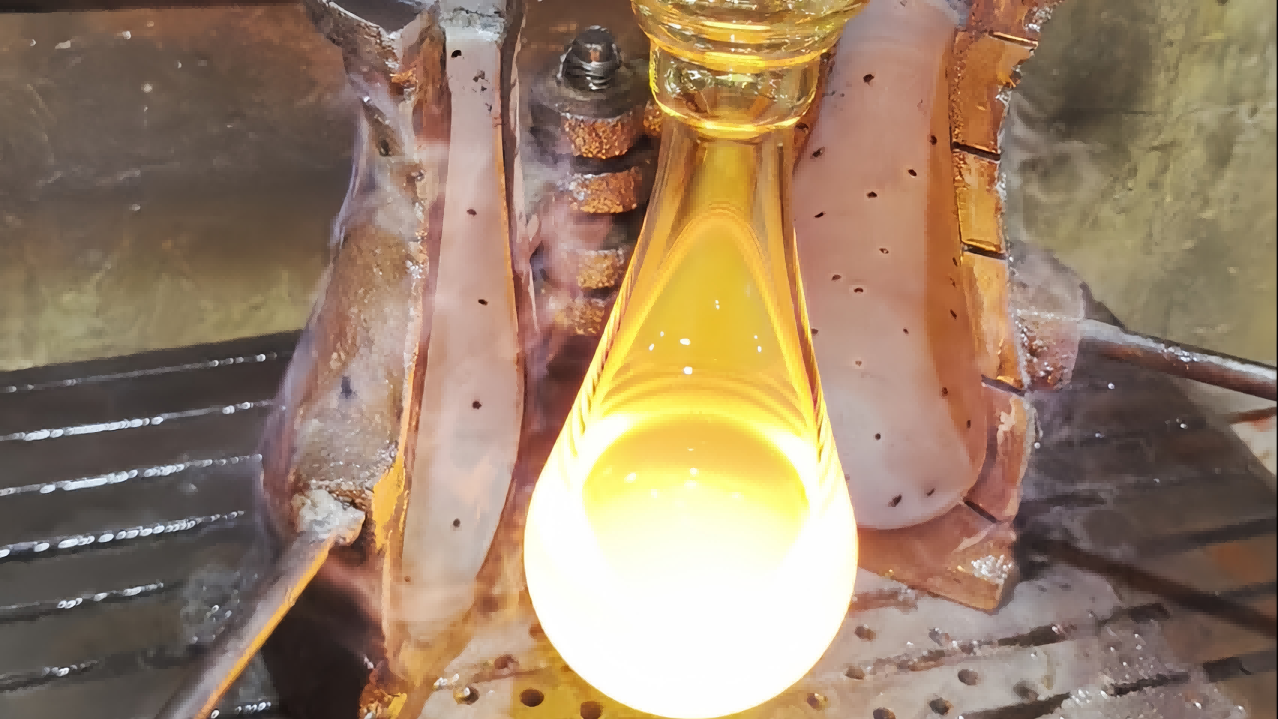
Mold Blowing: The expanding glass is confined within the cavity of a metal mold, forcing the glass to completely replicate the geometry and texture of the mold’s inner surface. Molds are typically designed with vent channels to allow trapped air to escape.
Step Four: Thermodynamic Solidification and Setting
During expansion, the glass surface in contact with the mold (or air) cools rapidly due to heat exchange, causing viscosity to increase sharply and forming a solidified outer layer. The internal glass continues limited expansion or ceases deformation under the constraint of this outer shell. Precise control of mold temperature is critical—it must be high enough to ensure the glass flows sufficiently to fill, yet cool enough to enable rapid solidification for demolding.
Step Five: Annealing to Eliminate Thermal Stress
The formed product must be immediately transferred to an annealing lehr. Through a strictly controlled cooling program, permanent thermal stresses caused by uneven cooling are eliminated, preventing spontaneous cracking and stabilizing the physical properties of the glass.
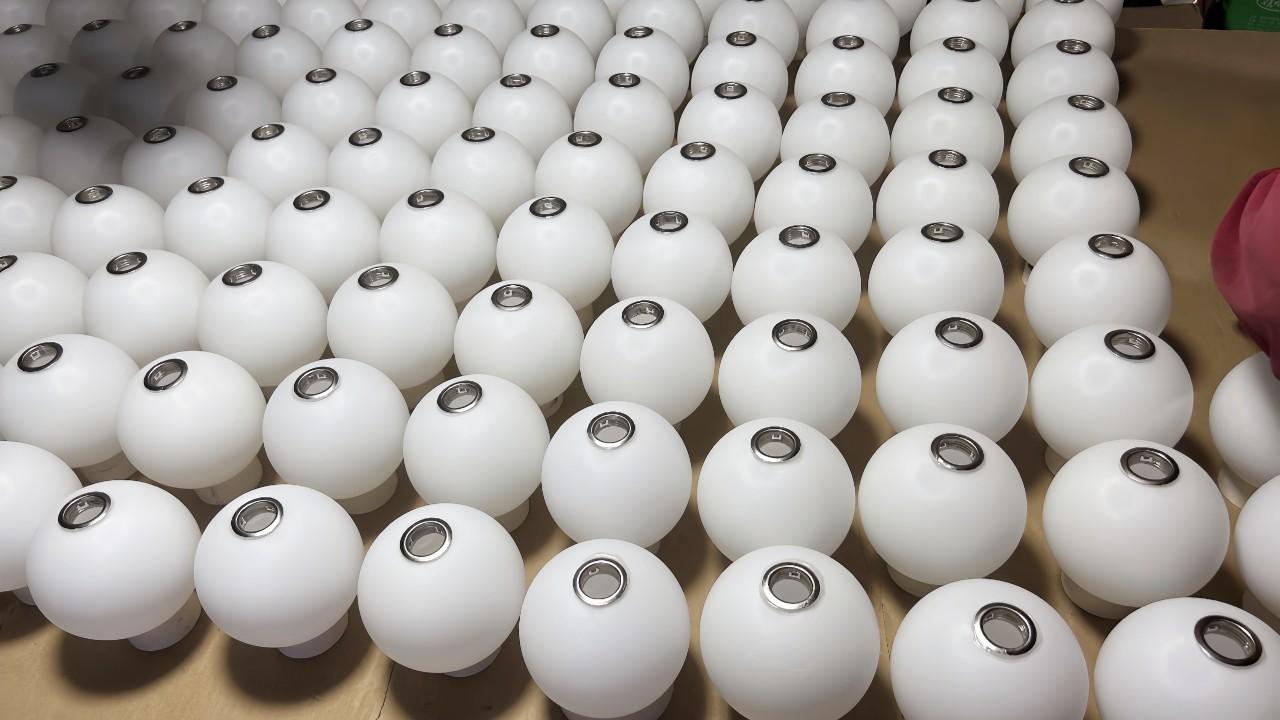
2. Dimensional Range and Precision Capability
Broad Dimensional Range: It can process everything from micro-devices (e.g., capillaries with an inner diameter as small as 0.1 mm, jewelry components) to large installations (e.g., customized glass piping systems over 2 meters in length, large-scale art installations).
Precision Characteristics: Precision is highly dependent on the artisan’s skill level. In the hands of a skilled technician:
Dimensional Control: Key dimensions (such as tube diameter and length) can be controlled within the range of ±0.2mm to ±1mm.
Wall Thickness Control: Relatively uniform wall thickness can be achieved through rotational blowing and stretching. However, for complex shapes, wall thickness uniformity is not as good as with molded products.
This is a type of precision achieved through “hand-eye coordination,” not the digital precision of a machine tool.
Perfect Retention of Substrate Characteristics: The processing is a purely physical thermal shaping process that does not alter the inherent properties of borosilicate glass: low expansion, thermal shock resistance, high chemical stability, and high light transmission.
No Mold Contact Contamination: The product does not come into contact with a mold. Its surface is a fire-polished surface with high purity, making it especially suitable for chemical and biological laboratory ware and semiconductor components that demand extremely high cleanliness and corrosion resistance.
Controllable Stress: Through skilled flame annealing (“fire polishing”) and subsequent programmable annealing, thermal stress can be effectively eliminated, resulting in products with high strength and safety.
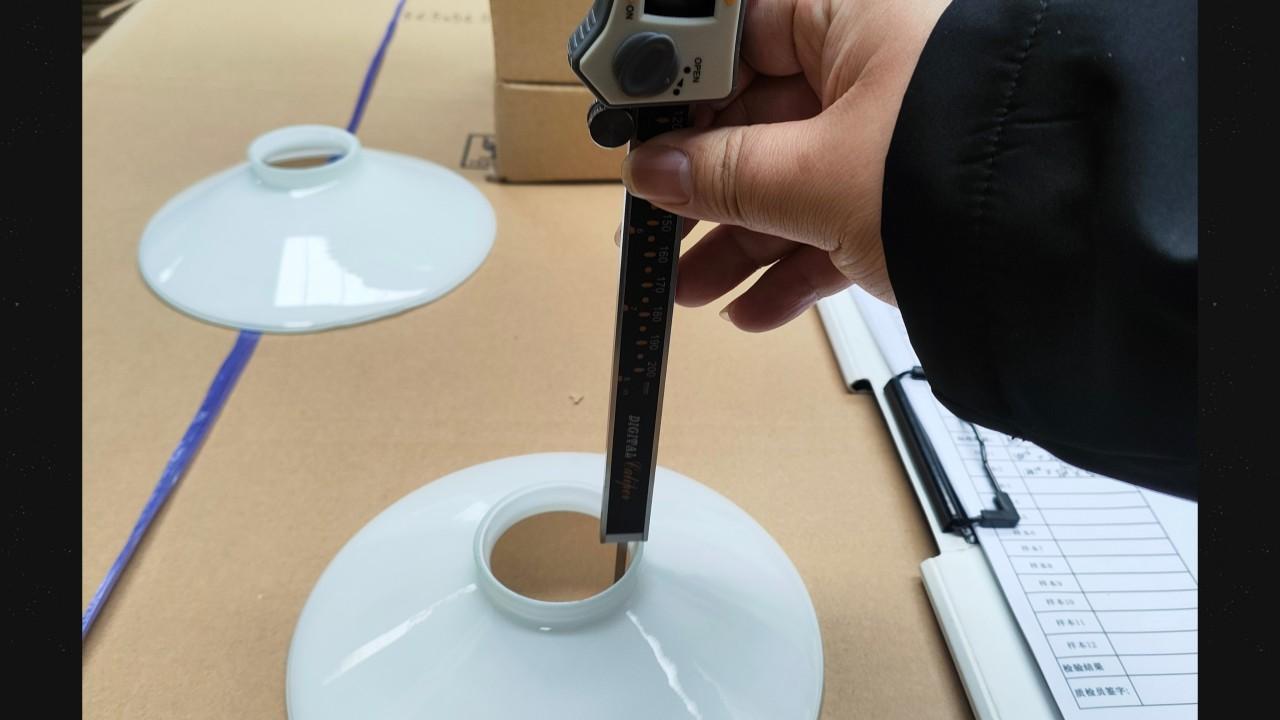
4. Flexibility and Rapid Prototyping Capability
Zero Mold Cost: Single-piece or small-batch production requires no mold investment, resulting in extremely low switching costs.
Real-Time Design and Modification Synchronization: Artisans can adjust the piece while working on it, based on drawings or real-time communication. This makes it an ideal means for rapid prototyping and design verification.
Personalized Customization: Every product can be unique, making it suitable for artistic creation and special-function customization.
Common Issues and Solutions in Molten Glass Blowing
Q1: The glass lampshade suddenly cracks or shatters into fragments during operation or shortly after completion?
Causes:
Blank Mold Issues: Mold misalignment, wear, or uneven temperature leading to poor formation of the parison at the lampshade mouth.
Counterblow/Plunger Mechanism Issues: Inaccurate timing sequence, insufficient pressure, or component wear failing to compact and shape the glass at the lampshade mouth.
Take-Out Action: Mechanical damage or thermal deformation to the lampshade mouth during parison transfer by tongs.
Solutions:
- Inspect and correct the concentricity and closing tightness of the blank mold.
- Adjust the pressure, duration, and timing of counterblow/plunger to ensure full formation of the lampshade mouth.
- Inspect and adjust the take-out mechanism to ensure gentle action and proper alignment.
Q2: Lampshade body deformed, collapsed, or bulging?
Causes:
Excessive Blow Mold Temperature: Glass cools too slowly, deforming under gravity or external pressure after demolding while still at high temperature.
Improper Blowing Pressure/Timing: Insufficient pressure leads to incomplete filling (collapse); inadequate hold time or premature pressure release causes shrinkage deformation before glass solidifies.
Mold Design or Manufacturing Issues: Asymmetric cavity, poor venting design causing localized vacuum adhesion.
Solutions:
- Enhance blow mold cooling, optimize cooling air channels.
- Optimize blowing pressure curve, increase hold time to ensure sufficient in-mold cooling and shaping.
- Inspect mold cavity dimensions and venting system.
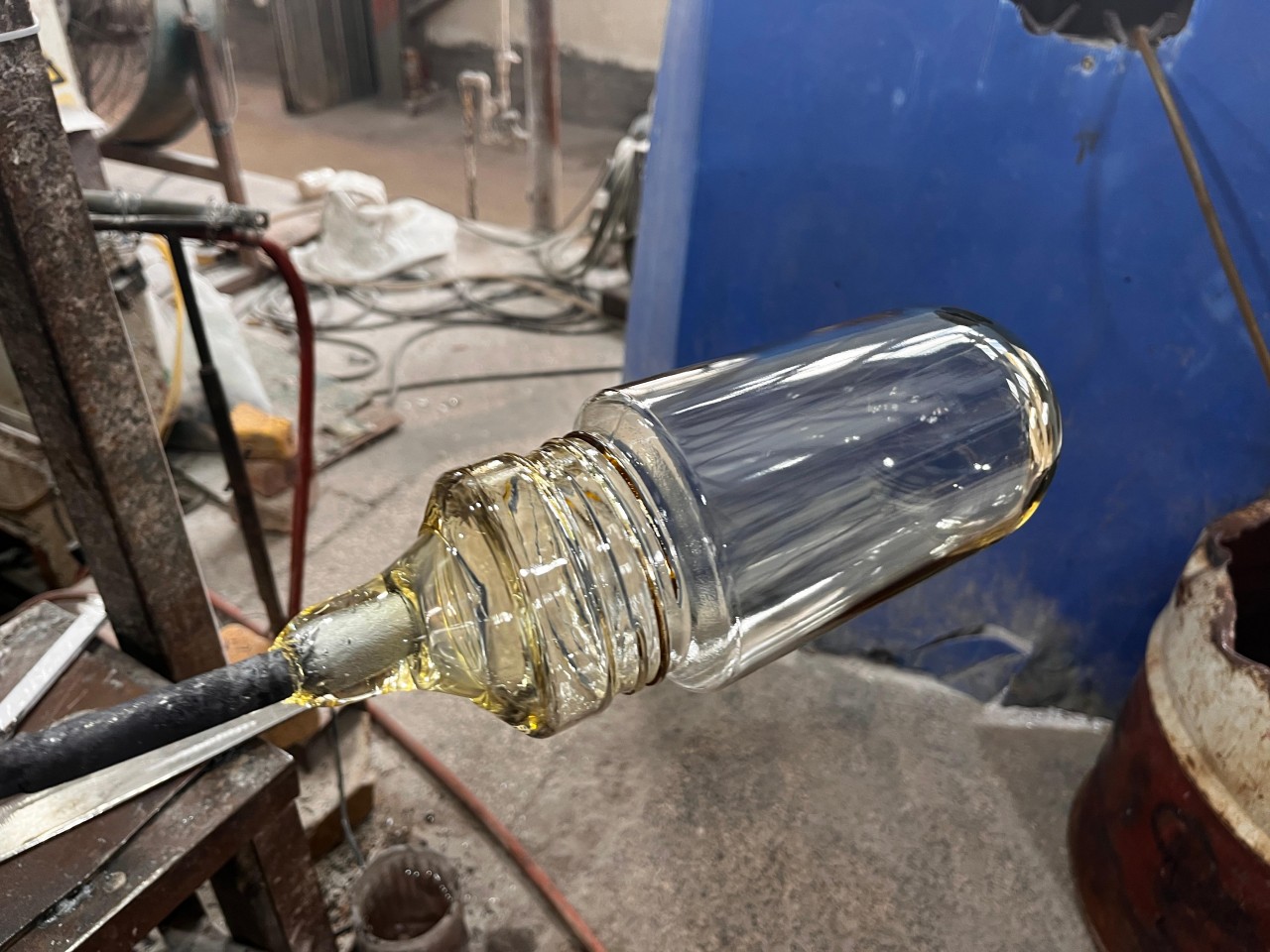
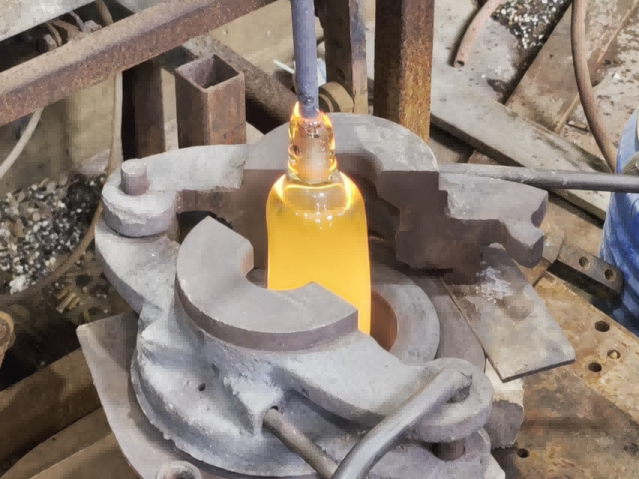
Q3: Prominent mold seams or flash on the lampshade body?
Causes:
Insufficient Clamping Force or Mold Wear/Deformation: Leading to incomplete mold closure.
Excessive Glass Temperature: Glass too fluid, squeezing into mold gaps.
Oversized Gob: Excess glass forced into parting surfaces.
Solutions:
- Inspect and adjust clamping mechanism pressure; repair or replace worn molds.
- Appropriately reduce gob temperature or glass melt temperature.
- Precisely control gob weight.
Q4: Uneven lampshade wall thickness, thin on one side and thick on the other?
Causes:
Uneven Parison Temperature: One side of the parison cools too quickly in the blank mold, causing glass to flow more toward the hotter side during blowing.
Asymmetric Parison Shape: Uneven blank mold temperature or uneven counterblow distribution results in inherently poor parison thickness distribution.
Eccentric Blowing: Blowhead or blowpipe not concentric with the mold.
Solutions:
- Ensure uniform temperature across all areas of the blank mold.
- Optimize counterblow pressure and distribution to ensure parison uniformity.
- Calibrate concentricity between blowing mechanism and blow mold.
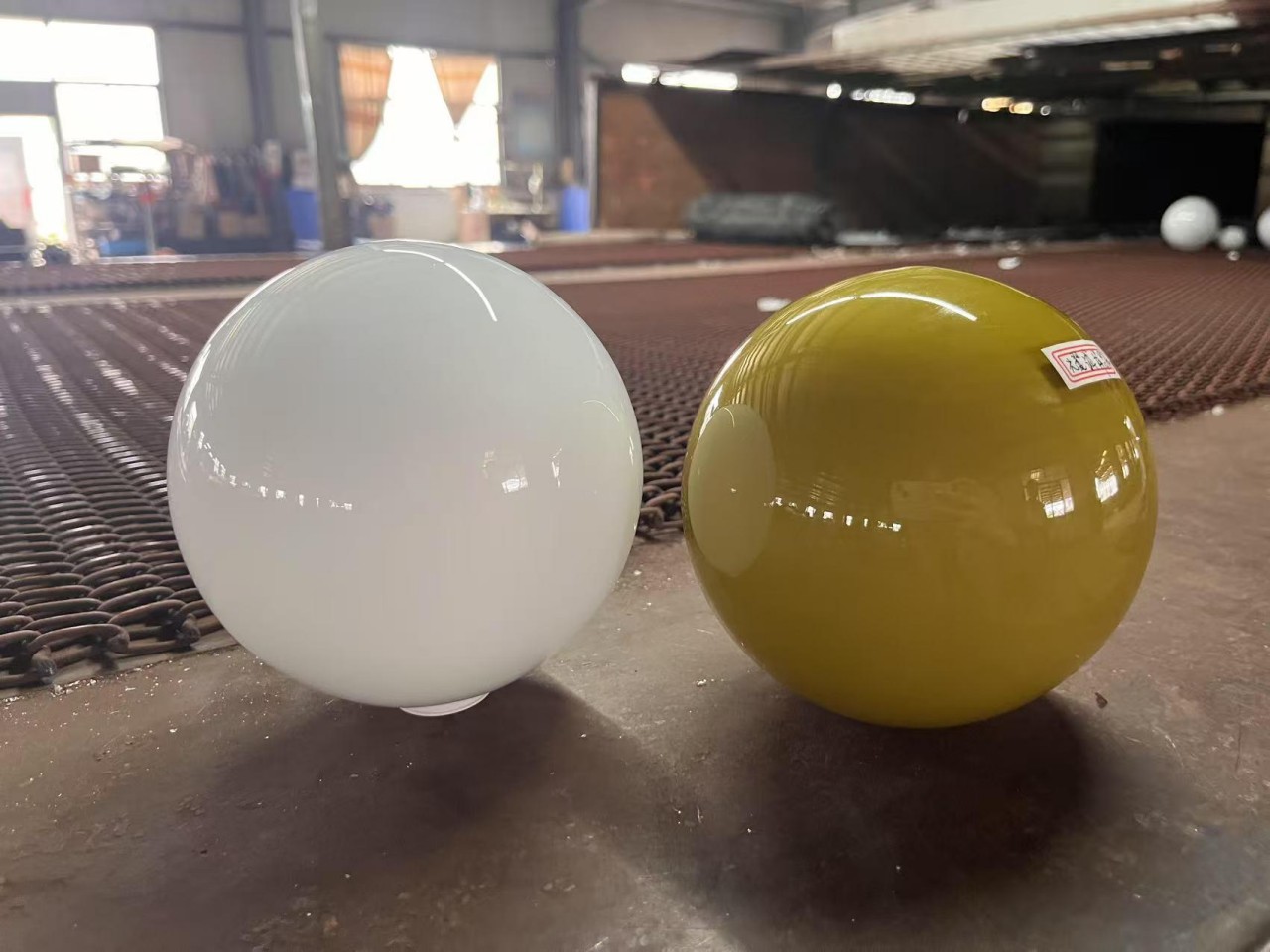
Q5: Lampshade top (rim) or bottom (crown) too thick or too thin?
Causes:
Gob Shape and Temperature: Excessively long gob or too high temperature tends to produce thin crowns; conversely, thick crowns.
Improper Counterblow/Vacuum Assist Parameters: Gas pressure and timing for forming the parison crown in the blank mold are critical.
Transfer Time: Excessive sagging during parison transfer from blank mold to blow mold leads to glass accumulation at the crown.
Solutions:
- Stabilize gob shape and temperature.
- Finely adjust counterblow (or vacuum) pressure and duration to control crown glass distribution.
- Optimize transfer speed to reduce parison sagging.
Q6: Wrinkles, cold marks, or roughness on the lampshade surface?
Causes:
Excessively Low Glass Temperature: Poor flowability in the mold, unable to smooth the surface.
Excessively Low Mold Temperature or Surface Contamination: “Chill” wrinkles from glass contact with cold mold; carbon deposits or oil stains on mold surface.
Deteriorated Mold Surface Finish: Wear or coating peels off.
Solutions:
- Increase gob temperature or glass melt temperature.
- Preheat molds to appropriate working temperature; clean molds regularly and thoroughly.
- Polish or recoat molds.
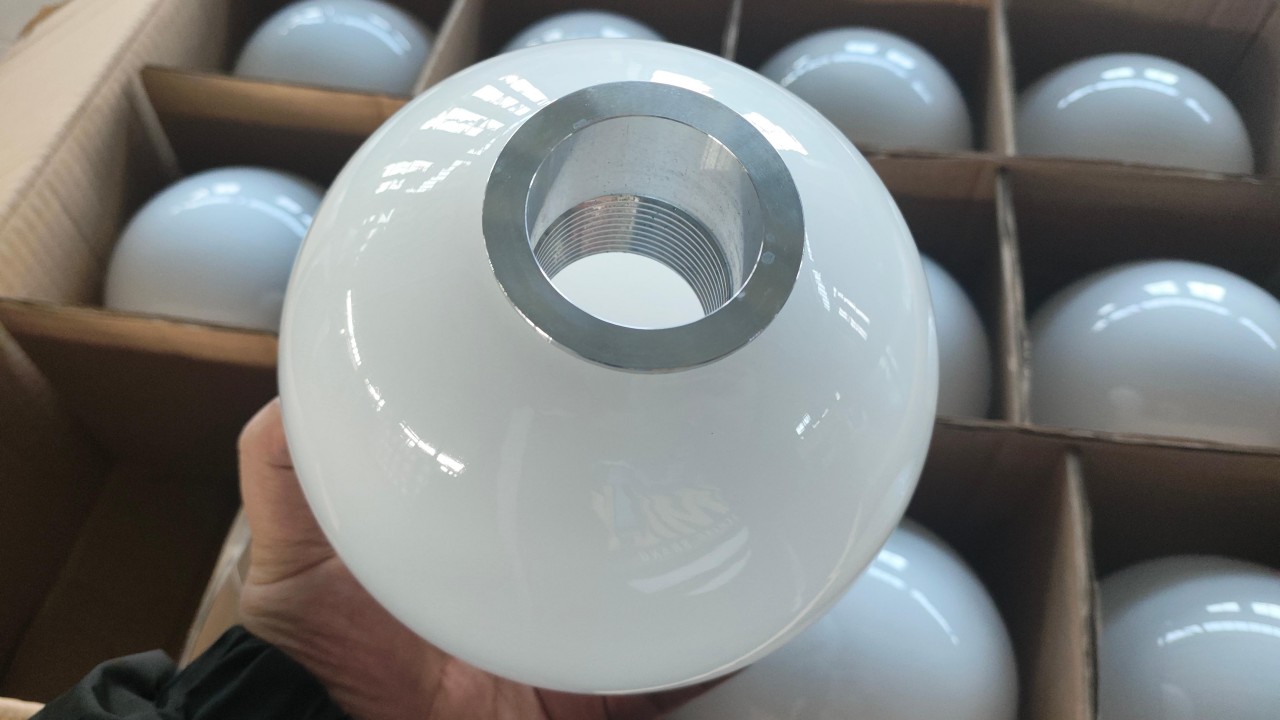
Q7: Bubbles, stones, or striae inside the lampshade glass?
Causes:
Glass Melt Quality Issues: Poor fining (bubbles), inadequate homogenization (striae), or refractory erosion (stones).
Gob Contamination: Contaminants introduced from improperly cleaned feeding system.
Poor Mold Venting: Gas trapped between mold and glass pressed into the glass surface.
Solutions:
- Optimize fining and homogenization processes in the furnace; control refractory quality.
- Regularly clean and maintain the feeder, channels, etc.
- Inspect and clear mold vent grooves/holes.
Q8: Hairline cracks or shattering on the lampshade body?
Causes:
Thermal Shock: Excessive rapid contact between hot glass and cold mold or cooling air.
Mechanical Impact: Hard collision with equipment or other products on the conveyor line.
Inadequate Annealing: Excessive residual stress leading to breakage during subsequent processing or use.
Solutions:
- Control mold temperature; avoid directing cooling air blasts at critical areas of the hot glass.
- Inspect and adjust equipment parameters to ensure smooth product movement on the line, avoiding collisions.
- Optimize lehr temperature curve to ensure thorough and uniform annealing; perform periodic stress checks.
Part 3
Advantages and disadvantages of hand-blown
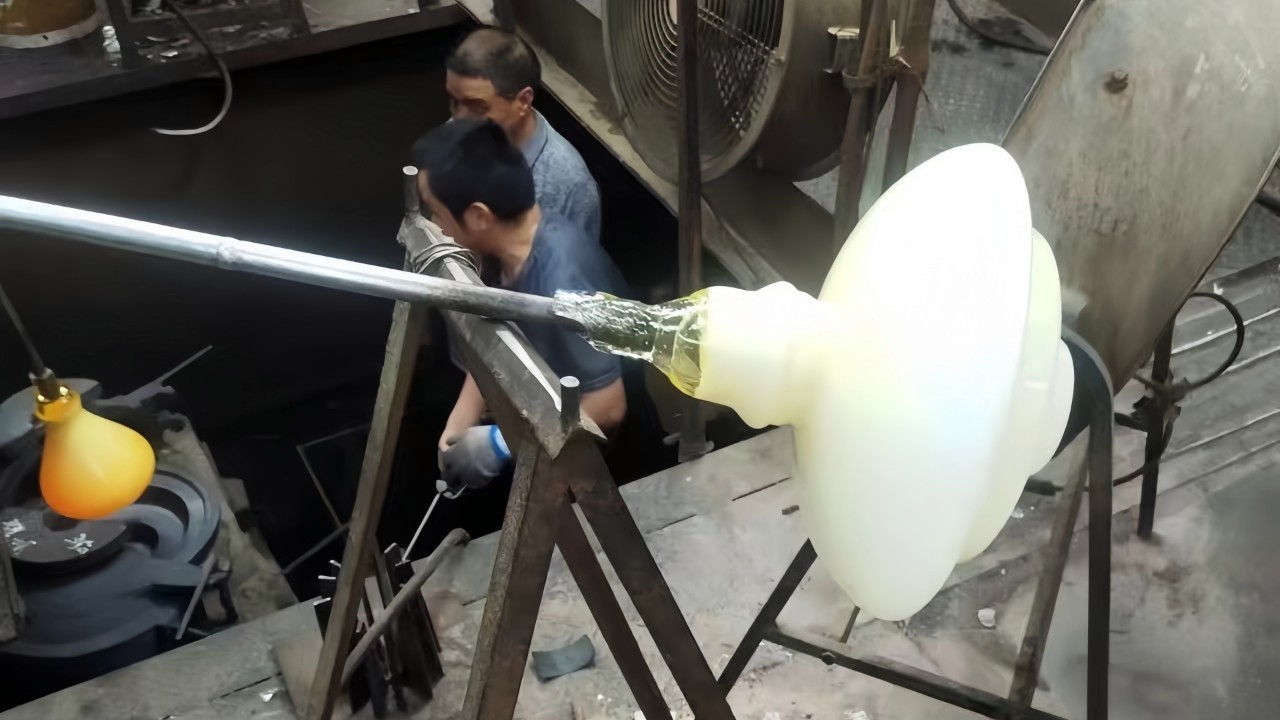
Key Advantages of Manual Molten Glassblowing Services
- High Customization & Artistic Value: Excels in producing unique, artistic components tailored to specific design needs, ideal for small-batch production.
- Complex Geometry with Mold Assistance: Capable of creating intricate and complex geometric shapes through bespoke mold design.
- Precision for Assembly: Achieves critical assembly dimensions with tolerances as tight as ±0.5mm, ensuring reliable part integration.
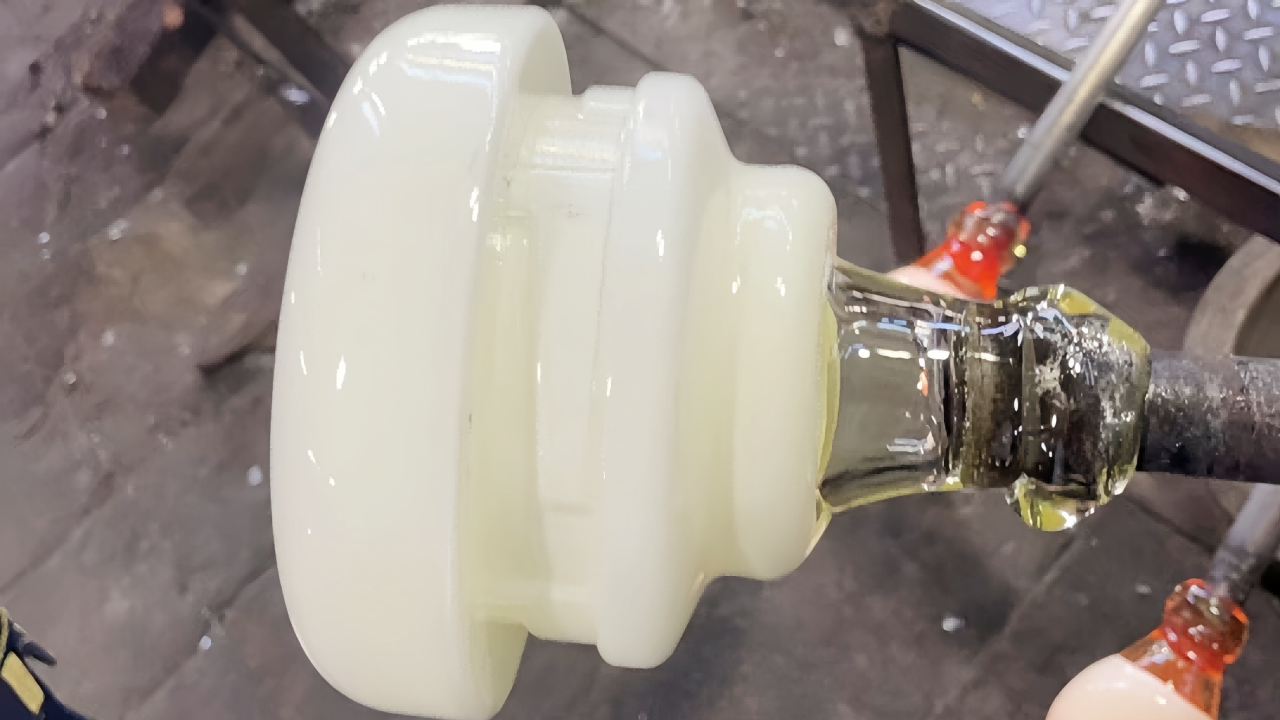
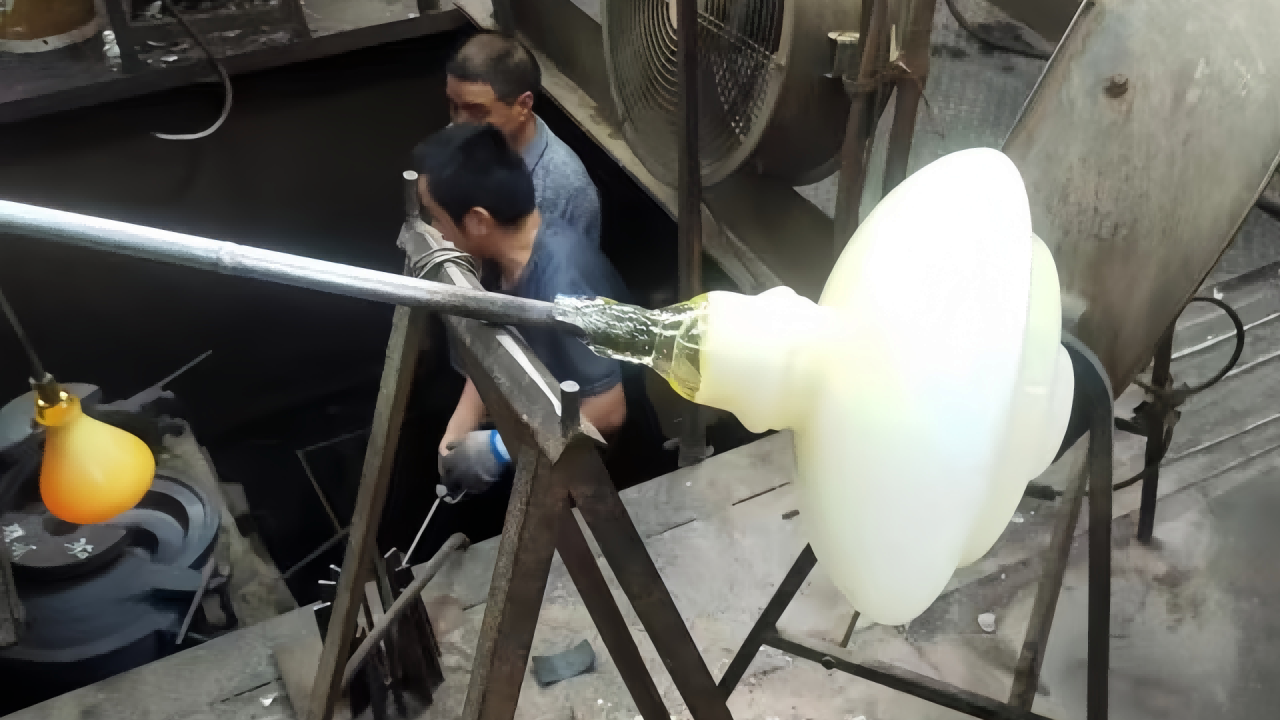
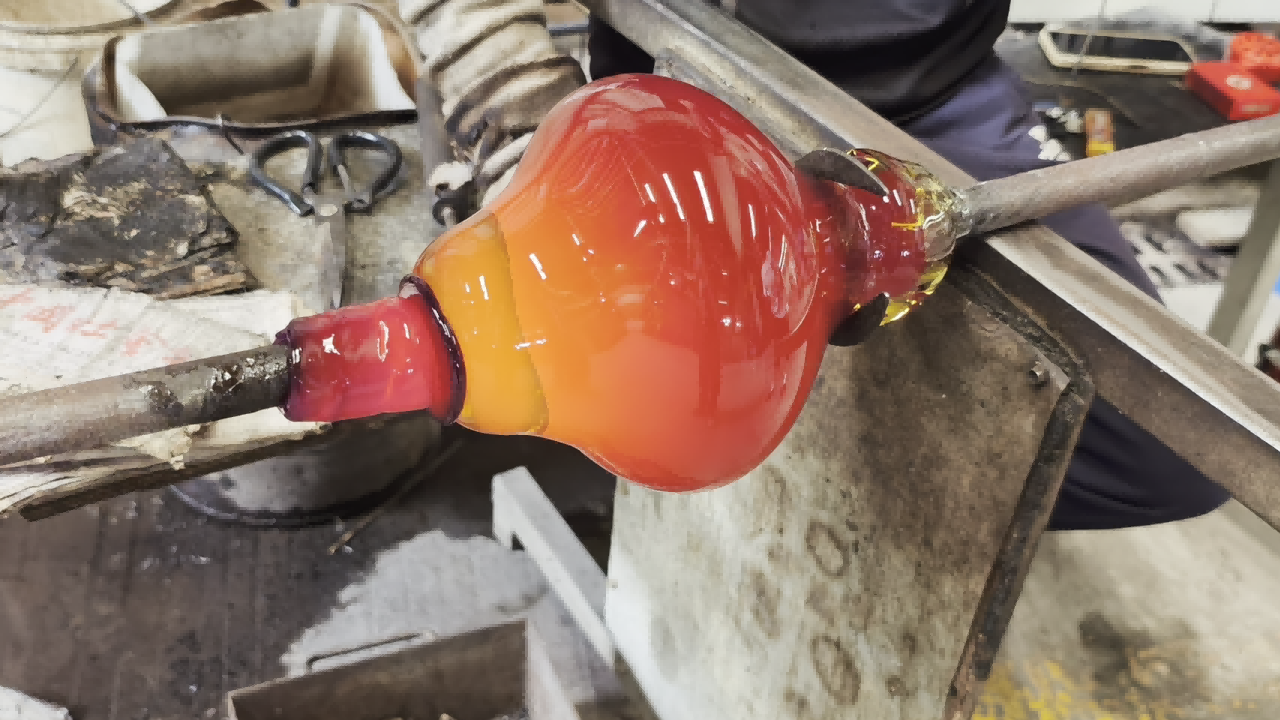
- Diverse Material: Supports various materials like clear soda-lime, durable colored, opal-lined, and pure opal glass for different aesthetic and functional lighting effects.
- Balanced Efficiency for Batches: Offers an efficient and stable process for small to mid-volume production runs, bridging the gap between art and commerce.
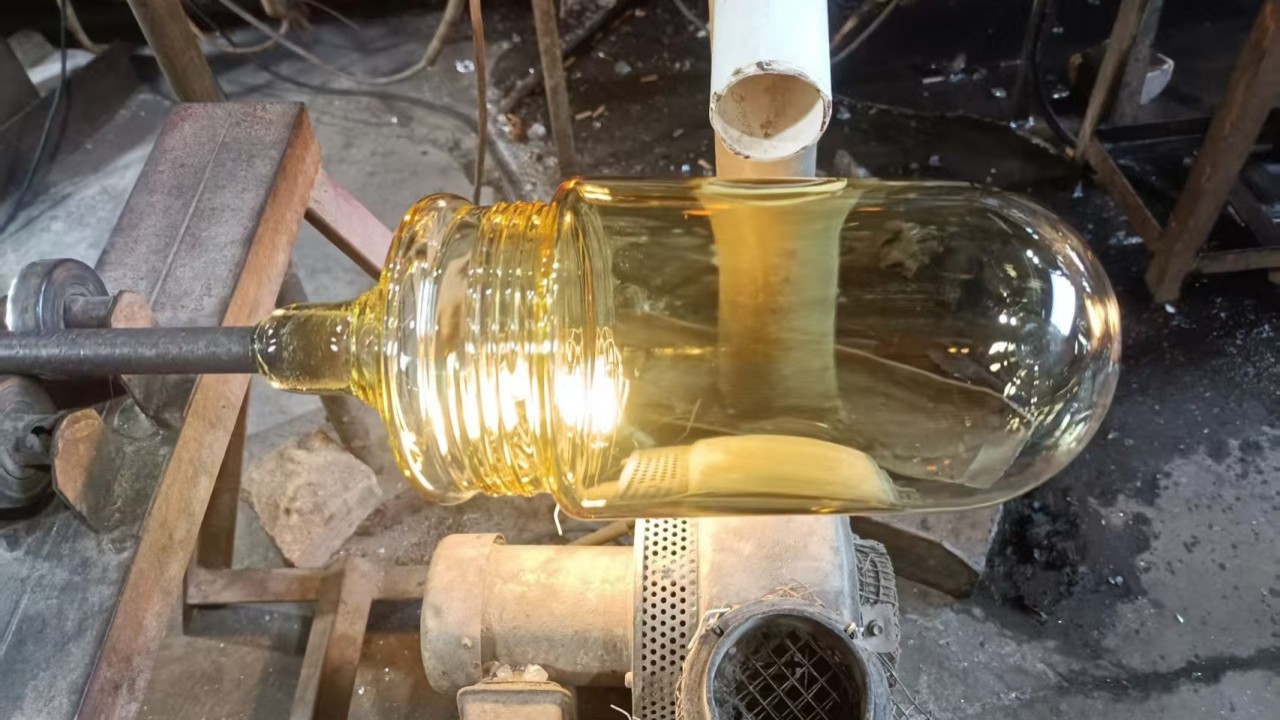
Key Disadvantages Limitations of Manual Molten Glassblowing
- Limited Mass Production Scalability: The reliance on skilled artisans makes it inherently less scalable than fully automated processes, resulting in lower overall output volumes.
- Higher Cost Structure: The labor-intensive nature and time-consuming craftsmanship lead to a higher per-unit cost compared to machine-made glass.
- Geometric Tolerances & Consistency: While capable of achieving ±0.5mm on key dimensions, it cannot match the extreme dimensional uniformity and repeatability of automated precision molding.
- Inherent Process Variations: As a handcrafted process, minor variations in texture, thickness, and shape are unavoidable, which may not be suitable for applications requiring absolute uniformity.
Molten Glass Blowing
We offer glass raw materials in a variety of formulations, each selected based on its performance characteristics and suitability for different applications.
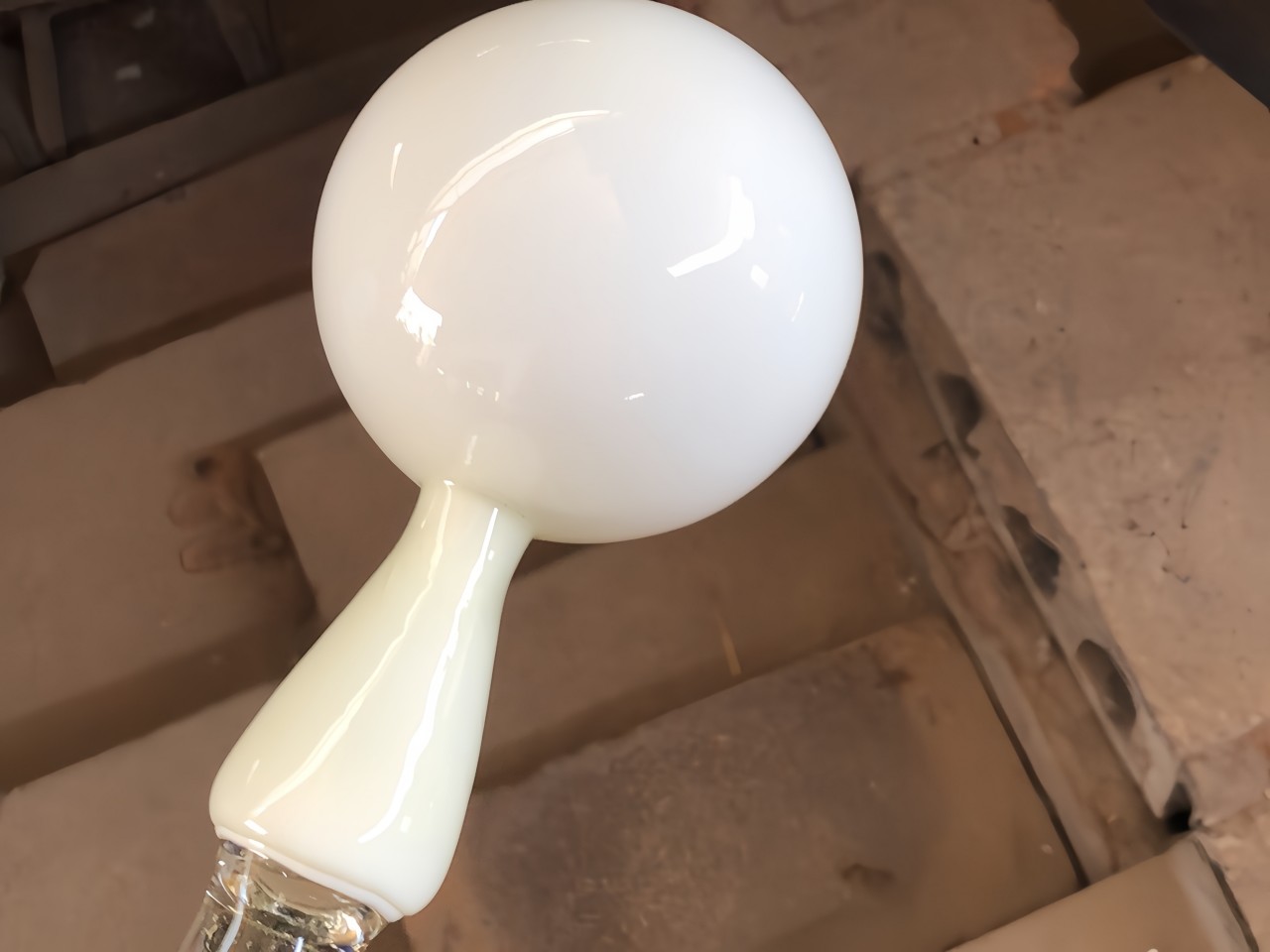
Opal Glass
Density (g/cm³): ~2.5
CTE (10⁻⁶/K): 8.5 - 9.0
Mechanical Properties:Medium hardness, good durability
Optical Properties (nd / Vd):High light diffusion, soft white glow
Chemical Resistance: Good
Applications: Decorative lighting, lampshades, architectural fixtures
Key Advantages: Excellent soft light diffusion, elegant aesthetic, widely used for indoor and outdoor lighting
Get a product quote
Colored Glass
Density (g/cm³): ~2.5
CTE (10⁻⁶/K): 8.5 - 9.0
Mechanical Properties:Medium hardness, good durability
Optical Properties (nd / Vd):Varies by color, opaque to translucent
Chemical Resistance:Excellent (color is mineral-based and permanent)
Applications:Artistic lampshades, decorative lighting, stained glass
Key Advantages:Rich, permanent colors for artistic and decorative effects, ideal for indoor decorative lighting
Get a product quote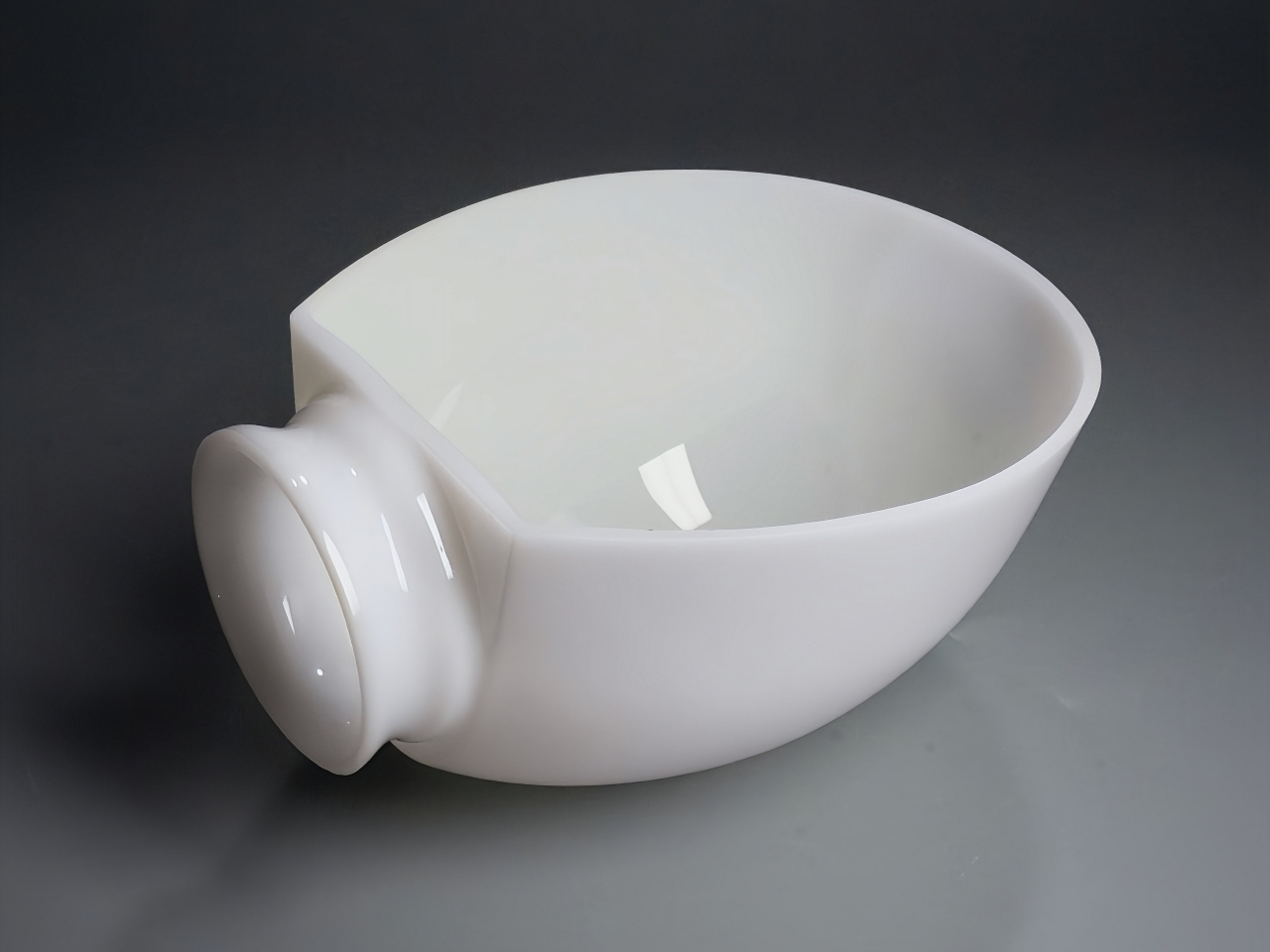
Pure Opal Glass
Density (g/cm³): ~2.5
CTE (10⁻⁶/K): 8.5 - 9.0
Mechanical Properties:Medium hardness, good durability
Optical Properties (nd / Vd):High light diffusion, lower translucency
Chemical Resistance:Good
Applications:High light diffusion, lower translucency
Key Advantages:Premium matte aesthetic, uniform soft glow, valued for its luxurious appearance
Get a product quote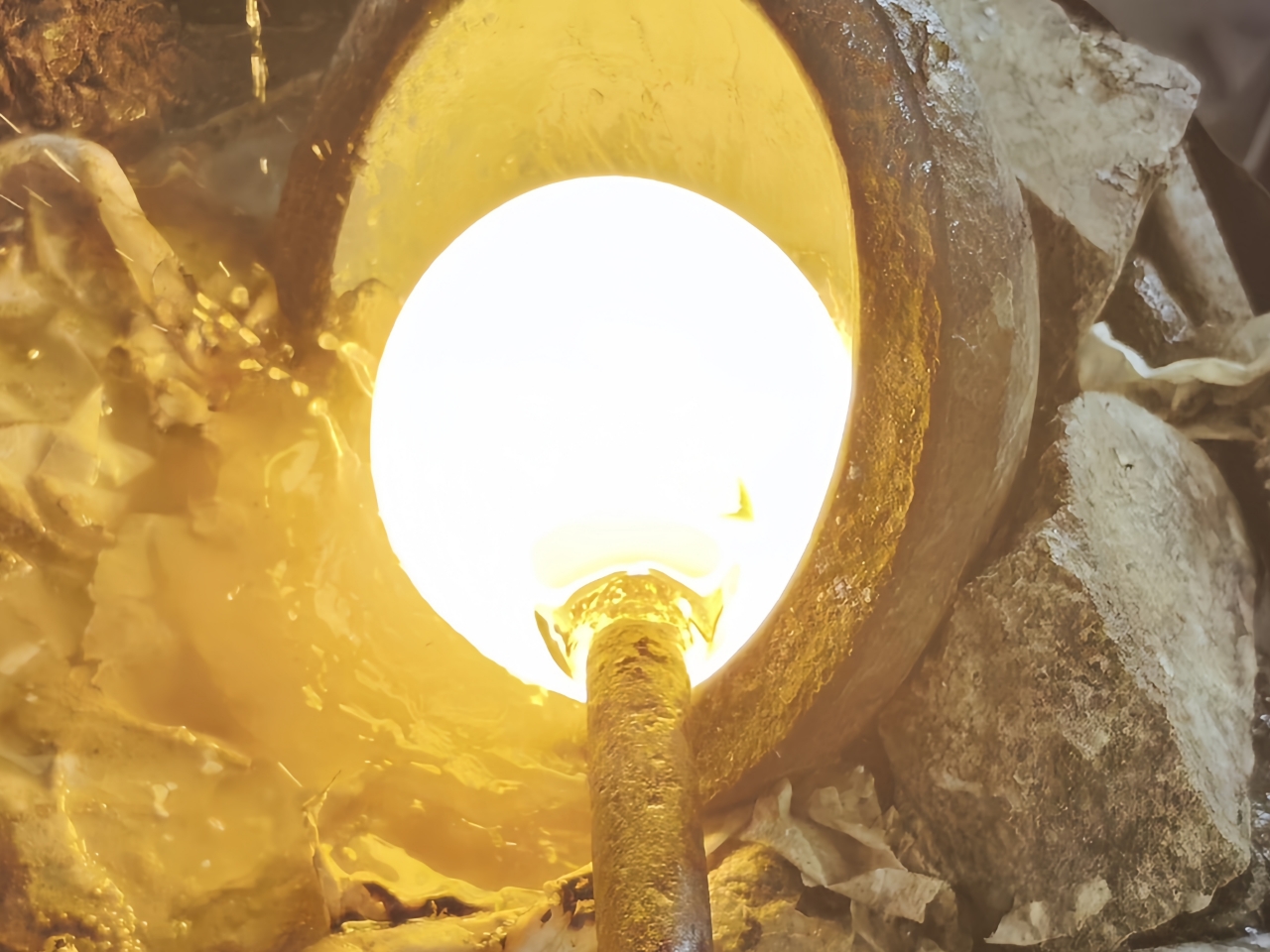
Borosilicate Glass
Density (g/cm³): ~2.23
CTE (10⁻⁶/K): 3.3
Mechanical Properties:High hardness, good strength
Optical Properties (nd / Vd):High clarity, excellent transmittance
Chemical Resistance:Excellent
Applications:High-performance lighting, laboratory ware, sight glasses
Key Advantages:Exceptional thermal shock resistance & chemical stability
Get a product quote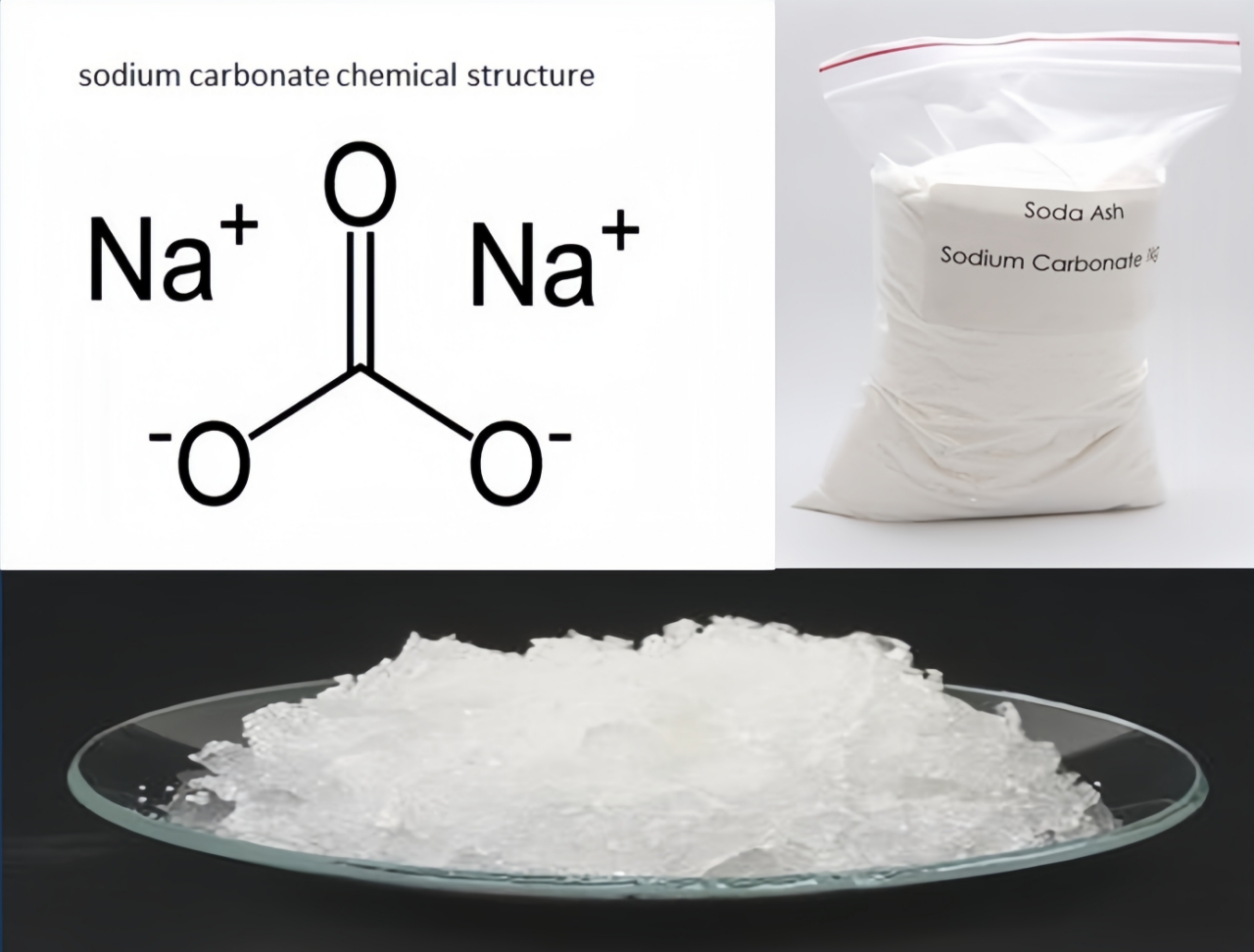
Soda-Lime Glass
Density (g/cm³): ~2.5
CTE (10⁻⁶/K): 8.5 - 9.0
Mechanical Properties:Medium hardness and strength
Optical Properties (nd / Vd):High clarity (~1.52 nd), excellent transmittance
Chemical Resistance:Good
Applications: Lampshades, household containers, decorative items
Key Advantages:Cost-effective, good workability, high optical clarity
Get a product quotePart 4
Technical Standards and Management System for Molten Glass Blowing Process
Chapter One: Raw Material and Melting Standards
Glass Batch
Composition Control: Fluctuation range of key oxide content (SiO₂, Na₂O, CaO, etc.) ≤ ±0.15% (mass fraction).
Particle Size and Uniformity: Proportion of particles larger than -40 mesh (0.425mm) < 5%, batch uniformity coefficient of variation CV value ≤ 3%.
Environmental Standards: Use of arsenic-containing or antimony-containing fining agents is strictly prohibited. Heavy metal content (Pb, Cd, Cr⁶⁺, etc.) in all raw materials shall comply with FDA and EU EC 1935/2004 standards.
Glass Melt Quality
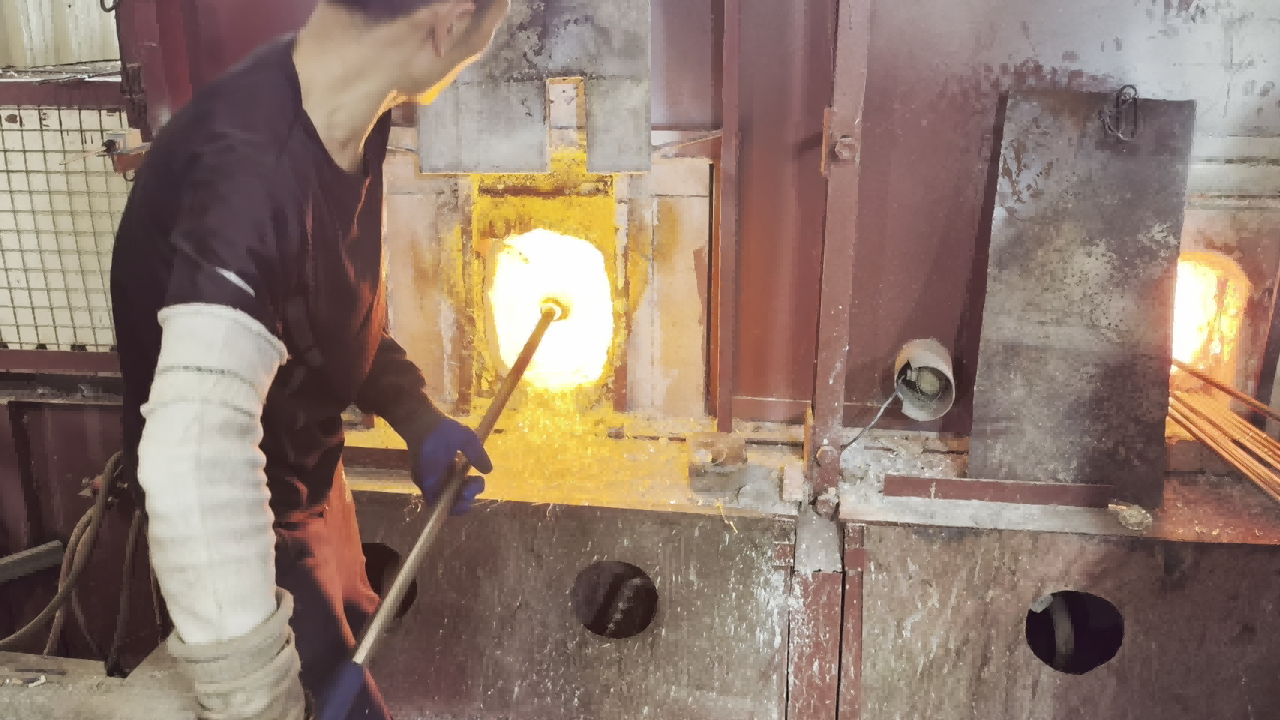
Temperature Stability: Glass melt temperature fluctuation in the working chamber ≤ ±3°C (24-hour continuous monitoring).
Homogeneity: Using online camera inspection, glass striae grade shall not be lower than Grade A as specified in ISO 1288-1.
Bubble Defects: In finished glass products, zero tolerance for bubbles with diameter >0.3mm; number of bubbles with diameter 0.1-0.3mm ≤ 3 per kilogram of glass.
Chapter Two: Forming Process Control Standards
Feeding System
Gob Weight Tolerance: Based on product weight, tolerance is controlled at ±0.5g to ±1.5g (specific according to product grade).
Gob Temperature: Temperature fluctuation of gob at feeder outlet ≤ ±5°C (monitored by infrared thermometry).
IS Machine Process Window
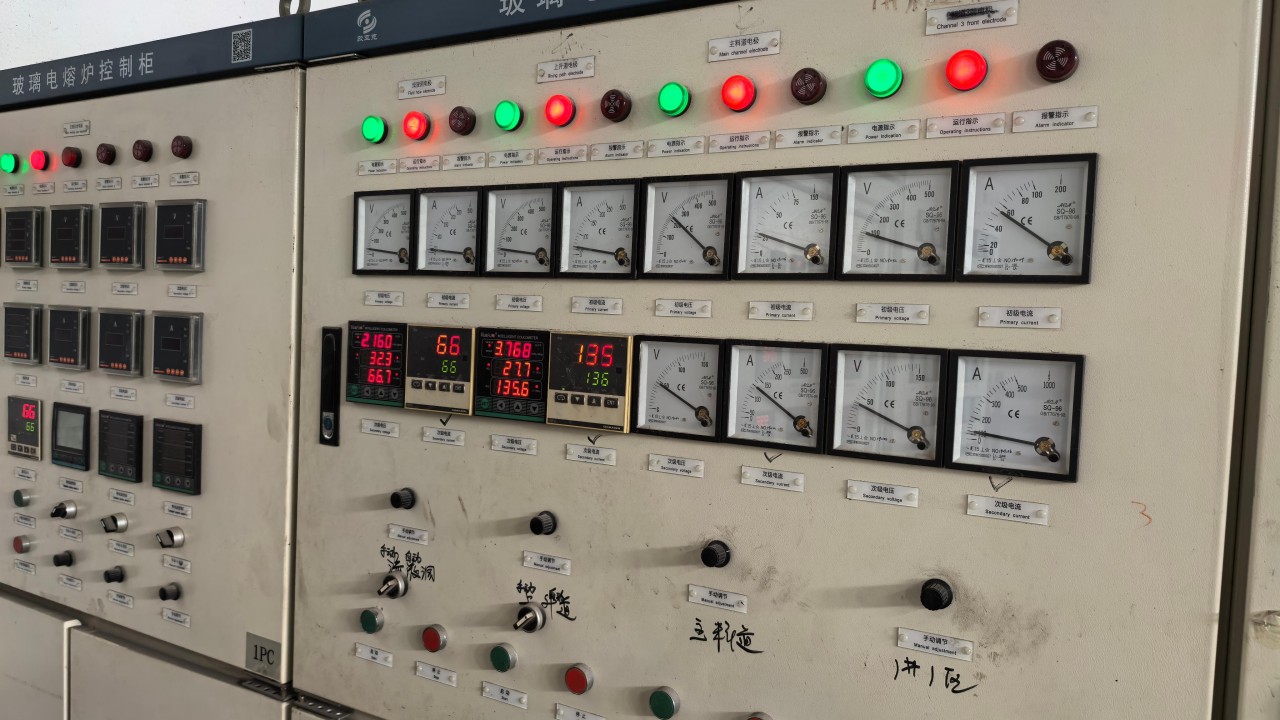
Timing Accuracy: All pneumatic and mechanical action sequences controlled by servo motors, repeatability accuracy error < 5 milliseconds.
Pressure Control:
Counterblow Pressure: 0.15 – 0.25 Bar, control accuracy ±0.01 Bar.
Blow Pressure: 2.5 – 4.0 Bar (depending on product), employing three-stage pressure curve to ensure uniform formation of bottom, body, and shoulder.
Mold Temperature Management:
Blank Mold Working Temperature: 500 – 550°C, temperature difference across zones ≤15°C.
Blow Mold Working Temperature: 450 – 500°C, equipped with closed-loop water cooling system, temperature uniformity ≤10°C.
Mold surfaces shall be coated with Tungsten Carbide (WC) or Titanium Nitride (TiN) coating, initial surface roughness Ra ≤ 0.4μm.
Chapter Three: Mold Management and Life Standards
Mold Design and Manufacturing
All molds shall be optimally designed based on 3D Fluid Simulation (CFD) to ensure uniform glass distribution.
Mold material shall be DIN 1.2344 (AISI H13) electroslag remelted steel, hardness after heat treatment 46-50 HRC.
Machining tolerances for critical dimensions (such as bottle mouth inner diameter, mold parting line) shall be ISO IT8 grade.
Mold Usage and Maintenance
Life Standards: Under standard maintenance, blank mold life ≥ 1.2 million cycles, blow mold life ≥ 1.5 million cycles.
Preventive Maintenance: Mandatory offline cleaning, polishing, and dimensional inspection must be performed every 150,000 cycles.
Mold Identification System: Each mold set shall have a unique QR code recording its production cycles, maintenance history, and process parameters.
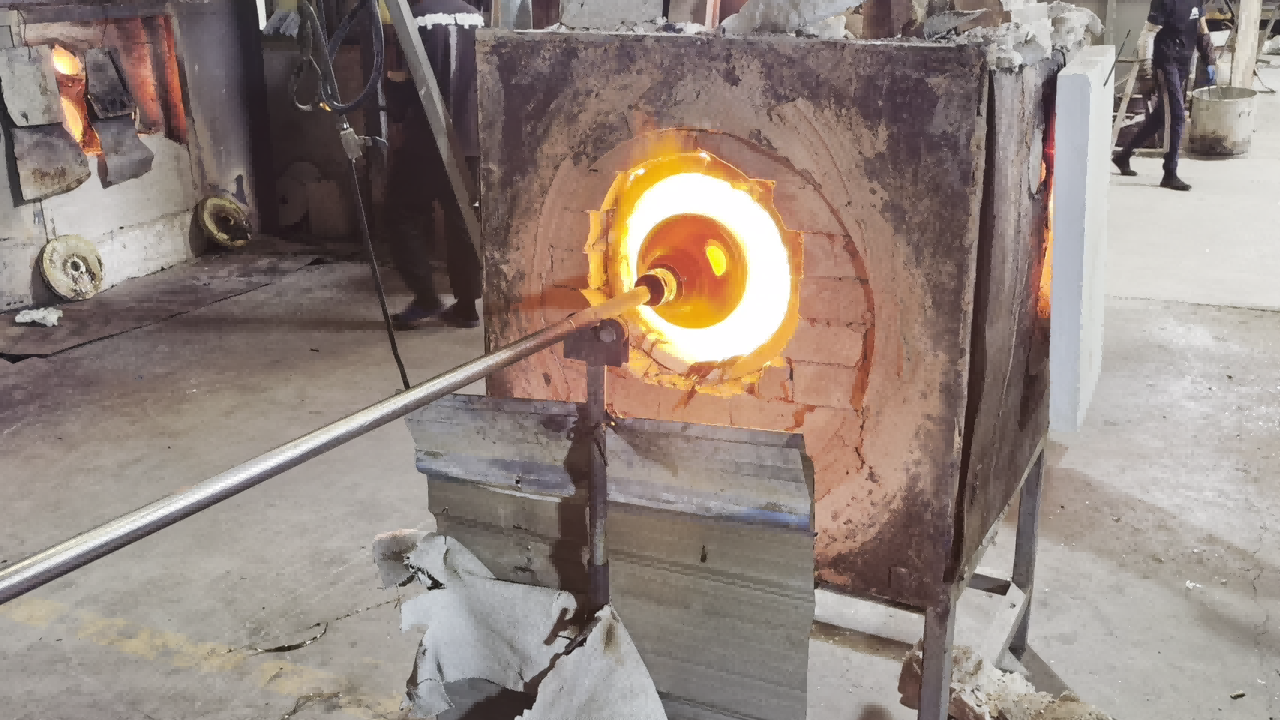
Chapter Four: Product Inspection and Quality Release Standards
Online 100% Full Inspection Items
Dimensions: Critical dimensions inspected using laser measurement, with tolerance standards 20% stricter than customer drawing requirements. For example, if customer requires ±1.0mm, internal control shall be ±0.8mm.
Defects: Based on high-definition machine vision (≥5 million pixels, multi-angle illumination), automatically detect and reject products containing cracks, stones, visible bubbles, deformation.
Wall Thickness: Using non-contact ultrasonic or X-ray thickness gauges, sampling inspection at specified points on bottle body (frequency: once per minute). Wall thickness uniformity requirement: thinnest point/thickest point ≥ 0.7.
Offline Sampling and Type Testing
Mechanical Strength: Vertical load strength, internal pressure, impact resistance tests (according to GB/T 6552, GB/T 4546, etc.), sampling frequency: once per 2 hours.
Chemical Stability: Monthly sampling, tested according to GB/T 4548 (water resistance) and GB/T 6582 (acid and alkali resistance).
Residual Stress: Sampling inspection using polariscope, optical path difference ≤ 40 nm/cm (for colorless glass).
Chapter Five: Quality Traceability and Continuous Improvement System
Full-Process Data Traceability
Each production batch (Lot) shall be traceable to: raw material batch numbers, furnace operating parameters, forming machine number, mold number, operating shift, all online inspection data, and offline inspection reports.
Data retention period ≥ product shelf life + 2 years.
Problem Response and Improvement
Establish a “Defect Code Library” ; any quality issue must be code-classified within 30 minutes.
For Class A defects (may cause customer production line shutdown), initiate “8D Problem Solving Method” ; root cause analysis and temporary/permanent countermeasures must be provided within 72 hours.
All improvement measures shall be updated in the Standard Operating Procedure (SOP) and Failure Mode and Effects Analysis (FMEA) database.

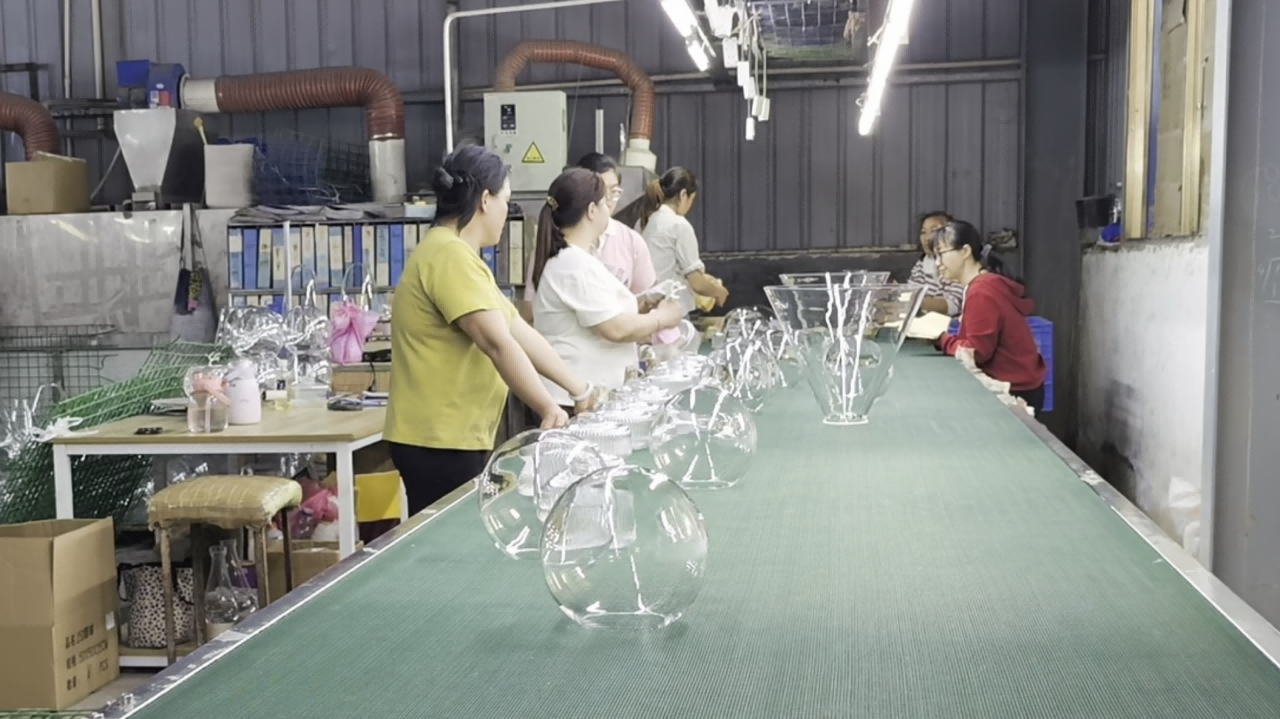
Chapter Six: Personnel and Training Standards
Key Position Certification
IS Machine Debugging Technicians and Mold Maintenance Engineers must pass the company’s internal Level 3 skills certification and complete at least 40 hours of refresher training annually.
Quality Inspectors must pass vision calibration and defect recognition ability tests, reviewed quarterly.
Part 5
Cost of Molten Glass Blowing cost introduction
Handcrafted/Artistic Blowing Cost Composition
This cost structure is characterized by “low fixed costs, high variable costs,” with “labor and time” at its core.
1. Direct Material and Consumable Costs (Approximately 10%-20%)
Specialty Glass Materials: Often uses more expensive borosilicate glass, colored glass rods, crystal glass, etc.
Fuel Gas and Oxygen: Continuous consumption of propane, natural gas, and oxygen by studio burners.
2. Direct Labor and Skill Costs (Approximately 50%-80%, The Absolute Core)
Craftsman Compensation: Wages paid to blowing craftsmen. This is not simple hourly wages but compensation for “high technical skill and high experience value.” Master craftsmen’s hourly rates can be ten times that of junior craftsmen.
Time Cost: Direct labor hours required to complete one piece. A complex large sculpture may require dozens or even hundreds of hours.
“Diseconomies of Scale”: As production volume increases, total labor cost rises almost proportionally and cannot be diluted.
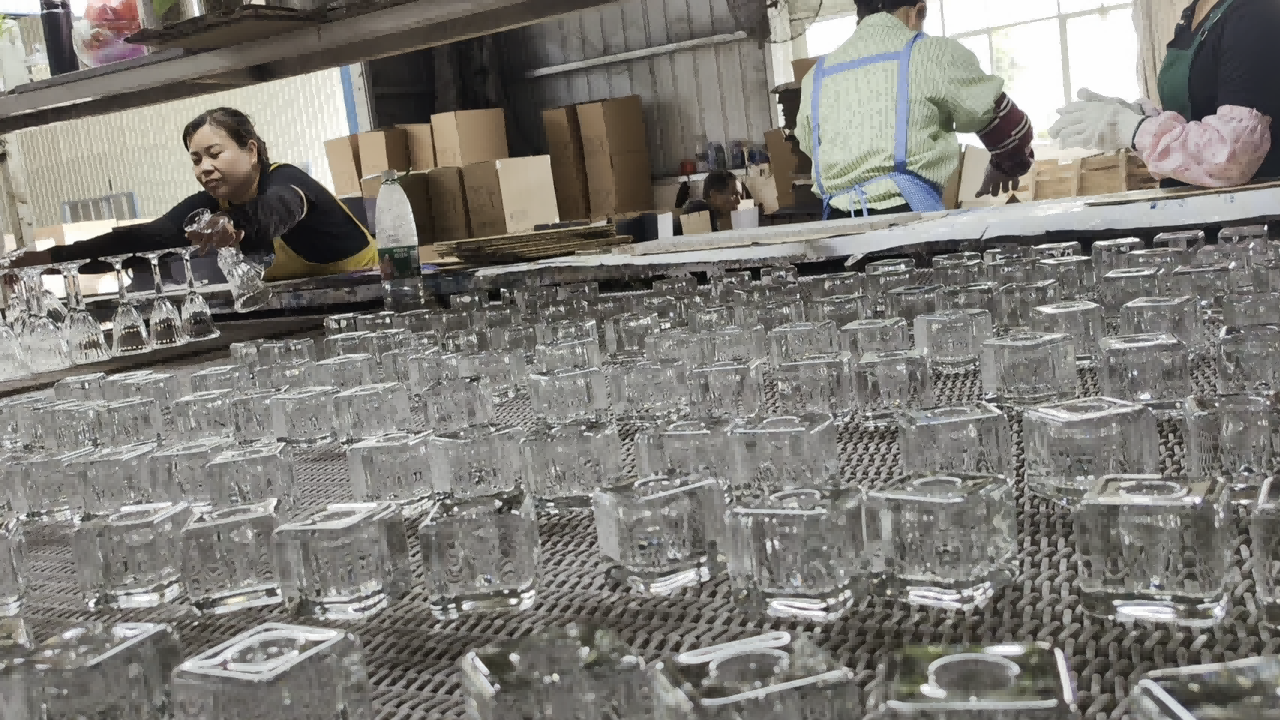
3. Equipment and Studio Depreciation (Approximately 5%-15%)
Furnace/Kiln: Even small studios require glass melting furnaces or kilns for remelting.
Programmable Annealing Furnace: Critical equipment for ensuring pieces do not crack, requiring significant investment.
Tools and Studio: Various hand tools, burner workstations, and rental costs.
4. R&D, Failure, and Uniqueness Costs (Important and Must Be Covered)
Design and Trial-and-Error Costs: Materials and time consumed in exploring process paths for new designs.
Failure Risk Allowance: Hand-blown production yield is not 100%; failure rates for complex pieces can be high. Costs must be absorbed by successful pieces.
Secrets to Cost Reduction
For the inherently high-cost process of molten glass blowing (especially manual blowing), the core secret to cost reduction lies in: systematically managing, optimizing processes, and improving efficiency to precisely concentrate resources on creating high-value-added activities while absolutely defending its “handcrafted value” and “artistic uniqueness,” thereby reducing all unnecessary waste.
I. Design Source: Design for Manufacturing Efficiency
Establish a “Classic Forms” Database
Core Strategy: Standardize and digitize historically best-selling and most process-mature forms (such as several classic whiskey cup or vase shapes). Clarify optimal material usage, standard labor hours, and key techniques.
Effect: When customers choose classic forms or make minor adjustments based on them, mature processes can be directly invoked, greatly reducing trial-and-error and debugging time. This achieves “rapid replication” and dilutes per-piece development costs.
Promote “Modular” and “Preform” Design
Core Strategy: Decompose complex works. For example, pre-produce components like spouts, handles, and decorative glass beads in batches as semi-finished products (preforms). When creating the main body, directly use these preforms for hot joining.
Effect: Liberate senior craftsmen’s time from repetitive labor, allowing them to focus on core creative parts such as main body shaping. Preforms can be made by apprentices or intermediate craftsmen, reducing total labor hour costs.
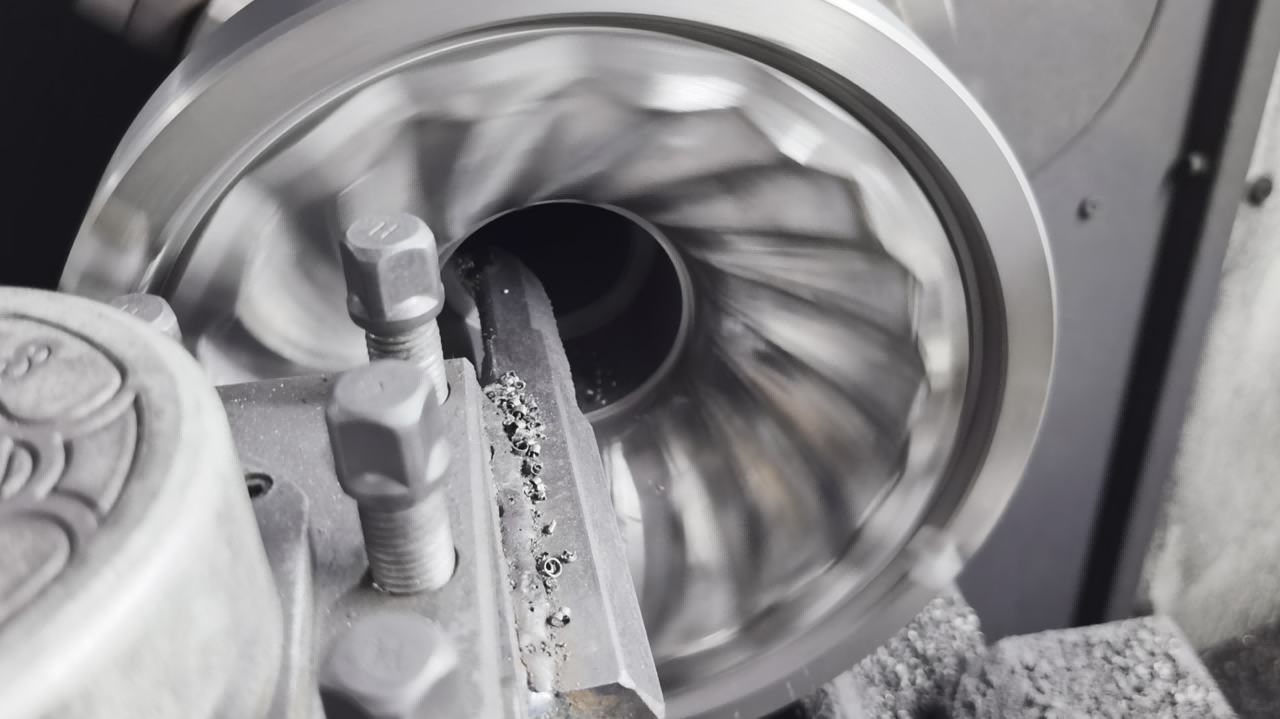
II. Process and Operation: Extract Benefits from Stability and Proficiency
“First-Pass Yield” Revolution
Core Strategy: Establish yield rate as a core KPI. The biggest cost waste is rework. Achieve this through:
Standardized Operating Instructions: Record short core operation videos for each product category as internal training materials.
Strengthen Annealing Management: Invest in precise programmable annealing furnaces and establish stringent annealing standards. Cold cracking due to improper annealing is a major loss.
Effect: Increasing yield rate from 70% to over 90% directly translates to significant savings in materials, energy, and labor hours.
Lean Management of Materials and Energy
Materials:
Precise Material Calculation: Through recording and optimization, find the minimum necessary material usage for each classic form and create material quantity gauges.
Waste Recycling System: All cut-off remnants and failed pieces must be sorted and recycled by color and type. After remelting, they can be used for components with lower color purity requirements or lower-tier products.
Energy:
Optimize furnace/kiln insulation to reduce heat loss.
Reasonable Production Batching: Concentrate production of products with the same color system or material in continuous time periods to reduce frequent furnace temperature adjustments and glass changeover losses.
III. Production Organization and Human Resources: Let the Right People Do the Highest Value Work
Establish Craftsman Grading and Collaboration Processes
Core Strategy: Clearly define role differentiation. Masters/senior craftsmen focus on new product development, complex customizations, and critical shaping; intermediate craftsmen are responsible for main body production of classic forms; junior craftsmen/apprentices handle preheating, material retrieval, simple preform fabrication, and subsequent cold working (base grinding, polishing), etc.
Effect: Maximize senior craftsmen’s creative output time and optimize the overall labor cost structure.
Studio Layout and Logistics Optimization
Core Strategy: Plan the studio according to the production workflow (material retrieval → workbench → annealing furnace → cold working → quality inspection and packaging) to shorten material and semi-finished product movement distances.
Effect: Reduce unnecessary movement, allowing craftsmen to focus more on work before the flame and increasing effective working time proportion.
Contact Us
Your feedback fuels our growth, and your questions drive our solutions.
We value your feedback, inquiries, and suggestions. Please feel free to get in touch with us
General inquiries
Please contact us via sales@bo-glass.com, and we will reply to you as soon as possible.
Interested to work with us
Drop your resume at info@bo-glass.com
and we will get back to you shortly.
We uses the contact information you provide to us to contact you about our relevent content, products, and services.