
Glass Manufacturing and Surface Finishing
The forming route controls geometry and wall-thickness capability; the finishing route controls diffusion, appearance, cleanability, and durability. Specify both as one optical-manufacturing system.
Jump to a question (16)
- How do patterns and ink layers on screen-printed glass panels affect transmittance and spot shape in ceiling lights?
- What should be noted about cleaning difficulty and long-term maintenance for fabric-textured or embossed glass wall lamps?
- How do inner-surface treatments, such as internal sandblasting and internal coating, differ from outer-surface treatments in diffusion and anti-soiling effects?
- In layered lighting, which glass surface finishes are best suited for ambient lighting, accent lighting, and task lighting?
- When kitchen fumes turn a glass lampshade yellow, is it glass aging or oil carbonization, and how can it be prevented?
- How can fingerprints or oil stains be cleaned from frosted or sandblasted glass shades without damaging the surface texture?
- How long can nano oleophobic coatings last on glass lampshades, and will daily wiping make the coating fail?
- How serious is lumen depreciation in lamps that are not cleaned for a long time, and how should different fixtures be cleaned and how often?
- For vintage industrial pendant lights, are aged, tea-colored, or amber glass shades coated or body-tinted, and how can fading be prevented?
- In light-luxury interiors with many metal elements, how should glass shade transparency and reflectivity match brass or brushed nickel?
- In greasy kitchen environments, are stain resistance and easy cleaning more important than optical performance for glass lampshades?
- How do reflector materials such as aluminum, plastic, and coatings affect light quality?
- Blue-light protection: can glass lampshades use material or coatings for selective spectral filtering?
- What BO-Glass production photographs can support a process review?
Forming processes
Choose a forming route according to geometry, tooling, wall uniformity, optical consistency, volume, and lifecycle impact.
How do blown, pressed, and centrifugally formed glass shades differ in thickness uniformity and optical consistency?
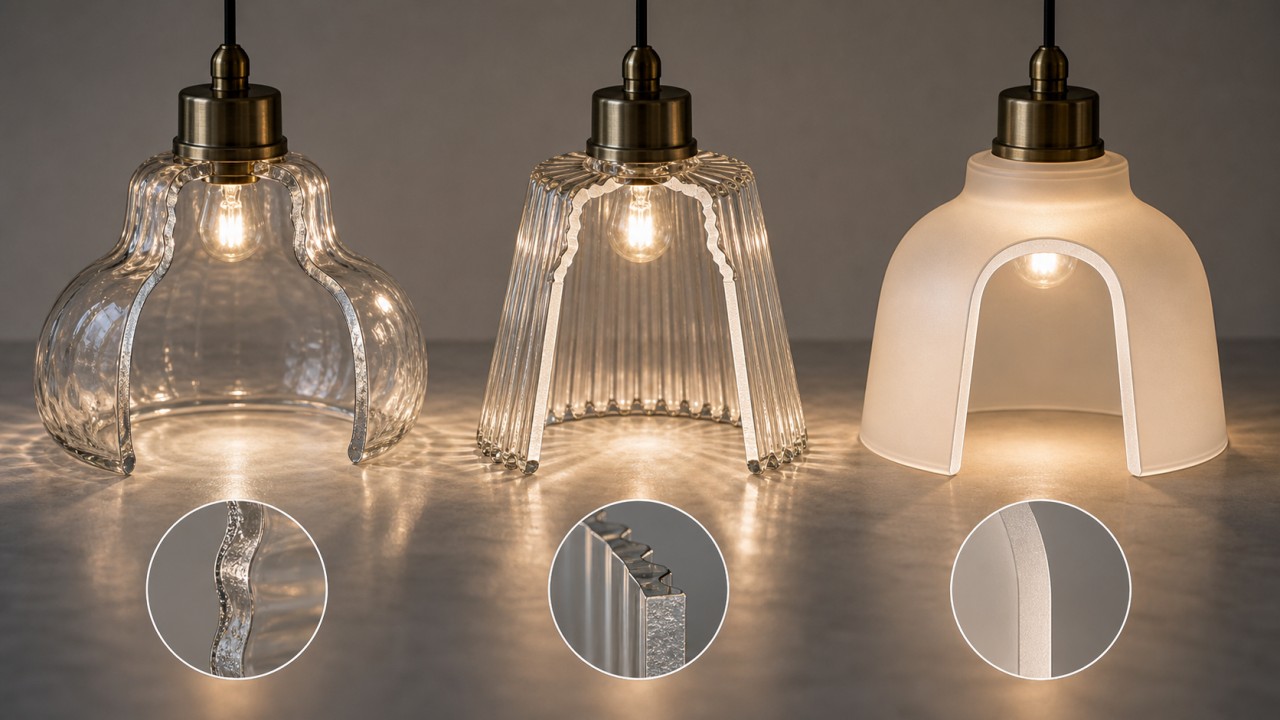
Blown, pressed, and centrifugal-formed glass shades differ greatly in thickness control, optical consistency, dimensional repeatability, and decorative character. The forming method should be chosen not only for shape, but also for how strict the optical requirements are.
Blown glass offers the greatest freedom of form and the strongest handmade character. It is suitable for globes, teardrops, organic shapes, irregular art shades, and small custom batches. It can intentionally show natural flow, small bubbles, handmade ripples, and subtle variation, which are desirable in many decorative luminaires. However, blown glass is usually the hardest to control in thickness. The shoulder, neck, bottom, and curved transition areas may become thicker or thinner. In clear shades, this can cause local magnification, visual distortion, uneven brightness, or slight color variation. Blown glass is excellent for artistic pendants and wall lamps, but less ideal for strict beam control or highly uniform luminous surfaces.
Pressed glass is formed by pressing softened or molten glass into a mold. It is better for mass production and normally provides stronger repeatability than handmade blowing. It is suitable for ceiling-light panels, patterned shades, ribbed glass, lenses, diffusers, and shades with precise mounting features. Pressing can integrate textures, prisms, microstructures, and assembly edges directly into the glass, which is useful for optical control and mechanical positioning. The challenges are mold marks, parting lines, residual stress, and surface quality. If mold temperature, pressing pressure, or annealing is not stable, pressed glass can still show flow marks, waviness, or optical unevenness.
In the life cycle of glass luminaires, how can formula optimization reduce carbon emissions during production?
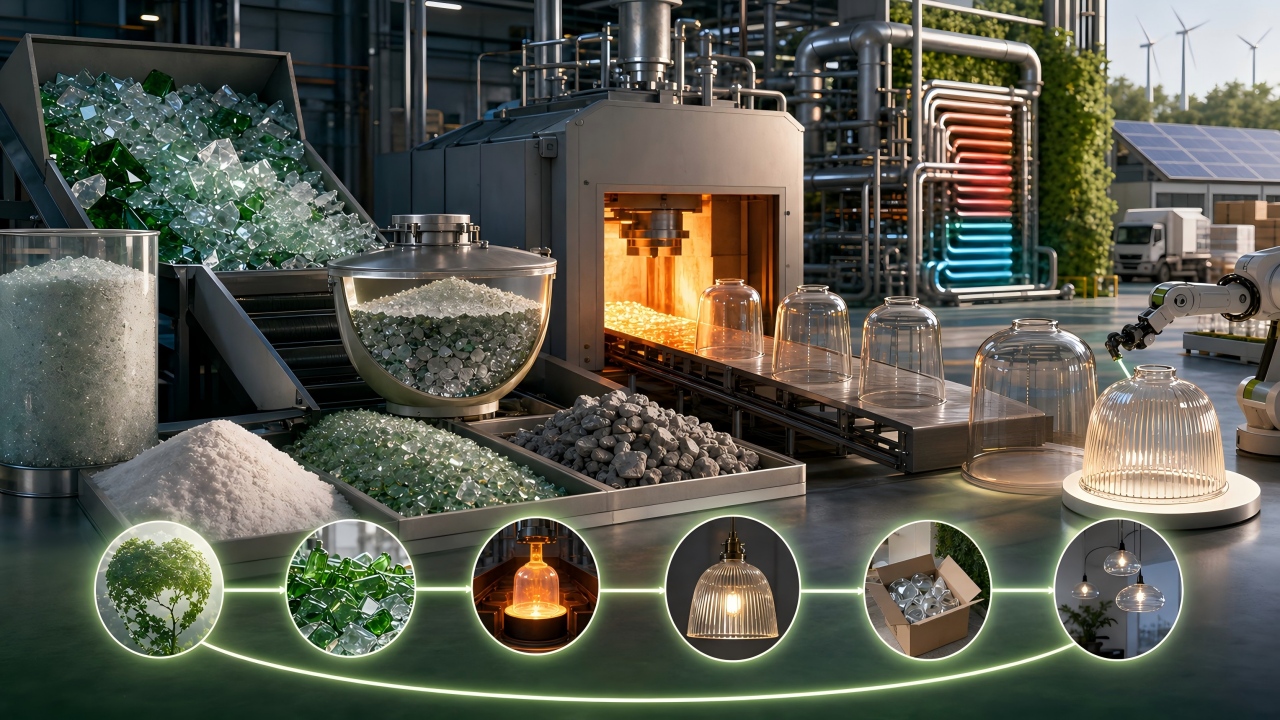
In the life cycle of glass luminaires, carbon emissions from glass production mainly come from high-temperature melting energy, raw-material decomposition, transportation, forming yield, and post-processing loss. Formula optimization aims to reduce melting temperature, shorten melting time, improve yield, and reduce high-carbon raw materials and scrap, while still meeting requirements for transmittance, strength, heat resistance, color, and processability.
A common strategy is increasing the proportion of cullet. Qualified recycled glass melts more easily than virgin minerals, reducing energy use and decomposition emissions. However, cullet must be controlled for color, impurities, metal, ceramic, and organic contamination, otherwise it can affect transmittance, bubbles, cords, and strength. A second strategy is optimizing fluxes and fining systems to lower melting temperature without sacrificing durability or environmental compliance. A third is avoiding excessive ultra-clear specifications, unnecessary thickness, or overly complex shapes that increase energy use and reject rate.
For lighting glass, low carbon should not be judged only by emissions per kilogram. The use phase matters too. A high-transmittance glass shade that improves system efficacy may save electricity over years, offsetting extra production impact. Repairable, replaceable, yellowing-resistant, and easy-clean shades extend product life and reduce waste. Manufacturers can track formula carbon footprint, recycled content, yield, energy use, and transport distance, while adopting electric melting, waste-heat recovery, lightweight design, and local supply chains where possible.
Surface treatments and maintenance
Compare internal and external finishes, printing, coatings, tinting, embossing, spectral treatments, and cleaning behavior.
How do patterns and ink layers on screen-printed glass panels affect transmittance and spot shape in ceiling lights?
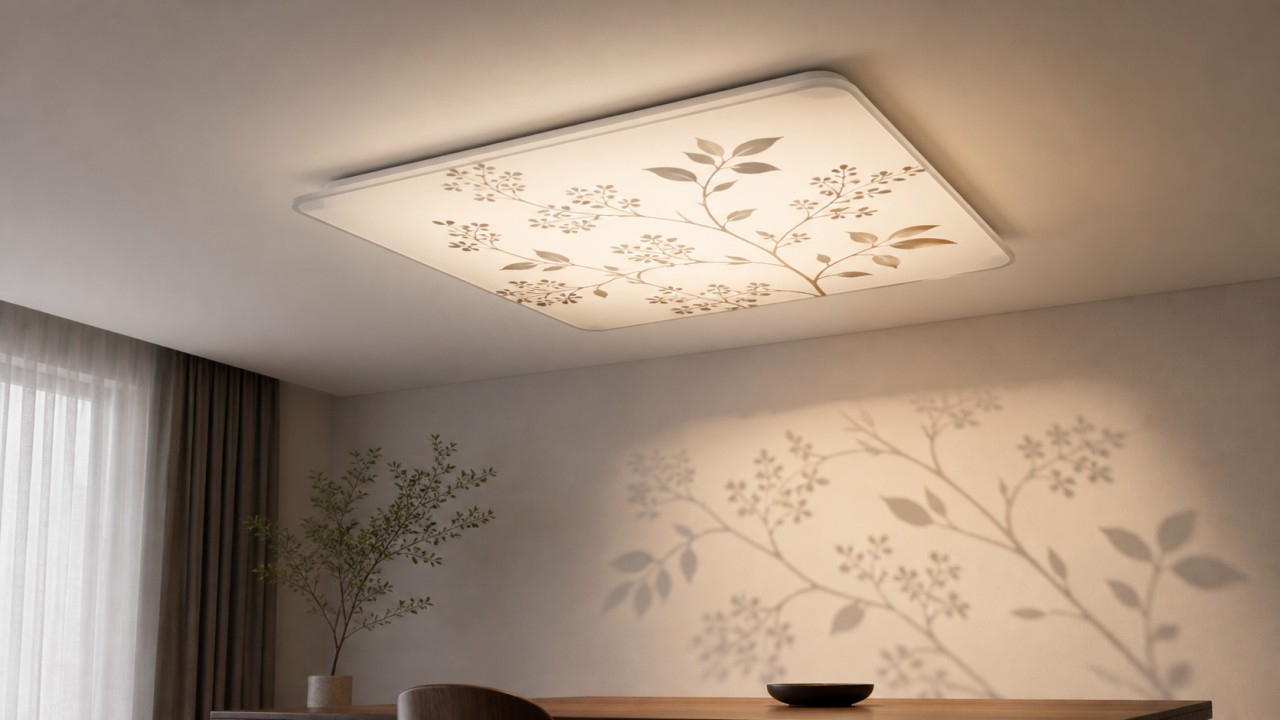
Printing changes transmission according to ink spectrum, opacity, thickness, coverage, dot or line geometry, glass substrate, and firing condition. Total luminaire loss is not necessarily equal to the printed-area percentage because light can be reflected, absorbed, or redistributed inside the cavity. A nominal 50% pattern should therefore not be assumed to reduce luminaire output by exactly 50%.
Coarse opaque patterns can create visible bright-dark structure when the source-to-panel distance is small, while finer translucent patterns may improve source hiding at the cost of efficiency or colour shift. Specify pattern geometry, registration, ink type, colour, cured thickness, adhesion, transmittance or reflectance, and acceptable illuminated appearance. Verify both flat coupons and the production-representative ceiling luminaire.
What should be noted about cleaning difficulty and long-term maintenance for fabric-textured or embossed glass wall lamps?
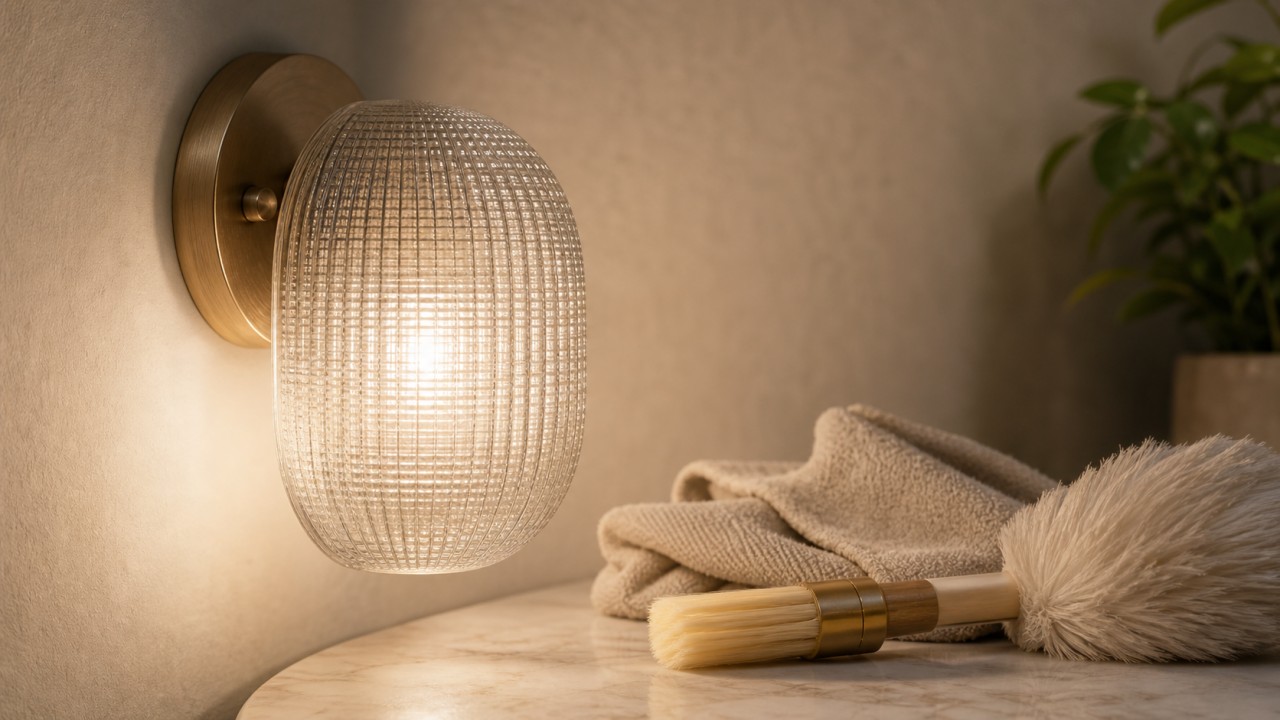
Textured and embossed glass can retain dust, grease, limescale, and cleaning residue more readily than a smooth surface. Cleaning difficulty depends on whether the texture is inside or outside, its depth and roughness, the glass or coating chemistry, the mounting position, and whether the shade can be removed safely.
Start with the luminaire manufacturer's instructions. Disconnect power, allow the fixture to cool, and remove the shade only when the fixing method is understood. Use a soft brush or low-suction vacuum for loose dust, then a microfiber cloth or soft brush with clean water or a neutral, glass-compatible detergent. Rinse removable parts where permitted and dry them completely before reassembly.
Do not recommend acids, alkalis, abrasive powders, toothpaste, salt mixtures, steel wool, or aggressive solvents as universal remedies. They can attack coatings, polished edges, printed decoration, gaskets, metal hardware, and some glass surfaces. Limescale or grease cleaners should be used only after compatibility is confirmed on a concealed area and the supplier has defined concentration, contact time, rinsing, and personal-protection requirements.
Long-term maintenance planning should also cover gasket inspection, moisture entry, accessible edges, thermal condition, coating wear, and replacement access. Validate representative cleaning cycles when appearance or optical performance is critical, and define acceptable changes in gloss, haze, colour, transmittance, adhesion, and surface condition.
How do inner-surface treatments, such as internal sandblasting and internal coating, differ from outer-surface treatments in diffusion and anti-soiling effects?
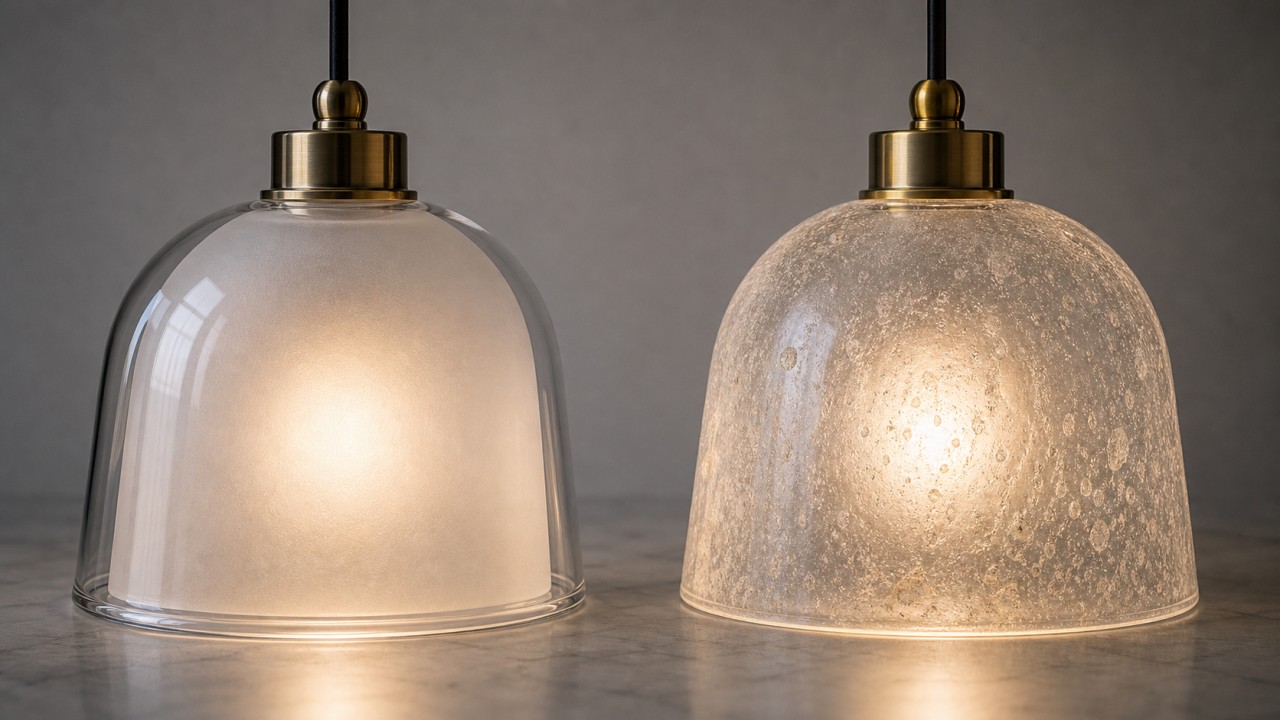
Inner-surface treatment and outer-surface treatment may look similar, but they affect light, cleaning, touch, and durability in different ways. A simple rule is: the inner surface mainly treats the light source, while the outer surface mainly interacts with the environment and the user.
Inner sandblasting, inner frosting, or inner diffusion coating scatters the light early, close to the source. This helps hide LED beads, filaments, and local hot spots. Because the outer surface can remain smooth, it is easier to wipe clean and less likely to trap fingerprints, grease, dust, or water stains. For kitchens, bathrooms, wall lamps, and table lamps, an inner-frosted and outer-smooth shade is often easier to maintain than an outer-frosted shade. The weakness is that the inner surface is closer to heat and optical radiation. If an inner coating is used, heat resistance, yellowing resistance, and adhesion must be verified.
Inner coating is often used for reflection, semi-transparency, smoked effects, gradients, or special color effects. Its advantage is that the coating is not directly exposed to touch, wiping, or airborne contamination, so abrasion risk is lower. The outer surface can still feel like clean glass. The disadvantage is that the coating may age, discolor, or peel if it is too close to a hot source, especially in a sealed shade or high-power fixture. Temperature control and coating quality are therefore critical.
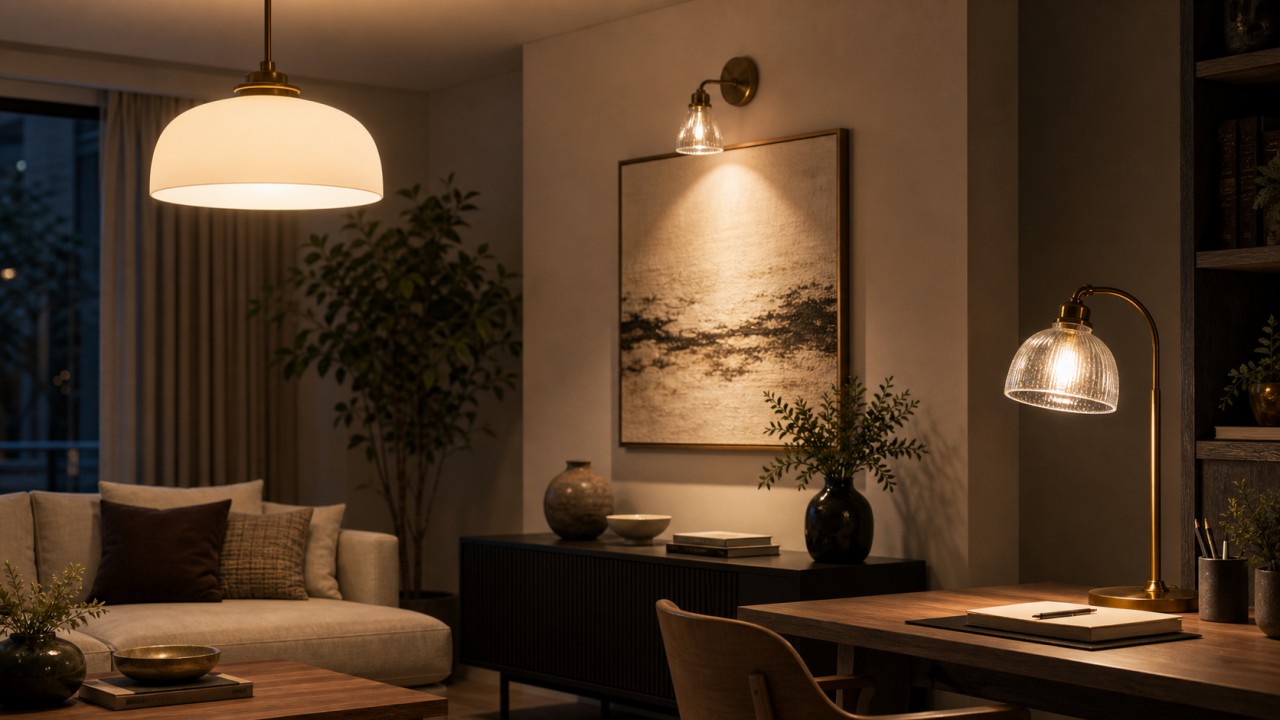
In layered lighting, which glass surface finishes are best suited for ambient lighting, accent lighting, and task lighting?
Layered lighting works because each layer has a different job. Ambient lighting provides the general brightness of the room, accent lighting creates focus and hierarchy, and task lighting supports a specific activity such as reading, cooking, writing, applying makeup, or doing handwork. The surface treatment of the glass should follow these different jobs instead of using the same finish everywhere.
For ambient lighting, the best glass treatments are those that diffuse light widely and reduce the visibility of the light source. Opal glass, frosted glass, acid-etched glass, sandblasted glass, and fine ceramic diffusion glass are common choices. These finishes increase haze, scatter light in many directions, and make the lamp surface look more even. They are suitable for bedrooms, living rooms, corridors, ceiling lights, and wall washers where the goal is a comfortable base layer of light. The advantage is softness and low glare. The trade-off is lower transmittance, so the fixture may need more LED output or a larger luminous area.
When kitchen fumes turn a glass lampshade yellow, is it glass aging or oil carbonization, and how can it be prevented?
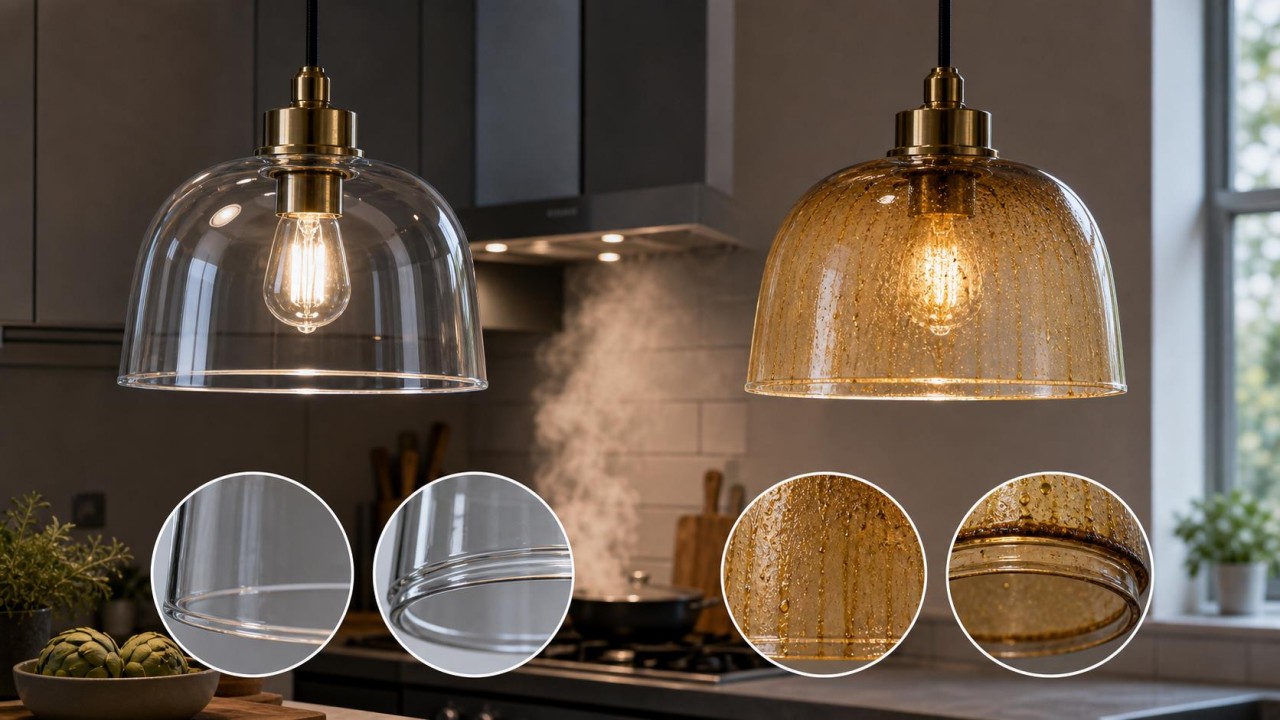
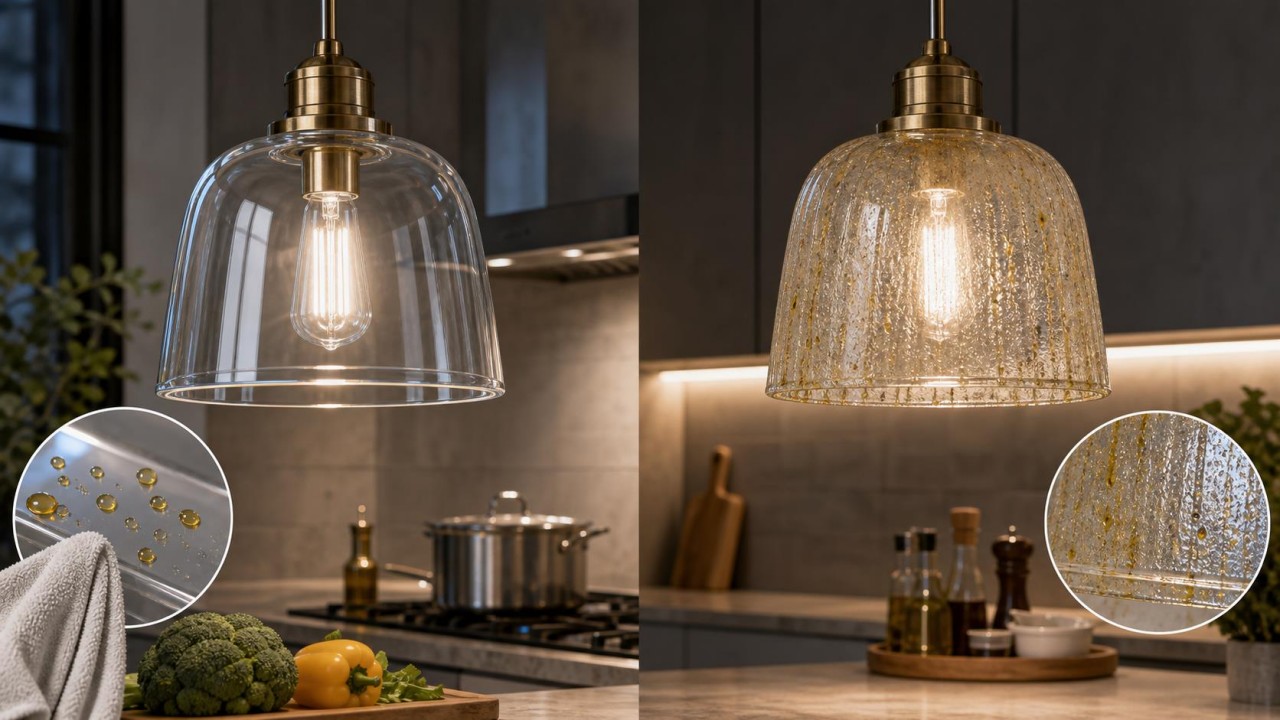
When a kitchen glass shade turns yellow, the cause is usually not the glass itself aging. In most cases, it is a yellow-brown film formed by cooking oil, steam, dust, and heat on the glass surface. Soda-lime glass, borosilicate glass, and tempered glass are chemically stable under normal kitchen-lighting temperatures. Unlike many plastics, they do not normally yellow significantly by themselves. The real causes are grease deposition, oxidation and polymerization of oil under repeated heating, and in some hot areas, partial carbonization of oil residue.
Kitchen fumes contain fine oil droplets, moisture, smoke particles, and decomposed cooking residues. At first, they form a nearly transparent oily film. With repeated heat from the lamp and cooking, the film oxidizes, becomes sticky, attracts dust, and gradually changes from pale yellow to brown-yellow. Near a stove or high-temperature zone, the grease can even carbonize and create darker stains that are much harder to remove. So the problem is usually aged surface contamination, not failure of the glass material.
Prevention starts with the glass surface. Kitchen shades should use smooth, glossy, low-porosity glass with no deep texture. Low-iron tempered glass or borosilicate glass with an oleophobic and hydrophobic outer coating is a strong choice. Avoid external sandblasting, rough frosting, fabric texture, hammered texture, and deep embossing in oily areas, because these microstructures trap grease. If soft light is needed, place the diffusion treatment on the inner side or use an internal diffusion structure while keeping the outside smooth.
How can fingerprints or oil stains be cleaned from frosted or sandblasted glass shades without damaging the surface texture?
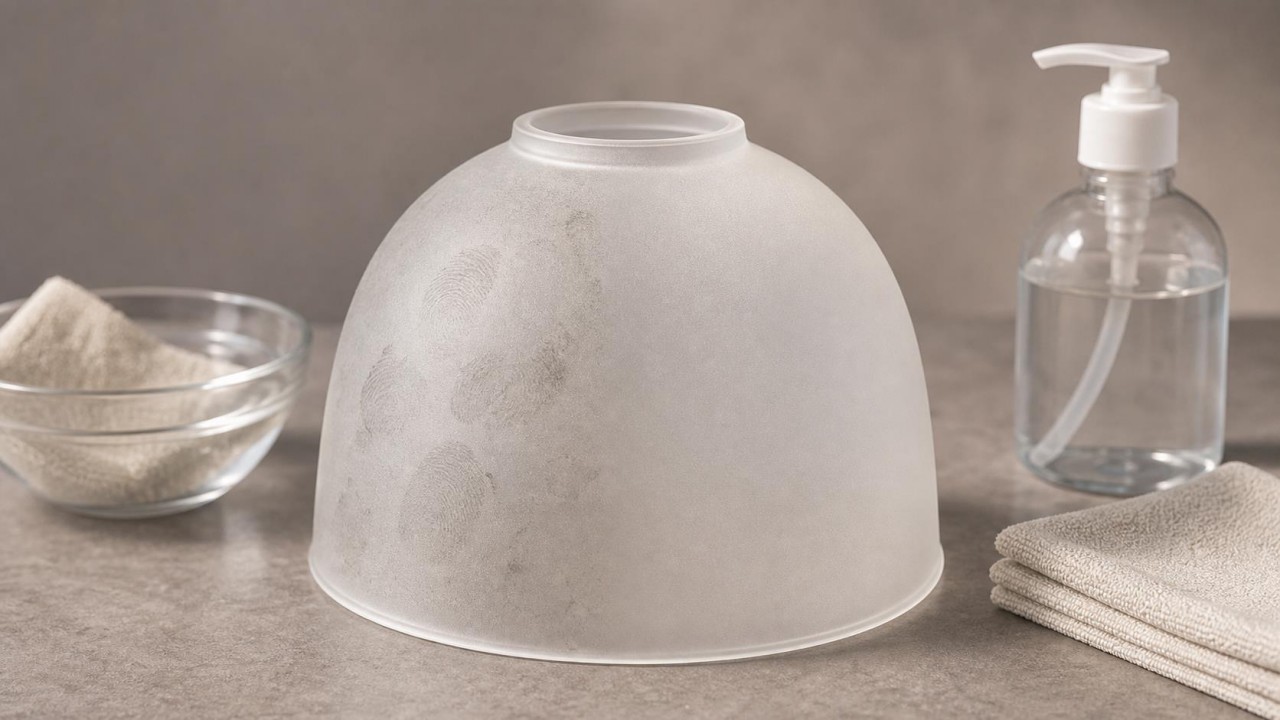
The challenge with frosted or sandblasted glass is that its surface is not fully smooth. It contains tiny roughness, pores, and micro-valleys that can trap fingerprints, cooking grease, limescale, and dust. If you rub it hard with a dry cloth, you may spread the oil more evenly and create shiny patches. If you use a hard brush, abrasive powder, or strong alkaline cleaner, you may permanently change the matte texture.
Before cleaning, identify the surface type. Acid-etched glass is usually finer and more resistant to wiping than mechanically sandblasted glass. Sandblasted surfaces are rougher, trap dirt more easily, and can be polished shiny by repeated friction. If the shade has an anti-fingerprint, anti-stain, or oleophobic coating, avoid alcohol, strong alkali, strong acid, and abrasive cleaners unless the supplier confirms compatibility.
For normal fingerprints, use warm water with a small amount of neutral dish detergent. First wet the surface thoroughly with a spray bottle or damp cloth to soften the oil. Then wipe gently with a microfiber cloth in one direction. Do not start with dry wiping, because that can push grease deeper into the microtexture. After cleaning, wipe again with clean water to remove detergent residue, then blot dry with a soft clean cloth. For stubborn local fingerprints, repeat with a neutral glass cleaner or diluted mild soap solution.
How long can nano oleophobic coatings last on glass lampshades, and will daily wiping make the coating fail?
The lifetime of a nano oleophobic coating on a glass lampshade has no single fixed value. It depends on coating chemistry, application method, curing quality, glass-surface preparation, use environment, and cleaning method. In most lighting applications, the coating is an extremely thin low-surface-energy film that prevents oil and water from spreading and sticking strongly. It is not a permanent shield. It is a functional layer that gradually weakens with use.
In low-contamination areas such as living rooms, bedrooms, and corridors, a good coating may last two to five years or even longer if it is rarely touched and cleaned gently. In kitchens, bathrooms, coastal homes, or hot and humid environments, oil, limescale, cleaning chemicals, and frequent wiping may reduce the effective life to six months to two years. A simple spray coating without proper curing may last even less. A factory-applied, chemically bonded, heat-cured coating with abrasion testing will perform much better.
Daily wiping does gradually wear the coating, but correct wiping will not destroy it immediately. The real enemies are abrasion, strong alkali, strong acid, aggressive solvents, hard brushes, steel wool, and particle-based cleaners. Frequent dry rubbing with rough paper or cloth also increases wear. The right method is to soften dirt first with warm water or neutral detergent, wipe gently with a microfiber cloth, rinse with clean water, and blot dry.
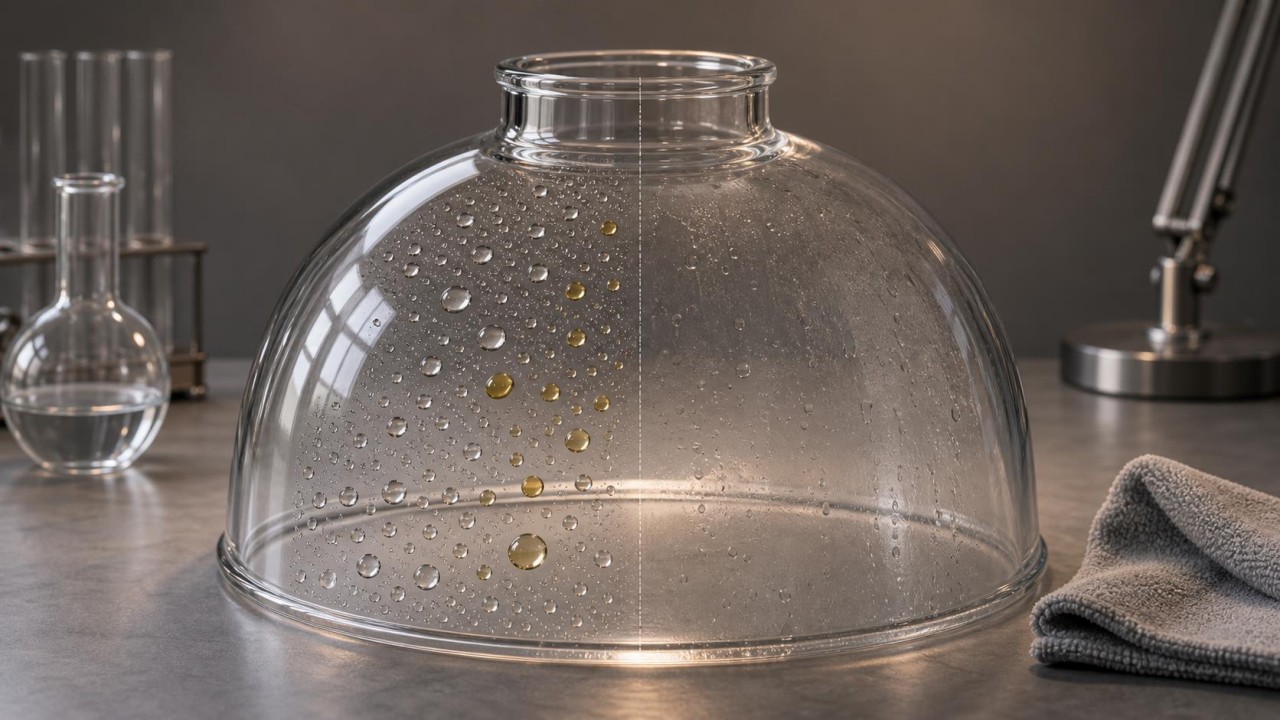
How serious is lumen depreciation in lamps that are not cleaned for a long time, and how should different fixtures be cleaned and how often?
Long-term uncleaned luminaires suffer from two kinds of lumen loss. One is real LED lumen depreciation over operating hours. The other is maintenance-related light loss caused by dust, grease, limescale, insects, and dirt on shades, lenses, reflectors, and heat sinks. In homes, when users feel a lamp has become dim, the cause is often not only LED aging. The fixture may simply be dirty.
In normal bedrooms and living rooms, one year without cleaning may reduce effective light output by about 5-15% because of dust on shades and surfaces. Kitchen fixtures are more serious. In oily environments, light output may drop 15-30% within a few months, and even more near heavy cooking areas. Bathroom lights can lose output through limescale, soap residue, and condensation marks. Outdoor or balcony lights can suffer from dust, rain deposits, insects, and salt mist; one year without maintenance can easily cause more than 20% effective light loss.
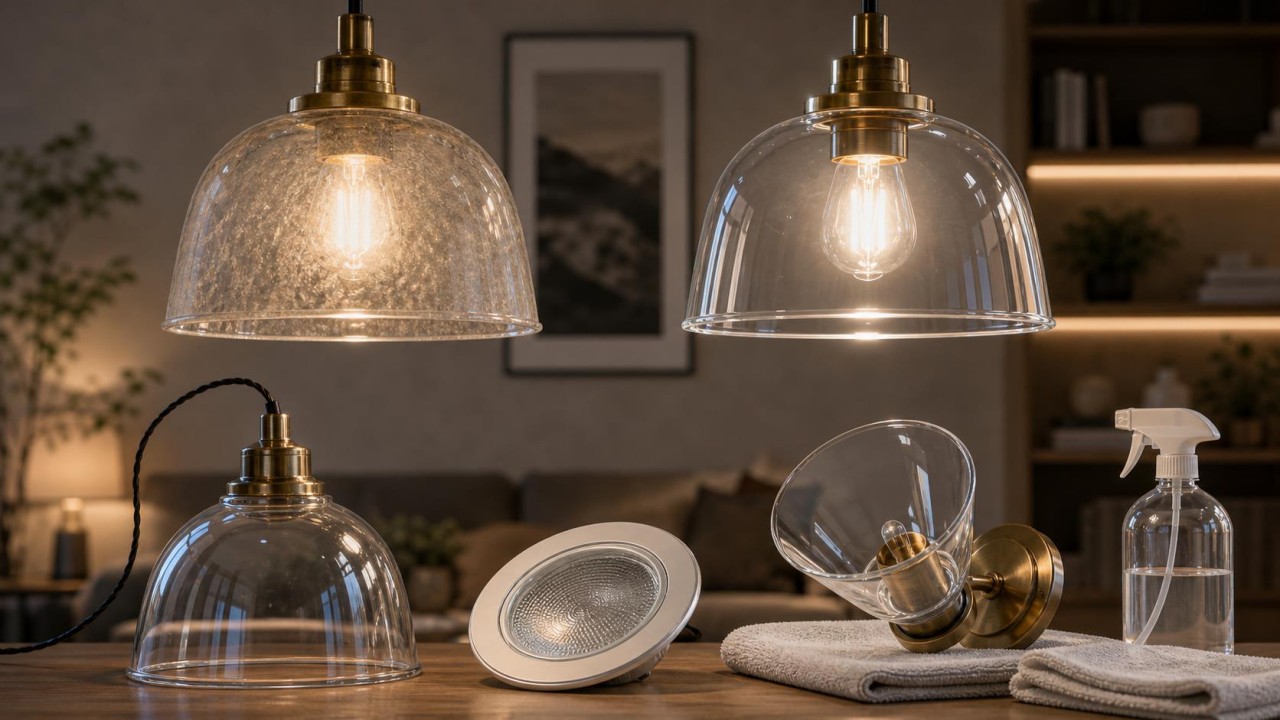
For vintage industrial pendant lights, are aged, tea-colored, or amber glass shades coated or body-tinted, and how can fading be prevented?
The tea, amber, smoky, or aged look of vintage industrial pendant glass can be produced either by body-colored glass or by surface coating, spraying, glazing, or post-treatment. These methods differ in cost, stability, and visual effect, so photos alone are not enough to judge quality.
Body-colored glass means colorants or metal oxides are added to the glass batch, so the color exists throughout the glass itself. Its advantages are strong color stability, wash resistance, and low fading risk. Even if the surface receives a fine scratch, it does not reveal a different base color. Amber, tea, smoke grey, green, and blue glass can all be made this way. The disadvantages are less flexibility in fine color adjustment and lower transmittance for darker colors. Batch production also requires strict control of formula and melting conditions; otherwise color depth can vary.
Surface coating or spraying can create richer effects, such as gradient smoke, metallic reflection, mirror finish, iridescent film, partial aging, mottled rust-like effects, or handmade patina. The advantage is high design freedom and layered appearance. The disadvantage is that the film or coating is on the surface and can be affected by wiping, cleaners, humidity, heat, and UV. Poor coatings may fade, peel, become patchy, lose adhesion, or show uneven color.
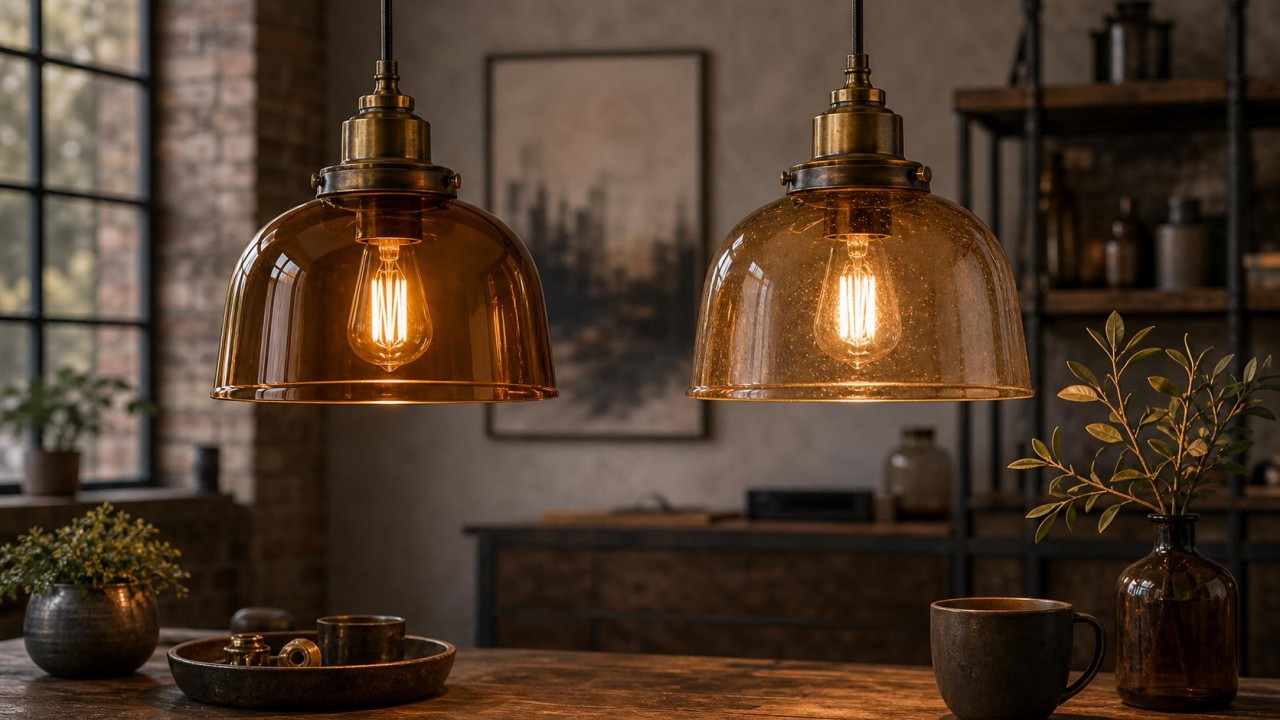
In light-luxury interiors with many metal elements, how should glass shade transparency and reflectivity match brass or brushed nickel?
Light luxury interiors are not about making every material shiny. The goal is controlled layers of sheen among metal, glass, stone, and fabric. If the glass shade is too reflective, it competes with brass, brushed nickel, and polished metal. If it is too dark, the space feels heavy. Therefore, transparency and reflectivity should be matched to metal color, surface finish, and room brightness.
Warm metals such as brass, champagne gold, and bronze work well with warm-clear or semi-transparent glass. Good options include light tea-colored glass, pale champagne glass, low-iron clear glass, warm smoked grey, and opal glass. Brass already reflects warm tones. If it is paired with very strong amber glass, the room can become too yellow. If it is paired with cold grey glass, the warmth may be weakened. A safe approach is to use high-transparency low-iron glass for lightness, or a light tea/champagne tint for subtle warmth, while avoiding overly dark shades.
Brushed nickel, chrome, stainless steel, and cool silver metals pair better with neutral or cool-neutral glass. Low-iron clear glass, light smoke grey, pale grey, opal glass, and subtle matte glass can maintain a clean look. Brushed nickel has a softer sheen than mirror chrome, so it can accept slightly reflective clear glass. But if the room already contains glossy stone, mirrors, and metal strips, the shade should be low-reflective or softly matte to avoid too many reflections.
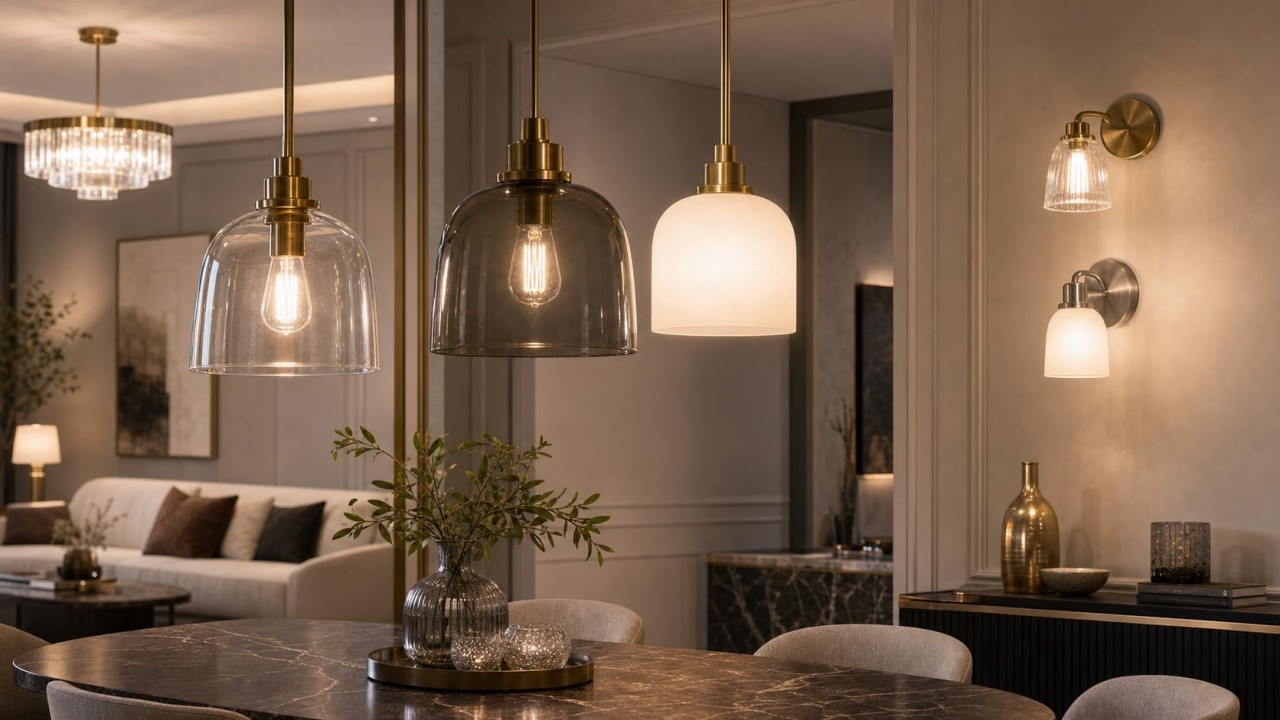
In greasy kitchen environments, are stain resistance and easy cleaning more important than optical performance for glass lampshades?
In a kitchen full of cooking fumes, stain resistance and easy cleaning are often more important in real use than an impressive optical specification on paper. The reason is simple: the optical performance that matters to the user is not only the initial transmittance of a new shade, but the maintained transmittance after weeks and months of cooking. Oil vapor, steam, smoke particles, and dust settle on the glass surface and form a sticky film. This film reduces light output, makes the shade look yellow or grey, attracts more dirt, and can be surprisingly difficult to remove if the surface is rough.
Therefore, in kitchen lighting, the first priority should be a surface that does not hold oil easily and can be wiped clean quickly. Smooth glossy glass is much better than deep textured glass. A transparent oleophobic and hydrophobic coating is useful because it reduces the adhesion of grease and water stains. A simple flat, shallow dome, or shallow bowl shape is easier to clean than a deep narrow cylinder, a complex fluted form, or a shade with many grooves. Internal corners should be minimized because oil accumulates there and becomes hard to reach.
How do reflector materials such as aluminum, plastic, and coatings affect light quality?
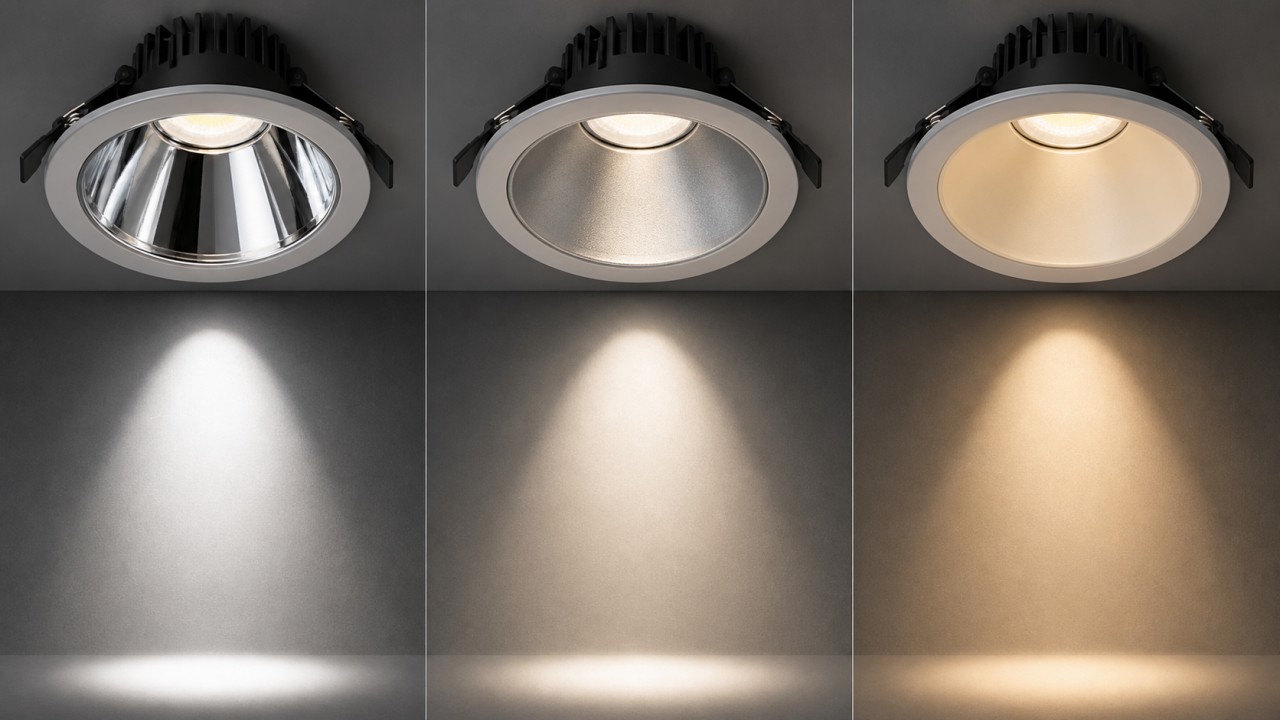
Reflectors collect, redirect, and shape light, so they affect efficiency, beam angle, glare, color shift, and long-term stability. Aluminum reflectors are common in downlights, spotlights, and commercial luminaires. They offer good heat resistance, high reflectance, and stable geometry. Anodized aluminum, mirror aluminum, and matte aluminum behave differently. Mirror aluminum gives high efficiency and crisp beams, but may increase glare. Matte or micro-textured aluminum softens the beam but slightly reduces efficiency.
Plastic reflectors are low-cost, lightweight, and easy to mold into complex shapes. They are suitable for low-power LED fixtures. However, ordinary plastics have weaker heat resistance, UV resistance, and dimensional stability. Under heat, they may yellow, deform, or lose reflectance. If plastic reflectors are used, choose heat-resistant engineering plastics and control LED temperature.
Coated reflectors can use glass, plastic, or metal substrates with high-reflectance, selective-reflection, or anti-glare films. High-quality coatings can improve efficiency and spectral control, but they require good process control and durability. Poor coatings may peel, oxidize, become patchy, or introduce color shift. When selecting reflectors, do not look only at initial reflectance. Check heat resistance, humidity resistance, cleaning resistance, and long-term lumen maintenance.
Blue-light protection: can glass lampshades use material or coatings for selective spectral filtering?
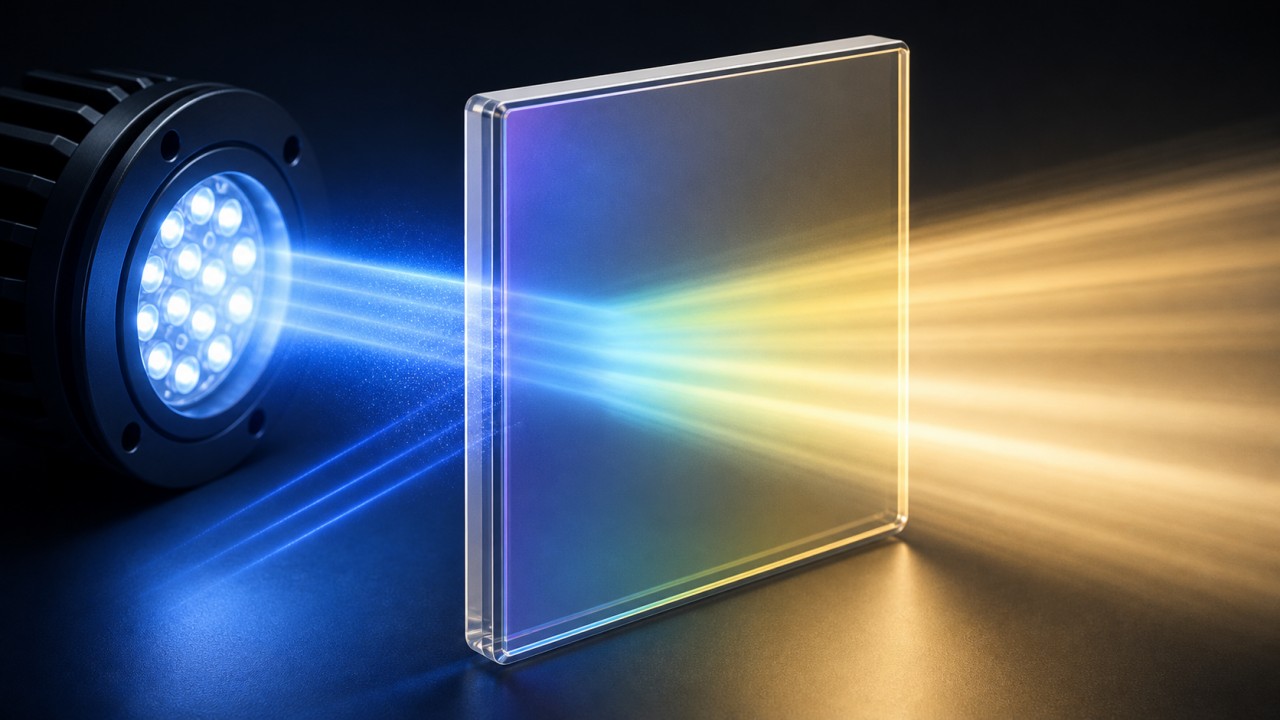
A glass shade can modify spectral transmission through its material or coating, but it is not a complete blue-light protection solution by itself. Photobiological risk depends on accessible spectral radiance or irradiance from the complete light source and luminaire, together with source size, distance, direction, operating mode, optics, and exposure assumptions. The shade is one part of that system.
IEC 62471 addresses photobiological safety of lamps and lamp systems, including luminaires. For visible-light products, IEC 62471-7:2023 specifies assessment for light sources and luminaires primarily emitting from 380 nm to 780 nm. IEC 60598-1:2024 also includes photobiological-safety provisions. Select the applicable standard and national adoption with the test laboratory or certification body, and assess the final luminaire—not only the shade or bare LED.
Material additives or optical coatings can change spectral transmission, but do not assume that filtering a fixed wavelength band guarantees a lower product risk group. Measure the transmitted spectrum and reassess accessible radiance or irradiance in the final optical configuration. Also report changes in luminous flux, chromaticity, colour rendering, beam distribution, and glare, and verify coating durability under wiping, heat, humidity, chemicals, and aging.
CCT is not a blue-light-safety metric. Products with the same CCT can have different spectra, source sizes, radiance, and exposure conditions. Procurement should rely on a traceable complete-luminaire photobiological-safety report and its stated measurement conditions, not on shade-only filtering percentages, “low-blue” marketing, or CCT alone.
What BO-Glass production photographs can support a process review?
BO-Glass-provided photographs document an ultrasonic cleaning line, controlled process equipment, and an automated robotic production cell. These images provide useful evidence that the equipment and production infrastructure exist, but they should not be treated as proof that every lighting-glass part uses the same route or can meet an undeclared capability window.
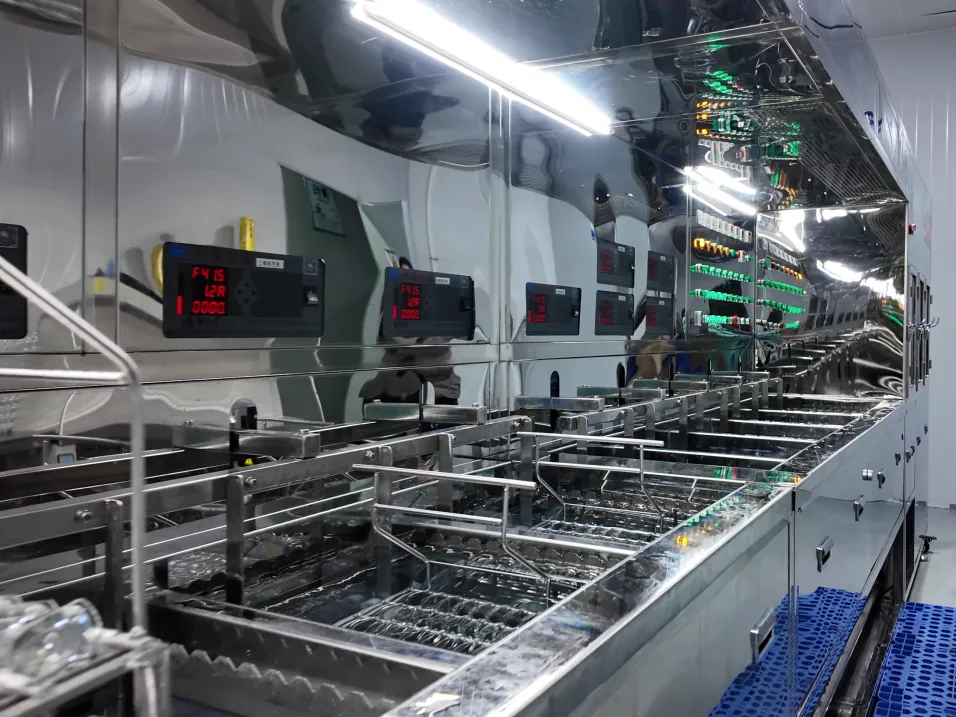

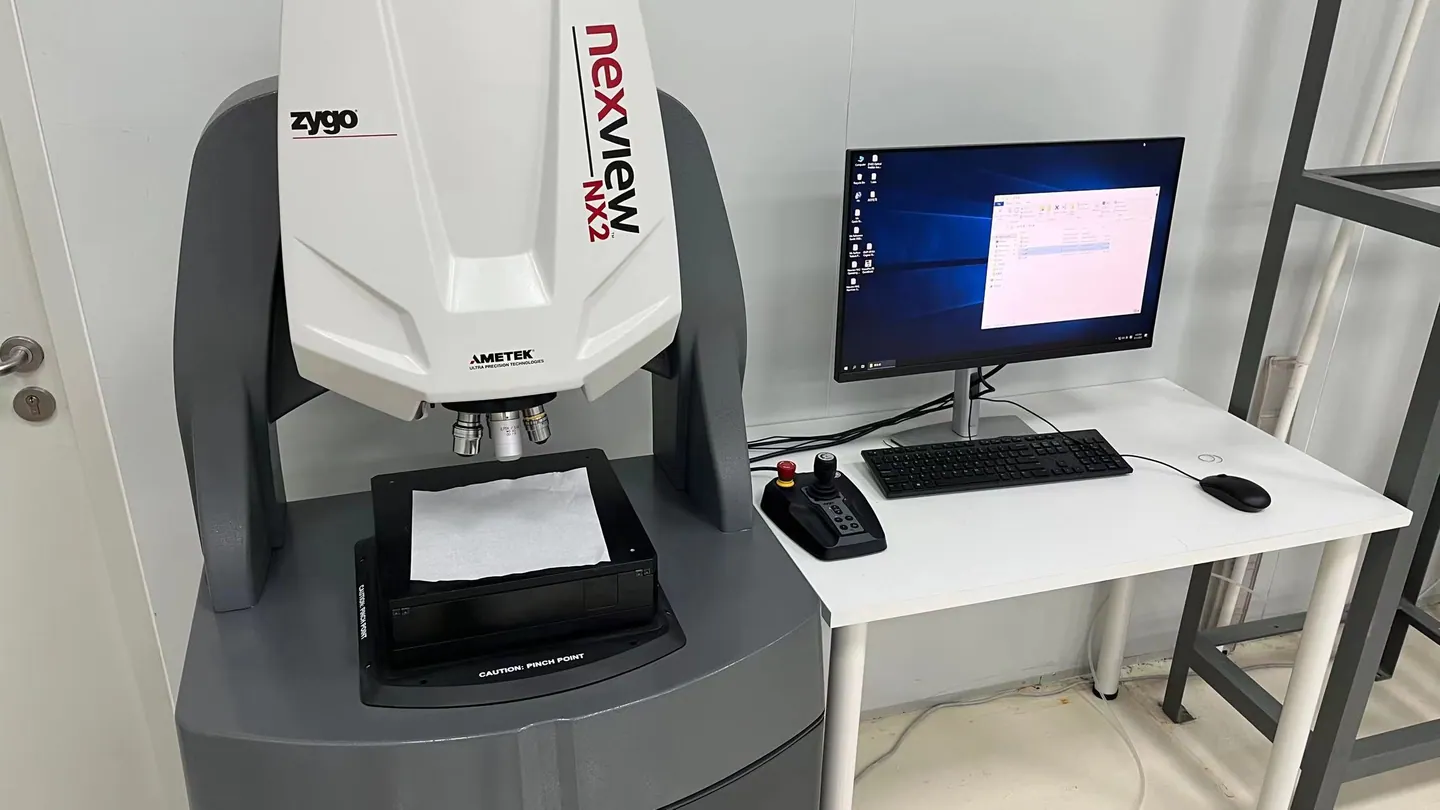
For RFQ use, ask BO-Glass to identify which photographed equipment applies to the proposed component and which steps are performed internally or by an approved partner. Record tooling, process parameters, sample approval, routine inspection, lot traceability and packaging controls instead of relying on a general factory photograph alone.
Contact Us
Your feedback fuels our growth, and your questions drive our solutions.
We value your feedback, inquiries, and suggestions. Please feel free to get in touch with us
General inquiries
Please contact us via sales@bo-glass.com, and we will reply to you as soon as possible.
Interested to work with us
Drop your resume at info@bo-glass.com
and we will get back to you shortly.
We uses the contact information you provide to us to contact you about our relevent content, products, and services.