
Custom Milk White
Opal Glass Parts
Milk-white opal glass parts for lighting and decorative products. Share your drawing and reference sample to review the glass, forming route, mounting details and finished appearance.
Blowing · Pressing · Appearance & fit review
Get a product quoteYour drawings remain confidential.

Swipe to view brands
Opal Glass Project Examples
Explore finished lighting parts, from broad ceiling shades to globes with defined mounting features.

Jade-White Ceiling Shades
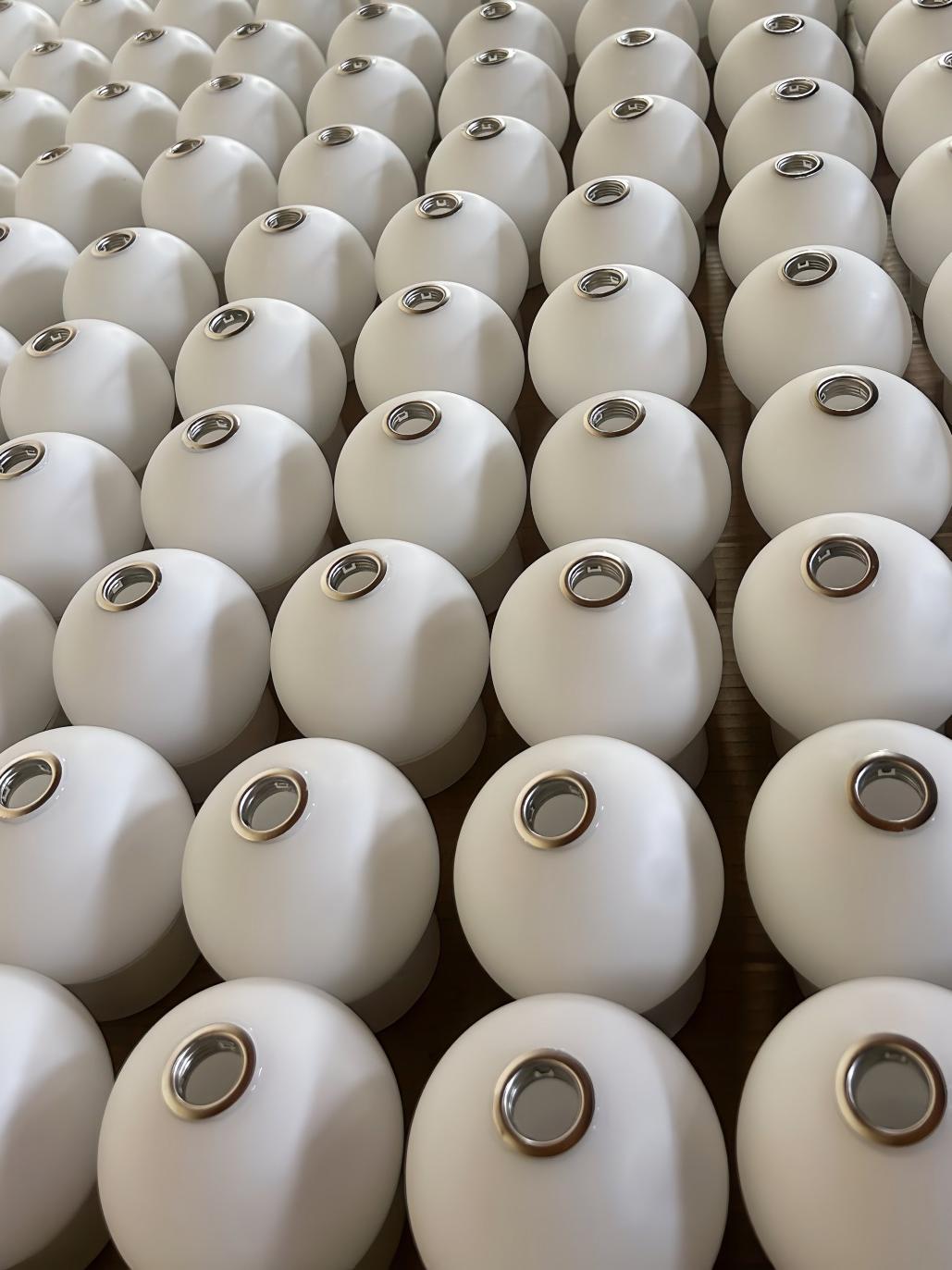
Two-person hand blowing and spin-mould forming produced a 500 mm shallow ceiling shade with a large opening. The project combined opening finishing with flatness and wall checks. Color was compared with a master under daylight and warm light.
Delivered project diameter: 500 mmDaylight and warm-light sample comparisonRead the ceiling shade project
Opal Screw-Neck Globes
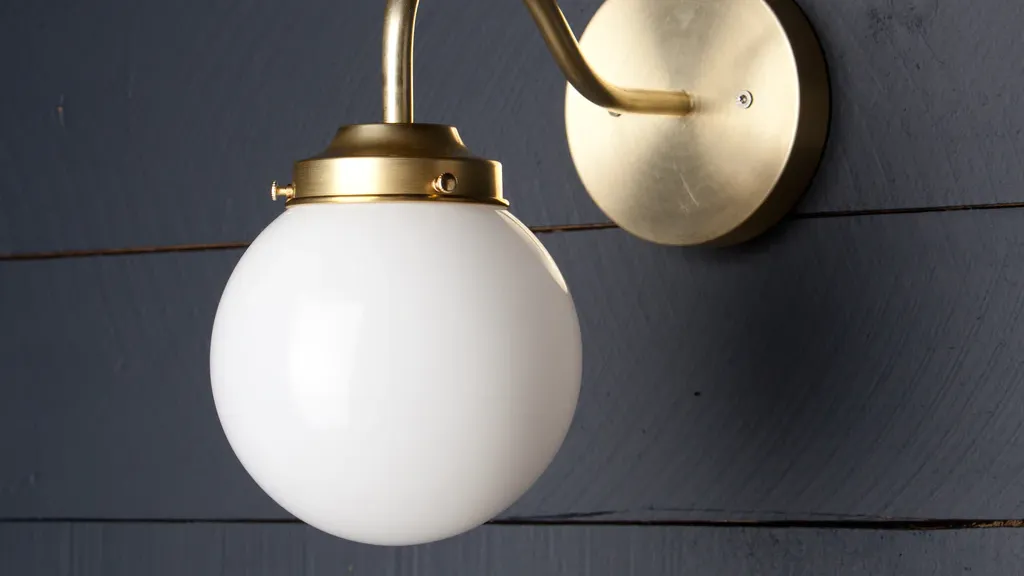
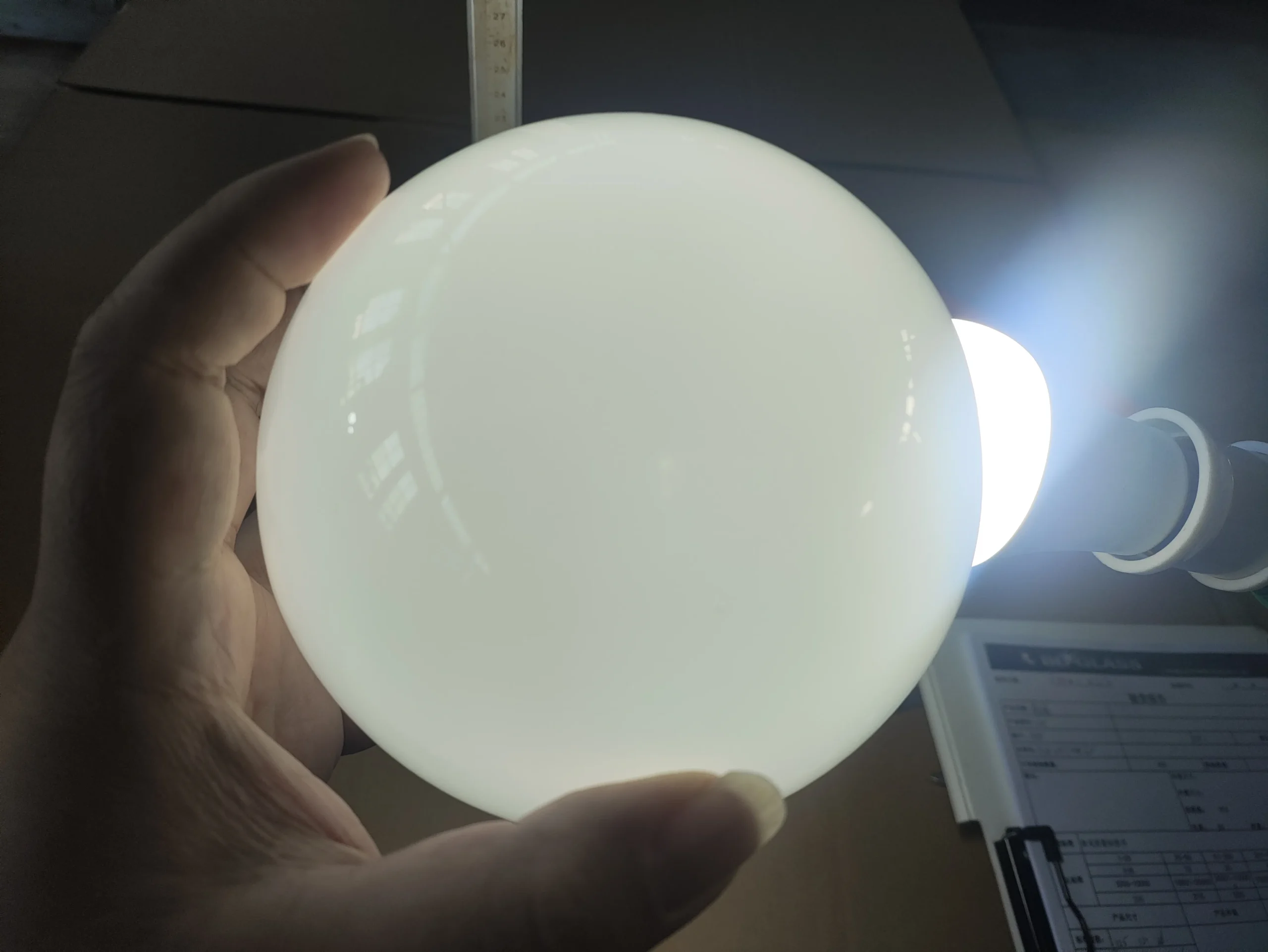
Mould-blown opal glass formed an approximately 150 mm globe with a threaded mounting neck. The project checked the neck against compatible fitting gauges and reviewed the shade under illumination, linking the spherical appearance with practical replacement-part fit.
Project globe: approximately Ø150 mmThread fit checked with compatible gaugesRead the globe project
Custom Opal Shade Collections
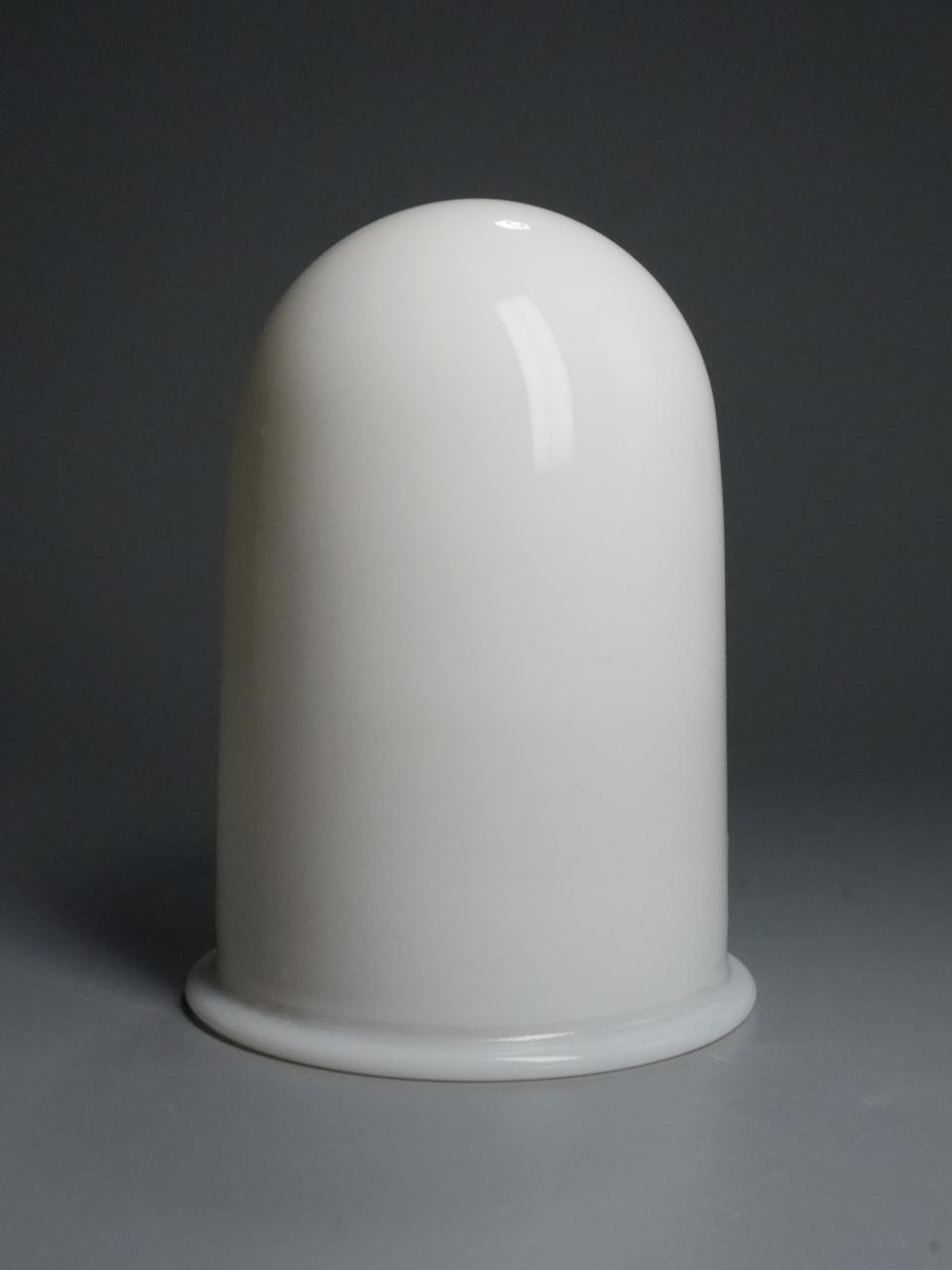
A collection of globe, bell and cylindrical shades used model-specific forming and mounting checks. Pre-production samples established the target whiteness and translucency. Finished shades were assessed unlit and illuminated, with lip-fitter, threaded and neck-style mounting configurations for the different models.
Multiple shapes and mounting configurationsModel-specific samples and inspectionRead the lamp shade project
Published project examples. Dimensions, glass specifications and acceptance criteria are specific to each design.
Specify the White You Want to See
Opal describes a light-scattering glass body. A white coating or frosted clear glass is a different construction.
White tone & transmission
Provide a physical reference for whiteness and transmitted appearance. Thickness, shape and the selected glass affect how much light passes through; agree the finished sample rather than a universal transmission value.
Surface finish
Specify gloss, satin or another required finish separately from the opal body. Confirm the available finishing route and use a sample to define texture, appearance and critical surfaces.
Lit & unlit appearance
Review the shade both switched off and with the intended light source. LED position, output and color temperature influence visible hotspots and the perceived white tone.
Develop the Part Around Its Assembly
Share the drawing, mating parts and intended finish before confirming the manufacturing route.
Forming the glass
Review blowing or pressing against the geometry, glass grade and wall sections. Define overall dimensions, openings and mounting datums. Agree feasible tolerances for the features that affect assembly.
Finishing the interfaces
Identify cut edges, rim flatness, holes and any ground or polished surfaces. Check the finished part with the mating holder, gasket or fixture where fit is critical.
Approve Appearance in the Intended Setup
Keep a representative approved sample and record how it should be compared.
Set the reference
Provide a physical sample, drawing and priority features. Photographs help explain the target but cannot settle white tone alone.
Review the finished part
Evaluate the intended thickness, shape and finish, including mounting surfaces and visible areas.
Compare both states
Use agreed lighting and backgrounds for unlit comparison, then evaluate the part in the intended fixture.
Record acceptance
Agree allowable appearance variation, dimensional checks and visible-defect limits before releasing production.
Define What the Finished Part Must Meet
Make appearance, assembly and operating conditions part of the specification.
Fit & mounting
Mark critical dimensions and inspection datums. Agree checks for openings, necks, rims and mating interfaces, including the intended assembly clearance.
Appearance & light
Define inspection distance, viewing conditions and permitted defects. Where optical values matter, specify the measurement setup, sample thickness and acceptance limits.
Operating conditions
State fixture temperatures, thermal cycling, cleaning agents and exposure. Validate the selected base glass and finished part for the application; an opal appearance alone establishes no thermal rating.
Questions Before Ordering
Is opal glass the same as frosted or spray-painted glass?
No. Opal glass scatters light within its body. Frosting changes a surface, while white paint adds a coating. Specify the required construction and approve its appearance on a sample.
Which base glass should I specify?
Choose it against forming, optical and operating requirements. Confirm the actual glass grade for the project; milk-white appearance does not identify its composition or heat resistance.
Can every opal glass part be tempered?
No. Suitability depends on the glass composition, geometry and processing route. Request any strengthening requirement during drawing review and confirm feasibility before ordering.
What are the sample quantity, minimum order and lead time?
These are quoted for the design and manufacturing route. State trial and repeat quantities, then agree separate schedules for tooling, samples and production.
Can application tests and documentation be included?
List the intended market, required documents and test conditions. Agree the glass specification, available evidence and any additional validation scope in the quotation.
Contact Us
Discuss Your Custom Glass Project
Share your drawing, photos or dimensions, together with the intended use and target quantity. We will review your requirements and discuss the next steps.
Sales Enquiries
Email sales@bo-glass.com with your part description, intended use and target quantity.
Send Your Design
Use the form to upload a drawing or describe an existing part. Mark critical dimensions and tell us which surfaces or features matter most.
Request a Custom Glass Quote
Upload a drawing or share dimensions, quantity, intended use and finish. Include any heat, pressure or chemical exposure.
Your drawings remain confidential.
We use the contact details you provide to respond to your enquiry. See our Privacy Policy for more information.