
Roadway, Parking Lot and Area Lighting Glass Guide
Roadway and area lighting must deliver useful light to a defined surface over years of dirt, windblown particles, vibration, impact risk, and cleaning. The first decision is whether the outer glass only protects an internal optical system or actively shapes the beam as an optical glass lens. This guide connects that functional distinction to distribution, glare, spill light, mounting tolerances, impact testing, and maintenance cost.
Glass Components for Roadway, Parking Lot, and Area Lighting
- Transmission example
- Published 3 mm low-iron float-glass data can be about 91% luminous transmittance; coatings, texture, thickness and angle of incidence change the result.
- Vandal resistance
- Specify the required IEC 62262 energy: IK08 = 5 J, IK09 = 10 J or IK10 = 20 J, tested on the mounted enclosure.
- Photometric check
- Compare the luminaire intensity distribution, cutoff and lumen output before and after the cover glass, not transmittance alone.
- Thermal expansion
- Estimate movement with ΔL = αLΔT, then check housing clearance and gasket compression at both temperature limits.
Should an LED street light use an optical glass lens or protective cover glass?
Whether LED street lights are suitable for using optical glass lenses or protective cover glass depends on the light distribution scheme of the luminaires. If the main light distribution has been completed by the LED secondary lens, the outer layer usually uses a high-transmittance protective cover glass, which is mainly responsible for protection, dust-resistant, waterproof and impact resistance.
If the glass itself needs to participate in light distribution, such as improving weather resistance life, reducing the aging of plastic lenses, or achieving special beam control, optical glass lenses can be considered. However, the cost, weight and processing accuracy of optical glass lenses require higher requirements, and batch consistency must also be strictly controlled. Most modern LED street lights use a combination of internal lenses and external protective cover glass.
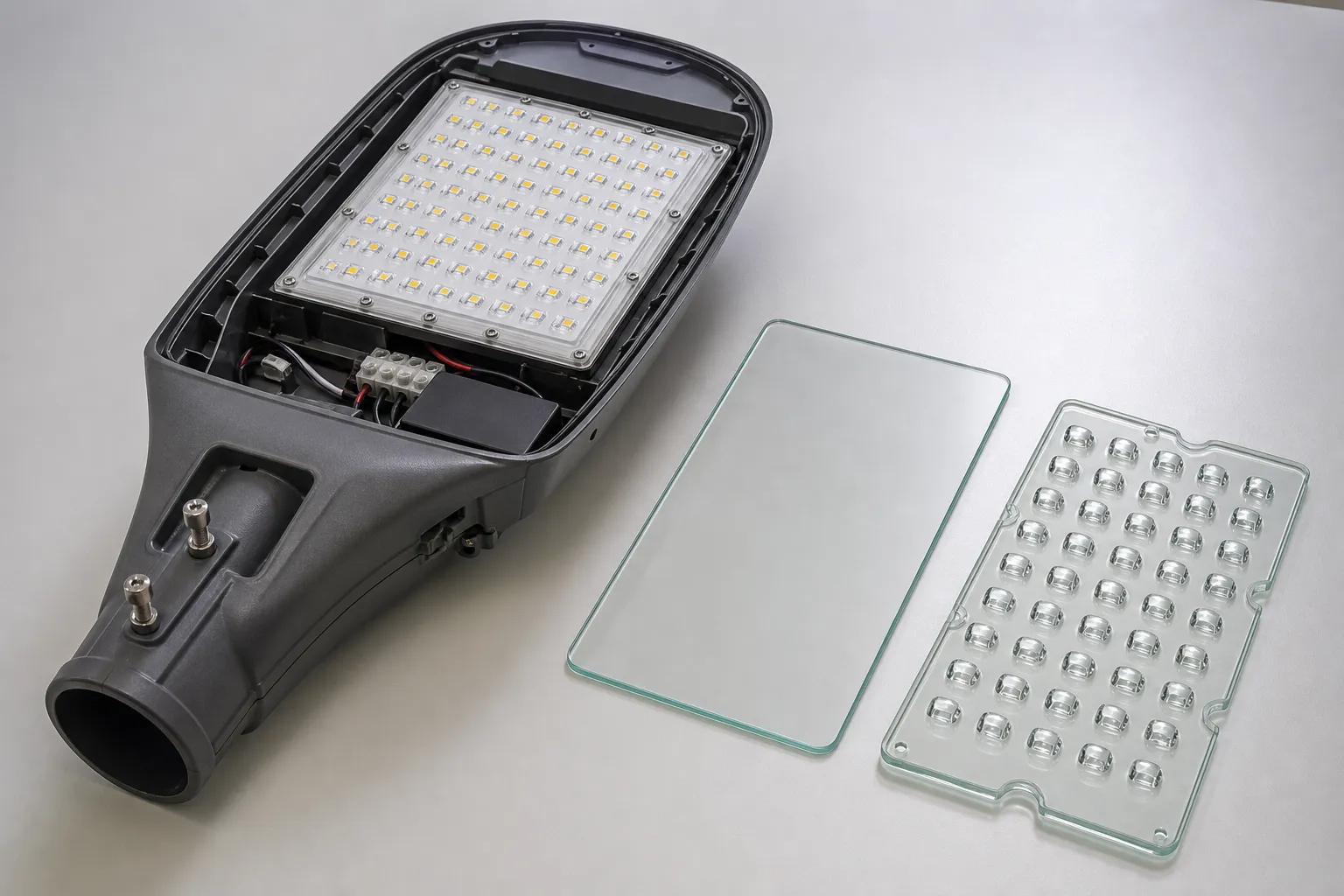
How do road lighting optical glass lenses affect the light distribution curve?
First determine whether the glass is only an environmental protective cover or a secondary beam-forming lens. A protective cover should disturb the internal LED optics as little as possible. A glass lens, by contrast, may use curvature, prismatic or free-form surfaces to create a symmetric distribution, an asymmetric roadway distribution, lateral spread, forward throw or a bat-wing pattern. These are spatial beam distributions, not polarization effects.
The optical result depends on the LED light-emitting-surface size and on the lens-to-LED axial, lateral and angular position. The drawing therefore needs datums and tolerances for optical-surface geometry, center position, mounting height and rotation. With a molded lens, cavity identity, refractive-surface replication, shrinkage and mold wear must also be controlled because small geometry changes can move peak intensity, create striping or change the cutoff from one production lot to another.
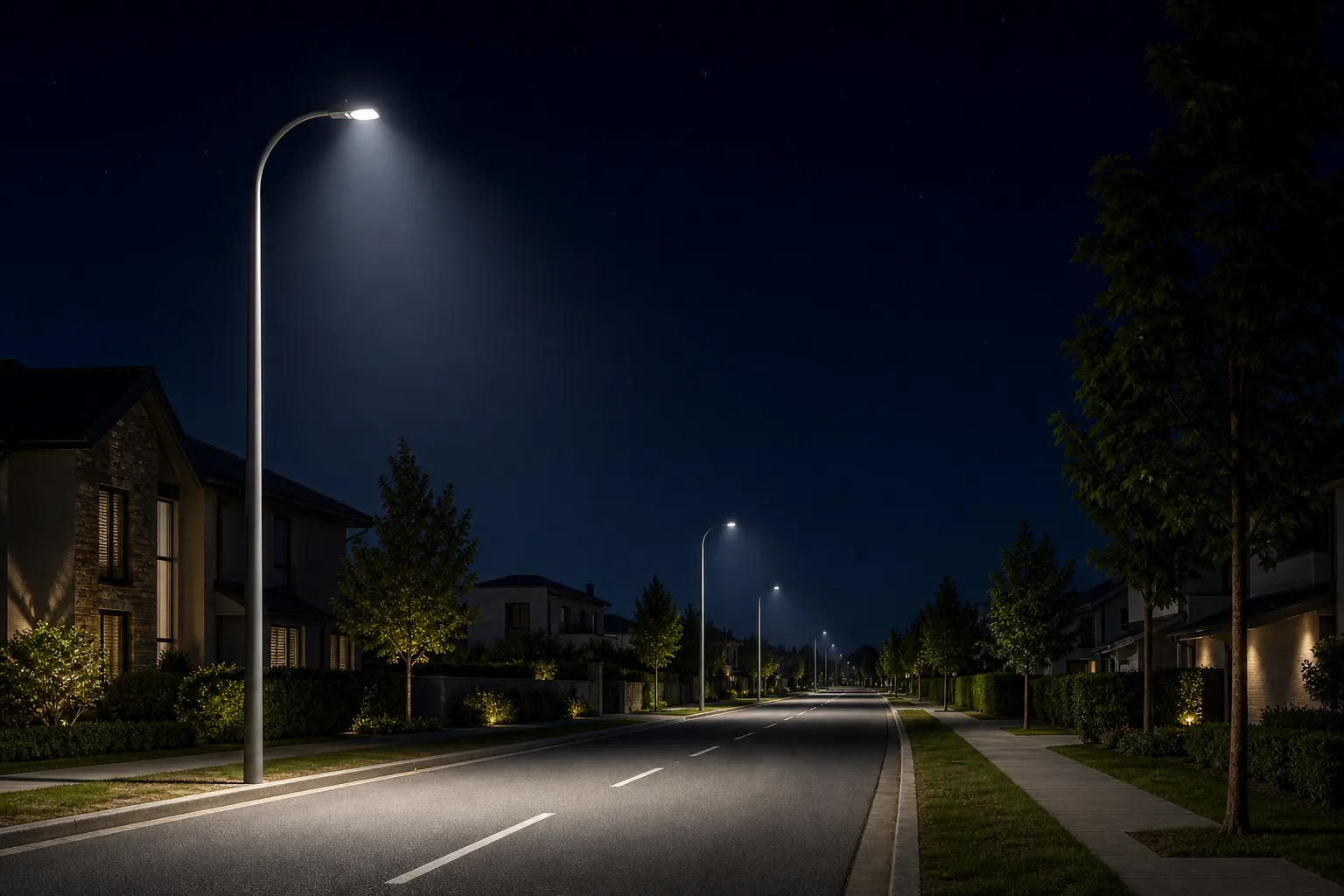
The design target should come from the complete roadway layout: pole height, road and sidewalk width, setback, overhang, luminaire spacing and tilt. The verification output should include the complete-luminaire intensity distribution, average illuminance or luminance, uniformity, threshold increment or the applicable glare metric, upward and off-road light and power-normalized efficacy. A transmittance value alone cannot demonstrate a compliant roadway distribution.
Prototype testing should compare the reference luminaire, candidate lens and at least two production lots using the same LED bin, drive current and thermal condition. Reject the lens if the distribution moves outside the approved photometric file, produces dark bands or excessive spill light, or shows a systematic CCT or Duv shift. Final acceptance must be based on complete-luminaire photometry, not inspection of the lens by itself.
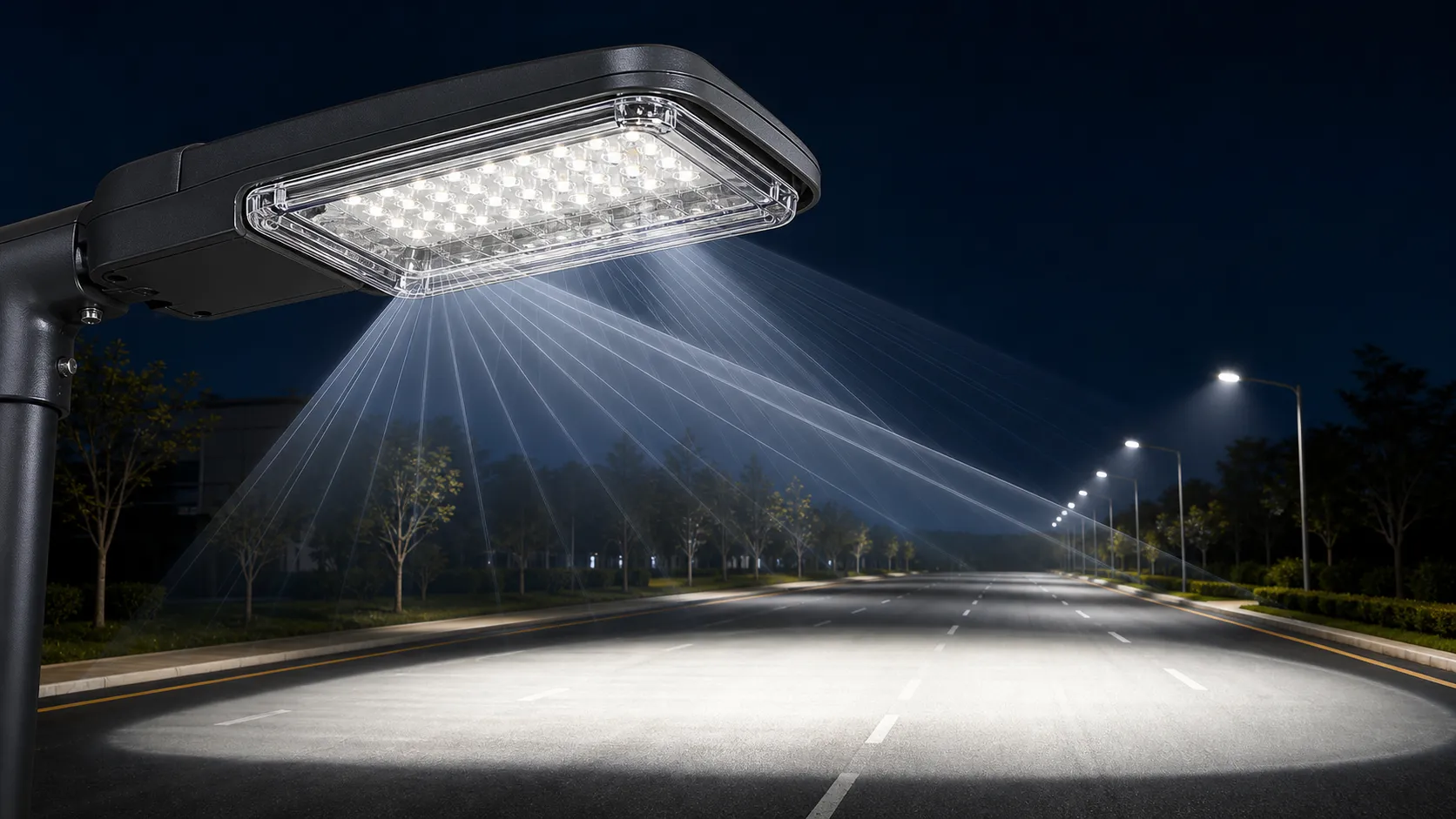
How can street light glass components reduce glare, spilled light and light pollution?
The key to reducing glare and light pollution with streetlight glass components is to accurately project light onto roads and pedestrian areas, rather than projecting horizontally or scattering toward the sky. The transparent cover should maintain low reflection and high flatness to avoid stray light caused by scratches, stains or uneven texture on the surface.
If it is necessary to soften the light, a moderate diffusion or glare control structure can be used, but the beam cannot be excessively diverged. A more effective way is to combine glass components with lenses, hoods, luminaire installation angles and light-cutting designs to allow the luminaires to meet the road illumination while reducing glare, spilled light and neighborhood light intrusion.
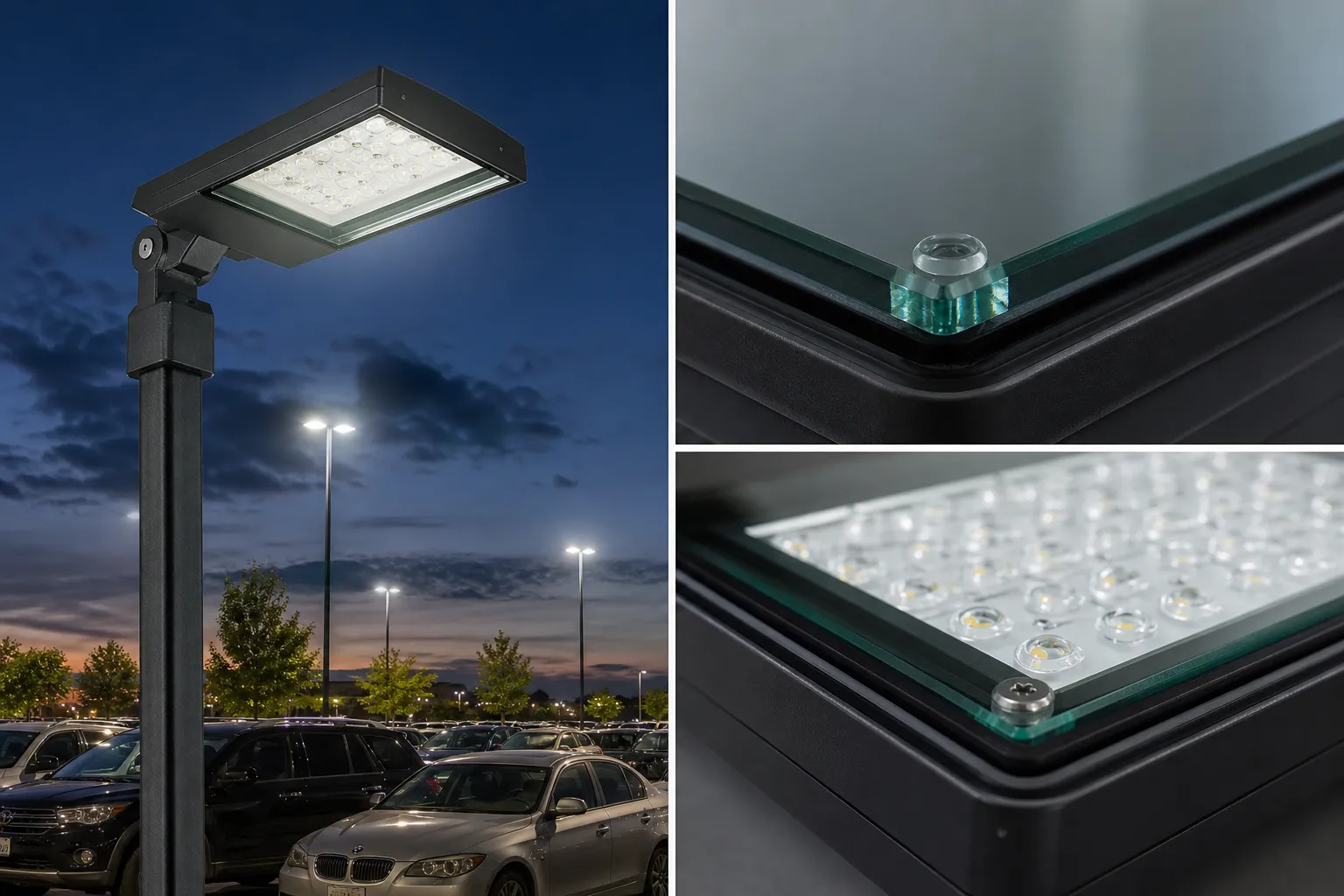
Why should the impact resistance level be considered for parking lot light protective cover glass?
Parking lot lights are usually installed in areas with intensive vehicle and pedestrian activity and may be subject to stone impacts, tool strikes, ball impacts or vandalism. If the impact resistance of the protective cover glass is insufficient, breakage can create falling-glass and cut hazards, compromise water ingress protection and increase maintenance costs.
It should be noted that the IK level is a classification of the electrical equipment enclosure's ability to withstand external mechanical impact according to IEC 62262, and should generally be understood as the ability of the complete luminaire or enclosure system. Glass thickness, tempered quality, edge protection and frame-pressing structure can help the complete luminaire improve its impact resistance, but the final results such as IK08 and IK10 should be confirmed through the complete-luminaire testing.
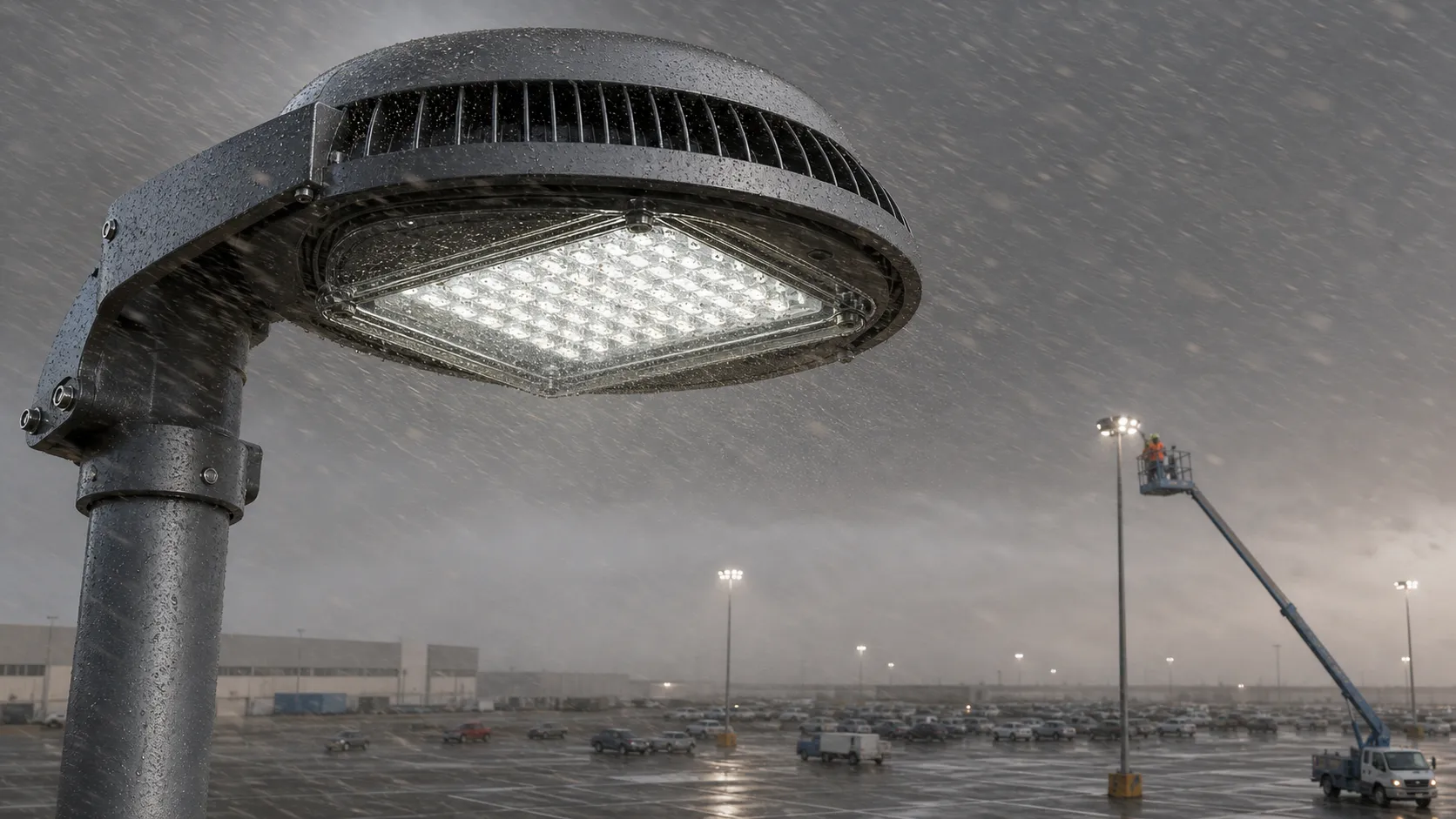
How do high pole luminaire glass components cope with sandstorm, rain and high-altitude maintenance problems?
The installation height of high pole luminaires is high, and the maintenance cost and risk are greater than ordinary luminaires. Therefore, the glass components must emphasize long-term stability and low maintenance. Wind and sand will wear away the glass surface, and rainwater and pollutants will cause dirt accumulation. If the light transmittance of the glass decreases, it will be troublesome to clean and replace it at high altitude.
Glass components should have surfaces that are highly transparent, wear-resistant, and easy to clean, and ensure reliable sealing surfaces to avoid fogging due to water ingress. Structurally, the fixing strength and wind vibration resistance of the glass must also be considered to prevent sealing failure due to vibration, temperature difference or loose screws in high-altitude environments.
Will the glass of road luminaires turn yellow or become cloudy after long-term outdoor use?
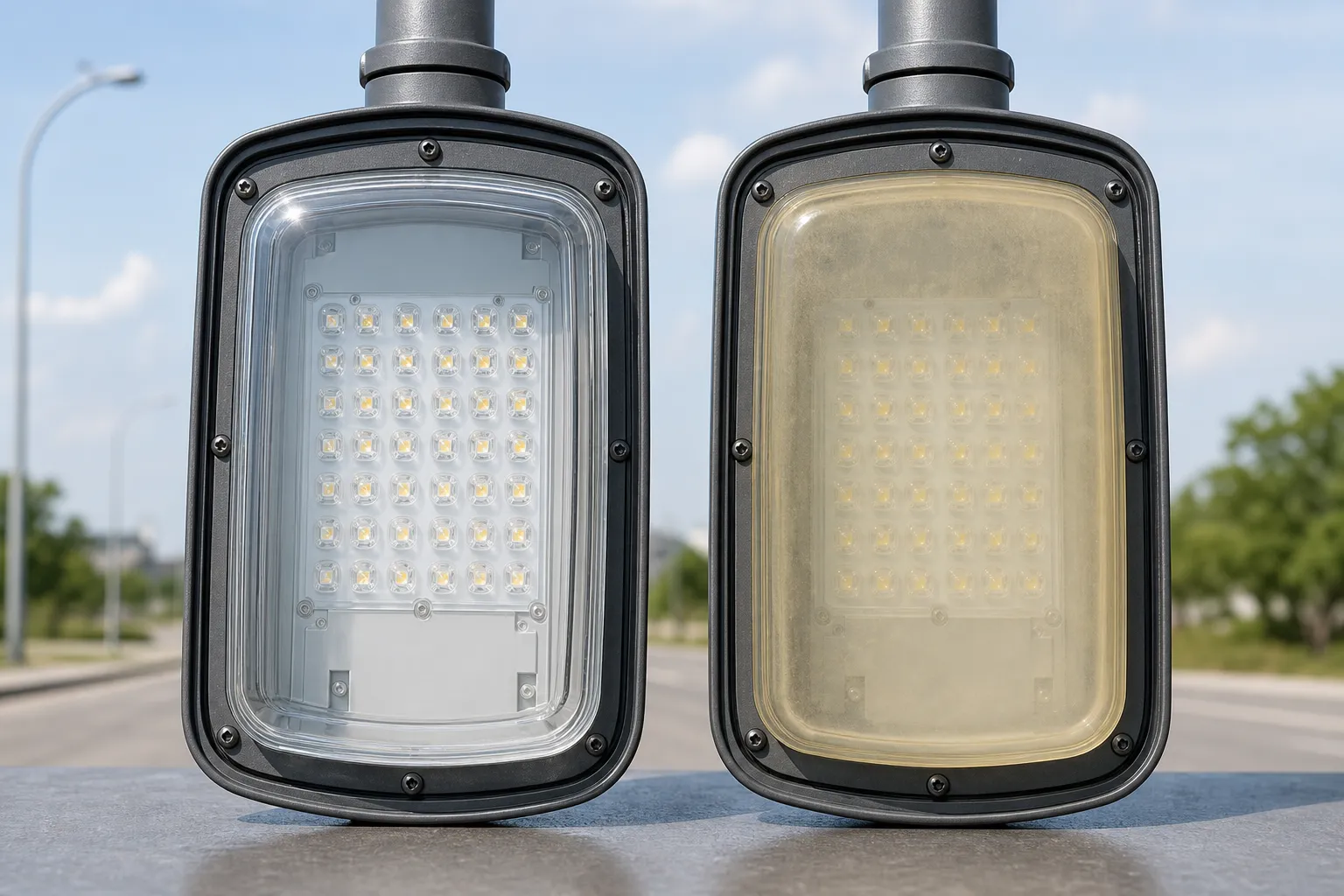
Glass bodies are generally less susceptible to UV yellowing than many plastic diffuser covers, which is an advantage of using protective cover glass for road lighting fixtures. However, after long-term outdoor use, the glass surface may still look cloudy due to dust, oil, rain marks, bird droppings, salt spray and minor scratches.
The real concerns are surface contamination, coating durability, edge contamination, seal failure and internal condensation. If the glass surface treatment is not appropriate or cleaning and maintenance is insufficient, the actual light transmittance and appearance will decrease even if the glass body does not age significantly.
How much light loss will be caused by dirt on the surface of street luminaire protective cover glass?
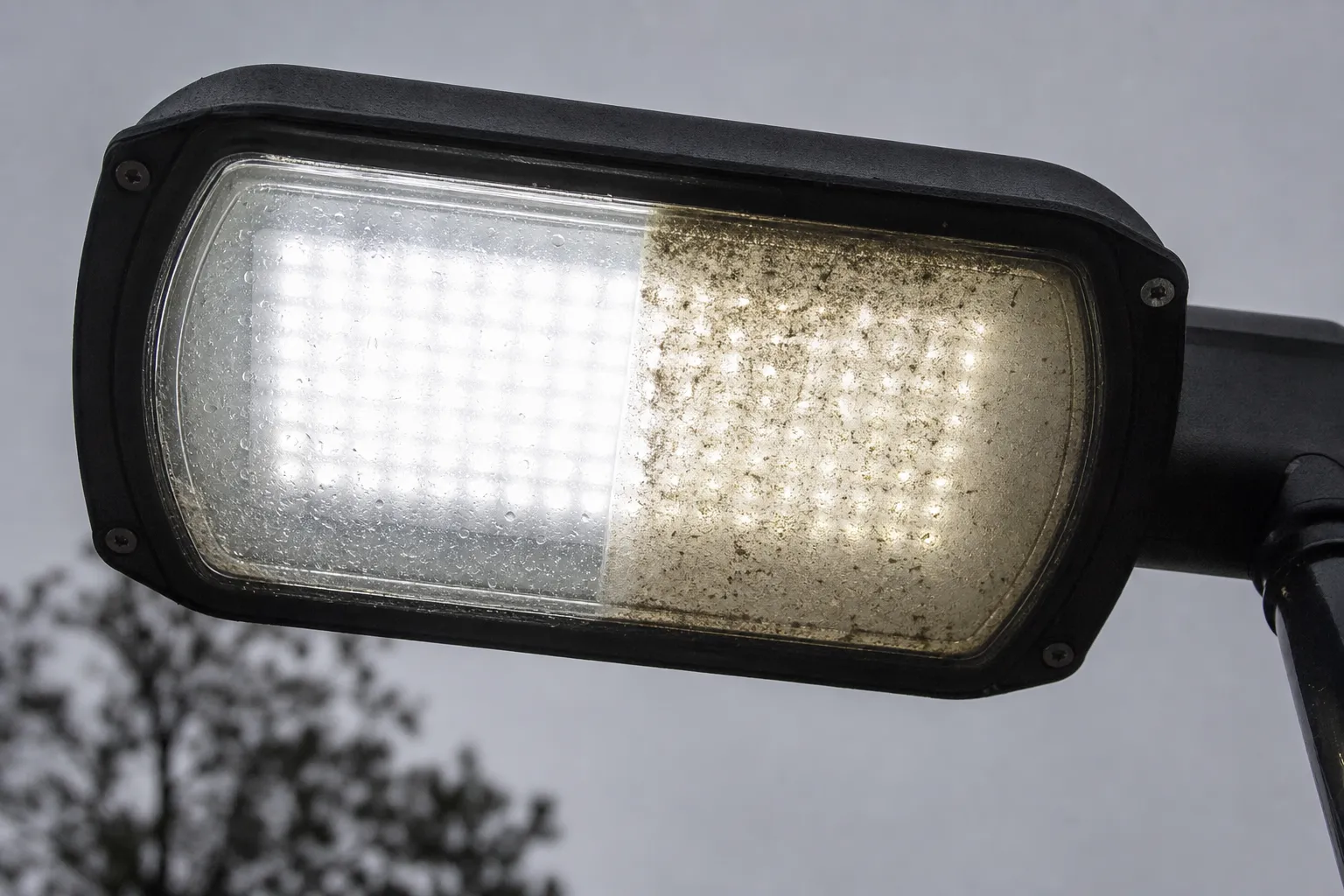
There is no fixed value for light loss caused by dirt on the surface of the street luminaire protective cover glass. It will be affected by the type of pollution, dust thickness, rain erosion, installation angle and maintenance cycle. Light dust may only cause a small amount of light loss, but oil, sediment, scale, bird droppings or long-term dust accumulation will significantly reduce the light transmittance.
In road lighting, dirty glass not only reduces the brightness, but may also change the light distribution, causing uneven illumination on the road surface. Glass surfaces and reasonable inclination angles that are easy to clean and have less dust accumulation should be selected during design, and regular cleaning should be considered in the project maintenance plan. Otherwise, long-term light decay will be mistaken for LED light source attenuation.
How can area-lighting glass maintain stable light transmission during long-term outdoor use?
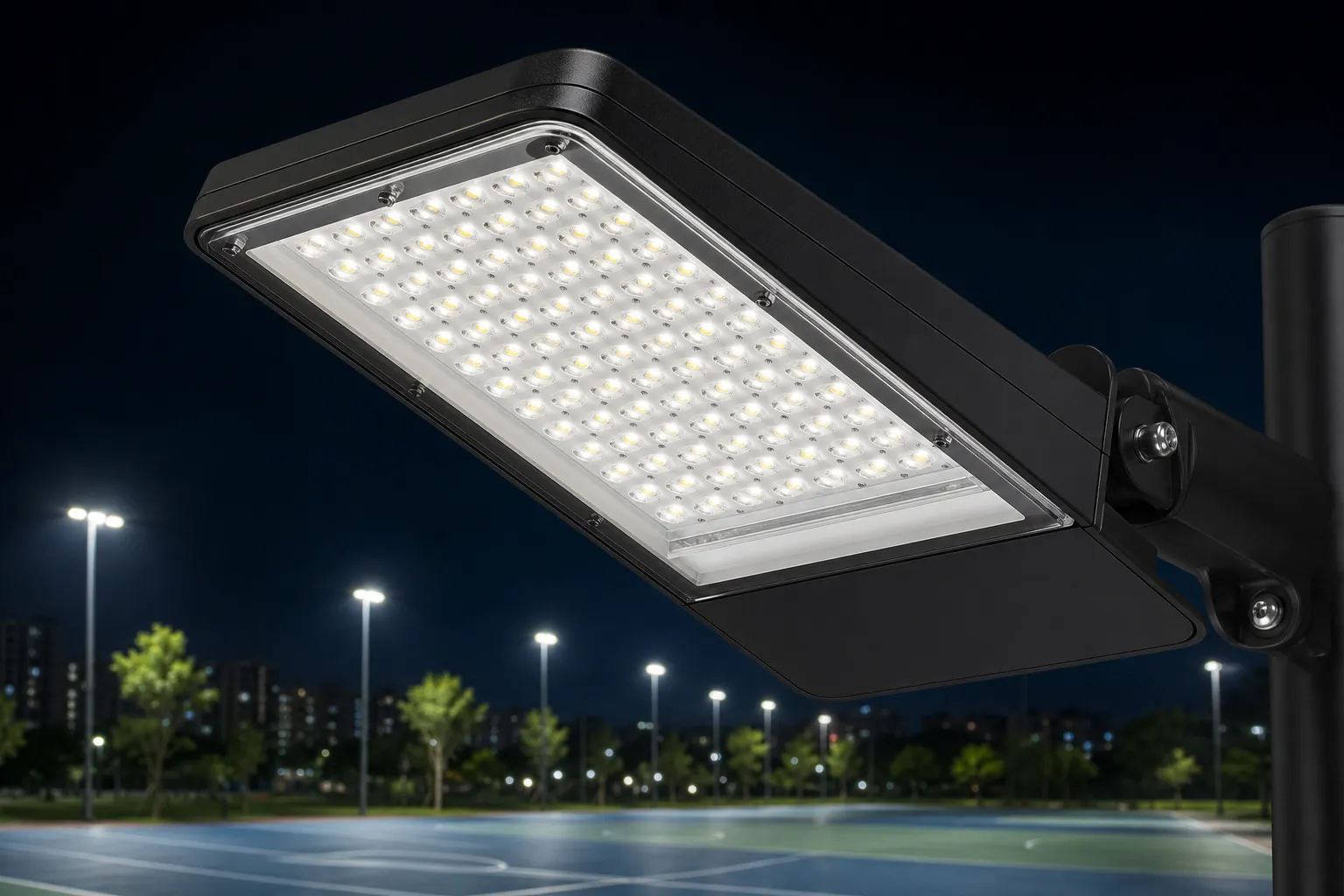
Area lighting is usually used in squares, parks, parking lots, logistics venues and public spaces. To maintain high light transmittance for a long time, glass materials must be optically stable, have few impurities and have a smooth surface. For projects that require high light efficiency, you can consider low-iron glass or high-quality transparent tempered glass.
At the same time, surface scratches, coating aging, sealing failure and external contamination must be controlled. The glass structure should be convenient for rainwater flushing and manual cleaning, and avoid deep texture or dust accumulation in dead corners. Long-term light transmission depends not only on the glass material, but also on surface-treatment quality, packaging, transport protection, installation practices, and maintenance.
How can road lighting glass reduce maintenance frequency and replacement costs?
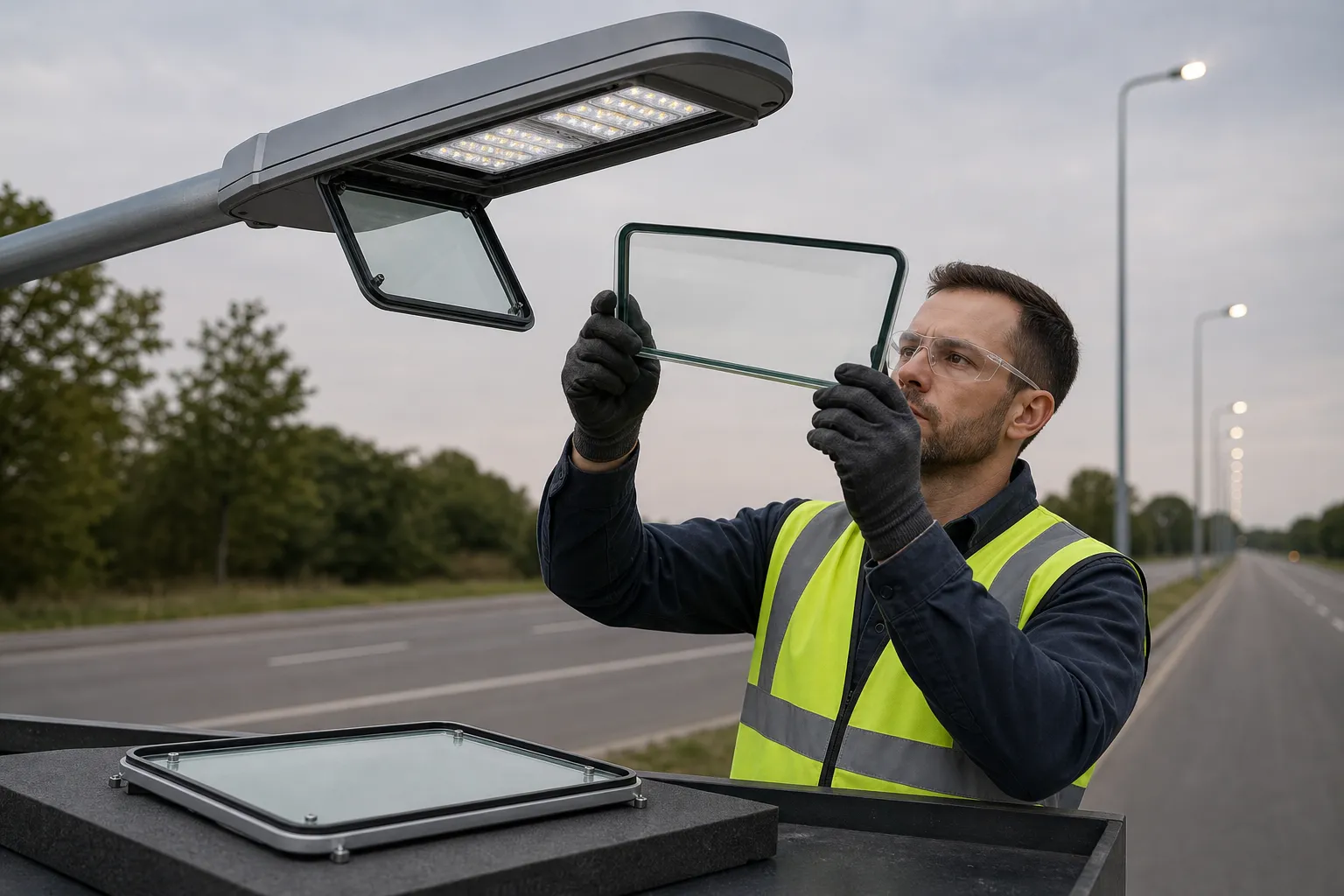
Road lighting glass reduces maintenance frequency. The key is to reduce dirt adhesion, breakage risk and sealing failure. The highly transparent, wear-resistant and easy-to-clean protective cover glass can delay light loss; the stable edge treatment and frame pressure structure can reduce edge chipping, cracking and water intrusion.
Reducing replacement costs also considers standardized dimensions, removable construction and spare parts consistency. For large-volume road projects, the more stable the specifications of glass components, the easier it is to purchase and replace them later. Paying more attention to controlling the glass structure and assembly method during the design stage can usually reduce the cost of high-altitude maintenance and replacement of the complete luminaire in the future.
What is the difference in outdoor life between street luminaire optical glass lenses and plastic lenses?
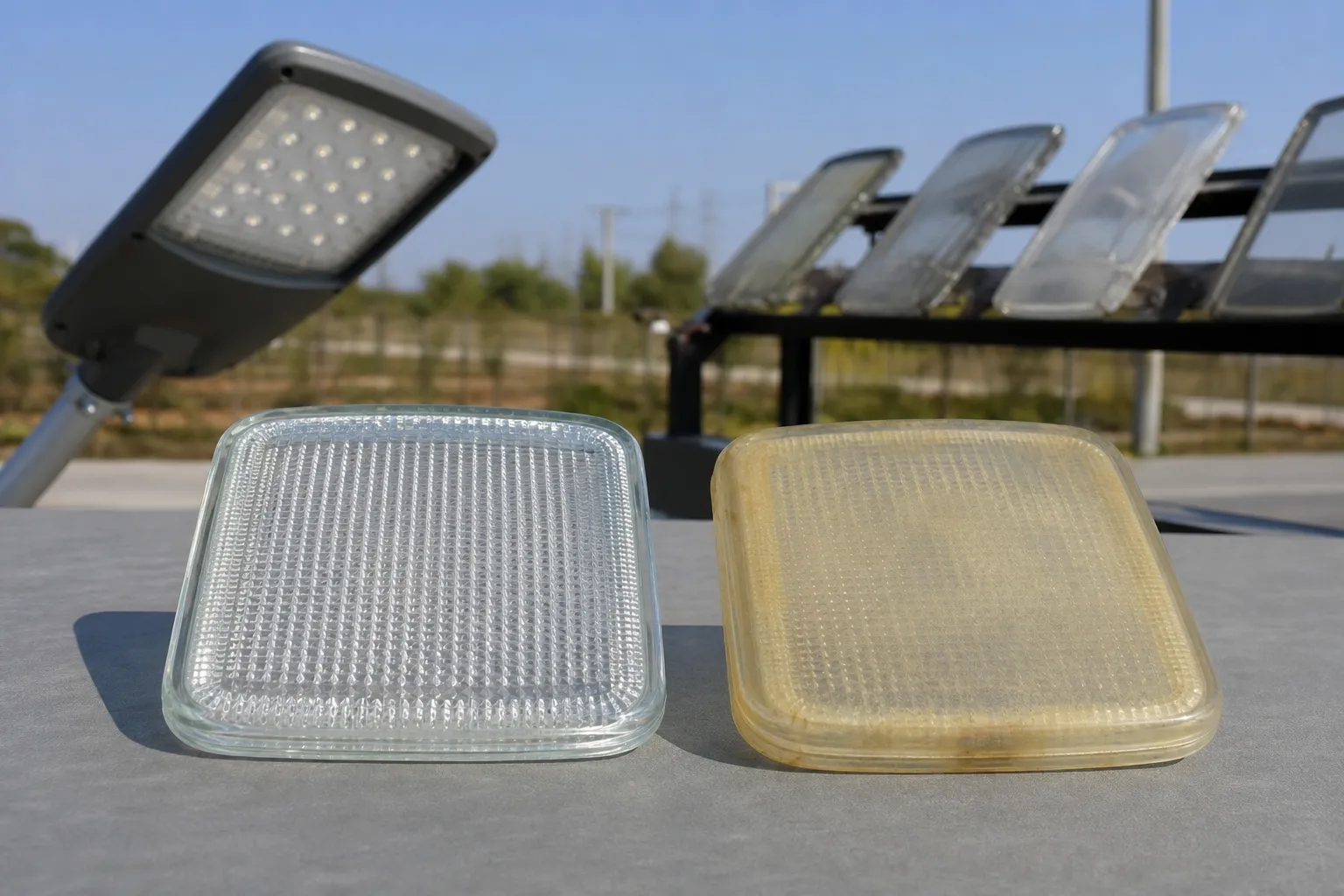
Optical glass lenses are generally better than plastic lenses in terms of UV resistance, high temperature resistance, yellowing resistance and surface hardness. They are less likely to age and discolor after long-term outdoor use, and can better maintain optical stability. For high temperature, high UV or long-life roadway lighting, this is a clear advantage of optical glass lenses.
Plastic lenses are light in weight, flexible in processing, and low in cost. They are suitable for complex free-form surface light distribution and mass production. However, they may face yellowing, fogging, cracking or surface aging problems outdoors for a long time. The actual choice should be a combination of optical design, cost, weight, weathering requirements and lifetime goals, rather than simply assuming that one material is absolutely better.
How should light efficiency and weather resistance be balanced for road-lighting glass components?
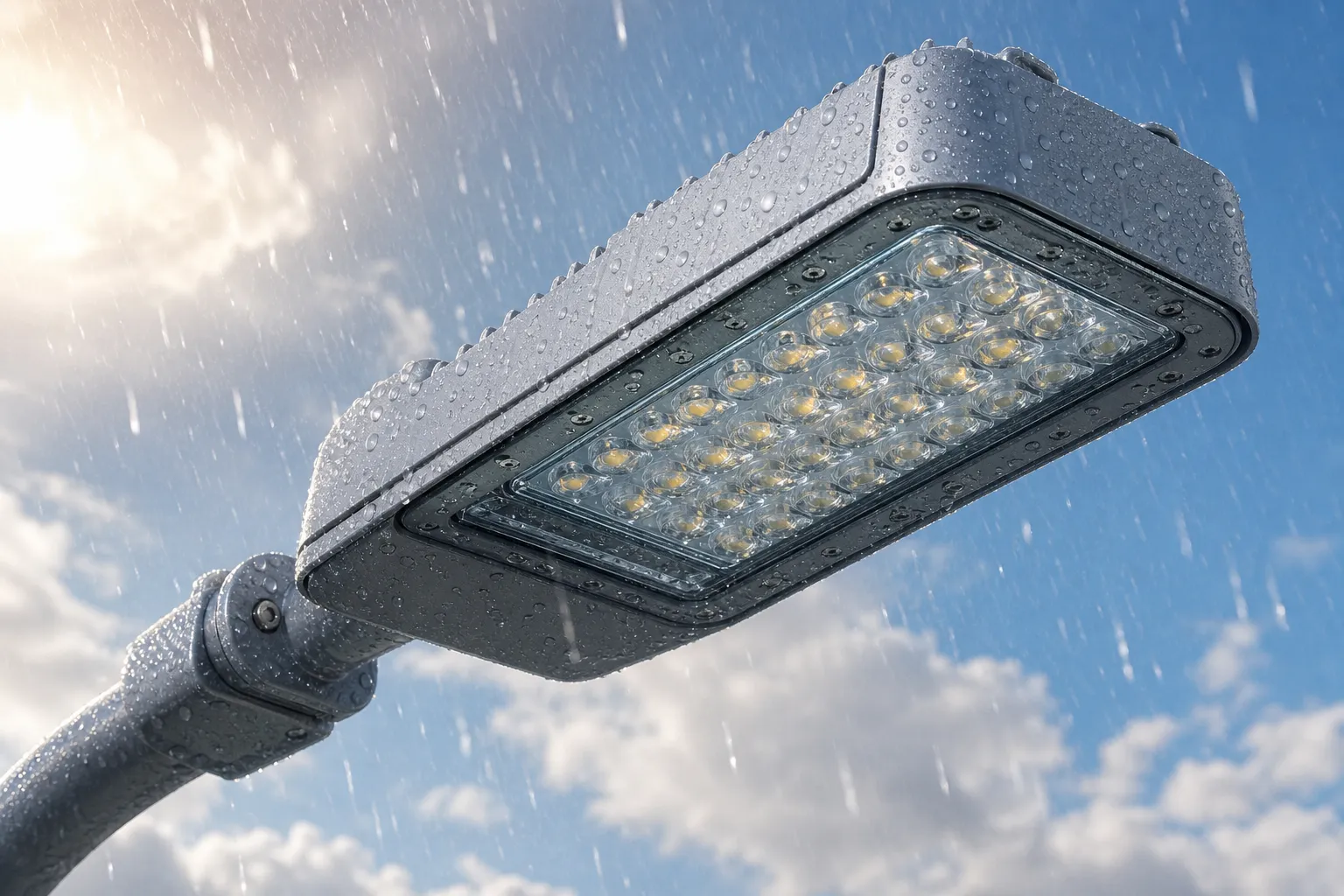
Road lighting glass components must have high light transmittance and long-term weather resistance. Choosing clear and high-permeability glass can improve light efficiency, but if the glare control, impact resistance and sealing design are insufficient, the actual use experience and lifespan will be affected; choosing high haze or thick glass, although softer and stronger, may reduce efficiency and increase energy consumption.
Reasonable choices should be based on road grade, light pole height, light distribution requirements, maintenance cycles and environmental conditions. Ordinary urban roads attach great importance to light efficiency and low glare balance, while coastal, sandy or public risk areas need to strengthen weather resistance, wear resistance and impact resistance. The best solution is to let the glass bear the protection and stable light transmission, and let the precise light distribution be completed by the lens and the luminaire structure.
How can parking lot luminaire glass avoid glare from strong light at night?
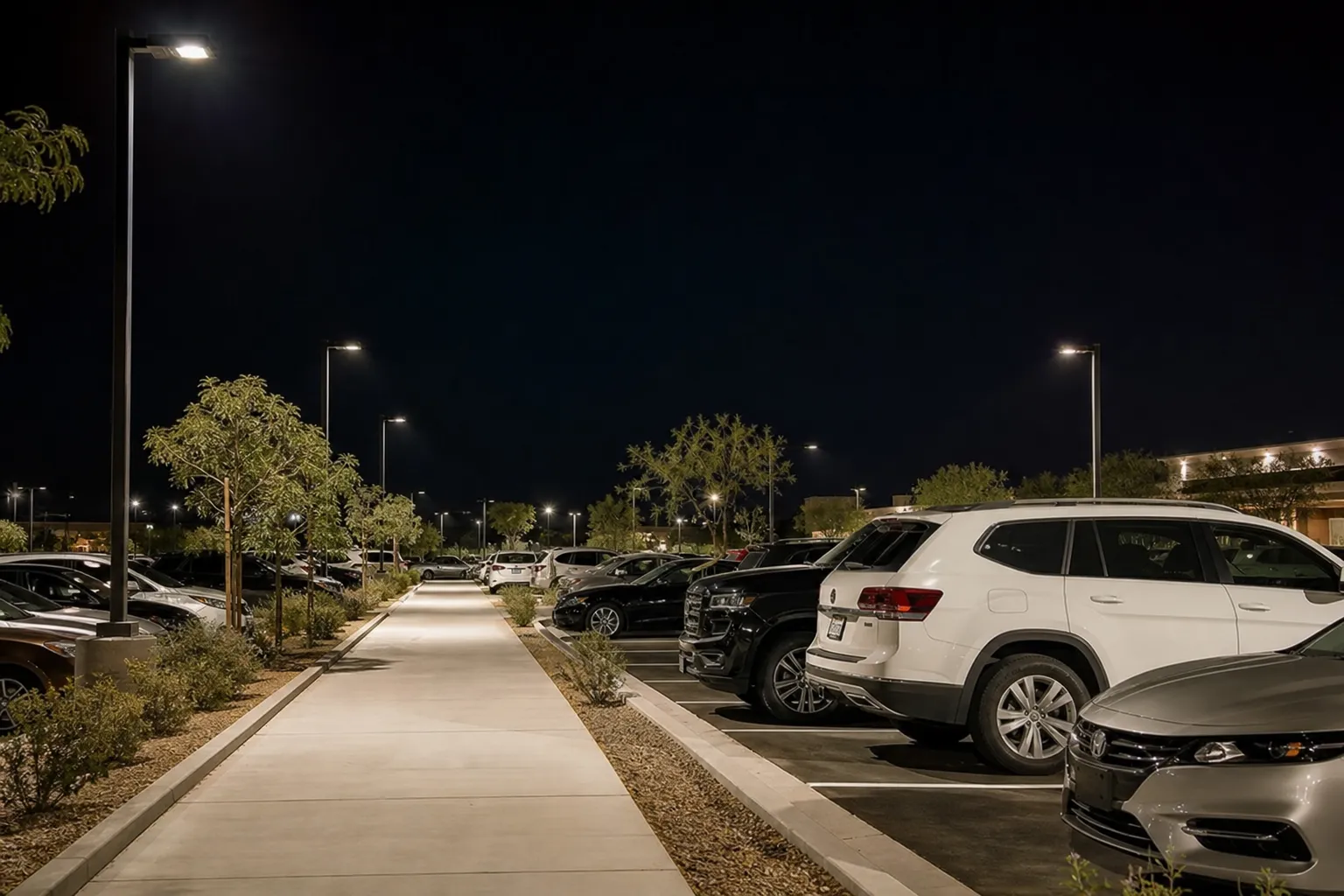
Parking lot lights are usually installed at low or medium heights, so that both vehicle drivers and pedestrians may directly see the front of the lights. If the glass is completely transparent and the LED array is exposed, it is easy to produce strong light glare at night, affecting safety and comfort.
Frontal brightness can be reduced through moderately diffused glass, micro-textured covers, internal lenses, glare control grilles or blackout frames. The glass should not be overly opalized, otherwise it will reduce the ground illumination and expand the scattering range. A more ideal approach is to control the light to cover the parking spaces and passages downwards, while reducing the highlights in the horizontal line of sight.
Contact Us
Your feedback fuels our growth, and your questions drive our solutions.
We value your feedback, inquiries, and suggestions. Please feel free to get in touch with us
General inquiries
Please contact us via sales@bo-glass.com, and we will reply to you as soon as possible.
Interested to work with us
Drop your resume at info@bo-glass.com
and we will get back to you shortly.
Request a Custom Glass Quote
Tell us about your project or upload a drawing.
Your drawings remain confidential.
We uses the contact information you provide to us to contact you about our relevent content, products, and services.