
Outdoor Lighting Glass Components Guide
Quick Application Selection Map
Begin with the installation environment and required function. A component used primarily for appearance and diffusion should be specified as a glass shade; a panel used mainly for environmental isolation is protective cover glass; a curved or textured element that actively changes the beam is an optical glass lens; and a clear aperture over a sensor or functional area is a glass window. The matrix below identifies the first risks to discuss before material or thickness is selected.
| Application | Dominant risks | Glass priorities | Installed-system priorities |
|---|---|---|---|
| Garden, path and landscape lights | Near-eye glare, dirt, visible LEDs and decorative consistency | Diffusion, source hiding, cleanable exterior, color and texture control | Light distribution, drainage, insect protection and maintenance access |
| Facade lights and wall washers | Beam discontinuity, warpage and row-to-row variation | Flatness, straightness, stable transmission and optical consistency | LED pitch, lens alignment, setback and mounting angle |
| Outdoor wall lights and wall packs | Rain paths, dust, insects, gasket variation and accidental impact | Sealing-land stability, safe edges and repeatable fit | Frame compression, cable entry, drainage and housing joints |
| In-ground, step, deck and recessed lights | Static load, foot traffic, abrasion, standing water and glare | Support-compatible thickness, edge integrity, wear resistance and surface safety | Continuous support, drainage, clamping, sealing and surface temperature |
| Underwater, pool and fountain lights | Pressure, long-term ingress, thermal shock, scale and color mixing | Thermal stability, sealing-face geometry, edges and optical neutrality | Pressure sealing, cable entry, electrical safety and water chemistry |
| Roadway, parking and area lights | Distribution, glare, impact, windblown dirt and maintenance cost | Useful transmission, stable geometry, impact-compatible support and cleanability | Complete-luminaire photometry, mounting tolerance and enclosure testing |
| Decorative outdoor lights | Shape, color, diffusion, wall-thickness variation and replacement matching | Master sample, opening geometry, texture, color and batch appearance | Source spacing, thermal clearance, retention and serviceability |
Materials, Manufacturing, Optics and Sealing at a Glance
Glass materials
Soda-lime glass supports many general protective and decorative applications. Borosilicate is considered when real temperature gradients, thermal cycling, or chemistry justify lower expansion. Low-iron glass is useful when transmission and color neutrality matter, while opal body glass prioritizes source hiding and luminous-surface uniformity. Material selection must also account for forming route, geometry, availability, quantity, and cost.
Manufacturing route
Blowing supports three-dimensional shades and flexible forms but requires realistic wall-thickness and opening tolerances. Pressing supports repeatable volume, molded texture, domes, covers, and optical surfaces after tooling. Heat bending creates broad curves, while cutting, drilling, edge finishing, CNC machining, tempering, sandblasting, etching, printing, coating, and electroplating add the required interface or appearance.
Optical behavior
Light transmission must be evaluated together with haze, spectral transmission, CCT and Duv shift, source hiding, surface-luminance uniformity, beam distribution, stray light, spill light, and uplight. A frosted or acid-etched finish is a surface treatment rather than a separate material. Optical comparison requires the same LED bin, current, thermal state, geometry, instrument, and sample condition.
Sealing and condensation
The glass supplier can control dimensions, flatness, edge quality, sealing-land geometry, and cleanliness. The luminaire manufacturer controls the full tolerance stack, gasket profile and compression, retaining frame, fasteners, cable entry, housing joints, venting, adhesive, drainage, and assembly environment. Condensation may result from trapped moisture or repeated pressure exchange during heating and cooling.
Explore the 14 Detailed Guides
The application guides address a specific luminaire family. The technical guides cover material and process selection, optics, sealing, reliability, maintenance, purchasing, and BO-GLASS manufacturing capability. In-ground, well, step, deck, and recessed lighting are grouped into one guide because these applications share similar requirements for load resistance, abrasion, drainage, edge safety, and glare control. Materials and manufacturing processes are also covered together because the selected glass composition must be compatible with the intended forming and finishing methods.
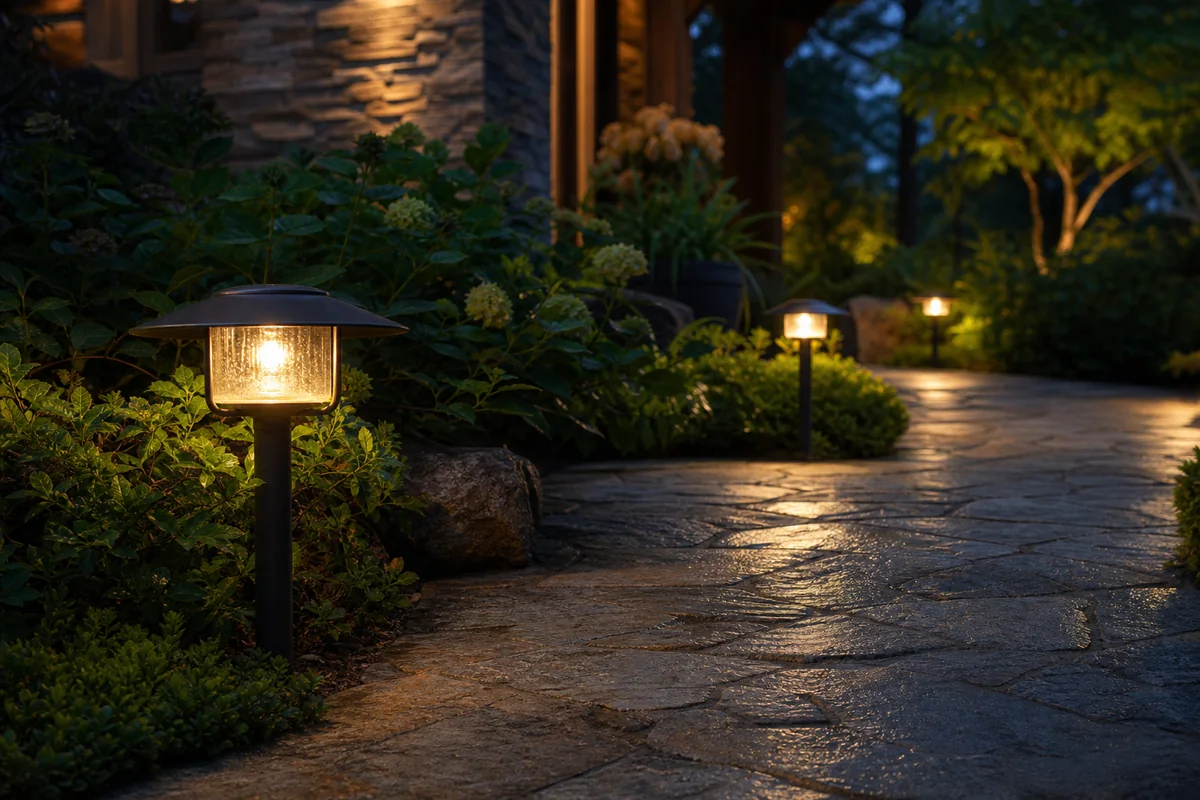
Select glass shades and protective cover glass for garden, path, lawn and courtyard lights, including diffusion, glare, dirt, color and sealing considerations.
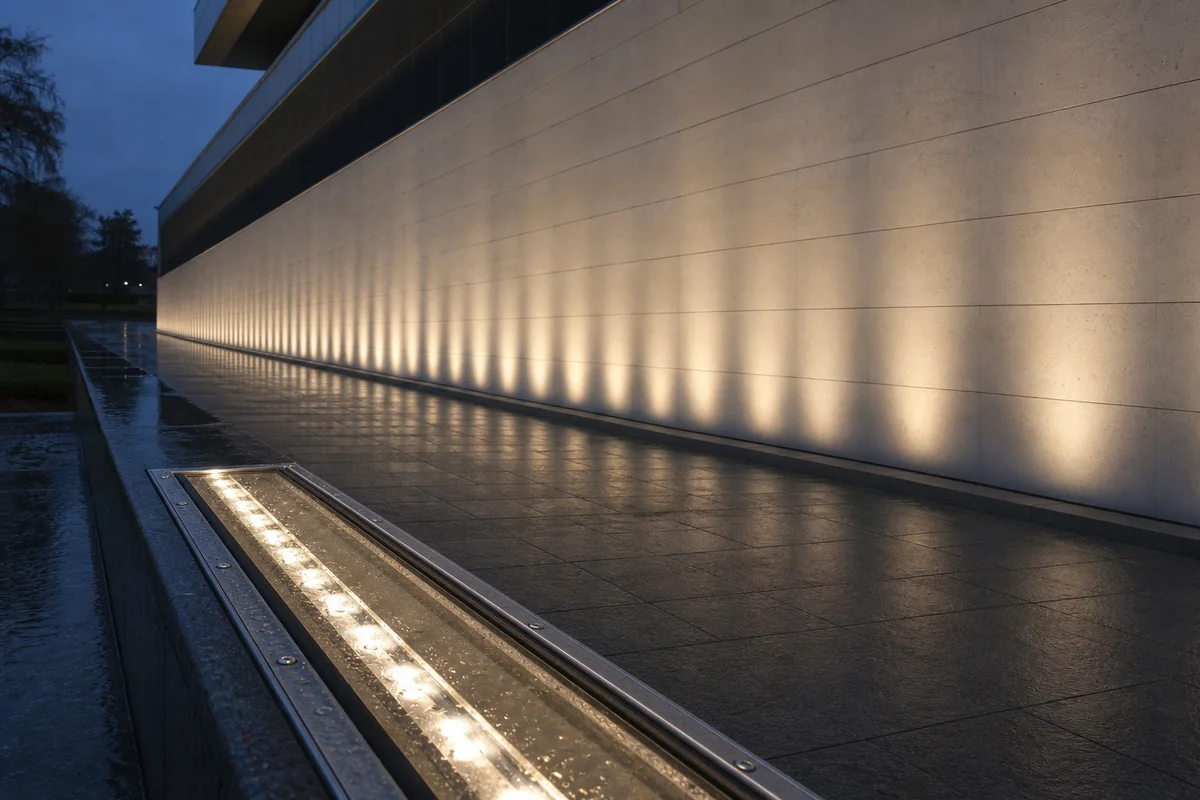
Engineering guide to protective cover glass and optical glass lenses for wall washers, facade lights and linear architectural luminaires.
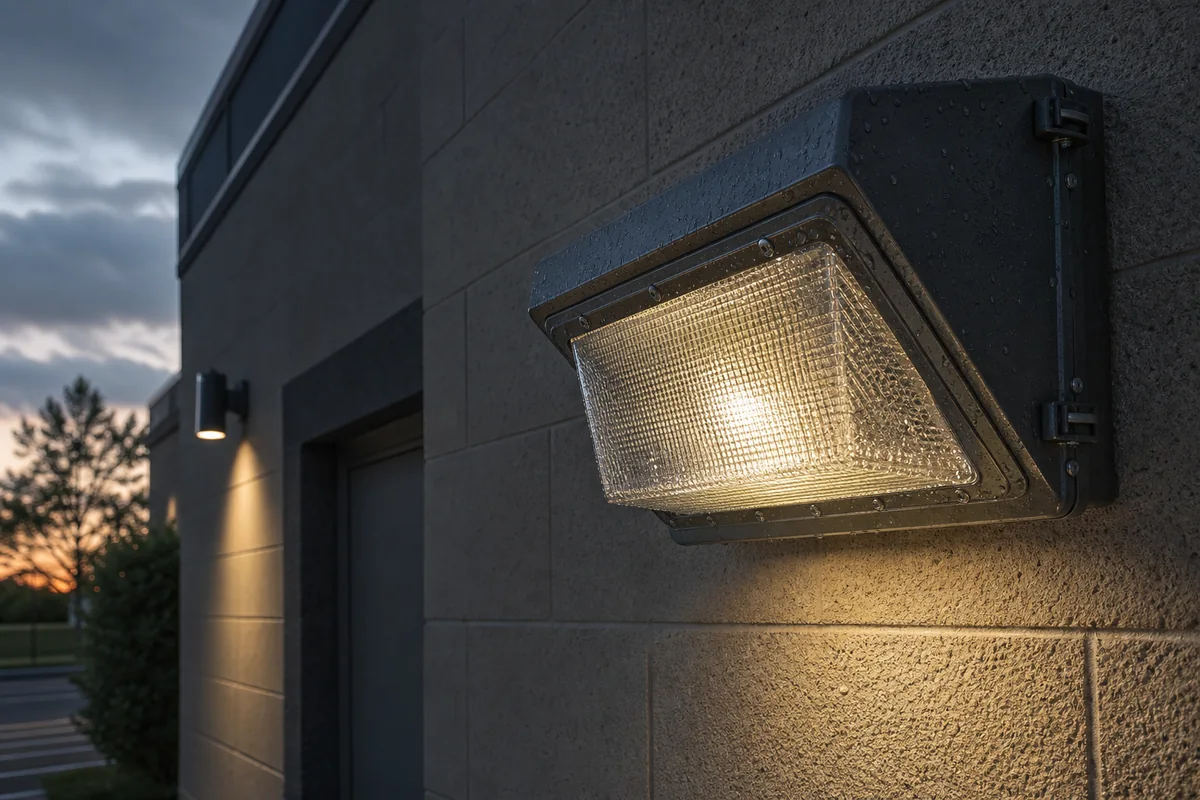
Choose glass shades and protective cover glass for outdoor wall lights and wall packs, with guidance on glare, sealing, assembly and impact risks.
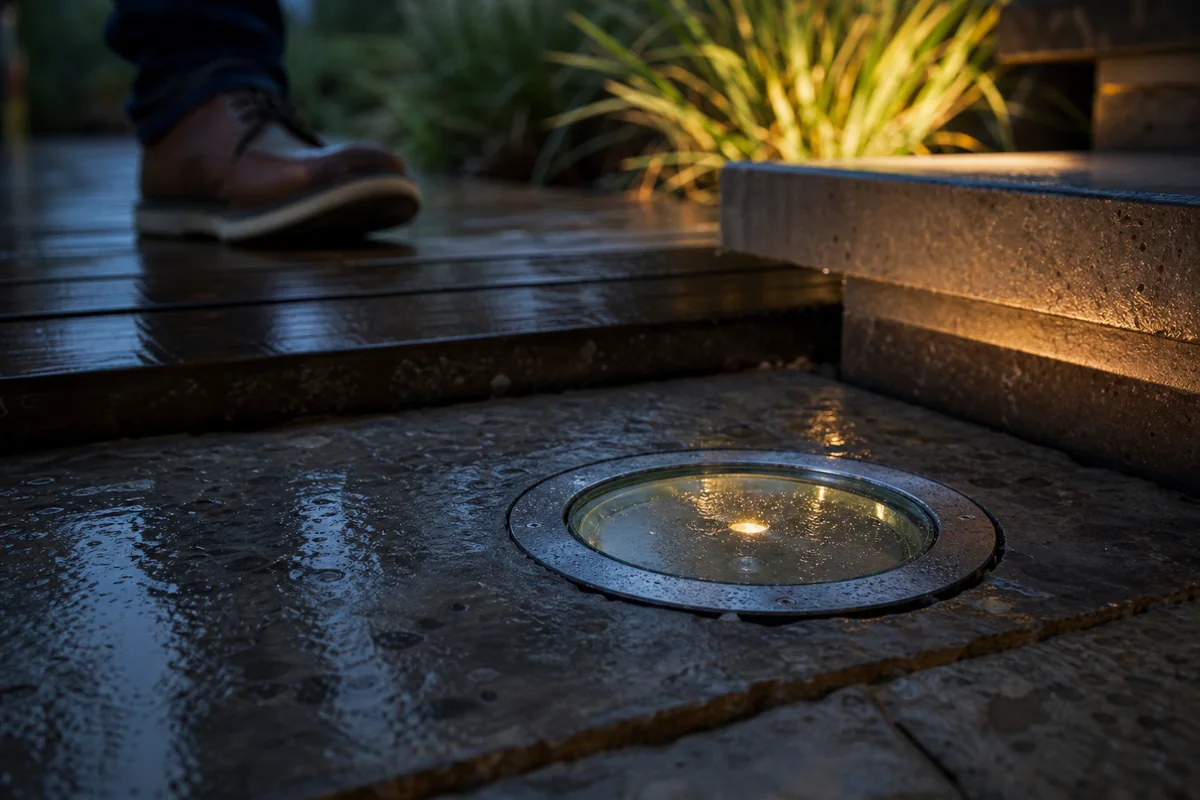
Glass selection for in-ground, well, step, deck and recessed outdoor lights, including static load, foot traffic, impact, sealing, drainage and glare.
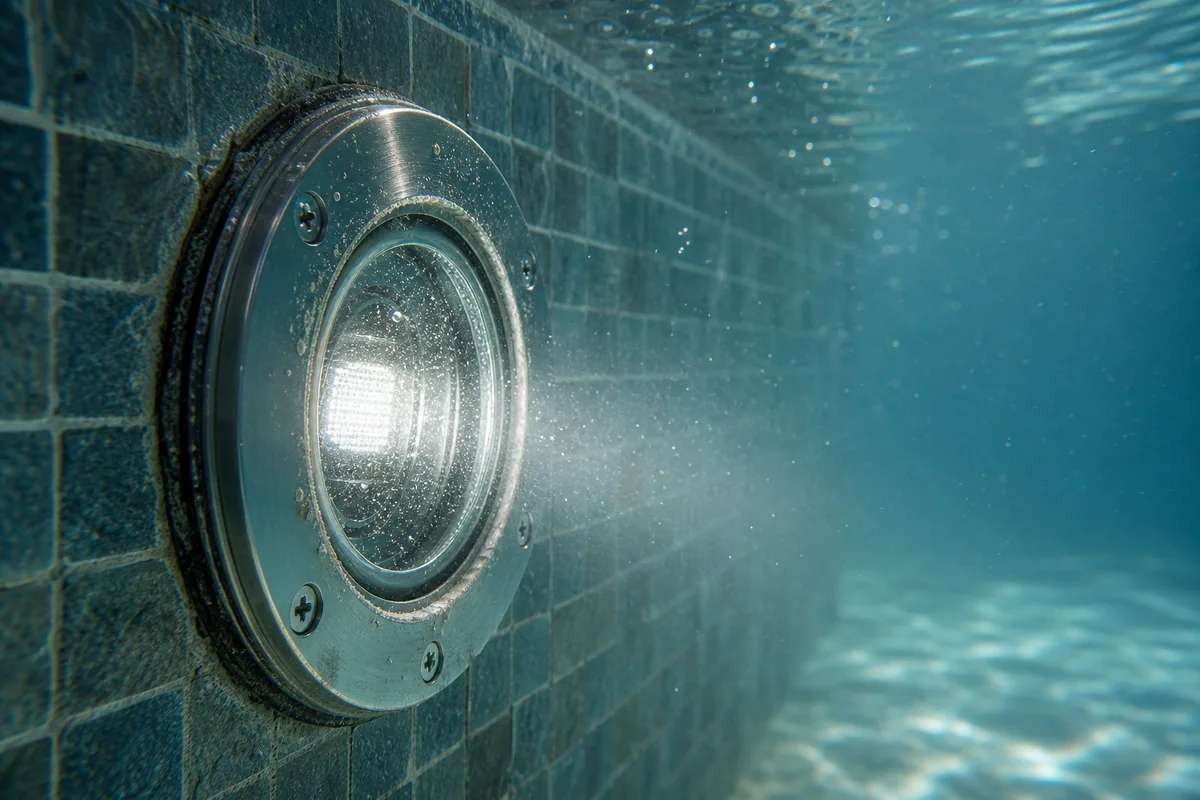
Specify protective cover glass for underwater luminaires, including pressure, sealing, thermal shock, optical color, scale and maintenance in pools and fountains.
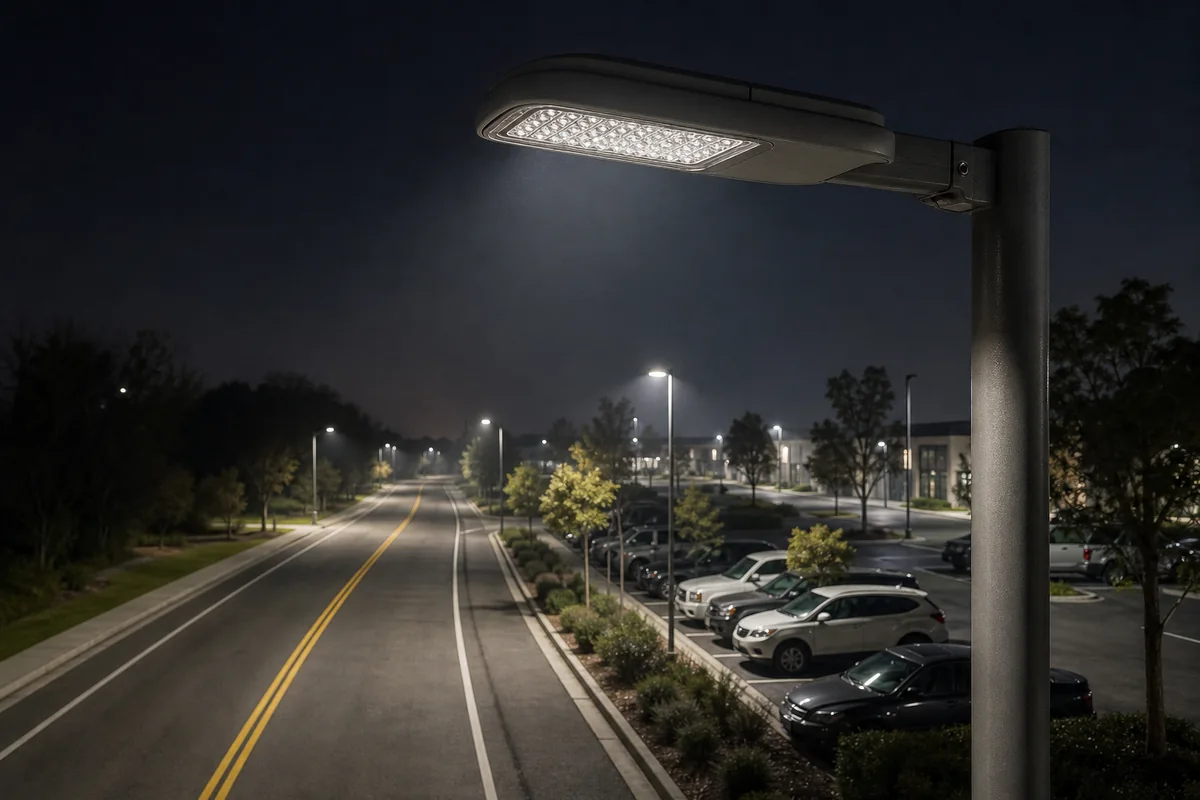
Guide to protective cover glass and optical glass lenses for roadway, parking lot and area luminaires, including distribution, glare, impact and maintenance.
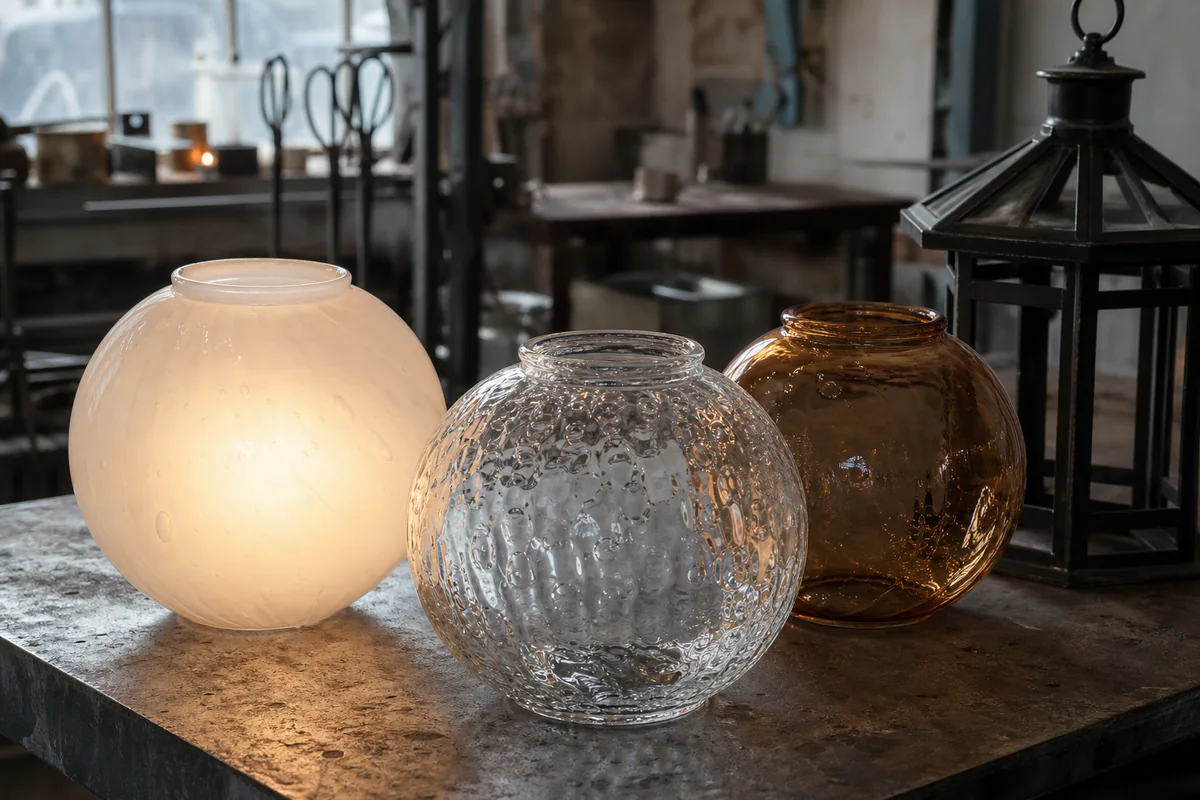
Select clear, opal, textured, body-colored and finished glass shades for outdoor decorative lights with attention to form, color and weatherability.
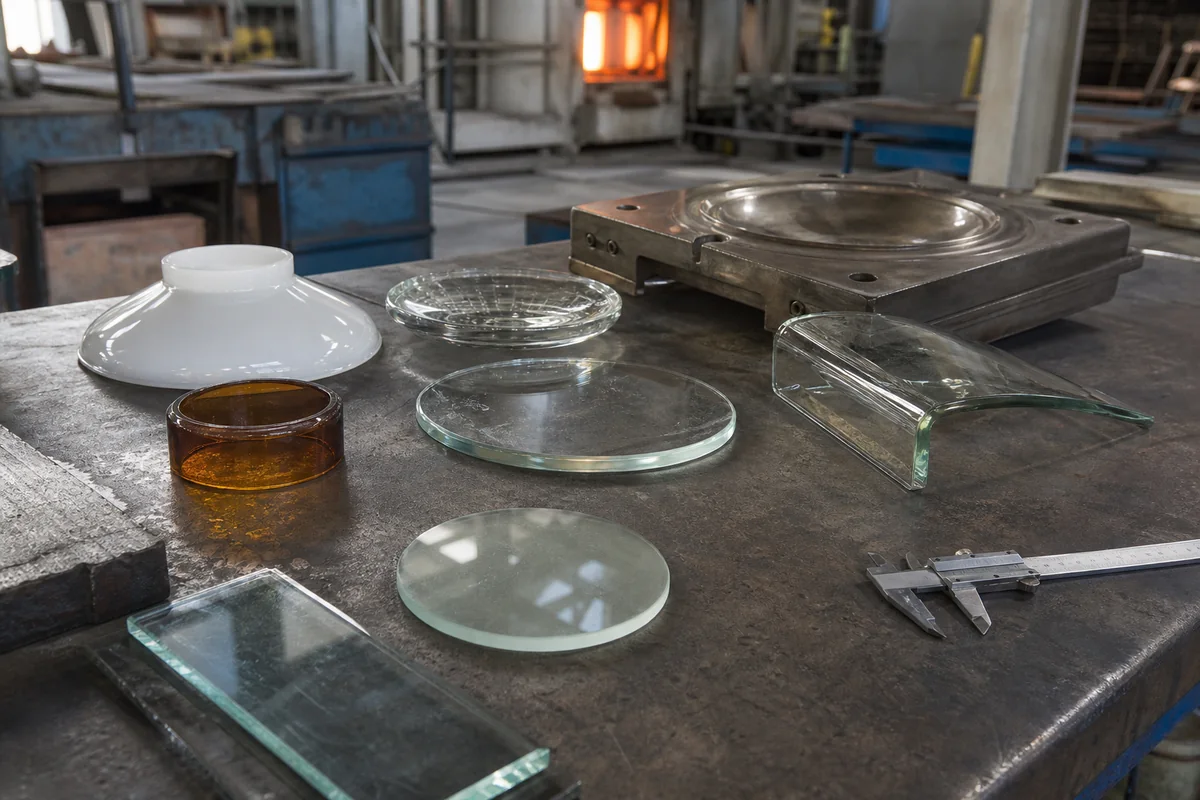
Compare soda-lime, borosilicate, low-iron, opal, body-colored and optical glass together with blowing, pressing, bending, machining and finishing processes.
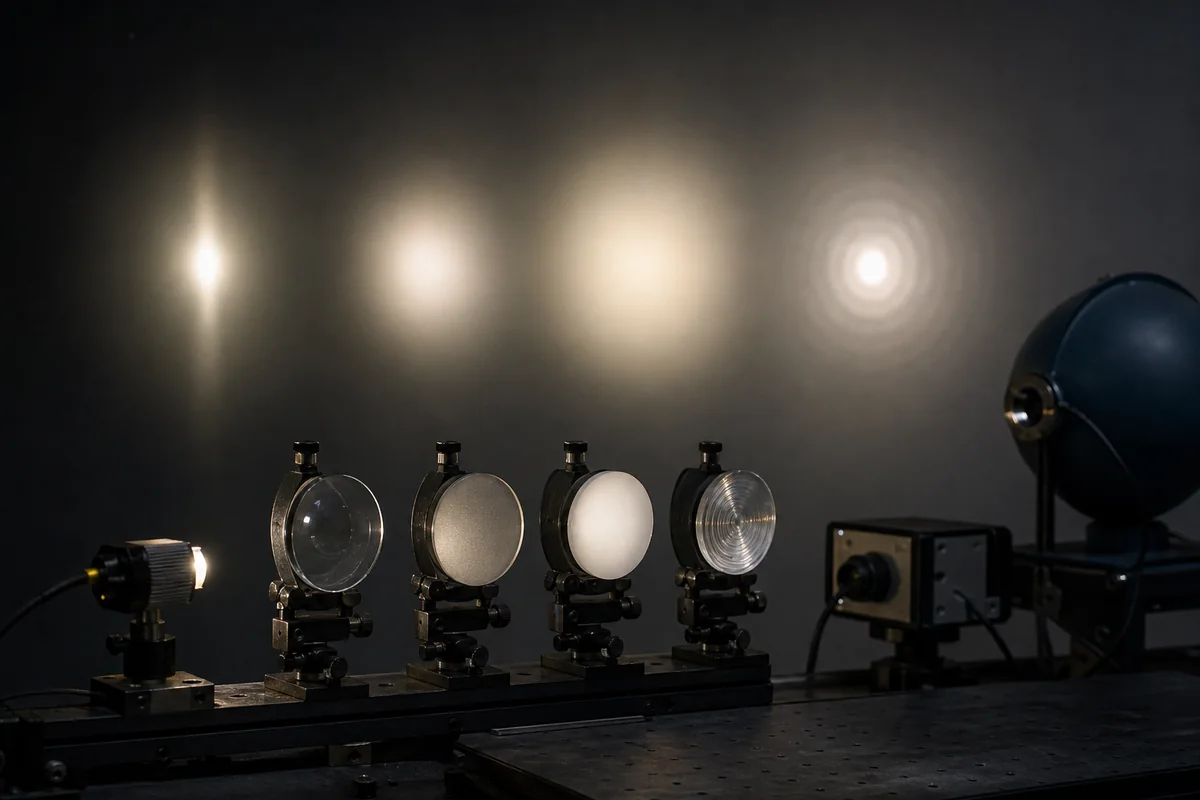
Understand light transmission, haze, CCT and Duv shift, source hiding, luminance uniformity, beam control, spill light and outdoor glare.
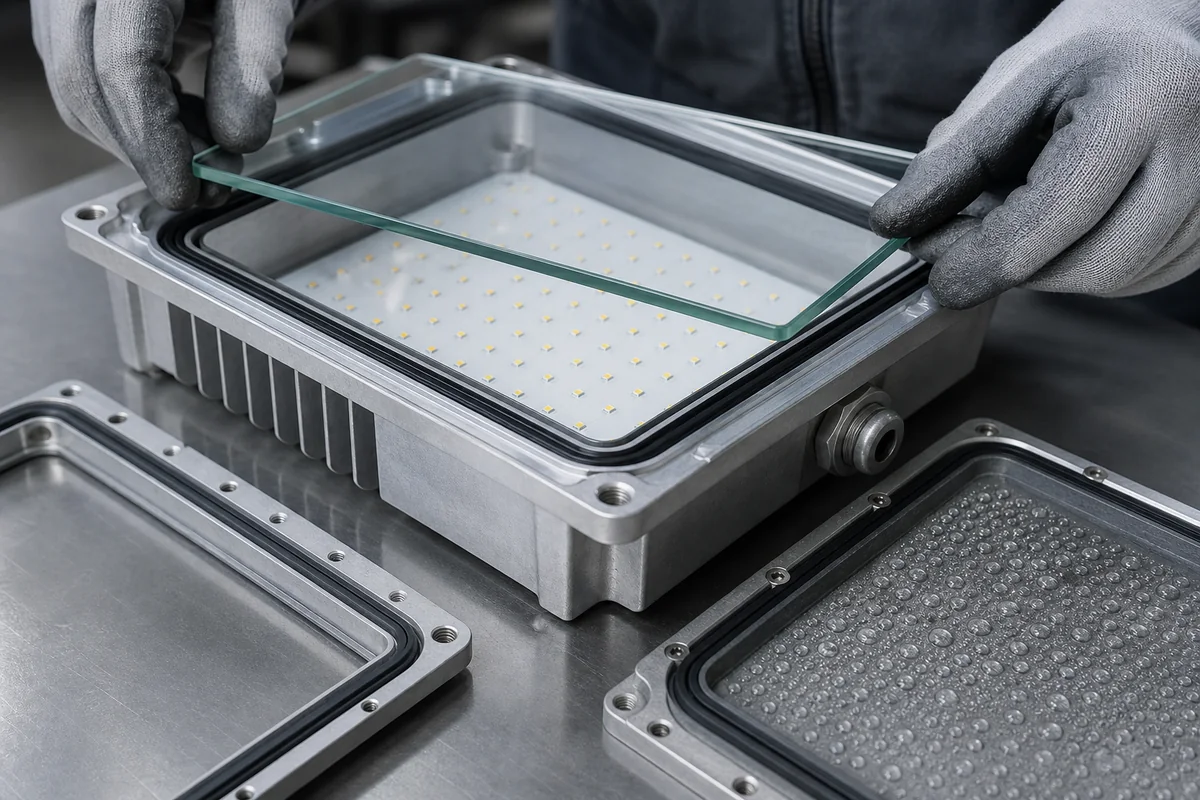
Design glass sealing interfaces for outdoor luminaires, including flatness, tolerances, gasket compression, drainage, pressure change, fogging and IP testing.
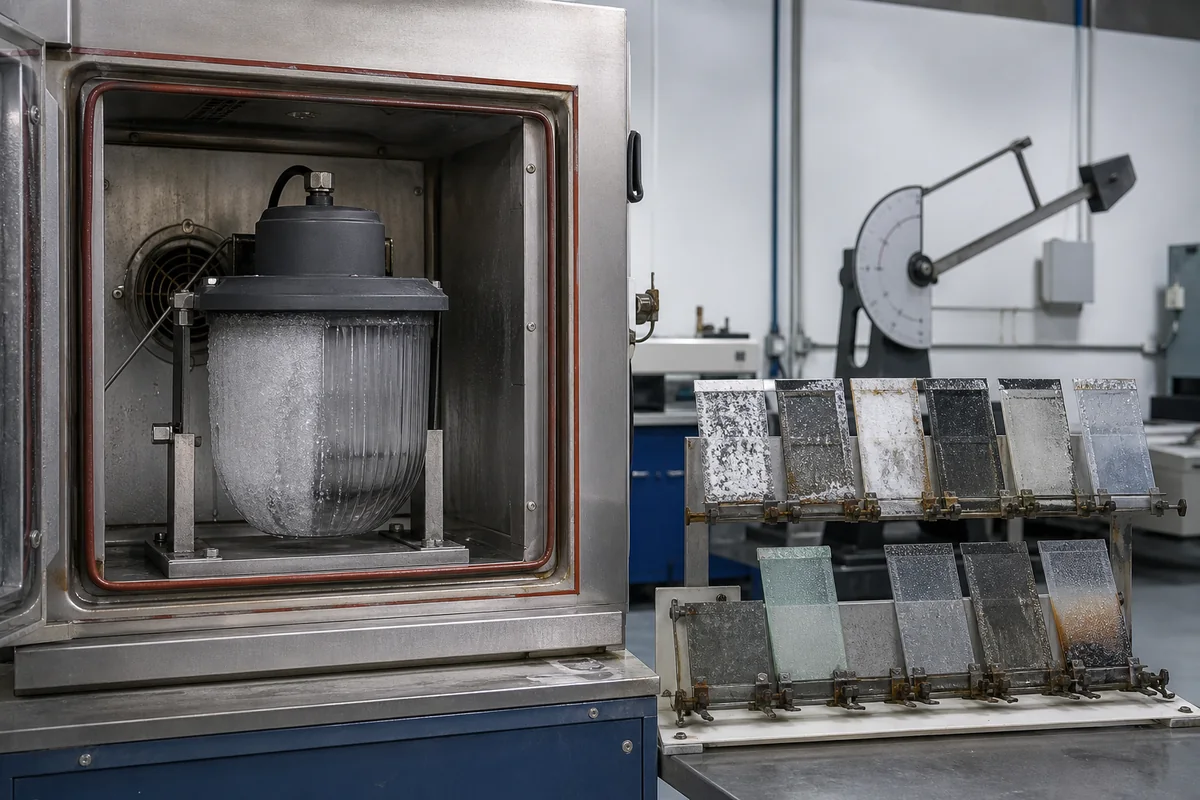
Evaluate UV, salt spray, humidity, freeze-thaw, thermal stress, impact, static load, breakage safety and environmental durability for outdoor glass.
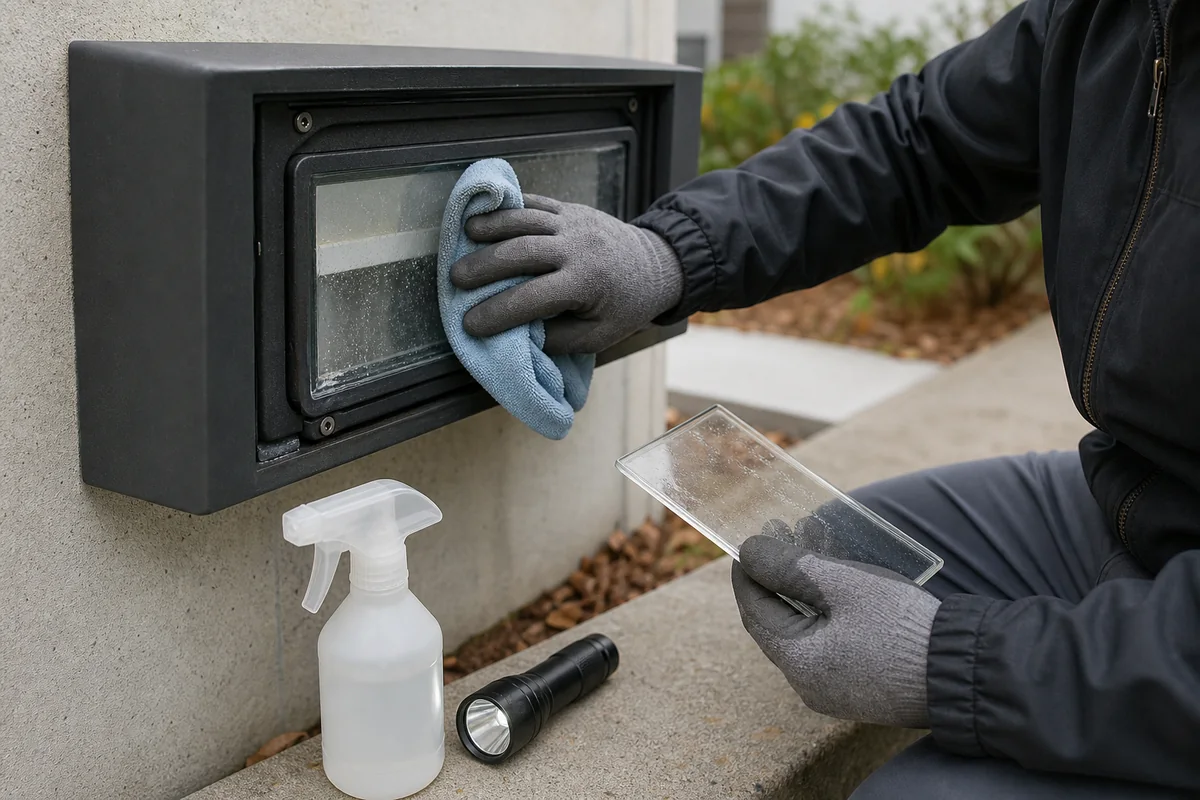
Clean, inspect, maintain and replace outdoor-lighting glass affected by dirt, oil, water spots, scale, scratches, sediment, loose mounting or aging.
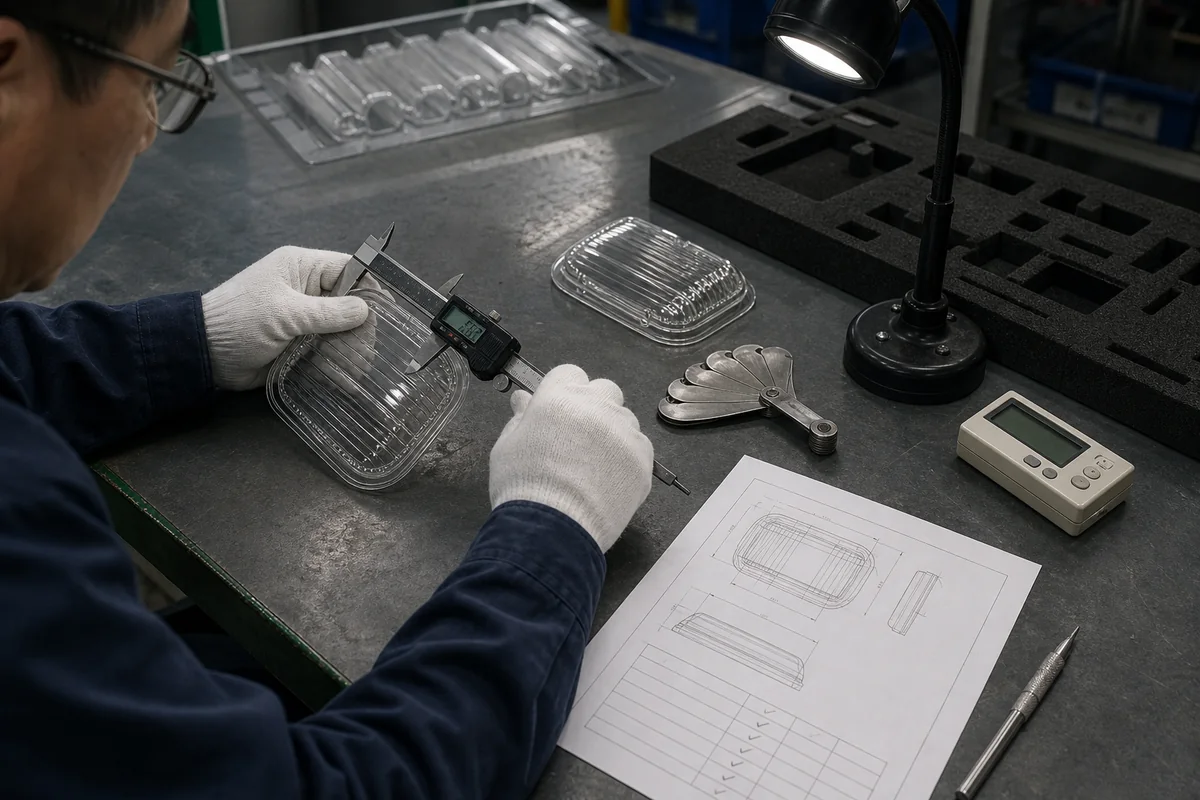
Prepare an RFQ for custom lighting glass, including drawings, samples, MOQ, tooling, tolerances, optical targets, inspection, AQL, packaging and lead time.
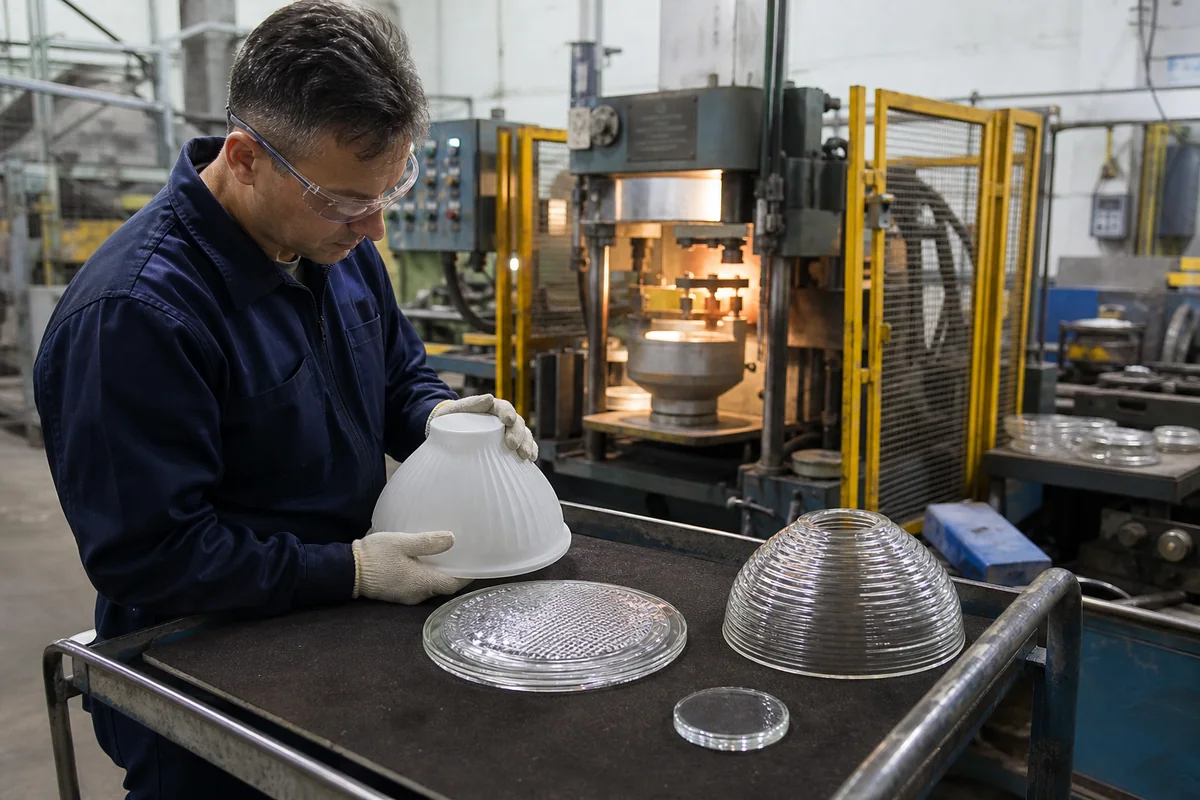
BO-GLASS custom manufacturing for outdoor-lighting glass shades, protective cover glass, optical glass lenses and glass windows from drawings or samples.
How BO-GLASS Custom Development Works
A practical project begins with the application, component function, drawing revision, target quantity, and acceptance requirements. BO-GLASS reviews whether the component should be a glass shade, protective cover glass, optical glass lens, or functional window; compares material and manufacturing routes; identifies critical sealing, optical, structural, and cosmetic interfaces; and returns DFM feedback, tooling assumptions, inspection items, and sample planning. Prototype approval should record fit, critical dimensions, appearance, optical behavior, and any assembly-level validation assigned to the customer or test laboratory.
After approval, the production release should freeze the drawing, master sample, material and finish, tool or cavity identity where applicable, inspection method, packaging configuration, and change-control rule. Published manufacturing routes and released project examples are available in the manufacturer capability guide, while RFQ, tolerance, sample, MOQ, quality-control, packaging, and lead-time questions are organized in the purchasing and quality-control guide.
Core Outdoor Lighting Glass FAQs
- Ingress protection
- IEC 60529 classifies the complete enclosure. A glass component alone cannot be described as IP65, IP67 or IP68.
- Impact energy
- IEC 62262 reference levels: IK08 = 5 J, IK09 = 10 J and IK10 = 20 J. The complete mounted assembly must be tested.
- Soda-lime example
- Published float-glass data: density about 2,500 kg/m³ and linear expansion about 8.3 × 10⁻⁶/K.
- Borosilicate example
- Published BOROFLOAT 33 data: density 2.23 g/cm³ and linear expansion 3.25 × 10⁻⁶/K from 20–300 °C.
How do the requirements for glass shades, protective cover glass and optical glass lenses differ across outdoor luminaires?
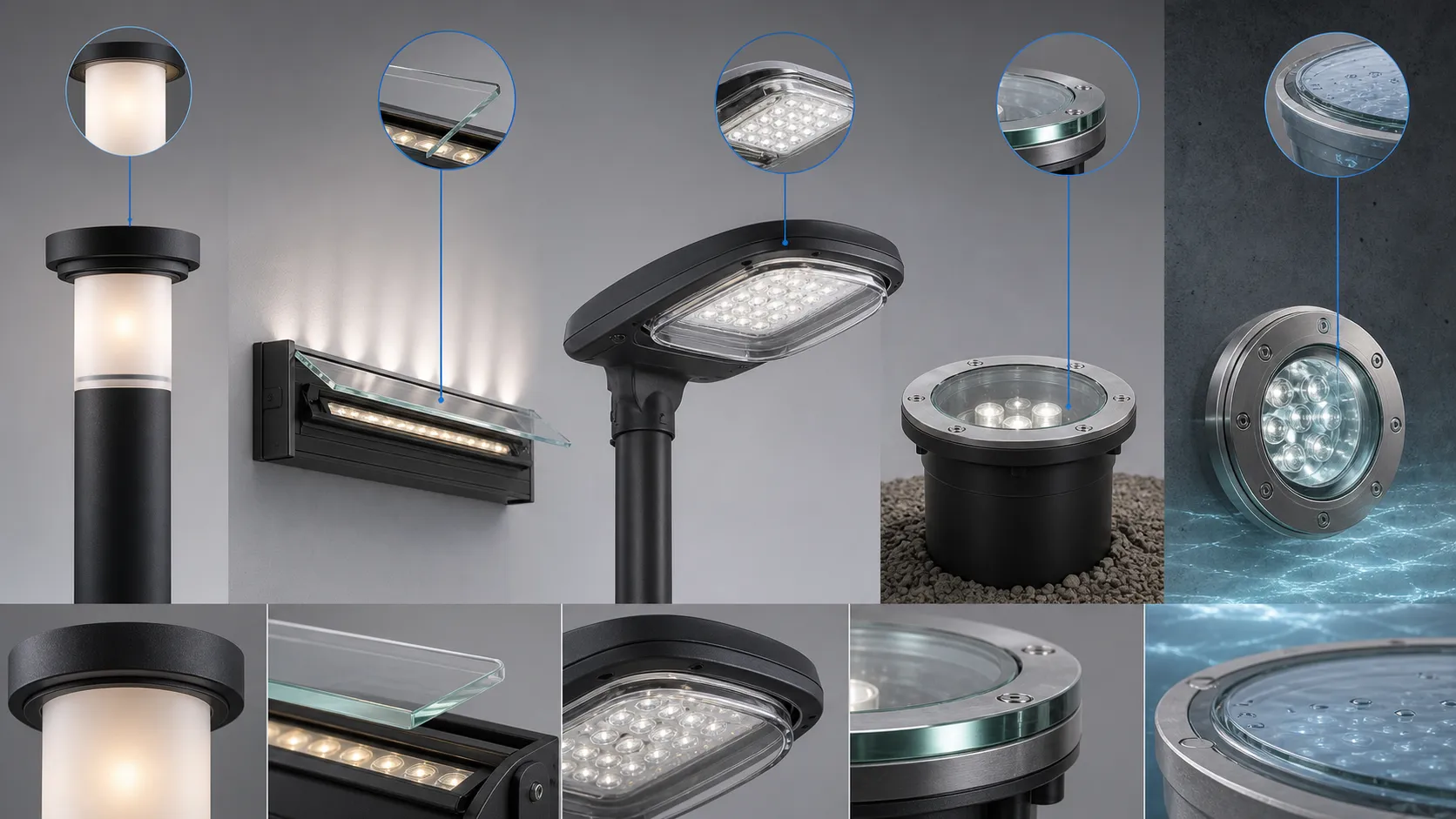
Different outdoor luminaires place different demands on their glass components. Garden lights, courtyard lights, outdoor chandeliers and decorative wall lights typically use a glass shade, where three-dimensional form, diffusion and appearance are important. Wall washers, floodlights, street lights, wall-pack lights, underground lights and underwater lights more often use protective cover glass, where sealing, impact resistance, flatness and long-term weatherability are the priorities. When a component actively shapes the beam, it should be identified as an optical glass lens.
When purchasing or customizing, specify the component category first, then confirm its material, geometry, installation method, light-emission direction, sealing interface and complete-luminaire performance requirements.
For product categories and available custom manufacturing routes, see the Custom Outdoor Lighting Glass Manufacturer guide.
What are the differences in the glass requirements for landscape lighting, architectural lighting and road lighting?
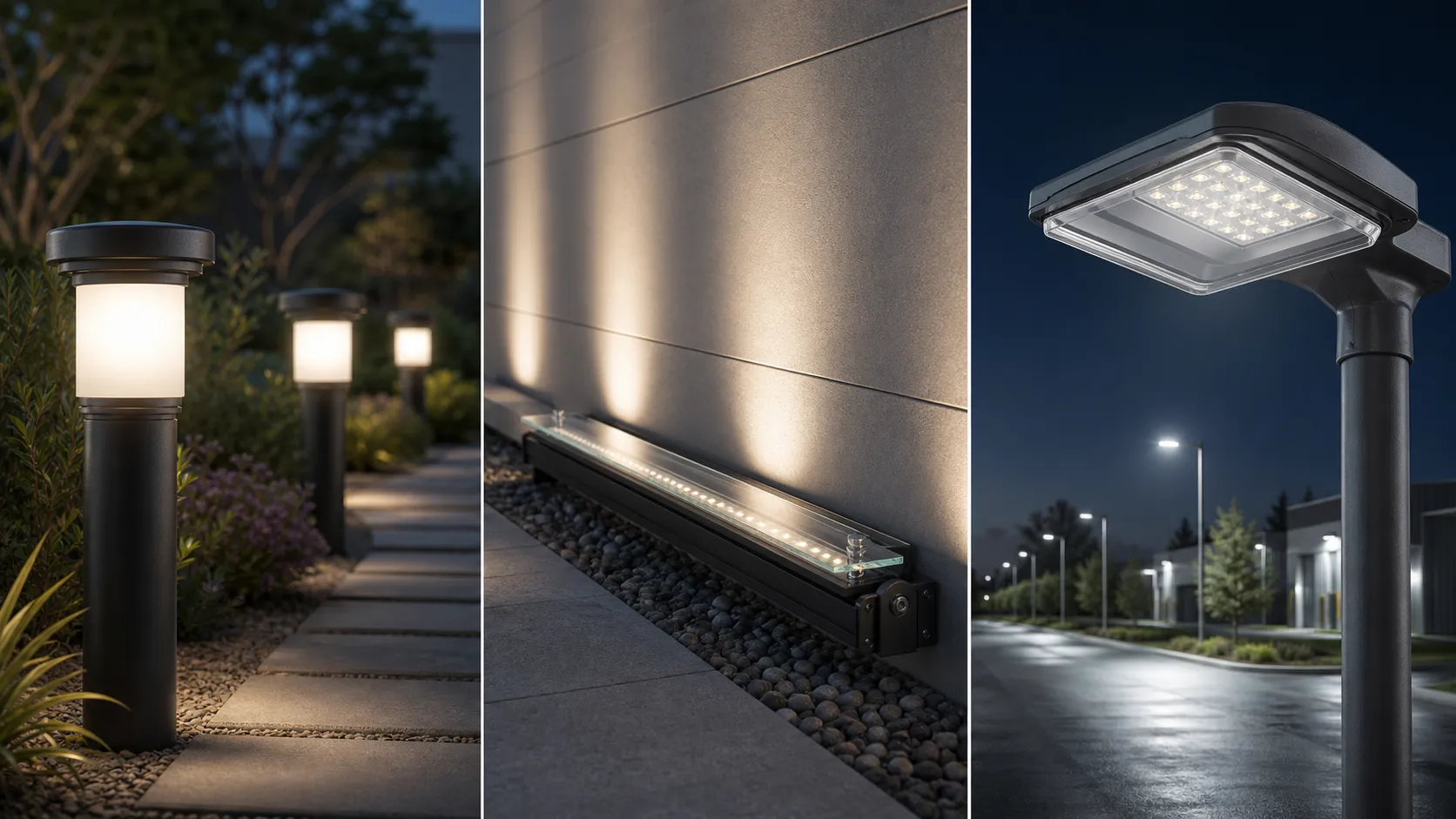
Landscape lighting pays more attention to visual atmosphere. Relevant options include opal glass, clear glass with a frosted or acid-etched finish, textured or embossed glass, and body-colored amber glass. The base glass and the surface or molded treatment should be specified separately because they are controlled by different manufacturing parameters.
Architectural lighting places greater emphasis on beam consistency and wall effects. Wall washers, linear lights and floodlights often require flat protective cover glass with stable light transmission and minimal batch-to-batch color variation. When a separate beam-forming element is used, the optical glass lens must control the beam angle and spot edge. Road lighting places greater emphasis on light-distribution efficiency, impact resistance, ease of maintenance and long-term weatherability.
For measurement and validation of these optical differences, see the Outdoor Lighting Glass Optics, Glare and Visual Comfort guide.
Why must outdoor lighting glass be evaluated for both optical and structural performance?
Brightness can only indicate how much light the luminaire has, but it does not indicate whether the light is comfortable, even, or in the right position. If outdoor lighting only pursues brightness, it is prone to dazzling glare, cluttered light spots, excessive spill light, or intrusion from neighborhood light.
The light transmittance, haze, texture, curvature and thickness of the glass will change the actual light emission effect; the assembly structure of the glass and the housing will affect water and dust ingress protection, heat dissipation and lifespan. Therefore, a good outdoor lighting glass solution must look at both optical effects and structural reliability, not just light source power or nominal brightness.
For material and manufacturing choices that support both optical and structural targets, see the Outdoor Lighting Glass Materials and Manufacturing Processes guide.
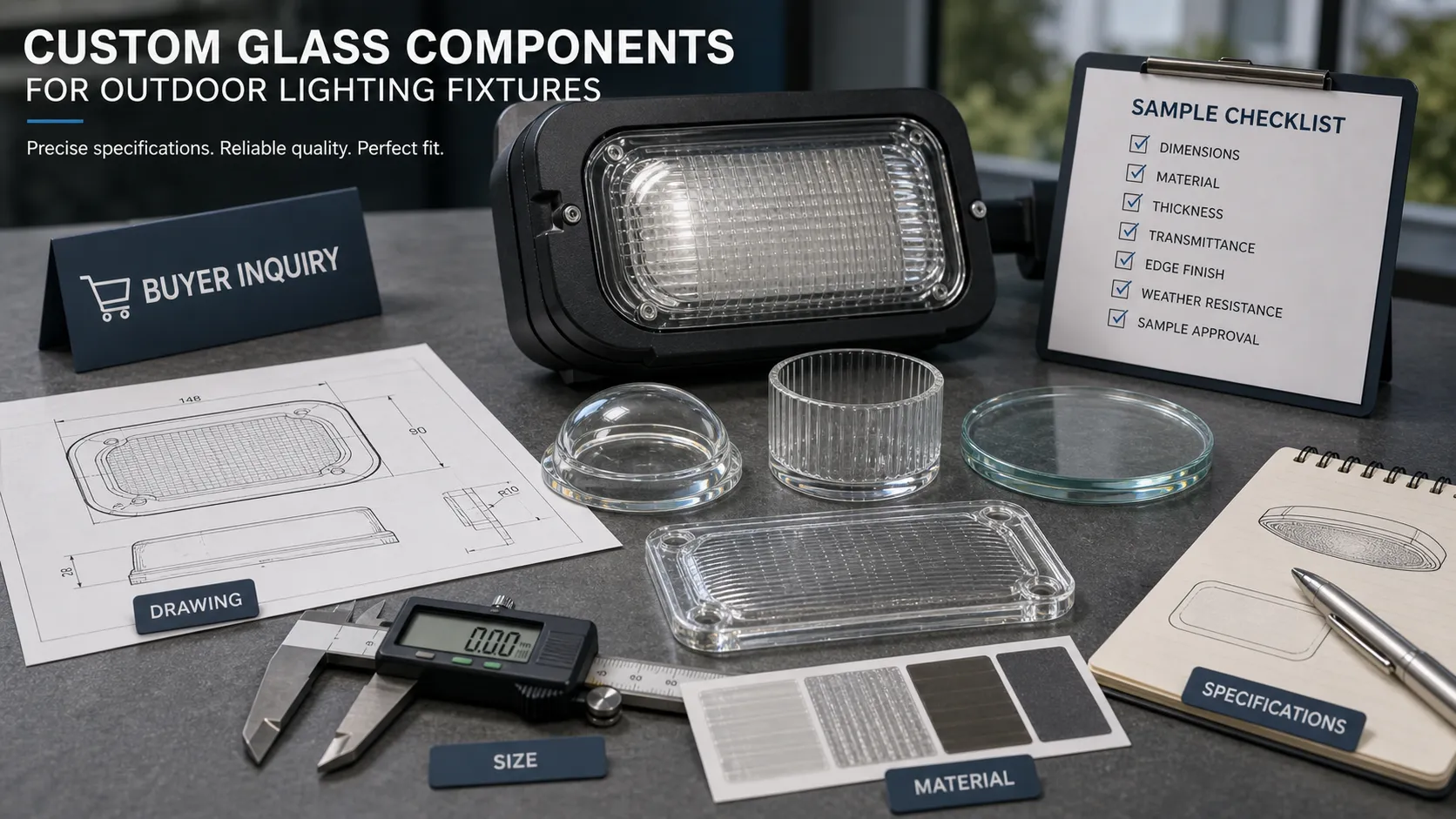
What information should buyers provide when requesting custom outdoor lighting glass?
Buyers should identify the luminaire type, installation environment and required component category, then provide a controlled 2D drawing with critical dimensions and tolerances. Complex three-dimensional glass shades or optical glass lenses should also include a 3D model or an approved physical sample. The request should state the glass material, thickness, edge requirements, surface finish, color, transmission or haze target, and the relevant retention or sealing interface.
Also include the prototype and annual quantities, cosmetic acceptance criteria, required component or complete-luminaire tests, packaging needs and target delivery date. These inputs allow the supplier to assess manufacturing route, tooling, inspection and project risk before quotation. See the custom outdoor lighting glass purchasing and quality-control guide.
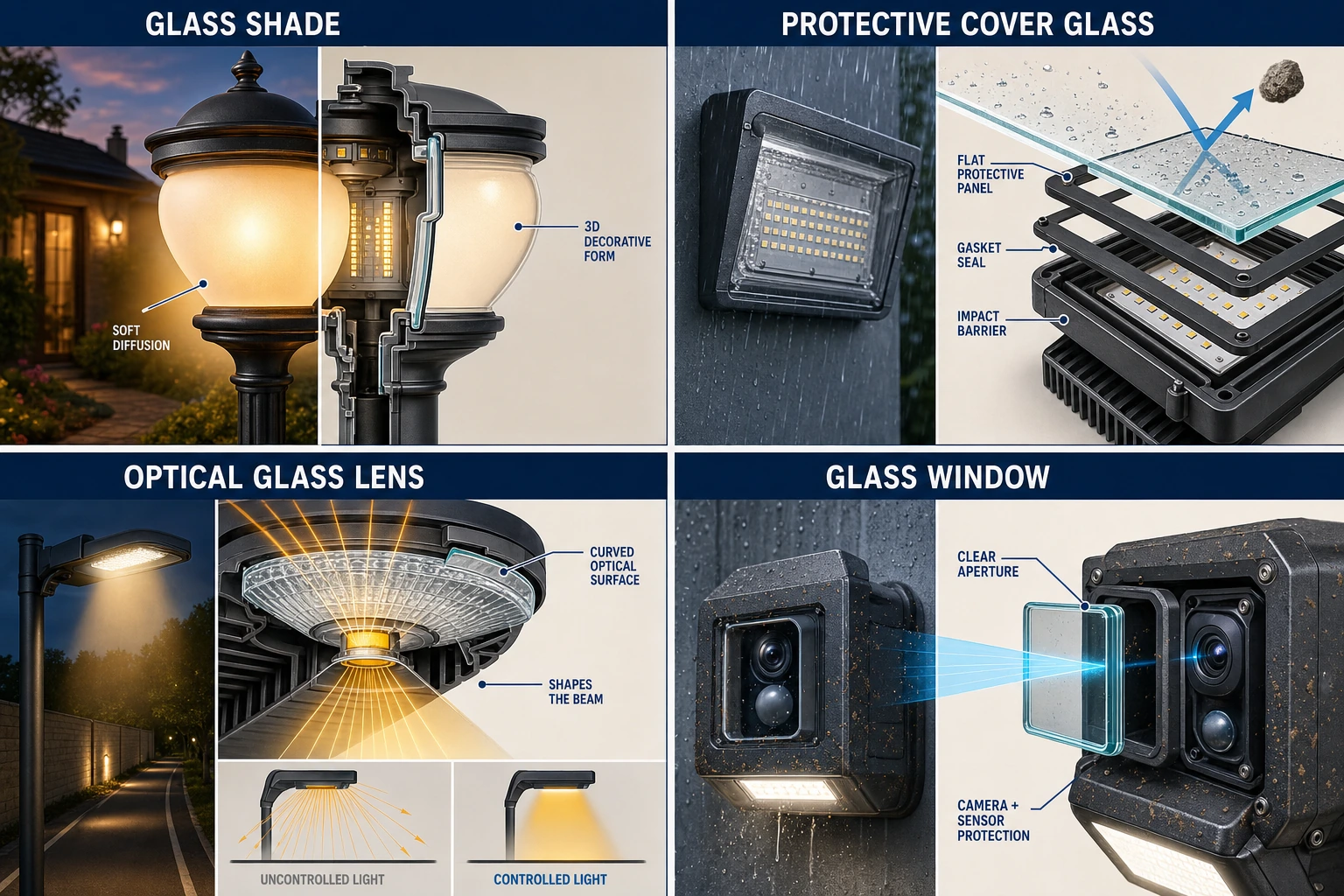
What is the difference between a glass shade, protective cover glass, optical glass lens and glass window?
Use the following four names consistently in drawings, quotations, product pages and inspection documents. The name should describe the component’s primary structural or optical function, not merely the fact that it is made of glass.
For BO-GLASS production options across these four component categories, see the Custom Outdoor Lighting Glass Manufacturer guide.
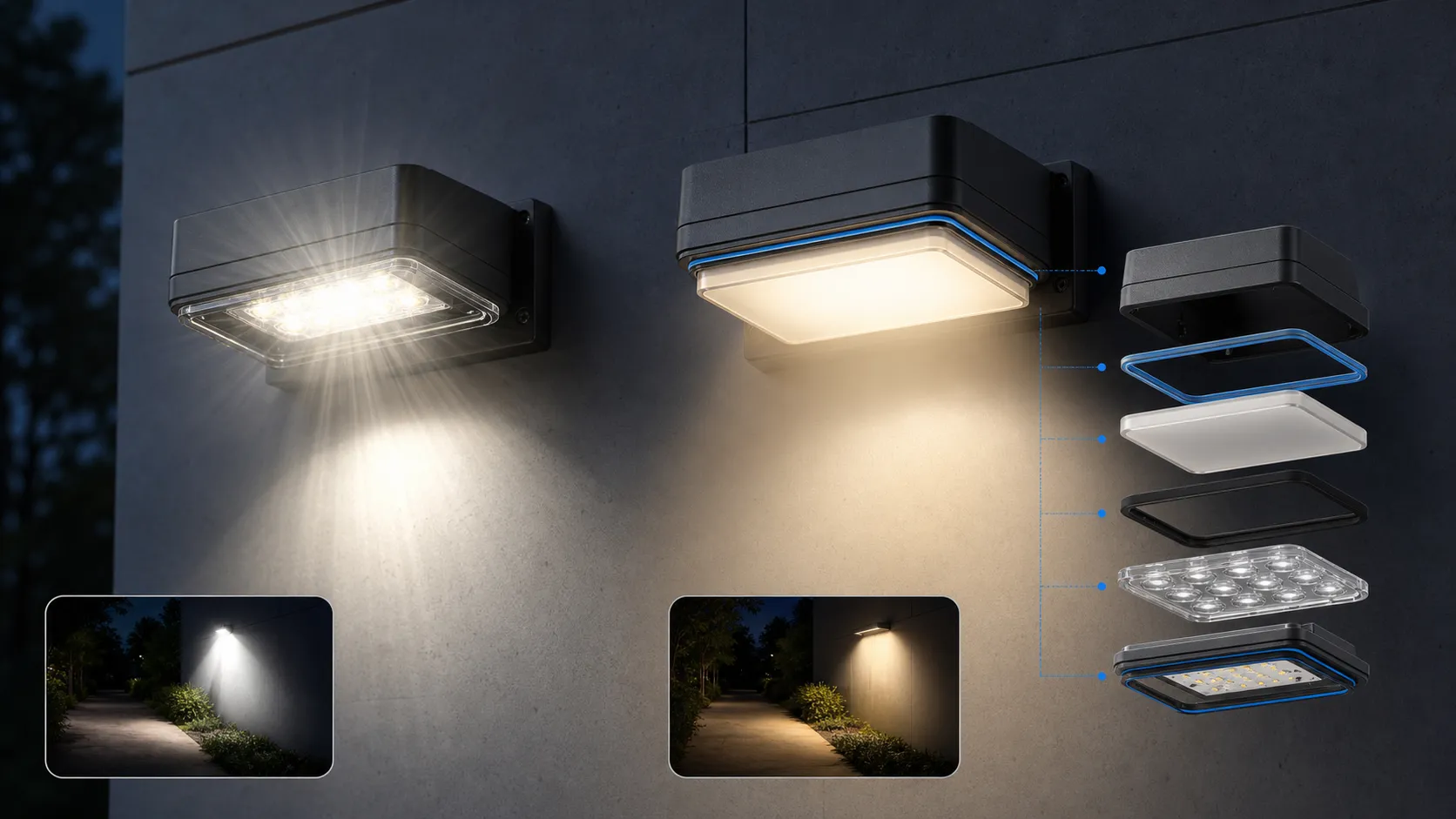
How can glass affect light transmission, glare, beam shape, and fixture appearance?
Glass affects more than total light transmission. Material composition and body color change spectral transmission and may shift CCT or Duv; thickness, surface reflection and coatings influence optical loss; while haze, frosting, opal glass and texture redistribute light, hide LED images and change apparent surface luminance. Too much diffusion can reduce useful intensity and increase spill light even when the source looks softer.
Curvature, molded optical surfaces and lens-to-LED alignment can narrow, widen or redirect the beam, while shade geometry, wall-thickness variation and finish determine the unlit and illuminated appearance of the fixture. Compare candidates with the same LED bin, drive current, thermal state and assembly geometry, then confirm the installed result through photometry and visual evaluation. See the outdoor lighting glass optics and glare guide.
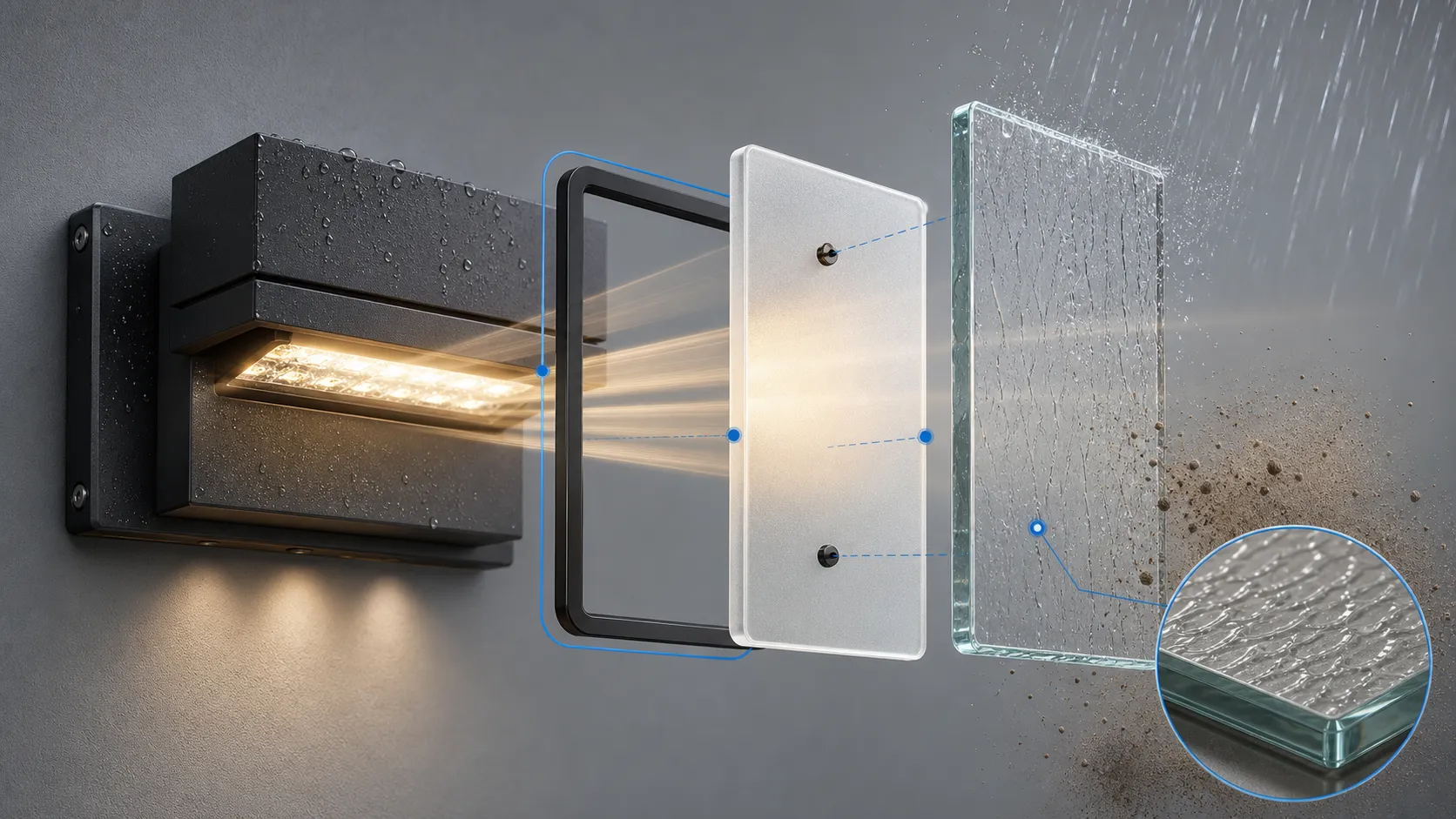
Why do outdoor lighting fixtures rely more on weather-resistant glass components than indoor lighting fixtures?
Outdoor luminaires are exposed to sunlight, rain, day-to-night temperature changes, windblown sand, salt spray, dust, and pollutants. These operating conditions are considerably more demanding than typical indoor environments. Although the glass body is less prone to yellowing than plastic, its edges, surface treatments, coatings, sealing interfaces, and assembly stresses still require environmental evaluation.
Weather-resistant glass components can reduce cracking, fogging, clouding, loss of light transmission, seal failure and frequency of maintenance. For outdoor projects, glass components must not only look good when new, but also maintain consistent transparency, appearance and safety after several years of use.
For UV exposure, salt spray, thermal cycling, impact and safety considerations, see the Outdoor Lighting Glass Weather Resistance and Safety guide.
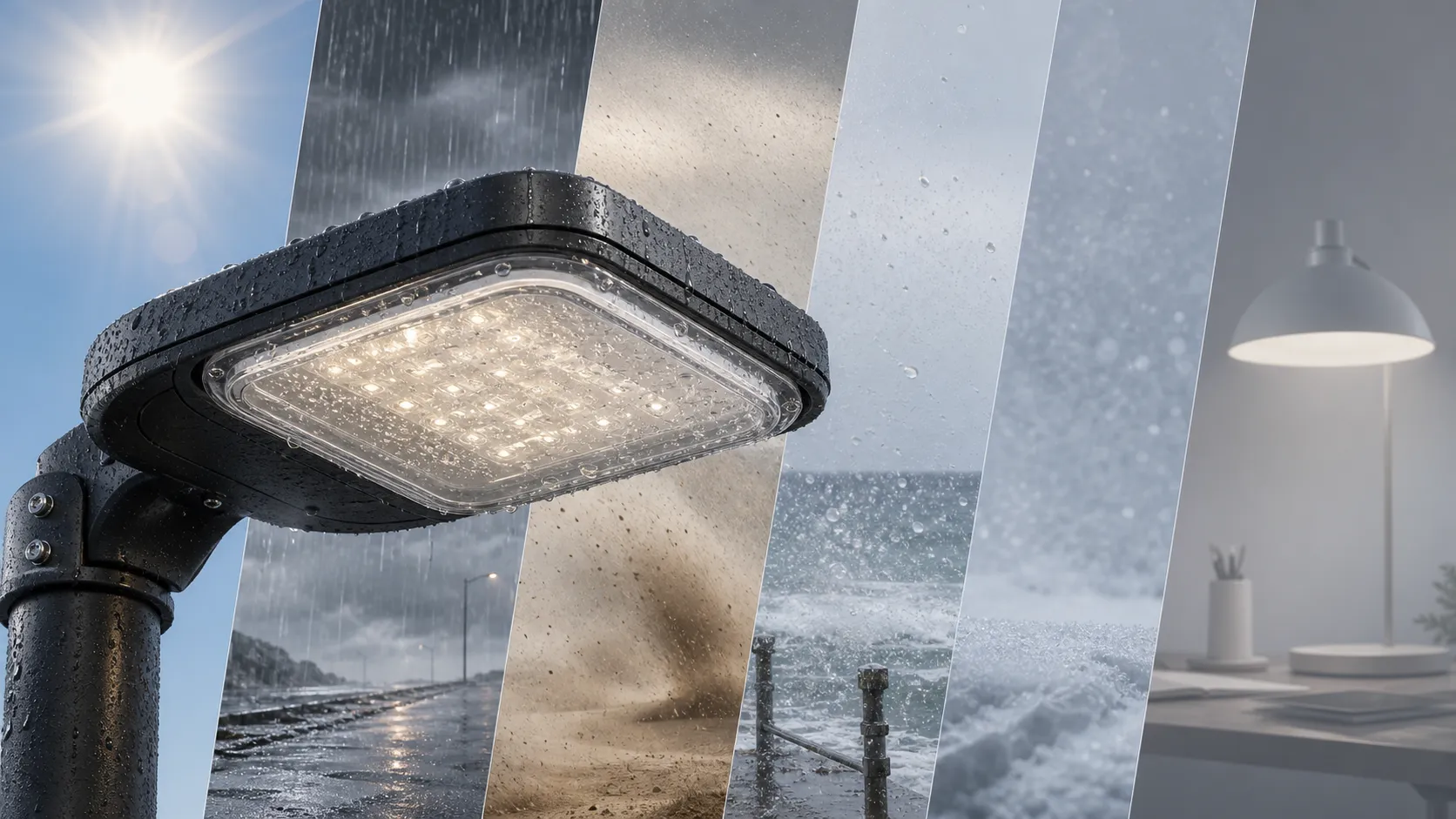
When selecting glass for outdoor lighting fixtures, should you consider the usage scenario or the structure of the fixture first?
Begin with the installation environment and performance target, then evaluate whether the luminaire structure can support the required glass, sealing, and optical solution. The application determines the main risks and performance priorities. For example, underwater lights focus on long-term sealing and water pressure, underground lights focus on load-bearing and impact resistance, wall washers focus on optical consistency, and garden lights focus on soft light and decoration.
The luminaire structure determines whether the selected glass solution can be implemented, including gasket-groove design, retaining-ring assembly, adhesive bonding, fastener positions, housing tolerances, heat-dissipation paths, and maintenance access. A safer sequence is to define the application requirements first, followed by the optical targets, sealing structure, glass material, manufacturing process, target cost, and delivery requirements.
For converting application and structure requirements into an RFQ and inspection plan, see the Custom Outdoor Lighting Glass Purchasing and Quality Control guide.
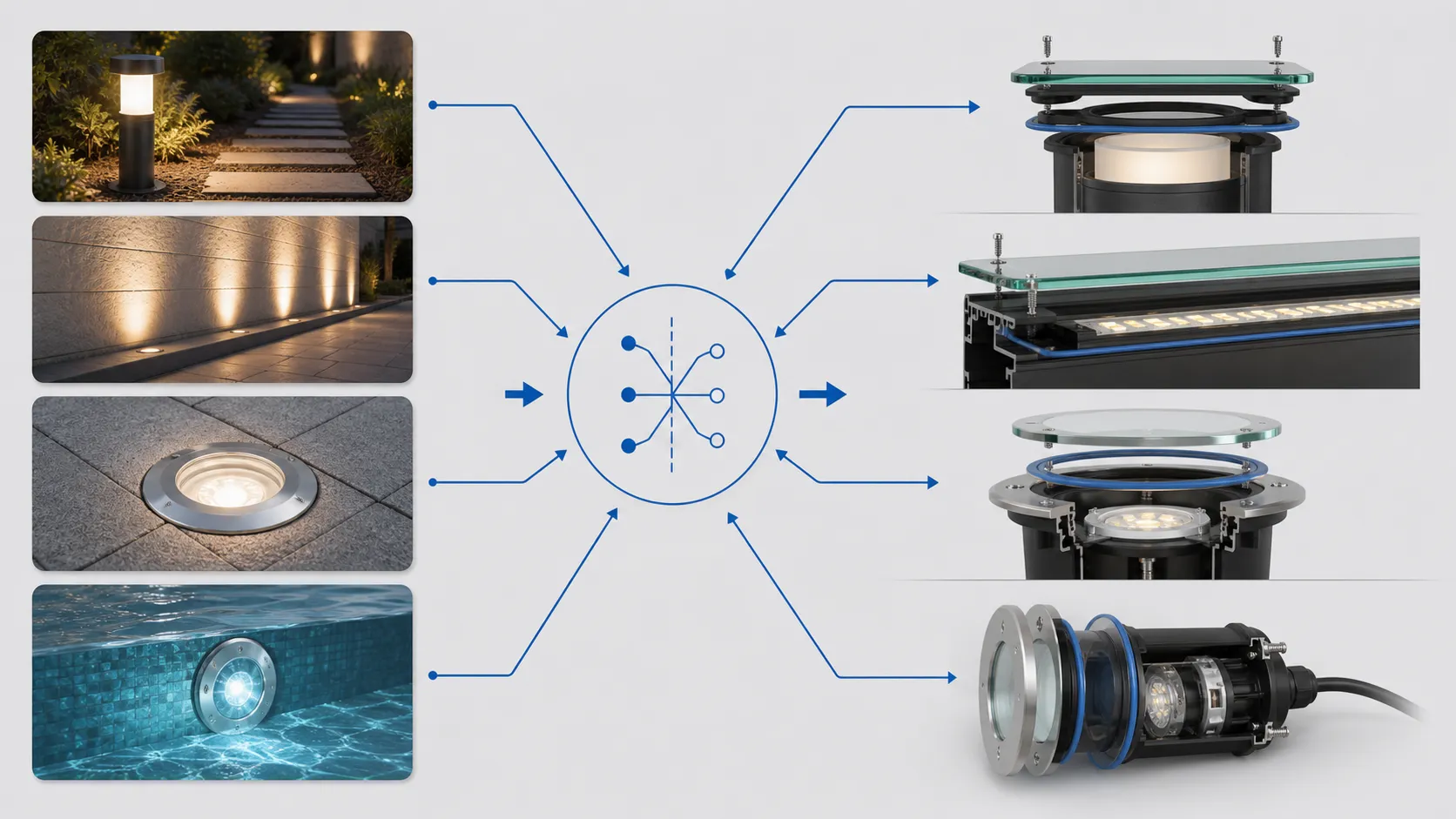
How do glass components affect water ingress protection, dust protection, and luminaire service life?
The interface between the glass component and the housing directly affects the luminaire’s resistance to water and dust ingress. Glass dimensions, thickness tolerance, edge flatness, chamfer quality and sealing-surface condition all influence gasket compression and contact uniformity. Poor fit can create leakage paths that allow water, dust or insects to enter and can also increase the risk of internal condensation.
Chips at the edge of the glass, local stress, tight assembly or uneven stress may also lead to cracking after transportation, installation or thermal cycling. Proper glass construction improves IP rating stability, reduces maintenance frequency, and extends the life of the LEDs, power supply, seals, and complete luminaire housing.
For detailed gasket, flatness, drainage, condensation and IP-test considerations, see the Outdoor Lighting Glass Waterproofing, Sealing and Condensation guide.
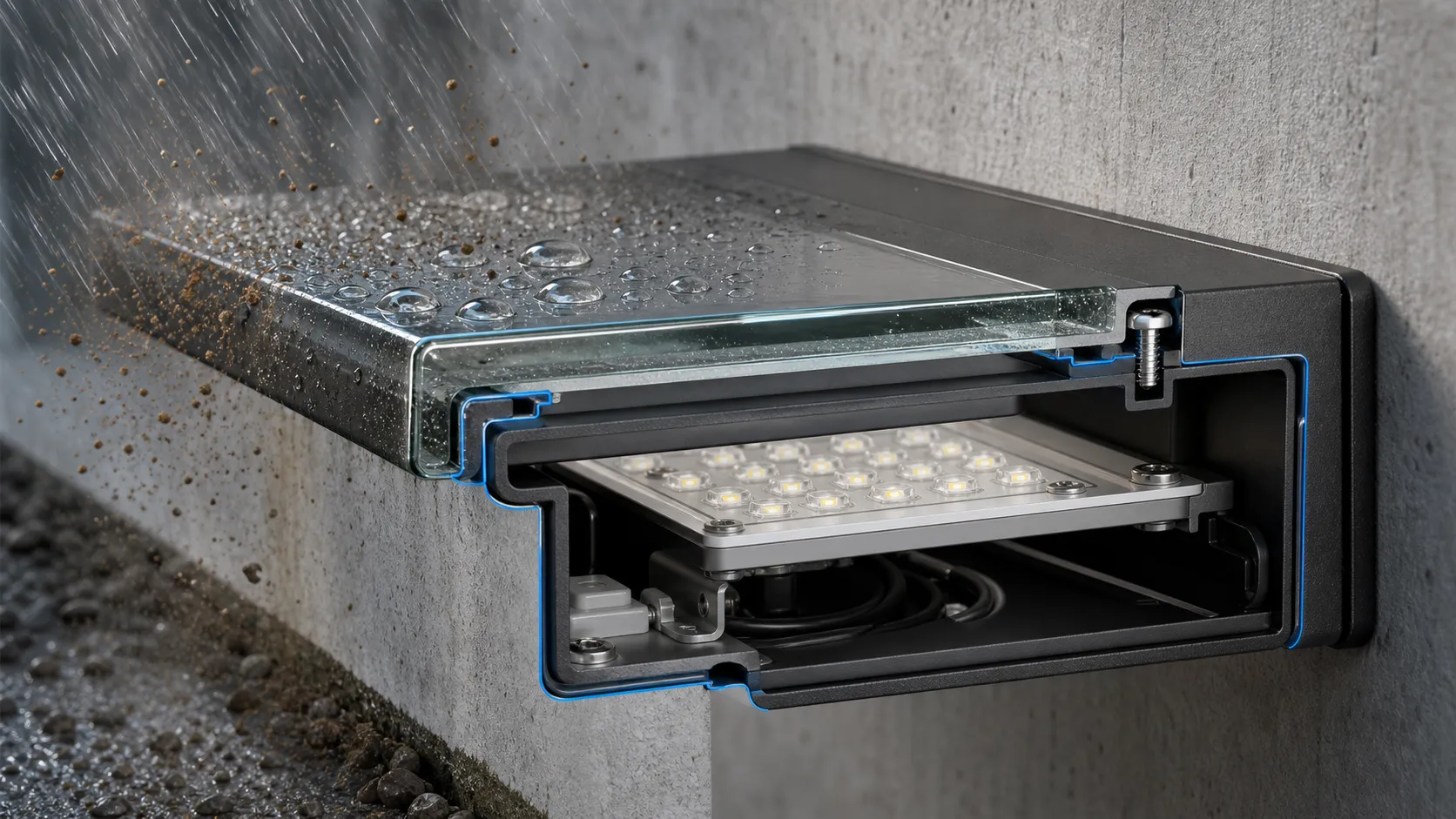
When customizing outdoor lighting glass, why do we need to confirm the transmittance, thickness, tolerance and sealing structure at the same time?
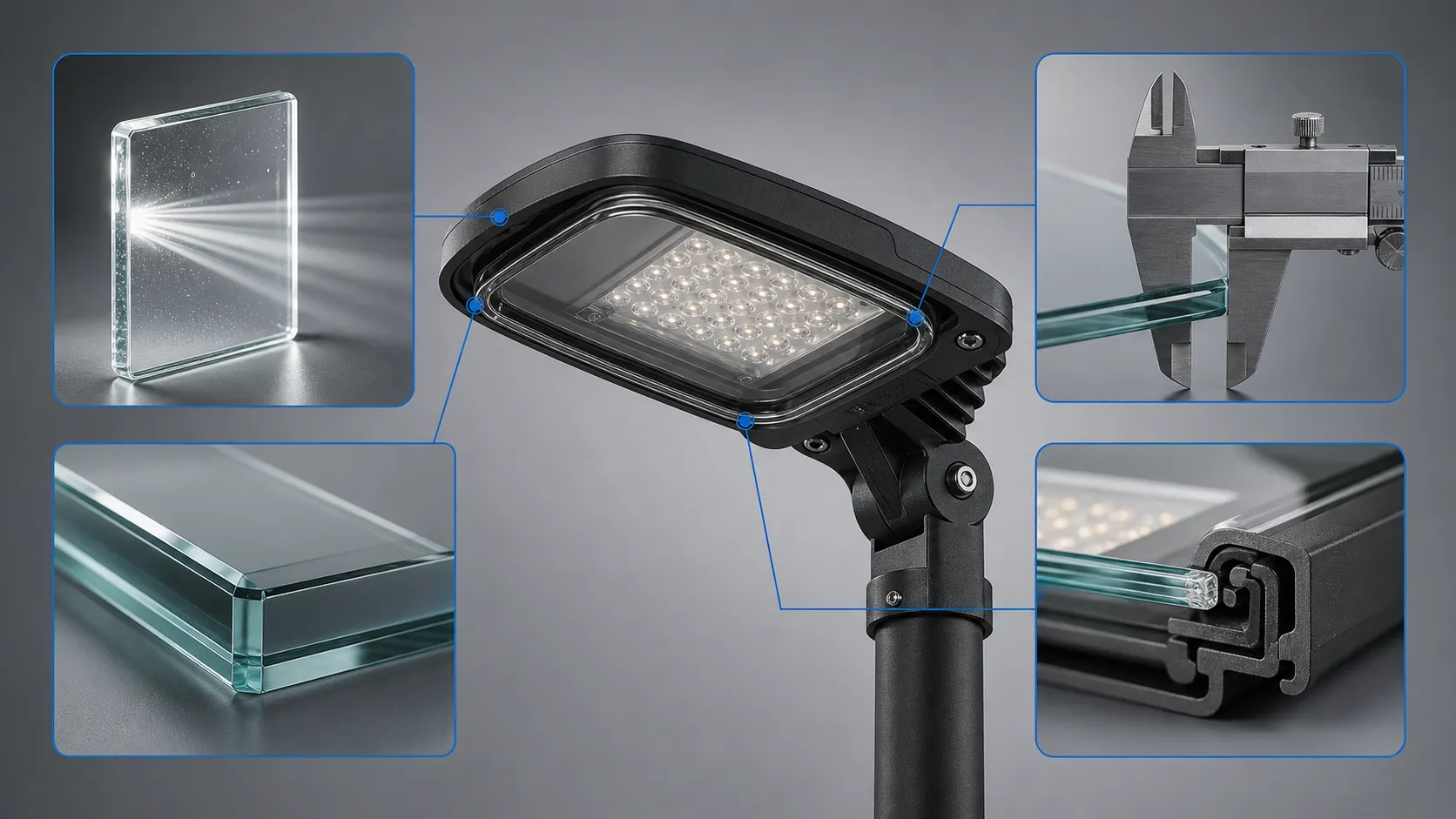
When customizing the glass for outdoor lighting fixtures, the transmittance determines the light efficiency, the thickness affects the strength and weight, the dimensional tolerance affects the assembly, and the sealing structure affects the water ingress protection and lifespan of the complete luminaire. If you only confirm one of the parameters, it is easy for the sample to look good, but it will leak, crack, or have inconsistent light effects when assembled in batches.
A more reliable development method is to simultaneously confirm the glass material, thickness, light transmittance or haze, edge treatment, dimensional tolerance, sealing surface requirements and luminaire body coordination method. Glass components can help the complete luminaire achieve target performance, but IP, IK, thermal shock and long-term reliability should still be confirmed through complete-luminaire testing.
Engineering decision: Write these values on one interface drawing: glass thickness and tolerance, sealing-land flatness, gasket free height, groove depth and frame stop. Calculate minimum and maximum gasket compression from the full tolerance stack, then measure luminous transmittance on the approved glass sample. A nominal thickness and a target IP code are not enough to release tooling.
For RFQ fields, sample approval, tolerance control and quality requirements, see the Custom Outdoor Lighting Glass Purchasing and Quality Control guide.
Contact Us
Your feedback fuels our growth, and your questions drive our solutions.
We value your feedback, inquiries, and suggestions. Please feel free to get in touch with us
General inquiries
Please contact us via sales@bo-glass.com, and we will reply to you as soon as possible.
Interested to work with us
Drop your resume at info@bo-glass.com
and we will get back to you shortly.
Request a Custom Glass Quote
Tell us about your project or upload a drawing.
Your drawings remain confidential.
We uses the contact information you provide to us to contact you about our relevent content, products, and services.