
Outdoor Lighting Glass Weather Resistance and Safety
Weather resistance and safety belong to the design stage. The relevant risks change with coastal salt, desert dust, high humidity, freeze-thaw cycles, solar heating, thermal gradients, public access, and impact exposure. This guide organizes those risks around likely failures, glass-related controls, installed support conditions, and the difference between a material property and a tested enclosure or complete luminaire.
Weather Resistance, Corrosion, Safety, and Long-Term Use
- Salt-spray limit
- ISO 9227 defines NSS/AASS/CASS methods but does not prescribe exposure duration or acceptance and is not intended to predict field life. [ISO source]
- Temperature cycling
- IEC 60068-2-14 requires a declared temperature-change profile; publish Tmin, Tmax, dwell, transfer time, cycles and post-test inspection.
- Heat-treated glass
- ASTM C1048 distinguishes heat-strengthened and fully tempered flat glass and requires fabrication before heat treatment.
- Chemical durability example
- BOROFLOAT 33 is published as hydrolytic class HGB 1/HGA 1; this does not establish resistance of coatings, inks, seals or the assembled luminaire.
What weather-resistance factors should be considered for outdoor-lighting glass components?
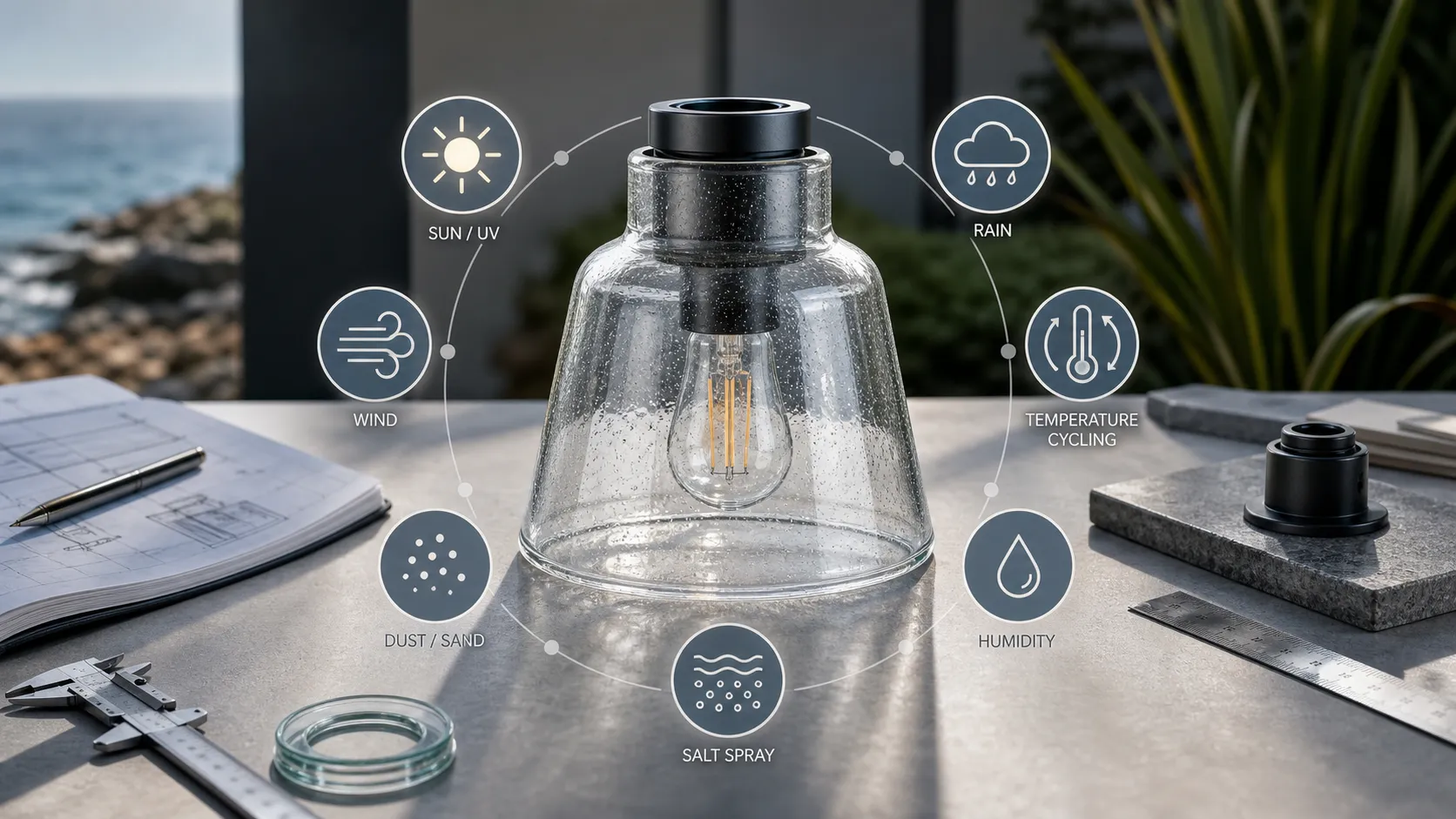
Outdoor-lighting glass components must withstand sunlight, ultraviolet exposure, rain, humidity, day-to-night temperature changes, windblown sand, salt spray, dust, bird droppings and cleaning agents. The glass body is generally stable, but edges, surface treatments, coatings, sandblasted layers, inks, adhesives and seals remain subject to long-term environmental effects.
When selecting a model, you should not only look at the appearance of the new sample, but also evaluate the light transmittance, color stability, cleaning difficulty and assembly reliability after years of outdoor use. For coastal, desert, high temperature, high cold or high humidity projects, the glass material, thickness, edge treatment and complete luminaire sealing structure should be designed accordingly.
Will the glass body age and turn yellow if exposed to sunlight for a long time?
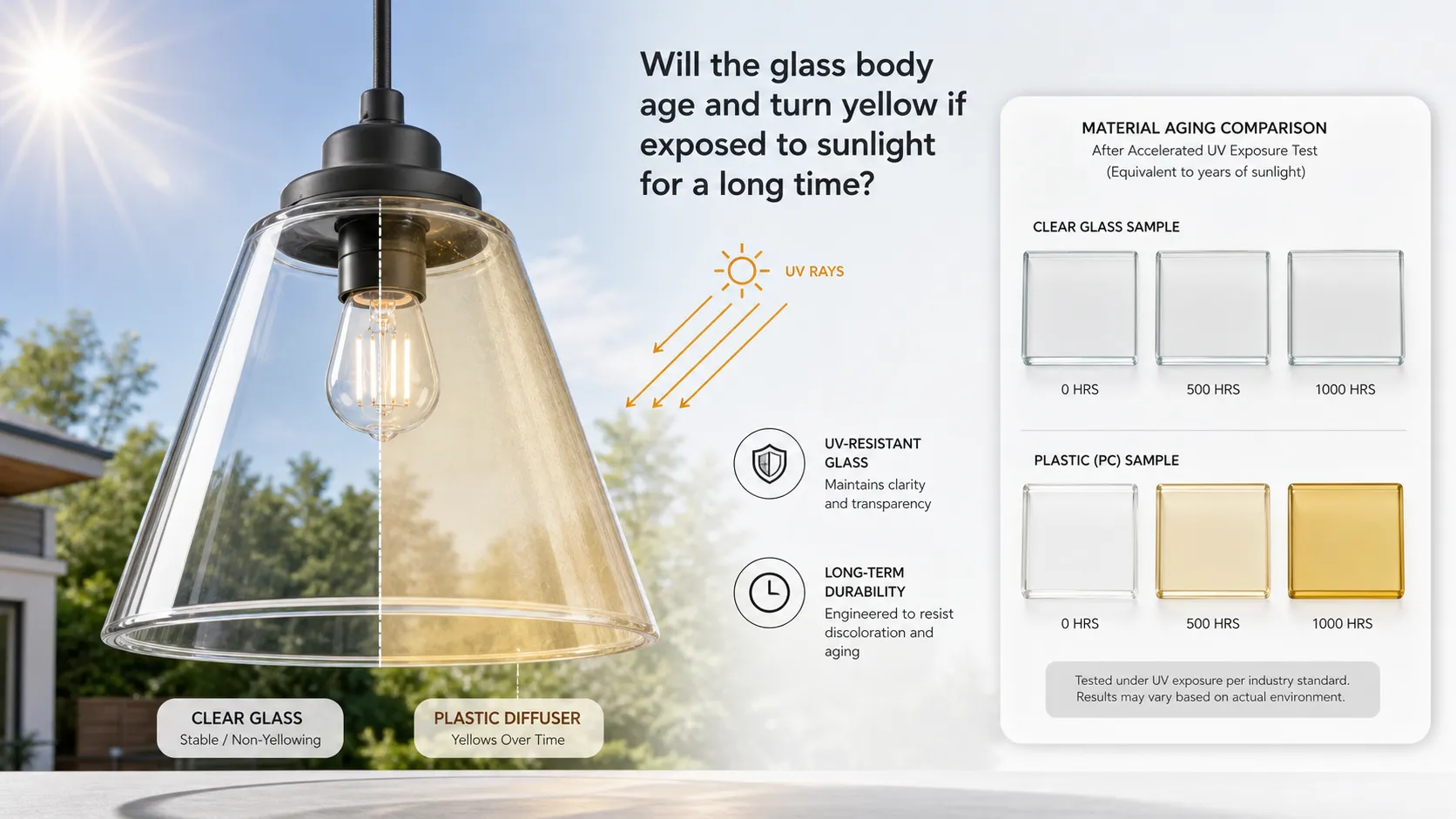
Glass bodies are generally less susceptible to yellowing from UV exposure than many plastic diffuser covers, which is an advantage of using glass in outdoor lighting. The color of standard clear glass, low-iron glass and borosilicate glass is generally relatively stable under long-term sunlight exposure.
But this does not mean that the luminaire will not change color or become cloudy in the long term. Surface dirt, rain marks, salt spray, coating aging, ink fading, seal failure and internal condensation can all affect the final appearance and light transmission. Therefore, when evaluating outdoor life, the glass body, surface treatment and complete luminaire structure should be looked at together.
Why do outdoor-lighting glass components become cloudy?
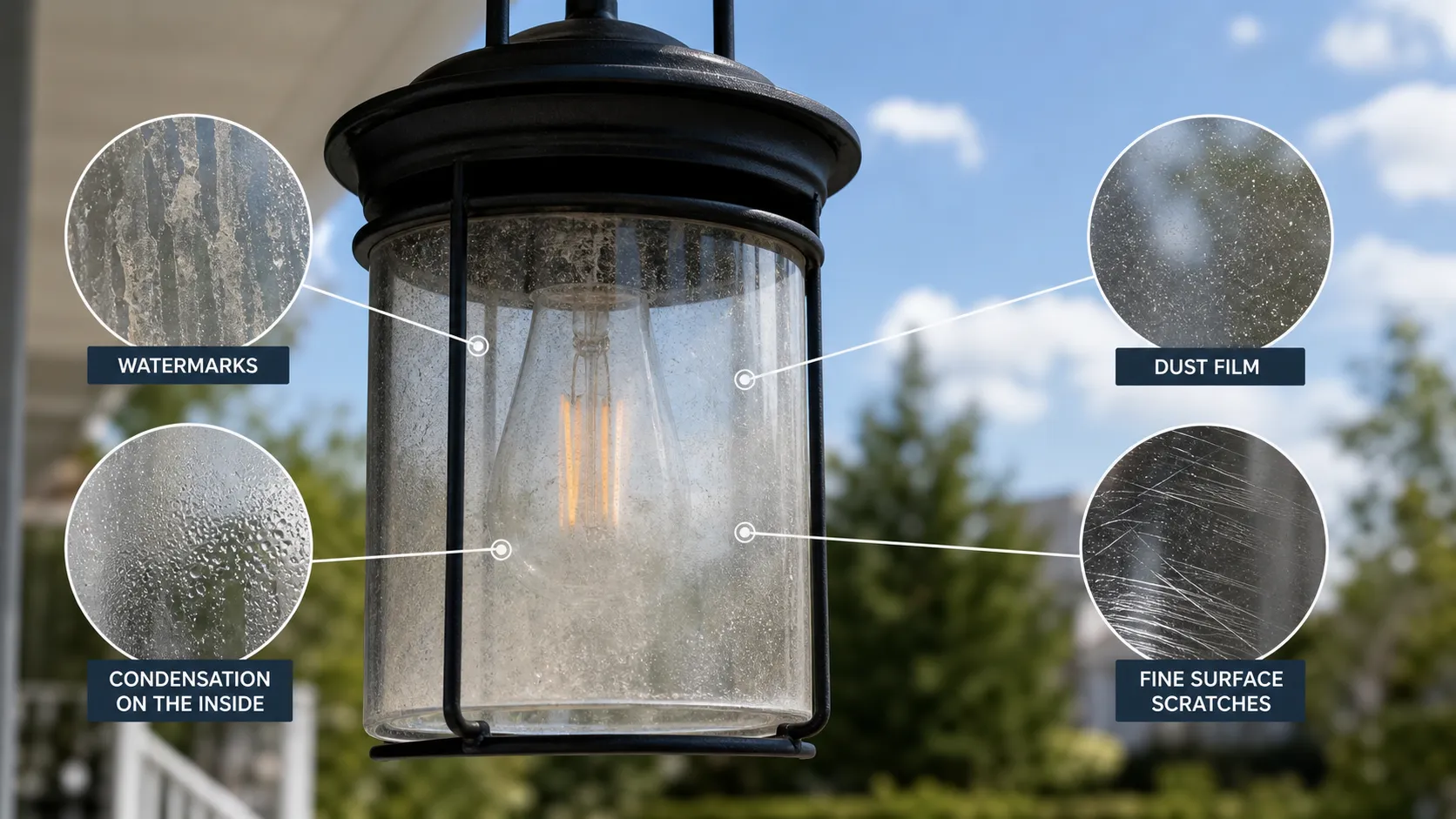
Common causes include dust deposits, rainwater marks, bird droppings, oil, salt crystals, fine surface scratches, scale and internal condensation. The glass itself may not have degraded, but contamination and micro-damage can make it appear gray or hazy.
If a luminaire is poorly sealed, water vapor may also form a film or stains on the inner glass surface. Reduce cloudiness by selecting easy-to-clean surfaces, avoiding rough exterior treatments, controlling the sealing design and setting maintenance intervals appropriate to the environment.
What issues should be paid attention to when using glass components for outdoor lighting fixtures in coastal areas?
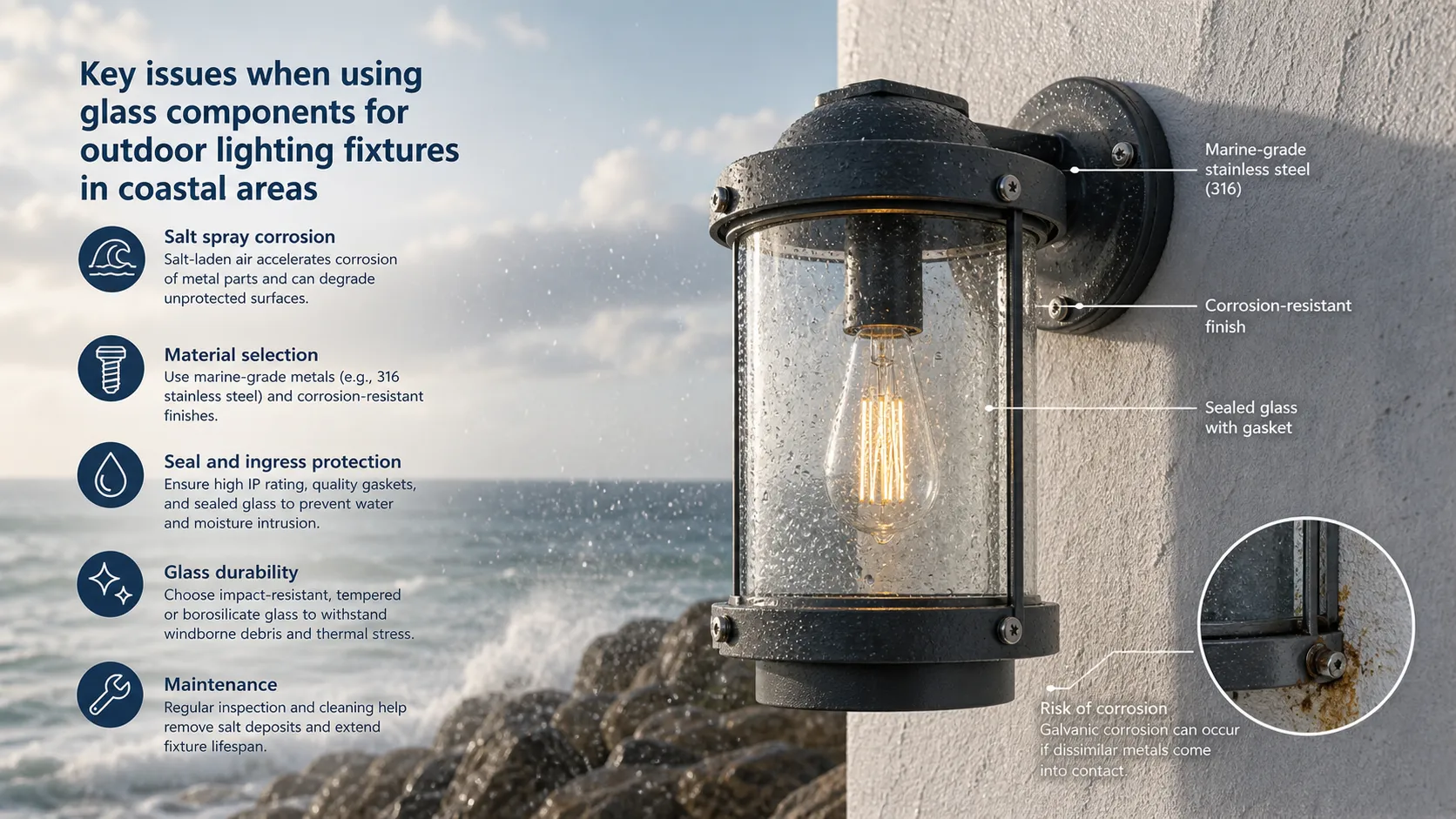
The main coastal risks are salt spray, high humidity, strong winds, rain and mixed pollutants. The glass body generally provides good corrosion resistance, but deposited salts can stain the surface and accelerate deterioration of metal frames, fasteners, brackets, adhesive joints and seals.
Therefore, the glass components of coastal outdoor lighting fixtures must pay attention to edge treatment, surface cleanliness, sealing surface stability and cooperation with metal parts. Housing and fastener materials are also critical, as corrosion of the structure around the glass may result in reduced holding force, seal failure or loosening of the glass.
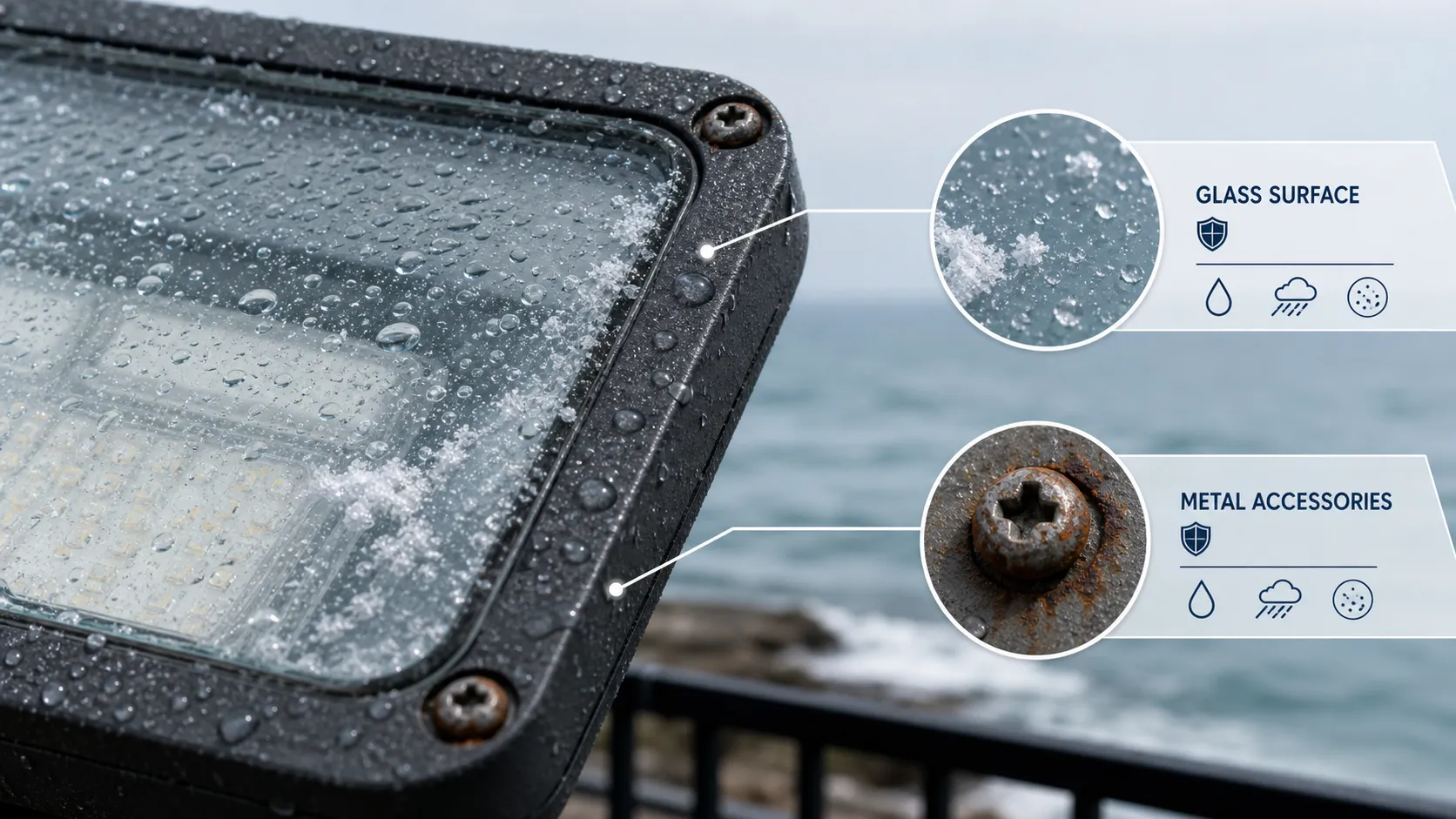
Will the high salt spray environment affect the glass surface and metal accessories?
The corrosion effect of high salt spray environment on the glass body is usually less than that on metal accessories and sealing materials, but the salt will leave white crystals, watermarks and dirty films on the glass surface, reducing the light transmittance and affecting the appearance. If the glass is coated, sprayed or roughened on the outside, its salt spray and cleaning resistance also need to be confirmed.
Metal fittings are more likely to be a source of problems. Once the pressure frame, screws and shell are corroded, it may cause uneven pressure of the glass, failure of the gasket or loosening of the assembly structure. Coastal projects should evaluate glass, metal, seals and surface treatments as a system.
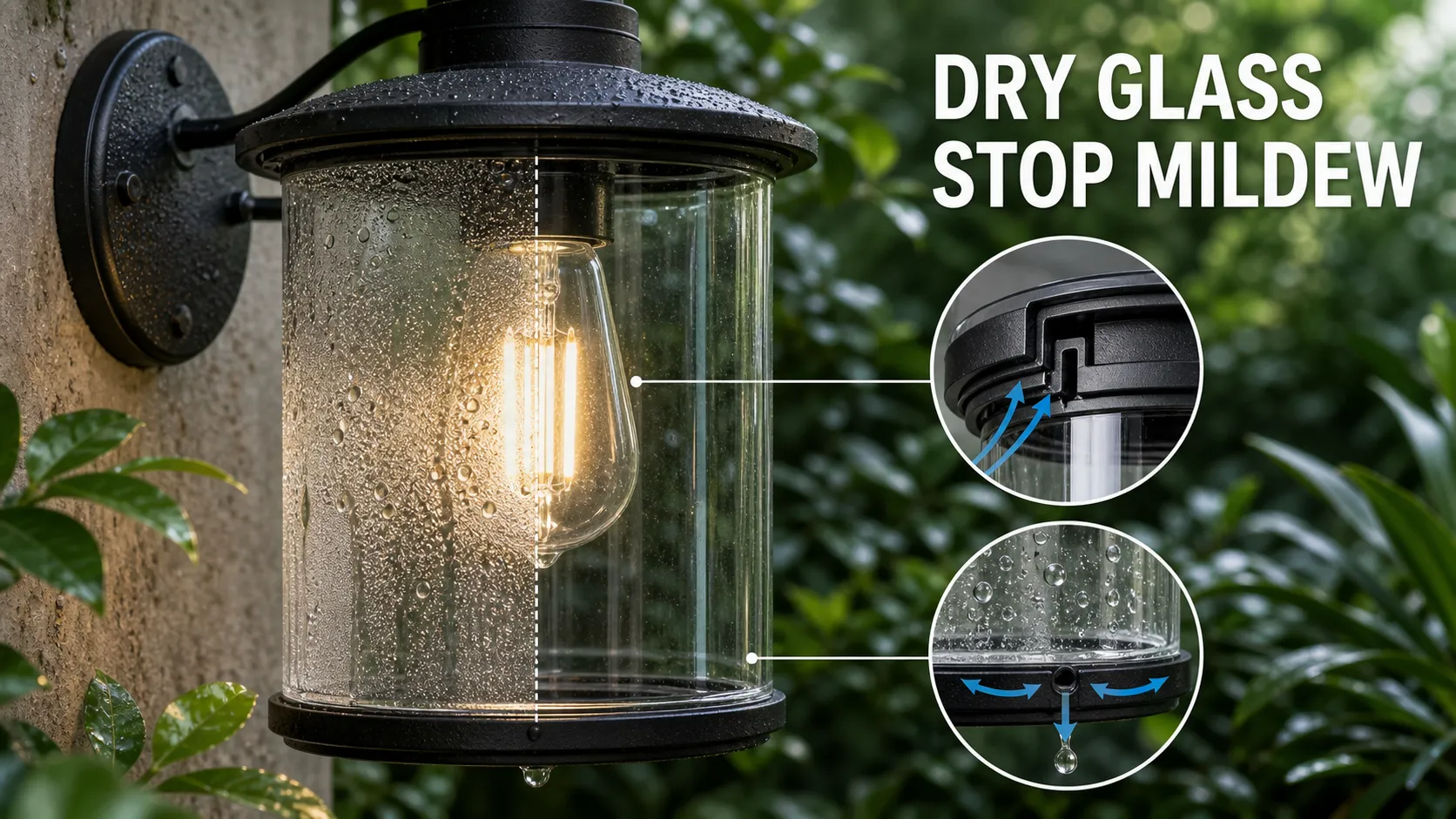
How can water vapor and mildew be prevented on glass components in high-humidity environments?
In high humidity, water films, dirt and mildew can form on outer glass surfaces, while poor sealing or assembly moisture may cause condensation and fogging inside the luminaire. Rough surfaces and structural dead zones make water accumulation and contaminant adhesion more likely.
Use easy-to-clean exterior surfaces, avoid water traps and maintain a reliable seal or appropriate drainage and ventilation between the glass and housing. For sealed luminaires, control assembly-environment humidity and verify long-term performance through complete-luminaire thermal-cycling and damp-heat tests.
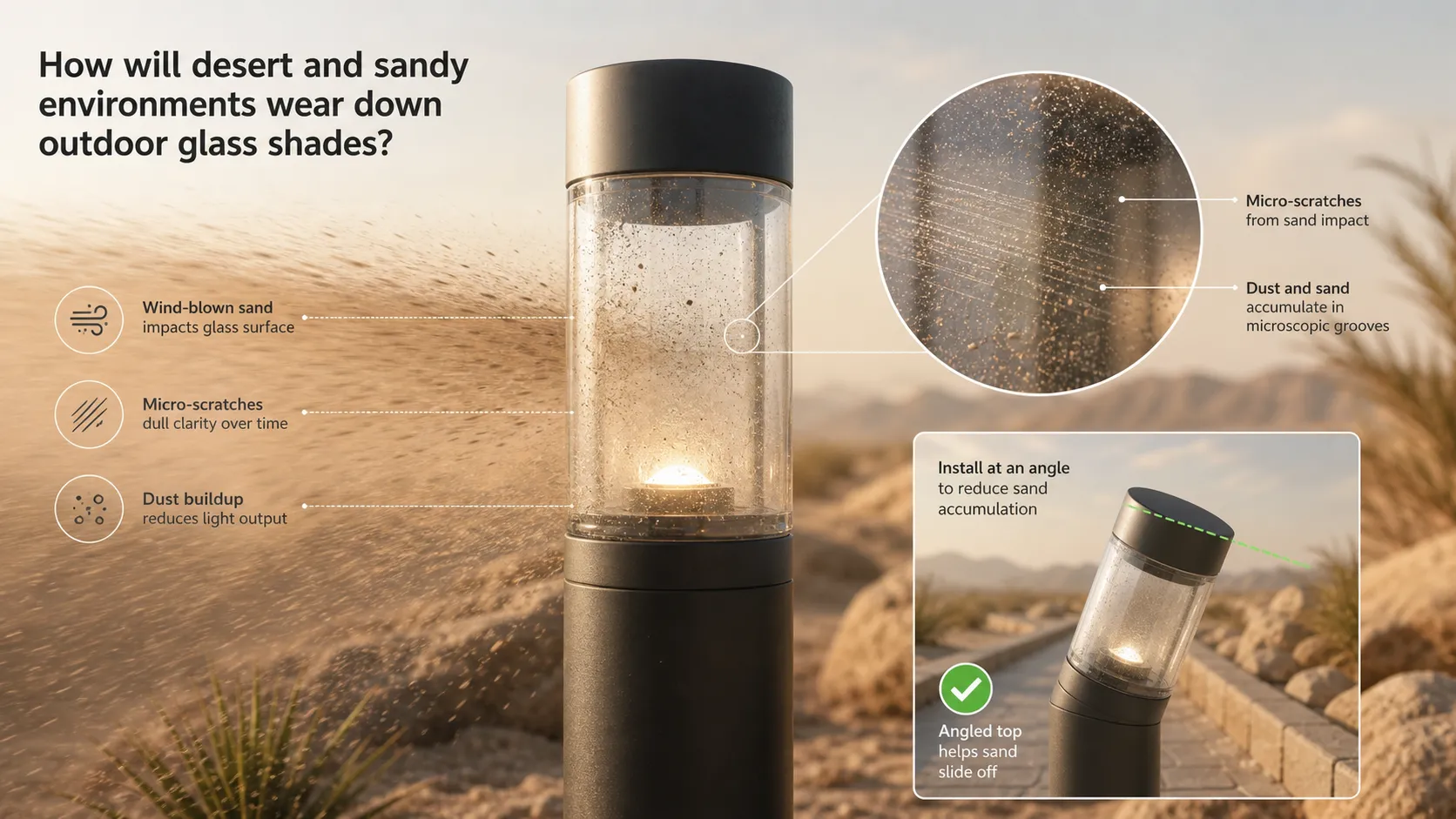
How do desert and sandy environments wear outdoor-lighting glass components?
Fine sand particles in desert and sandy environments will continue to wash away the glass surface, which may cause fine scratches, surface fogging and reduced light transmittance in the long term. Low-mounted luminaires, windward-facing luminaires and in-ground lights are particularly susceptible to sand and dust abrasion and buildup.
The glass itself has a high hardness, but it does not mean that it will not be scratched by wind and sand for a long time. When designing, try to avoid grooves and exposed rough surfaces that are prone to sand accumulation, choose exterior surfaces that are easier to clean, and reduce wear through structural shading, installation angles, and maintenance plans. For high wind and sand projects, packaging, transportation and on-site installation protection are also important.
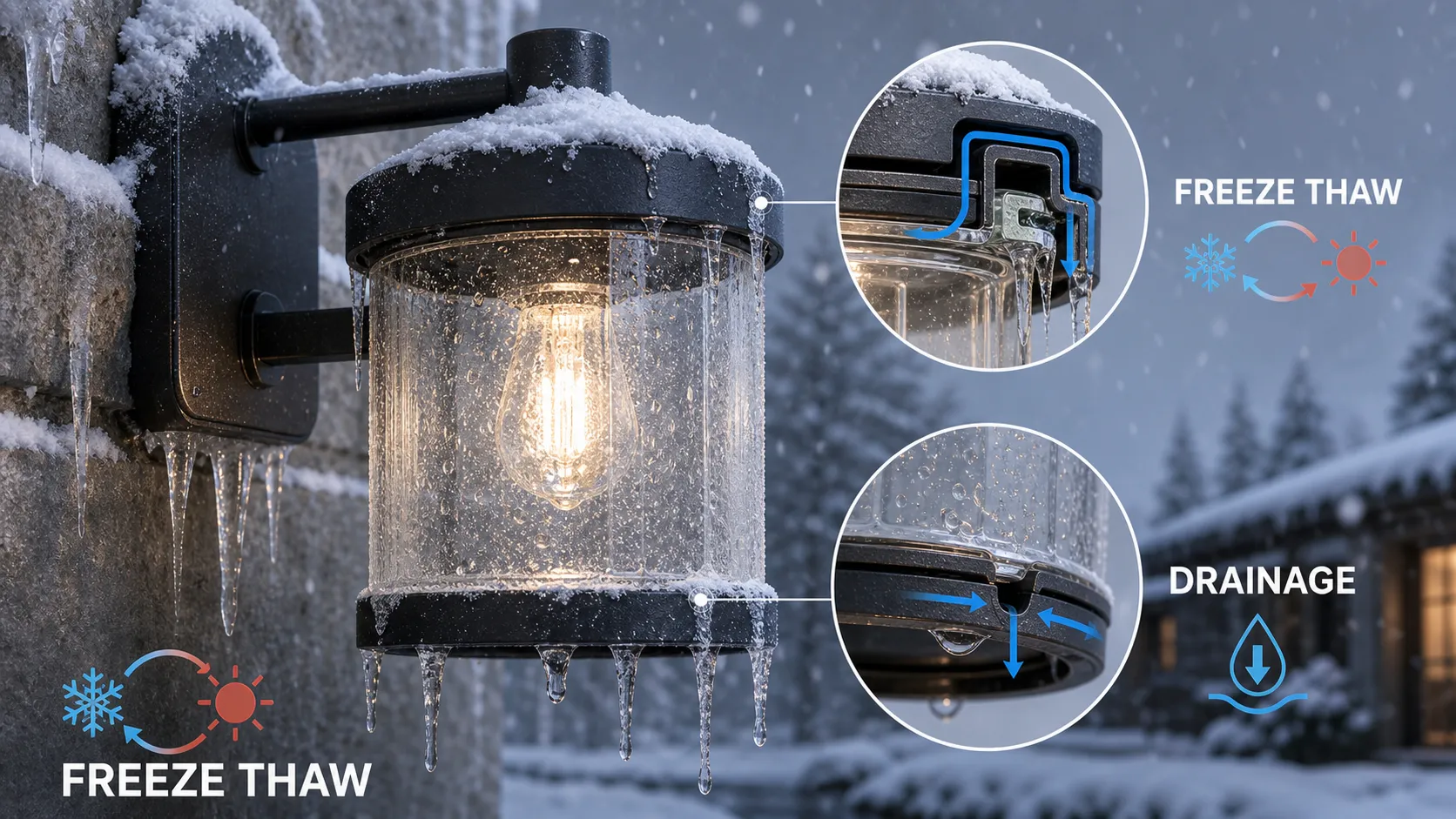
How should outdoor-lighting glass components handle ice, snow and freeze-thaw cycles?
Glass components in cold climates face low temperatures, snow and ice coverage, meltwater refreezing and thermal shock. The glass body usually tolerates low temperatures, but edge microcracks, over-constrained assembly or trapped water can increase the risk of cracking and seal failure during freeze-thaw cycles.
Avoid internal water accumulation, provide reliable drainage and sealing, finish glass edges correctly, control residual stress and maintain appropriate clearance between the glass and housing. Luminaires that may heat rapidly after operating under snow should also undergo thermal-shock and complete-luminaire temperature-rise tests.
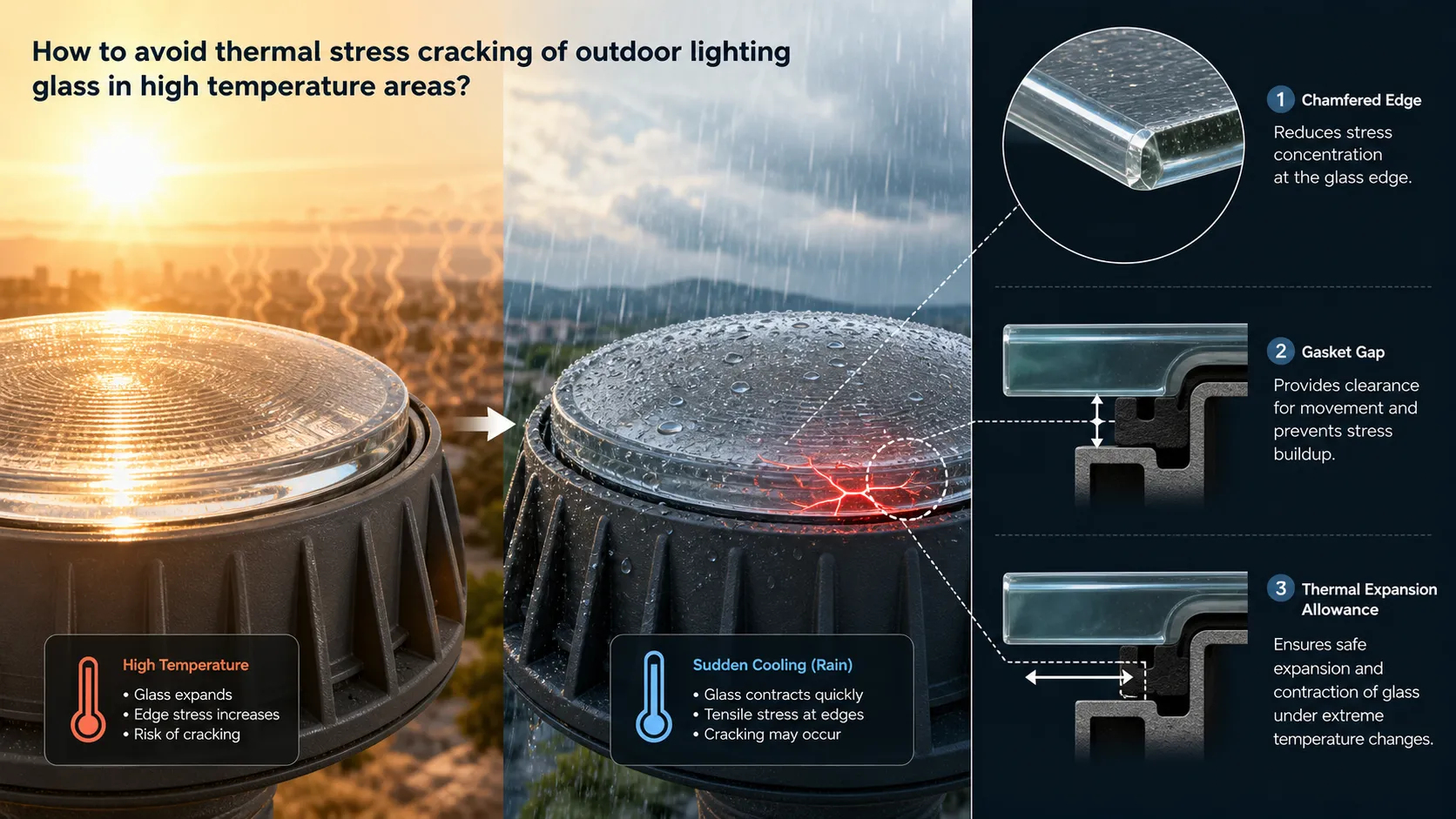
How can thermal-stress cracking be reduced in outdoor-lighting glass used in hot climates?
The glass of outdoor luminaires in high-temperature areas will be affected by sunlight exposure, the luminaire's own heating, and sudden rainfall and cooling. If the glass thickness is uneven, the edges are defective, the annealing stress is high, or the assembly is too tight, thermal expansion and contraction may cause thermal stress cracking.
Risk reduction can be achieved from three aspects: material, structure and process: when necessary, choose glass with better thermal stability, control annealing and edge quality, avoid hard pressing of the metal housing on the glass, and allow the luminaire to have a reasonable heat dissipation path. Reliability should ultimately be confirmed through sample lighting, thermal cycling and rain simulation tests.
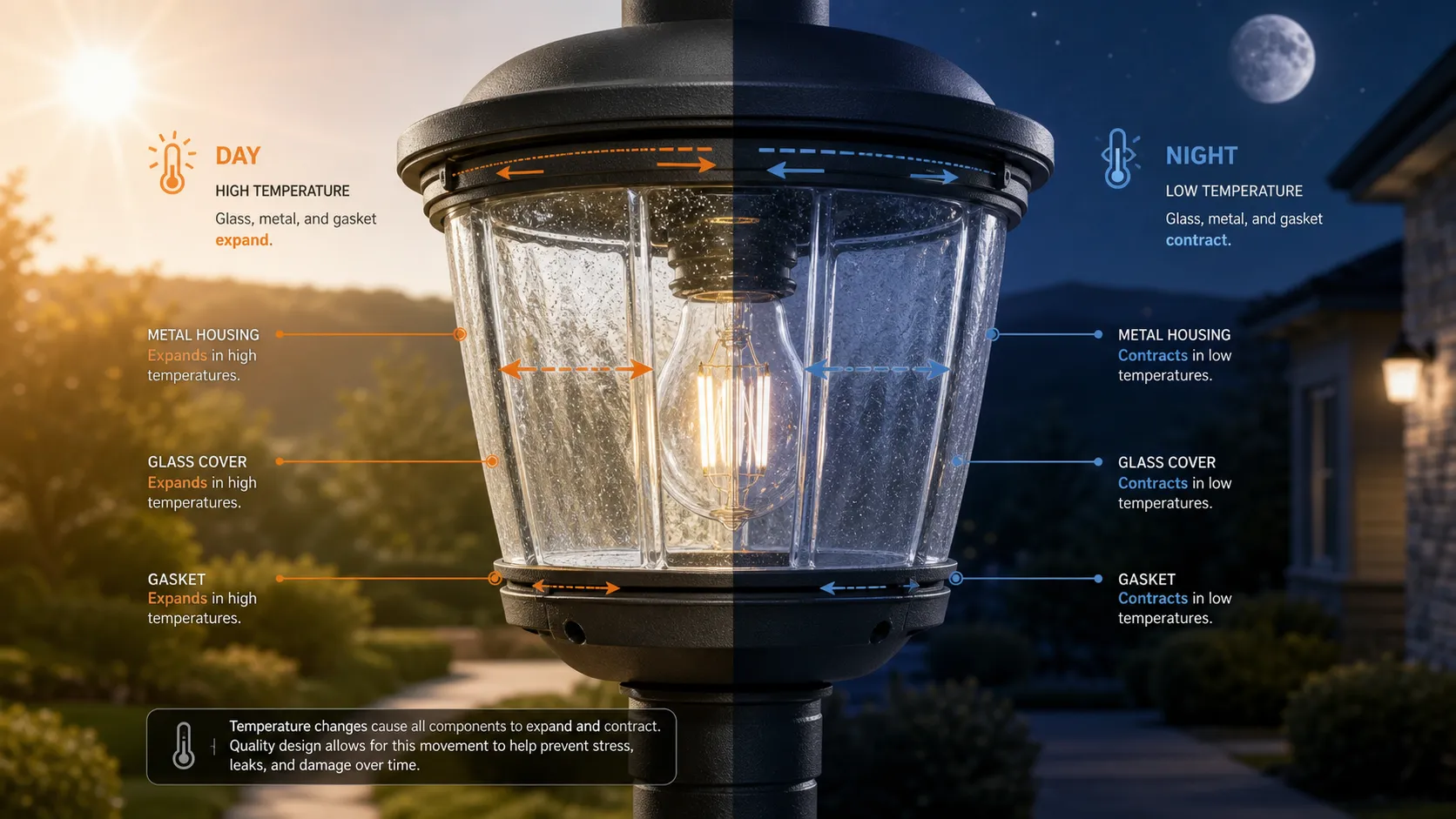
What impact will the temperature difference between day and night have on the glass of outdoor lighting fixtures?
Day-night temperature changes cause the glass, metal housing, gaskets and adhesive joints to expand and contract at different rates. Repeated cycles can change gasket compression, fatigue the adhesive layer, introduce uneven glass stress or propagate existing microcracks.
The glass components themselves need to control thickness, edge quality and residual stress, and the assembly structure must avoid excessive tightness and hard contact. For areas with significant temperature differences, luminaires should focus on verifying the sealing, fogging, loosening and cracking conditions after thermal cycling, rather than just looking at whether the initial assembly is qualified.
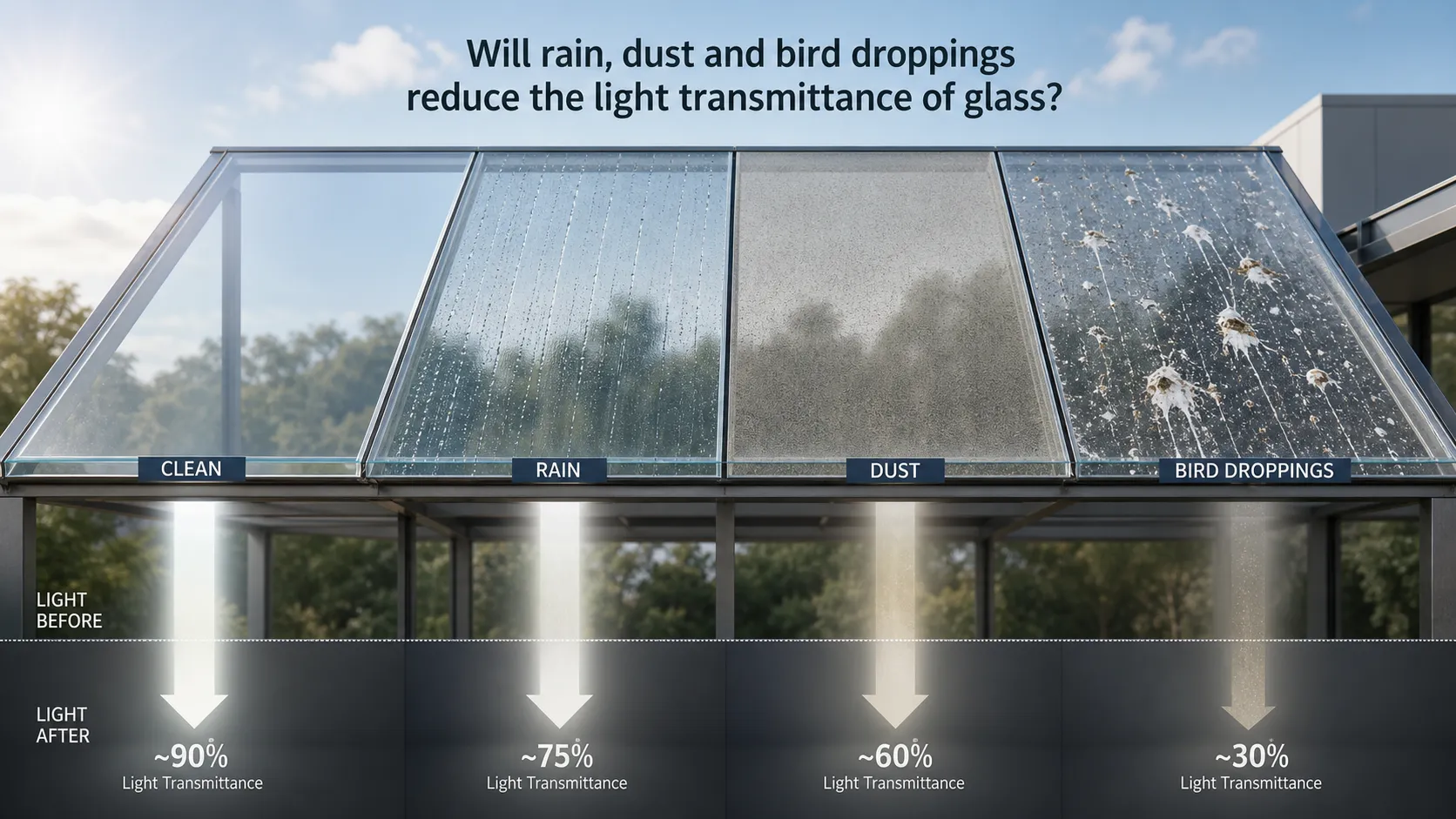
Will rain, dust and bird droppings reduce the light transmittance of glass?
Rain, dust and bird droppings will all reduce the light transmittance of glass, but the degree depends on the thickness of the contamination, cleaning frequency, glass installation angle and surface condition. Slight floating dust may not have much impact, but long-term accumulation of dust, rain marks, bird droppings and oil stains will significantly reduce the light output and worsen the appearance of the luminaire.
The smoother the outer surface of the glass, the easier it is to be washed away by rain and manual cleaning, and the more stable the long-term light transmission effect will be. For products that are inconvenient to maintain, such as high pole lights, wall-mounted lights, underground lights and underwater lights, anti-fouling, drainage and cleaning convenience should be considered during the design stage.
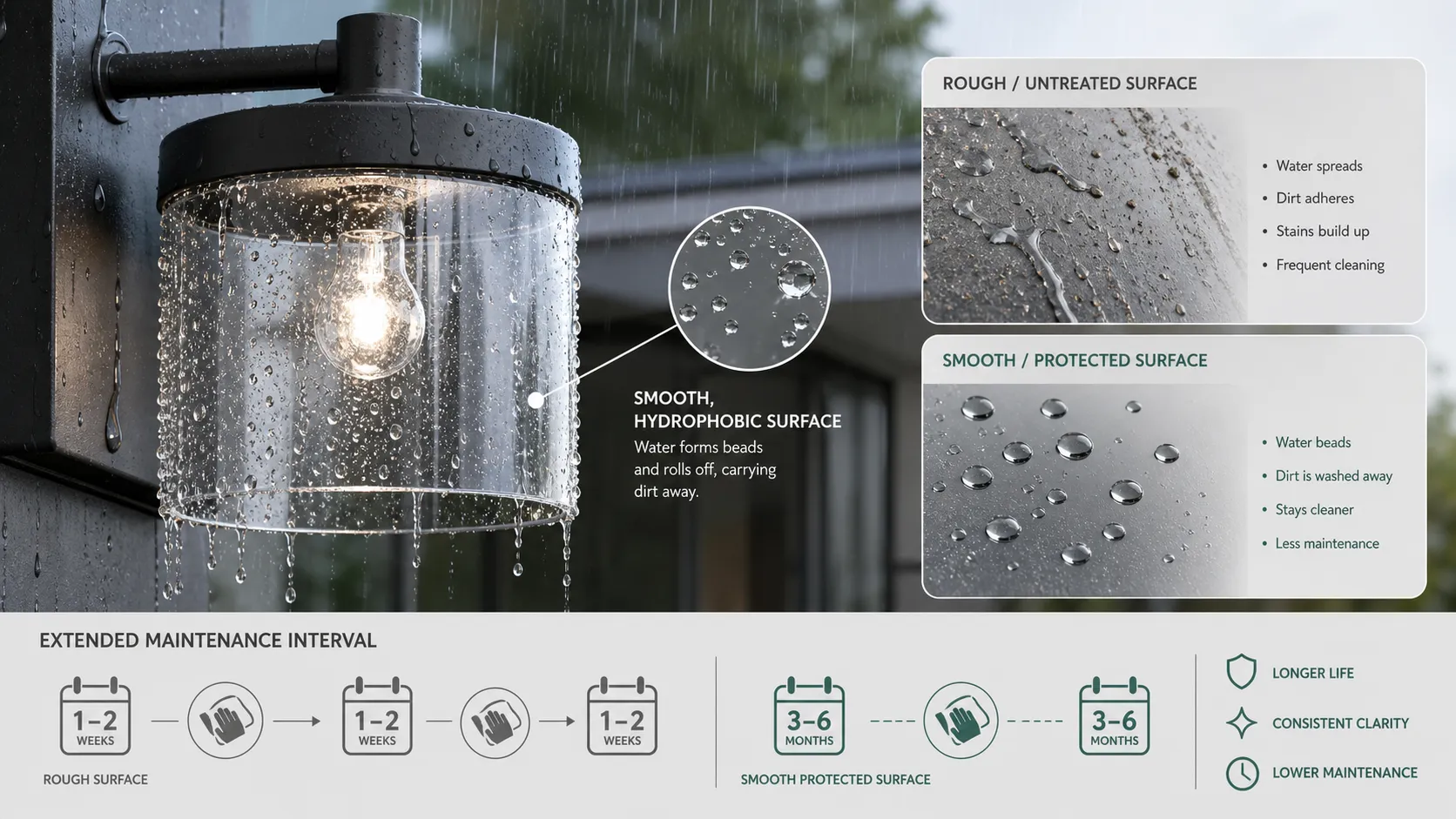
How can dirt adhesion and cleaning frequency be reduced for outdoor-lighting glass components?
Avoid overly rough exterior surfaces, deep textures and structural dead zones where water can collect. Glass with a smooth outer surface, few grooves and an installation angle that promotes drainage is more likely to remain clear through rainfall and routine cleaning.
Easy-to-clean, hydrophobic or antifouling coatings can be considered depending on project needs, but coating life can be affected by UV light, detergents, scrubbing frequency and environmental contamination. A more prudent strategy is to combine easy-to-clean construction, appropriate surface preparation and a maintenance program, rather than relying solely on a single coat.
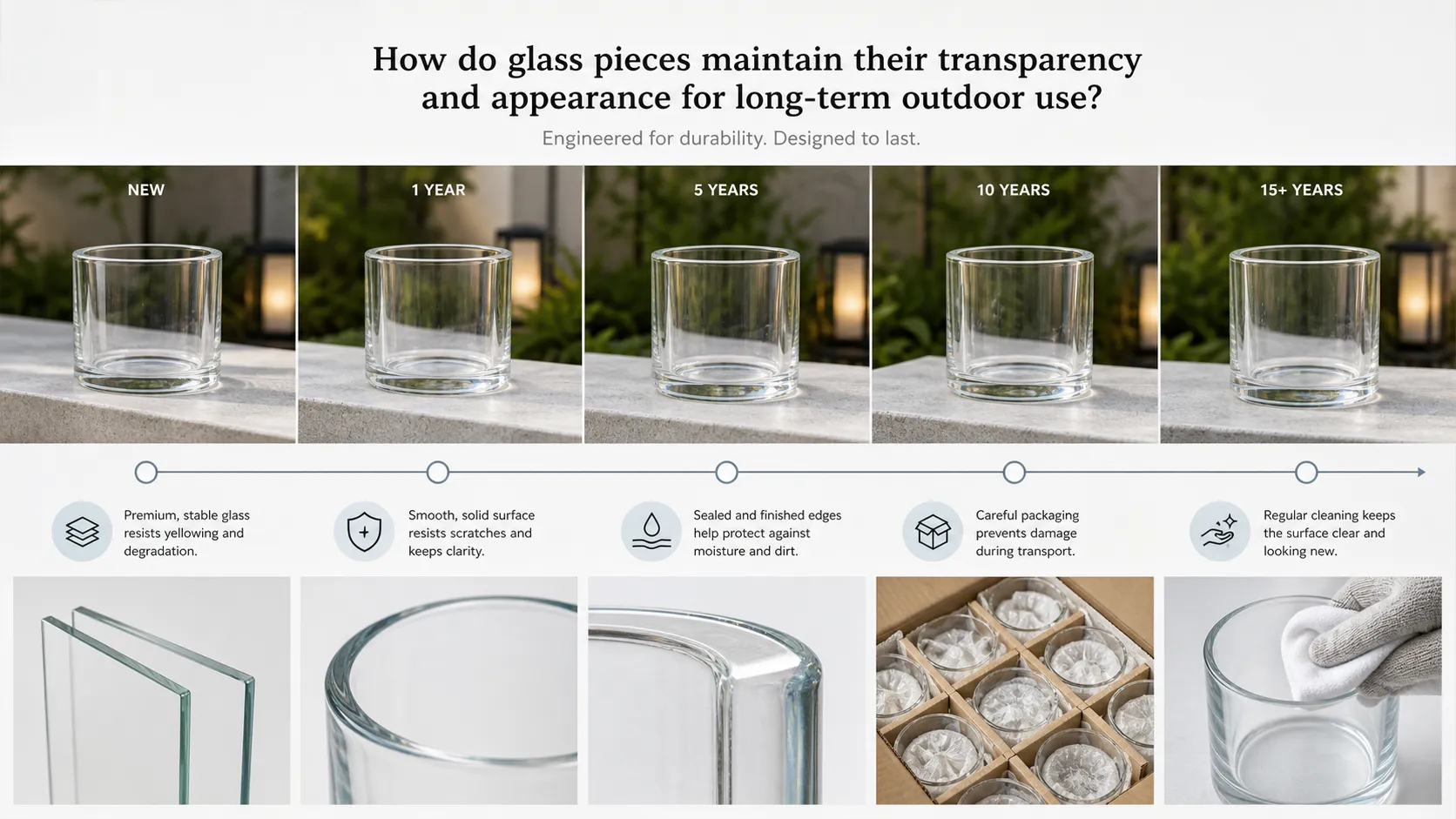
How can glass components retain their transparency and appearance during long-term outdoor use?
To maintain the transparency and appearance of glass components for long-term outdoor use, it needs to be controlled from several aspects including material, surface, edge, sealing and maintenance. The material should be stable, the surface should be easy to clean, the edges should reduce chipping and stress, and the sealed structure should avoid internal water ingress and fogging.
Packaging, shipping and installation can also affect long-term appearance, with scratches, contamination and assembly stresses likely to show up after use. It is recommended for engineering projects to retain sample standards, clarify appearance defects, light transmittance, color and cleaning requirements, and conduct necessary inspections before batch shipment.
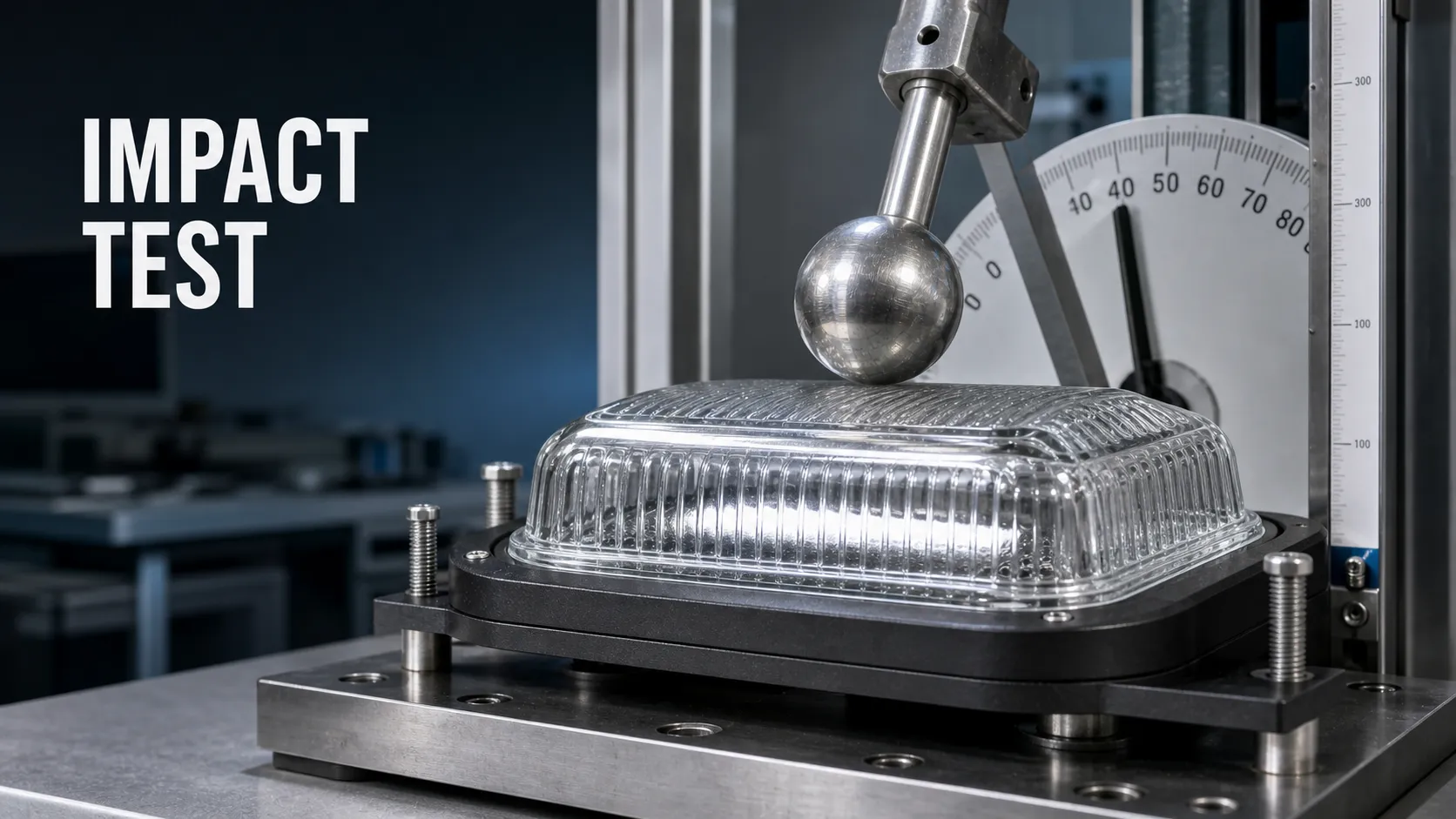
Does outdoor lighting glass need impact testing?
Whether the glass of outdoor lighting fixtures requires impact testing depends on the installation location, usage environment and project requirements. Underground lights, parking lot lights, public area luminaires, low-mounted wall luminaires and luminaires that are easily touched or bumped usually require more attention to their impact resistance.
Impact resistance is generally a property of the complete luminaire or enclosure system and is not determined by the glass pane alone. Glass thickness, tempering quality, edge protection, retaining-frame design and installation method all affect the test results. Critical requirements should be verified through sample or complete-luminaire testing rather than judged solely by glass thickness.
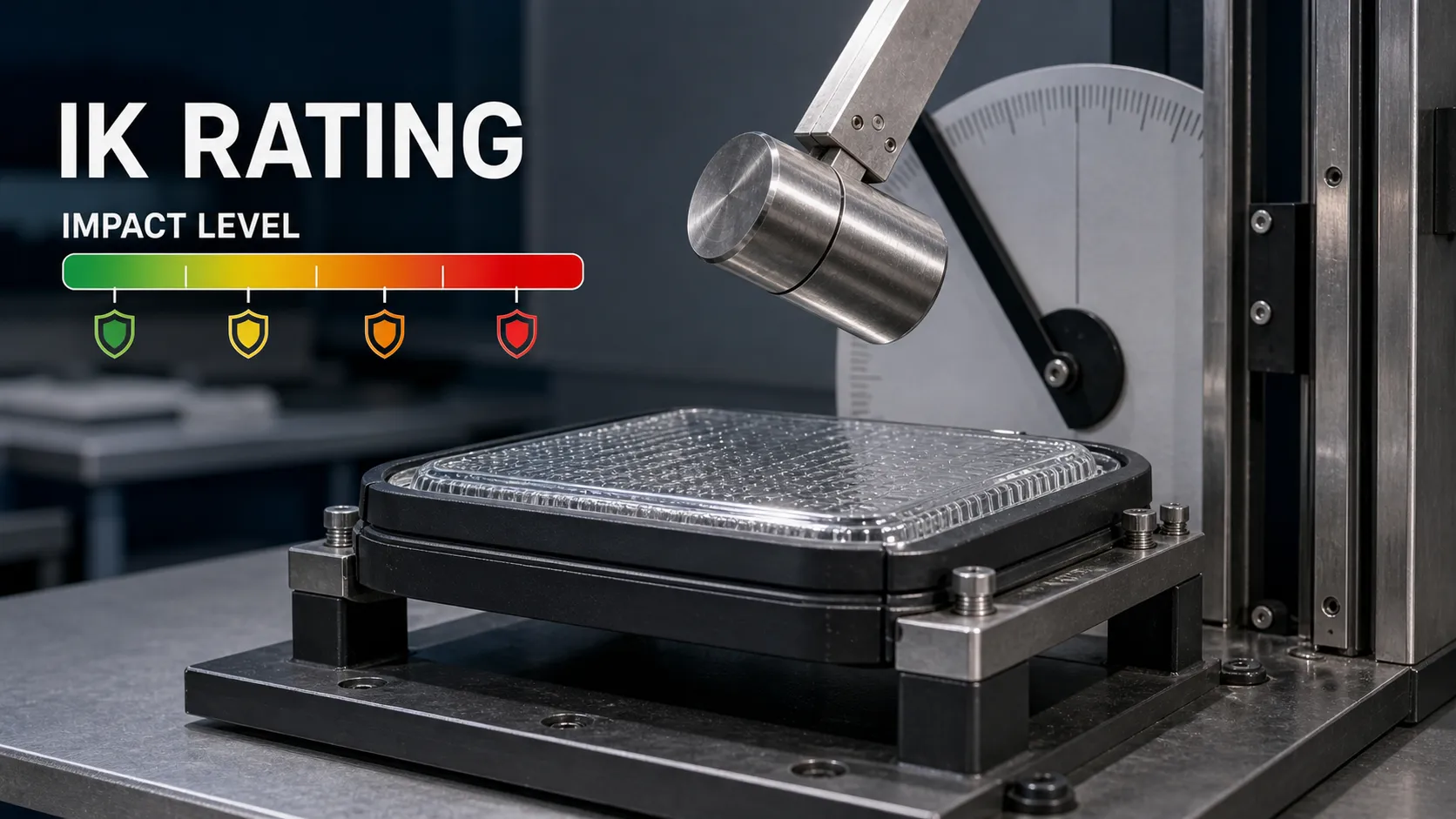
What does IK rating mean for outdoor glass luminaires?
The IK level is the IEC 62262 classification of the electrical equipment enclosure's resistance to external mechanical impact. It is used to describe the enclosure system's ability to withstand external impact. For outdoor lighting fixtures with protective cover glass or glass shades, the glass is one of the important components that affects the IK test results.
However, grades such as IK08 and IK10 should not be understood as independent certification of single panes of glass. The final result is related to the glass thickness, tempering state, support method, pressure frame structure, housing material and impact location, and should be subject to the test of the complete luminaire or housing system.
Engineering decision: The data behind the code are impact energies: IK08 = 5 J, IK09 = 10 J and IK10 = 20 J under IEC 62262. The test report should identify the striker, impact locations and mounted enclosure. Quoting only “tempered glass” or glass thickness does not establish an IK classification.
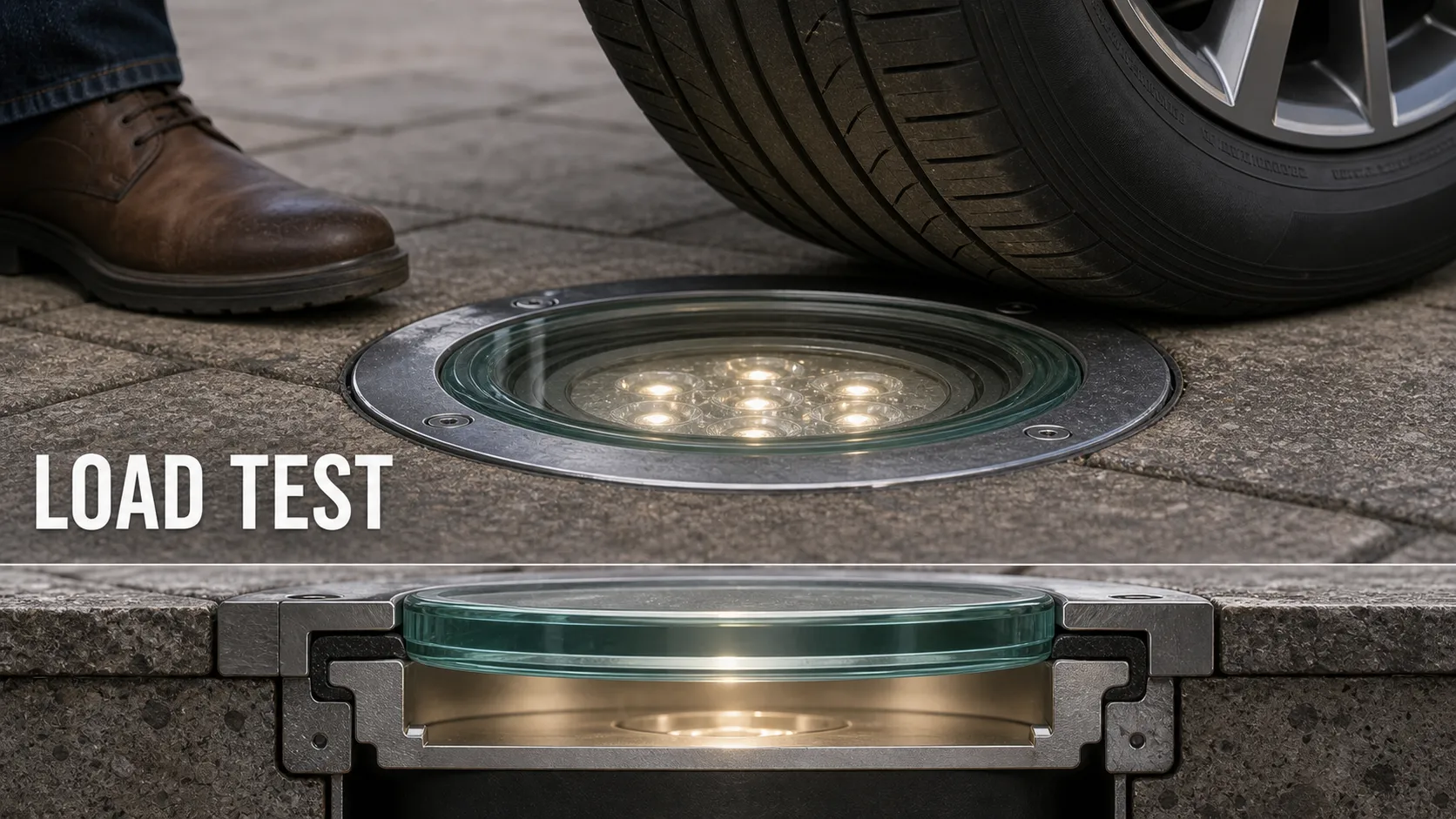
What mechanical strength requirements does the protective cover glass of an underground light need to meet?
The protective cover glass of the underground light needs to consider trampling, impact from falling objects, sand wear, vehicle pressure and long-term outdoor temperature difference. The forces on pedestrian areas, landscaped areas and driveway areas vary greatly and therefore glass thickness, tempering, support structure and surface anti-skid requirements will also differ.
The mechanical strength should not only look at the glass itself, but also the face ring support, pressure frame stress, glass span and installation flatness. Driveway or public area projects should be confirmed through pressure, impact, abrasion and waterproof testing of the complete luminaire to avoid partial suspension of the glass or breakage caused by edge stress.
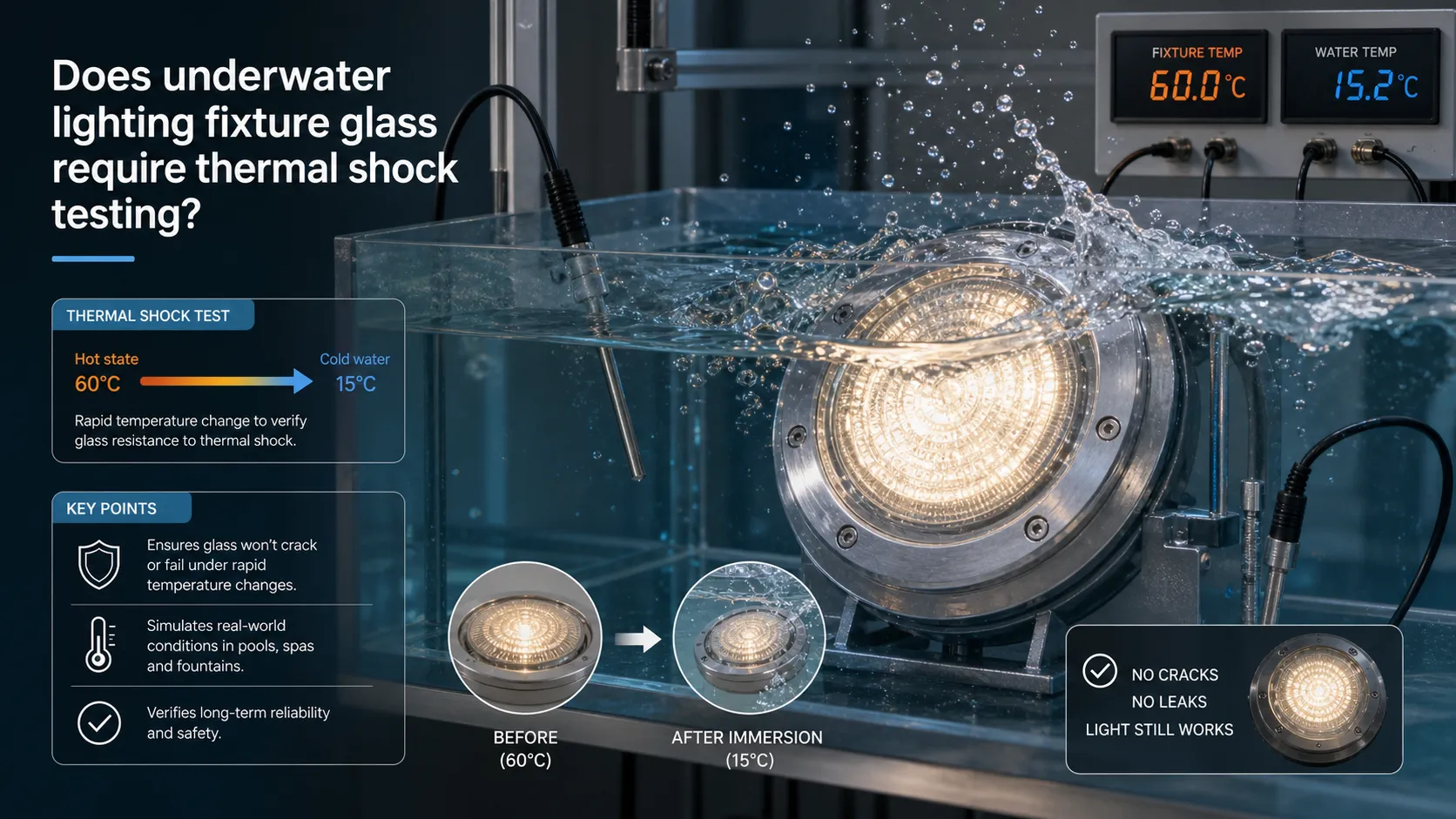
Does underwater lighting fixture glass require thermal shock testing?
It is generally recommended to pay attention to the risk of thermal shock when it comes to underwater luminaire glass, especially in applications where the luminaire power is high, the glass is thick, the switches are frequent, or the water temperature changes significantly. After the luminaire is lit, the glass is heated, and thermal stress may occur when it is washed by cold water or the environment cools down rapidly.
Whether dedicated thermal-shock testing is required depends on the luminaire design, glass material, power, installation depth and applicable project standards. Glass selection can reduce risk, but final reliability still depends on heat dissipation, sealing, clamping design and actual operating conditions and should be confirmed through sample or complete-luminaire testing.
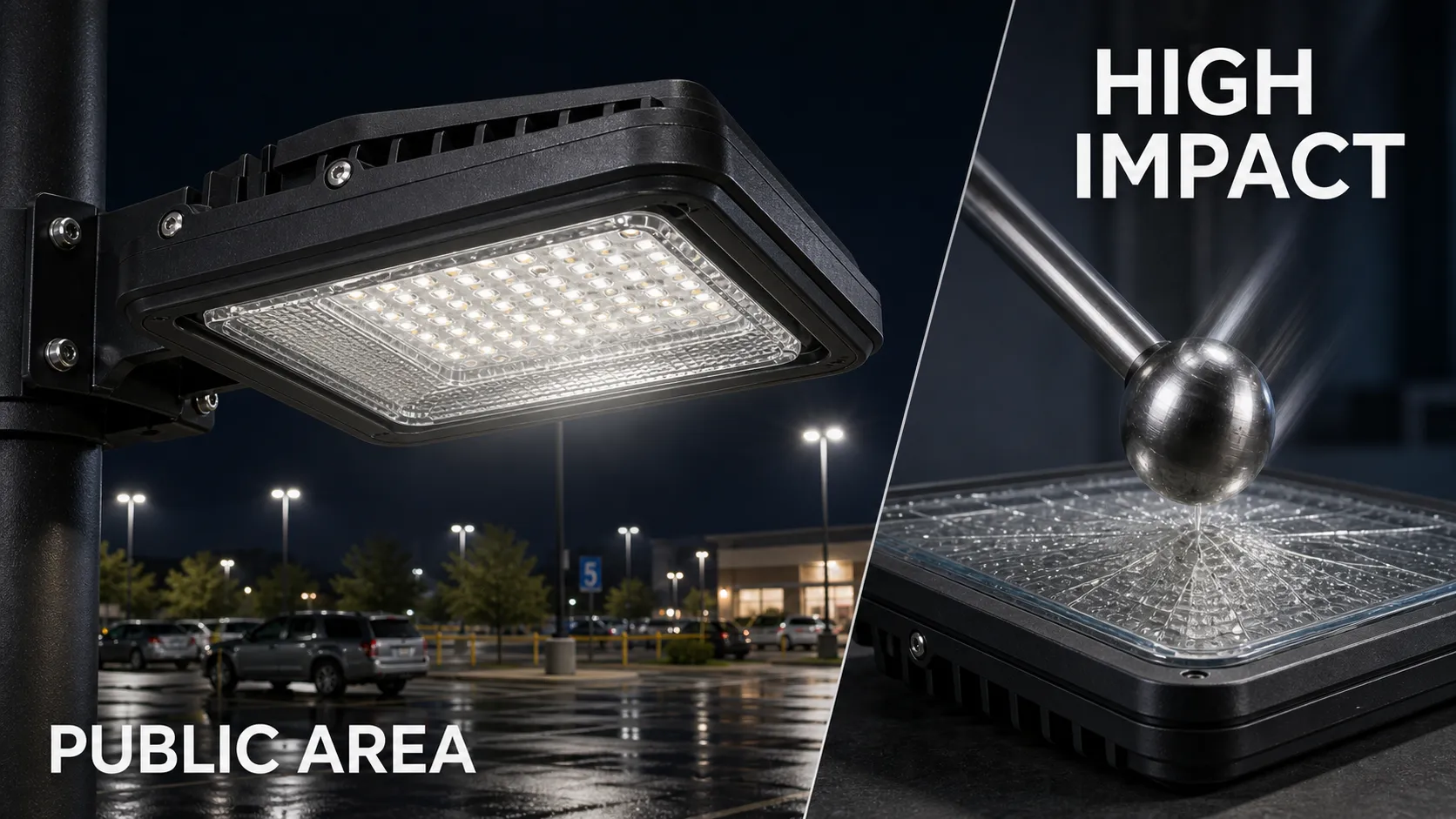
Does glass for parking lot and public area lighting fixtures need a higher impact rating?
Parking lot and public area luminaires are generally more susceptible to external impacts, flying rocks, tool strikes, or vandalism than private garden lights, so there is a greater need for attention to impact-resistant design. The appropriate thickness, tempering method and protective structure of the protective cover glass or glass shade should be selected based on the installation height, probability of personnel contact and project safety requirements.
Higher impact resistance is not achieved only by thickening the glass. The shell, pressure frame, supporting surface and fixing method are equally important. If the project clearly requires an IK level, the test results of the complete luminaire or housing system should be used as the basis, and the glass components should be matched to the test goals during the design stage.
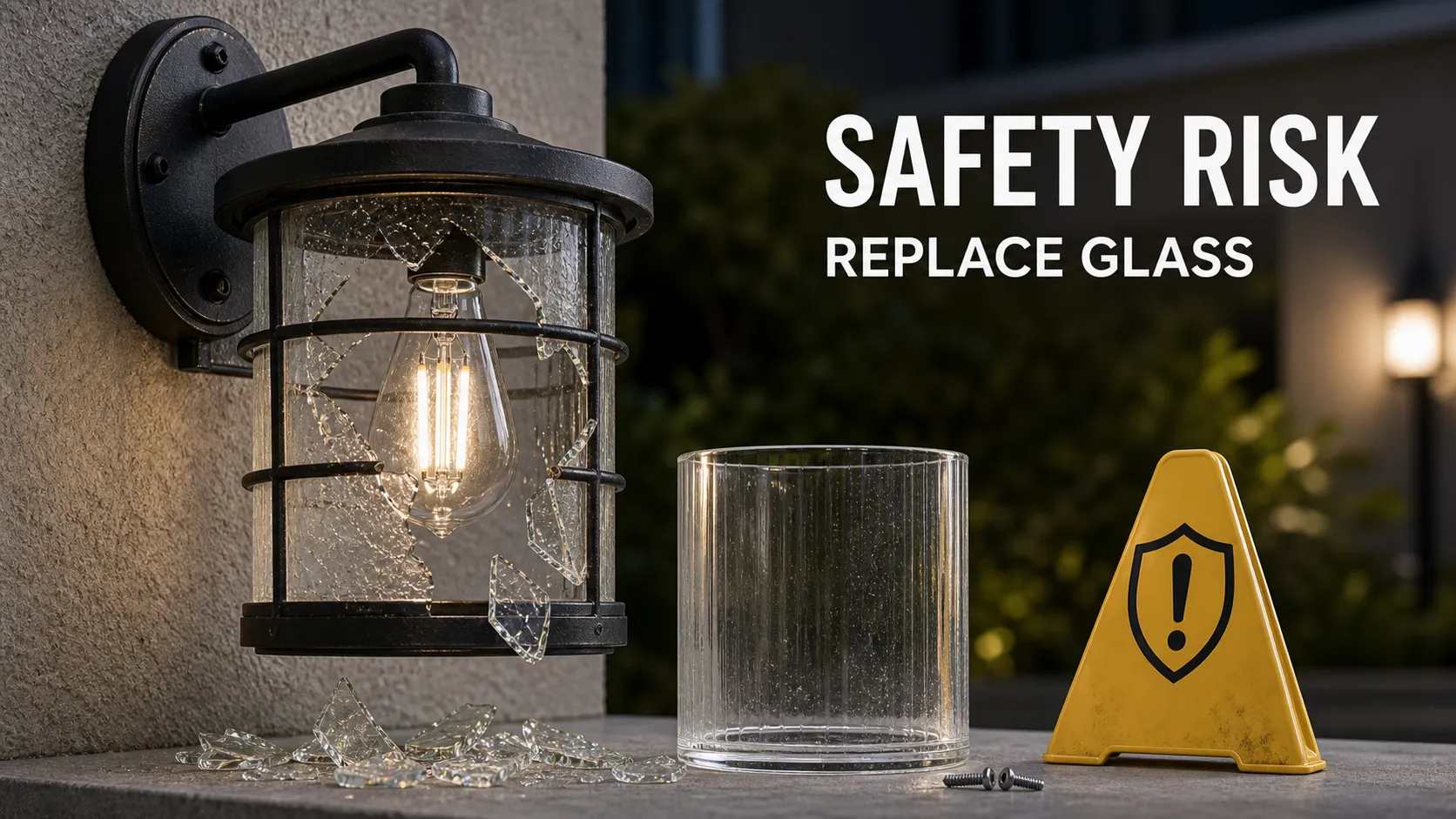
What are the safety risks if an outdoor-lighting glass component breaks?
A broken glass component can create cut and falling-fragment hazards, compromise water ingress protection, expose the light source and lead to electrical or sealing failures. Broken protective cover glass in underground, step or underwater luminaires can present particularly serious mechanical, electrical and waterproofing risks.
Risk reduction requires starting from the glass material, thickness, tempering, edge processing, assembly stress and packaging and transportation. For luminaires in public areas, the fragmentation status, replaceability and maintenance procedures after breakage should also be considered to avoid small problems turning into safety accidents.
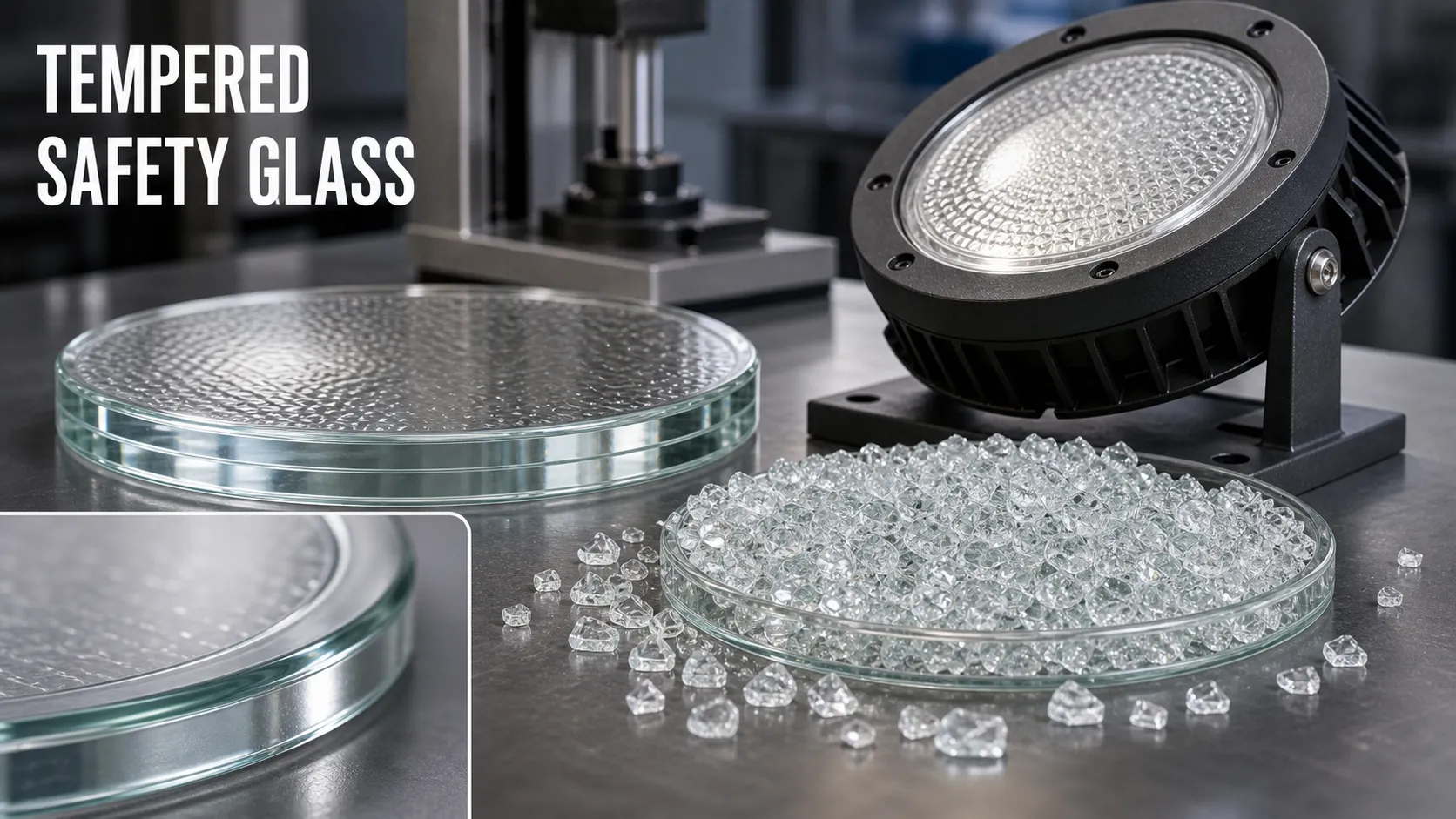
Does the glass of outdoor lighting fixtures need to be tempered?
Not all outdoor lighting glass needs to be tempered. Whether to temper it depends on the application scenario, size, thickness, stress mode, thermal shock risk and project requirements. In-ground lights, parking lot lights, common area fixtures and larger covers are often better suited to consider tempering or strengthening.
However, tempered glass is not suitable for cutting, drilling or edging after processing, and the size and hole location must be confirmed in advance. For small decorative glass shades, complex blown parts or special optics, it is also possible to use non-tempered solutions and reduce the risk through structural protection and edge treatments. The final selection should be based on the overall luminaire design and test objectives.
How can a glass component be evaluated for outdoor-lighting use?
To determine whether glass components are suitable for outdoor lighting, you should look at material stability, light transmittance or haze, thickness, edge quality, dimensional tolerance, surface treatment, temperature difference resistance, assembly matching and maintenance convenience. Just looking good or having a single piece of glass be strong is not enough.
A more reliable way to judge is to put the glass into the actual luminaire body and check the sealing, light efficiency, glare, heat dissipation, impact resistance and thermal cycling performance. For engineering projects, packaging and transportation, batch consistency and supply capabilities should also be confirmed to ensure that sample effects can be consistently reproduced in batch orders.
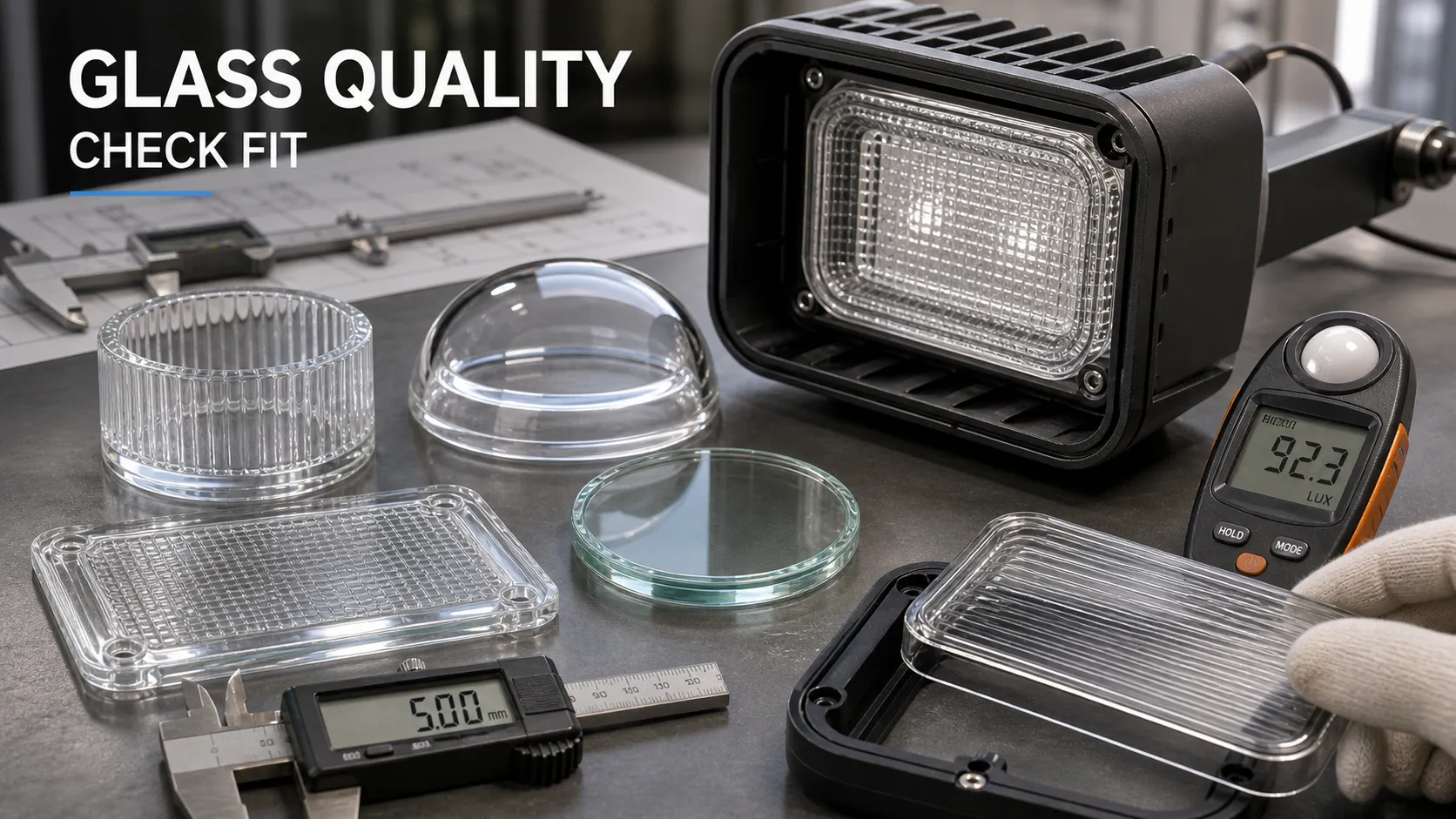
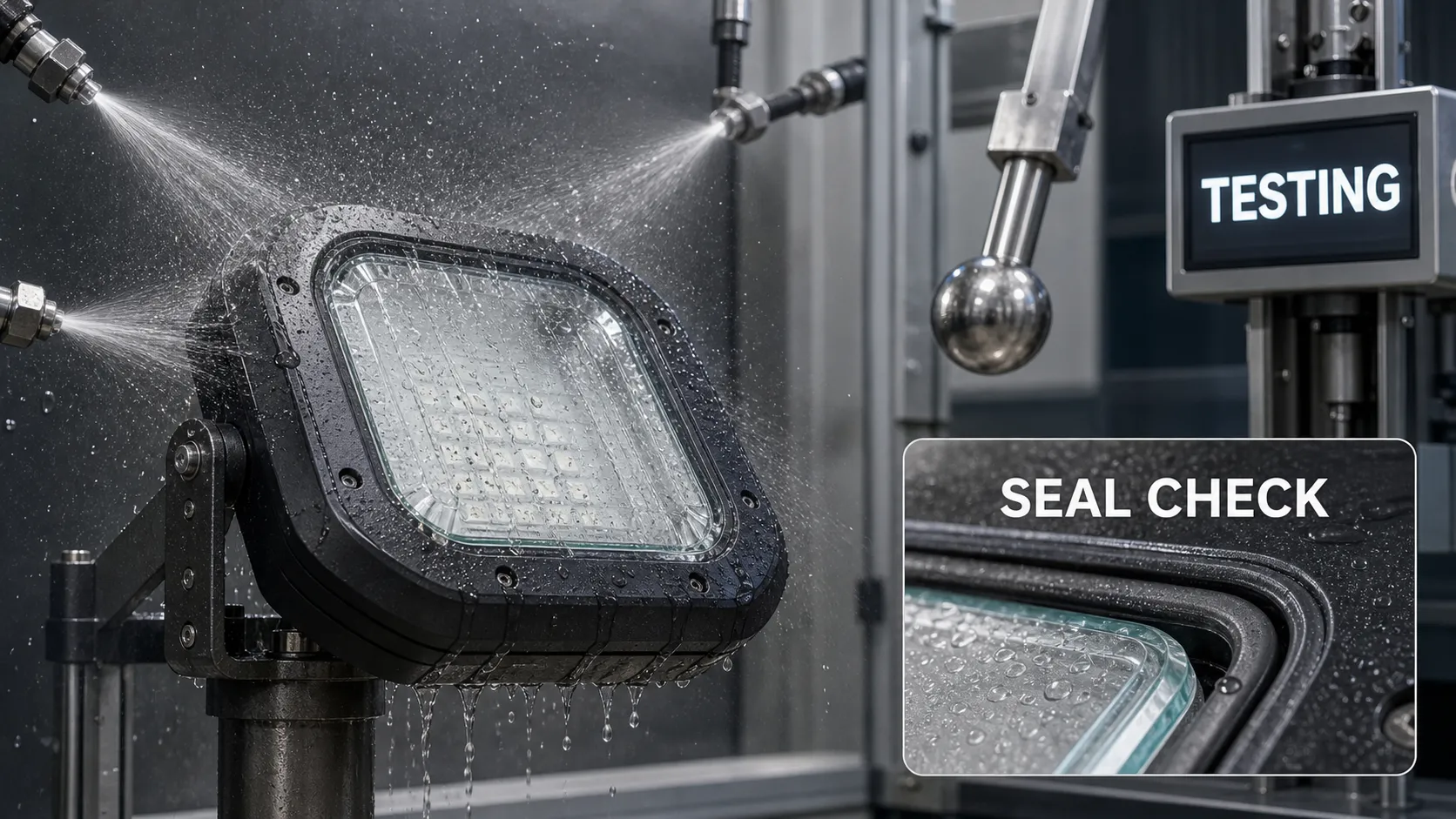
When doing IEC/UL testing of outdoor lighting fixtures, what results do the protective cover glass and sealing structure usually affect?
When outdoor luminaires undergo IEC- or UL-related testing, the protective cover glass and sealing design can affect water and dust ingress protection, impact resistance, thermal shock, temperature rise, insulation safety and mechanical retention. Glass thickness, tolerances, edge quality, sealing-surface flatness and assembly method all influence complete-luminaire test performance.
It should be noted that IEC 60598, UL 1598, etc. usually focus on the design, structure and performance requirements of complete luminaires, and do not replace the certification of the complete luminaire with ordinary glass components alone. Glass suppliers can provide materials, dimensions, processing and related testing support, but final certification or project acceptance should be based on full luminaire testing and third-party reports.
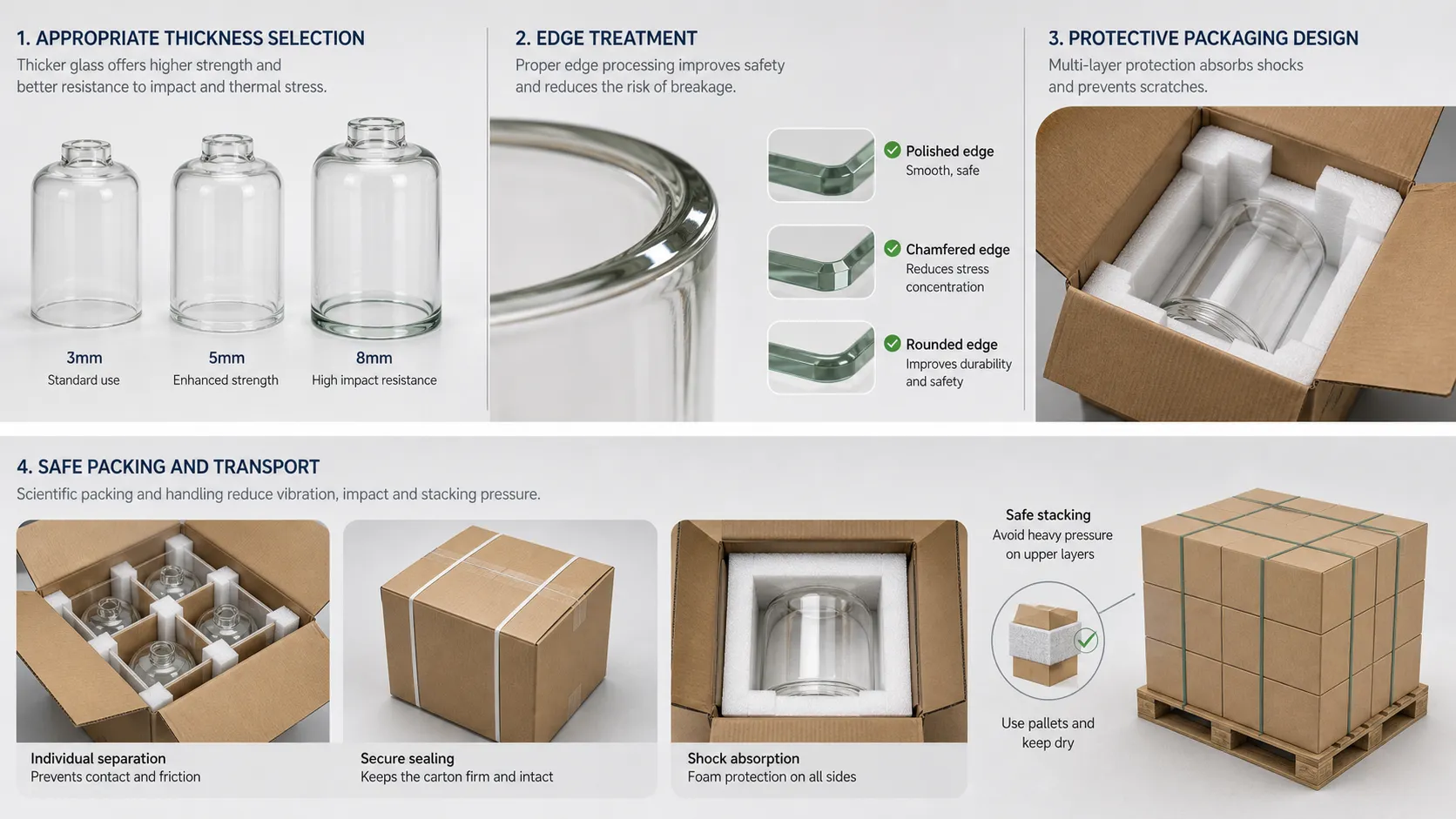
How can the risk of glass breakage be reduced through thickness, edge treatment and packaging design?
To reduce the risk of glass breakage, it is necessary to simultaneously control thickness, edge treatment, structural stress, and packaging and transportation. Appropriate thickness can increase the safety margin, chamfering, edge grinding and polishing can reduce edge micro-cracks and stress concentration, and reasonable assembly can prevent the glass from being hard pressed by metal or partially suspended.
Packaging design is equally important. There should be isolation and buffering between glass components, and large-sized or special-shaped parts should be prevented from shaking, corner collision and pressure during transportation. For bulk export items, packaging methods, drop risks, stacking directions and on-site handling processes will all affect the final breakage rate.
Contact Us
Your feedback fuels our growth, and your questions drive our solutions.
We value your feedback, inquiries, and suggestions. Please feel free to get in touch with us
General inquiries
Please contact us via sales@bo-glass.com, and we will reply to you as soon as possible.
Interested to work with us
Drop your resume at info@bo-glass.com
and we will get back to you shortly.
Request a Custom Glass Quote
Tell us about your project or upload a drawing.
Your drawings remain confidential.
We uses the contact information you provide to us to contact you about our relevent content, products, and services.