
Glass Screen Printing Ink Selection and Durability
Select the ink as part of a glass-ink-cure system, then validate it under the real product exposures.
Engineering note: Typical starting values are provided for reference. Final tolerances and process parameters should be confirmed through sample trials using the specified glass, ink system, artwork and firing conditions.
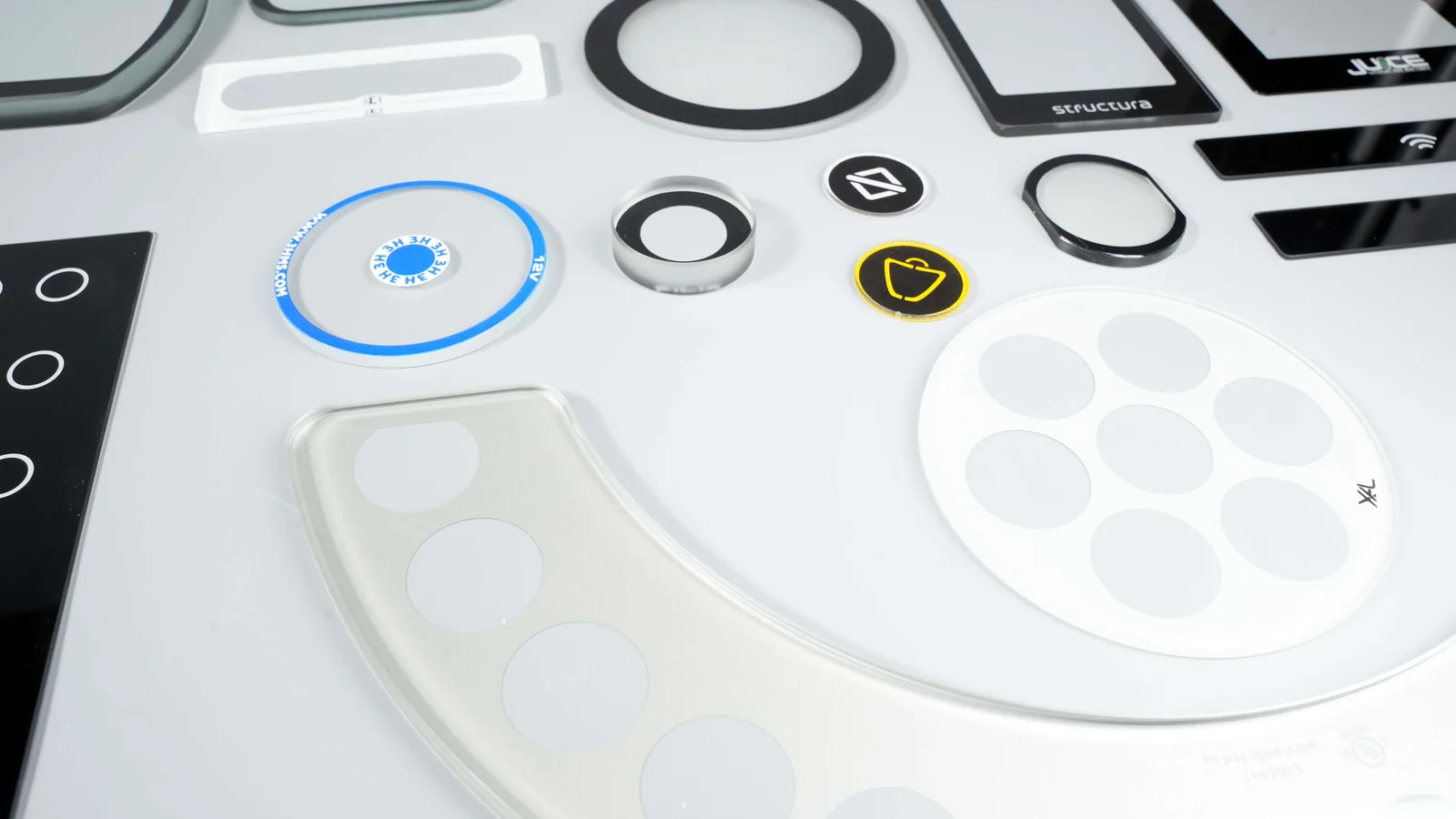
Start with exposure and cure constraints
Ink labels such as ceramic, UV-curable and solvent-based identify important formulation categories. Performance selection also considers the resin, pigment, additives, cure completeness, film thickness and supplier-rated service range. Together, these factors establish the suitable temperature and exposure range.
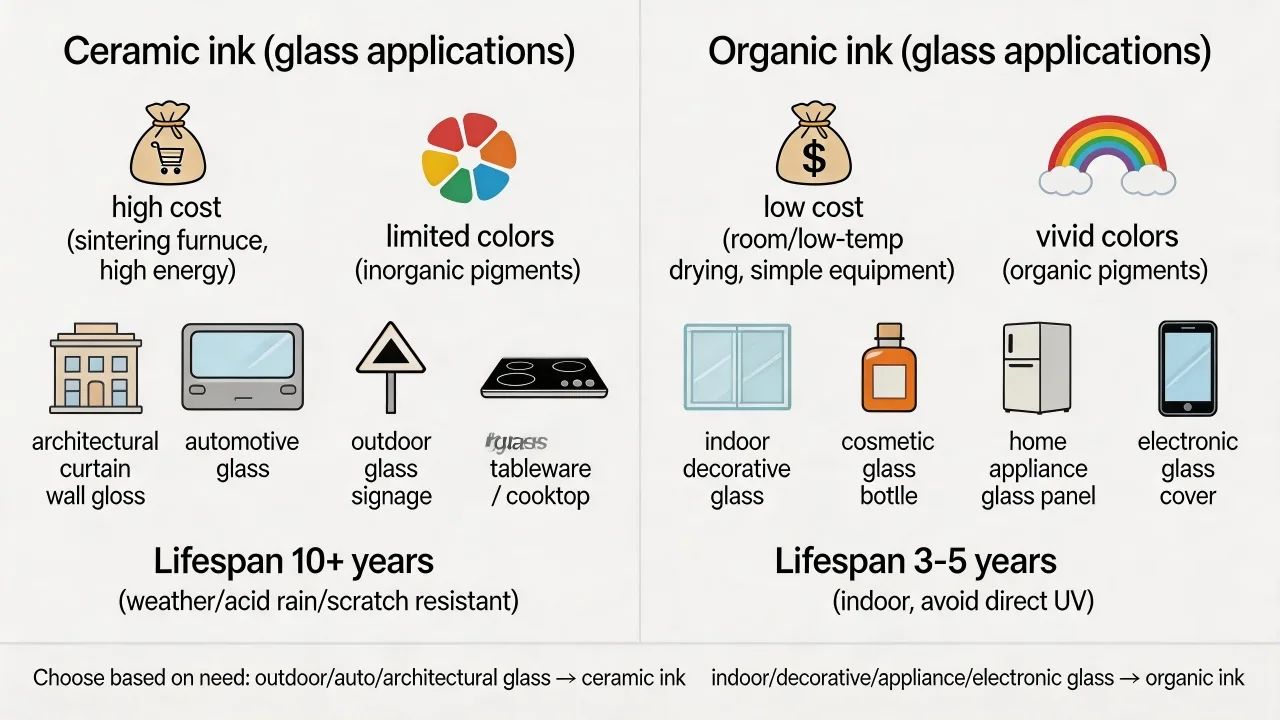
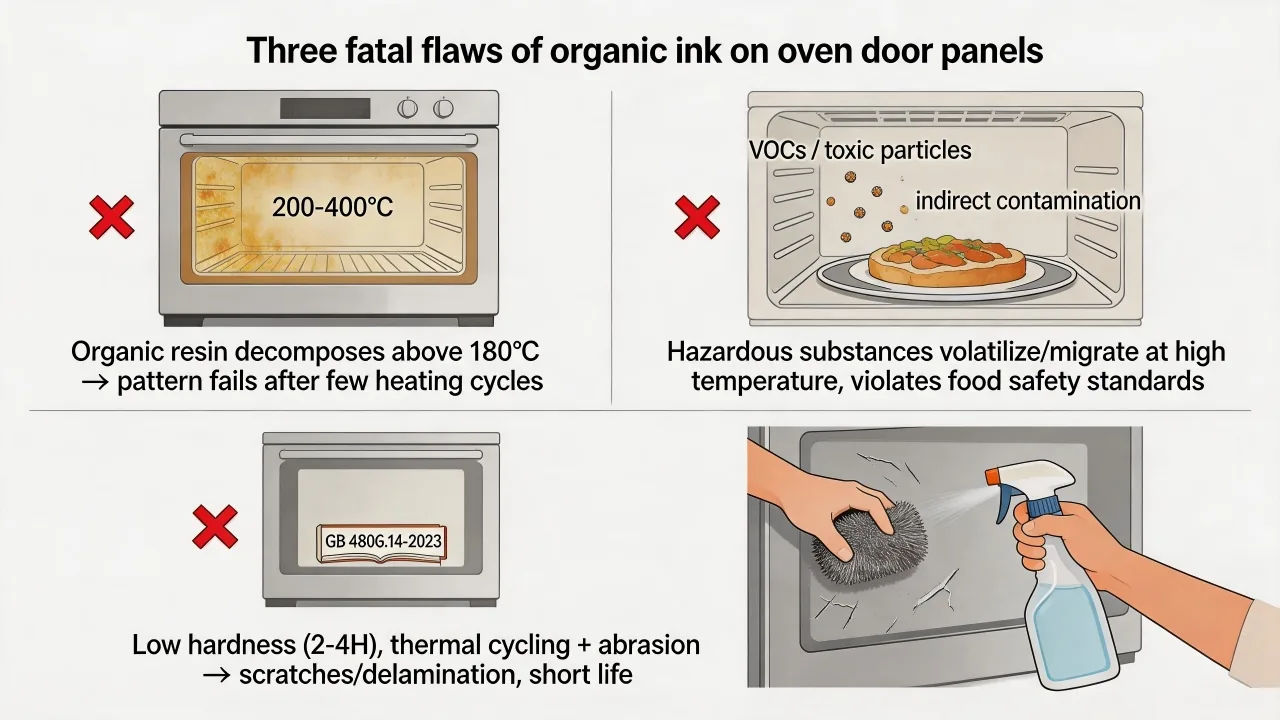
Properly fired ceramic enamel generally provides better heat, weathering, abrasion and chemical resistance than organic ink. Actual performance depends on the enamel formulation, firing profile, glass substrate and specified validation method. Ceramic enamel is therefore a common route for oven panels, architectural spandrels and products fired or tempered after printing. The final route should follow the application requirements.
Organic systems are useful when the glass is already tempered, when a low-temperature cure is required, or when color, flexibility or production constraints favor them. Their durability range is broad. A service-life claim such as three to five years requires evidence covering outdoor orientation, UV dose, temperature, moisture, cleaners, pigment stability and the agreed acceptance threshold.
| Route | Often considered when | Key verification |
|---|---|---|
| Ceramic enamel | Print can be fused during a controlled high-temperature cycle | Compatibility, firing window, color, opacity, strength and final-use durability |
| Two-component organic | Post-temper decoration or lower-temperature cure is needed | Mix ratio, pot life, cure, adhesion, chemicals, heat and weathering |
| UV-curable organic | Fast cure and suitable geometry/equipment are available | Dose, shadowing, through-cure, post-cure behavior, heat and chemicals |
| Single-component organic | Moderate duty or specialized supplier system | Cure conditions, blocking, abrasion, cleaners and shelf/process stability |
When ceramic enamel is selected, continue with the firing and tempering route review →
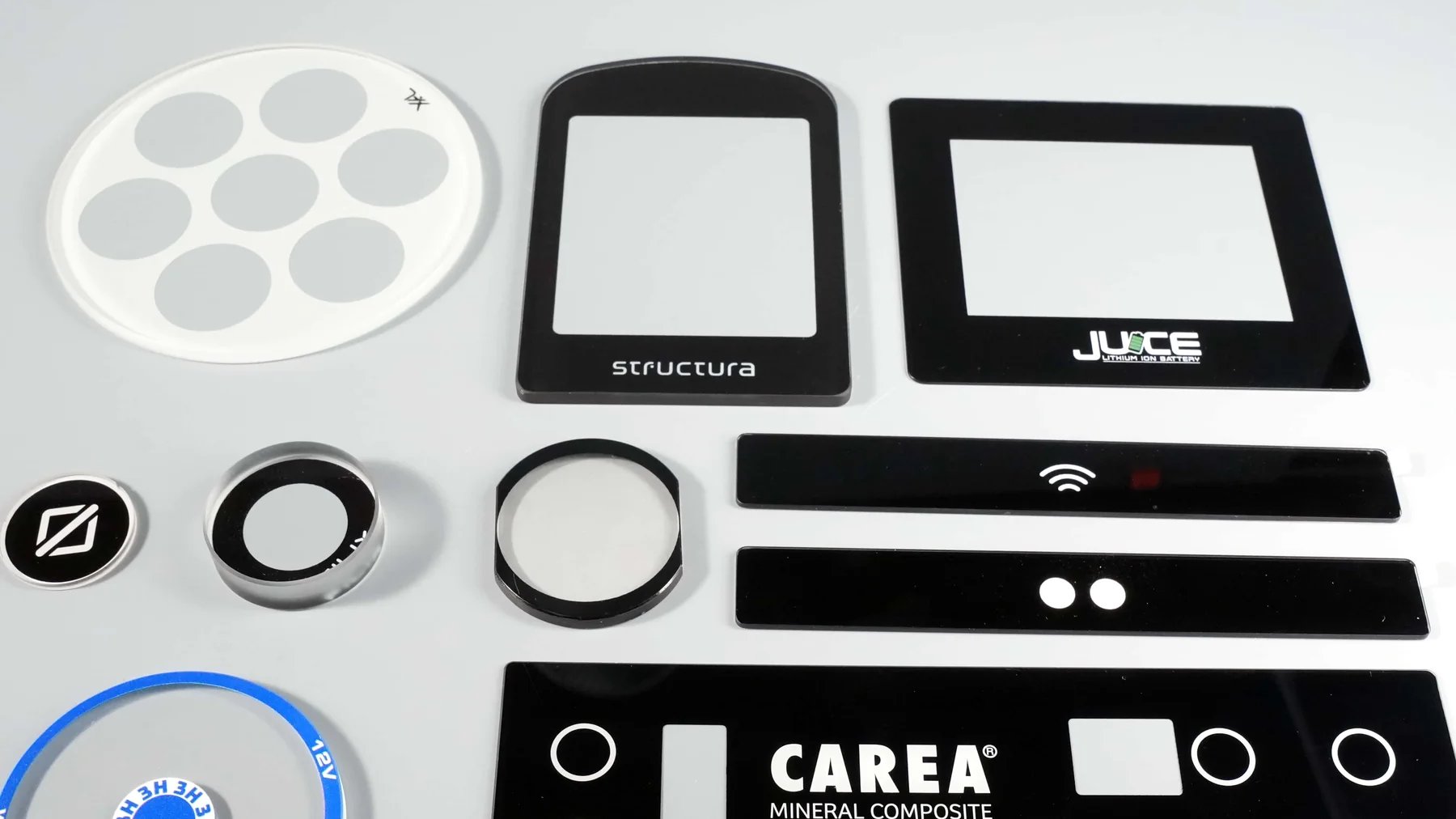
Replace lifetime claims with an exposure profile
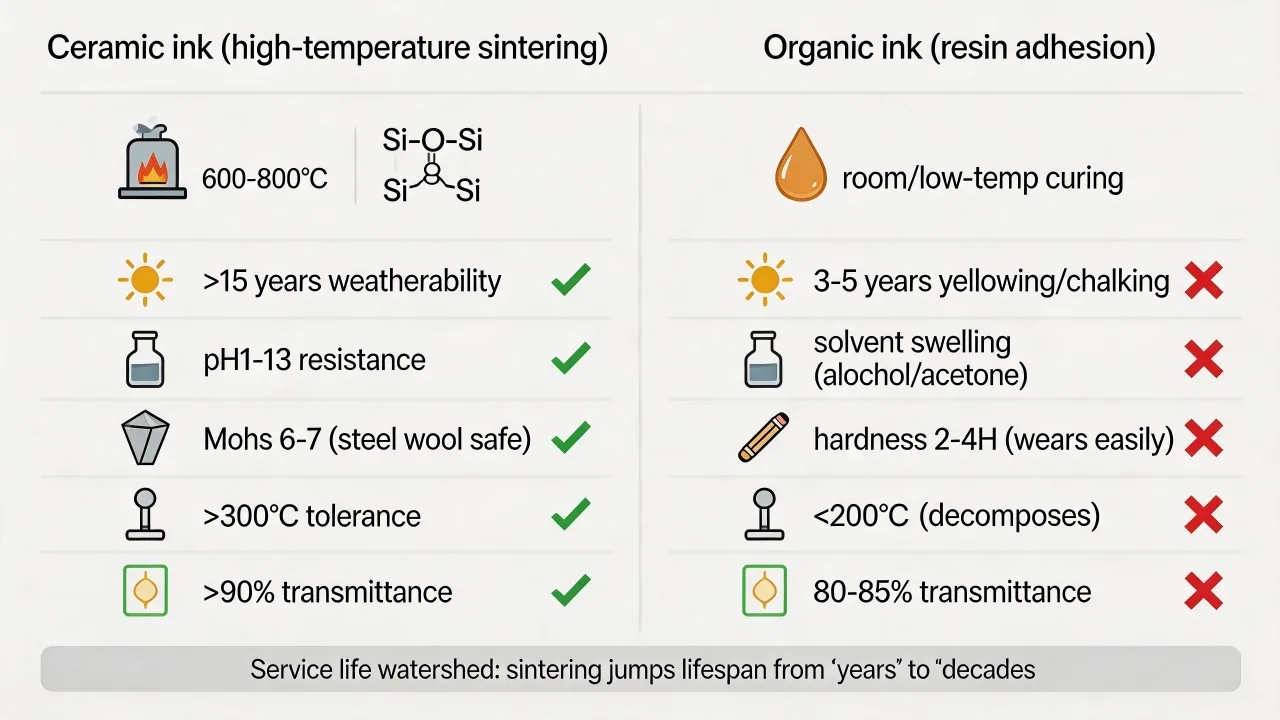
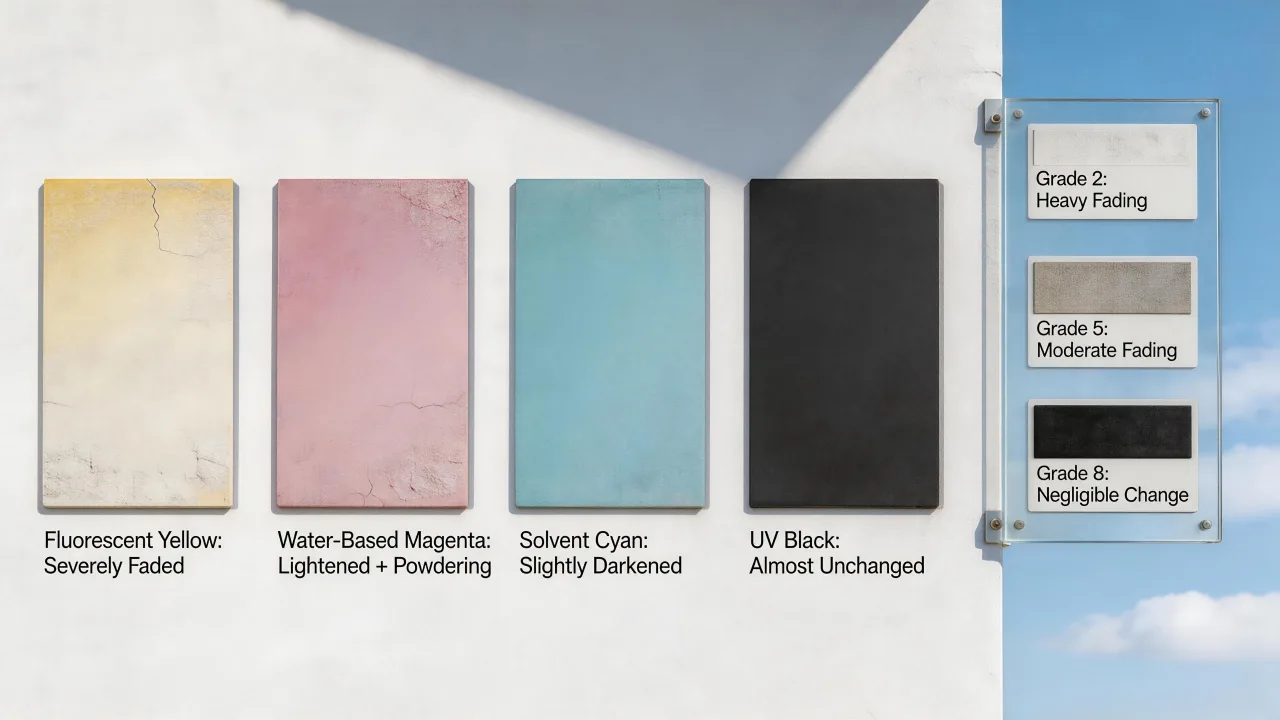
A statement such as “ceramic enamel lasts more than 15 years” or “organic ink lasts three to five years” compresses too many variables into one number. Service life is the time until a defined property crosses an agreed limit. That property might be color change, gloss loss, adhesion, legibility, blistering, corrosion masking or optical density. A testable claim names both the property and its acceptance limit.
Build an exposure profile from the product’s intended use: maximum and cycling temperature, UV and moisture, immersion or splash chemicals, abrasion mechanism, cleaning concentration, dwell time and frequency. Consider combinations. A film may pass a dry heat test and a separate cleaner test yet fail when cleaned while hot or after weathering.
Use accelerated tests as comparative tools and correlate them with field history where possible. Record the test specimen construction and cure history. Representative results come from coupons that match the final glass, film thickness and thermal profile.
- Define failure in measurable terms before selecting a test.
- Test the final printed construction, including any topcoat, adhesive or assembly exposure.
- Condition specimens for an agreed period before testing.
- Include an unexposed control and record visual as well as instrumental changes.
- Use supplier data to screen candidates, then validate the selected process.
Color, opacity and transmission are construction properties
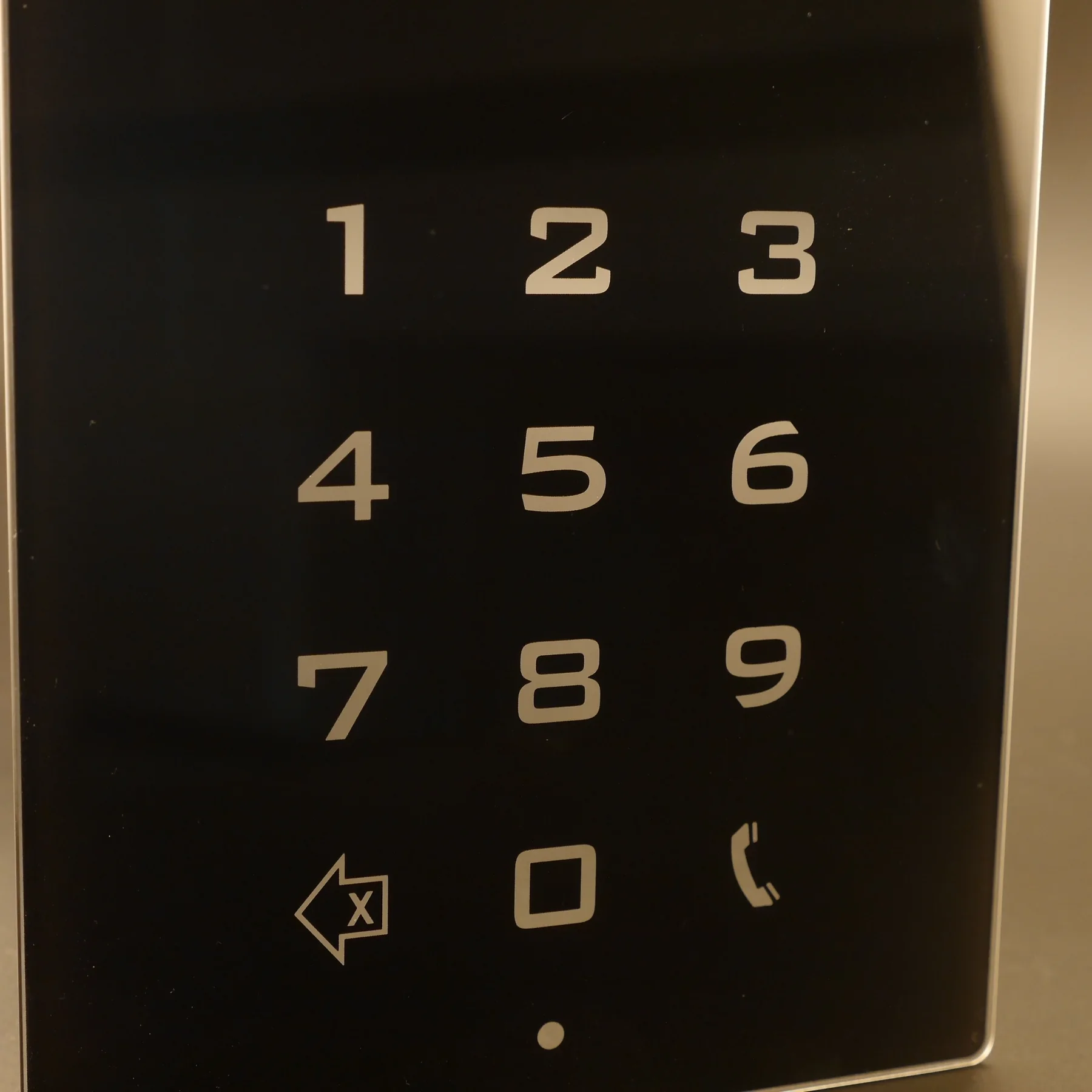
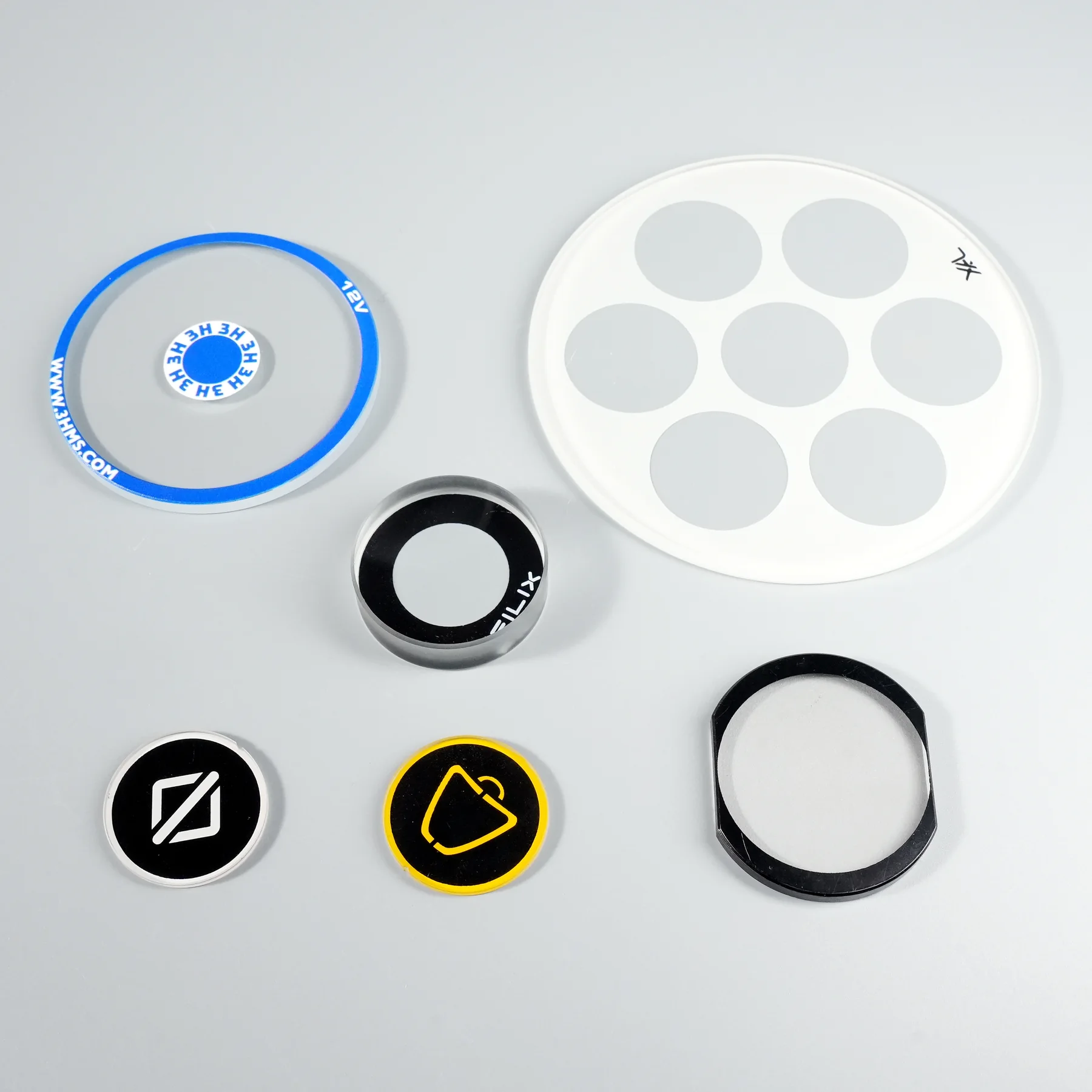
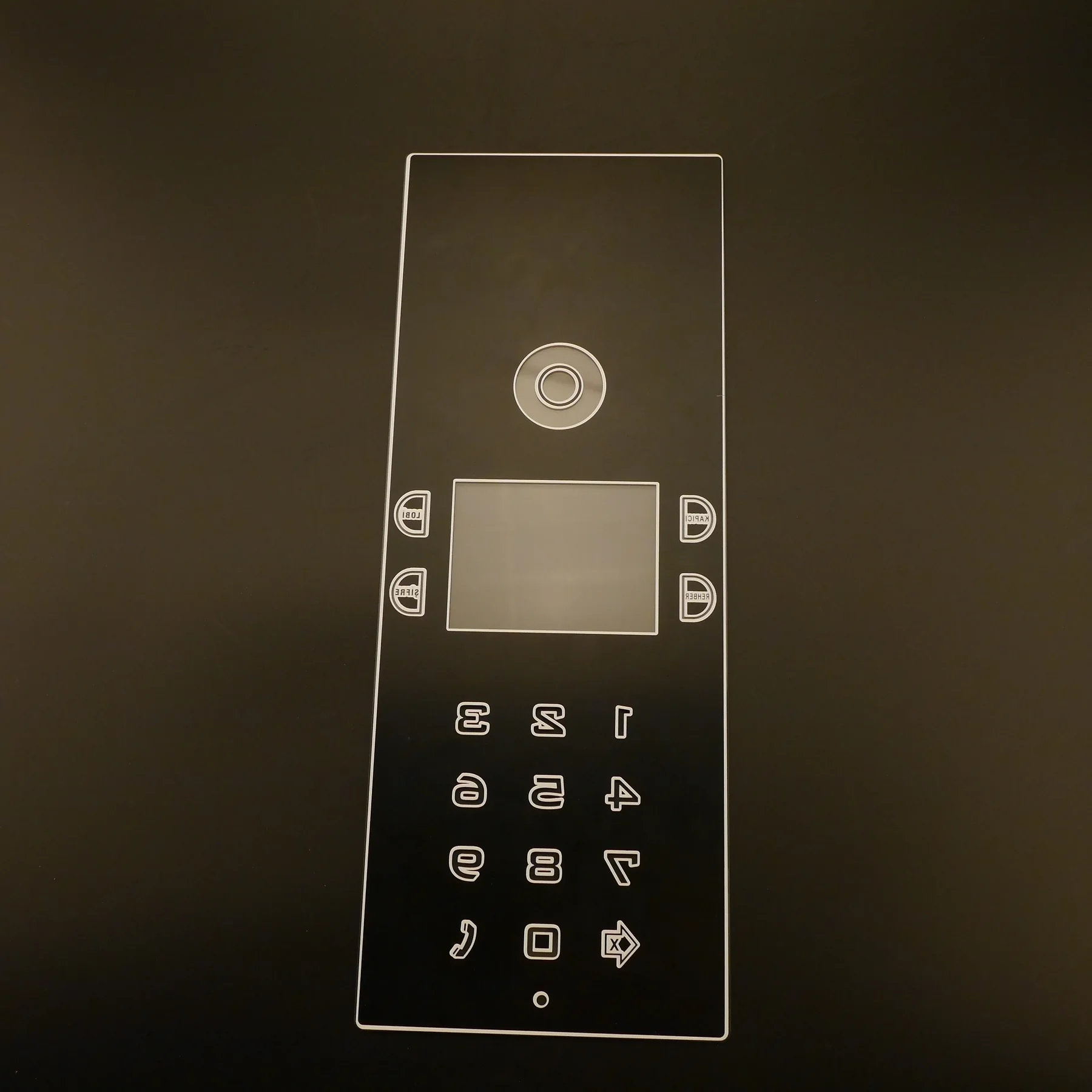
Compare transmission between ceramic and organic inks after specifying color, pigment concentration, film thickness and wavelength. A semi-transparent black for a backlit icon, a translucent white diffuser and an opaque border have different measurement needs. Define spectral transmission, photopic transmission, luminance uniformity, optical density or contrast ratio according to the function.
Color difference should be measured on the production glass under an agreed condition. Low-iron and conventional float glass can shift the appearance of white and light colors, with the magnitude determined by the complete construction. Build separate master samples when glass constructions differ.
A temperature shift during firing can change ceramic-enamel color, gloss or opacity. The result depends on furnace atmosphere, time at temperature, enamel chemistry, substrate and measurement method. Use a designed firing-window trial and map both temperature and appearance.
Separate true precious-metal systems from imitation metallics
Gold, silver and platinum appearances can be produced by materially different systems. True precious-metal preparations, lustres, aluminum-pigmented metallics, mica effects and printed simulations differ in raw-material cost, firing or cure route, conductivity, color, opacity and resistance. Cost each specified system from its actual material, process, yield and inspection requirements.
Quote the actual specified system. Cost should include ink yield, minimum purchase quantity, screen and setup requirements, scrap risk, firing constraints, inspection and any protective layer. A more expensive material may use a very thin deposit; a lower-cost effect may require extra passes or a backing color. Appearance should be approved on the final glass because viewing through glass can strongly change sparkle and hue.
If electrical conductivity, microwave behavior or contact with food or skin matters, evaluate an appearance-only metallic substitute as a separate material system. Request composition and regulatory information from the supplier and validate the final component for its intended use.
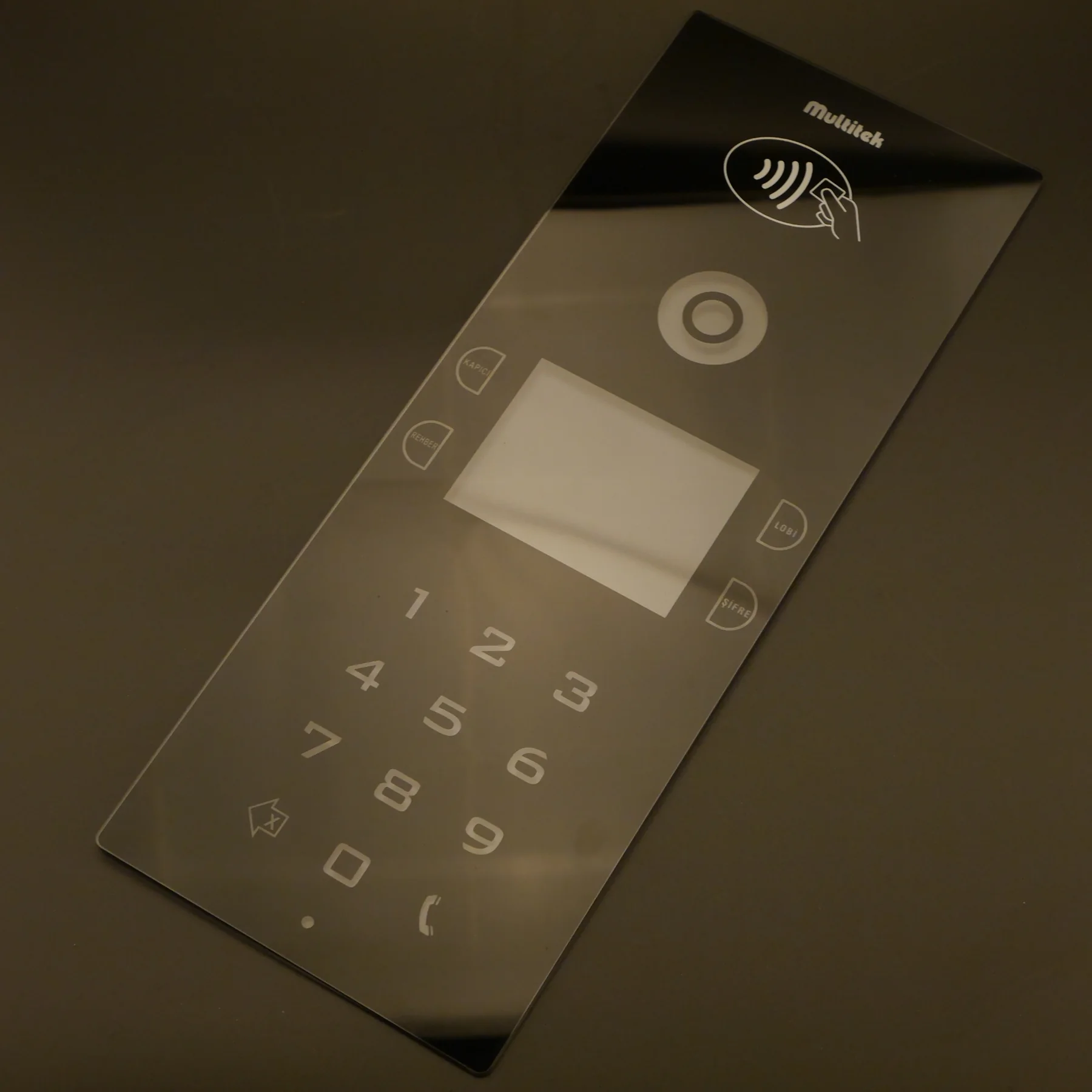
Determine marking durability and biological evaluation from intended use
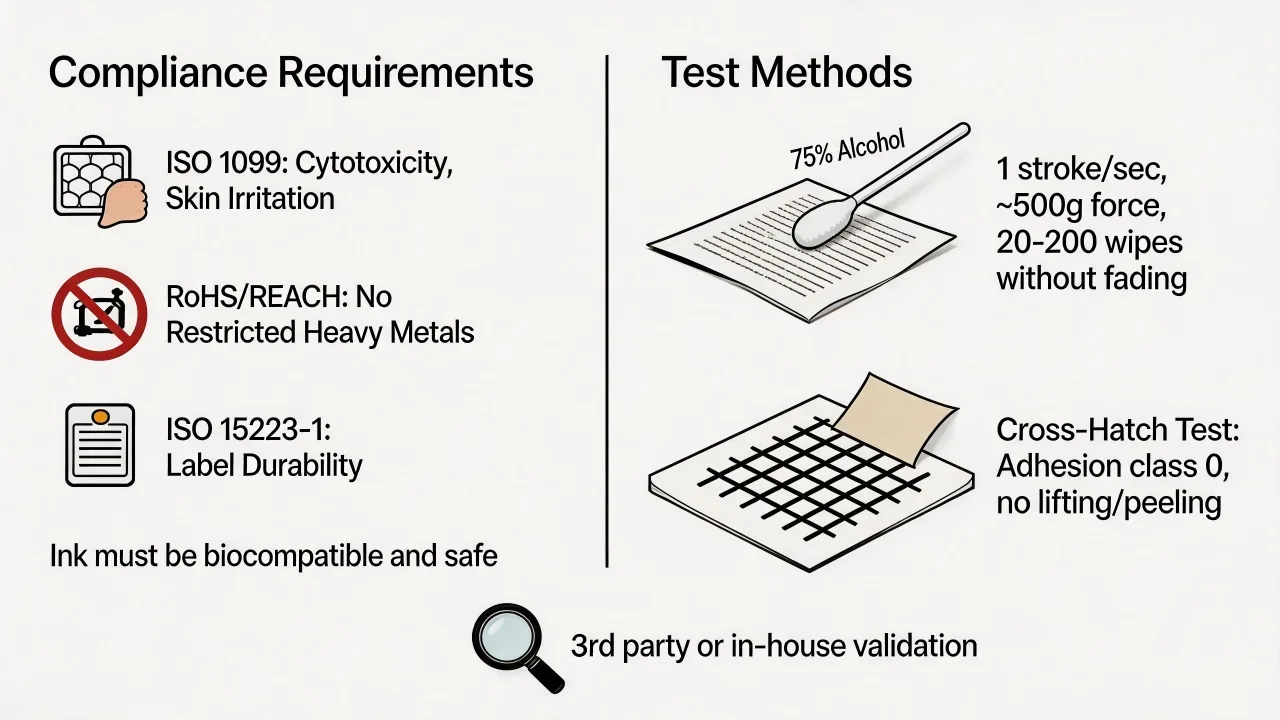
ISO 15223-1 specifies symbols used with information supplied for medical devices; alcohol-wipe durability requires a separate defined protocol. ISO 10993-1 provides a risk-management framework for biological safety evaluation, with the assessment tailored to the device, materials, nature and duration of body contact, exposure and available evidence.
Applicable biological evaluation and marking-durability requirements must be determined according to the device’s intended use, contact category, cleaning protocol and target market. The final printed component should be validated under the customer’s specified alcohol concentration, wiping force, cycle count and sterilization conditions.
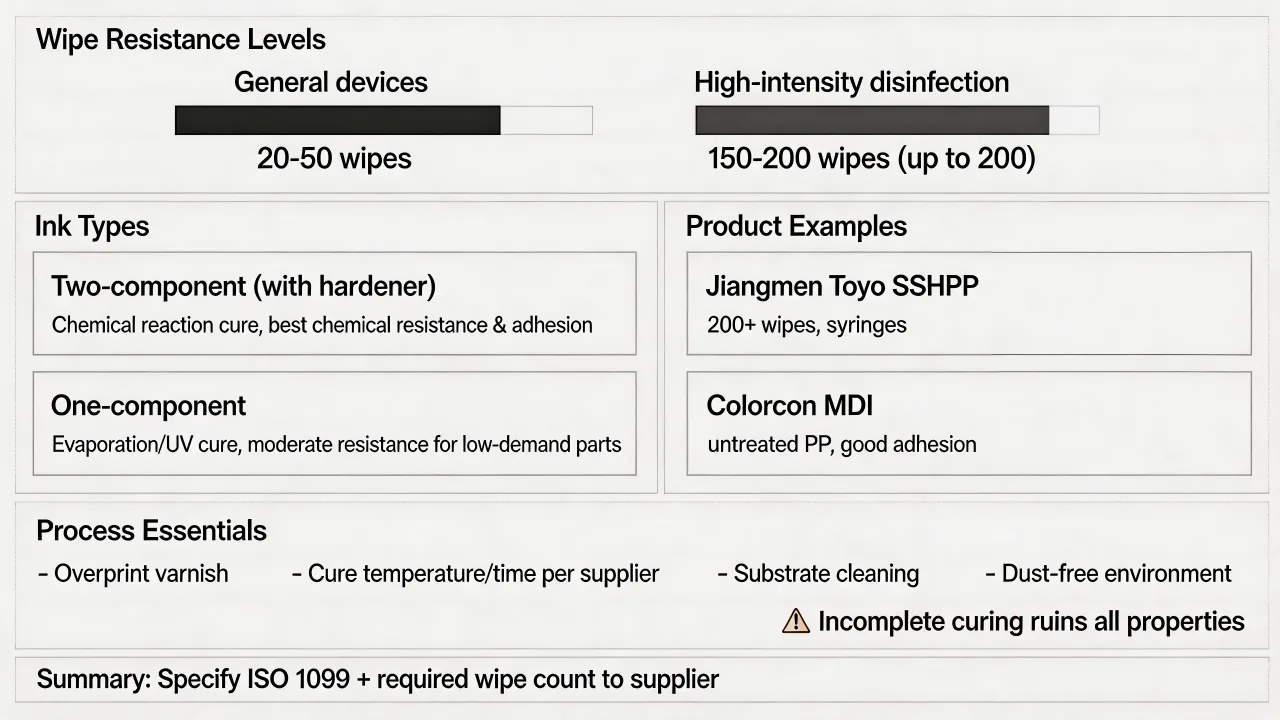
A protocol should identify the wiping medium and concentration, applicator, wetness, normal force, stroke length and speed, cycle definition, conditioning, inspection method and acceptance criterion. These details make results such as “20 wipes,” “200 wipes” or “passes alcohol” reproducible. Include sterilization, disinfection, aging and repeated cleaning in the sequence when they represent actual use.
Regulatory responsibility remains with the device manufacturer. Ink supplier declarations and coupon tests support the assessment, together with evaluation of the finished, processed component.
Name the method and its limits
Adhesion should be evaluated using a mutually agreed test method, including the applicable standard, cut spacing, tape specification, conditioning period and acceptance rating. A bare statement such as “5B, 3M tape” omits variables that can materially change the result.
ASTM D3359 was developed for relatively ductile coatings on metallic substrates and rates lower levels of adhesion by tape testing. Its published scope and precision limitations matter when someone proposes it for glass or a fused ceramic layer. If it is used as an agreed comparative method outside its primary scope, the deviation, specimen preparation and interpretation should be documented. ISO 2409 is another cross-cut method; in both cases, the rating is a classification rather than an absolute bond-strength value.
Cross-cut performance addresses one adhesion mechanism. Pair it with exposures that reproduce the relevant cleaner, thermal or abrasive conditions. If field peeling occurs after a laboratory tape test passes, investigate cure, contamination, aging, moisture ingress, chemical attack, thermal mismatch and part-to-part process variation.
Standards referenced
Check the current edition and scope before writing a customer specification. Links below point to the issuing organizations.
← Glass Screen Printing Fundamentals and Design Guidelines | Main guide | Screen Making, Mesh and Exposure Control →
Contact Us
Your feedback fuels our growth, and your questions drive our solutions.
We value your feedback, inquiries, and suggestions. Please feel free to get in touch with us
General inquiries
Please contact us via sales@bo-glass.com, and we will reply to you as soon as possible.
Interested to work with us
Drop your resume at info@bo-glass.com
and we will get back to you shortly.
We uses the contact information you provide to us to contact you about our relevent content, products, and services.