
Glass Selection and Melt Preparation for Molten Glass Blowing
Choosing the right glass means connecting application requirements with an identifiable material, a suitable production route and evidence from representative samples. This guide explains what customers should specify and what the organisation preparing the melt needs to control.
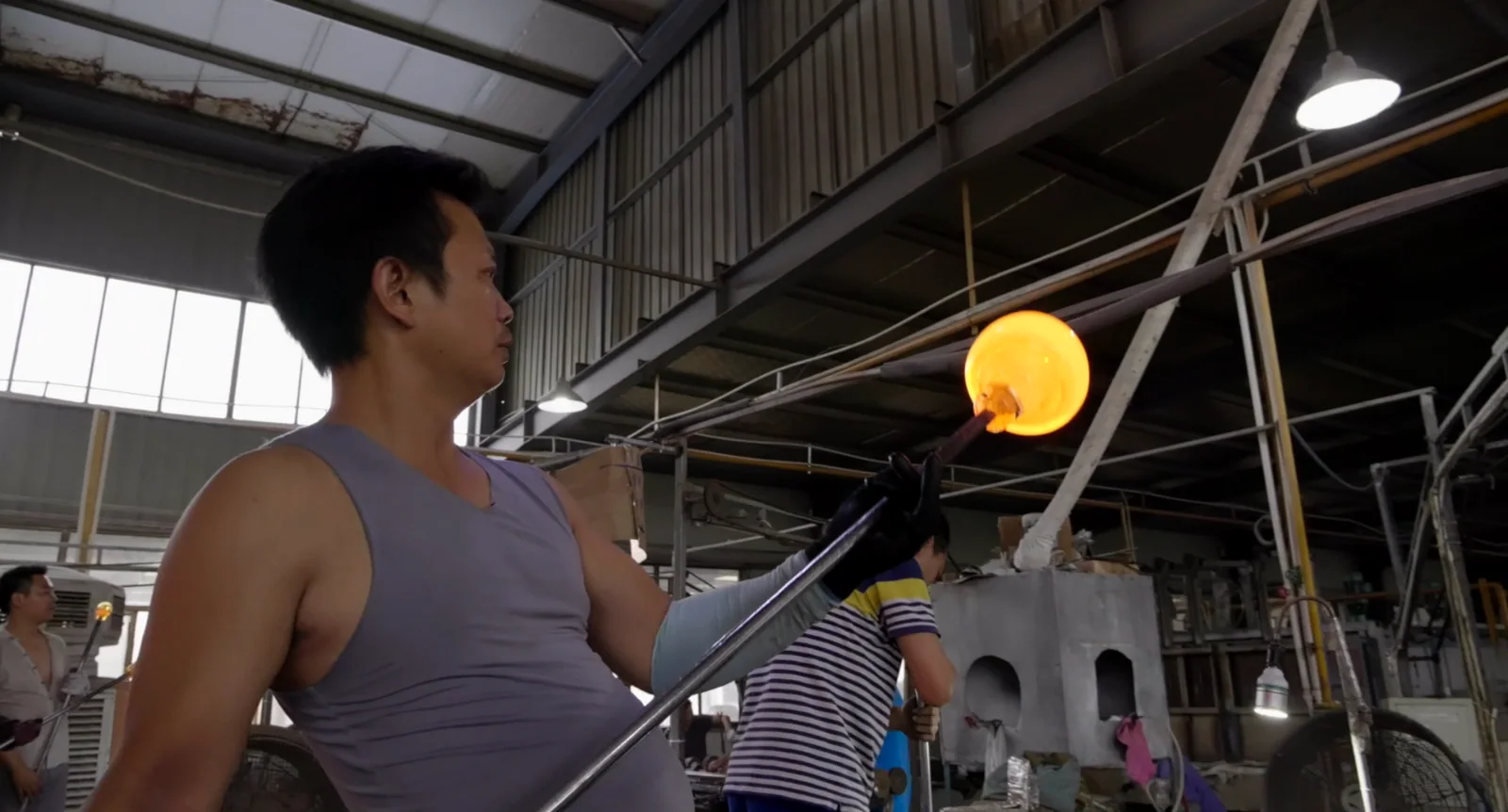
Quick-start: prepare these five items
- Intended use, installation, operating conditions and critical product requirements.
- Drawing or concept, including wall distribution, heavy sections and assembly interfaces.
- Known glass grade, or material properties requiring supplier review.
- Colour, clarity, diffusion and any combined-glass or surface-treatment construction.
- Expected quantities, acceptance criteria and documentation needed for approval.
1. Material Supply Route and Responsibilities
Identify the input route before discussing preparation. Purchased glass for remelting and raw batch require different controls. Cullet means glass pieces used as melting input; the term alone does not establish composition, cleanliness or suitability.
Swipe horizontally to view all columns.
| Input route | What it contains | Main questions |
|---|---|---|
| Prepared batch | A formulated mixture intended to become glass | Is the formula identified, with controlled ingredients, weighing and mixing? |
| Purchased glass for remelting | Supplier-produced nuggets, pieces or another suitable form | Are grade, lot, condition and remelting information available? |
| Segregated production returns | Identified glass from an established process | Is each return category eligible, traceable and free from unacceptable contamination? |
| Mixed input | A specified combination of batch, purchased glass and permitted returns | Are proportions, final composition and the combination validated? |
The customer supplies the intended use, functional requirements and acceptance criteria. The organisation actually melting the glass establishes and validates the charging, melting, conditioning and release procedures for its material and equipment. That organisation may be the component manufacturer or an upstream glass producer.
Confirm who selects the grade, authorises input changes, releases the melt and accepts the finished component. Request evidence appropriate to the product rather than assuming that one supplier performs every stage.
At enquiry stage, distinguish a mandatory glass grade from a preferred candidate or an unresolved choice. For an upstream melt, establish how material identity and release evidence will remain connected when glass reaches the component maker. This allows approval responsibilities to follow the material through the supply chain.
Purchased glass has already undergone an earlier melting process, but its condition after remelting still needs assessment. An existing procedure is a starting point only when its material, equipment and operating conditions apply to the proposed work.
2. Match the Glass Grade to the Application
Start with the characteristics that determine product acceptance. A lighting globe may prioritise colour and diffusion; a vessel may need chemical durability, clarity and a suitable rim. Temperature exposure, cleaning, mounting loads and decoration introduce further requirements.
Identify a supplier grade or a controlled composition specification. “Soda-lime-silicate”, “borosilicate”, “clear” and “blown” are useful descriptions, but none fully specifies a glass or its forming behaviour. If selection remains open, give the supplier the application requirements and identify which properties need review.
Use material data to compare candidates, checking whether each value is typical, a specification limit or a result measured on the supplied lot.
Swipe horizontally to view all columns.
| Product requirement | Material information to review | Evidence to check |
|---|---|---|
| Temperature exposure | Thermal expansion and its measurement interval | Supplier method and tolerance, followed by tests on representative finished parts |
| Forming and geometry | Viscosity–temperature curve, working and softening references | Range, units, measured or calculated basis, and trials with the proposed geometry |
| Stress relief and cooling | Annealing, strain and transition reference values | Definitions, test methods and validation of the proposed thermal treatment |
| Colour and lighting | Colour, transmission and diffusion | Known sample thickness, viewing or measurement conditions, and finished trial pieces |
| Contents and cleaning | Chemical durability | Test medium, exposure conditions and results applicable to the intended contact |
| Weight | Density and expected wall distribution | Measurement temperature, whether density is typical or specified, and finished-part mass |
| Material supply and equipment | Grade identity and processing guidance | Manufacturer, product code, document revision, input form and equipment applicability |
These temperatures describe different behaviours. A single value labelled “melting” or “working” cannot define the complete production cycle. Viscosity information helps explain forming response; annealing and strain references support planning for stress relief and cooling under defined conditions.
Select a candidate, assess it through representative trials, then confirm finished-product performance. Supplier sample data does not account for the component's wall distribution, surface condition, thermal history or assembly. Include those factors when deciding whether a grade is suitable.
Give each trial a specific decision to resolve: material suitability, forming response or finished-part performance. Record the specimen construction and test conditions so a positive result is not extended to a different thickness, treatment or application without review.
3. Control Incoming Glass and Production Returns
Maintain material identity from receipt through charging. Labels and storage arrangements should distinguish grades, colours, lots and material status, including material transferred into smaller containers.
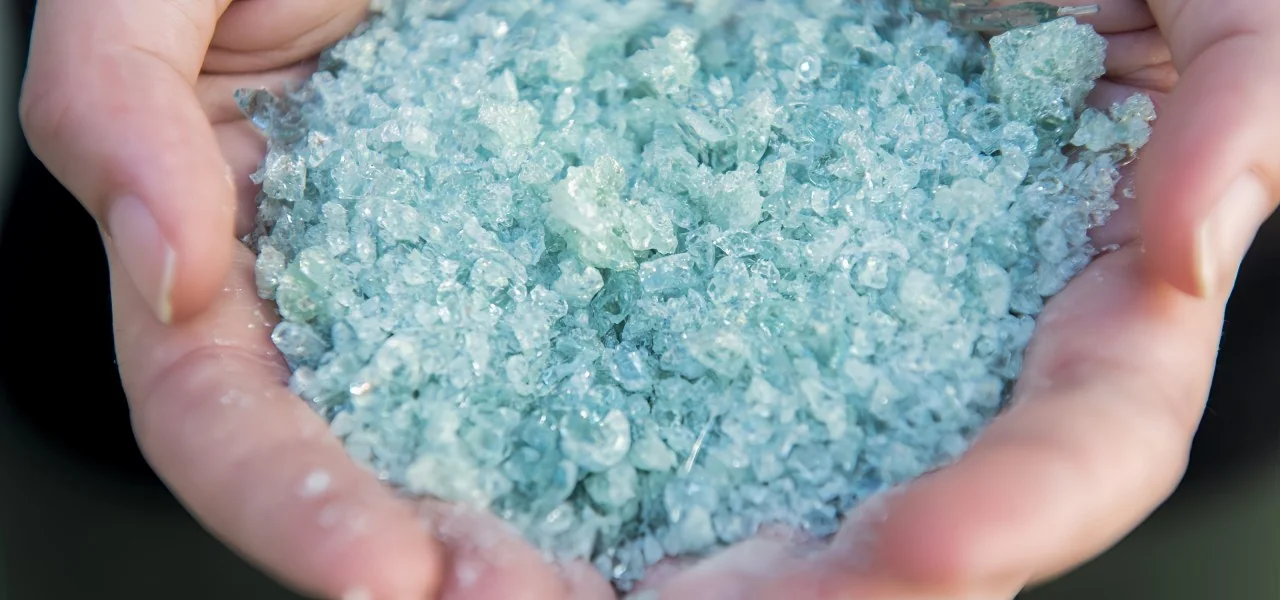
Incoming checks cover documentation and physical condition. Protect glass and batch ingredients from contamination during storage, transport and handling. Specify packaging condition, storage needs and preparation before use; use suitable tools and containers where cross-contamination could affect quality.
Production returns need an eligibility decision before reuse. Establish the original grade, any fused additions, coatings or printing, exposure to grinding media or metal, and the reason for rejection. A dimensional rejection and a contamination rejection require different reuse decisions.
Keep unidentified material separate. Record restricted and rejected returns so they cannot re-enter production through a general scrap collection. Track the quantity of each permitted return category introduced into a charge.
Foreign material can enter through inputs, storage, handling or furnace contact materials. A solid inclusion might originate from contaminated cullet, incompletely melted batch or refractory wear; appearance alone does not establish its source.
For mixed inputs, control the composition and quality of the resulting melt. This is a different question from thermal compatibility between layers or additions that remain joined in a finished component. Permission to use two input materials should not be treated as approval for every fused-glass construction using them.
4. Specify Colour, Clarity and Glass Combinations
Describe how the visual effect is produced: colour within the body glass, a coloured layer, applied glass decoration, or a coating, paint or print. Material construction and surface treatment should appear separately in the specification.

For clear glass, distinguish low visible colour, transmission, bubble quality and illuminated appearance. A thick reference sample can look different from a thin blown wall; compare samples using known thicknesses and consistent backgrounds and lighting.
For coloured glass, identify the grade and construction. Physical samples and finished trial pieces provide a stronger approval basis than screen images. Evaluate appearance after the forming, annealing and finishing operations that can affect it.
For opal or other light-scattering glass, describe the result under ambient and transmitted light where applicable. Consider diffusion, consistency across the component and visibility of the intended light source. Opal glass, frosted clear glass and a white coating are different constructions even when photographs look similar.
When separate glasses remain joined as layers, handles, feet or decoration, assess the actual combination. Matching nominal thermal expansion is insufficient: viscosity behaviour also matters, as explained in Bullseye's compatibility guidance.
Record the base and added grades, suppliers, colour, approximate proportions, layer arrangement, joining and reheating sequence, and final thermal treatment. Evaluate representative samples with that construction and history. Keep compatibility assessment separate from colour approval, and review material substitutions even when the commercial colour name stays unchanged.
5. Understand Melt Preparation and the Working Range
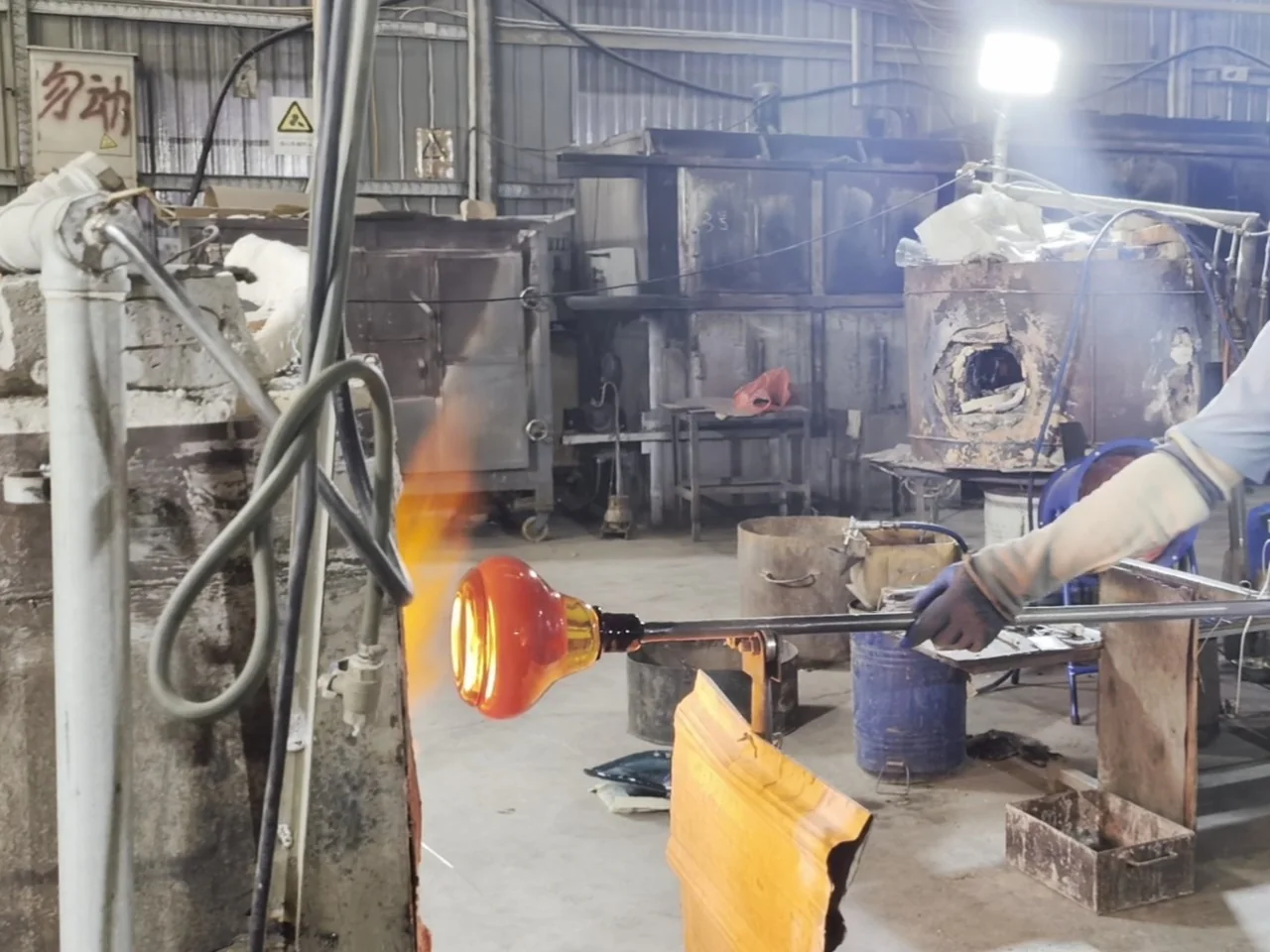
Melt preparation must deliver glass ready for repeatable forming. SCHOTT's explanation of glass melting and hot forming distinguishes melting, bubble removal, homogenisation and conditioning.
Swipe horizontally to view all columns.
| Stage | Required outcome | Evidence to consider |
|---|---|---|
| Melting | Inputs have become a melt | Charge records and checks on melting progress |
| Fining or bubble removal | Gas inclusions meet the intended quality level | Representative bubble observations or measurements |
| Homogenisation | Unwanted composition differences are reduced | Examination for cords, striae or other signs of inhomogeneity |
| Conditioning | The melt has a suitable thermal state for forming | Recorded conditions and repeatable forming response |
Stages can overlap within an installation; they do not imply four separate furnaces. Suppliers may also use “fining” and “refining” differently, so specify the intended result. Conditioning prepares molten glass for forming; annealing addresses residual stress in the formed component during controlled cooling.
As forming glass cools, viscosity increases. Assess how a candidate responds during gathering, initial bubble formation, reheating, mould contact and completion of openings. The useful working range depends on geometry, glass quantity, tooling and handling time as well as material properties. Record observations alongside process conditions when developing the route.
The melting environment also matters. For applicable sulphate-containing soda-lime-silica formulations, TNO's research examines the relationship between batch chemistry, oxidation–reduction (redox) state and fining behaviour. Apply these findings within their formulation and process context.
Where these effects matter, define the controlled inputs and indicators. A visible flame condition alone does not describe the chemistry of the entire melt; use evidence appropriate to the installation.
Review pots, linings and immersed equipment for their interaction with the glass. Contact-material reactions and wear can contribute to quality changes. Suspected devitrification (unwanted crystallisation) also requires examination of the glass and its thermal exposure before changing the cycle.
6. Control Charging, Recovery and Thermal Consistency
The melting organisation should establish how additions affect the existing melt and how readiness for forming is demonstrated. Record material identities, addition quantities and times, permitted return content, furnace readings, observations, samples and adjustments.
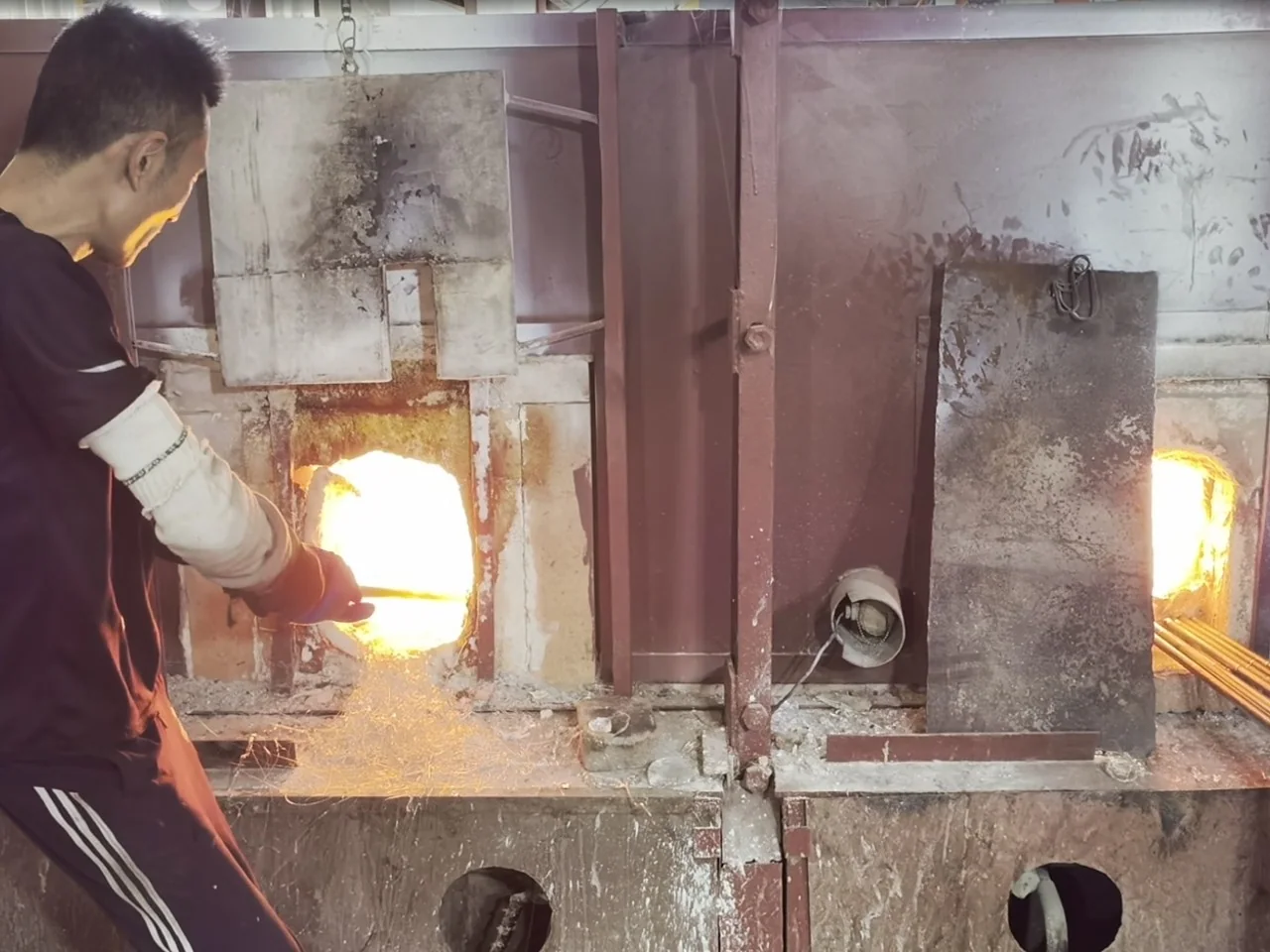
When replenishment occurs during production, identify the transition period and the components made from it. Define recovery by a demonstrated endpoint, such as specified quality checks, temperature trends and trial-gather response. A waiting time can form part of the procedure, but its suitability needs validation under the intended charging conditions.
A controller setpoint, furnace-atmosphere reading and glass temperature describe different quantities. For each reading, identify the measurement method, location, instrument status and production stage. Establish any relationship used to interpret it as evidence of glass condition. Where direct measurement is unavailable, combine the available readings with defined process observations.
One stable reading does not establish uniformity throughout the melt. During development, compare representative gathers with controlled timing and handling. Useful indicators can include gather mass, initial forming response and resulting wall distribution. Operator observations are more useful when their method and decision criteria are recorded.
Conditioning can occur in a pot or a working region of the furnace. The arrangement should suit the material and the defined forming route.
Specify how extended holding, interruptions and restarts are managed. Record glass level, additions, thermal history and quality observations, then determine when further sampling is necessary before production resumes. Review these controls when the glass, equipment or operating pattern changes.
7. Define Melt-Quality Checks and Release Criteria
Develop a release plan that identifies sampling locations or times, sample preparation, examination conditions, acceptance criteria and actions for an unacceptable result. Consistent thickness, cooling history and illumination make sample comparisons meaningful.

Swipe horizontally to view all columns.
| Release check | Evidence needed |
|---|---|
| Identity and preparation | Inputs, proportions and completed stages match the controlled procedure |
| Bubbles or seeds | Size, population, distribution and location meet defined limits |
| Solid inclusions or stones | Samples meet dimensional, location and population criteria |
| Homogeneity and colour | Samples meet requirements for cords, striae and unwanted colour variation |
| Thermal condition | Specified readings and stability criteria are satisfied |
| Forming response | Trial checks meet the established criteria where required |
Define terminology and the inspected sample size or volume. “Seed” commonly means a small bubble, but classification boundaries vary. “Few bubbles” is insufficient without a population limit and any restrictions on clustering or location. Intentional decorative bubbles need their own appearance criteria.
Cords or striae can indicate local inhomogeneity. For haze or crystalline-looking regions, establish whether the effect is internal, on the surface or associated with crystallisation before assigning a cause. Persistent defects may require microscopy, compositional analysis or bubble-gas investigation; choose the method for the decision being made.
Sampling may follow initial preparation, significant replenishment, material changes, maintenance or prolonged interruptions. Set frequency using demonstrated process behaviour and the consequences of an undetected change.
When a release check fails, retain the sample, identify potentially affected production and follow the defined disposition procedure. Record the investigation and the evidence used to authorise release or restart.
Development establishes relationships between conditions and results; routine release monitors selected indicators. Melt release confirms readiness for forming, while finished-product inspection still checks the effects of gathering, blowing, tooling, annealing and finishing. Connect both sets of evidence to the production lot.
8. Maintain Traceability and Review Changes
Connect incoming material to the melt and finished components. The record should identify the supplier, grade, incoming lot, formula revision where applicable, colour additions, return categories and quantities, furnace or pot, processing dates, release samples and associated product lots. Include deviations and their disposition.
Keep maintenance, refractory replacement and start-up records available when investigating changes. Retain representative defect samples with their charge and production history so observations can be compared with operating events.
Review substitutions against the characteristics that matter to the product. A replacement may need assessment of forming behaviour, colour, combined-glass compatibility, annealing, durability or application performance. Similar appearance or nominal expansion does not establish that existing settings will produce equivalent results. Record the evidence supporting acceptance and clarify which changes require customer review.
For colour or composition changeovers, define how residual material will be managed. Identify necessary cleaning or removal, checks for carryover and the release conditions for the next product. Keep transition material identifiable until its disposition is decided. Apply the same discipline when changes arise upstream: preserve the connection between the supplied material, its approval and the finished product.
9. Prepare Material Requirements for Quotation
A useful enquiry describes the required result and the evidence needed for approval. The supplier can then explain the proposed material and preparation route.
Swipe horizontally to view all columns.
| Specification item | Information to provide |
|---|---|
| Application and geometry | Use, operating exposure, drawings, critical sections and interfaces |
| Material | Required grade or properties needing selection and review |
| Appearance | Clear, coloured, opal, layered or surface-treated construction and references |
| Internal quality | Bubble, inclusion and homogeneity acceptance criteria |
| Combined glasses | Materials, arrangement and required compatibility evidence |
| Supply and approval | Quantities, samples, finished-product checks and packaging needs |
| Documentation and changes | Certificates or reports required, lot records and substitutions needing review |
If a grade has not been chosen, identify that decision as open. Avoid choosing solely from a colour photograph or generic material family. Provide existing material specifications, physical references and mating components where these constrain the choice.
For a BO-Glass project, this information supports assessment of material candidates, supply responsibilities, development work and quotation. Confirm the proposed route and approval evidence before treating a trial material as the production specification.
References
Contact Us
Discuss Your Custom Glass Project
Share your drawing, photos or dimensions, together with the intended use and target quantity. We will review your requirements and discuss the next steps.
Sales Enquiries
Email sales@bo-glass.com with your part description, intended use and target quantity.
Send Your Design
Use the form to upload a drawing or describe an existing part. Mark critical dimensions and tell us which surfaces or features matter most.
Request a Custom Glass Quote
Upload a drawing or share dimensions, quantity, intended use and finish. Include any heat, pressure or chemical exposure.
Your drawings remain confidential.
We use the contact details you provide to respond to your enquiry. See our Privacy Policy for more information.