
Outdoor Lighting Glass Cleaning, Maintenance and Replacement
Maintenance begins after installation and has a different search intent from durability design. Cleaning method, water quality, detergent compatibility, surface texture, coating, scratches, scale, sediment, loose mounting, seal condition, and replacement matching determine whether the luminaire remains safe and optically effective. This guide provides practical inspection and maintenance criteria without assuming that every visible mark requires immediate replacement.
Maintenance, Cleaning, and Long-Term Use
- Cleaning validation
- Record cleaner chemistry, concentration, pH, temperature, contact time, wiping load and cycle count; then remeasure transmittance and haze.
- Before/after baseline
- Retain the original sample and initial luminous transmittance, haze, gloss and color data so aging is measured rather than described.
- Scratch impact
- Inspect under fixed lighting and quantify the change in transmitted light or beam pattern; visual scratch grades alone may not predict optical loss.
- Service trigger
- Define maintenance by an agreed light-loss, haze or appearance threshold and site contamination rate, not by one universal calendar interval.
How should outdoor-lighting glass components be cleaned to avoid scratches?
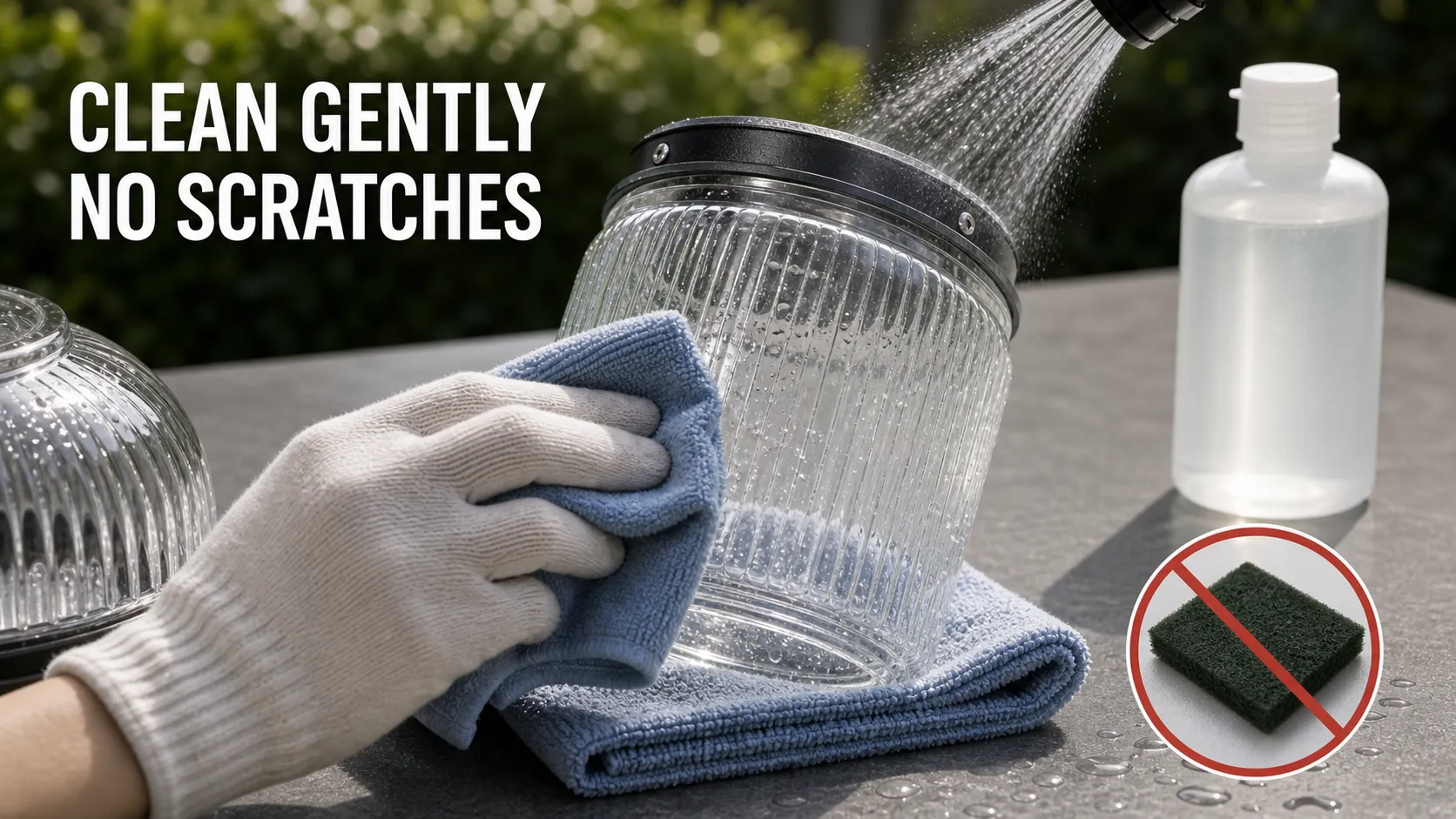
First rinse away sediment and hard particles with clean water, then clean with a soft cloth, sponge or neutral detergent. Avoid dry wiping. Sand, metal particles and hard brushes are common causes of fine scratches, especially on underground lights, low garden lights and luminaires in windy, sandy environments.
For engineering projects, cleaning methods should be specified in the maintenance manual. Avoid using strong acids and alkalis, rough scouring pads or hard scrapers. If the glass surface is coated, sandblasted, screen-printed or anti-fouling treated, you also need to confirm the compatibility of the cleaning agent, otherwise the glass may be scratched or the surface functional layer may be damaged.
How should oil contamination be removed from frosted or sandblasted glass surfaces?
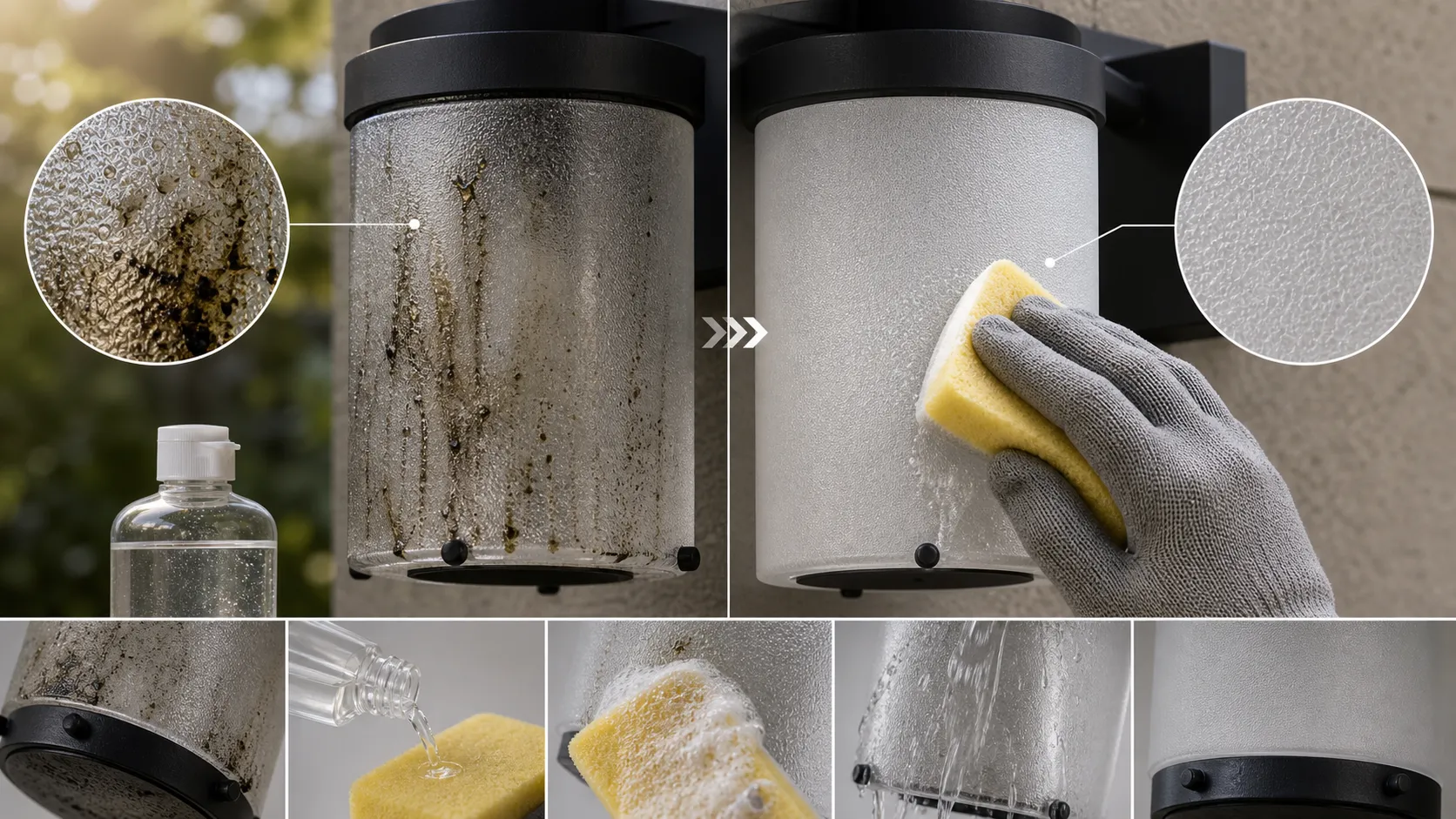
Frosted and sandblasted glass surfaces are more likely to attract oil, dust and fingerprints because the slightly rough surface allows contaminants to get trapped in the tiny bumps. When handling, use warm water, neutral detergent and a soft brush to clean gently, and avoid repeated rubbing with strong solvents or hard brushes.
For long-term maintenance of outdoor luminaires, it is recommended to give priority to a structure with a sandblasted interior and a smooth outer surface, so that the soft light effect is retained on the inside and the outside is easier to clean. When external sandblasting or deep frosting is used outdoors, the maintenance frequency and environmental pollution must be evaluated in advance to avoid oil stains that are difficult to clean later and affect the appearance.
How can water spots be prevented on clear outdoor protective cover glass?
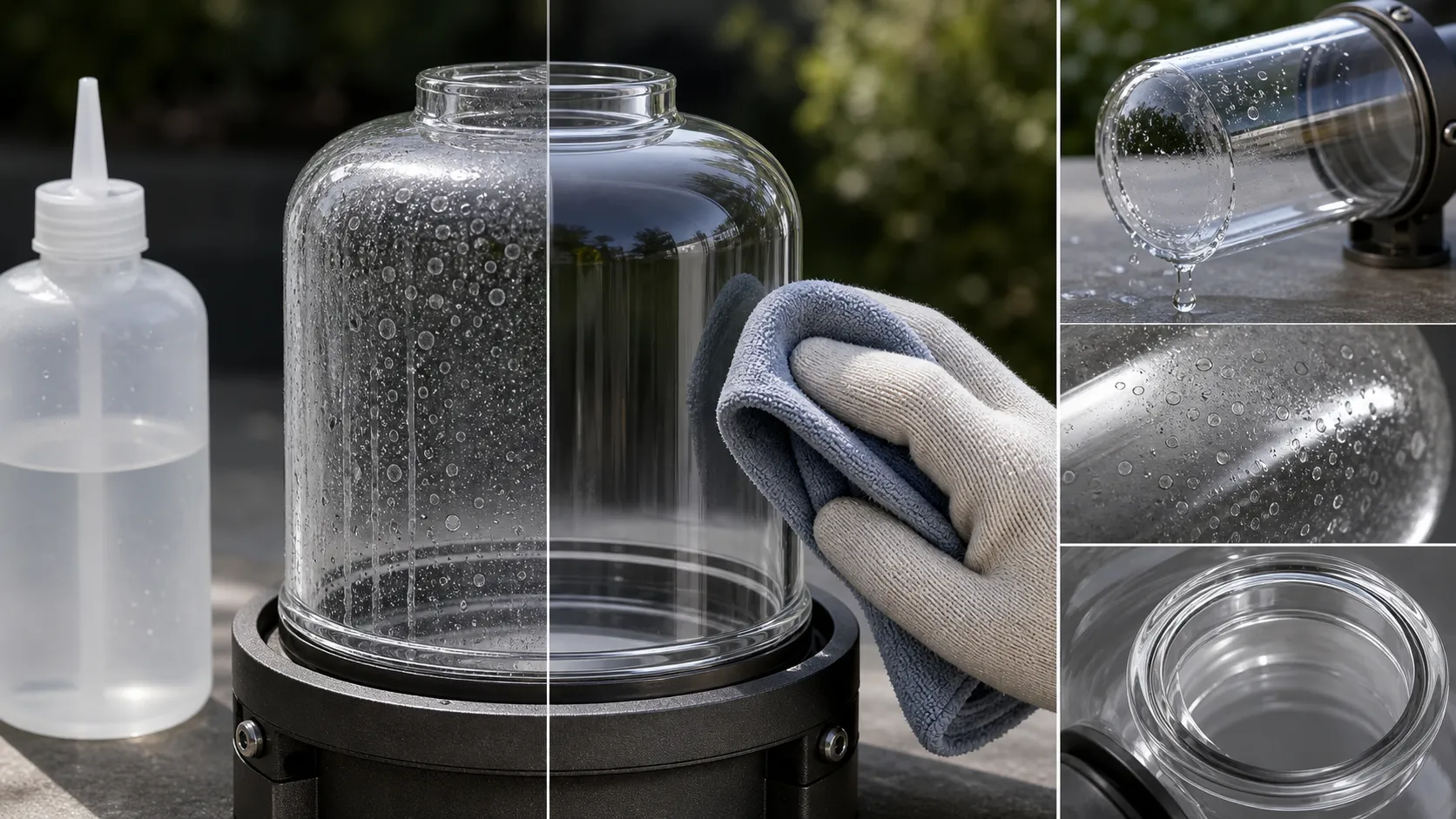
Watermarks on outdoor transparent protective cover glass are mostly related to rain minerals, natural drying after cleaning, mixed dust deposition and insufficient surface inclination. The key to avoiding watermarks is to make the glass surface easy to drain, reduce water accumulation areas, and rinse with a clean soft cloth or deionized water after cleaning to reduce residue.
From a design perspective, the outer surface of the transparent cover should be as smooth as possible to avoid water pockets and water accumulation on the edges. For high-end architectural lights, wall washers and solar lights, consider easy-to-clean or hydrophobic coatings, but still confirm the coating's outdoor life and scrub durability.
How should scale be removed and controlled on underwater-light glass?
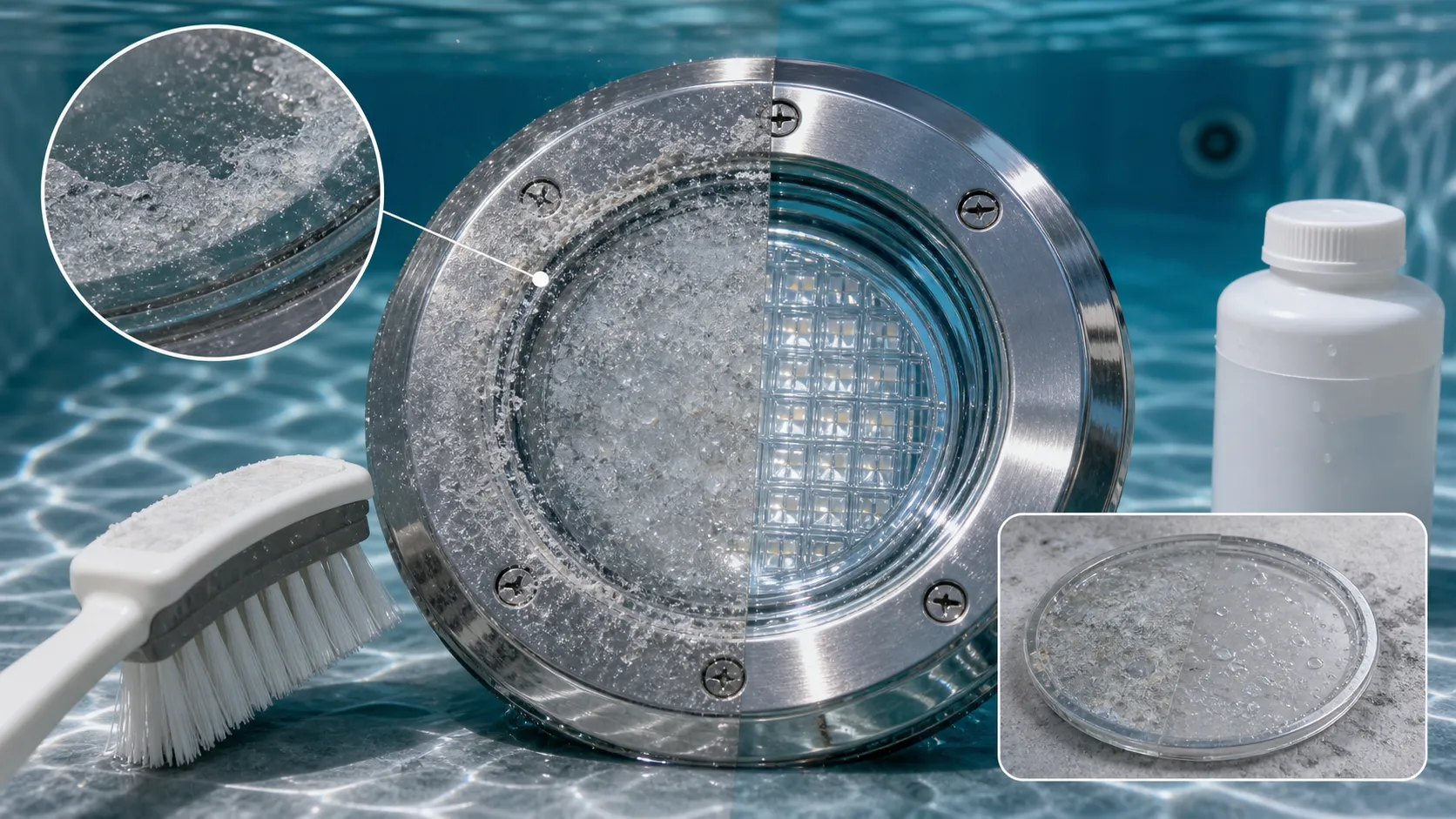
Scale on the surface of underwater luminaire glass mainly comes from calcium and magnesium ions in the water, chlorine water environment and poor water circulation. Slight scale can be softened and wiped off with a cleaning agent suitable for swimming pools or fountain systems. Avoid using metal scrapers or hard emery cloths when cleaning to avoid scratching the glass or damaging the sealing edges.
Preventing scale requires starting from both glass surface and water quality management. The outer surface of the glass should be as smooth as possible and have as few grooves as possible to facilitate water flushing and manual cleaning. At the same time, controlling water quality and regularly maintaining the circulation system can also reduce scale deposition. Anti-scale coatings can be used as a secondary solution, but resistance to chlorine water and scrubbing should be verified.
How can sediment abrasion be reduced on in-ground-light glass surfaces?
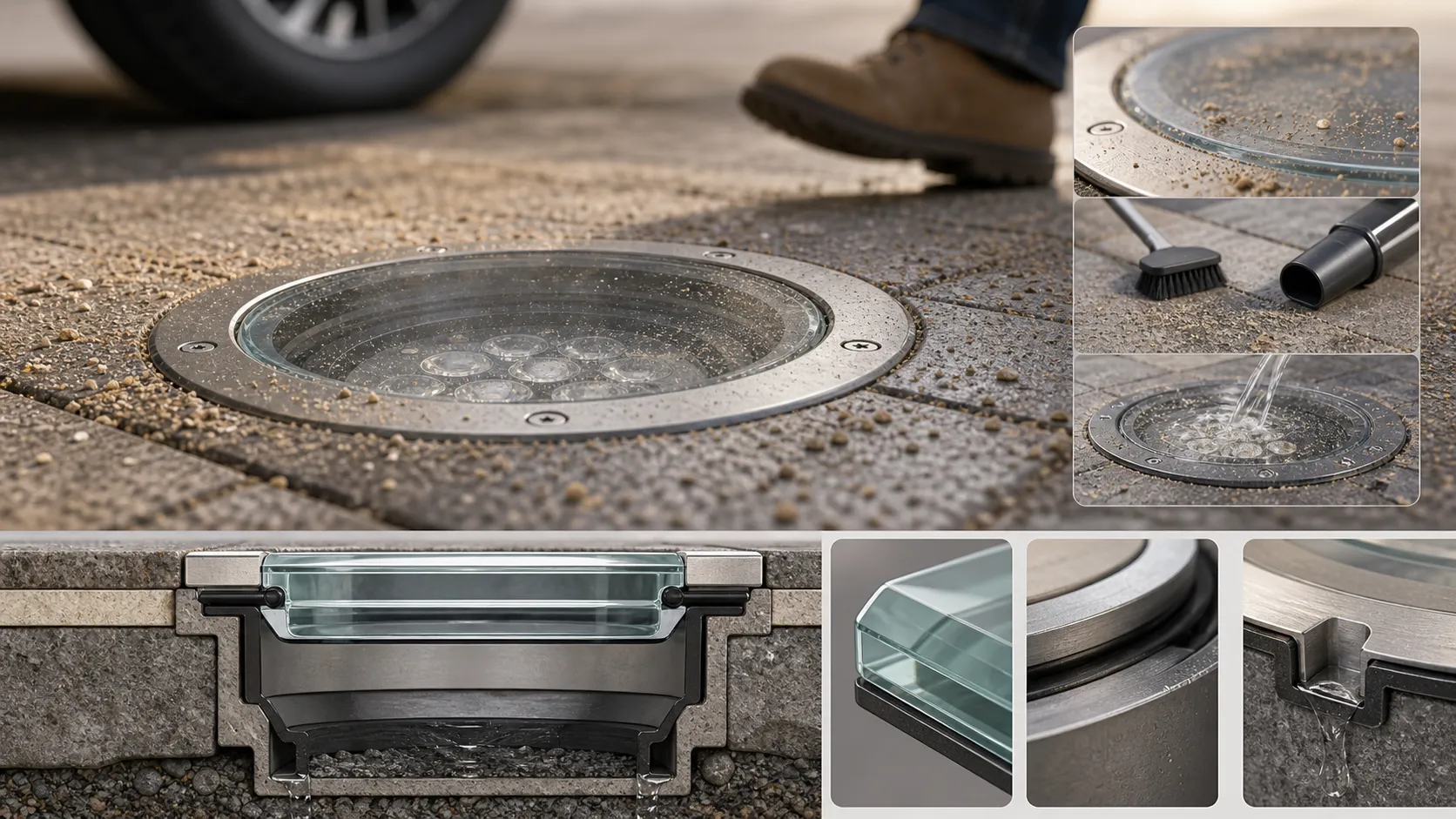
Sand and sand wear on the glass surface of underground luminaires usually comes from sand and gravel particles brought by shoe soles, tires, cleaning tools and rain. To reduce wear and tear, the first step is to make the glass flush with the ground or surface ring after installation to avoid forming raised stress points or sand-accumulated edges. At the same time, try to avoid locations where vehicle tires will directly run over them for a long time.
During maintenance, the sediment should be washed away before wiping to avoid dry wiping with sand. Structurally, the risk of wear can be reduced by protecting edges with stainless steel face rings, proper drainage, and choosing appropriate thickness and surface treatment. In long-term high wear scenarios, the protective cover glass should be planned as a maintainable and replacement part.
How can the protective cover glass of outdoor lighting fixtures reduce insect intrusion, dust accumulation and maintenance frequency through structural design?
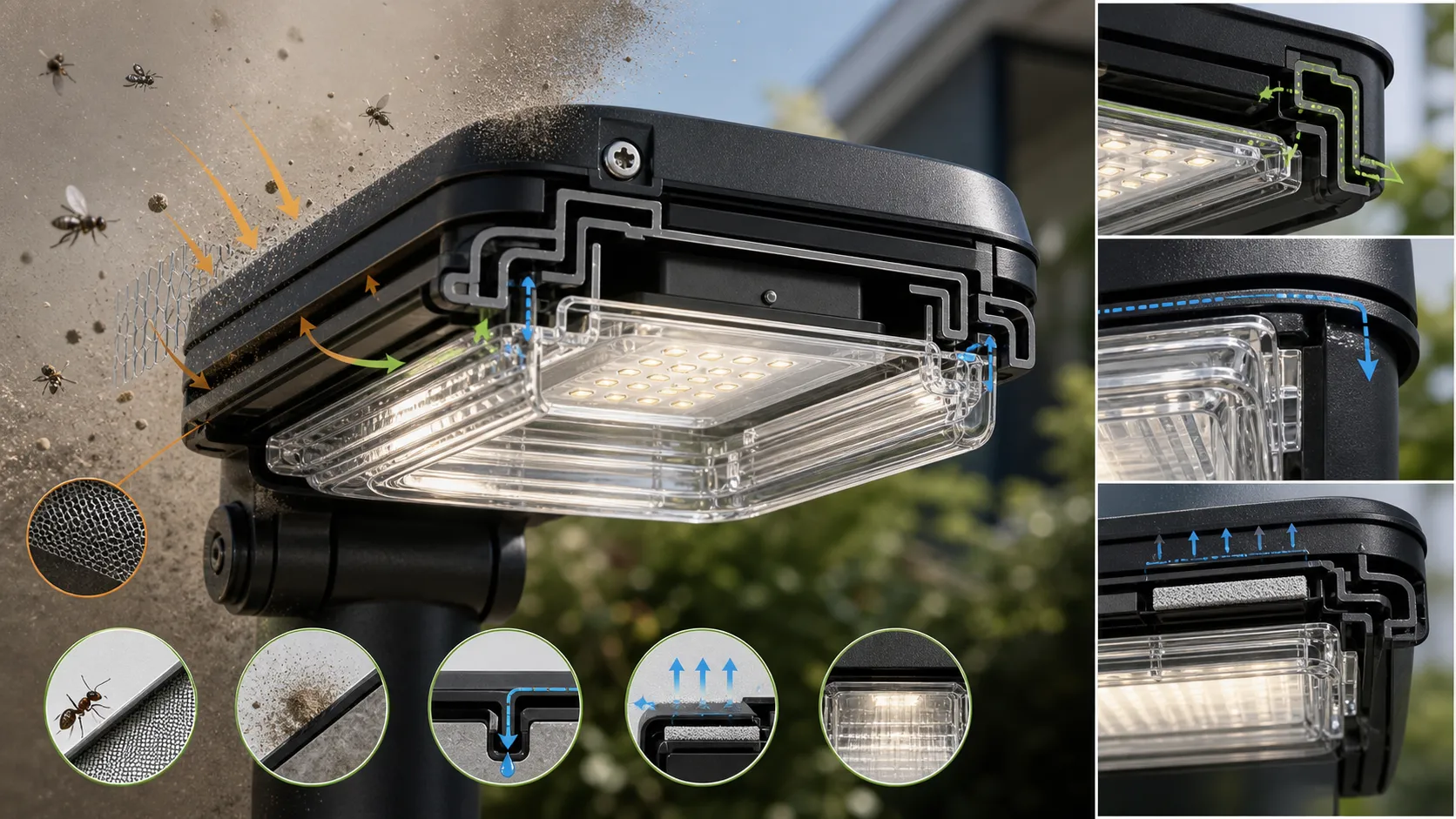
To reduce insect infestation, dust accumulation and maintenance frequency, it is necessary to deal with the protective cover glass and luminaire body structure at the same time. Glass openings, wire holes, heat dissipation holes, back panels and assembly gaps should avoid forming passages for insects and dust to enter; locations that require ventilation should control entry paths through insect screens, labyrinth structures or zoning designs.
Protective cover glass shape also affects maintenance frequency. The smoother the outer surface, the fewer grooves and dead corners where water accumulates, and the easier it is to be washed away by rain and cleaned manually. For garden lights, courtyard lights and outdoor chandeliers, drainage, ventilation and sealing should be considered at the same time to prevent water vapor, insects and dust from entering and being unable to be discharged.
How often does outdoor-lighting protective cover glass require maintenance?
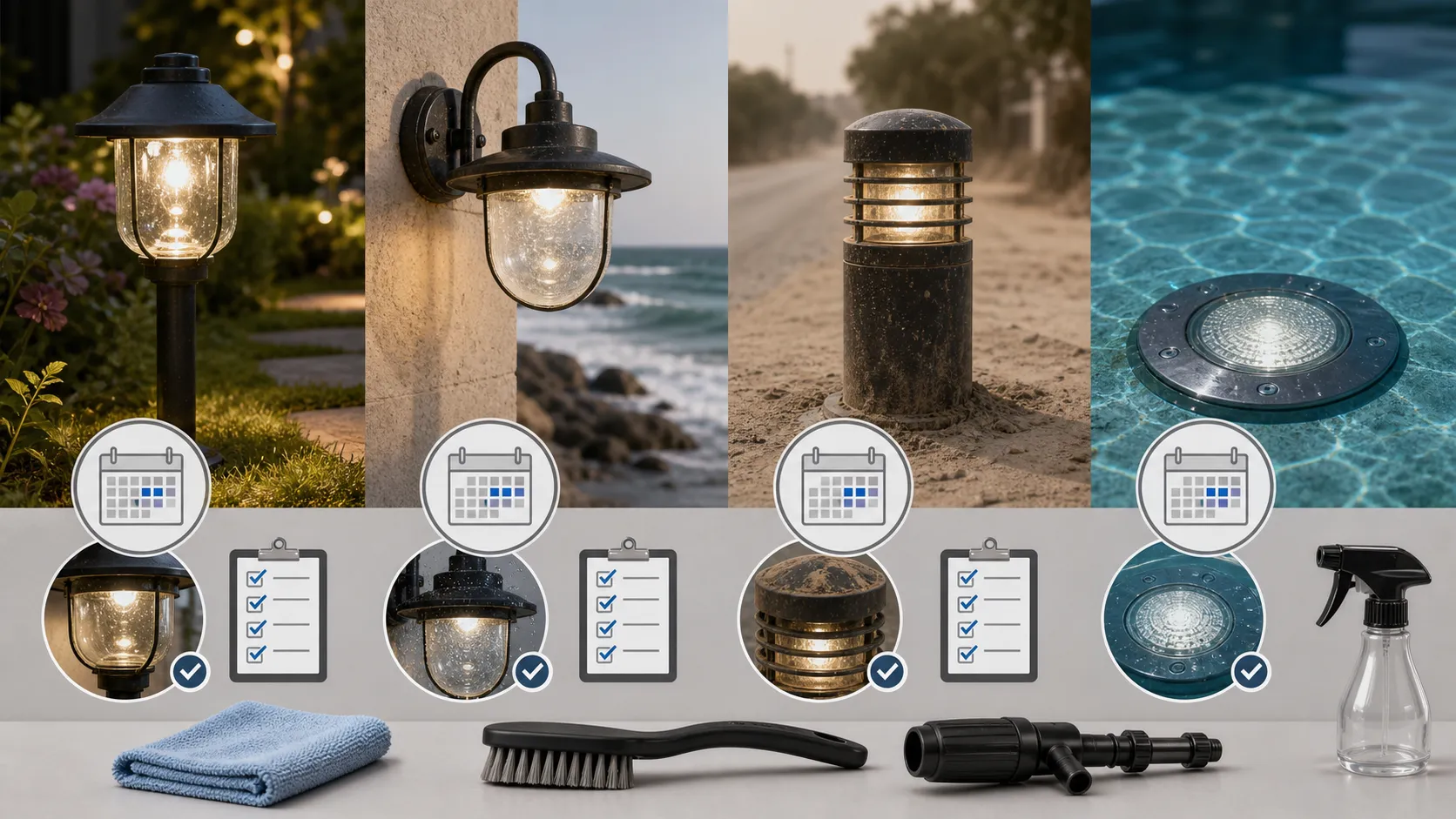
There is no unified fixed value for the maintenance cycle of the protective cover glass of outdoor luminaires. It should be determined based on the installation environment, luminaire height, pollution level, glass surface treatment and project lighting requirements. Ordinary courtyards and residential scenes may be cleaned every few months to six months, while highly polluted roads, coastal, sandstorm, underground and underwater scenes may require more frequent maintenance.
For B2B projects, it is best to plan the maintenance cycle in advance in the project plan. High pole lights, architectural wall washers, underwater lights and large-area underground lights have high maintenance costs. When selecting glass, priority should be given to ease of cleaning, stain resistance, wear resistance and replaceability, rather than waiting for the light transmittance to drop significantly before processing.
How much light loss can result when an outdoor glass component is not cleaned?
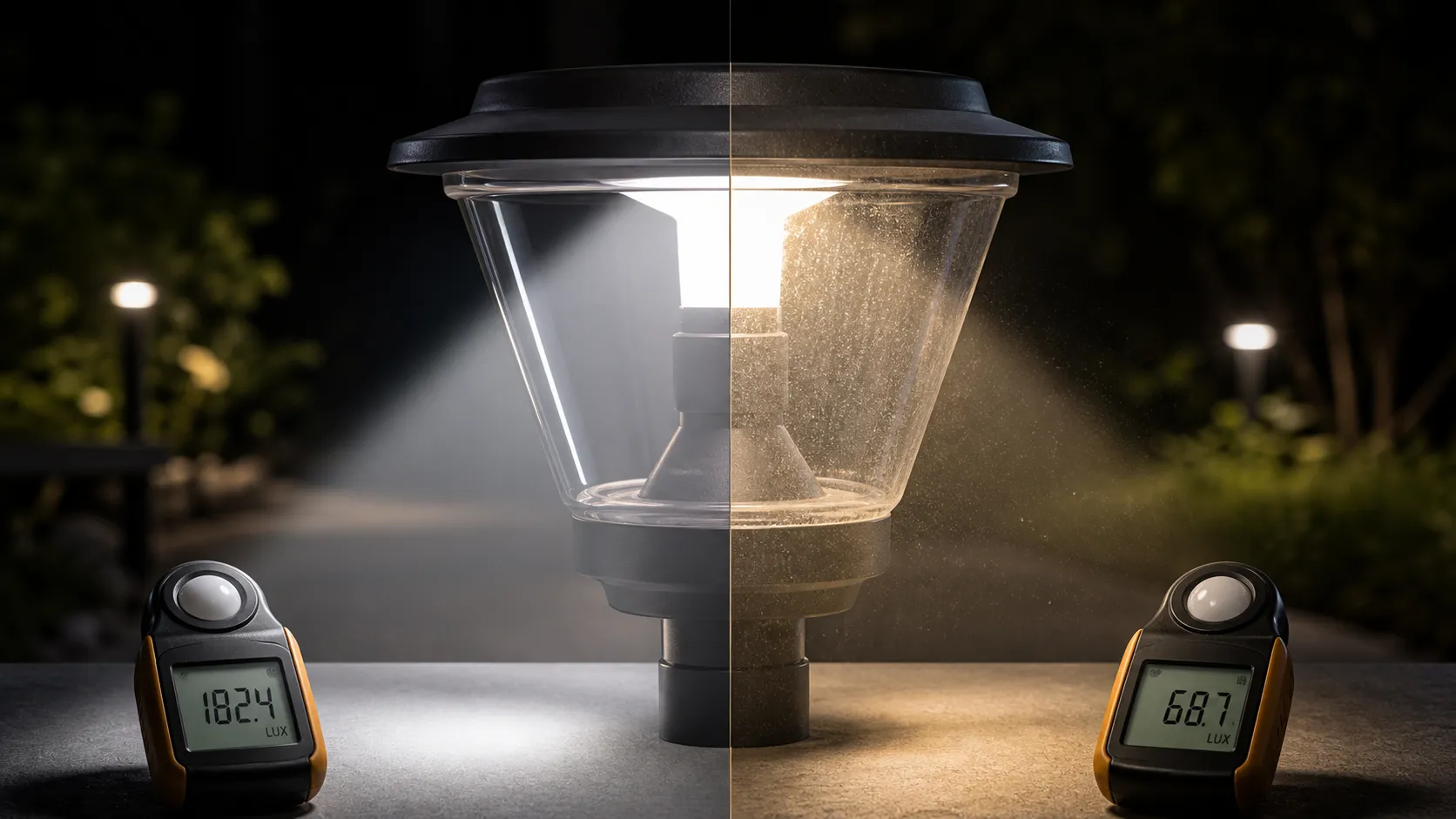
The amount of light loss depends on the contaminant type, deposit thickness, installation angle and environment. Light surface dust may have a limited effect, but accumulated dirt, oil, scale, bird droppings and sand can significantly reduce transmittance and make the beam darker, more scattered or uneven.
This type of light attenuation is easily mistaken for LED light source attenuation, but may actually be caused by contamination on the glass surface. If an engineering project has requirements for illumination maintenance, glass contamination and maintenance cycles should be included in the design, rather than just looking at the initial parameters of the light source.
Will the glass coating become ineffective due to daily wiping?
Glass coatings have the potential to gradually fail due to daily wiping, cleaning agents, UV rays and environmental contamination, depending on the coating type, location and abrasion resistance level. Anti-reflective, anti-fog, hydrophobic, easy-to-clean, colored or metallized coatings do not have the same durability, and exterior surface coatings are generally more susceptible to wear and tear than interior surfaces.
If outdoor luminaires rely on coatings for optical or antifouling effects, the coating's resistance to weathering, scrubbing, and cleaning agents should be confirmed during the design phase. The maintenance documents should also specify the cleaning methods that can be used to avoid damaging the coating with strong solvents, hard brushes or abrasive powders.
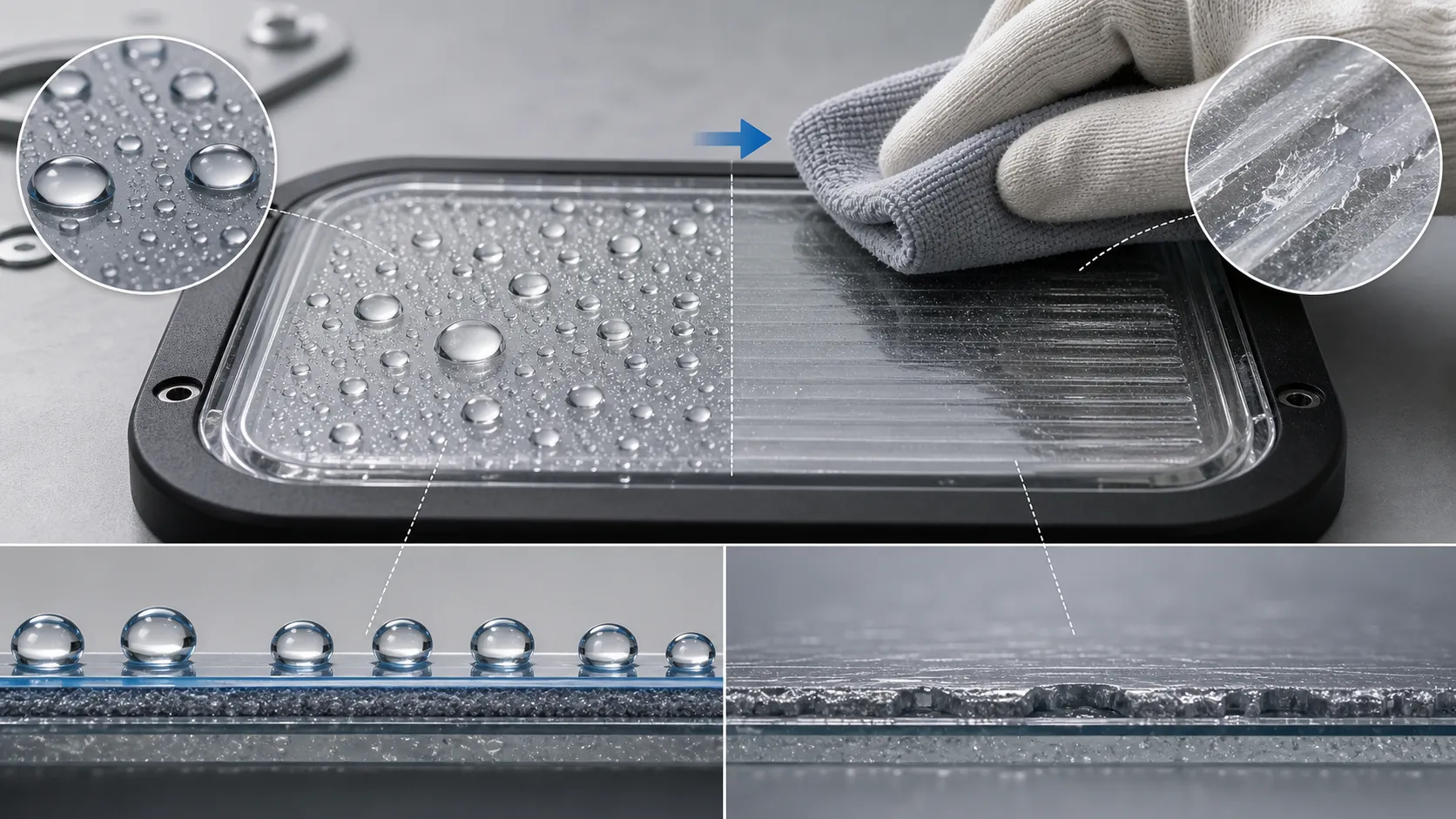
Can the outdoor protective cover glass still be used after its surface is scratched?
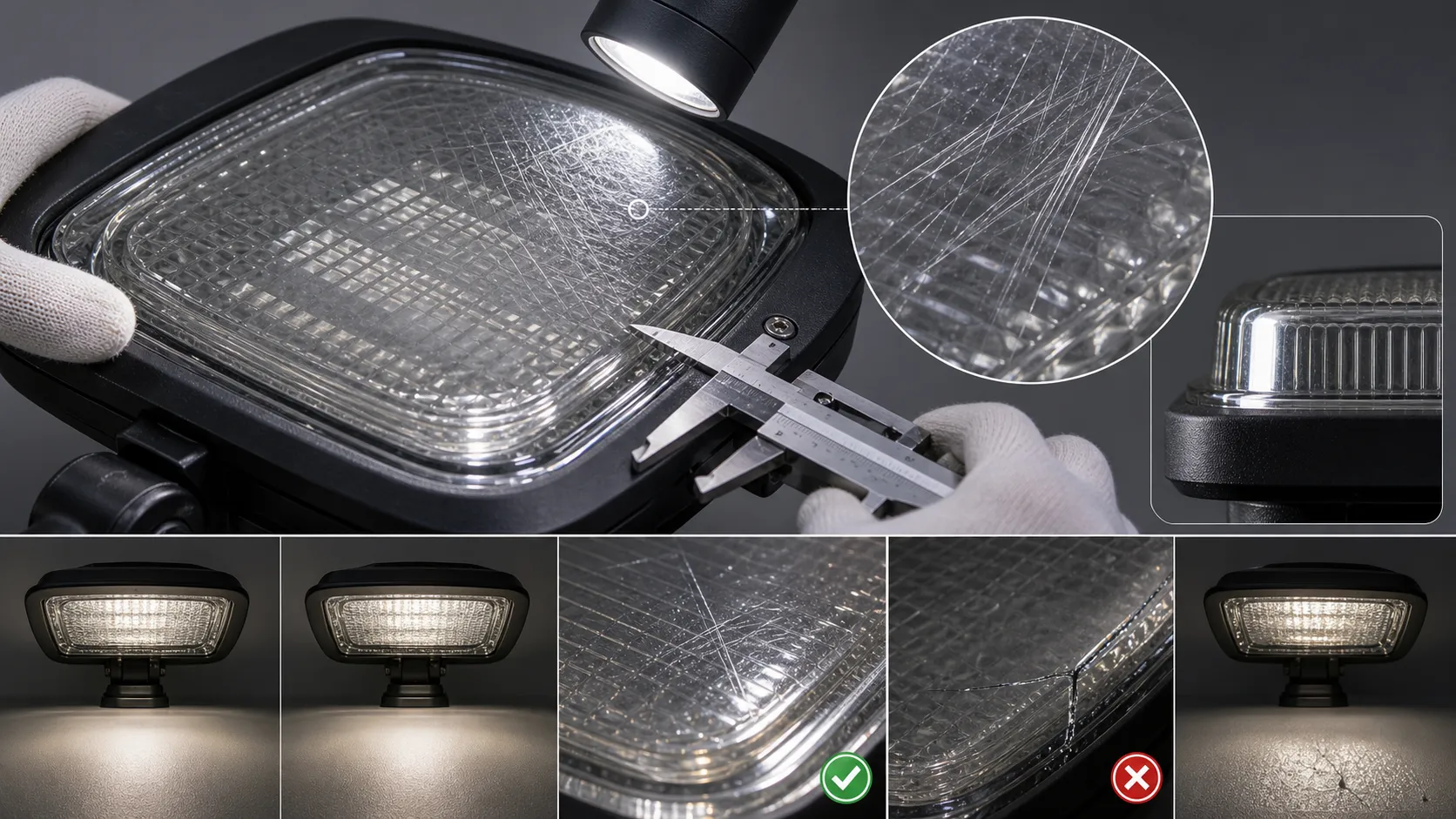
Whether the outdoor protective cover glass can continue to be used after the surface is scratched depends on the scratch depth, location, quantity and lighting application. Minor superficial scratches may only affect the appearance and a small amount of light transmission, but deep scratches, edge cracks, hole edge cracks or scratches at pressure-bearing locations may cause breakage and safety risks.
For underground lights, underwater lights, parking lot lights and public area lighting fixtures, more careful evaluation should be done after scratches, because the glass also performs pressure-bearing, protective or sealing functions. If scratches affect the light spot, sealing, strength or user safety, they should be replaced in time, rather than just judging from the appearance.
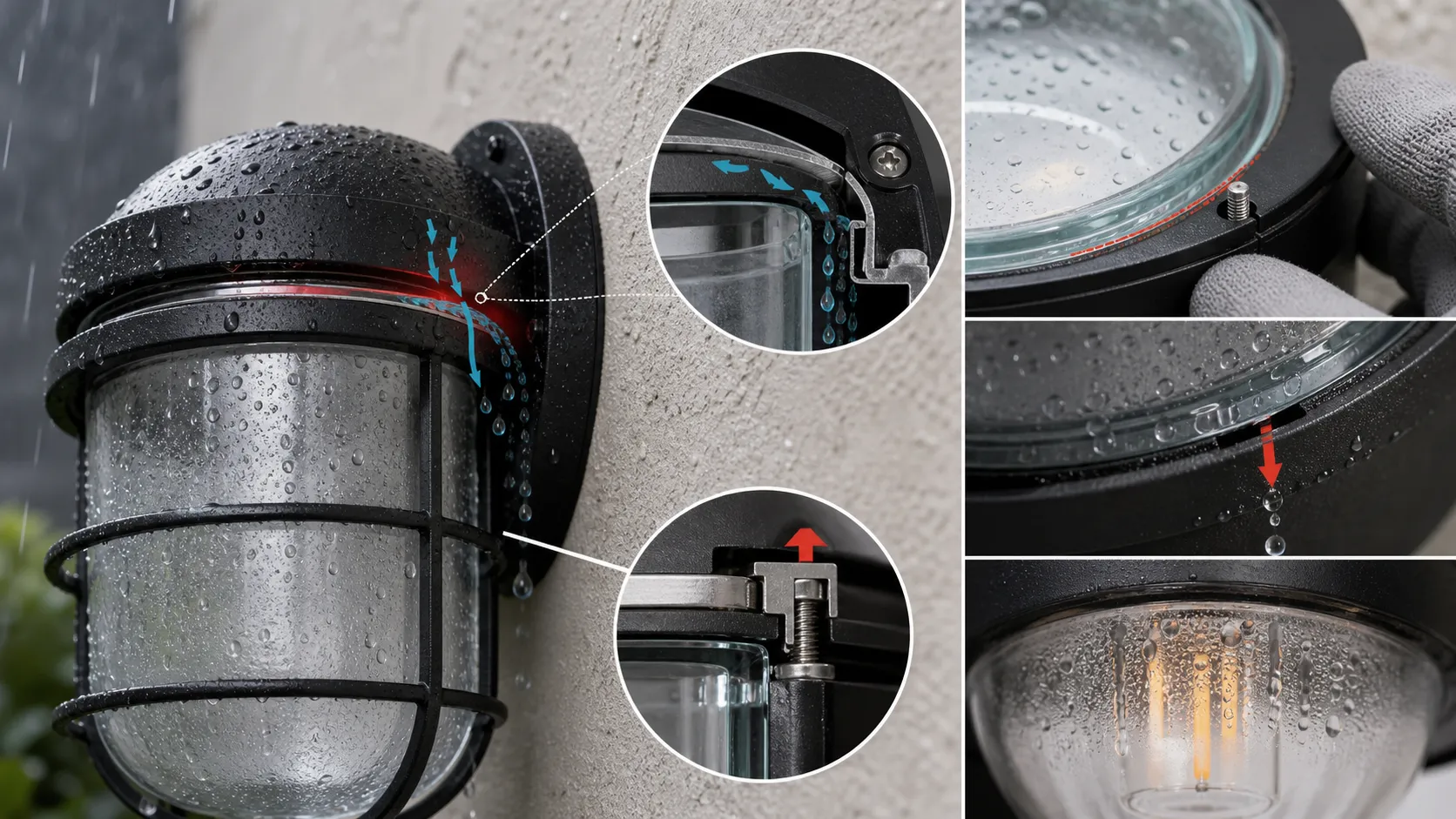
Will a loose luminaire protective cover glass compromise water ingress protection?
A loose protective cover glass can compromise water and dust ingress protection as well as long-term safety. Once the cover loosens, gasket compression may become insufficient, the adhesive layer may crack and the load on the retaining frame may change, allowing rain, dust and insects to enter the luminaire.
Looseness can also allow the glass to shift under wind vibration, thermal expansion or external loading, increasing the risk of edge chipping and cracking. If movement is detected, inspect the retaining frame, fasteners, gaskets, adhesive joints and glass edges, then determine whether reassembly or component replacement is required before repeating the complete-luminaire water-ingress test.
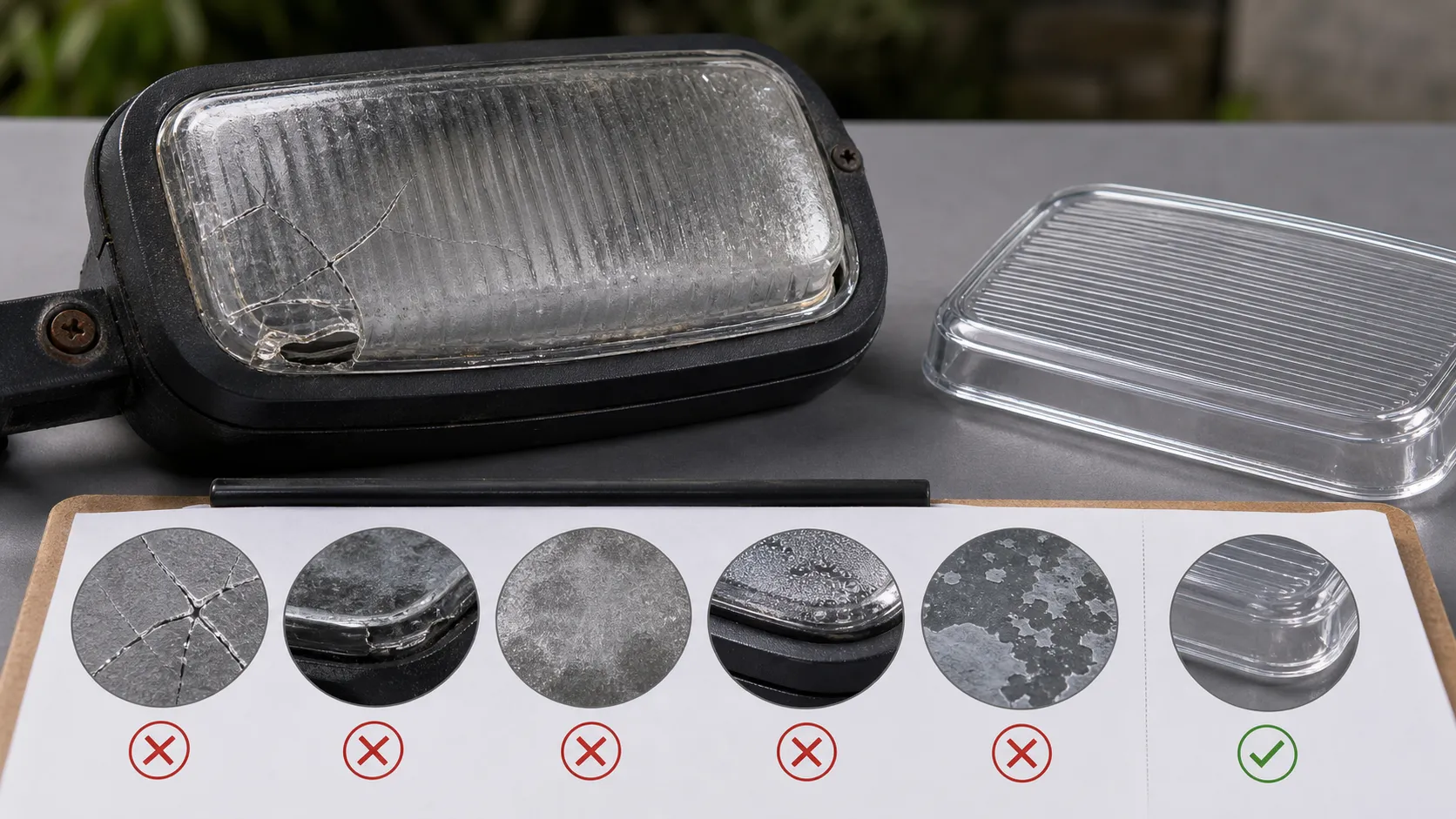
When should outdoor-lighting glass be replaced?
To determine whether the glass of outdoor lighting fixtures needs to be replaced, you can look at four aspects: safety, sealing, light efficiency and appearance. If the glass has cracks, chipped edges, deep scratches, looseness, obvious deformation, seal failure or repeated internal fogging, replacement should be given priority.
If the glass surface is scratched for a long time, the scale is severe, the light transmittance is significantly reduced, or the spot quality is affected, the replacement cost and maintenance value should also be evaluated. For B2B projects, it is recommended to establish regular inspection standards and manage the glass status together with the IP of the complete luminaire, glare control, illumination maintenance and safety maintenance.
Contact Us
Your feedback fuels our growth, and your questions drive our solutions.
We value your feedback, inquiries, and suggestions. Please feel free to get in touch with us
General inquiries
Please contact us via sales@bo-glass.com, and we will reply to you as soon as possible.
Interested to work with us
Drop your resume at info@bo-glass.com
and we will get back to you shortly.
Request a Custom Glass Quote
Tell us about your project or upload a drawing.
Your drawings remain confidential.
We uses the contact information you provide to us to contact you about our relevent content, products, and services.