
Outdoor Lighting Glass Waterproofing, Sealing and Condensation
Water ingress and condensation are interface and system problems. Glass dimensions, flatness, edges, and sealing-land cleanliness influence gasket contact, but cable entries, fasteners, housing joints, vents, adhesives, assembly humidity, and temperature cycling influence the final result. This guide explains what the glass supplier can control, what the luminaire manufacturer must validate, and why a thicker glass component cannot compensate for an unstable sealing interface.
Water Ingress, Sealing, Condensation, and Fogging
- System test
- IEC 60529 evaluates the enclosure, including glass, gasket, frame, cable entry and fasteners. Component inspection supports but cannot replace the IP test.
- O-ring compression
- Parker identifies 30% as a typical maximum static squeeze and recommends leaving gland void for tolerance, swelling and thermal expansion.
- Submersion pressure
- Add approximately 9.81 kPa per meter of water depth, then account for pressure cycling, installation loads and safety factor.
- Condensation trigger
- Fog forms when the inner glass surface falls below the internal-air dew point. Record assembly temperature/RH and hot-to-cold surface temperatures.
Why is it easy for water to enter the protective cover glass of outdoor luminaires?
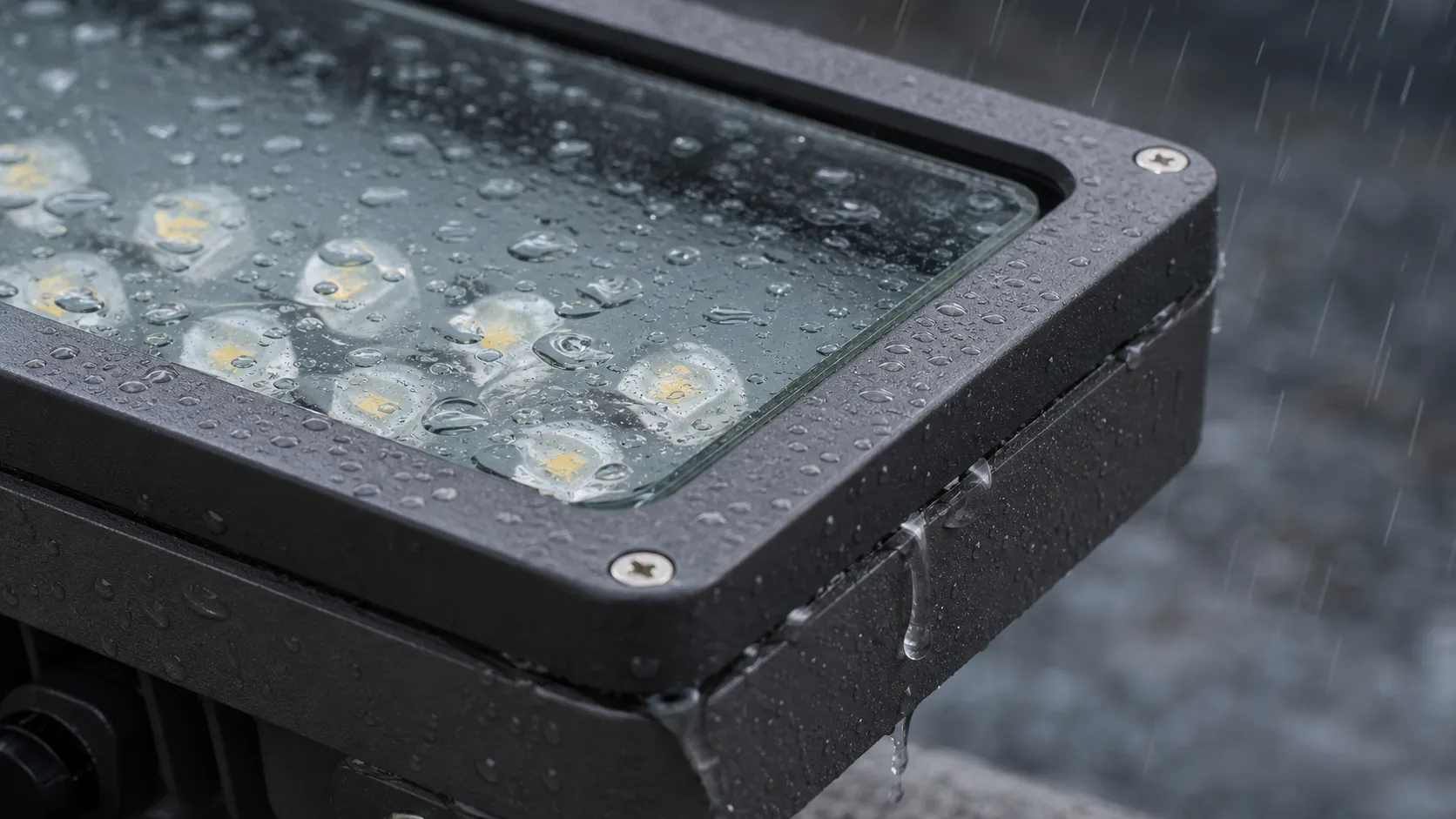
Water ingress around outdoor-lighting protective cover glass usually does not occur because the glass absorbs water. It occurs at weak interfaces among the glass, housing, gasket, sealing adhesive, cable entries and assembly structure. Rainwater may enter through glass interfaces, retaining-frame gaps, fastener penetrations, back panels, cable entries or housing joints, especially under wind-driven rain, standing water and repeated thermal cycling.
Glass components will affect the risk of water intrusion, such as opening size, edge flatness, thickness tolerance and sealing surface quality will all affect whether the gasket is compressed evenly. However, the waterproof capability is the result of the complete luminaire system and needs to be confirmed by combining housing design, sealing materials, assembly process and the IP test of the complete luminaire.
Is fogging inside the protective cover glass of outdoor luminaires a glass problem or a structural problem?
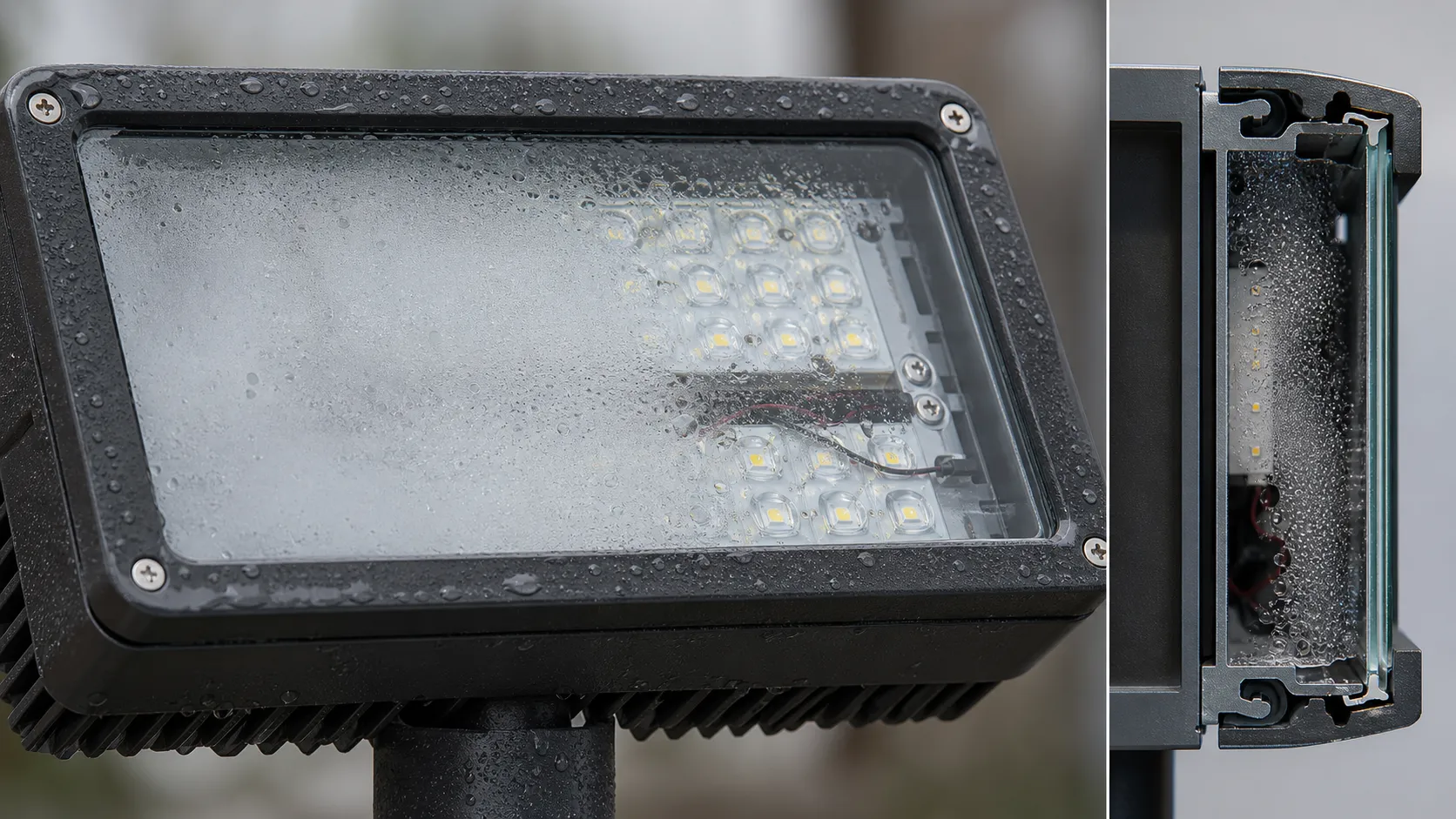
In most cases, fogging inside the protective cover glass of outdoor luminaires is not a problem with the glass itself, but is caused by structural sealing, internal moisture and thermal cycling. If moisture is brought into the interior of the luminaire during assembly, or if the sealing is not tight enough to allow moisture to enter, the water vapor will condense on the cooler inner surface of the glass to form fog when the temperature drops.
The glass surface temperature, thickness and temperature difference between the interior and exterior affect fogging, but the root cause usually lies in the overall luminaire design and assembly control. Reducing fogging requires control of assembly-environment humidity, gasket compression, cable-entry waterproofing, appropriate drying treatment and pressure-equalization design, followed by complete-luminaire thermal-cycling and operating tests.
How does the protective cover glass cooperate with the housing and gasket to form a reliable sealing structure?
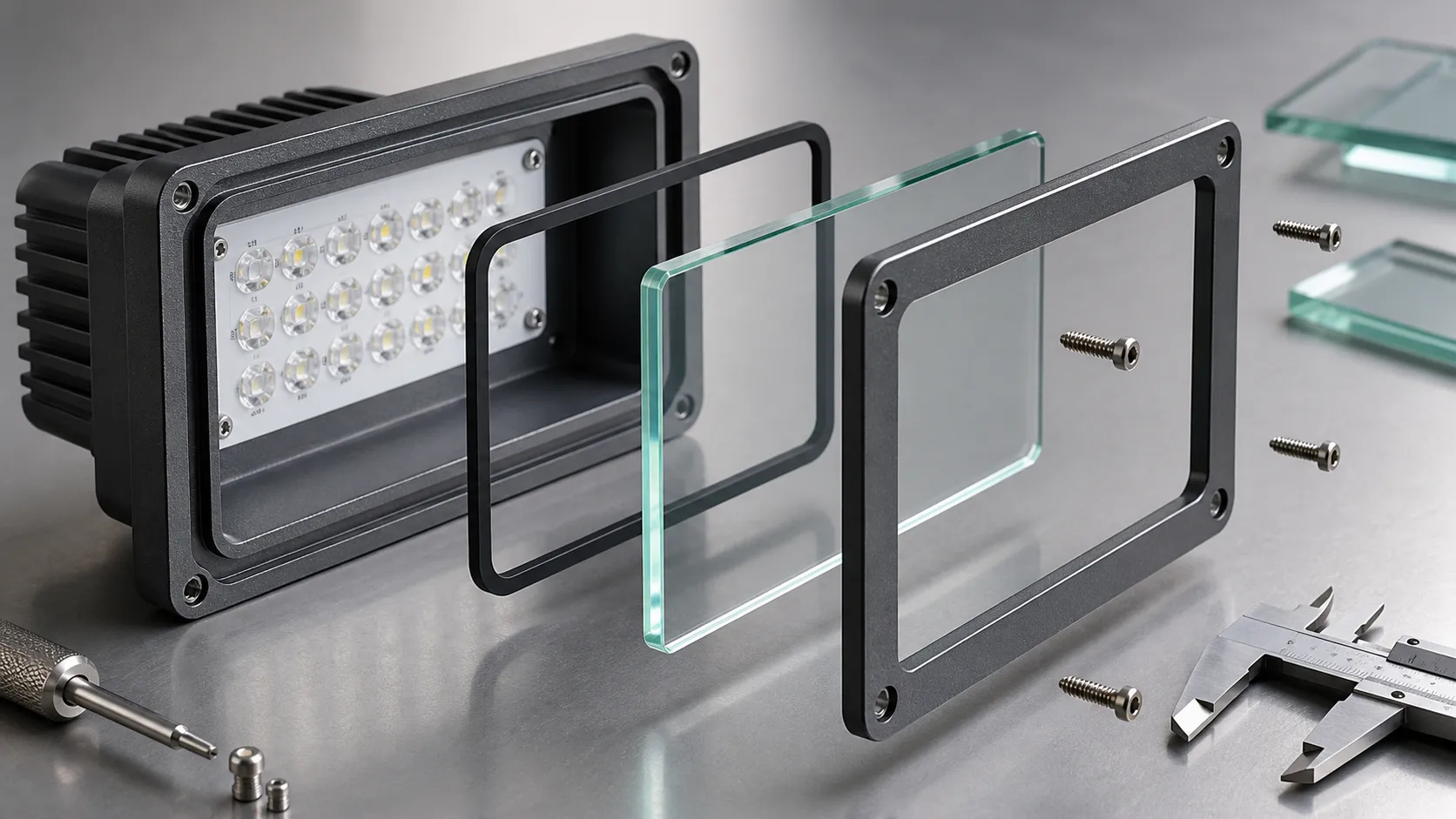
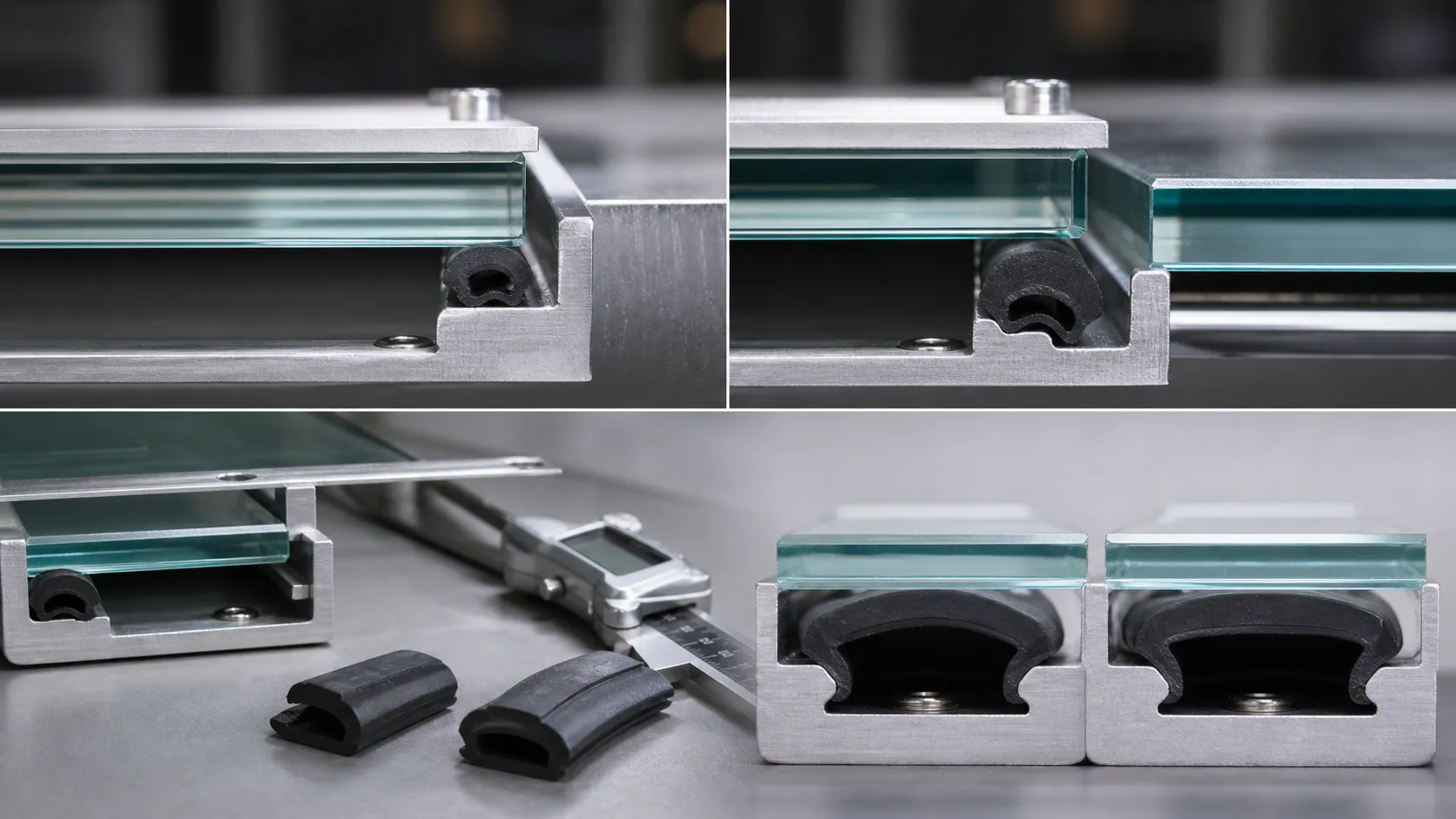
The sealing structure between the protective cover glass and housing should provide a continuous, flat and sufficiently wide sealing land, with uniform compression of the gasket or sealing-adhesive bead. Common approaches include a retaining frame with gasket, a stepped rebate with sealing adhesive, a fastener-clamped cover and a potted assembly. The appropriate design depends on luminaire type, installation orientation, serviceability and the target ingress-protection level.
When designing, it is necessary to avoid direct contact between glass and metal, and to avoid local stress on the glass caused by single-point compression. Glass size tolerance, thickness tolerance, edge chamfer, housing flatness and gasket compression should be confirmed together, and the final waterproof stability needs to be confirmed through the complete luminaire assembly test and IP test.
How does the gasket material affect the long-term waterproof stability between the glass and the housing?
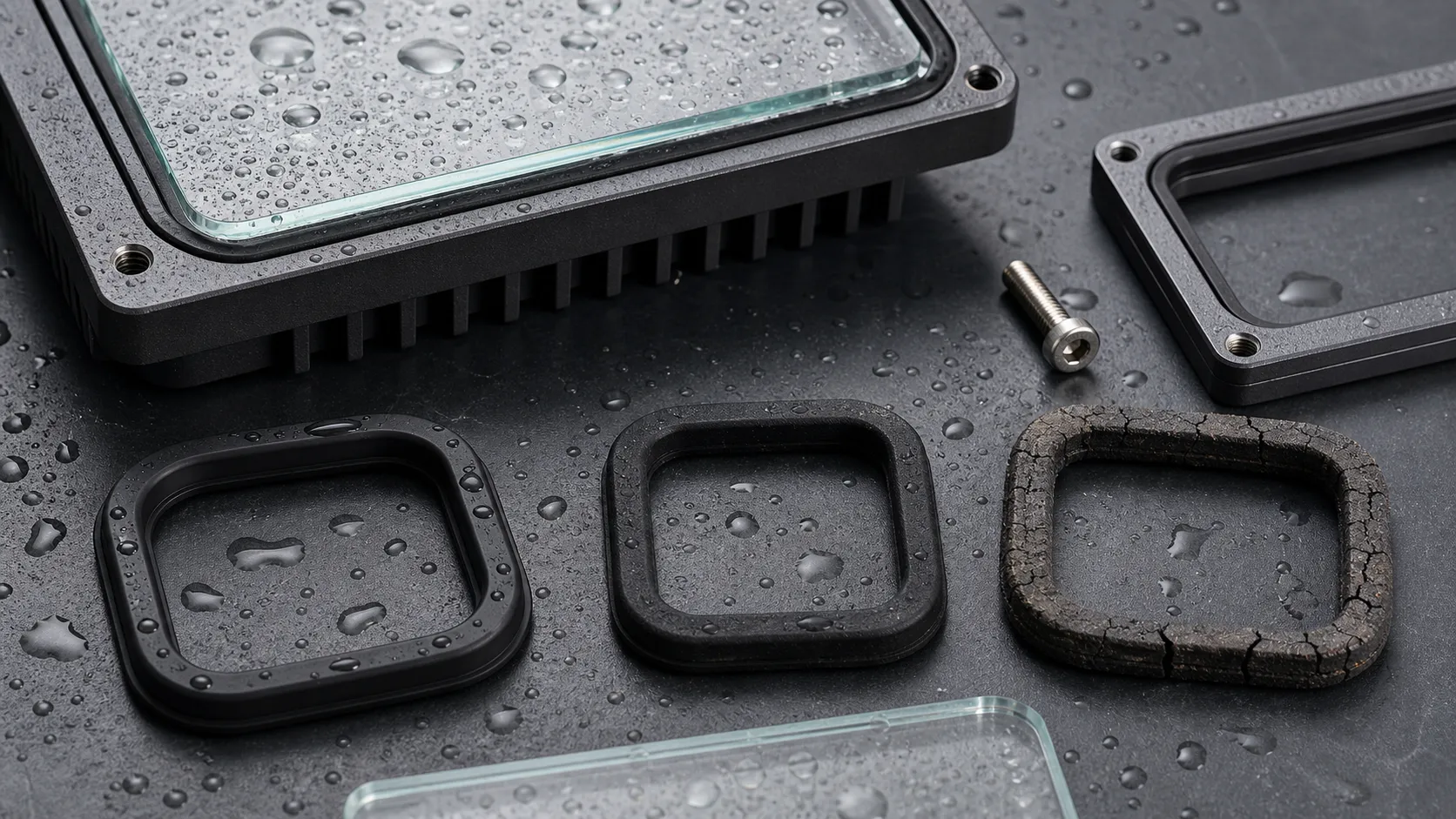
The material of the gasket will significantly affect the long-term waterproof stability between the glass and the housing. Silicone, EPDM, rubber and other materials have different performances in terms of temperature resistance, UV resistance, hydrolysis resistance, resilience and compression permanent deformation. If the material selection is not suitable, it may be sealed in the short term, but it will easily age, harden, lose rebound or produce water leakage in the long term.
The glass component itself must provide a flat and stable sealing contact surface, and the gasket is responsible for compensating tolerances and buffering forces. The two need to be matched in design, especially to confirm the gasket compression level, contact width, assembly pressure and long-term environmental conditions. Ultimately, the waterproofing stability must be judged based on the complete-luminaire testing.
Engineering decision: For O-rings specifically, Parker gives 30% as a typical maximum static squeeze, a common gland-fill range of 60–85% and at least 10% void for tolerance, swelling and thermal expansion. These are starting points, not limits for every gasket profile. Verify compression set after heat aging and recalculate minimum/maximum squeeze using the actual glass and housing tolerances. [handbook]
How does glass edge flatness affect fixture sealing?
The flatness of the glass sealing edge directly affects contact uniformity in the gasket or sealing-adhesive layer. If the edge is warped, wavy, chipped or locally stepped, the gasket may be over-compressed in some areas and under-compressed in others, creating a potential water-ingress path.
For luminaires with high waterproof requirements such as underground lights, underwater lights, wall washers and wall-mounted lights, the flatness and edge grinding quality of the glass are particularly important. The edge processing, flatness, chamfering and allowable defect range should be clearly stated in the drawings, and samples should be used to verify whether the glass and the housing sealing surface can fit stably.
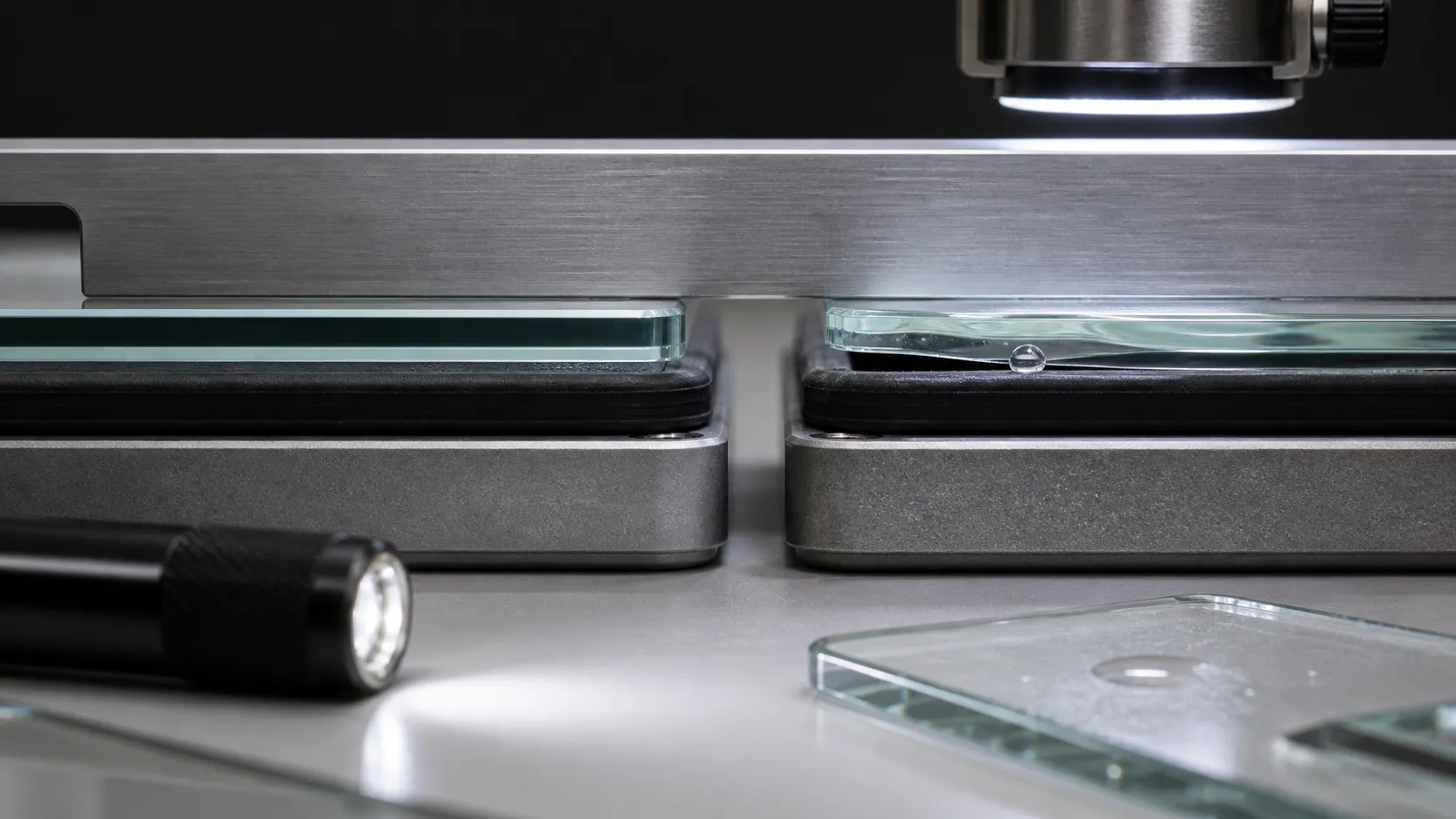
Will the glass thickness tolerance affect the gasket compression?
Glass thickness tolerances will affect the amount of seal ring compression, especially in pressure frames, slots or stepped seal structures. When the glass is thick, the gasket may be over-compressed, resulting in difficulty in assembly, excessive stress on the glass, or loss of rebound in the gasket; when the glass is thin, the gasket may be under-compressed, which may cause water leakage, looseness, or dust intrusion.
Therefore, outdoor lighting glass cannot only have a nominal thickness, but must also agree on an acceptable thickness tolerance, and match this tolerance with the gasket design, pressure frame height and housing processing tolerance. During mass production, thickness stability will directly affect the assembly consistency and protection test results of the complete luminaire.
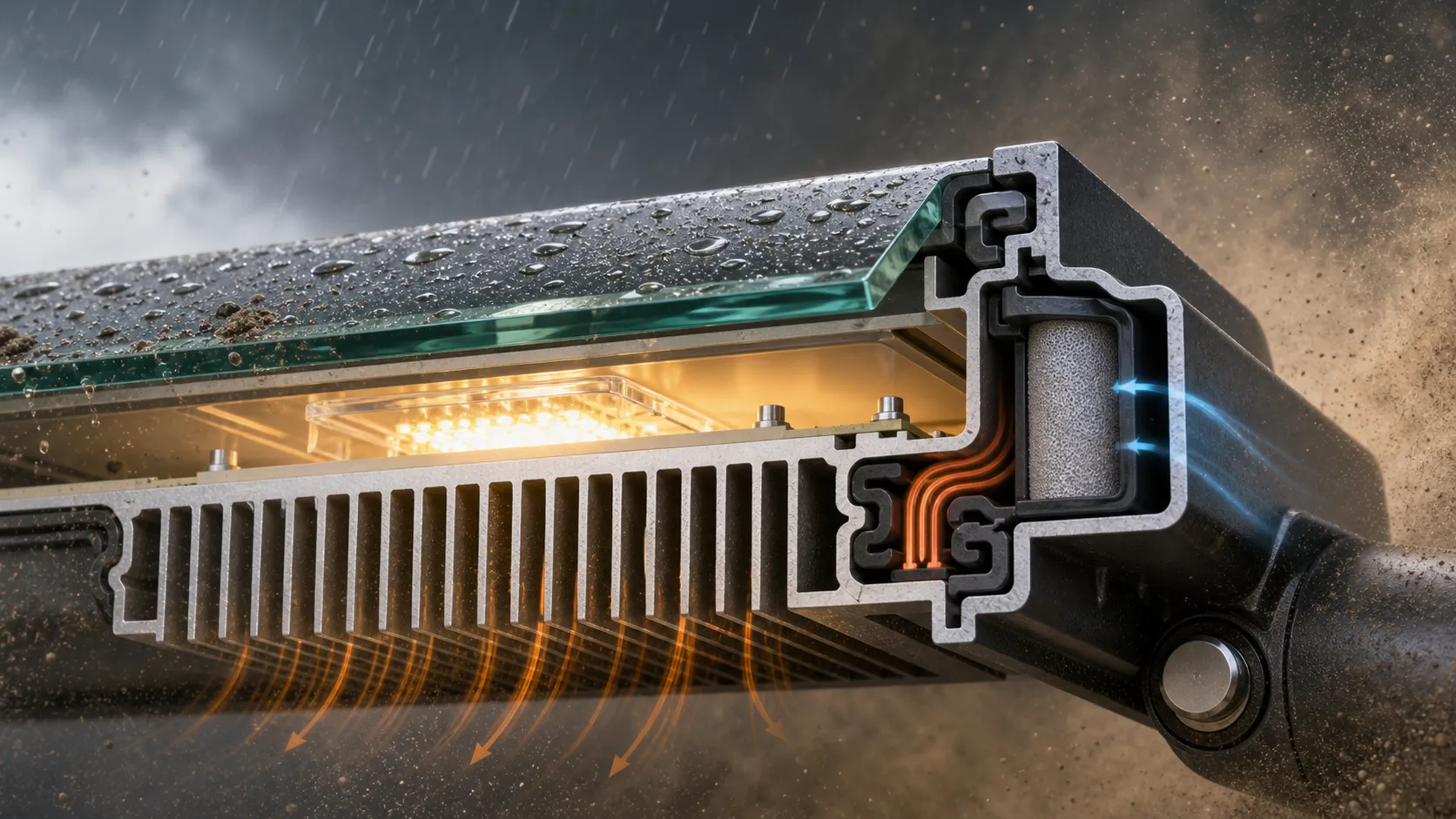
How do the glass components of outdoor luminaires cooperate with the complete luminaire structure to take into account dust prevention and heat dissipation?
To achieve effective dust ingress protection, the glass components of outdoor lighting fixtures usually need to form a reliably sealed enclosure with the housing and seals, preventing dust, insects and particles from entering the light-source cavity. However, if the luminaire is completely enclosed and lacks an adequate heat-dissipation path, internal heat may not escape effectively, shortening the life of the LEDs, power supply and sealing materials.
The solution is not to let the glass alone be responsible for heat dissipation, but to let the glass complete front protection and light transmission. The heat dissipation is mainly completed through the metal housing, back plate, heat dissipation ribs or structural heat conduction paths. If necessary, vent valves, partition sealing or potting solutions can be added to reduce dust and water ingress, as well as pressure changes caused by thermal cycling.
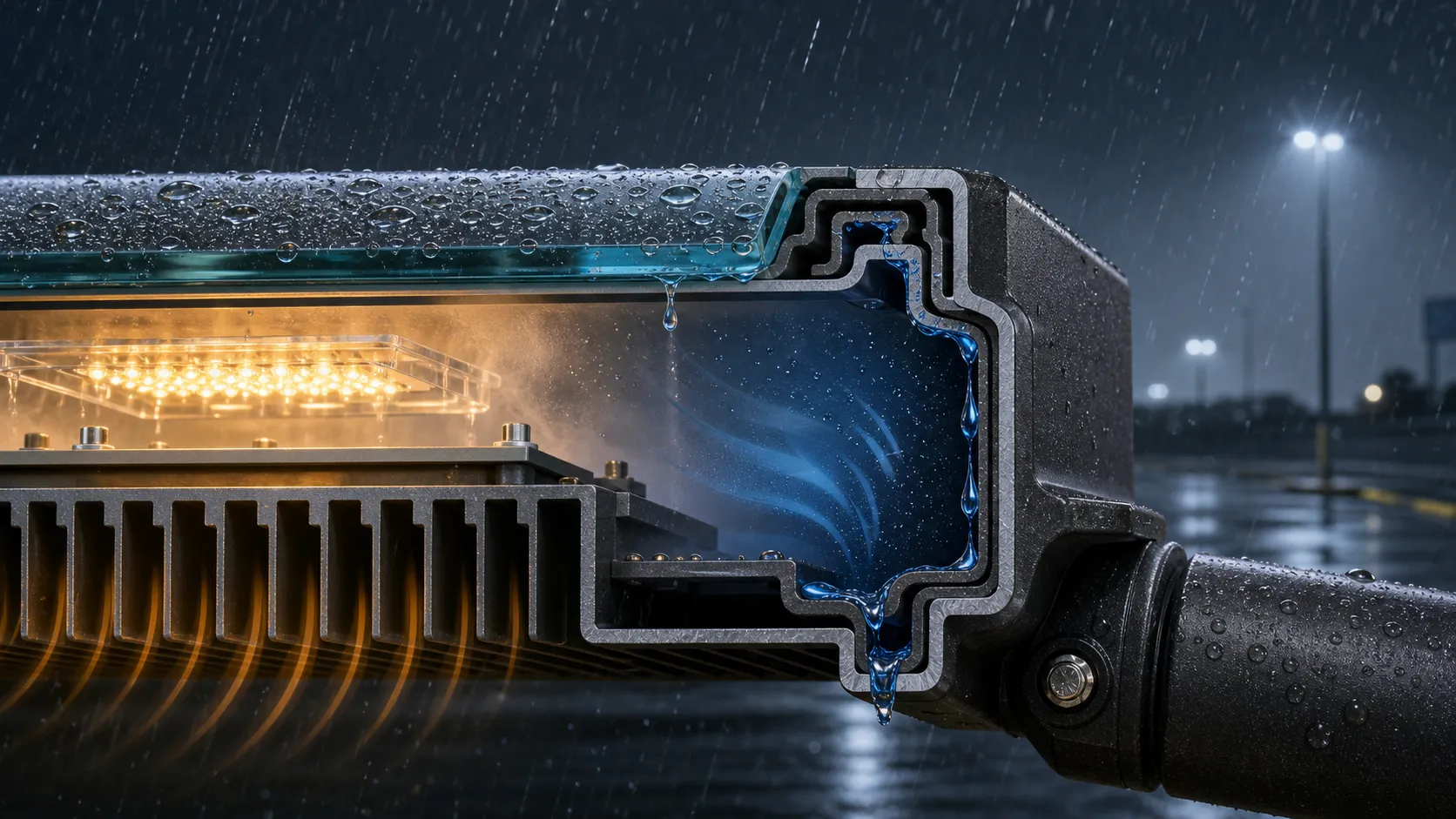
Why does the thermal cycling cause negative pressure in outdoor luminaires to absorb water?
When the outdoor luminaire is lit, the internal air heats up and expands. When it is turned off or encounters rain to cool down, the internal air shrinks, and a pressure difference occurs between the inside and outside of the luminaire. If there are tiny weak points in the sealing structure, external water vapor or water droplets may be sucked into the luminaire body under negative pressure. This is one of the reasons why many outdoor luminaires repeatedly fog up and get water ingress.
The fit of the protective cover glass, seal and housing affects this risk. A stable sealing surface, appropriate compression and weather-resistant sealing materials can reduce the probability of water absorption; for luminaires with large temperature differences or large sealing volumes, a pressure-equalizing vent structure can also be considered. Finally, it needs to pass the thermal cycling, rain and complete luminaire waterproof test verification.
Engineering decision: The pressure change can be estimated from absolute temperature. If a sealed cavity cools from 60 °C (333 K) to 20 °C (293 K) at constant volume, its internal absolute pressure would fall by about 12% before leakage or venting. Test with declared hot/cold temperatures, dwell and transition time, and inspect the glass seal, cable entry and vent as one pressure system.
How do glass openings, hole spacing, and hole edge treatments increase sealing risks?
Glass openings increase sealing and strength risks, especially when the holes are located close to the edges, the holes are large, the edges of the holes are rough, or the area around the holes needs to be compressed by screws. The edge of the hole is prone to stress concentration, and if the sealing gasket is not in uniform contact, it may also become a water leakage path.
If holes must be made in the glass of an outdoor luminaire, the hole diameter, hole spacing, edge distance, chamfering and hole-edge polishing requirements should be clearly defined, and screws should not bear directly against the glass. The waterproofing design should use gaskets, adhesive or metal clamping parts. After the holes are introduced, the complete luminaire must still be tested for water ingress protection and assembly reliability.
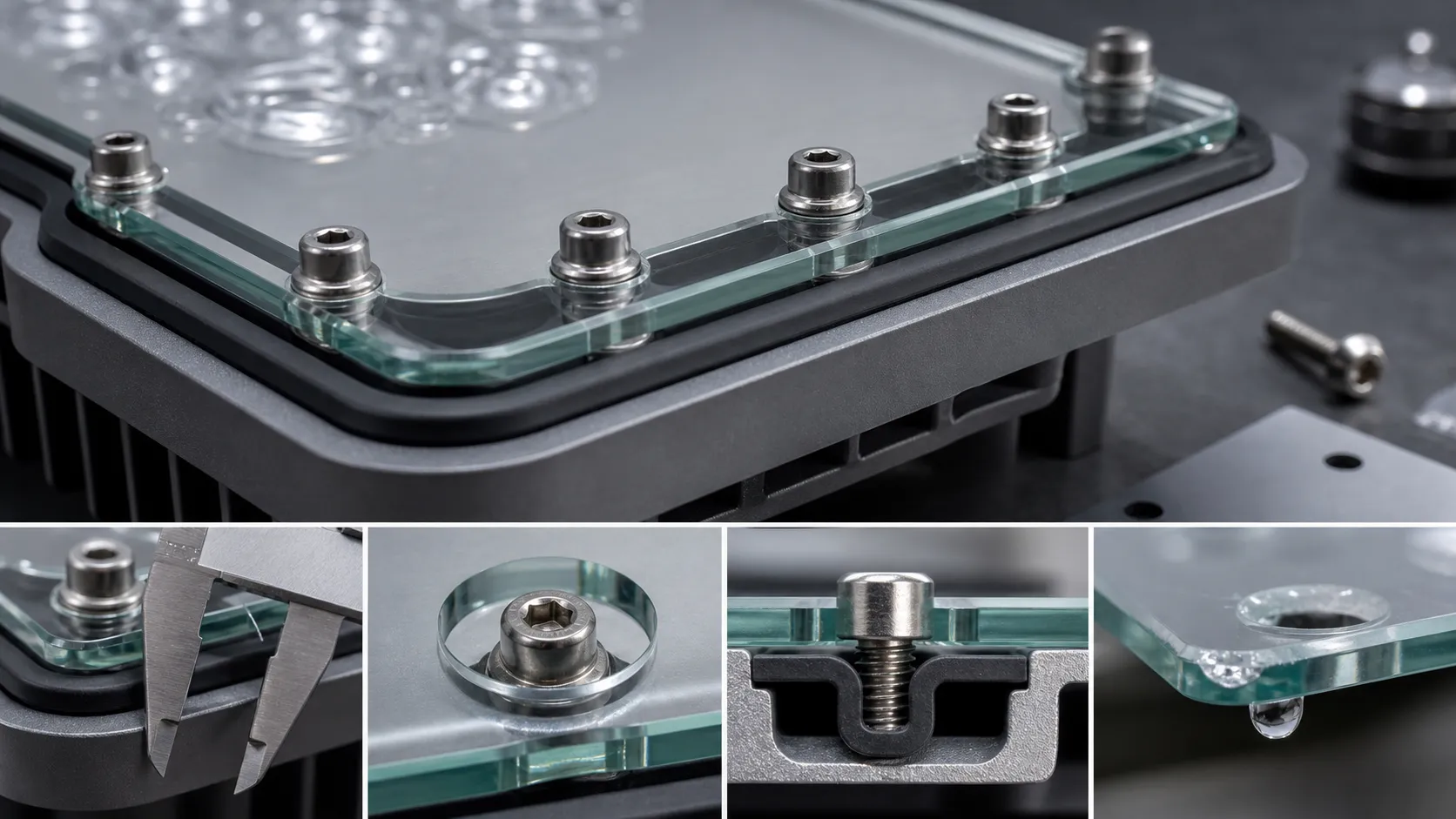
How do glass dimensions, tolerances and sealing surfaces help improve IP protection stability for the complete luminaire?
Glass size, tolerance and sealing surface quality can help the complete luminaire improve IP protection stability, because the length, width, diameter, thickness, flatness and edge quality of the glass will affect the compression of the gasket and the force of the pressure frame. If the size of the glass fluctuates too much, some luminaires in the same batch may be pressed too tightly and some cannot be pressed, resulting in unstable waterproof test results.
An IP rating classifies the dust- and water-ingress protection provided by an electrical enclosure under IEC 60529; it is not a separate certification for the glass component. Controlled glass dimensions and sealing-surface quality can help the luminaire reach its target rating, but the complete assembly must still be tested with its housing, cable entries, fasteners, sealing adhesive and production assembly process.
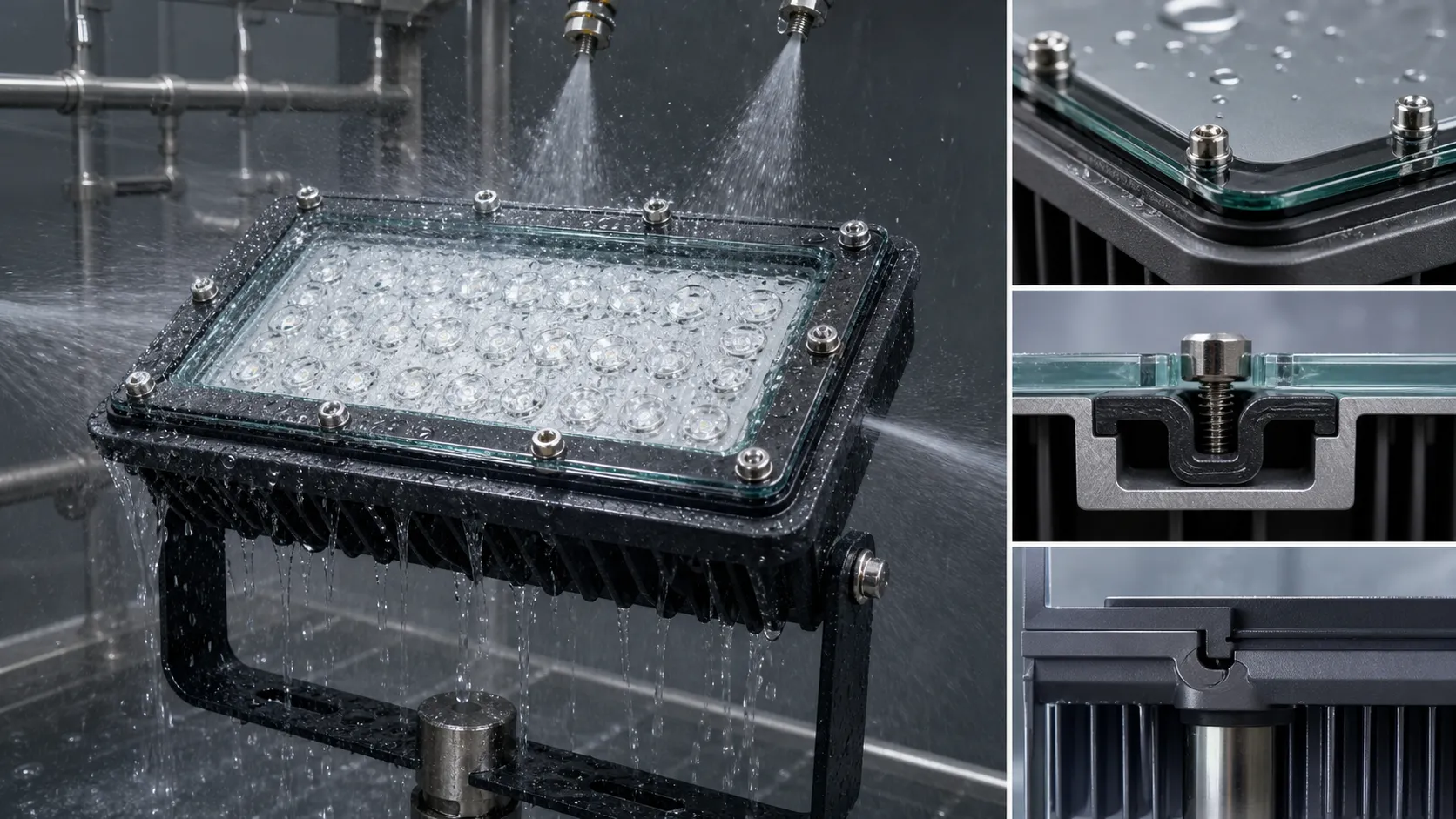
Do outdoor glass components need to be tested for waterproof assembly in conjunction with the luminaire body?
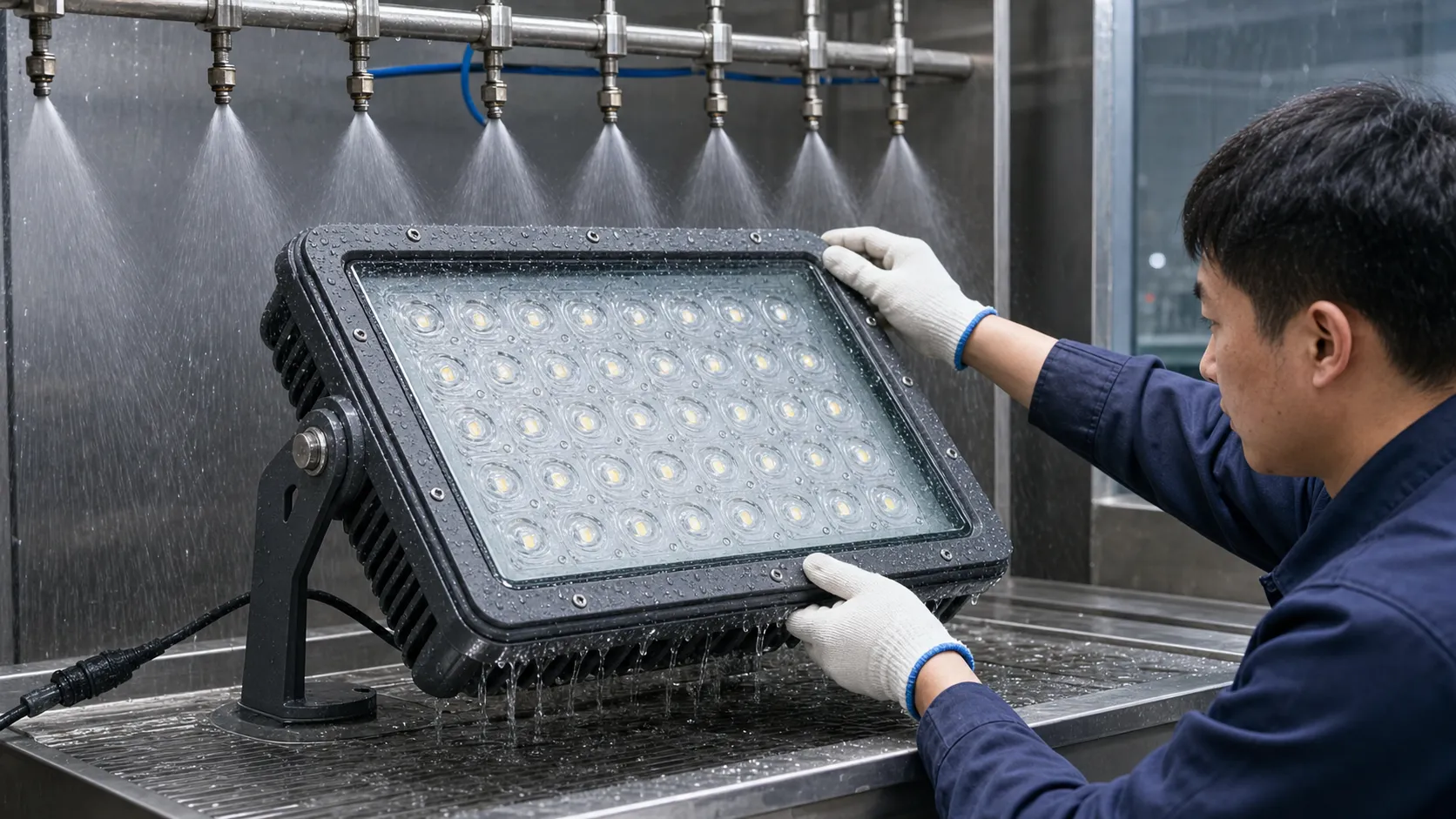
A single glass component cannot reproduce the water-ingress performance of the complete luminaire, but before leaving the factory, the size, flatness, edge quality, thickness tolerance and sealing surface can be inspected according to customer needs, and if necessary, sample assembly testing can be done with the customer's luminaire body. In this way, problems such as mismatch between the glass and the housing, abnormal compression of the gasket, or uneven stress on the pressure frame can be discovered in advance.
For products with demanding water ingress protection requirements, such as underground, underwater and wall-mounted luminaires or wall washers, complete-luminaire water ingress, immersion, thermal-cycling or operational aging tests are recommended at the sample stage. Glass suppliers can support critical dimensional and surface-quality controls, but the final IP rating must be based on complete-luminaire testing.
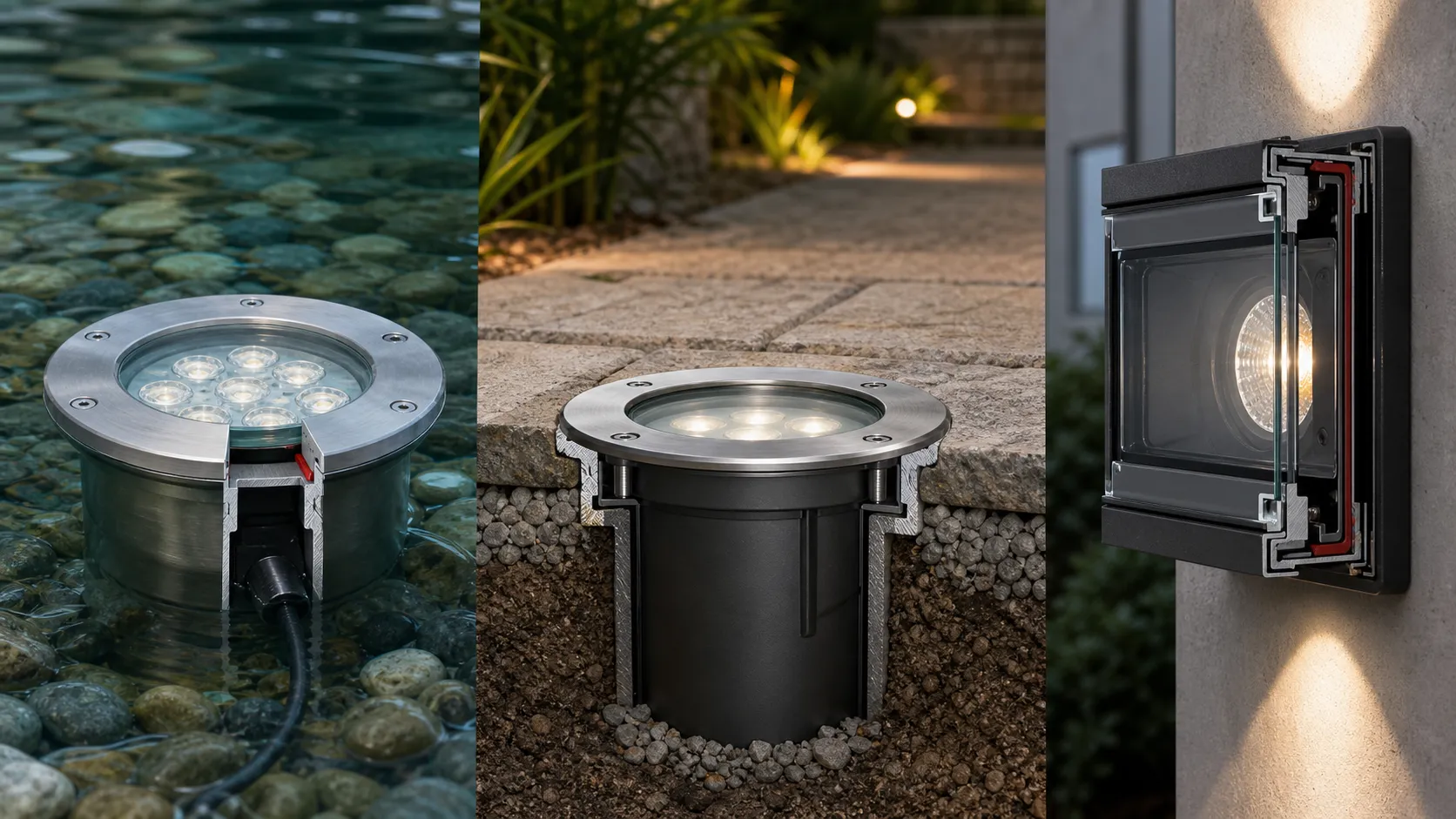
What are the differences in glass sealing points between underwater lights, underground lights and wall lights?
Glass sealing in underwater luminaires must account for long-term immersion, hydrostatic pressure, gasket water resistance and uniform compression. The glass edge and sealing surface must remain stable and reliable. In addition to waterproofing, underground lights must withstand sediment, standing water, foot traffic and vehicle loads, so glass load-bearing capacity, edge support and sealing design are all critical.
Wall-luminaire sealing focuses on rainwater flow paths, back-panel leakage, the wall interface, waterproofing of cable entries and the fit of the protective cover glass. All three luminaire types require coordinated glass and housing design, but their risk sources differ, so the same glass dimensions and sealing concept cannot simply be reused. Performance must ultimately be verified through complete-luminaire testing under the relevant application conditions.
Contact Us
Your feedback fuels our growth, and your questions drive our solutions.
We value your feedback, inquiries, and suggestions. Please feel free to get in touch with us
General inquiries
Please contact us via sales@bo-glass.com, and we will reply to you as soon as possible.
Interested to work with us
Drop your resume at info@bo-glass.com
and we will get back to you shortly.
Request a Custom Glass Quote
Tell us about your project or upload a drawing.
Your drawings remain confidential.
We uses the contact information you provide to us to contact you about our relevent content, products, and services.