
Outdoor Decorative Light Glass Shades Guide
Decorative outdoor glass must be judged both unlit and illuminated. Shape, wall thickness, texture, bubbles, color, diffusion, opening geometry, tooling marks, and batch variation can all change the finished luminaire. This guide distinguishes body-colored glass from spray-coated, printed, textured, and frosted options, and explains how manufacturing route and outdoor exposure affect appearance, cleaning, replacement matching, and long-term color stability.
Outdoor Decorative Lights and Custom Glass Shades
- Wall-thickness map
- Report the opening, shoulder, side wall, transition and crown; include minimum, maximum and mean rather than one convenient measurement.
- Residual stress
- Use a defined polariscopic method and retain the image, sample ID, annealing lot and acceptance decision.
- Color tolerance
- Use L*, a*, b* and ΔE00 against a retained master under fixed illuminant/observer settings. Set the limit during sample approval.
- Lit appearance
- Pair unlit and lit photographs with transmittance, haze, CCT and Duv so color and diffusion are not judged from photographs alone.
What types of glass shades are suitable for outdoor decorative lights?
Outdoor decorative options should distinguish the base glass from its manufacturing treatment: untreated clear soda-lime or borosilicate glass; opal body glass; clear glass with an internal frosted or acid-etched finish; textured or embossed glass; and body-colored amber, brown or smoke glass. This classification makes material, surface and batch controls explicit.
When selecting, don't just look at the appearance, but also consider outdoor weather resistance, cleaning and maintenance, assembly methods and batch consistency. For B-end projects, the glass shade must not only comply with the design language, but also be able to stably adapt to the luminaire body, seals, and packaging and transportation requirements.

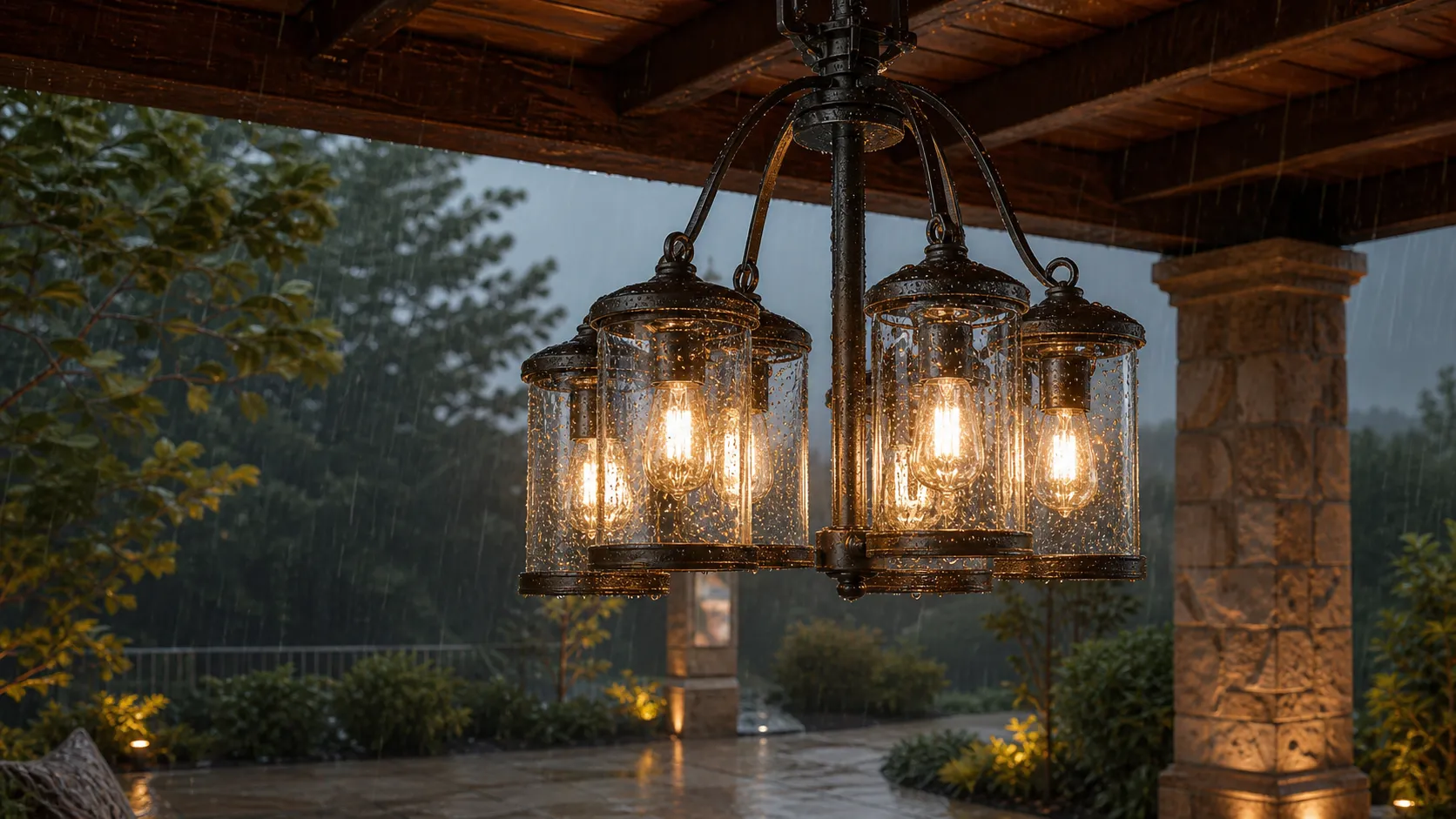
How does an outdoor chandelier’s glass shade withstand wind movement and temperature changes?
An outdoor chandelier’s glass shade is exposed to wind-induced movement, chain oscillation, thermal cycling and rain, so both the shade and its mounting structure must be reliable. Avoid hard contact between the shade opening, suspension points, retaining rings and metal parts; use soft pads, gaskets or locating features to cushion vibration.
Temperature changes will cause glass, metal housings and seals to expand and contract to varying degrees. During design, a reasonable assembly gap should be reserved, the edge quality and annealing stress of the glass should be controlled, and the glass should be prevented from being under local stress for a long time. For large or special-shaped chandelier glass shades, it is best to conduct assembly and swing tests at the sample stage.
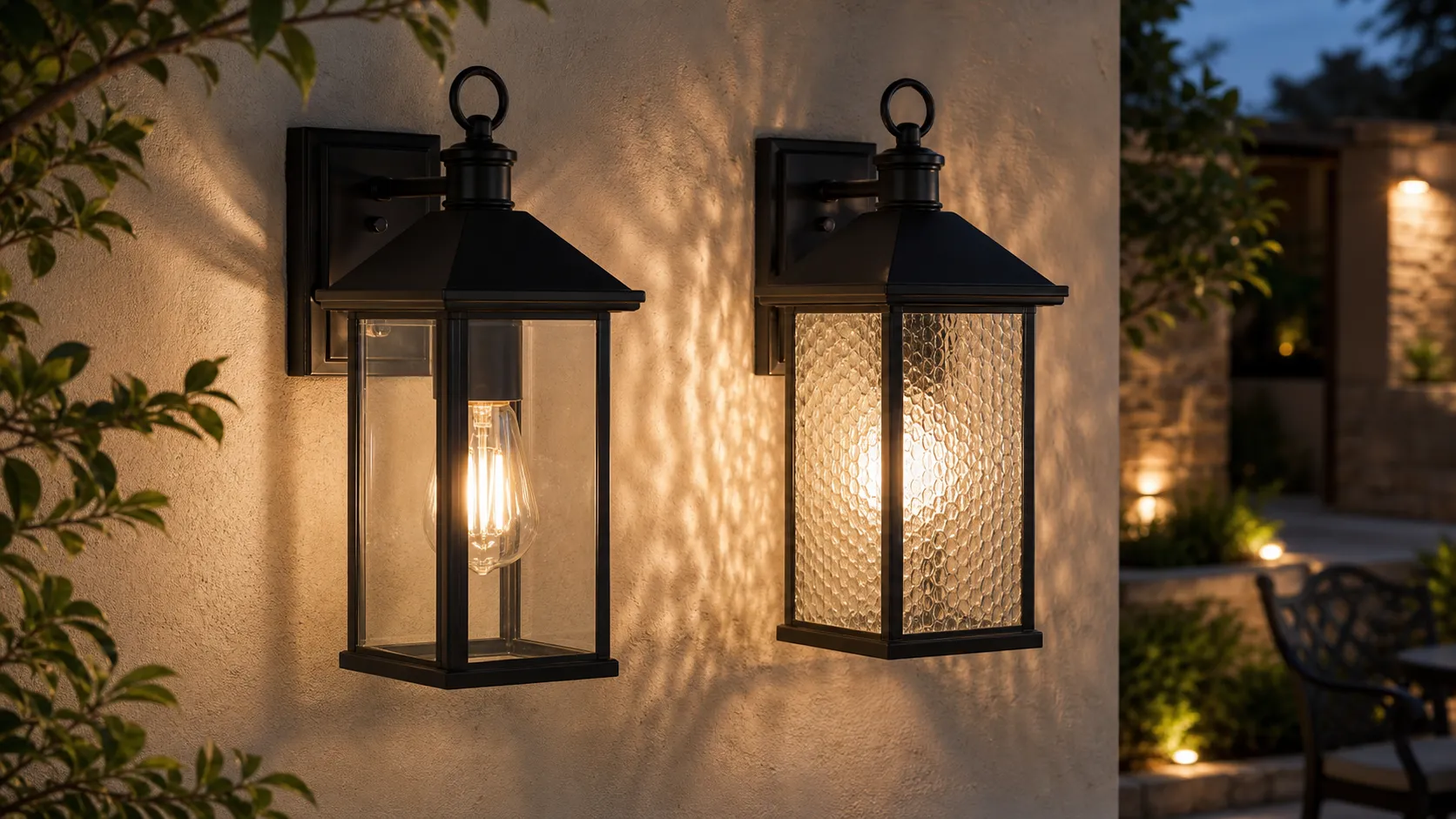
Is clear glass or textured glass suitable for outdoor lantern lights?
If you are pursuing a traditional, transparent and bulb-visible effect for outdoor lanterns, you can use transparent glass, which is especially suitable for retro filament light sources or designs with internal light-shielding structures. But clear glass exposes LED point sources, wiring, and internal dust, making it more likely to produce glare at night.
Textured glass is more suitable for lantern lights that need to soften the light, enhance the decorative feel, or hide the internal structure. Water ripples, vertical lines, bubbles and hammered glass can give lanterns a textured feel during the day and richer light and shadow at night. The actual choice should be determined based on the style of the luminaire, the brightness of the light source, the installation height and the frequency of maintenance.
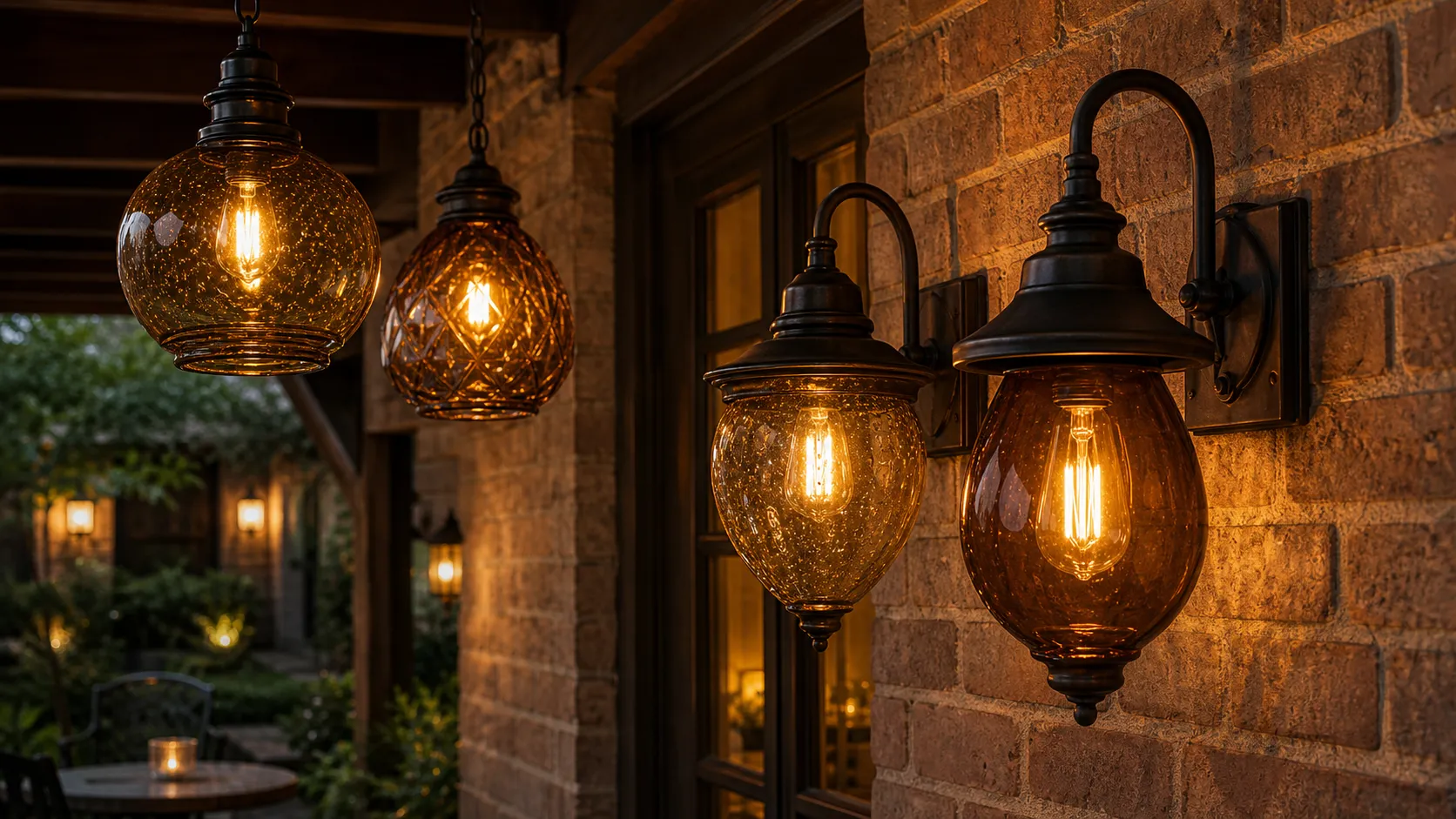
Why are amber, brown or bubble glass commonly used in retro outdoor luminaires?
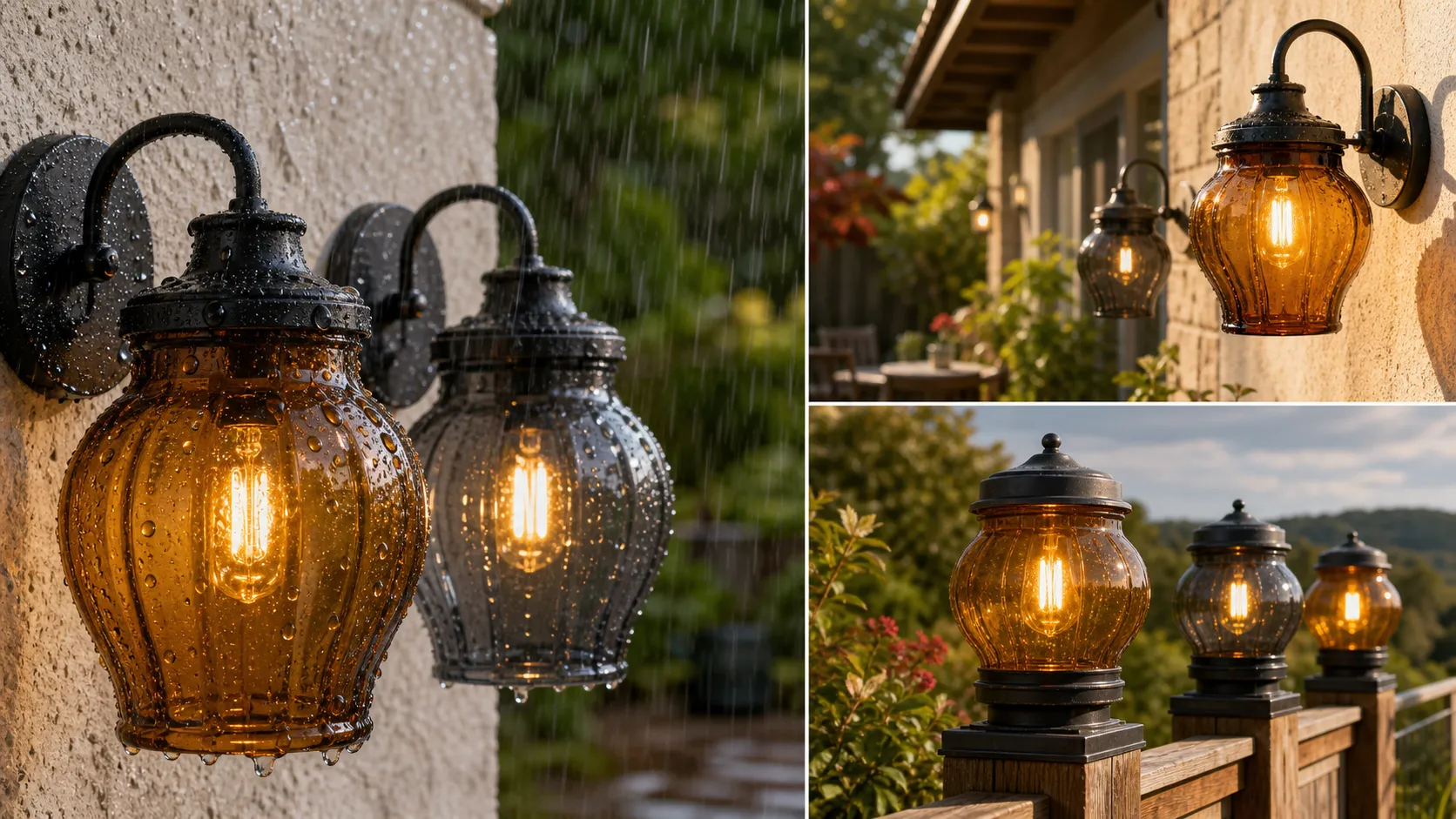
Retro outdoor luminaires often use amber, brown or bubble glass because these glasses can create a warmer, softer and handmade visual effect. Amber will significantly enhance the warm light atmosphere, brown is more low-key and calm, and bubble glass can make the glass shade look closer to traditional blown glass.
It should be noted that the color and bubble effects will affect the light transmittance and color temperature perception. When used in outdoor projects, both daytime appearance and nighttime lighting effects are important to check, as well as color stability, batch consistency, and ease of surface cleaning.
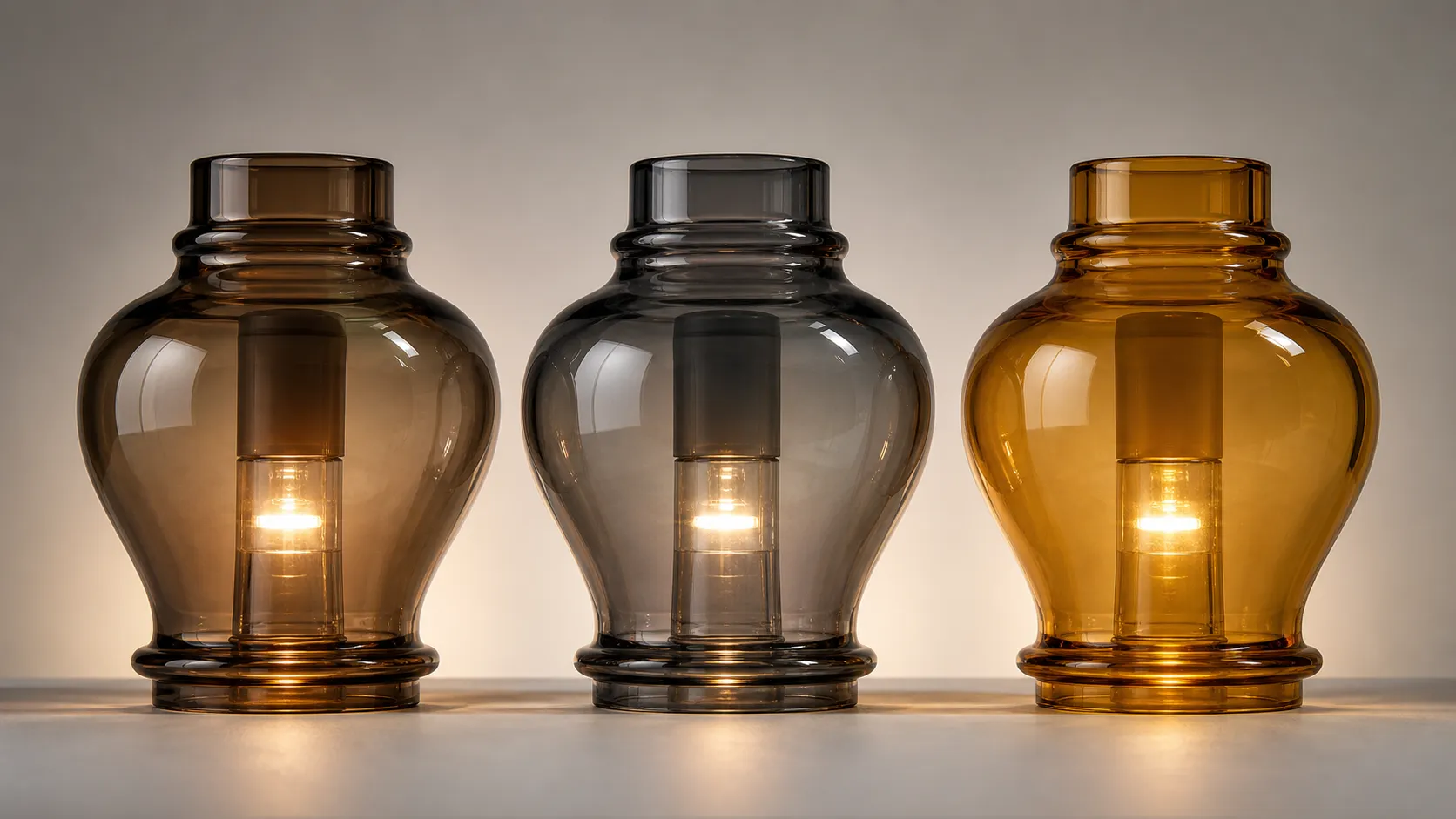
What is the difference between tinted glass, smoked glass and amber glass in outdoor lighting fixtures?
Brown glass is more retro and low-key, which can reduce the straightforwardness of transparent glass and make luminaires more layered during the day; smoked glass is more modern and suitable for black, dark gray, stainless steel or minimalist style shells; amber glass is warmer and more suitable for antique copper, brass and country retro style luminaires.
From the perspective of light efficiency, these colored glasses will change the perception of light and may reduce some light transmittance. Brown and smoke gray are generally more restrained, while amber has a more obvious impact on color temperature. In engineering projects, samples should be used to confirm color depth, lighting effects and batch differences to avoid overall color inconsistency after batch installation.
Is the color of the outdoor decorative glass shade body colored or surface sprayed?
The color of outdoor decorative glass shades can come from body coloring, surface spraying, coating or baking paint. Body coloring is usually more stable in color and less likely to be exposed due to scratches or outdoor aging. It is suitable for long-term outdoor applications and projects that require higher weather resistance.
Surface spraying or coating color selection is more flexible and suitable for small batch customization and special appearance effects, but it is necessary to focus on confirming adhesion, UV resistance, detergent resistance and wear resistance. For outdoor lighting fixtures, if surface color layers are used, the location, maintenance methods and life expectancy of the inner and outer surfaces should be as clear as possible to avoid complaints of fading, falling off or color difference in the future.

How can long-term color fading be reduced in outdoor decorative glass shades?
To improve long-term color stability for outdoor colored glass shades, priority should be given to body tinted glass or a proven weather-resistant coating process. The color of body tinting comes from the glass material itself and is generally less susceptible to fading due to scrubbing, UV rays and rain than ordinary surface spraying.
If the project must use spray, plated or electroplated colors, weathering testing, adhesion, cleaning agent resistance and batch color variation ranges should be confirmed at the sample stage. Long-term non-fading cannot only be judged by the supplier's verbal promise, but should be judged in combination with the use environment, process instructions, sample testing and the customer's target lifespan.
How do bubble glass and water corrugated glass affect the light and shadow effects of outdoor luminaires?
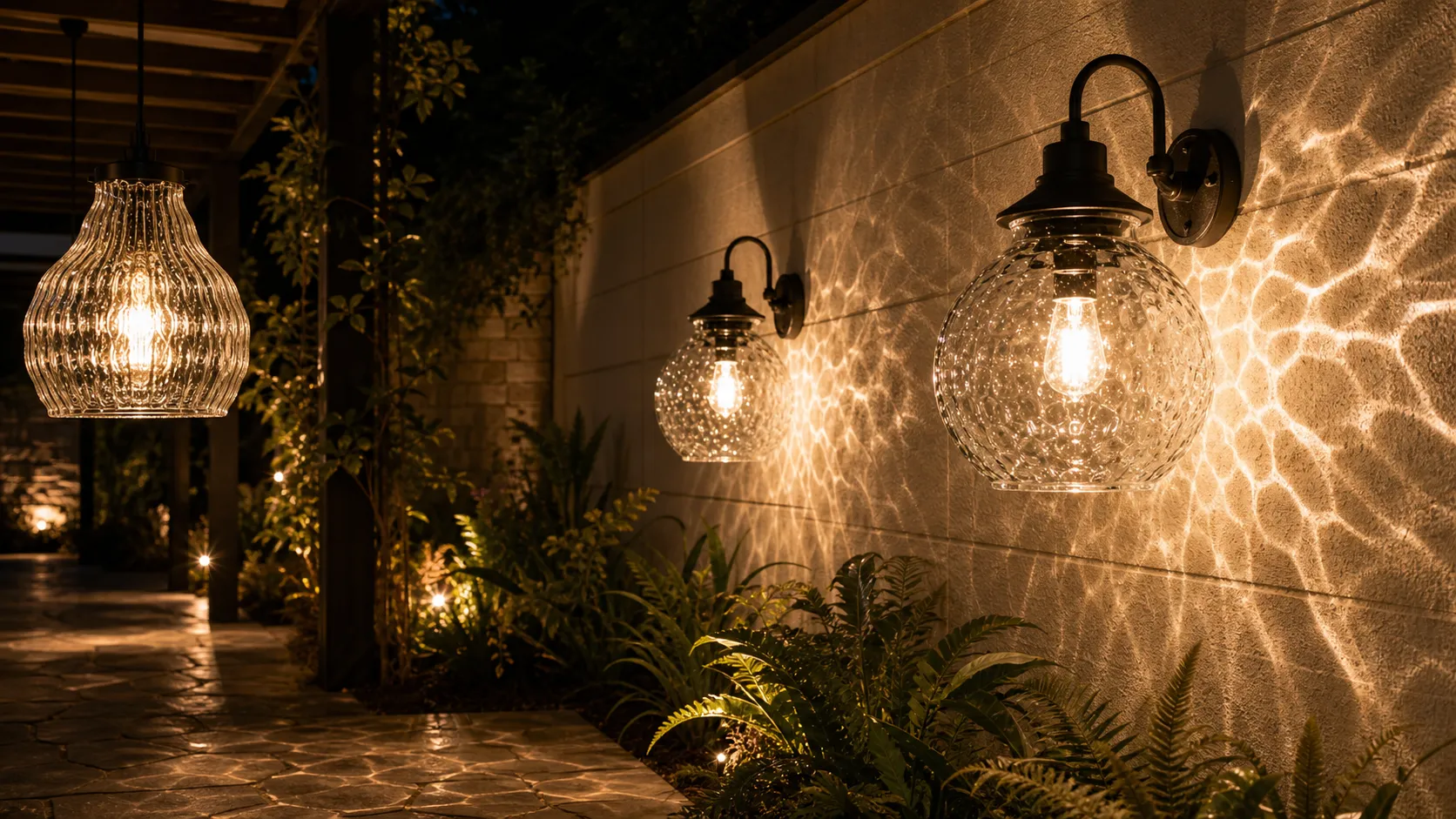
Bubble glass will create a fine, slightly flickering visual layer in the light, making it suitable for outdoor luminaires with a strong retro, handmade feel and decorative atmosphere. Water-corrugated glass stretches and refracts light, creating a softer flow around walls, floors or glass shades.
The focus of this type of textured glass is not to increase illumination, but to enhance decorative light and shadow. If the texture is too deep, it may cause messy spots, uneven light and dark, or difficulty in cleaning. If the texture is too shallow, it may not be obvious enough. Batch projects should confirm the sample effect under real light sources, real installation heights and night environments.
Are blown glass shades suitable for long-term outdoor use?
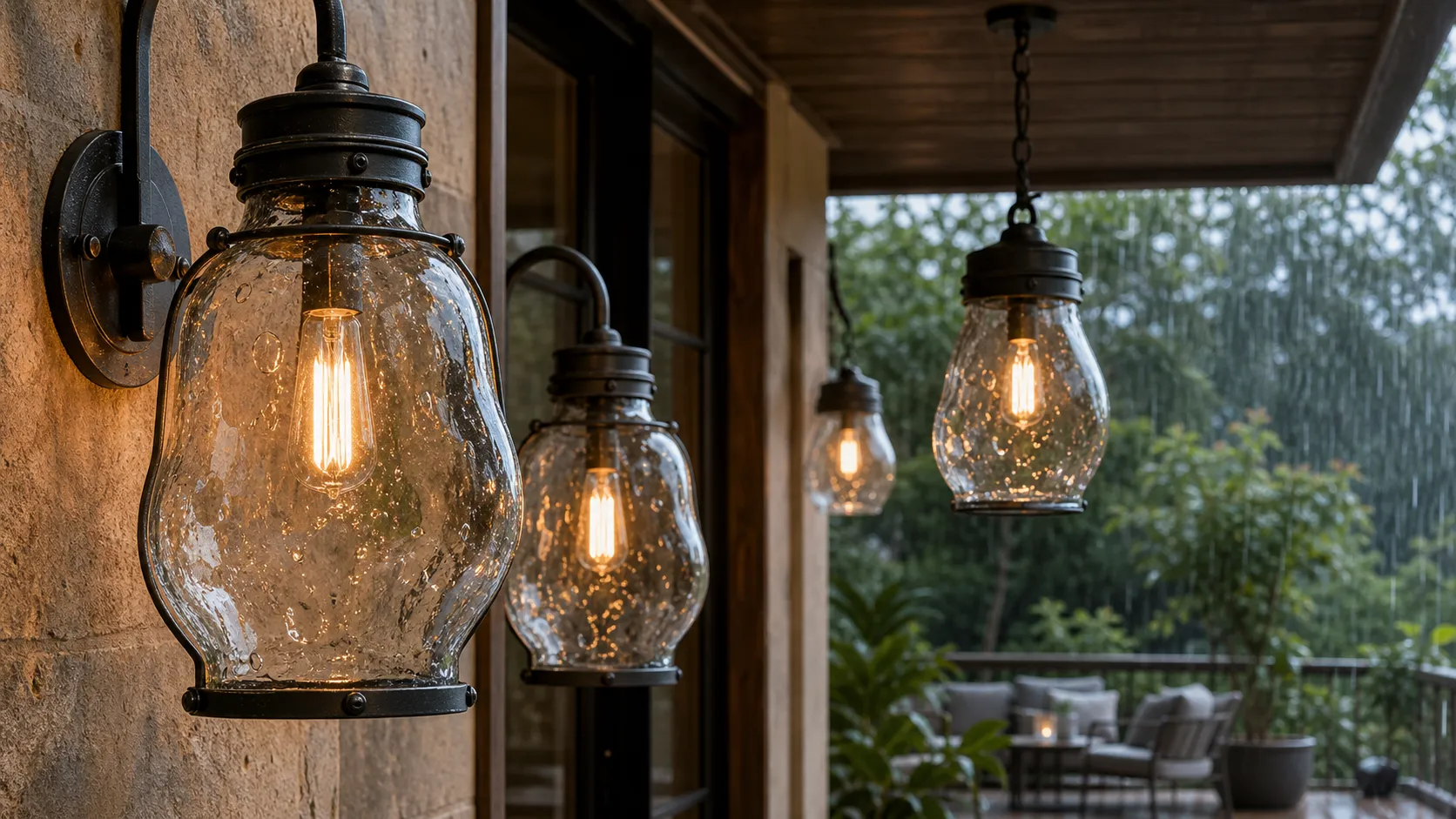
Blown glass shades can be used in long-term outdoor lighting fixtures, but control of material, thickness, opening size, annealing stress and assembly structure is required. Its advantages are flexible shape and strong handmade texture, suitable for decorating chandeliers, lanterns, garden lights and high-end landscape lights.
However, the dimensional consistency of blown glass is usually not as good as that of molded glass. Tolerances must be reserved during batch assembly, and assembly risks must be controlled through mouth grinding, edge treatment and inspection standards. If the installation environment is windy, has a large temperature difference, or is difficult to maintain, the thickness of the glass, fixing method, and packaging and transportation plan need to be specially evaluated.
Engineering decision: Approve a wall-thickness map rather than one thickness value. Measure at the opening, shoulder, straight wall, transition and crown and report minimum, maximum and mean by sample. Link that map to opening diameter, roundness, polariscopic stress image and the exact annealing lot.
How should batch appearance consistency be controlled for outdoor decorative glass shades?
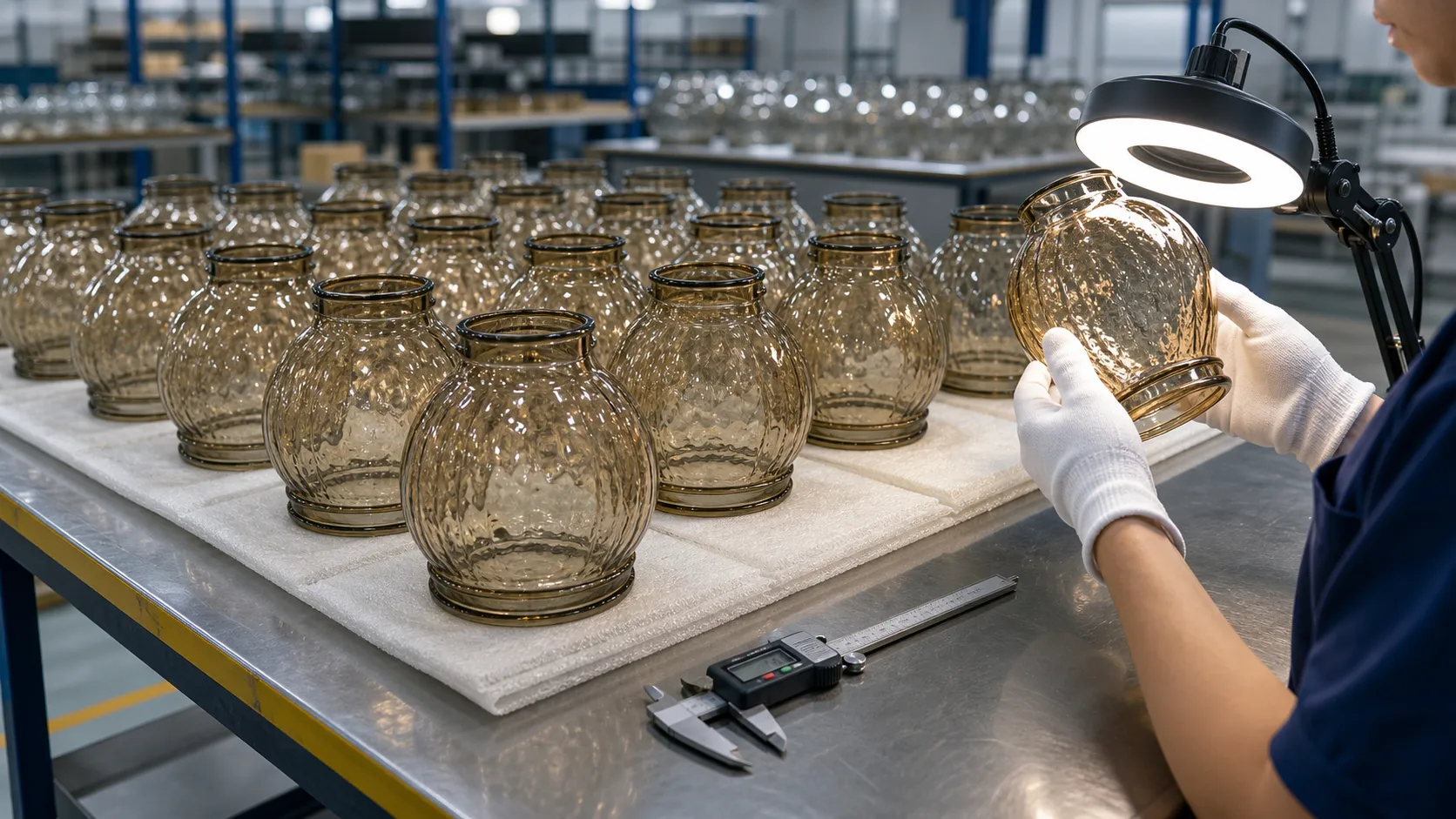
The batch appearance consistency of outdoor decorative glass shades mainly depends on the mold, material batch, color control, texture depth, wall thickness and post-processing process. If the transparency, number of bubbles, color depth and opening size fluctuate too much, it will be very obvious when comparing installations in rows or the same project.
Controlling consistency requires establishing confirmation samples during the sampling stage, including color samples, texture samples, size samples and lighting effect samples. During mass production, acceptable standards for color difference, bubbles, ripples, thickness differences and appearance defects should be clarified, and random inspections should be carried out before shipment. Decorative glass allows a certain sense of handcrafting, but the project must have a controllable scope.
How do high-end hotel and villa projects use glass shades to enhance the atmosphere?
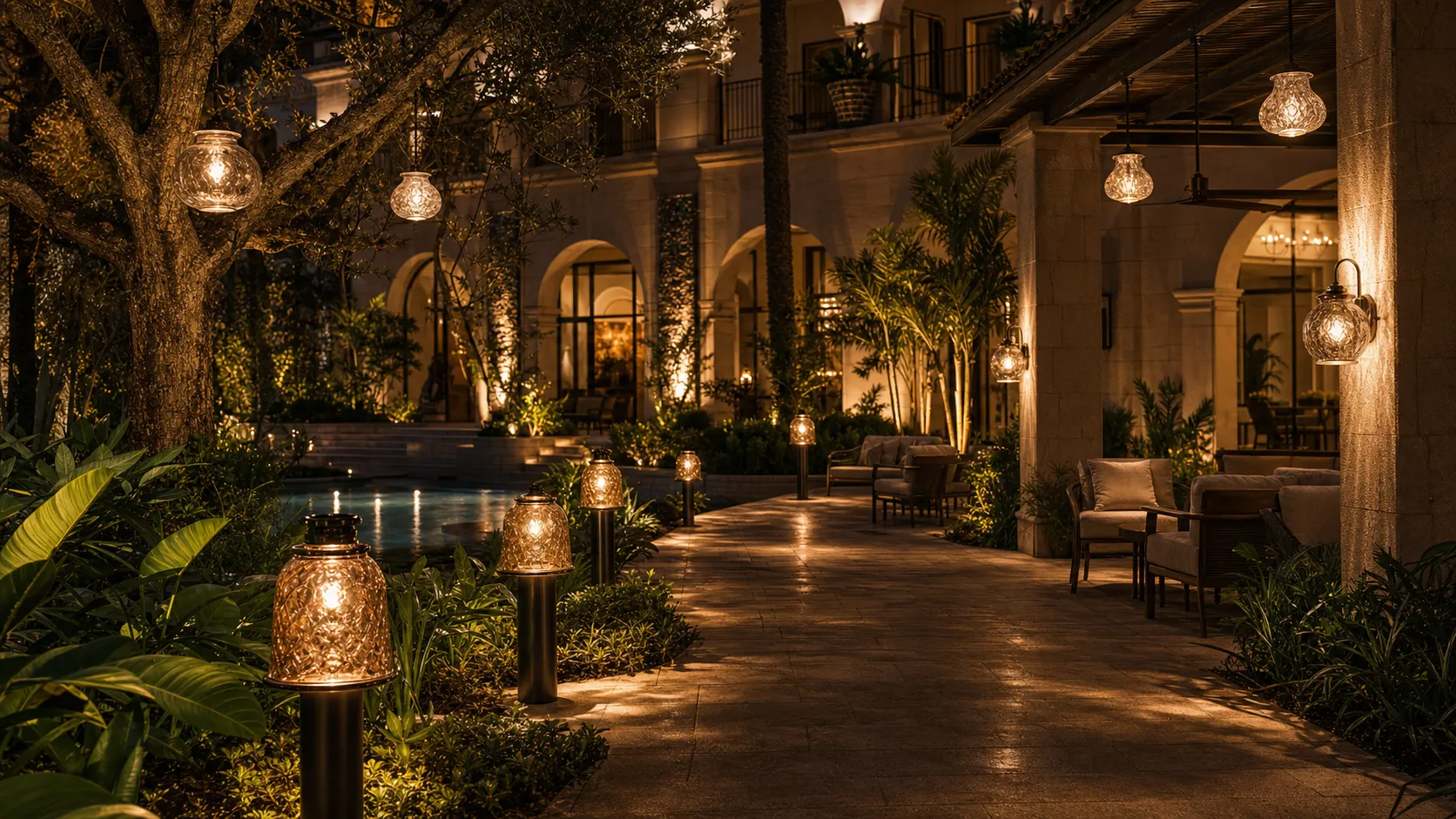
High-end hotel and villa projects can enhance the atmosphere through the material, color, texture and light diffusion of glass shades. Opal glass can create a soft and quiet courtyard atmosphere, amber and brown glass can enhance a warm retro feel, and water ripples, bubbles and embossed glass can make luminaires more detailed during the day and night.
For projects like this, avoid looking at the beauty of a single glass shade, and look at the continuous effect of the entire group of fixtures in paths, walls, courtyards and entrance spaces. Glass tint, light transmittance and texture should be consistent at the project level and coordinated with brass, stainless steel, aluminum alloy or ferrous metal housings.
How can rainwater accumulation inside an outdoor decorative luminaire’s glass shade be prevented?
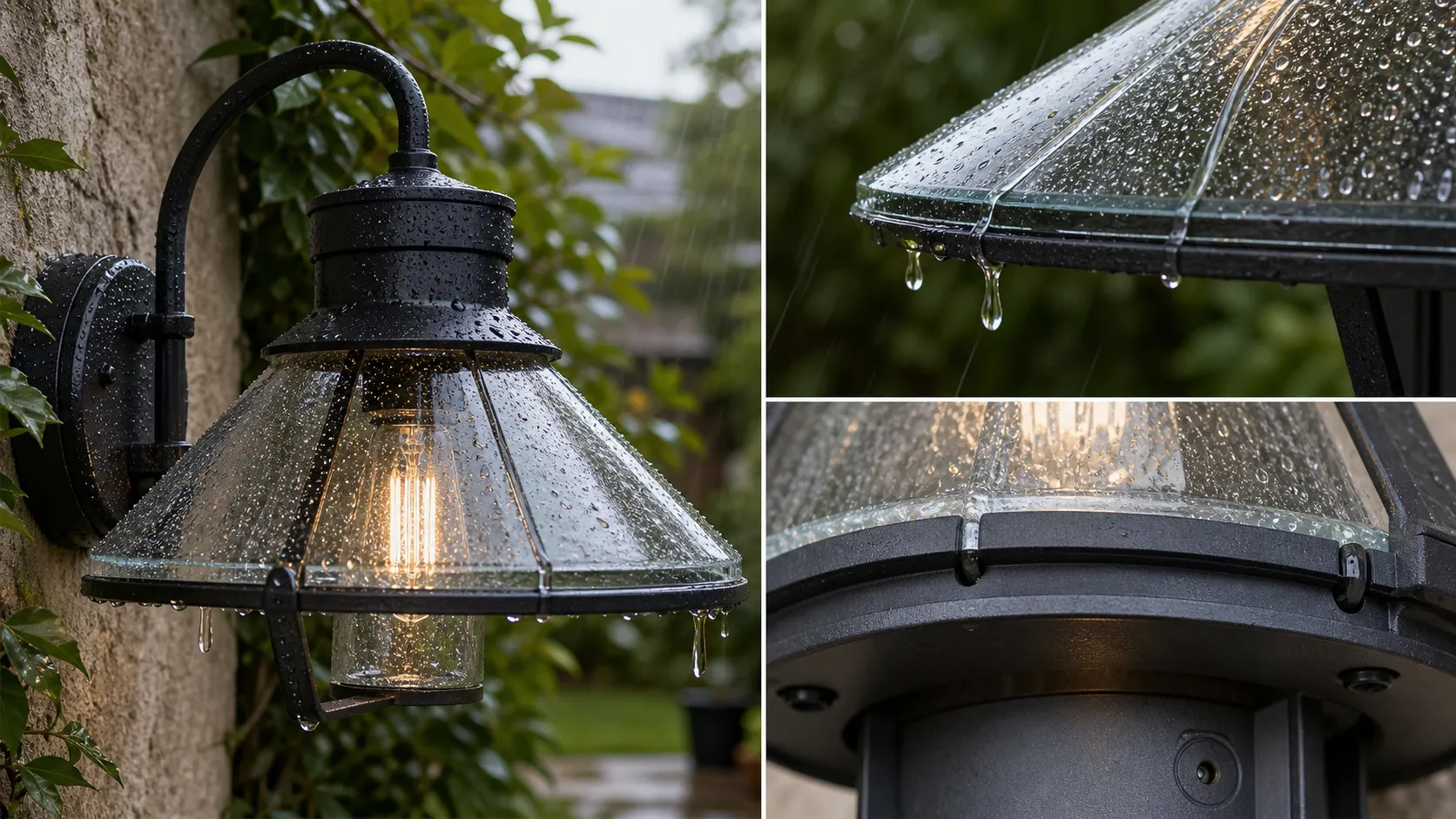
Water accumulation inside a decorative luminaire’s glass shade usually results from poor sealing, an unsuitable opening orientation, a missing drainage path or an incorrect installation angle. Because decorative shades often have complex three-dimensional forms, pockets at the bottom, opening or joints can collect water, insects and dust.
Provide a clear rainwater drainage path and an appropriate seal or drainage gap between the shade opening and metal housing. For inverted, suspended or lantern-style structures, check the lowest point of the glass shade, fastener holes and cable entries so that long-term outdoor use does not create hidden water traps.
Contact Us
Your feedback fuels our growth, and your questions drive our solutions.
We value your feedback, inquiries, and suggestions. Please feel free to get in touch with us
General inquiries
Please contact us via sales@bo-glass.com, and we will reply to you as soon as possible.
Interested to work with us
Drop your resume at info@bo-glass.com
and we will get back to you shortly.
Request a Custom Glass Quote
Tell us about your project or upload a drawing.
Your drawings remain confidential.
We uses the contact information you provide to us to contact you about our relevent content, products, and services.