
In-Ground, Well, Step and Deck Light Glass Guide
Ground-recessed and low-level luminaires share the same difficult interfaces: static load or foot traffic, edge safety, abrasion, standing water, drainage, sealing, and glare at short viewing distances. Combining in-ground, well, step, deck, and small recessed lights in one guide avoids repeating the same structural principles while still identifying where vehicle loads, pedestrian contact, optical direction, and maintenance requirements differ.
Protective Cover Glass for In-Ground Lights and Well Lights
- Impact target
- If IK10 is specified, the mounted luminaire is evaluated at 20 J. Glass thickness alone cannot establish the rating.
- Load case
- State total force, loaded footprint, edge support, load duration and safety factor. “Walk-over” and “drive-over” are not test conditions.
- Ingress target
- IP67 and IP68 apply to the complete luminaire. For IP68, the immersion depth and duration must be declared for the product.
- Heat-treated glass
- ASTM C1048 requires cutting, holes, notches, grinding, sandblasting and etching to be completed before strengthening or tempering.
Why should we focus on load-bearing and impact resistance for underground light protective cover glass?
Underground lights are installed on the ground or near the ground. The protective cover glass must not only transmit light, but also withstand trampling, tool collisions, falling objects, and even vehicle crushing. It does not mainly withstand environmental aging like ordinary glass shades, but directly faces mechanical pressure and surface wear.
If the strength of the glass is insufficient, the edge support is uneven, or the assembly structure is unreasonable, edge chipping, cracks, and water intrusion may occur. In serious cases, it may cause safety risks. Therefore, the protective cover glass of the underground luminaire should also consider the glass thickness, tempering quality, support area, pressure frame structure and actual use load.
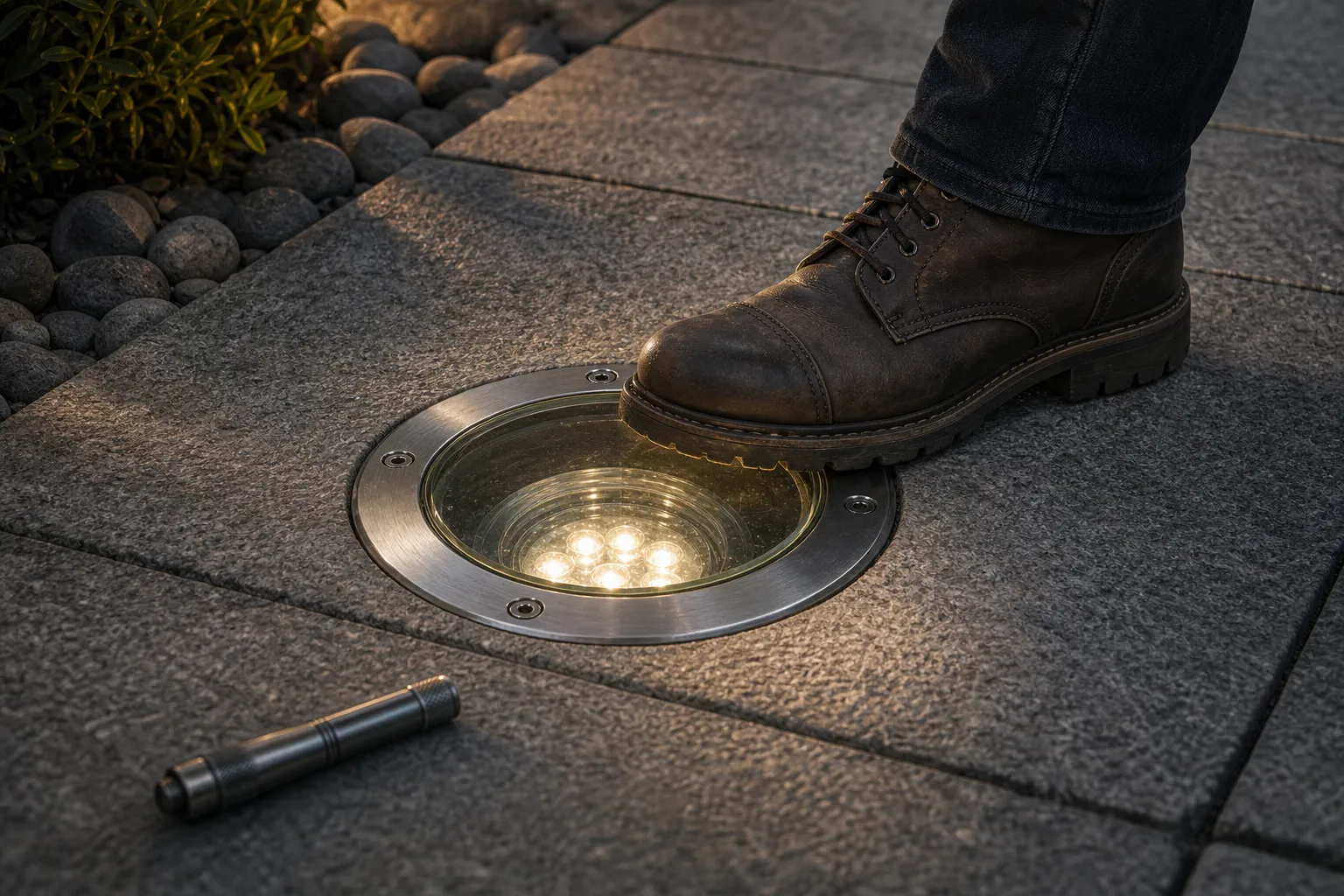
How should protective cover glass thickness be selected for in-ground luminaires?
The thickness of the underground luminaire glass cannot be simply determined by the size of the luminaire, but must be combined with the installation location, force type, glass span, support method and whether there are vehicles passing through. Relatively thin tempered glass can be used in general pedestrian areas, but driveways, plazas and public areas require higher thickness and more reliable structural support.
Thicker glass generally provides greater strength, but also increases weight, cost and light loss, and can impact heat dissipation and assembly space. A safer approach is to conduct a stress assessment based on the complete luminaire structure, and then conduct trampling, impact and waterproof tests on samples, rather than just selecting the thickness based on experience.
Engineering decision: Thickness must be verified against a declared load case: force, contact footprint, glass clear span, edge support, impact energy and safety factor. If the project calls for IK10, the relevant enclosure impact energy is 20 J; that result belongs to the mounted luminaire, not to an unsupported glass coupon.
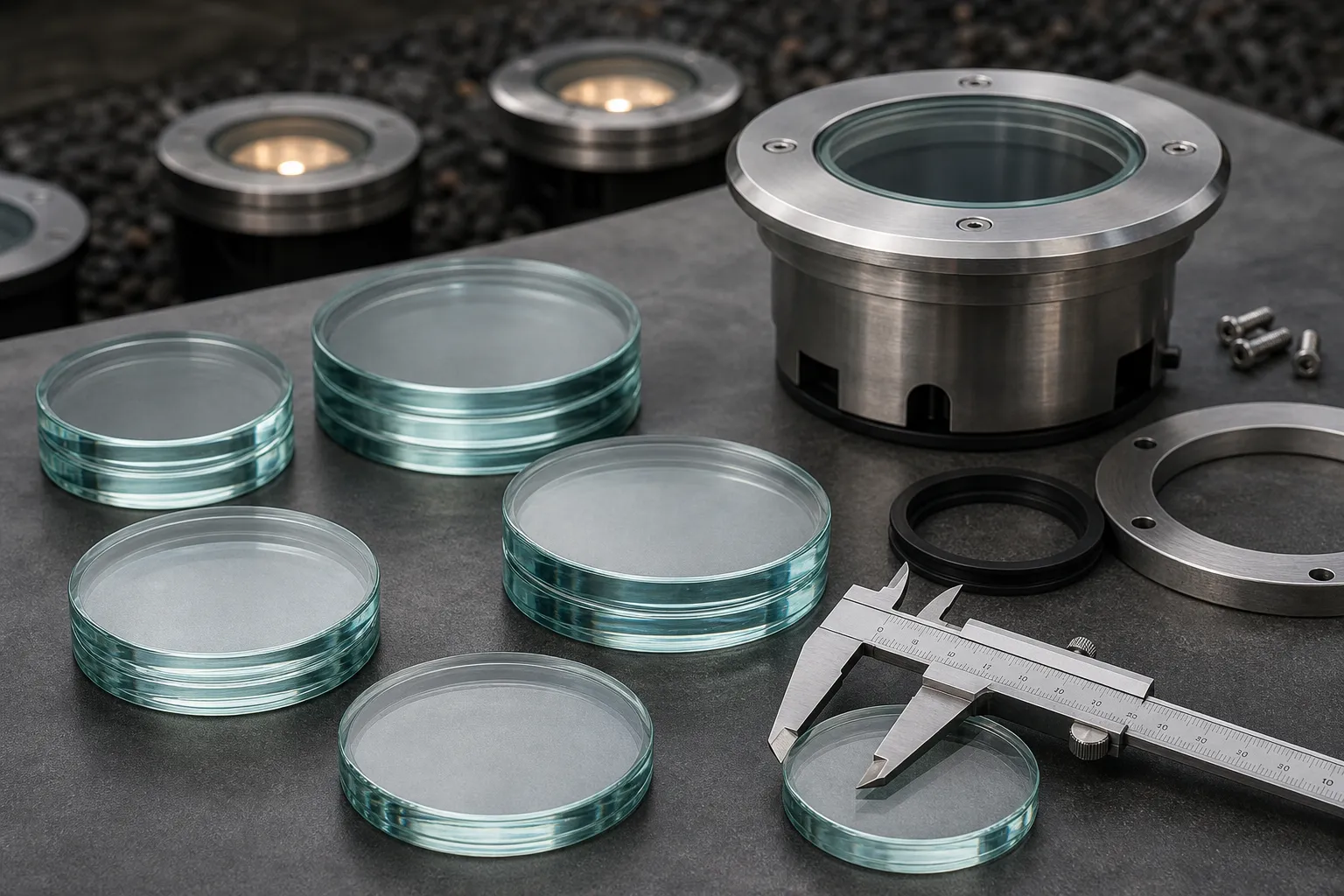
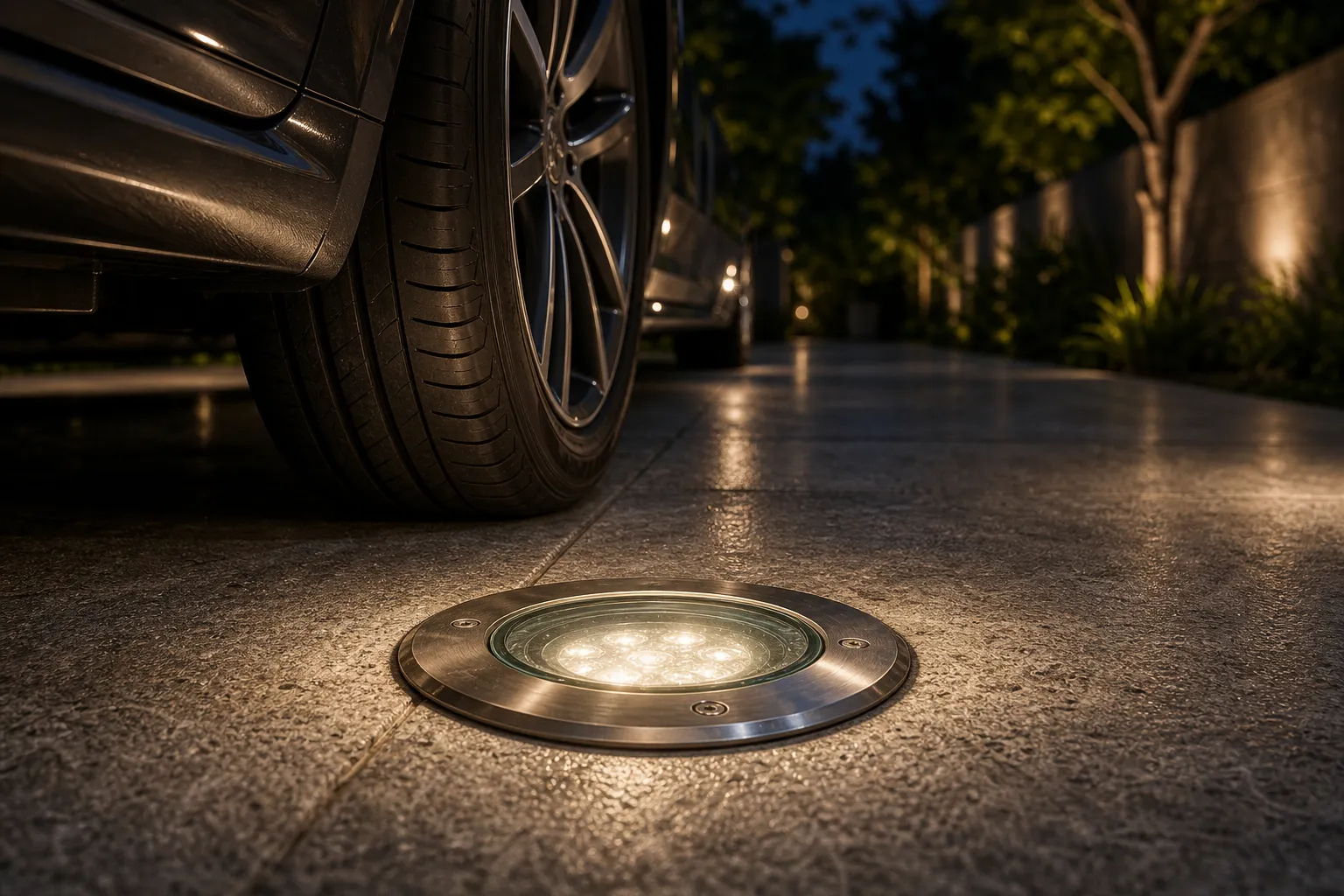
What pressure and wear resistance requirements does the driveway underground light glass need to meet?
Driveway underground light glass needs to withstand vehicle tire pressure, local impact, sand and gravel friction and long-term rain cement and sand pollution. The protective cover glass should usually be made of thicker tempered glass or a specially designed pressure-bearing glass structure, and the edges of the glass should be fully supported to avoid excessively large suspended spans in the middle.
In terms of wear resistance, the glass surface should be kept as hard and clean as possible to avoid being worn by sand, tires and cleaning tools for a long time. Driveway scenes should also focus on slip resistance, drainage and thermal shock resistance, as vehicle parking, sun exposure and rain cooling will subject the glass to more complex environmental changes.
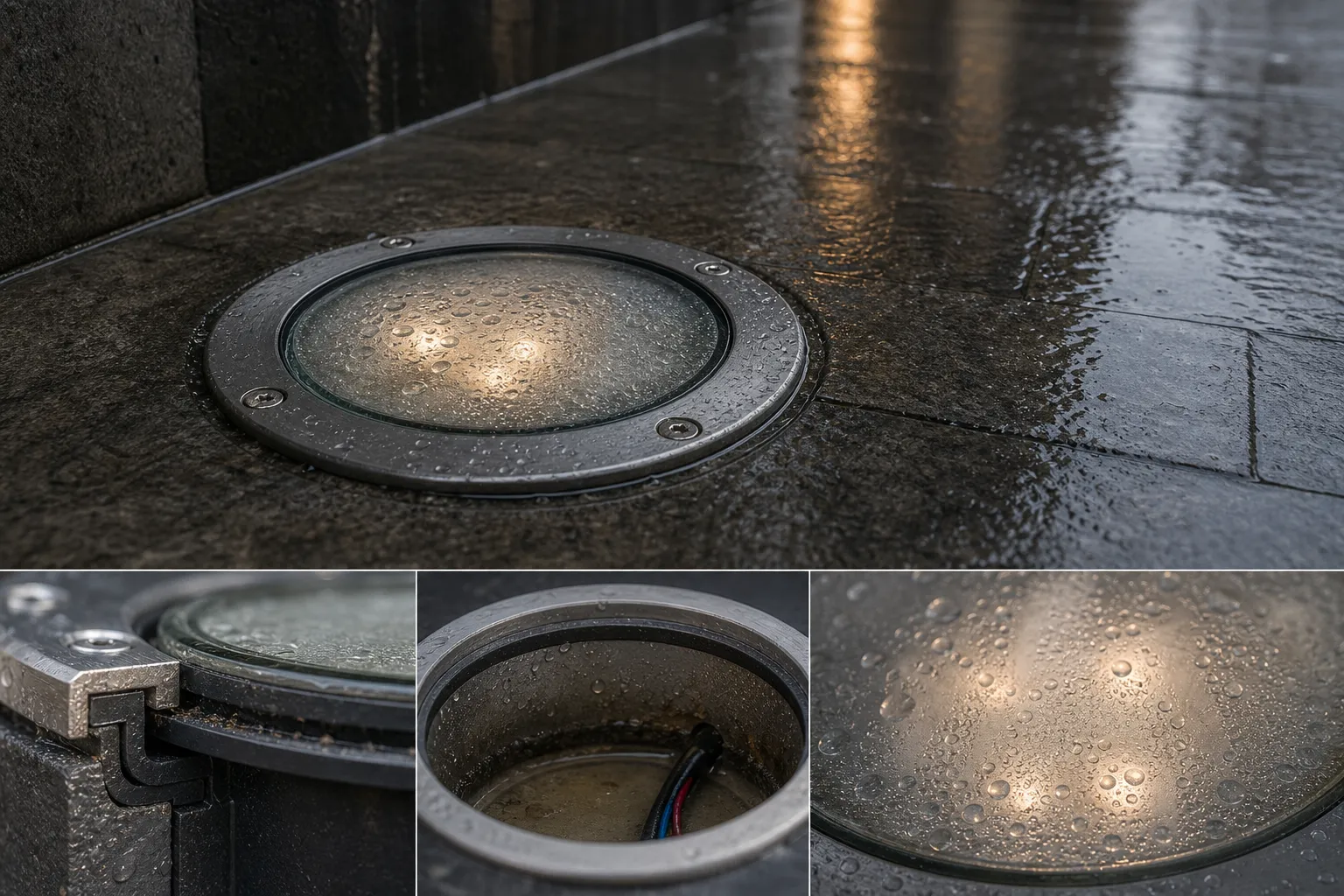
Why is the protective cover glass of an underground luminaire prone to water intrusion and fogging?
An in-ground luminaire is installed at a low point and is often exposed to standing water, sediment and persistent moisture. Its housing may be embedded in soil, stone or concrete, creating more severe water exposure than a typical wall-mounted luminaire. Uneven sealing between the protective cover glass and housing, deterioration or debonding of the sealing adhesive, insufficient fastener preload, or irregular glass edges can create direct leakage paths.
Fogging usually results from residual internal moisture, pressure changes during thermal cycling that draw in water, or trapped water vapor that cannot escape after sealing. To reduce these problems in underground lights, the flatness of the glass edge, gasket compression, cable-entry waterproofing, drainage design and assembly testing are all critical.
How can the edge chamfering of underground light glass reduce the risk of chipping and cracking?
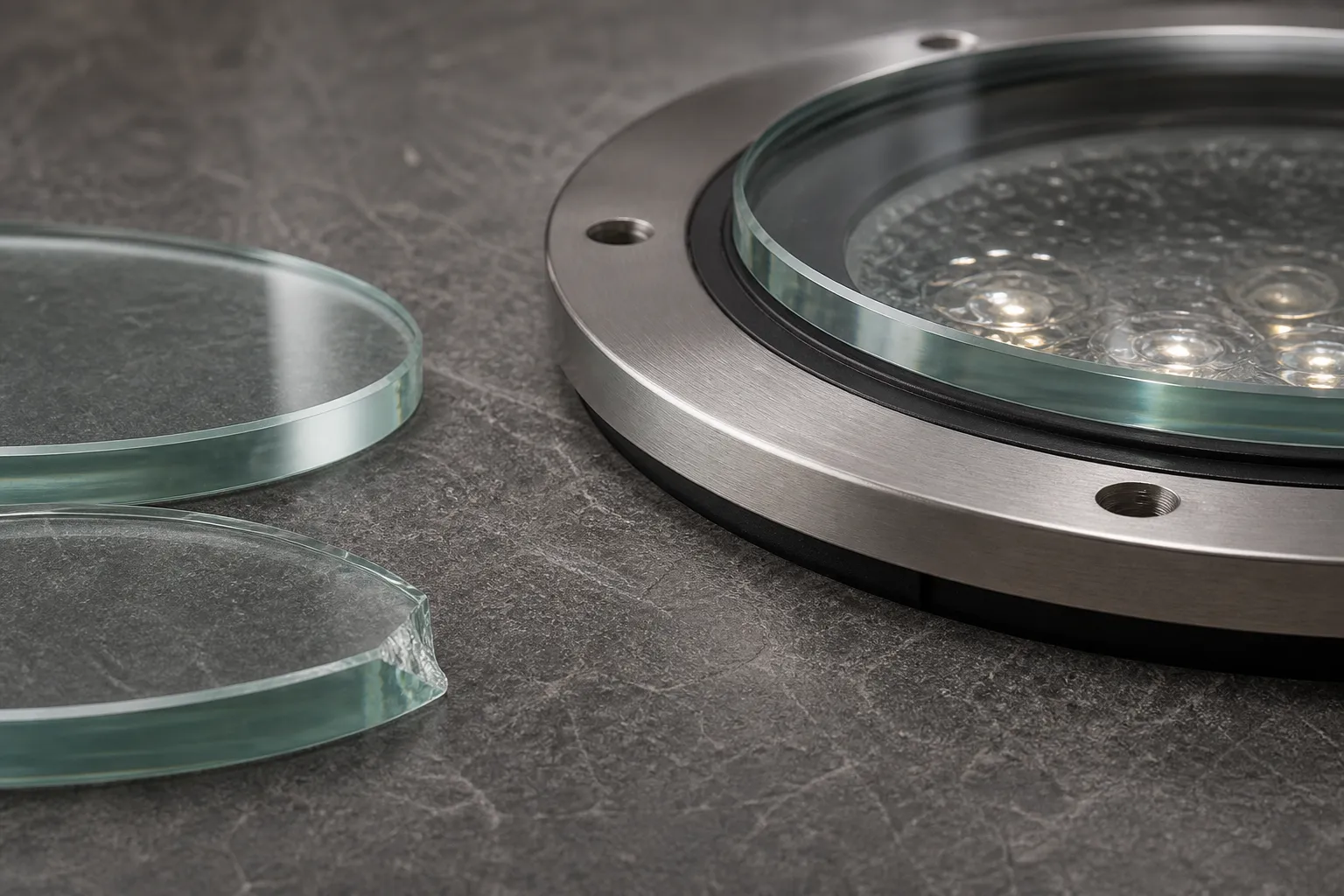
The edge of the underground luminaire glass is a sensitive location for stress and sealing. Sharp edges are prone to micro-chips during transportation, installation, frame pressing and stepping. Small chipping will become the starting point of cracks, which will gradually expand after thermal cycling or external impacts.
By chamfering, grinding and polishing, sharp edges can be removed, reducing stress concentration and reducing the risk of installing a cutting hand. For load-bearing underground lights, edge treatment is not only an appearance issue, but also a safety and lifespan issue. In particular, it is necessary to avoid direct contact between the glass edge and the metal.
Does the glass surface of underground lighting need anti-slip or anti-wear treatment?
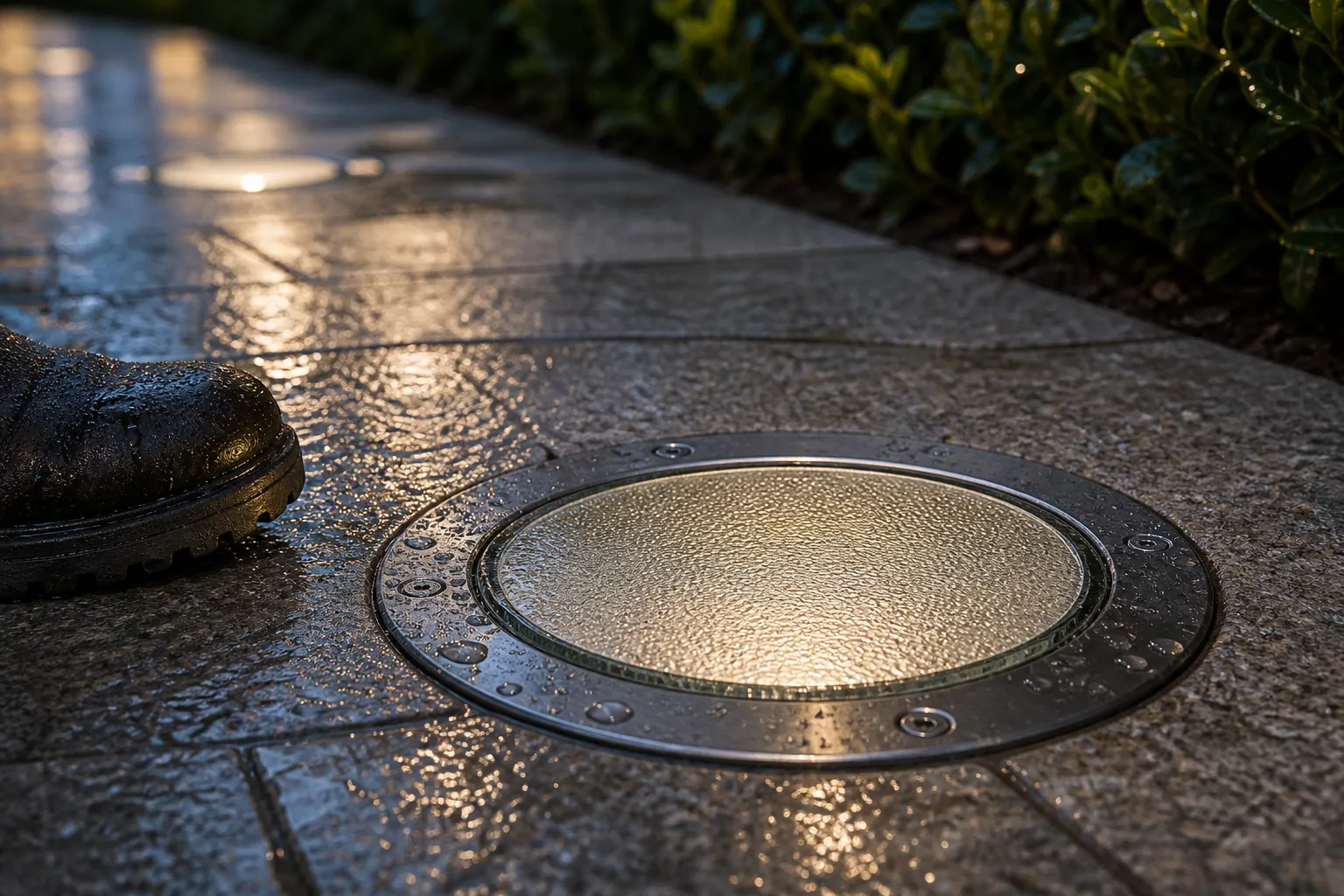
When underground lights are installed on sidewalks, steps, squares or driveways, whether the glass surface requires anti-slip treatment depends on the frequency of traffic, ground slope, rainwater environment and project safety requirements. For slippery areas, fine textures, anti-slip spots, etching patterns or other surface treatments can be considered, but the treatment method cannot significantly damage the light transmission and spot effects.
In terms of anti-wear, the hardness of the glass itself is relatively high, but long-term sand friction will still cause fine scratches and reduced light transmittance. Although a surface that is too rough will increase anti-slip, it will also be easier to accumulate dirt and difficult to clean. Therefore, the glass of underground luminaires must balance anti-slip, safety, light transmittance and maintenance convenience.
How does the protective cover glass of an underground light affect the light angle and spot shape?
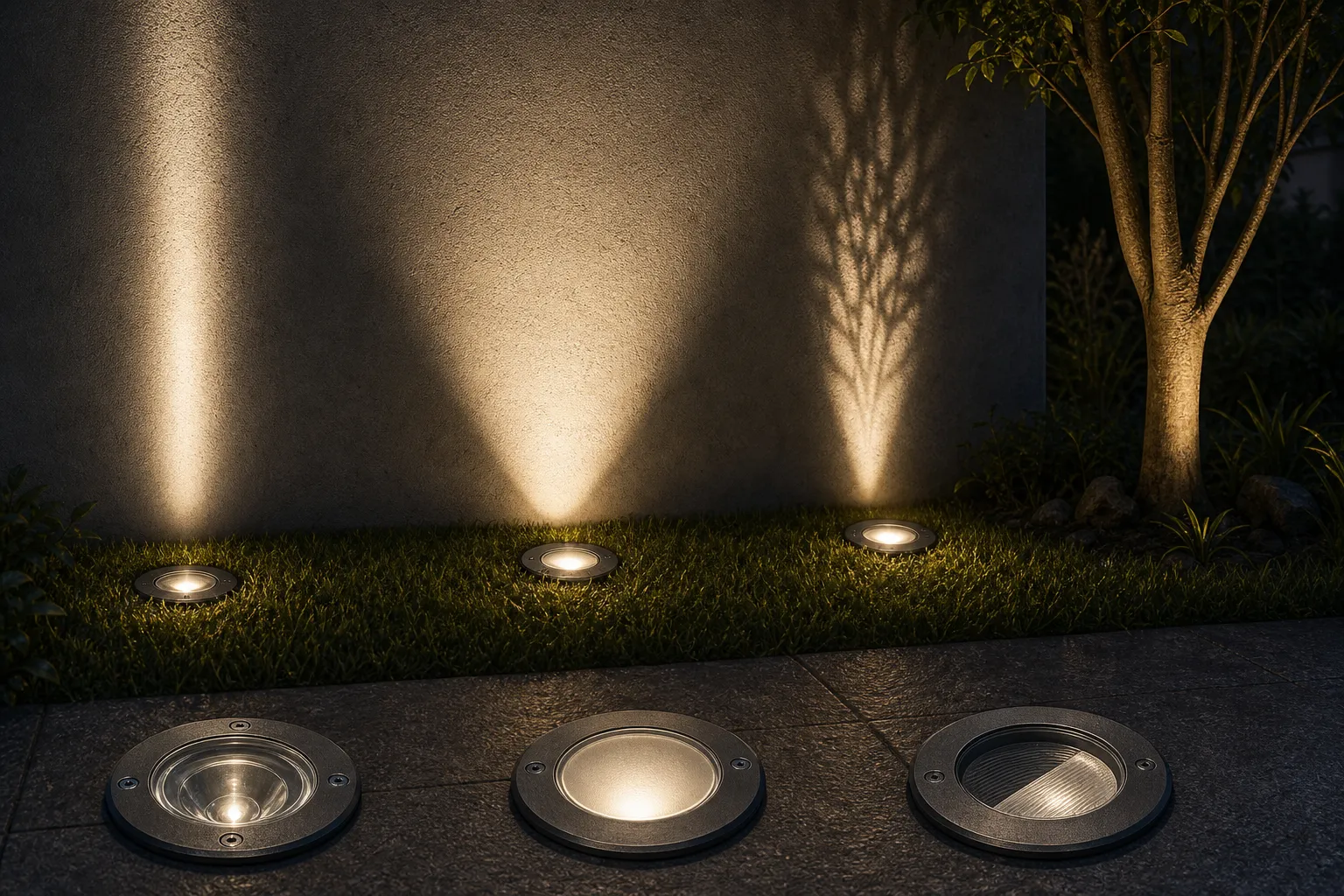
If the underground luminaire protective cover glass is an ordinary flat plate, it mainly plays a protective and sealing role and has a relatively limited impact on light distribution. However, glass thickness, surface reflection and stains will still cause a certain amount of light loss. If you use glass with curved surfaces, textures or lens structures, the light angle and spot shape will be significantly changed.
For example, when narrow-angle underground lights are used for projection on trees, columns and walls, the flatness of the glass and the accuracy of the lens will affect the edge of the beam; diffused glass can make the light spot softer, but may reduce the projection distance. When selecting, you should decide whether the glass is mainly for protection or also responsible for optical control according to the lighting objectives.
Should an underground light use protective cover glass or a pressed optical glass lens?
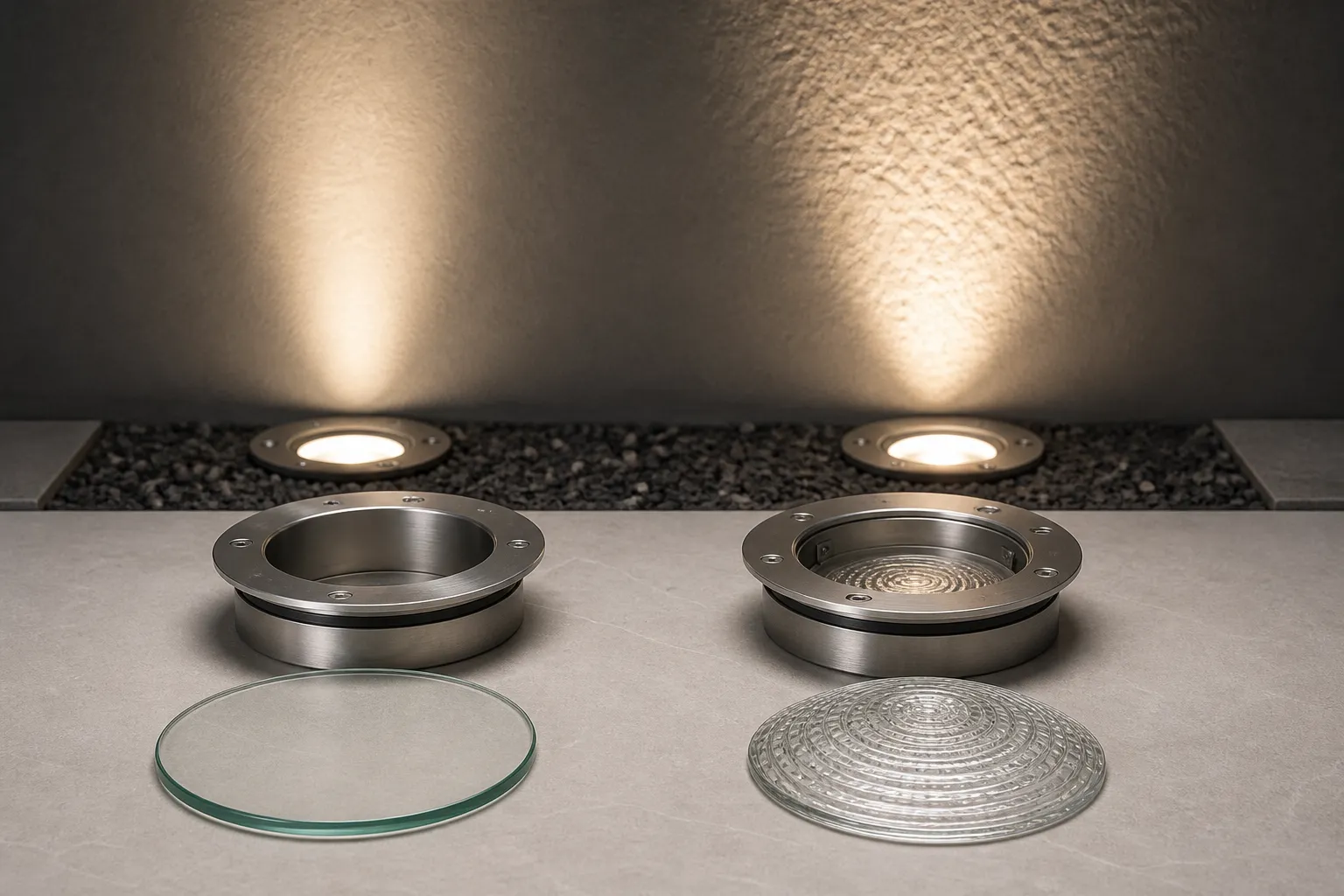
If the underground light is mainly used for basic lighting, sign lighting or there is already a lens inside for light distribution, it is usually suitable to use a flat protective cover glass. Flat glass has a simple structure, stable sealing surface, easy processing and maintenance, and is suitable for most engineering projects.
If you need a specific beam angle, elliptical spot, narrow angle projection or special wall washing effect, you can consider pressed optical glass lenses. Pressed optical glass lenses can undertake more light control functions, but have higher requirements on molds, dimensional accuracy, assembly position and batch consistency, and the cost and development cycle will also increase.
How do underground light glass components fit into stainless steel or aluminum alloy shells?
Underground luminaires commonly use stainless steel face rings, aluminum alloy luminaire bodies, or a combination of both. When the glass components are matched with the metal housing, it is necessary to prevent the glass from directly bearing the hard pressure of the metal, and uniform support and sealing should be achieved through gaskets, cushions, pressure frames or step structures.
Stainless steel has high strength but less elastic buffering, and aluminum alloy has good heat dissipation but more obvious thermal expansion. Both materials will affect the glass stress and sealing stability. When designing, the glass diameter, thickness, edge chamfering, pressing force and gasket compression level should be controlled to ensure that the glass is not locally squeezed during installation, stepping on and thermal cycling.
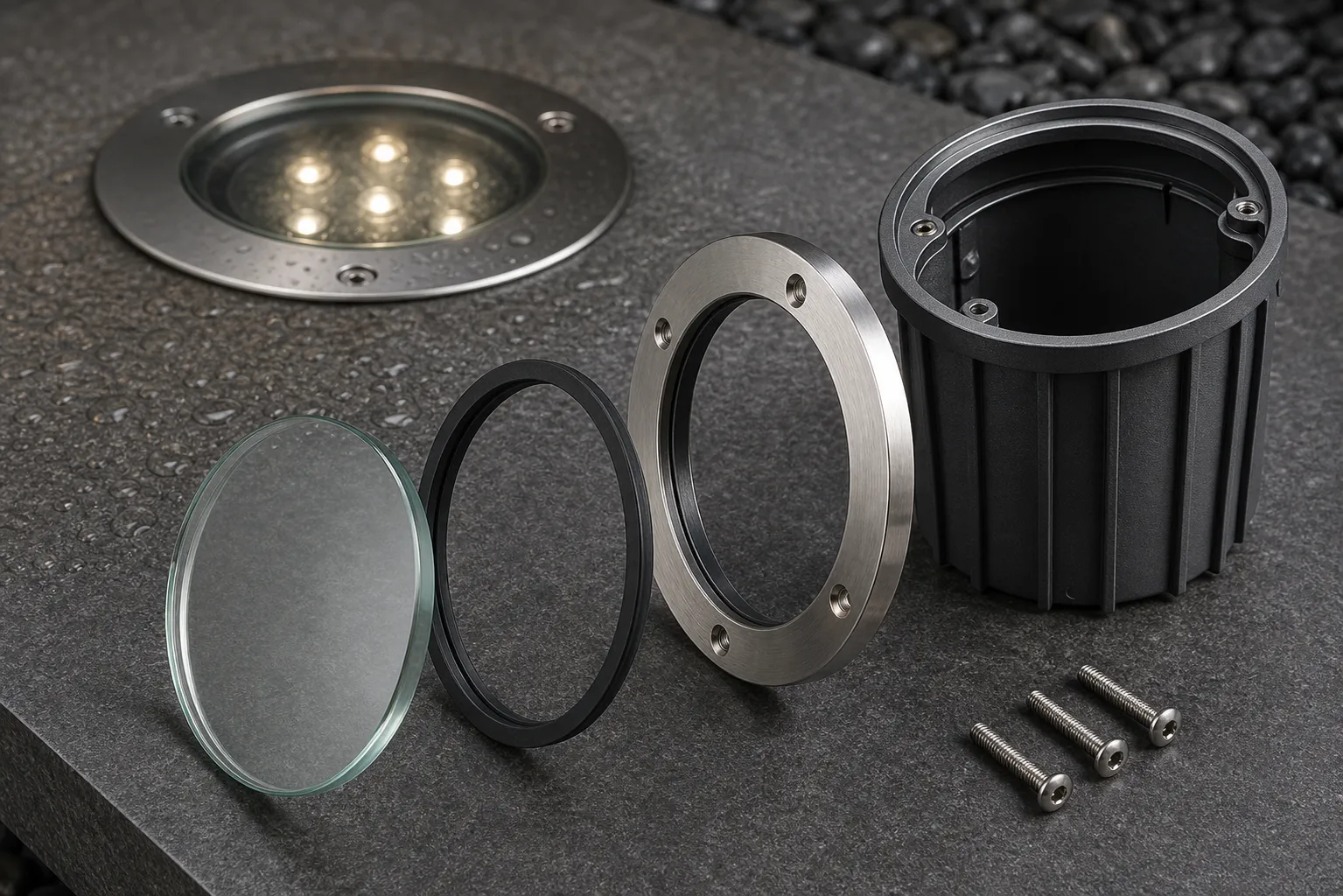
How does outdoor underground light glass deal with rain, sand, and trampling?
When dealing with rainwater, the key to outdoor underground light glass is reliable sealing and smooth drainage; to deal with sediment, the key is surface wear resistance, easy cleaning, and no accumulation of dirt on the edges; to deal with trampling, the key is glass strength, support structure, and installation flatness. The three often occur at the same time, so you cannot choose glass based on a single performance.
In actual projects, the protective cover glass should be flush with the surrounding luminaire surface to avoid trip hazards or edges where water can collect. If the installation location is easily covered by sediment, choose a wear-resistant, easy-to-clean surface and maintain it regularly. Otherwise, long-term dirt accumulation will significantly reduce light output.
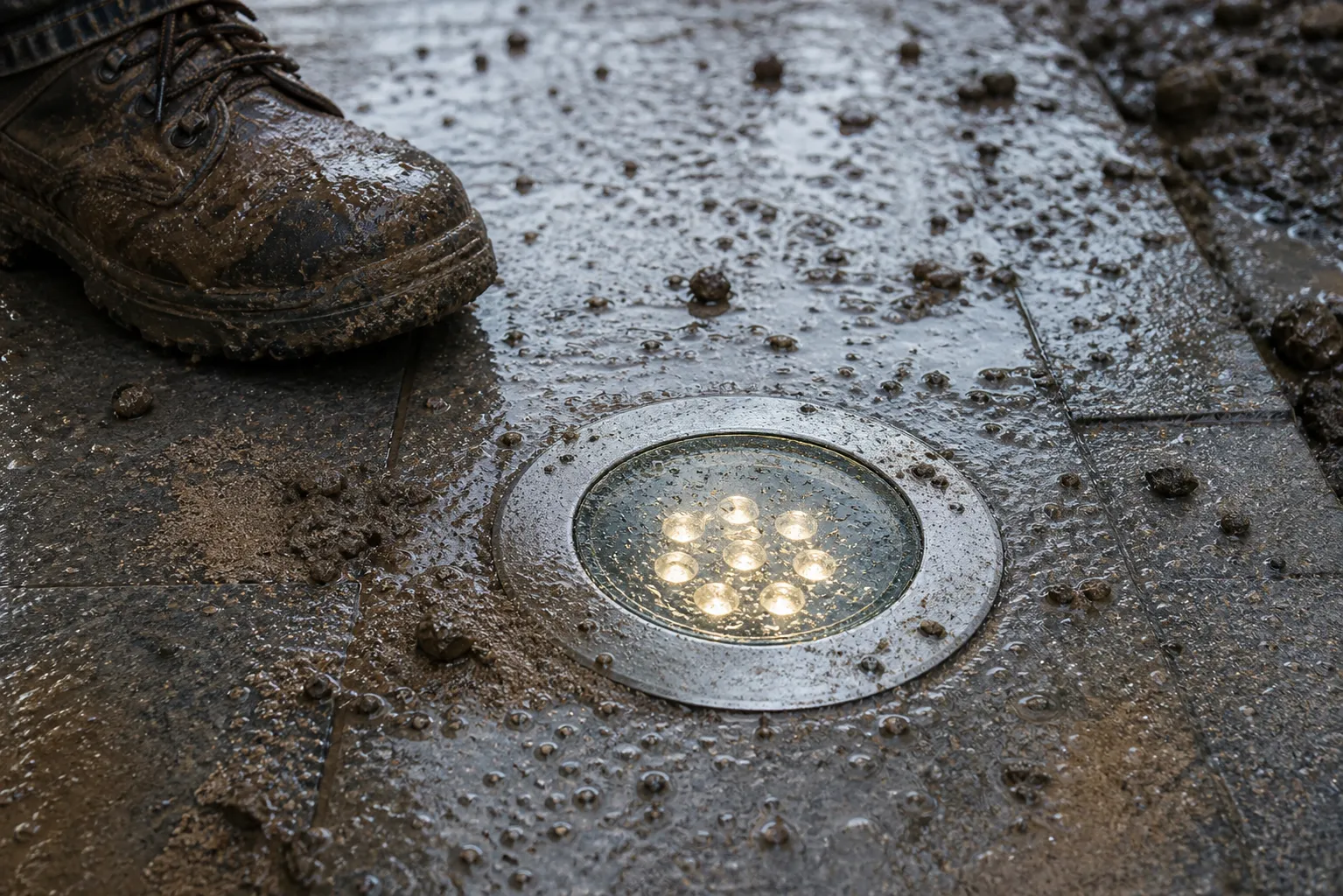
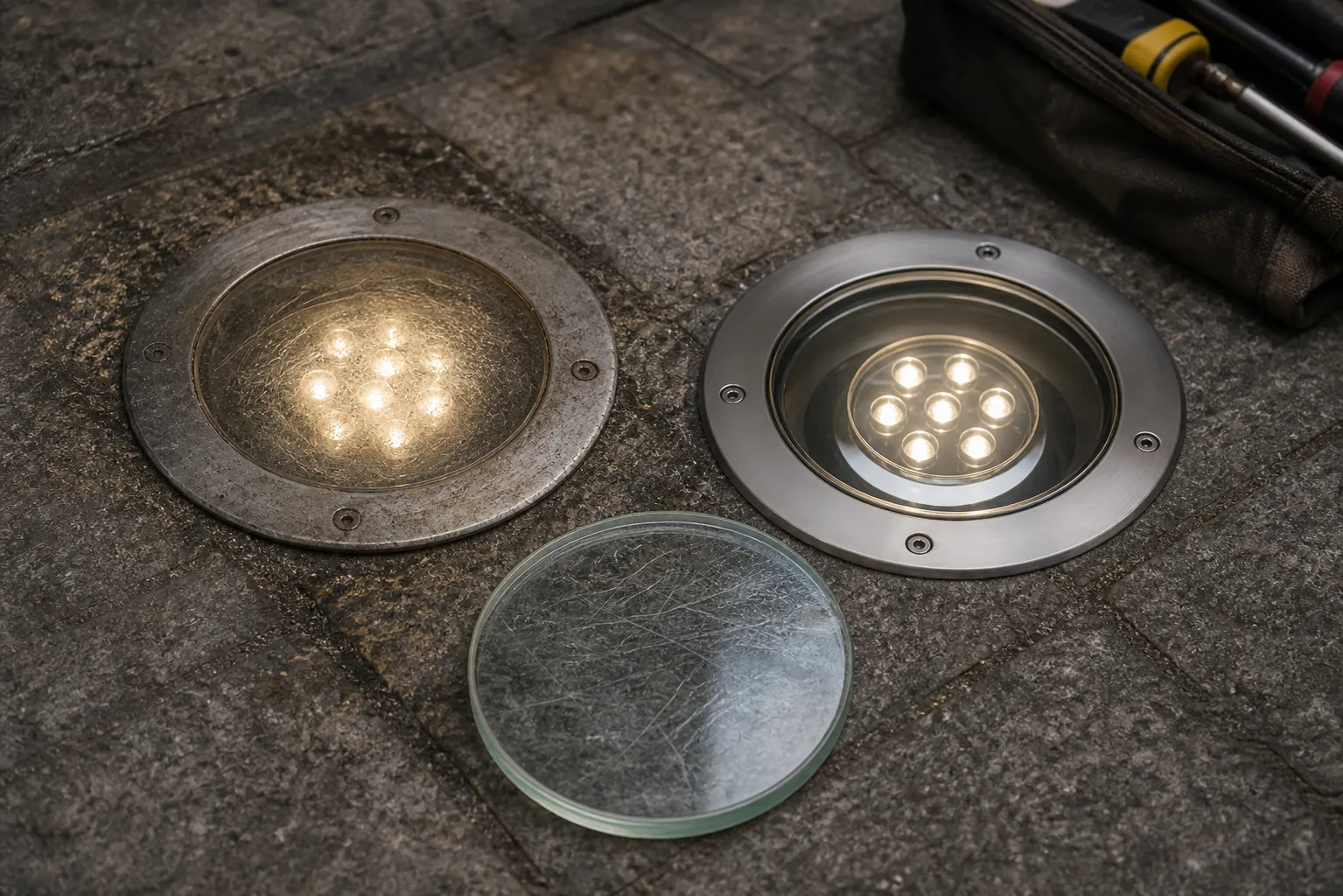
Will the light transmittance be affected after long-term grinding of the surface of the underground luminaire glass?
Long-term grinding of underground luminaire glass will affect the light transmittance and spot quality. Slight scratches may only make the glass look gray, but a large number of scratches will increase scattering, causing the light to weaken and the edges of the spot to become messy. Narrow-angle projection and decorative light effects are particularly susceptible to this.
Grinding usually comes from friction with sand, shoe soles, tires, cleaning tools and hard particles. Ways to reduce the impact include choosing the right thickness and finish, avoiding installation directly under the path of high-wear wheels, keeping it drained and clean, and using soft tools rather than hard dry scraping during maintenance.
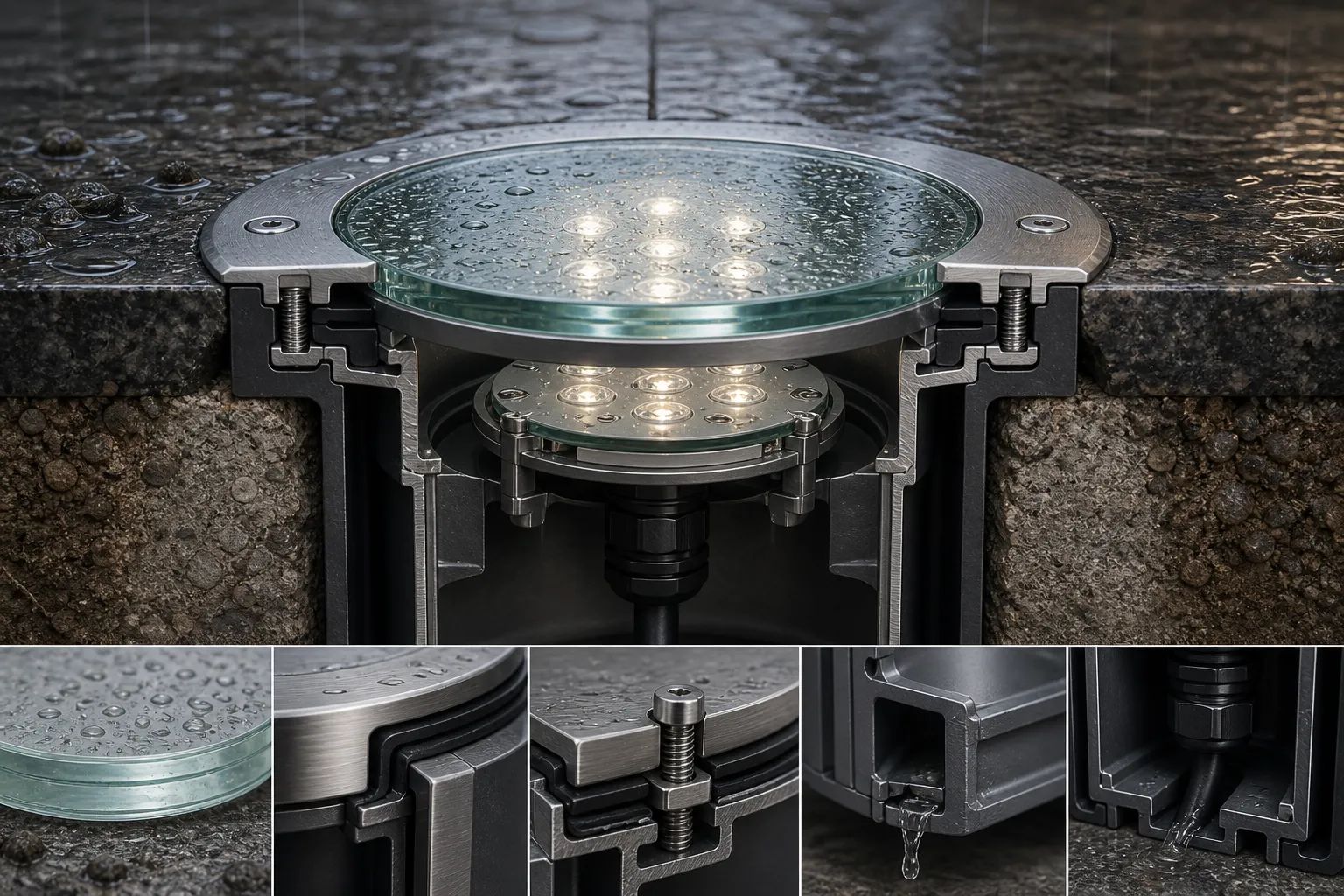
How can structural design support the target IP rating of an in-ground luminaire?
Underground luminaire glass components can help improve the IP protection level of the complete luminaire through flat sealing surfaces, stable thickness tolerances, reliable edge processing and reasonable frame pressure. The sealing contact width between the glass and the housing, the compression level of the gasket, and the uniformity of pressing will all affect the waterproof and dust-resistant test results of the complete luminaire.
However, IP65, IP67 or IP68 ratings apply to the complete luminaire enclosure and do not mean that the protective cover glass alone is certified. In-ground luminaires must also verify cable entries, housing joints, fastener penetrations, sealing adhesive and the installed assembly. Final performance should be confirmed through water-ingress and thermal-cycle testing of the complete luminaire.
Glass Components for Step, Deck, and Small Recessed Lights
- Point-load definition
- Record force, contact footprint, support span, loading position and duration. A center load and an edge load are not equivalent.
- Impact reference
- IEC 62262 energies are 5 J at IK08, 10 J at IK09 and 20 J at IK10; verify the complete recessed assembly.
- Slip performance
- Name the wet/dry method, surface orientation and contaminant. A textured appearance by itself does not establish slip resistance.
- Seal stack-up
- Calculate minimum and maximum compression from the glass-thickness, groove-depth, gasket and frame tolerances before building the sample.
Why are outdoor step lights more suitable for soft protective cover glass?
Outdoor step lights are usually installed at people's feet, knee height or low on the wall, so users will see the lights at close range. If the protective cover glass is too transparent, the LED point light source or strong bright area will easily be dazzling, which will affect the comfort of walking at night.
The soft protective cover glass can diffuse the light more evenly, reduce abrupt bright spots, and allow the edges of steps and walking paths to be softly illuminated. The goal of step lights is not to illuminate the space very brightly, but to clearly indicate height differences, boundaries and walking directions. Therefore, frosted, opalescent or moderately fogged glass is usually more suitable than pure transparent glass.
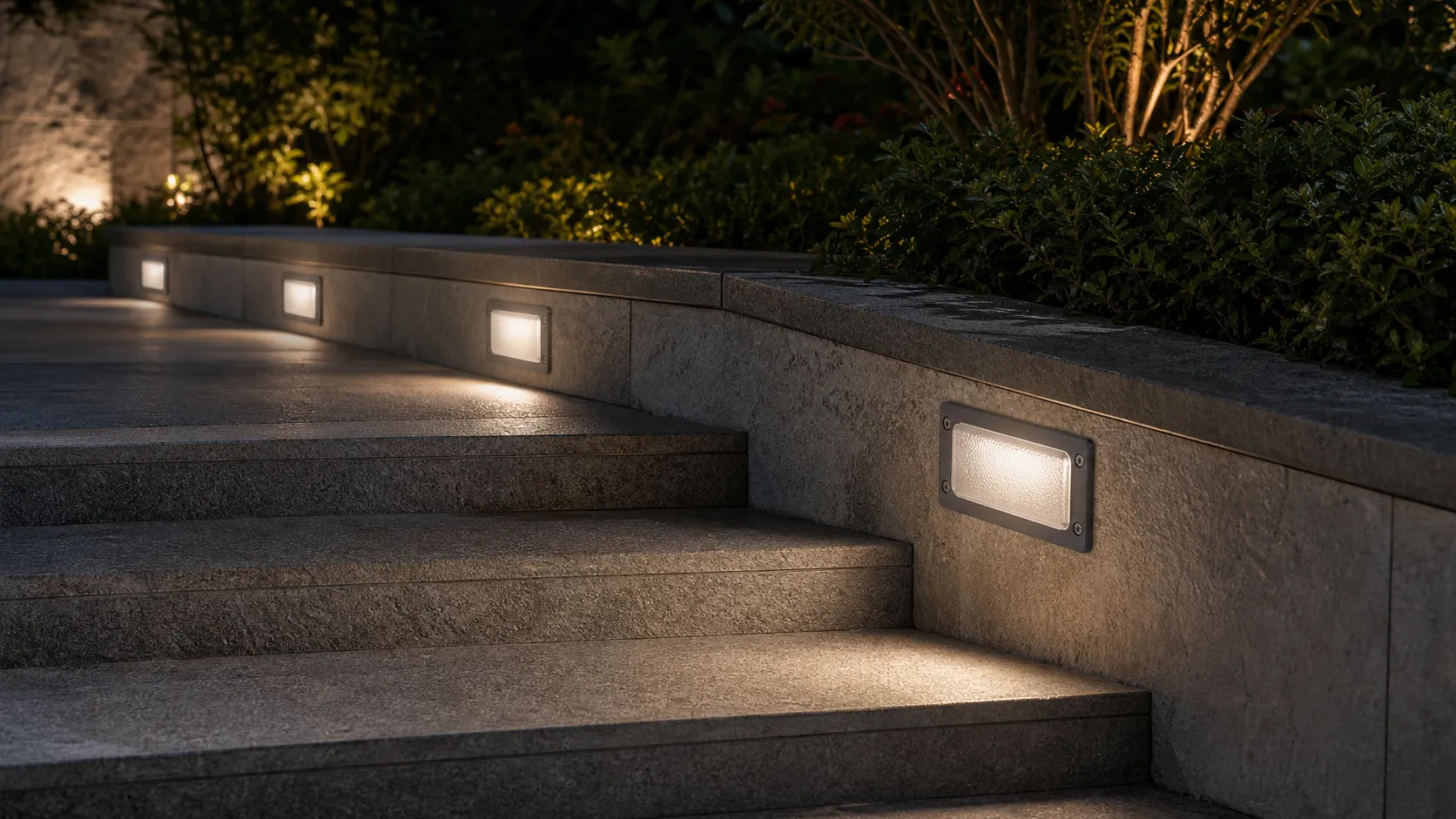
How can step luminaire glass reduce glare and abrupt light spots at night?
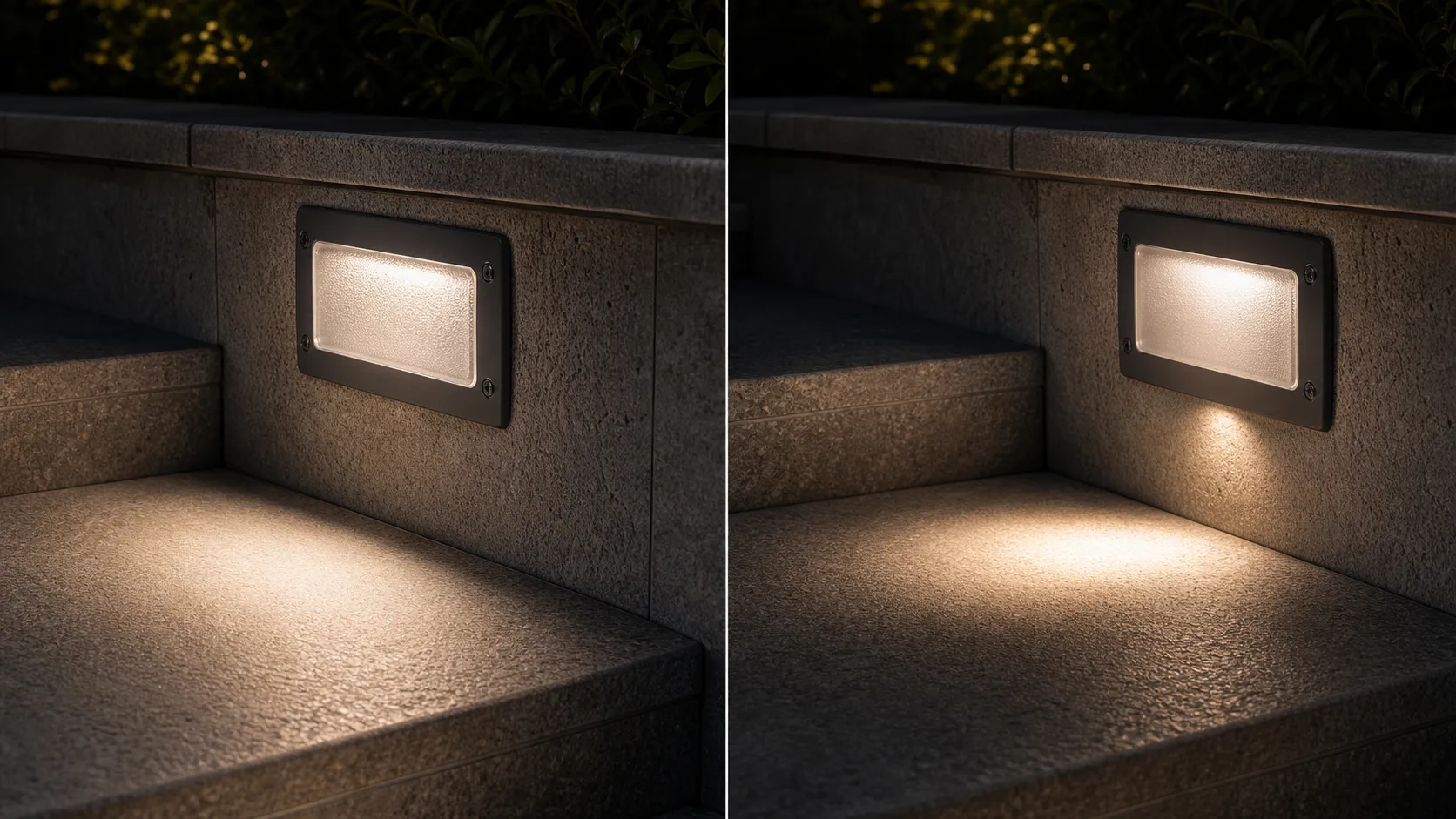
To reduce glare, step lights must first avoid direct exposure of the LED light source to human eyesight. The glass can be frosted, opalescent, fine-textured, or sandblasted on the inside to allow light to diffuse first and then shine through, reducing front-facing highlights.
At the same time, the structure of the luminaire should allow more light to shine downward or diagonally downward instead of directly horizontally. The haze of the protective cover glass cannot be too high, otherwise it will cause insufficient brightness or excessive light spots; it is ideal to combine the light-shielding structure, reflective surface and moderate diffusion glass to make the step outline clear but not dazzling.
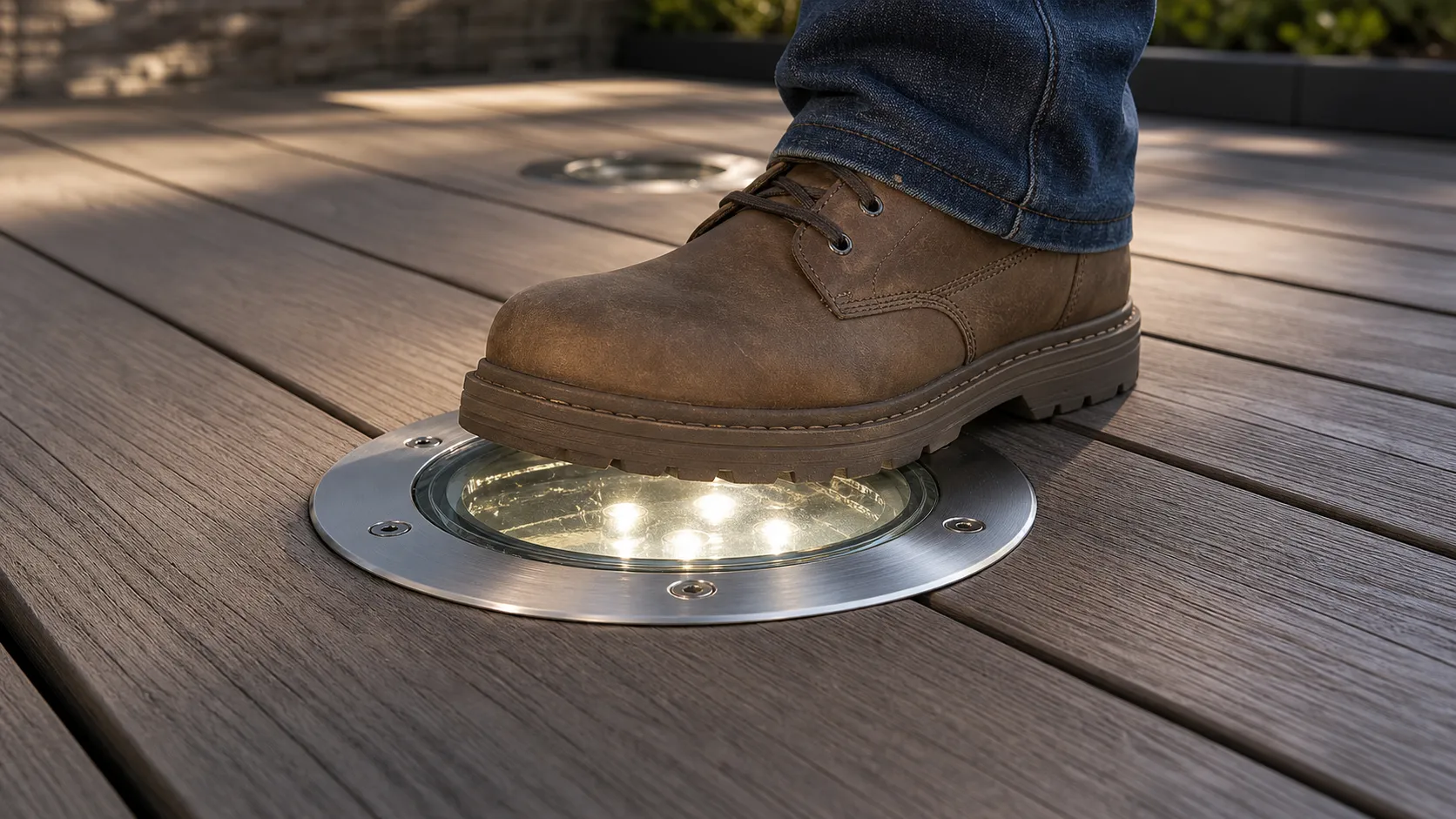
How can deck-light protective cover glass be protected against cracking under foot traffic?
Deck lights are often installed on wooden decks, patios, planks, or outdoor surfaces where the protective cover glass may be directly exposed to stepping on, furniture feet, and occasional impacts. Preventing breakage cannot only rely on thickening the glass, but also ensuring that there is sufficient support under the glass to avoid hanging in the middle and stress at the edge points.
The protective cover glass should be made of tempered glass or reinforced structure with appropriate thickness, and should be chamfered, edged and framed for protection. After installation, it is best for the glass surface to be flush with the deck or surface ring to avoid forming protruding stress points; if used in public areas, it should also be evaluated together with anti-slip, impact resistance and long-term maintenance requirements.
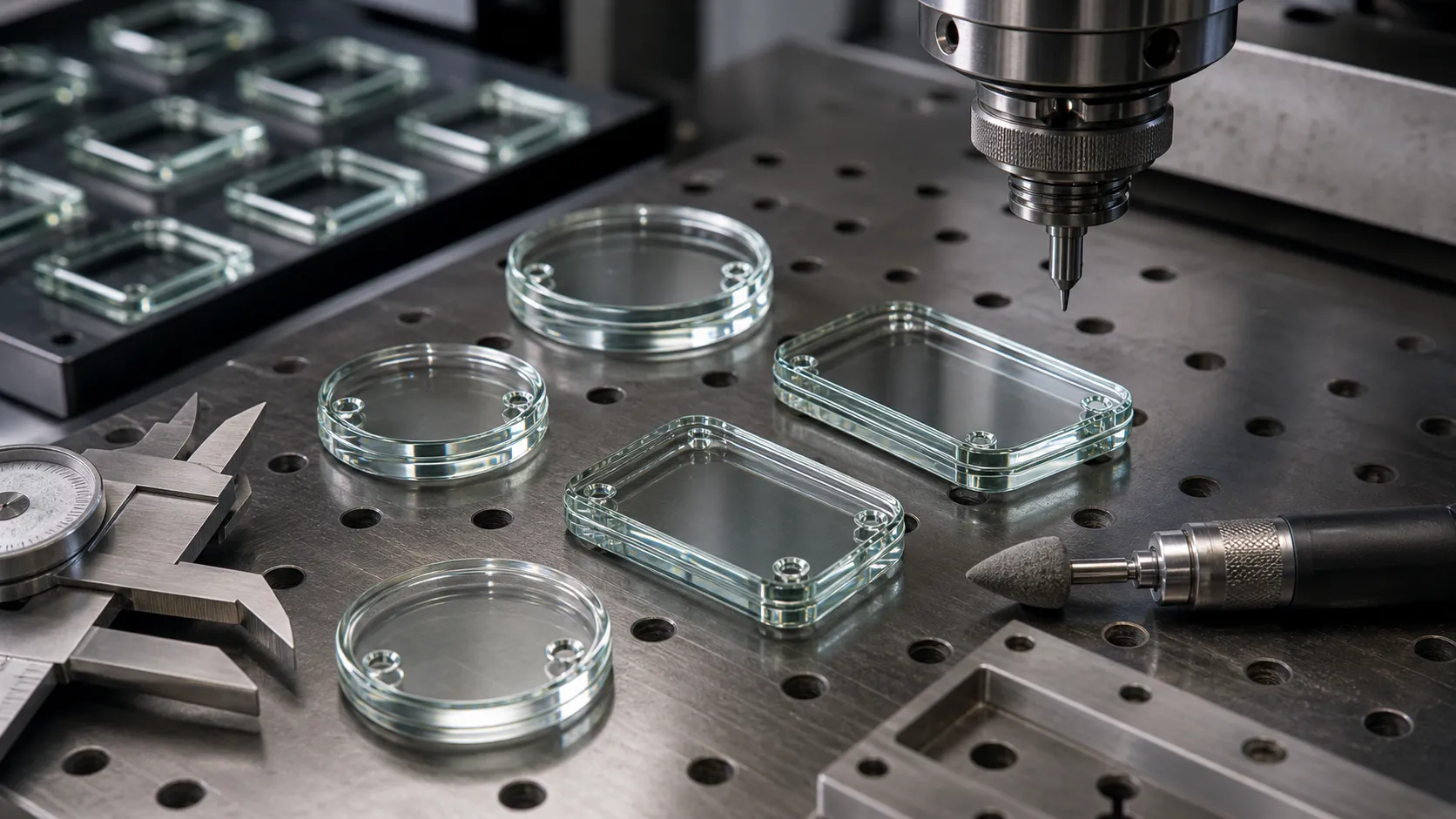
What are the difficulties in processing small-sized protective cover glass?
Small-sized protective cover glass look simple, but the processing difficulties are concentrated. Because of the small size, errors in edge grinding, chamfering, hole opening, silk screen printing or surface treatment are more likely to account for a larger proportion, and slight deviations may lead to poor assembly or uneven appearance.
Small glass components are also more likely to chip, scratch or be lost during cutting, edge grinding and cleaning, making batch consistency more difficult to control. If special shapes, hole locations, rounded corners or high-precision tolerances are also required, the processing method, fixturing approach and inspection standards must be confirmed in advance. They cannot be quoted and produced in the same way as ordinary large glass panels.
How should dimensional tolerances be controlled for recessed step-light glass?
Recessed step lights have higher requirements on glass size tolerances because the glass needs to accurately fit the metal frame, plastic parts, gaskets or wall openings. If the size is too large, it may not fit in or cause assembly stress; if the size is too small, gaps, shaking, leakage, and uneven appearance may occur.
When controlling tolerances, the length, width, thickness, fillet, hole position, edge chamfer and surface flatness requirements of the glass should be clearly defined, and the glass supplier should be informed of the actual assembly structure. For batch projects, it is best to use samples to verify the compression level and assembly feel of the gasket first, and then solidify the confirmed dimensional standards into drawings and inspection specifications.
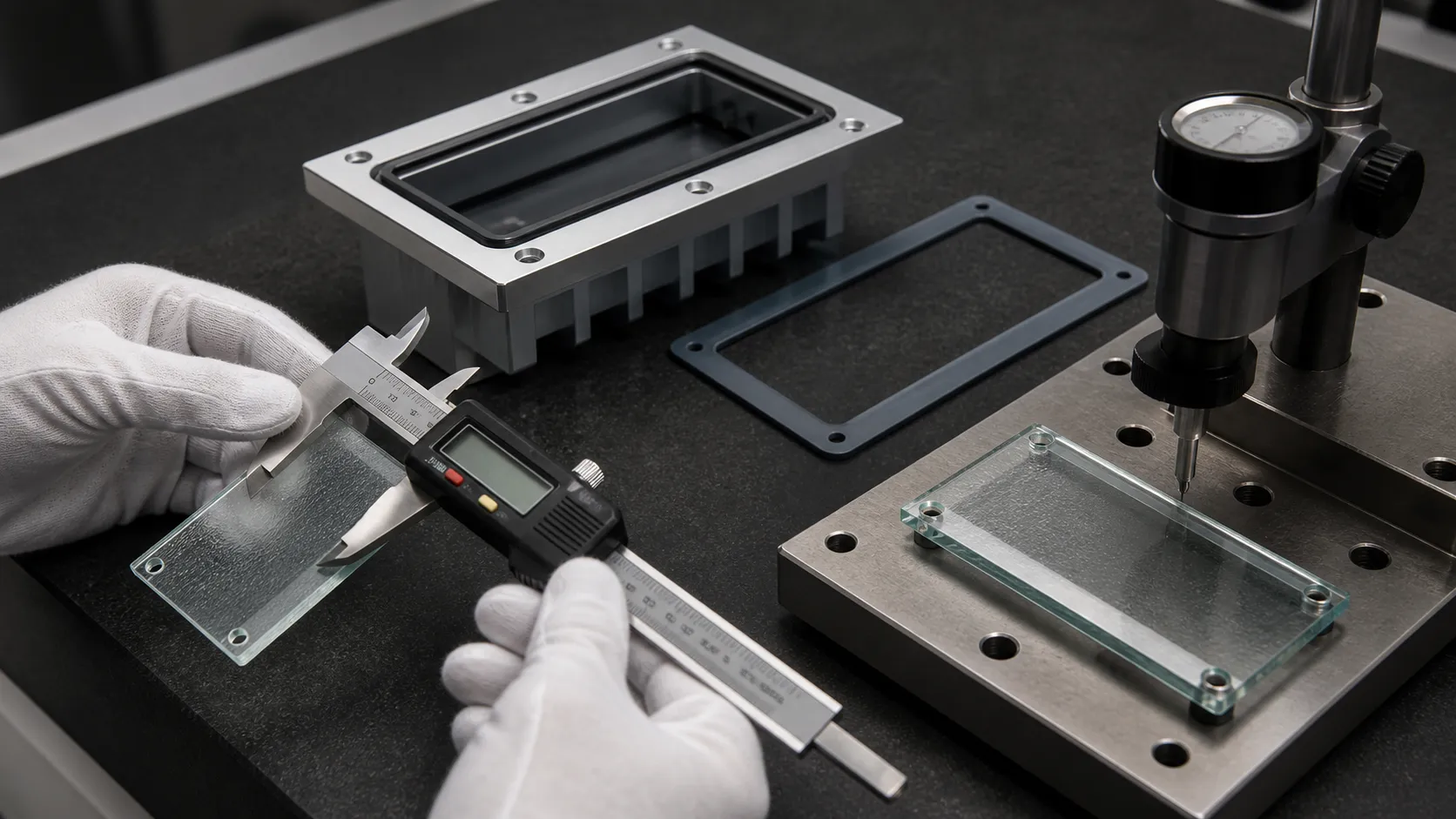
Why do the glass edges of step luminaires have to be chamfered and polished?
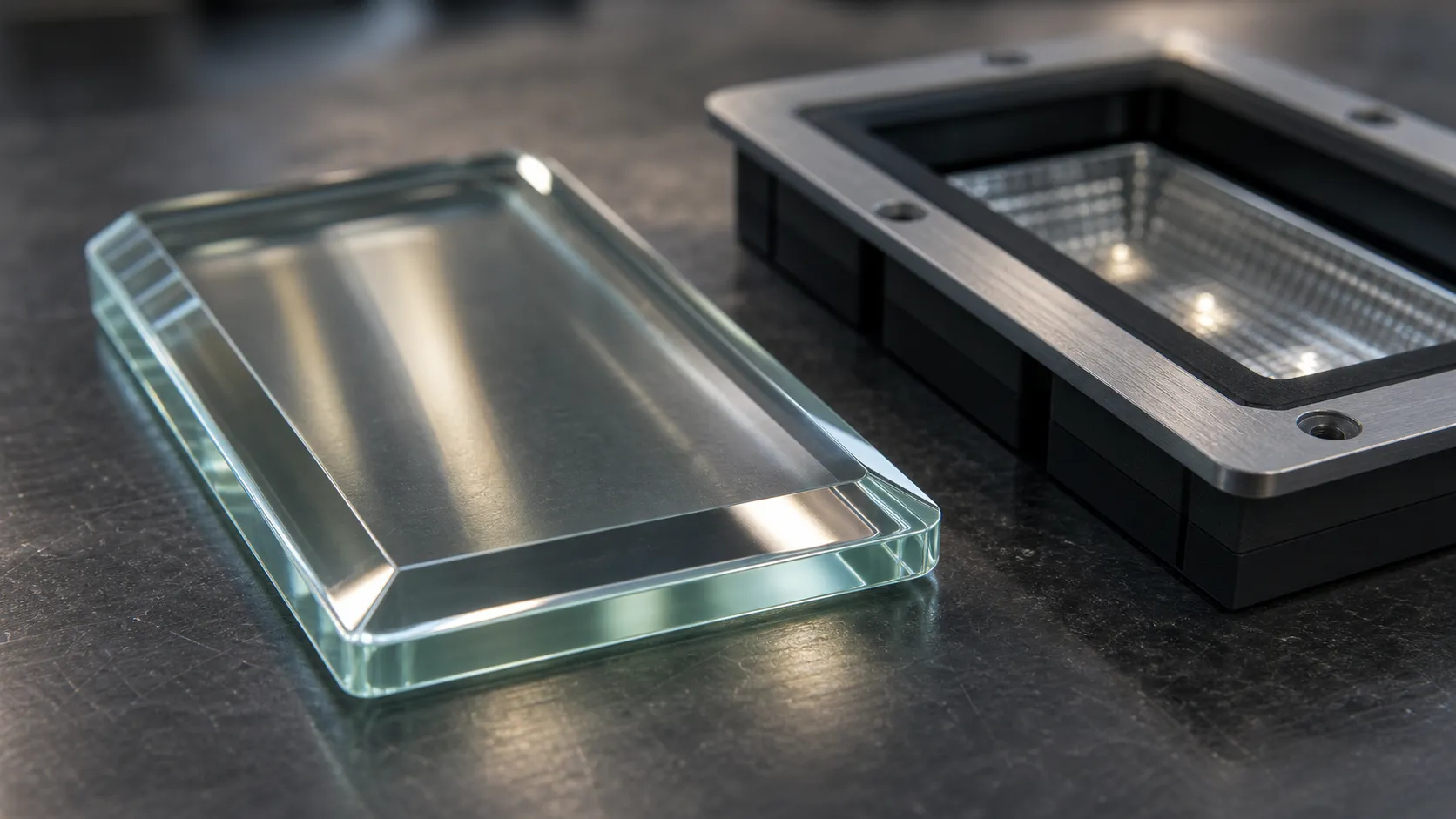
Step light glass edges must be chamfered and polished, mainly for safety, fit and longevity. The edges of untreated glass are sharp and can easily cut your hands during installation. It is also prone to small chipping during transportation and pressing. These small defects can become the starting point for subsequent cracking.
Chamfering removes sharp edges, and polishing reduces microcracks and stress concentrations. For recessed or low-mounted outdoor lighting fixtures, the glass edge is often in contact with the gasket, face frame and wall structure. More consistent edge quality improves assembly, water ingress protection and long-term reliability.
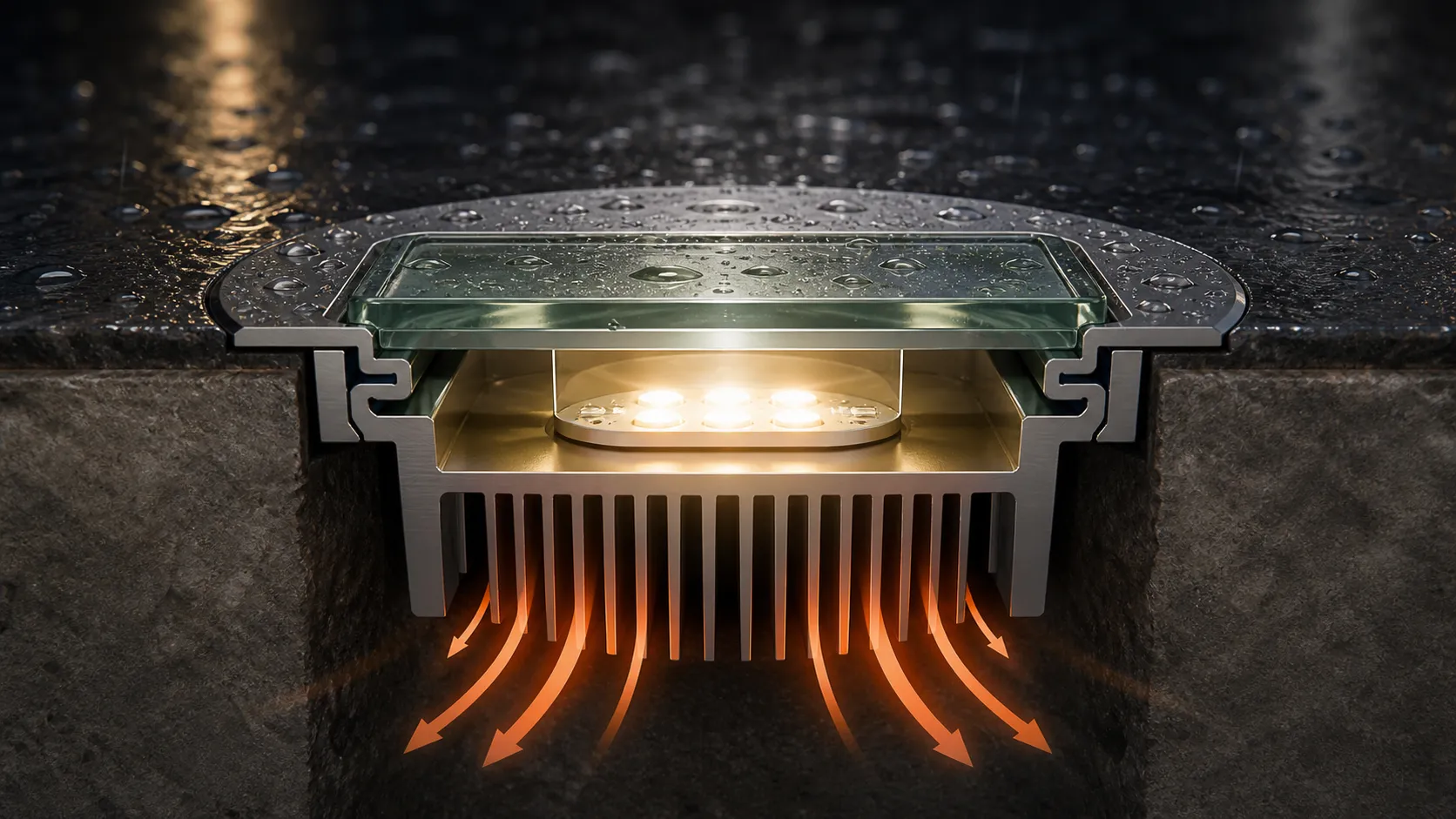
How can glass in small outdoor luminaires support both waterproofing and heat dissipation?
Space in small outdoor luminaires is limited, and the glass must form part of the seal without preventing internal heat from dissipating. Waterproofing requires a reliable sealing interface between the glass and housing, but if the luminaire is fully enclosed and lacks an adequate heat-dissipation path, LED and driver temperatures will rise and service life may be reduced.
The design should allow the glass to be responsible for front protection and sealing, while at the same time dissipating heat through the metal housing, back panel or heat dissipation structure. If necessary, vent valves, potting or partition sealing methods can be used to reduce negative-pressure water absorption caused by thermal cycling. The glass thickness, gasket compression and assembly clearance must be coordinated with the thermal design of the complete luminaire.
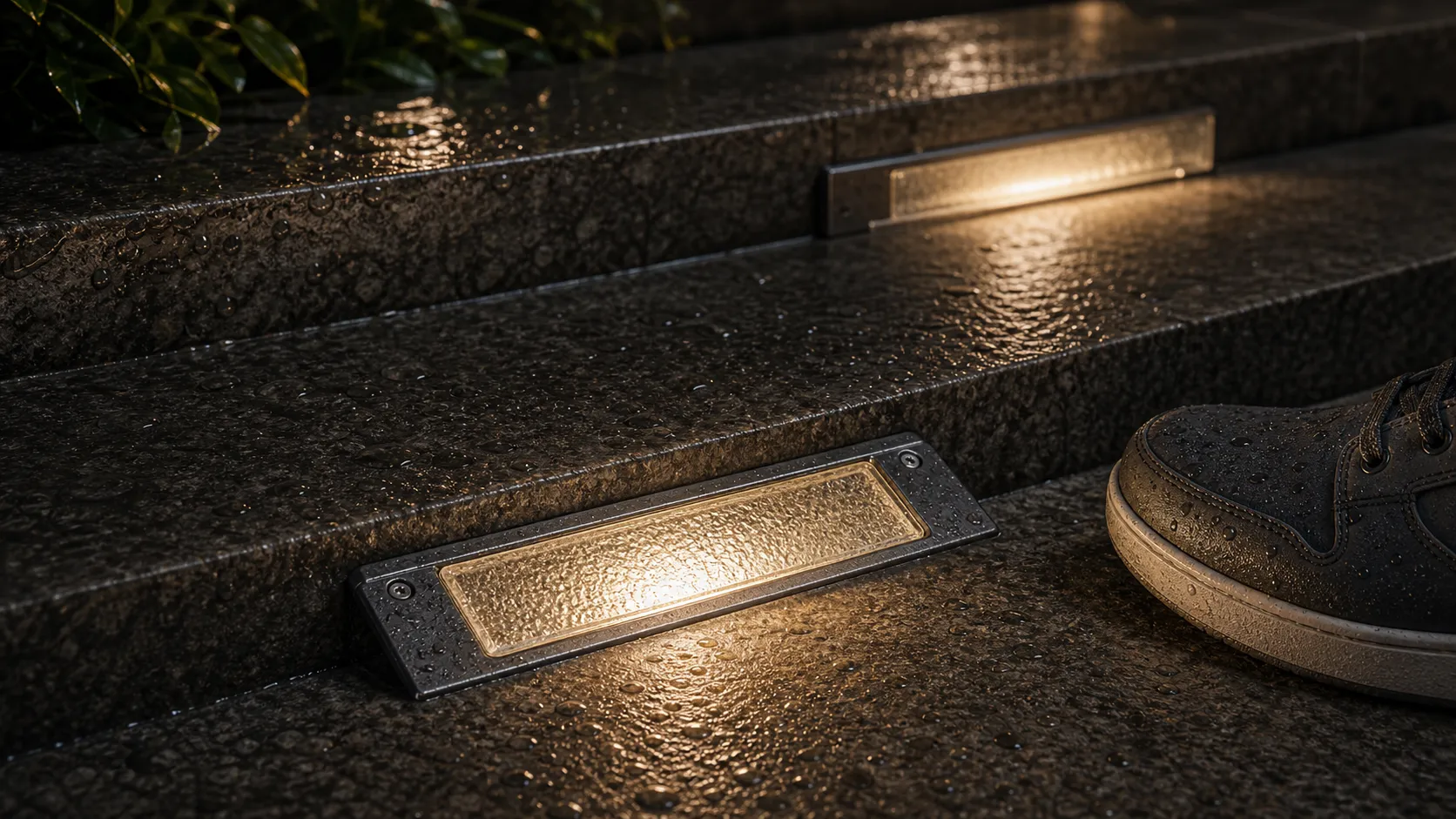
Does the protective cover glass of the step luminaire need anti-slip treatment?
Whether the protective cover glass of the step luminaire requires anti-slip treatment depends on whether the glass is located in a stepable area. If the glass is installed on a vertical wall or on the side of a step, anti-slip safety is usually not required; if the glass is on a tread, deck, or a location where people will directly step on it, anti-slip safety should be considered.
Anti-slip treatment can use fine textures, etched points, light frosting or anti-slip patterns, but care should be taken not to significantly affect the light transmittance and cleaning convenience. If the surface is too rough, it will accumulate dust, scale and become dirty, which will increase the difficulty of maintenance. Therefore, the anti-slip grade should be selected according to the actual traffic environment and should not be over-treated.
How can handling injuries be reduced when installing small outdoor glass components?
Small outdoor glass components are easy to be directly picked up, pressed in or adjusted by hand during installation. If the edges are sharp, have obvious chipping, or are too small to be easily grasped, the risk of hand injuries will increase. The first step in reducing risk is to chamfer, grind and polish the edges to ensure there are no sharp corners or burrs.
Packaging and construction are also important. Glass components should be packaged separately to avoid hidden edge chipping caused by collision with each other; suction cups, gloves or special tools can be used during installation to avoid direct contact of fingers with the edges. For mass installation projects, glass edge safety standards should be written into the inspection requirements, rather than just relying on the careful operation of on-site personnel.
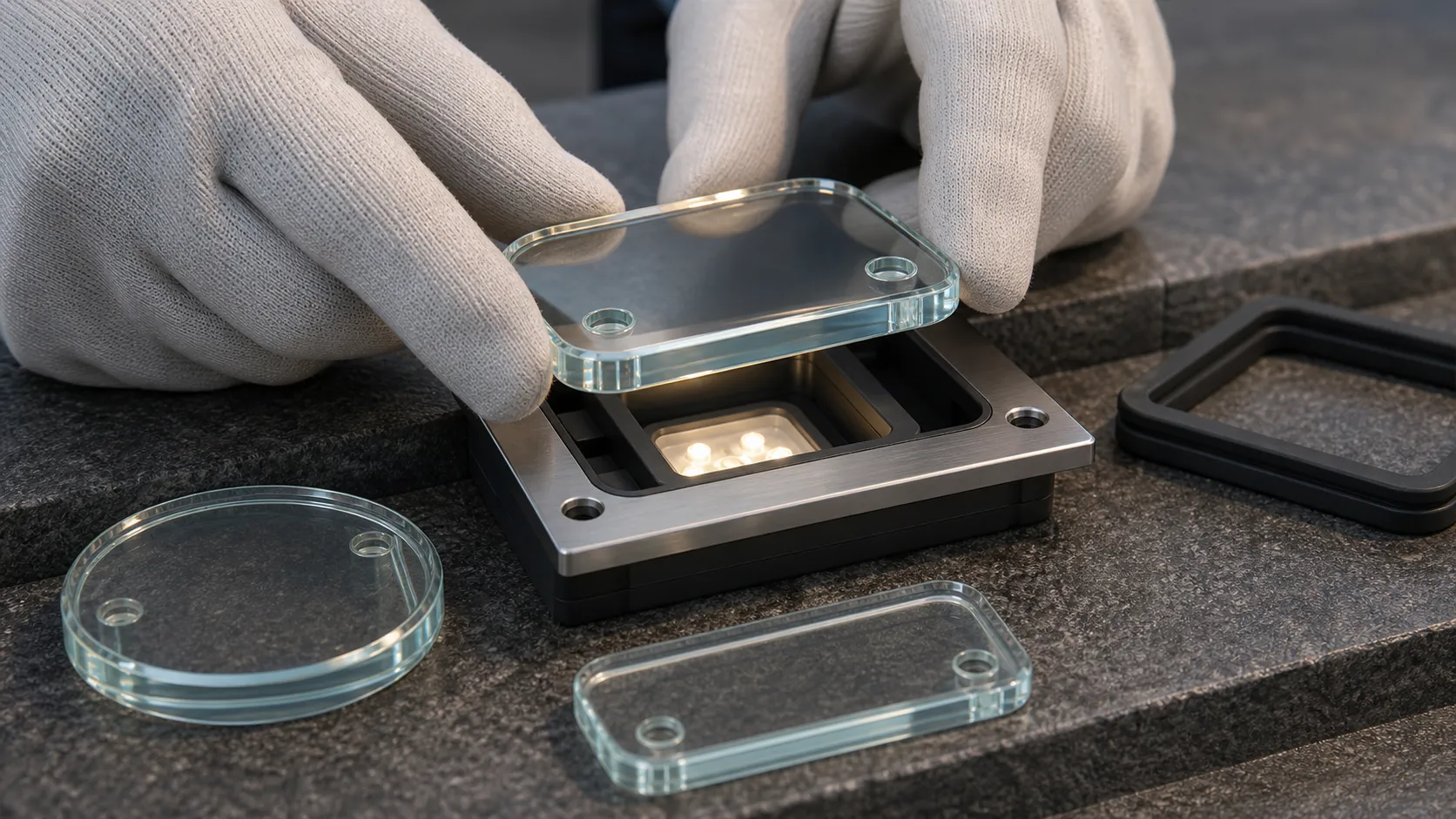
How can local stress cracking be prevented in step-light glass components?
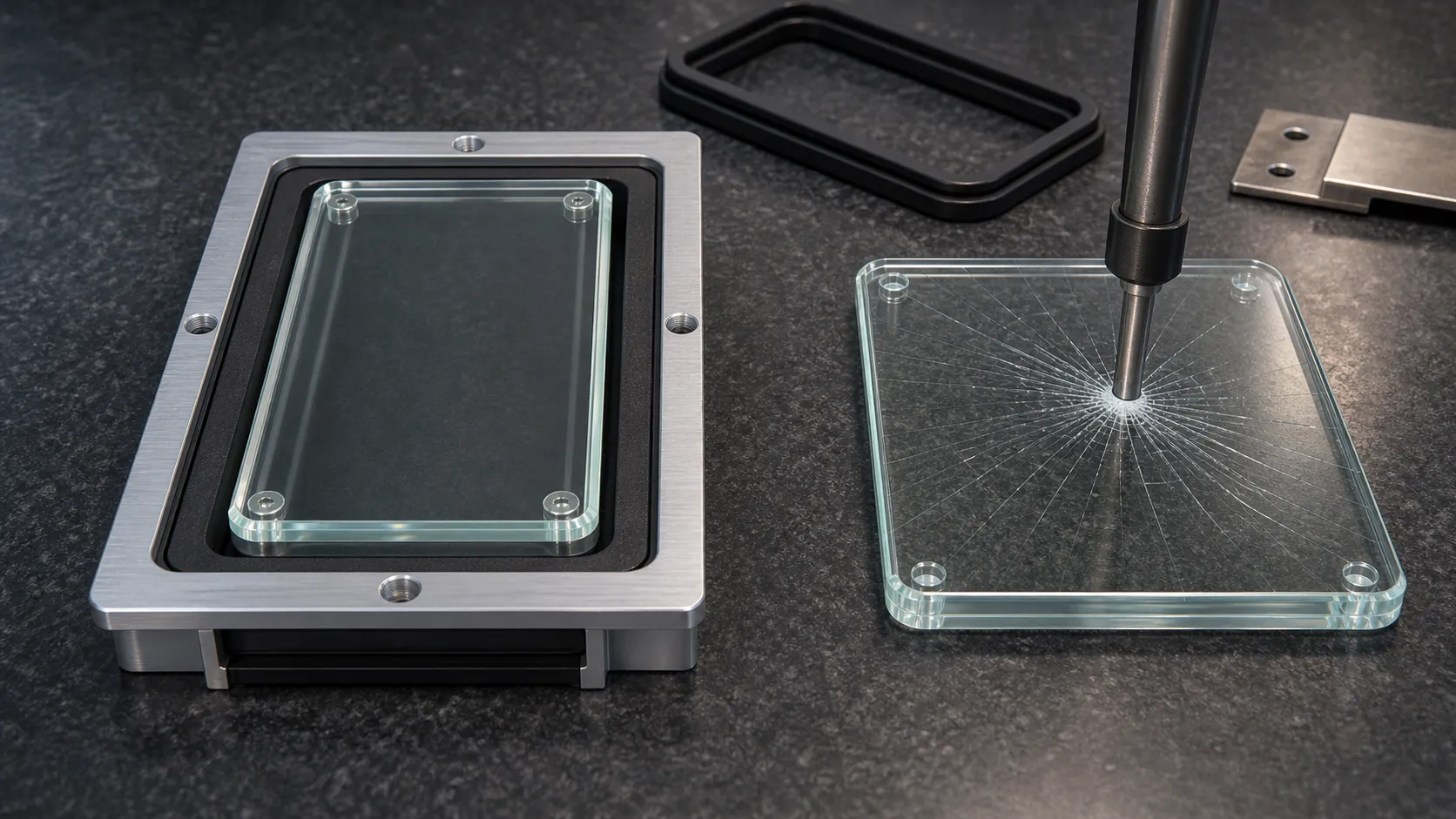
Local stress cracking of step luminaire glass often results from over-tightening of the assembly, misaligned screws, uneven metal frame, uneven compression of the gasket, or minor defects at the edge of the glass. Although small-sized glass has a small area, if the stress is concentrated, it will also crack after transportation, installation or thermal cycling.
To avoid local stress, the glass needs to be evenly stressed, avoid hard contact, and buffer it with soft seals, limit steps, and reasonable tolerances. The edges of the glass should be chamfered and polished, and holes and special-shaped corners should be designed to avoid sharp corners. Assembly tests and thermal cycling tests should be performed at the sample stage to confirm that the glass will not fail due to long-term pressure.
Contact Us
Your feedback fuels our growth, and your questions drive our solutions.
We value your feedback, inquiries, and suggestions. Please feel free to get in touch with us
General inquiries
Please contact us via sales@bo-glass.com, and we will reply to you as soon as possible.
Interested to work with us
Drop your resume at info@bo-glass.com
and we will get back to you shortly.
Request a Custom Glass Quote
Tell us about your project or upload a drawing.
Your drawings remain confidential.
We uses the contact information you provide to us to contact you about our relevent content, products, and services.