
Outdoor Wall Light and Wall-Pack Glass Guide
Outdoor wall lights combine visible appearance with direct exposure to rain paths, dust, insects, maintenance, and accidental impact. The component may be a decorative glass shade, flat protective cover glass, or an optical glass lens in an up-and-down lighting system. This guide explains how to select and integrate the glass with the housing, gasket, frame, adhesive, and internal optics without assigning complete-enclosure performance to the glass alone.
Glass Components for Outdoor Wall Lights and Wall Packs
- IP claim boundary
- Test the assembled housing, gasket, cable entry, fasteners and glass together under IEC 60529. Passing glass inspection does not establish an IP rating.
- IK selection
- Use impact energy, not adjectives: IK08 = 5 J, IK09 = 10 J, IK10 = 20 J under IEC 62262.
- Seal compression
- For a static face-seal O-ring, 30% is a typical maximum starting point; verify minimum squeeze after glass, groove and housing tolerances stack up.
- Temperature change
- For IEC 60068-2-14 testing, declare Tmin, Tmax, dwell, transfer time and cycle count. “Passed thermal cycling” without the profile is not comparable.
Should I choose clear protective cover glass or frosted protective cover glass for outdoor wall luminaire?
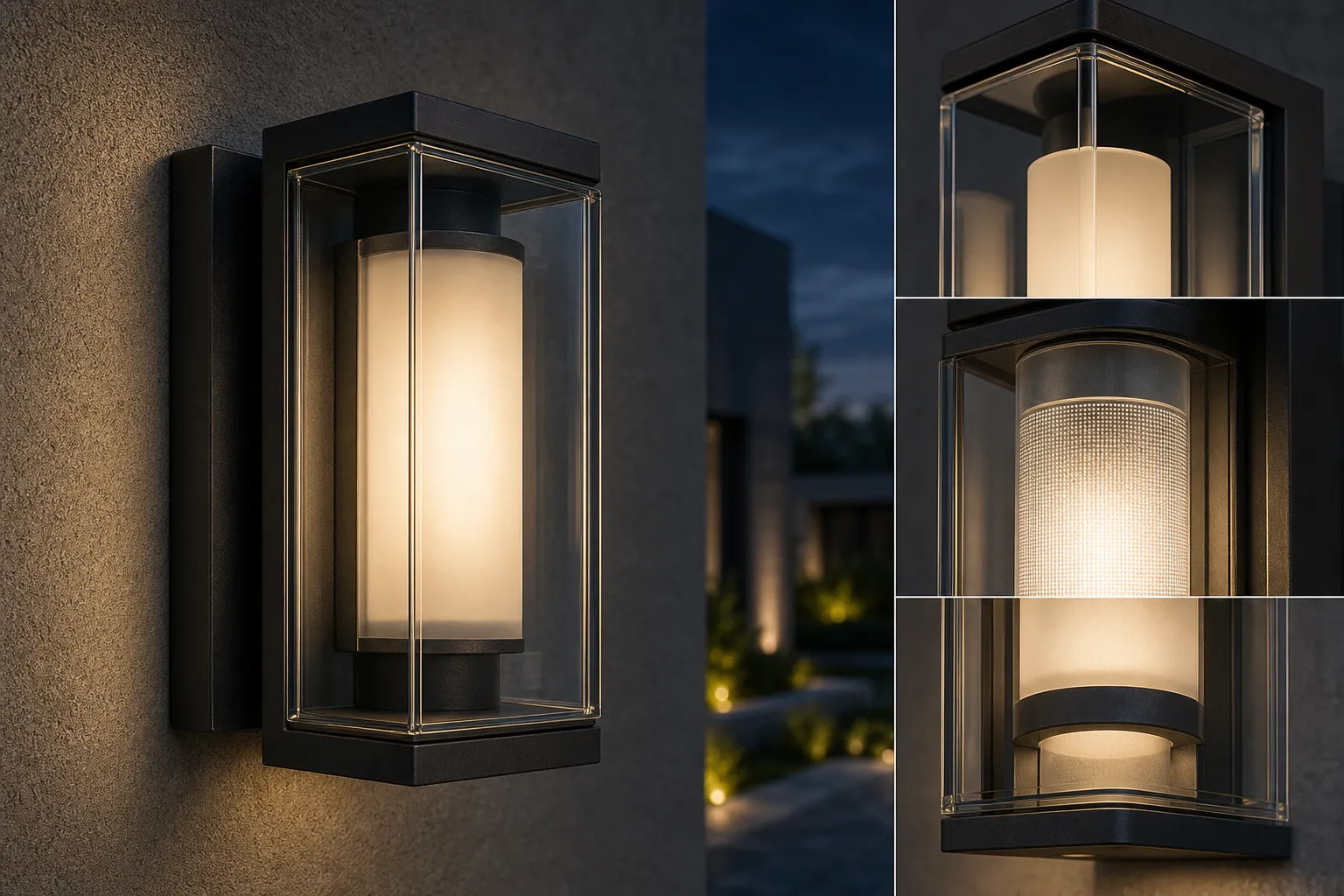
Choosing untreated clear glass or clear glass with a frosted finish for outdoor wall luminaires depends on whether the source is already shielded and how closely the luminaire is viewed. Untreated clear glass suits retro filament sources or fixtures with an internal optical shield, but directly visible LED emitters can cause glare.
An internal frosted or acid-etched finish is more suitable near eye level when moderate scattering is required while keeping the exterior smooth for cleaning. If stronger source hiding and surface luminance uniformity are required, opal glass is a separate material option. The drawing should identify the base glass and treated side instead of specifying only “frosted glass”.
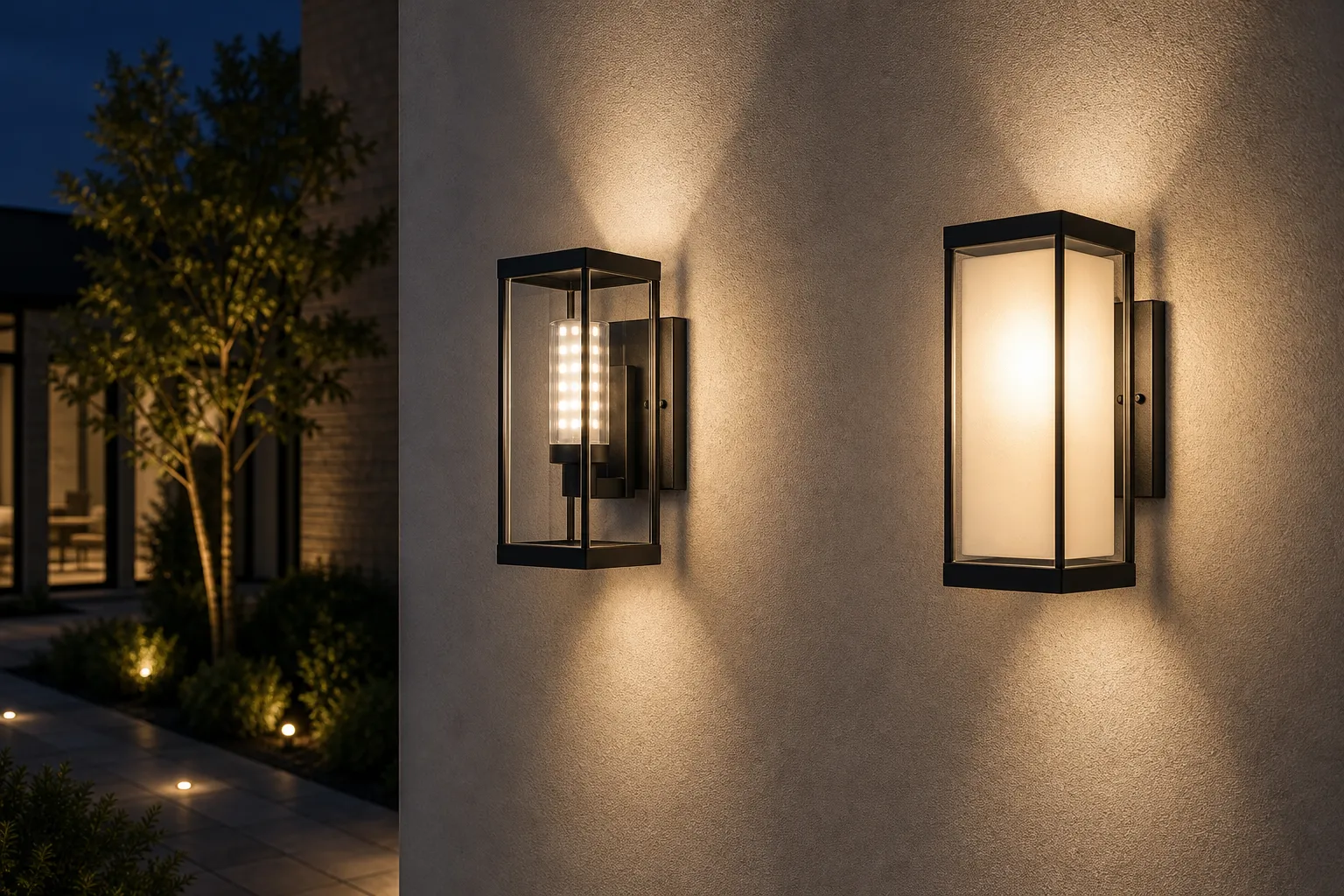
How can glare through clear glass or from exposed LEDs be reduced in outdoor wall luminaires?
Clear glare typically comes from exposed LEDs, highlight spots in reflectors, or specular reflections from glass surfaces. To avoid this problem, you cannot just use the glass as a transparent protective cover, but let the light source pass through blocking, reflection or diffusion before entering the line of sight.
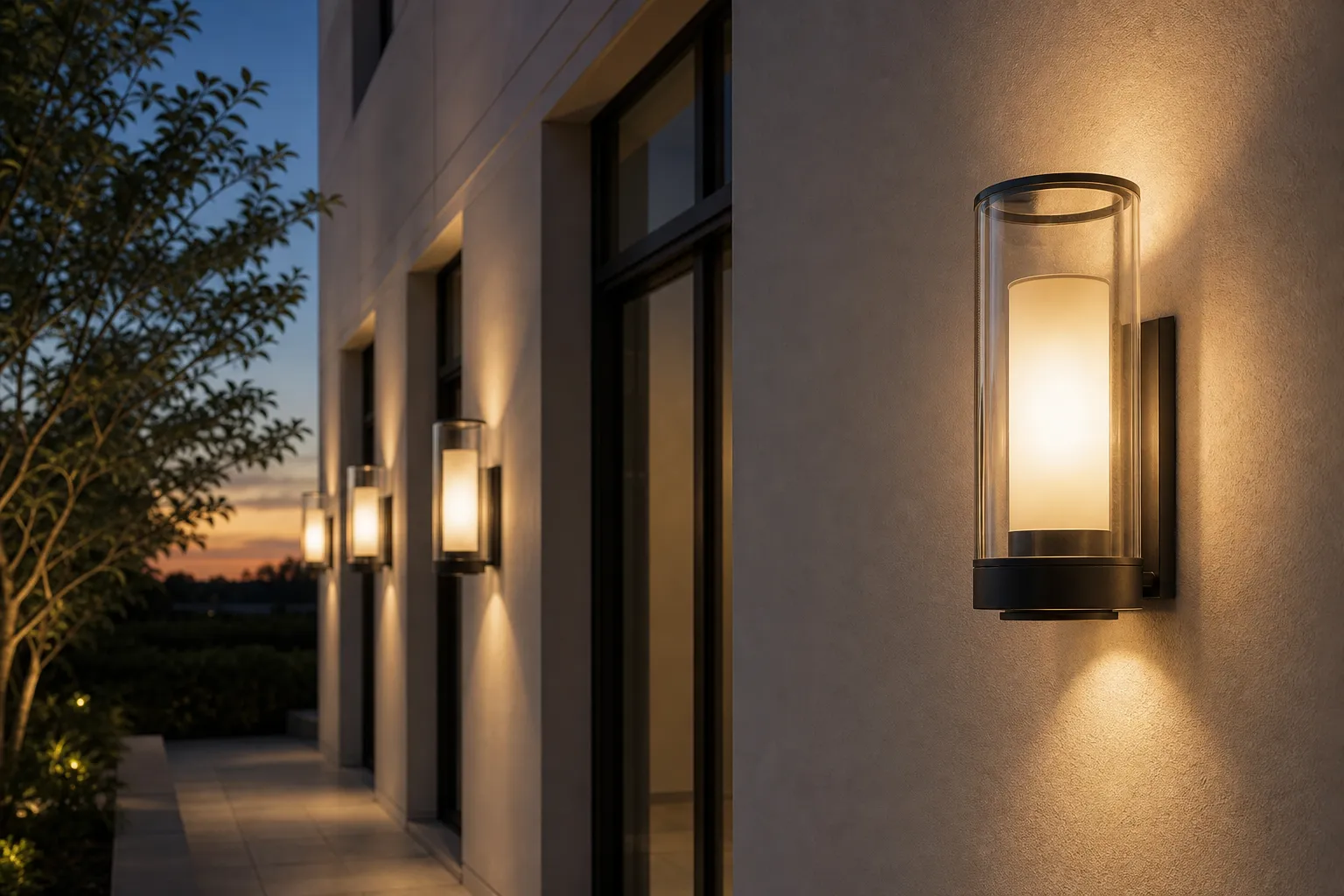
Common practices include using an internal frosted or acid-etched finish on clear glass, lightly textured glass, an opal inner sleeve, a light shield, a low-luminance filament source or a concealed top-lighting structure. For wall luminaires at doorways, balconies and corridors, the source and high-luminance optical images should remain outside normal sight lines.
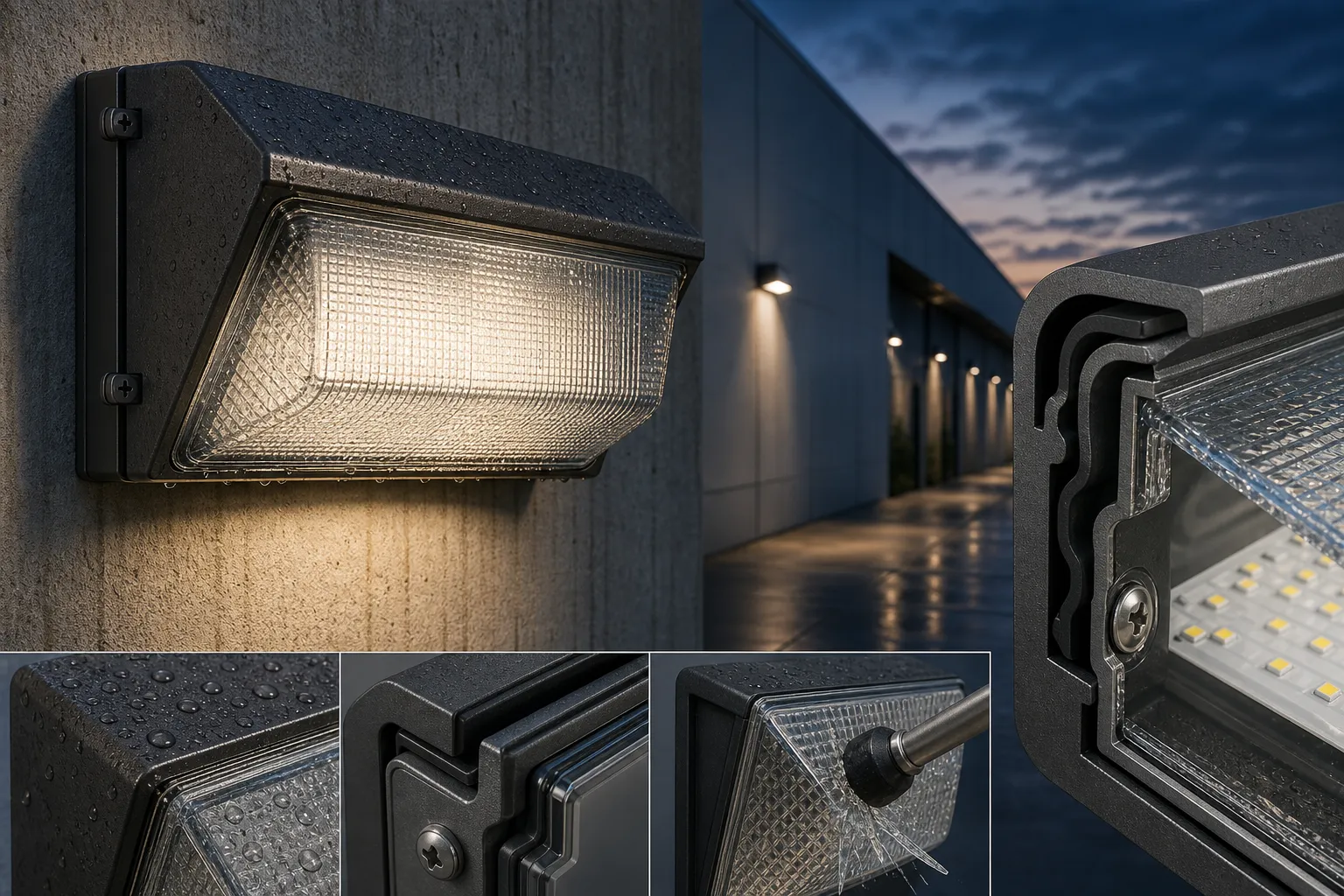
How should protective cover glass be integrated to support water ingress protection, dust protection, and impact resistance in wall-mounted luminaires?
Wall-mounted lights are usually installed on building exterior walls or public passages. The protective cover glass must not only protect the light source, but also withstand rain, dust, wind and sand, and occasional collisions. The key to improving waterproof and dust-resistant performance is to make the protective cover glass dimensionally stable, have smooth edges, and form a continuous and reliable sealing surface with the gasket, pressure frame or adhesive structure.
Impact protection may require increased thickness, heat-treated glass, or a frame that shields vulnerable edges, depending on the application. Thickness alone does not determine impact resistance. Edge quality, heat treatment, support conditions, clamping pressure, and housing design are equally important.
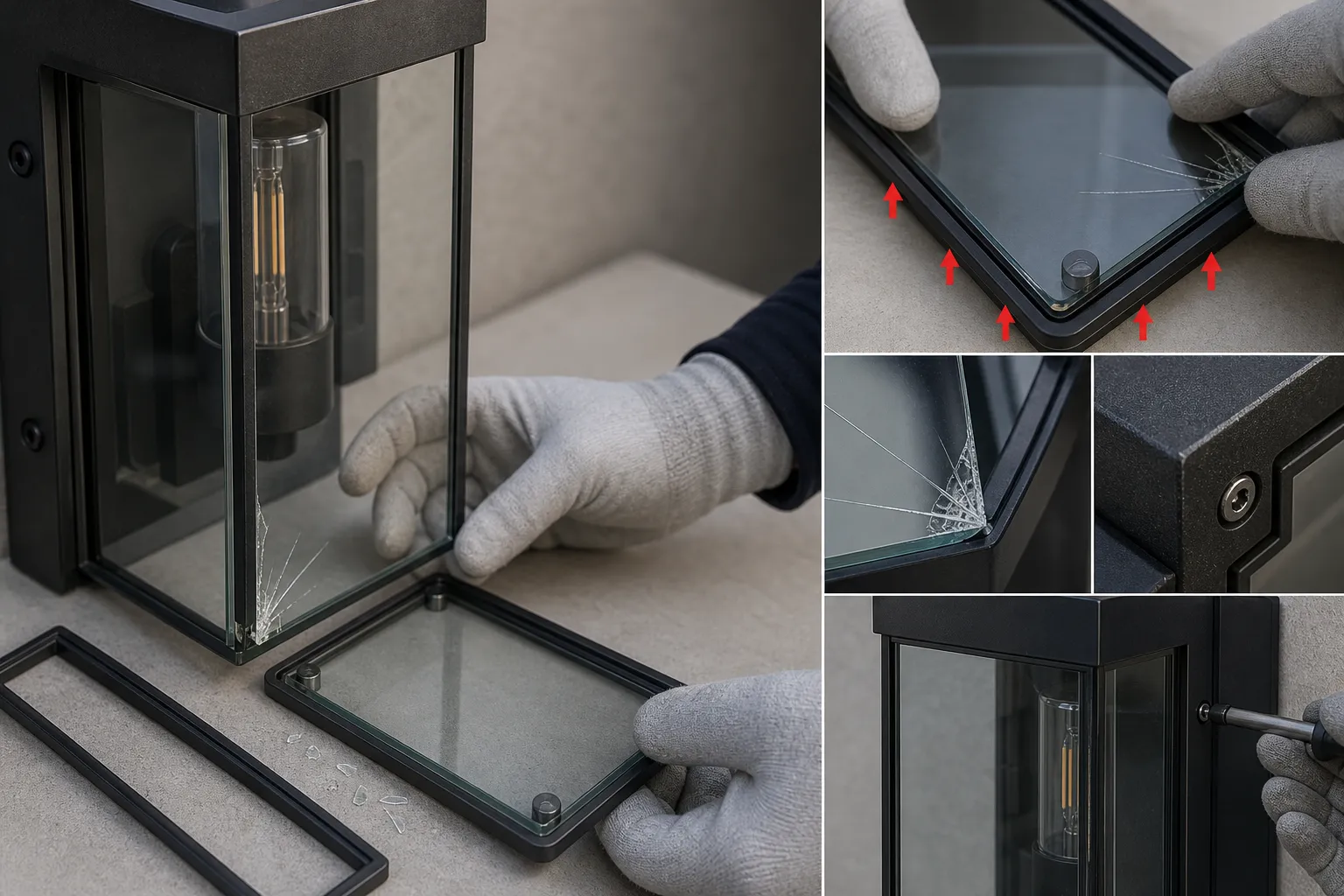
Why is the protective cover glass of outdoor wall luminaire easy to crack during assembly?
Common reasons for cracks in the protective cover glass assembly of outdoor wall luminaires are mismatched dimensional tolerances on the mouth, over-tightening of the metal housing, uneven stress on the screws, chipping at the edge of the glass, or failure to control the residual stress inside the glass. Glass itself has strong compression resistance, but is very sensitive to point stress, edge defects and local distortion.
During assembly, avoid allowing screws, metal buckles or hard shells to directly press on the weak edges of the glass. It is best to use silicone rings, soft pads, uniform compression rings or reasonable gaps to buffer them. Before mass production, samples must be used to verify assembly tolerances to confirm that the glass will not sustain stress due to thermal expansion and contraction or installation deviation.
How should assembly tolerances be controlled between a wall-light glass shade and the metal housing?
A reasonable gap needs to be maintained between the wall luminaire protective cover glass and the metal housing. It should not be too loose to cause shaking, water intrusion and abnormal noise, nor too tight to cause assembly stress and cracking due to thermal cycling. Tolerance control depends on the size of the glass opening, the inner diameter of the housing, the compression level of the gasket, and the fixing method.
The gasket should provide the primary compression and cushioning rather than allowing the glass to contact the metal directly. Because blown or pressed glass shades can vary slightly in size from batch to batch, the design should include suitable assembly clearance, locating steps, soft washers and a uniform clamping structure.
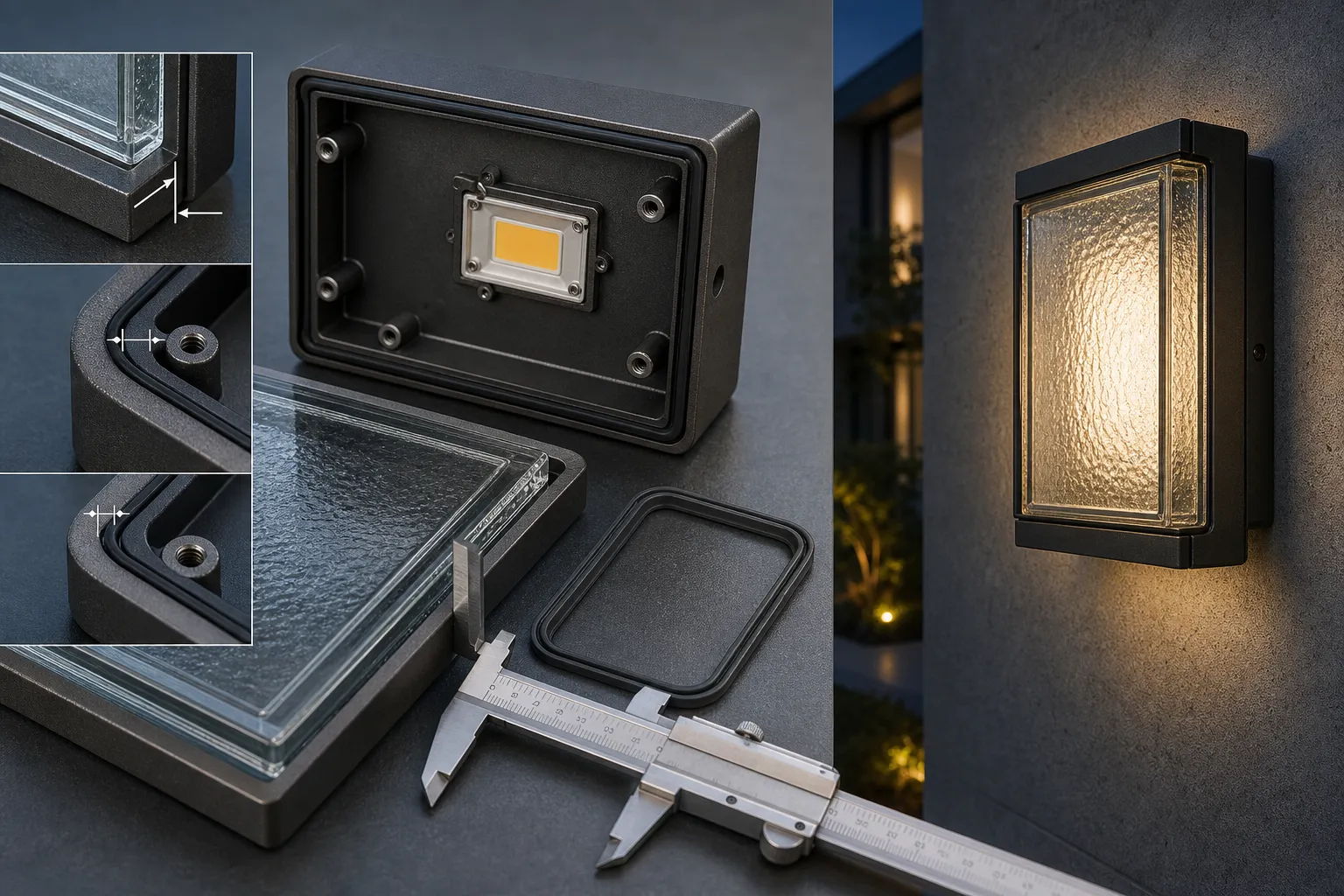
How can water ingress around the glass interface of an outdoor wall luminaire be prevented?
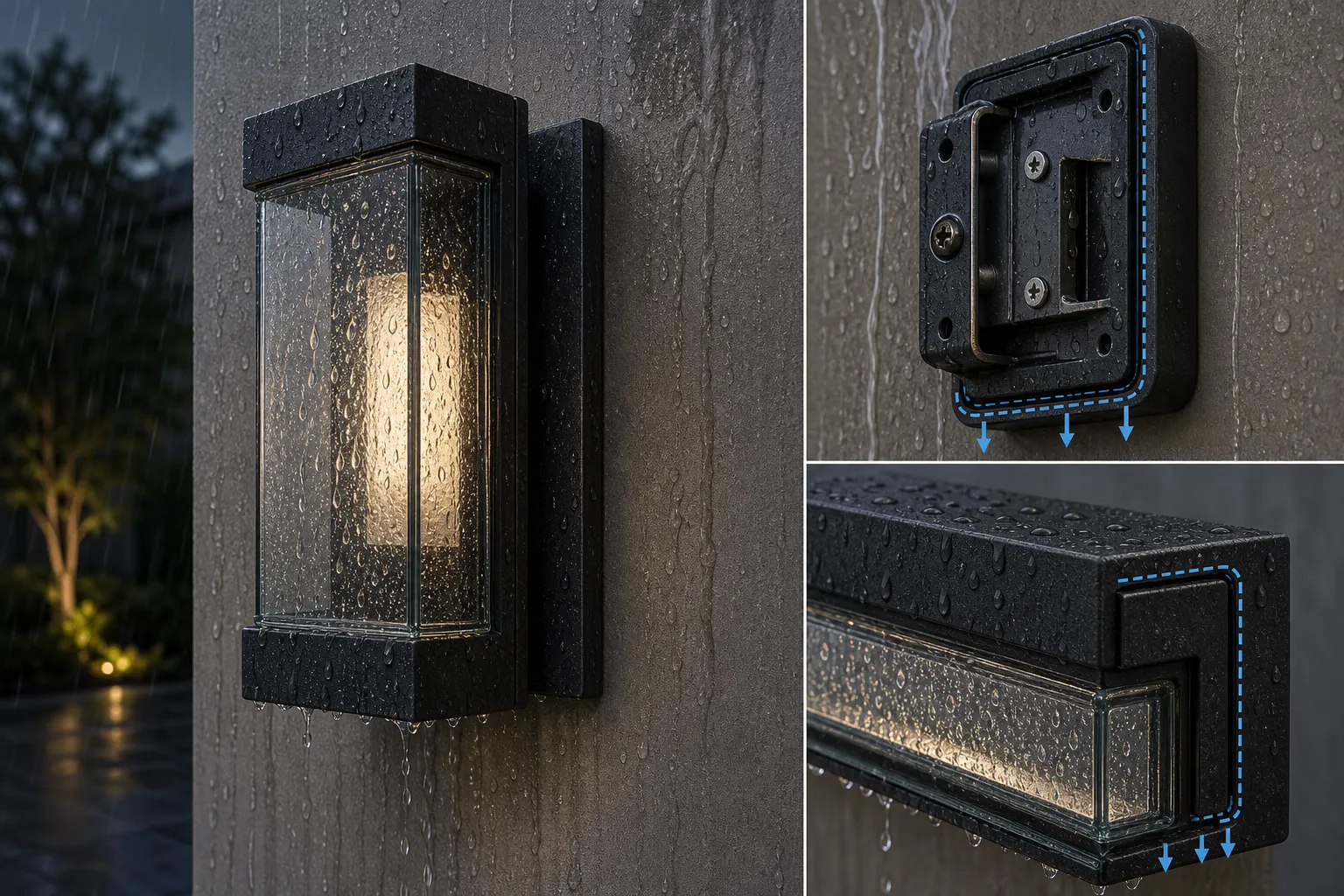
Water ingress through the back panel of an outdoor wall luminaire is often not caused by the glass alone. It is usually a system-level sealing problem involving the protective cover glass, back panel, wall interface, cable entry and screw holes. Rainwater may flow down the wall, enter between the back panel and the wall, and then reach the luminaire through cable entries or assembly gaps.
During design, reliable sealing gaskets, drainage paths and waterproof cable-entry details should be incorporated into the back panel, together with a continuous sealing surface between the protective cover glass and the housing. During installation, an uneven wall, loose fasteners or incomplete sealant can compromise water ingress protection. The waterproofing of wall luminaires must therefore account for both the product design and on-site installation conditions.
Is tea glass, amber glass or textured glass suitable for retro outdoor wall sconces?
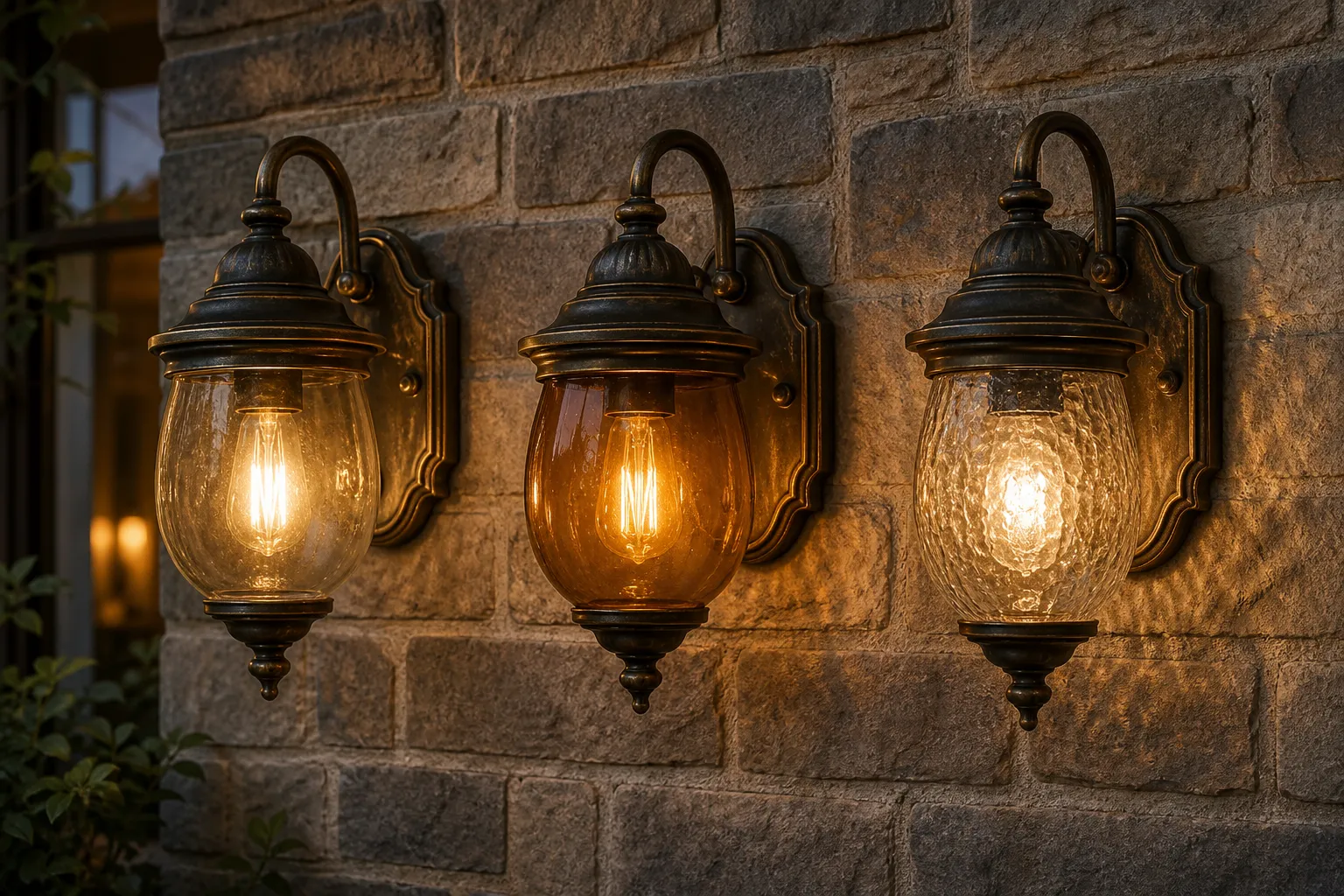
Vintage outdoor wall sconces often use tea, amber, and textured glass to create a warm, nostalgic, and handmade feel. Amber glass will make the light warmer and is suitable for brass, black metal, antique bronze and other shells; brown glass is more restrained, has a retro color filter effect during the day, and will not change the atmosphere as obviously as amber at night.
Textured glass can add depth without drastically changing the color temperature, such as ripples, vertical lines, bubbles or hammered glass. The actual choice depends on the style of the project: if you want a warm atmosphere, choose amber, if you want a low-key retro look, choose brown, if you want light, shadow and texture, choose textured glass. You can also combine light-colored glass with textures.
How can an outdoor wall-light glass shade balance appearance, diffusion, cleaning, and maintenance?
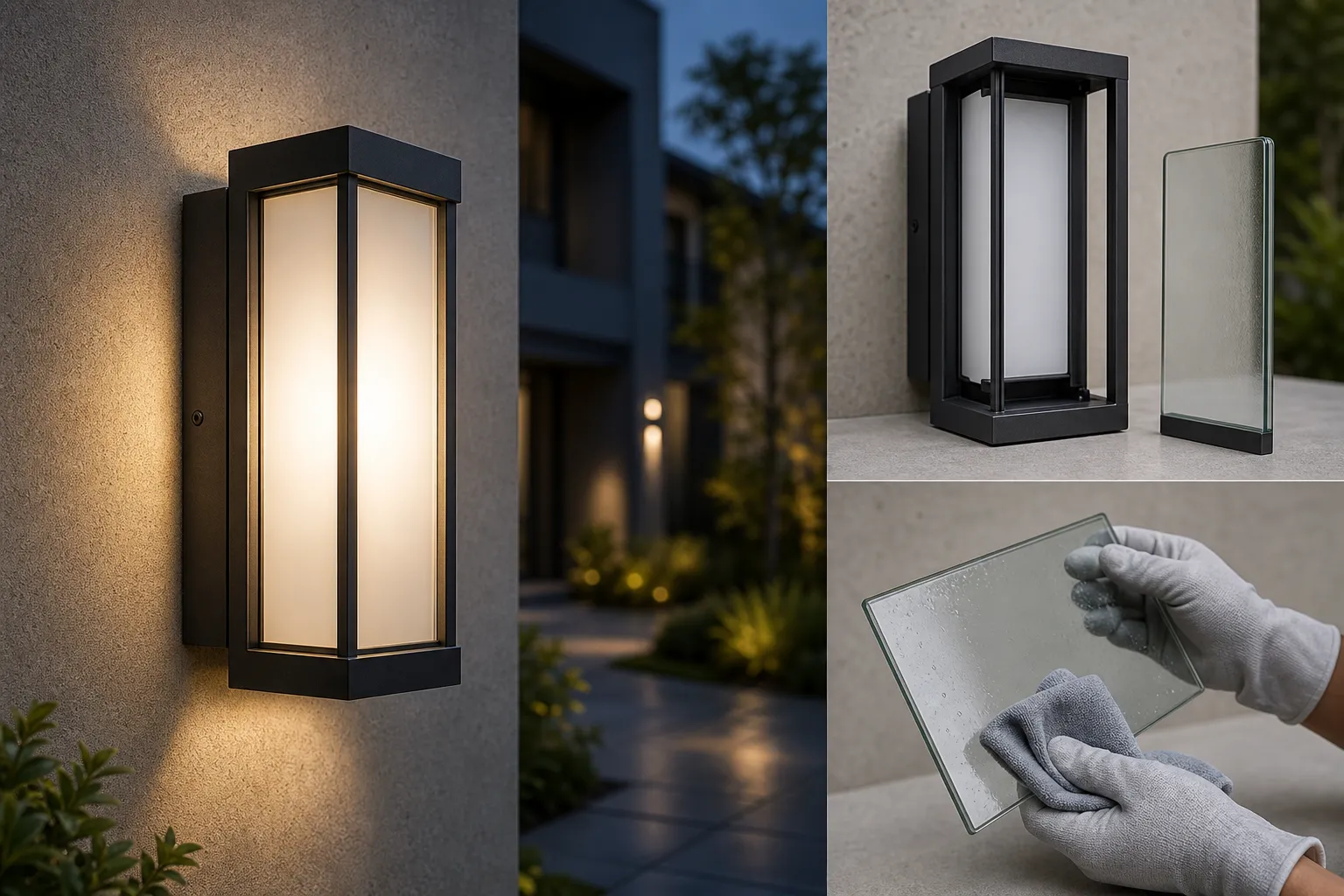
The appearance, soft light and ease of maintenance of an outdoor wall light glass shade need to be considered together. Frosted, opalescent, and textured glass can enhance the soft light effect and also hide internal LEDs and dust, but if the surface is too rough or deeply textured, it may be more susceptible to dust, watermarks, and smudges.
A more balanced solution is to choose glass with frosted inside and smooth outside, which can diffuse light and facilitate cleaning of the outer surface. For wall luminaires with high installation locations or inconvenient maintenance, the glass shape should minimize grooves and dead corners; for key decorative locations, textured glass can be used appropriately to enhance the texture.
How can a transparent glass shade conceal glaring LED emitters in a wall luminaire?
A transparent wall-luminaire glass shade does not conceal the LED emitters by itself, so glare must be controlled through the internal optical structure. Opal inner tubes, frosted diffusers, light shields, reflector cups or low-luminance linear light sources can keep the LEDs out of direct view.
Another approach is to place the light source above, below or behind, allowing the light to be reflected from the wall or reflected inside the luminaire body before being revealed. If you must retain a completely transparent retro look, choose filament-type LEDs, low-brightness warm light sources, or bulbs with frosted shades to avoid direct visibility of high-spot light sources.
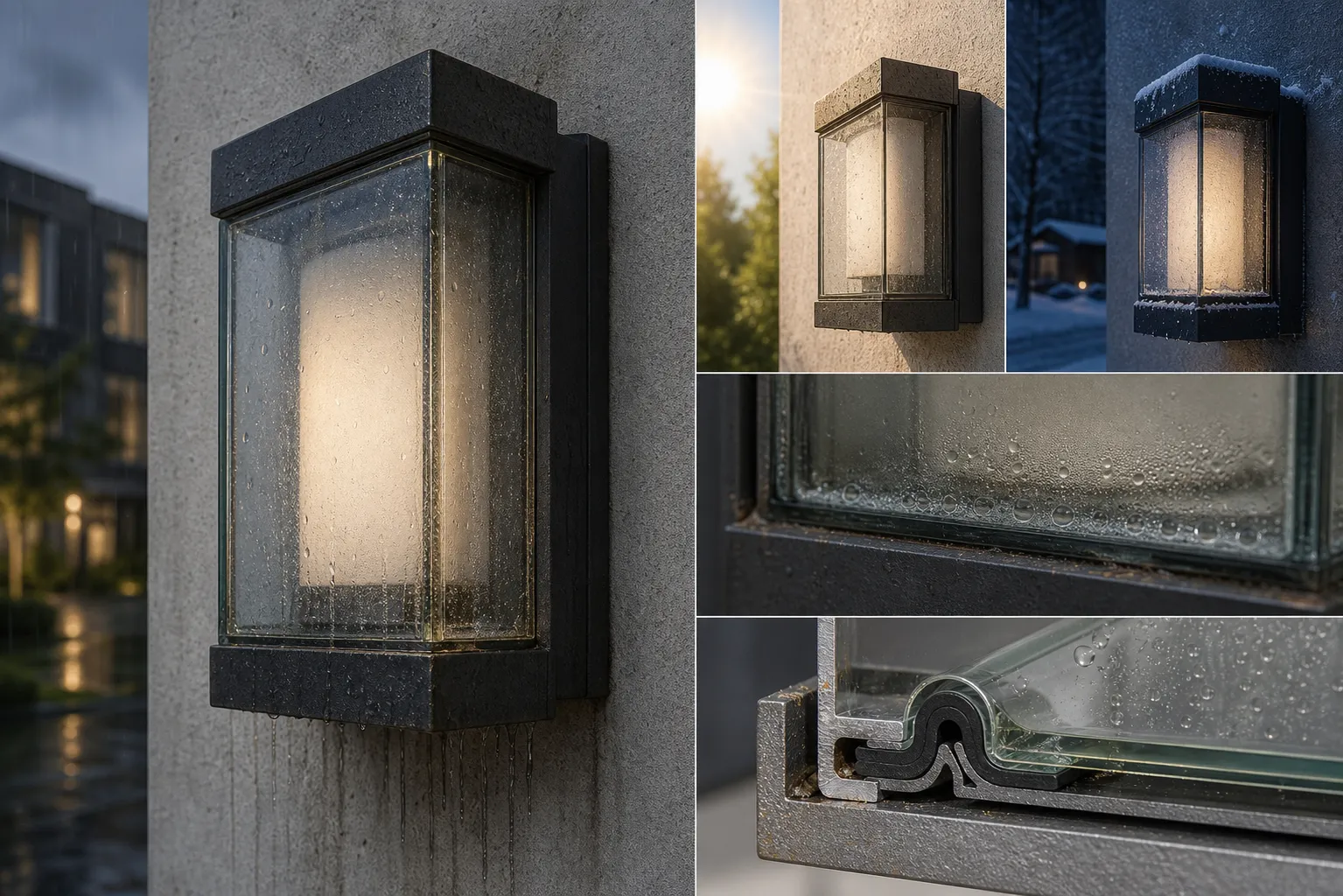
How do outdoor wall light glass components cope with sealing failure caused by thermal cycling?
When outdoor wall lights are heated during the day, cool down at night, and washed by rain, pressure changes will occur inside the luminaire body, and the glass, metal housing, and gaskets will also undergo slight displacements due to thermal expansion and contraction. If there is no buffer space in the structure, the seal may gradually compress and fail, and the glass may crack due to long-term stress.
To deal with thermal cycling, it is necessary to choose weather-resistant sealing materials, control the compression of the gasket, and avoid an excessively tight fit between the glass and the metal. If necessary, a vent valve or reasonable drainage structure can be added to reduce the risk of negative-pressure water absorption and internal condensation. Glass edge flatness and thickness tolerances can also affect seal stability.
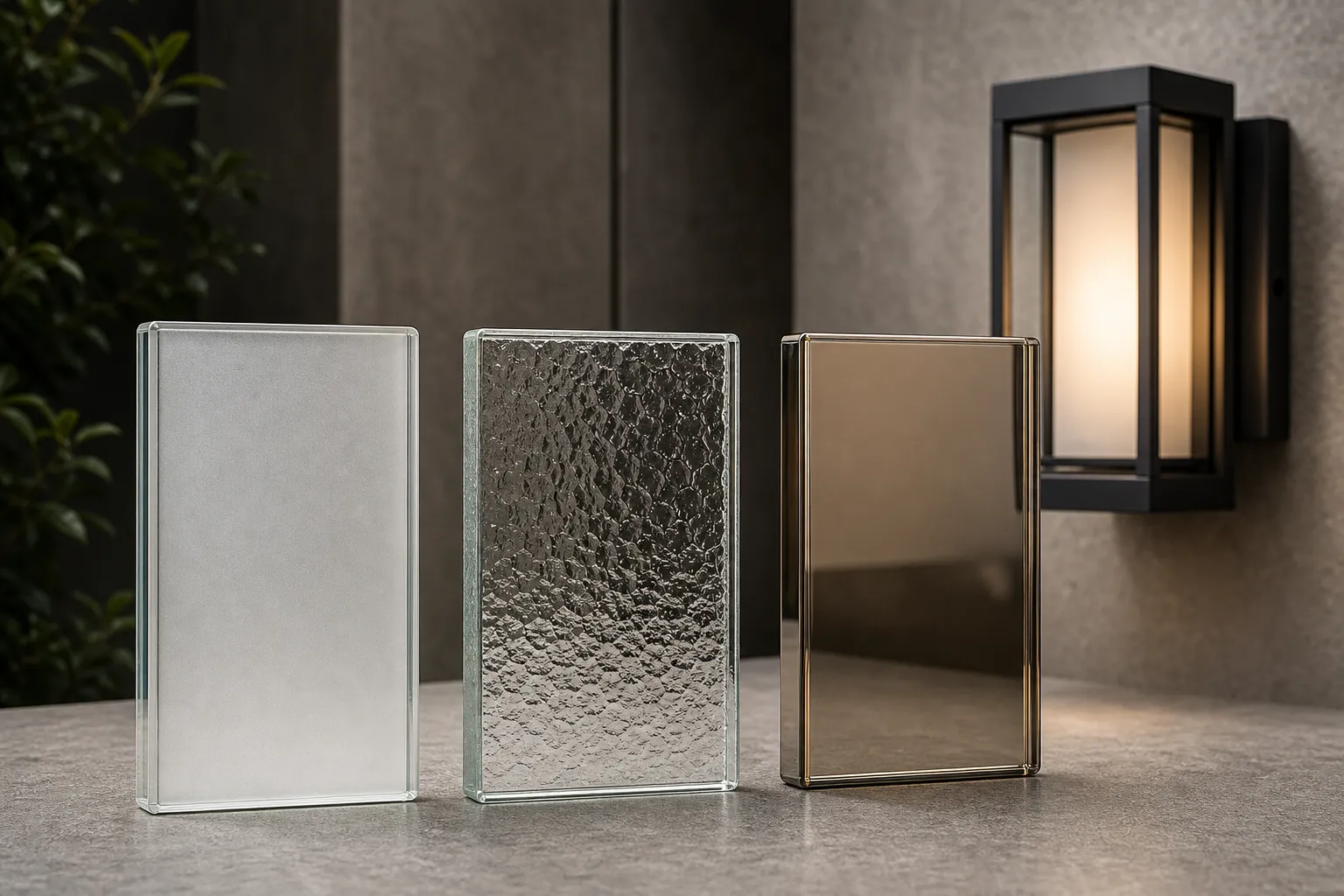
Can the outdoor wall luminaire protective cover glass be sandblasted, embossed or electroplated?
The outdoor wall luminaire protective cover glass can be sandblasted, embossed, acid etched, coated or partially decorated, but the process must be selected based on outdoor weather resistance and maintenance requirements. Sandblasting and acid etching can create a soft light effect, and embossing can bring about texture and light and shadow changes, making it suitable for decorative wall luminaires.
The plating or metallization effect should be used with caution, especially if the outer surface plating is exposed to rain, ultraviolet rays and detergents for a long time, it may peel off, become discolored or mottled. A safer approach is to place the easily damaged treatments on the inside, or choose a surface process with better body color, pressed texture, and weather resistance.
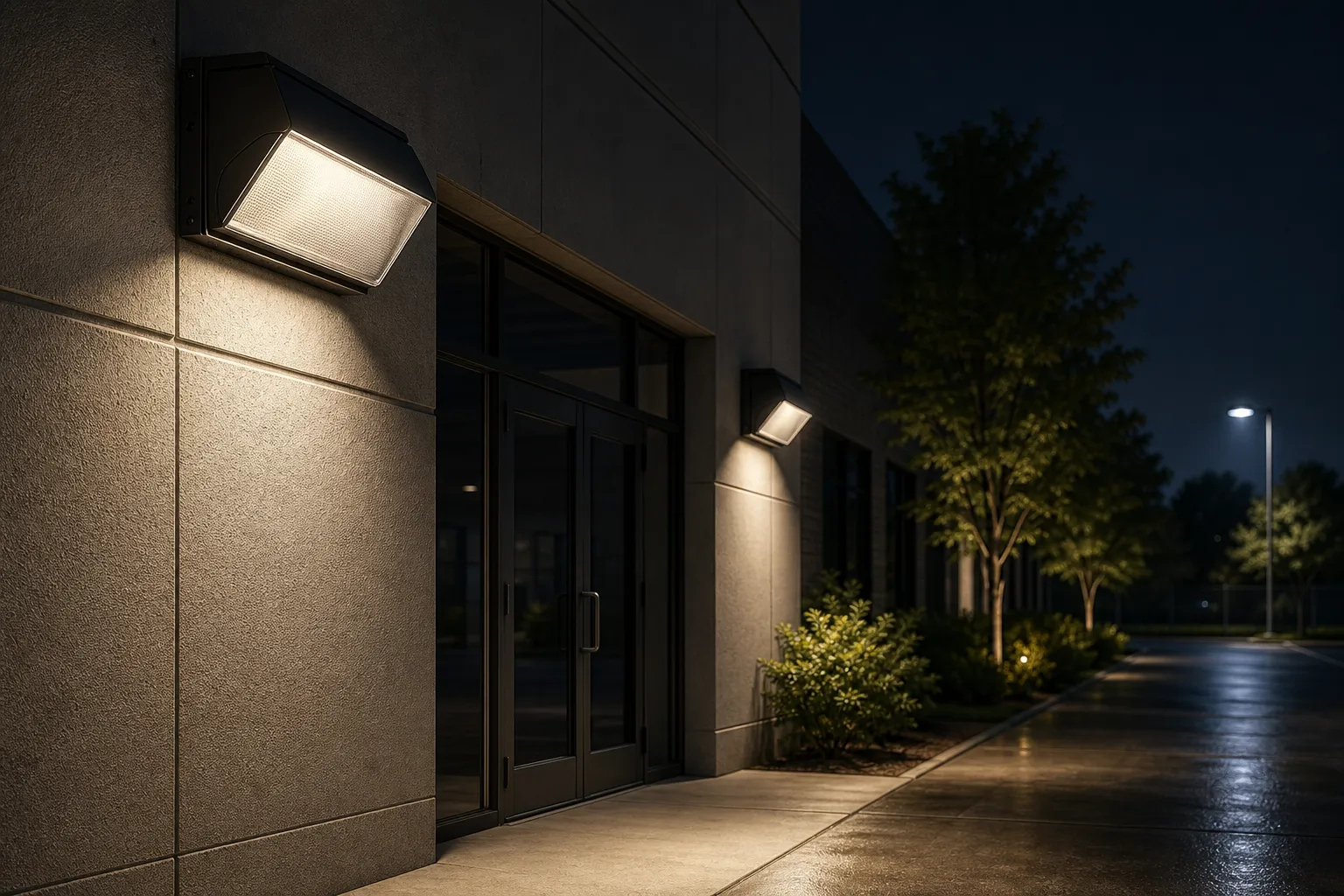
How does the wall-mounted light protective cover glass reduce the glare of security lighting at night?
When wall-mounted lights are used for security lighting, they tend to have high brightness. If the protective cover glass is completely transparent and faces the human eye, it is easy to produce strong glare. To reduce glare, we can start from three aspects: glass, light source and structure: the glass can choose moderate haze or micro-texture, the light source can use lenses to distribute light, and the structure can add light-shielding frames or downward illumination angles.
The emphasis is on allowing light to cover passages, walls and floors, rather than shining directly outward horizontally. Although excessive haze can soften the light, it may reduce efficiency and expand spilled light. Therefore, security wall lights should strike a balance between brightness, coverage and visual comfort.
Contact Us
Your feedback fuels our growth, and your questions drive our solutions.
We value your feedback, inquiries, and suggestions. Please feel free to get in touch with us
General inquiries
Please contact us via sales@bo-glass.com, and we will reply to you as soon as possible.
Interested to work with us
Drop your resume at info@bo-glass.com
and we will get back to you shortly.
Request a Custom Glass Quote
Tell us about your project or upload a drawing.
Your drawings remain confidential.
We uses the contact information you provide to us to contact you about our relevent content, products, and services.