
Architectural Facade and Wall Washer Glass Guide
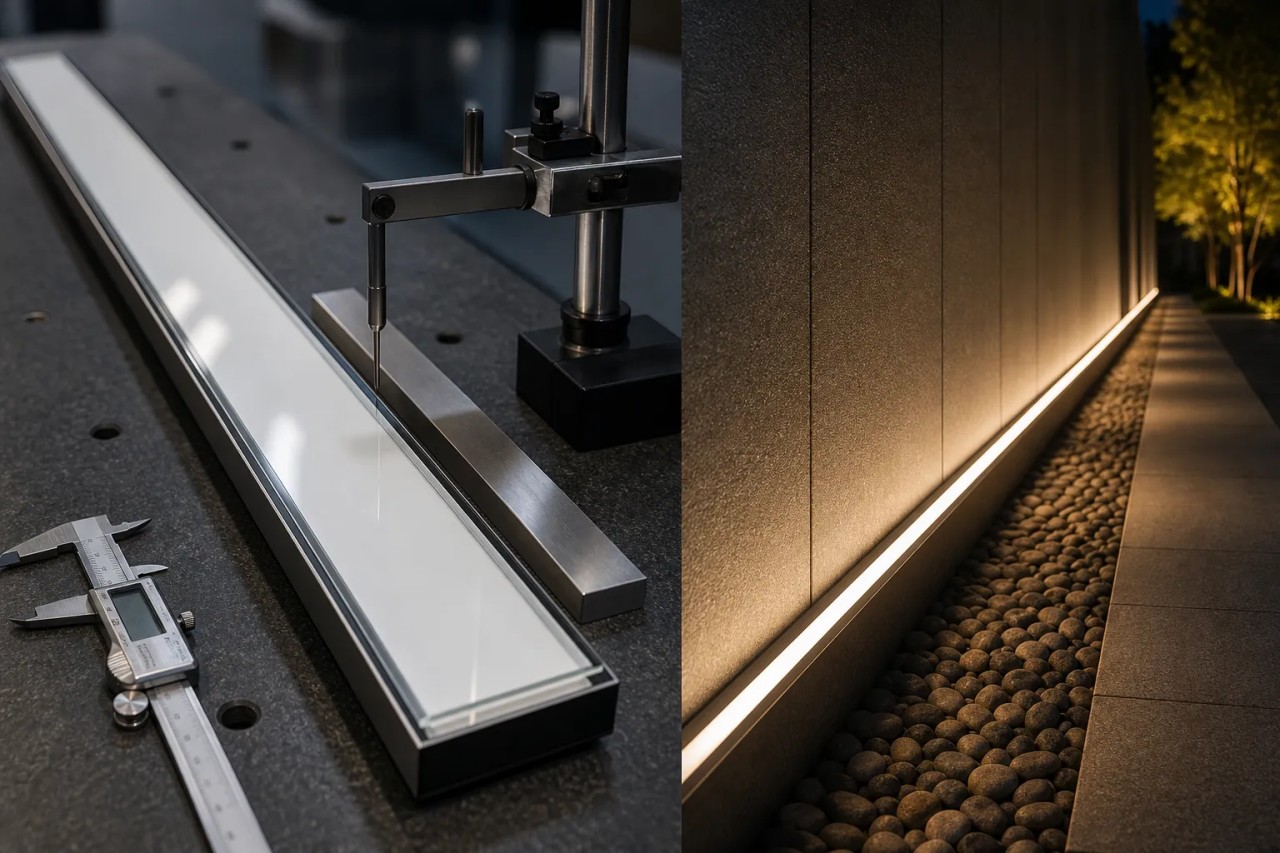
Architectural facade lighting reveals small variations that may be invisible in a single sample. Flatness, straightness, transmission, haze, color, LED pitch, optical alignment, and installation angle can determine whether a wall wash appears continuous or broken. This guide focuses on protective cover glass and optical glass lenses used in wall washers, facade luminaires, floodlights, and linear systems, with emphasis on repeatable beam quality and batch consistency.
Glass Components for Facade Lighting and Wall Washers
- Low-iron reference
- A published Pilkington example reports 91.1% light transmittance for 3 mm Optiwhite, calculated to ISO 9050. Treat this as a product example, not a universal value.
- Row-to-row consistency
- Control thickness, luminous transmittance, haze and ΔE00 by lot; define the permitted range in the approved sample rather than using “visually similar”.
- Geometry record
- Measure sealing-span flatness, bow, twist and both diagonals. A single length-and-width check cannot predict gasket contact or beam continuity.
- Optical verification
- Compare candela distribution or wall illuminance with the same luminaire, aiming distance and glass orientation; also report CCT and Duv shift.
Why do architectural wall washers need high-consistency long protective cover glass?
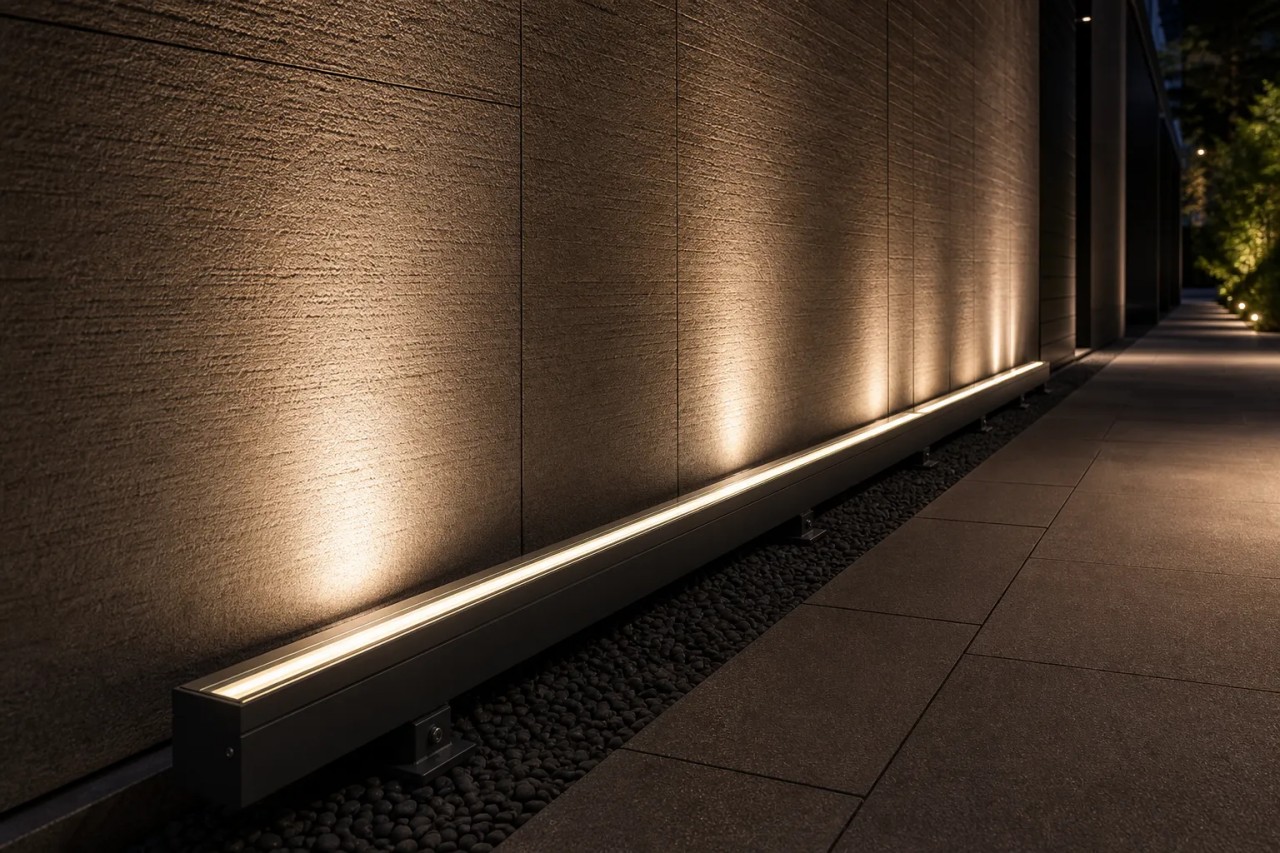
Architectural wall washers are usually installed in rows on the edge of exterior walls, curtain walls or facades. When multiple luminaires emit light continuously, the human eye can easily see brightness breakpoints, color difference and uneven light spots. If the light transmittance, thickness, flatness or surface treatment of the long protective cover glass is inconsistent, it will directly affect the continuity of light and dark on the entire wall.
Therefore, the wall washer protective cover glass must not only be transparent, but also ensure batch consistency, edge straightness, surface cleanliness and assembly stability. Especially for linear wall washers, slight warping, scratches or haze changes on the protective cover glass may be amplified into obvious light and shadow problems on the wall.
How does the wall washer optical glass lens affect the beam angle and wall spot?
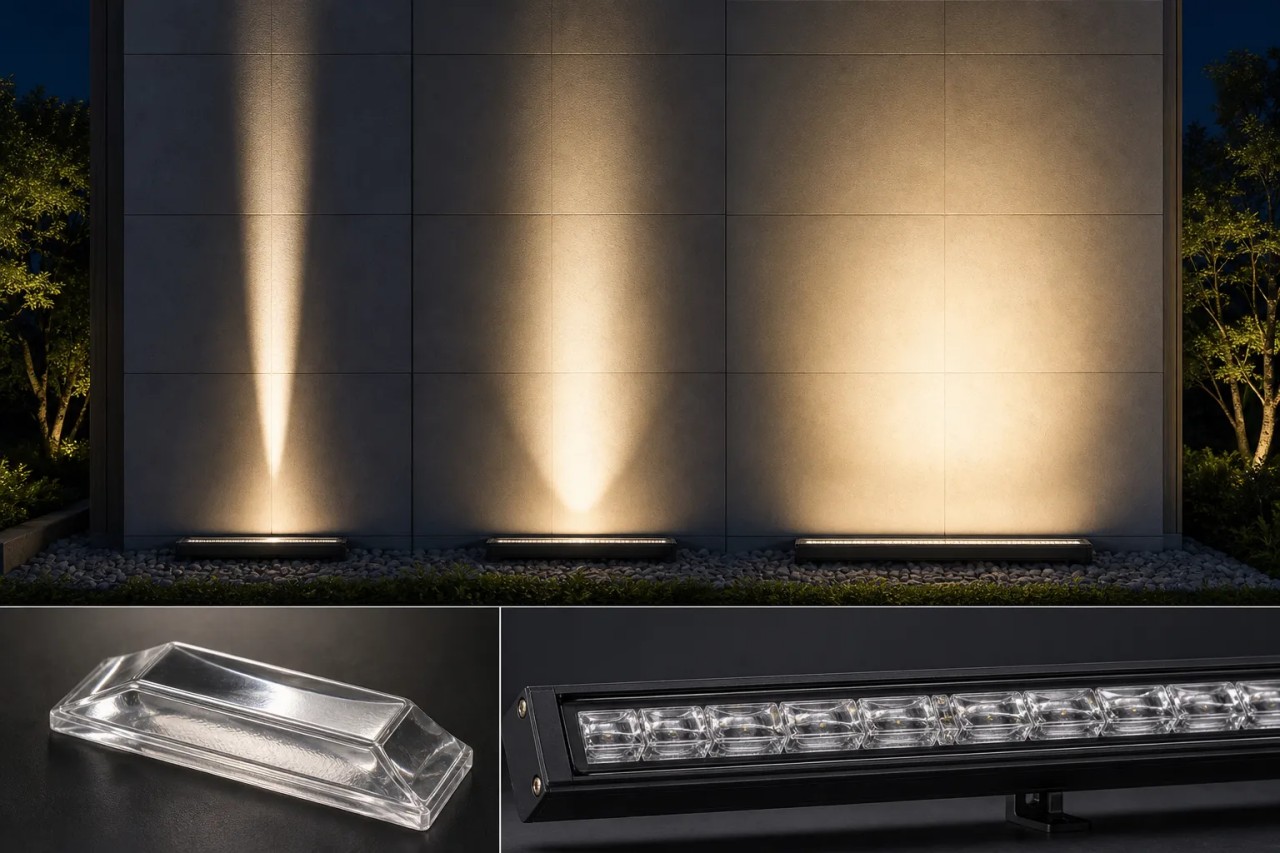
Wall washer optical glass lenses change light direction through curvature, thickness, and optical surfaces, thereby determining beam angle, projection distance, and wall spot shape. Narrow-angle lenses are suitable for tall walls, long-distance projection, and key facade emphasis, while wide-angle lenses suit close-range wall washing and uniform illumination.
If lens focal length, curvature, or installation position deviates too much, the wall may show widened spots, divergent edges, local bright spots, or dark areas. For architectural projects, lens design should be verified together with LED layout, distance from the wall, and installation angle; optical glass lens parameters should not be evaluated in isolation.
How can linear wall washers avoid dark ends and an overly bright center?
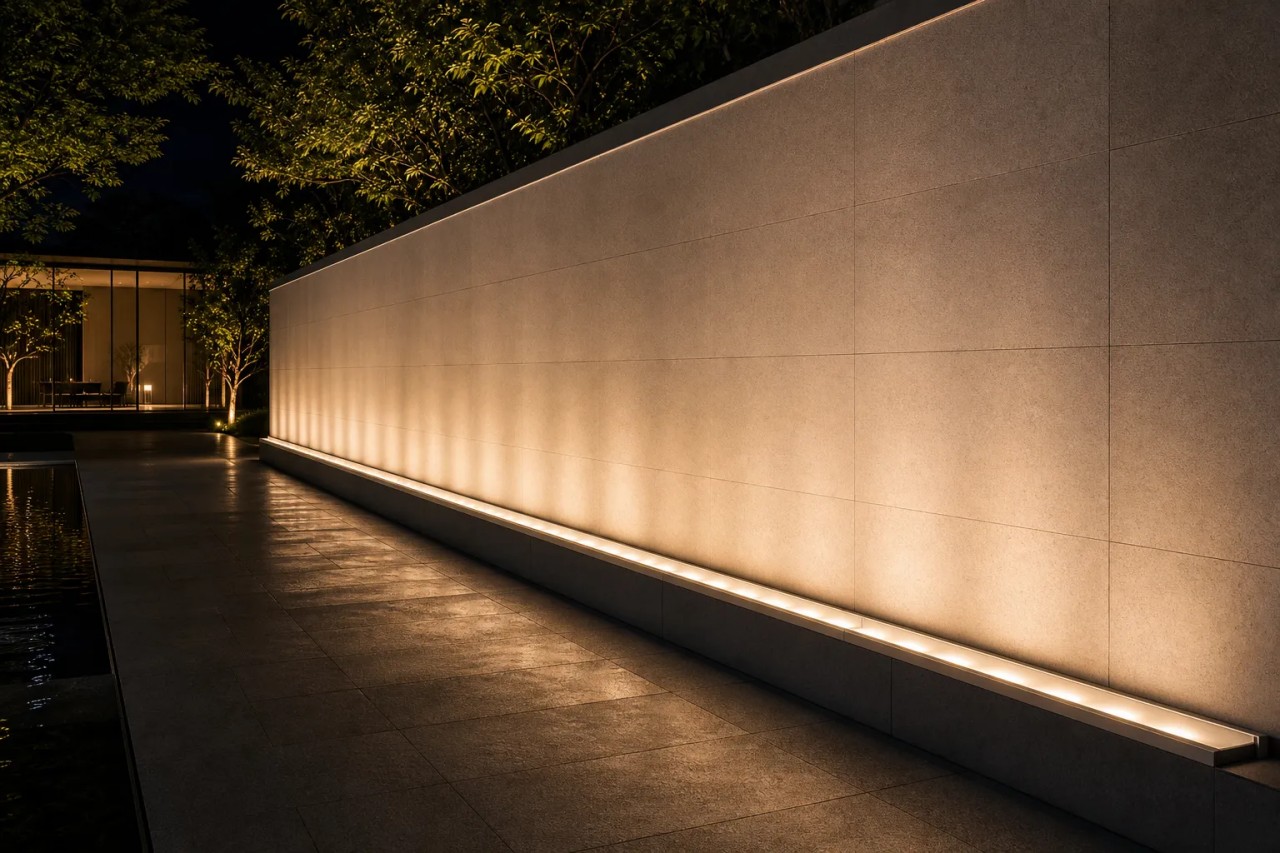
The linear wall washer appears dark at both ends and bright in the middle, which is usually related to LED arrangement, end-structure occlusion, lens continuity and protective cover glass consistency. If the retaining frame is too wide at either end, the sealing-adhesive layer thickness varies, or the lens-end transition is not properly controlled, light output near the ends will be reduced.
The solution should start with the complete optical system of the luminaire, including optimizing LED spacing, end fill light, lens splicing, cover flatness and installation angle. Glass components need to maintain consistent light transmission in the length direction, stable edge processing, and avoid optical breakpoints caused by black edges, gaps or local stress at the ends.
How can exterior floodlight protective cover glass maintain high light transmission and weather resistance?
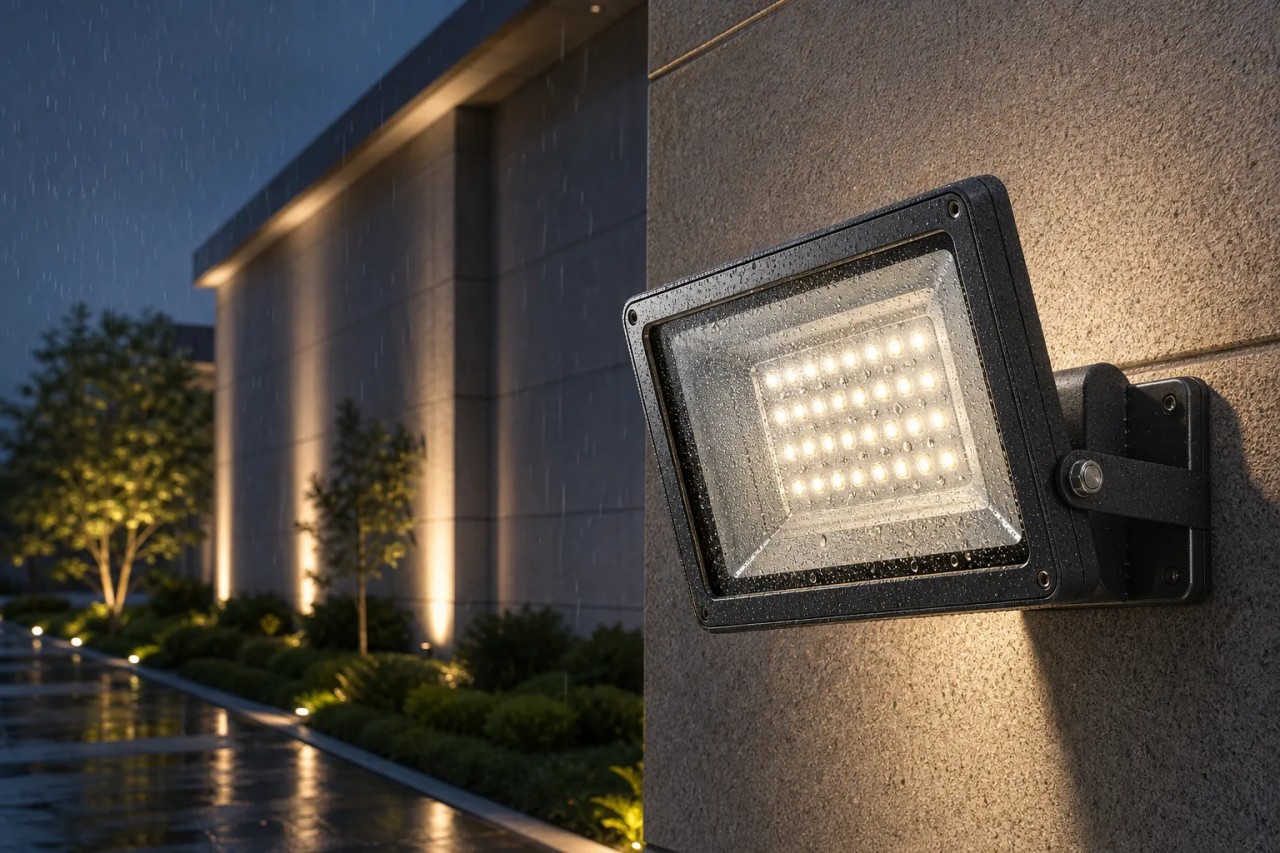
Outdoor facade floodlights usually require high brightness and longer projection distance, so the protective cover glass should prioritize high transmittance, low impurity content, and a flat surface. Ordinary clear glass can meet many projects, while low-iron glass is more suitable for architectural lighting projects with higher requirements for efficiency, color rendering, and color temperature stability.
For weather resistance, attention should be paid to edge treatment, tempering or heat-treatment quality, sealing-surface flatness, and coating durability. Outdoor floodlights face rain, sand, ultraviolet exposure, and pollutants for long periods. The protective cover glass should reduce light loss and be easy to clean, avoiding scratches, dirt buildup, or coating failure that could affect long-term transmittance.
How does building facade lighting glass reduce glare and light pollution?
Glass for building facade lighting is designed so that light reaches the building surface rather than scattering into the sky, windows or the eyes of passers-by. Although the transparent cover has low light loss, if the angle and shading design of the luminaire are insufficient, it is easy to produce spilled light and glare.
The light output range can be controlled through low-glare glass, micro-textured diffusion, hoods, honeycomb grilles, precise lenses and reasonable installation angles. The glass component itself should remain optically neutral and consistent to avoid stray light caused by surface reflections, scratches, or uneven haze. Good facade lighting should highlight the building's outline while minimizing interference with surrounding residents and the night sky.
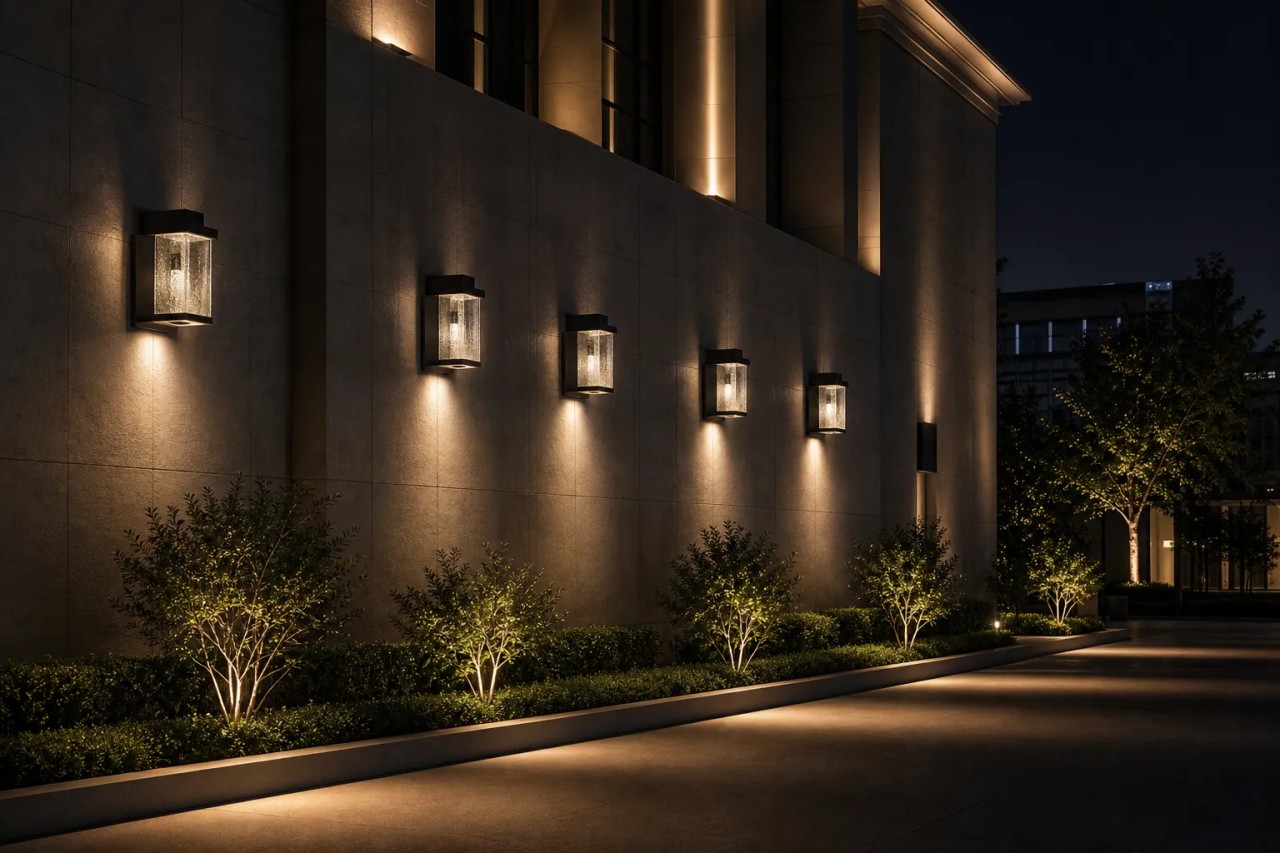
How does protective cover glass affect the light direction of up-and-down wall luminaires?
Up and down wall lights usually form wall beams through the upper and lower light outlets. The role of the protective cover glass or glass window is to protect the light source and stabilize the light boundary. If the glass is too diffuse, the edge of the beam will become softer and the range will become wider; if the glass is too transparent, glaring light sources or internal structures may be visible.
When controlling the direction of light emission, the glass form, internal reflective cup, light shield, lens, and opening size must be designed together. Top light and bottom light can use different haze or different lens structures to meet the needs of decorative spots, functional lighting and glare control. The fit between the glass edge and the housing must also be stable, otherwise the beam symmetry will be affected.
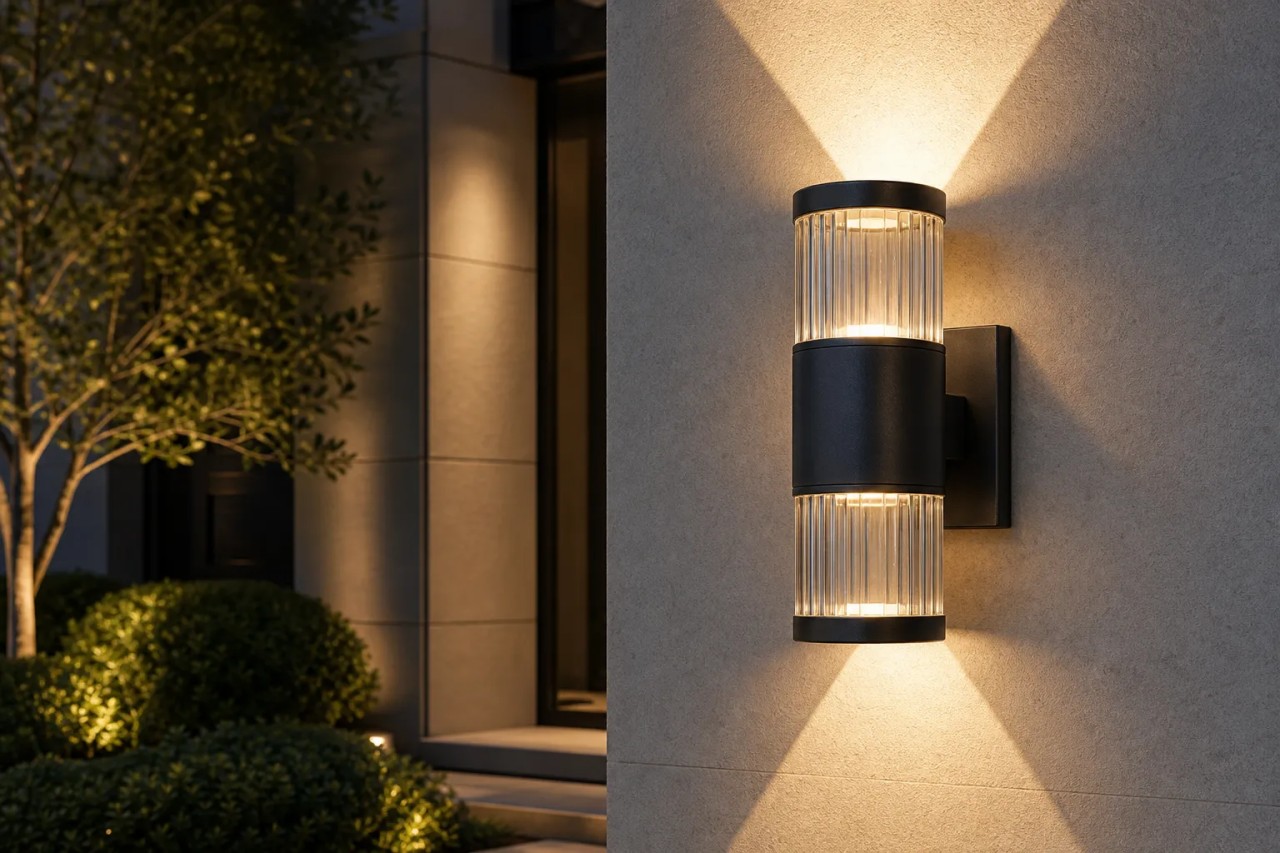
How does the protective cover glass of the outdoor wall luminaire take into account security brightness and visual comfort?
Outdoor wall-mounted lights are often used on building exterior walls, passages, parking lot entrances and public areas, and need to provide sufficient security brightness. However, if the protective cover glass is too transparent and the LED array is directly exposed, it will produce a strong glare at night, especially when the human eye is close to the height of the luminaire.
A better approach is to use moderately diffused glass, internal lenses or light-shielding structures to allow light to evenly cover walls and floors while reducing frontal glare. The protective cover glass must also have reliable sealing and impact resistance, because wall-mounted lights are exposed to rain, dust, sand and human contact all year round.
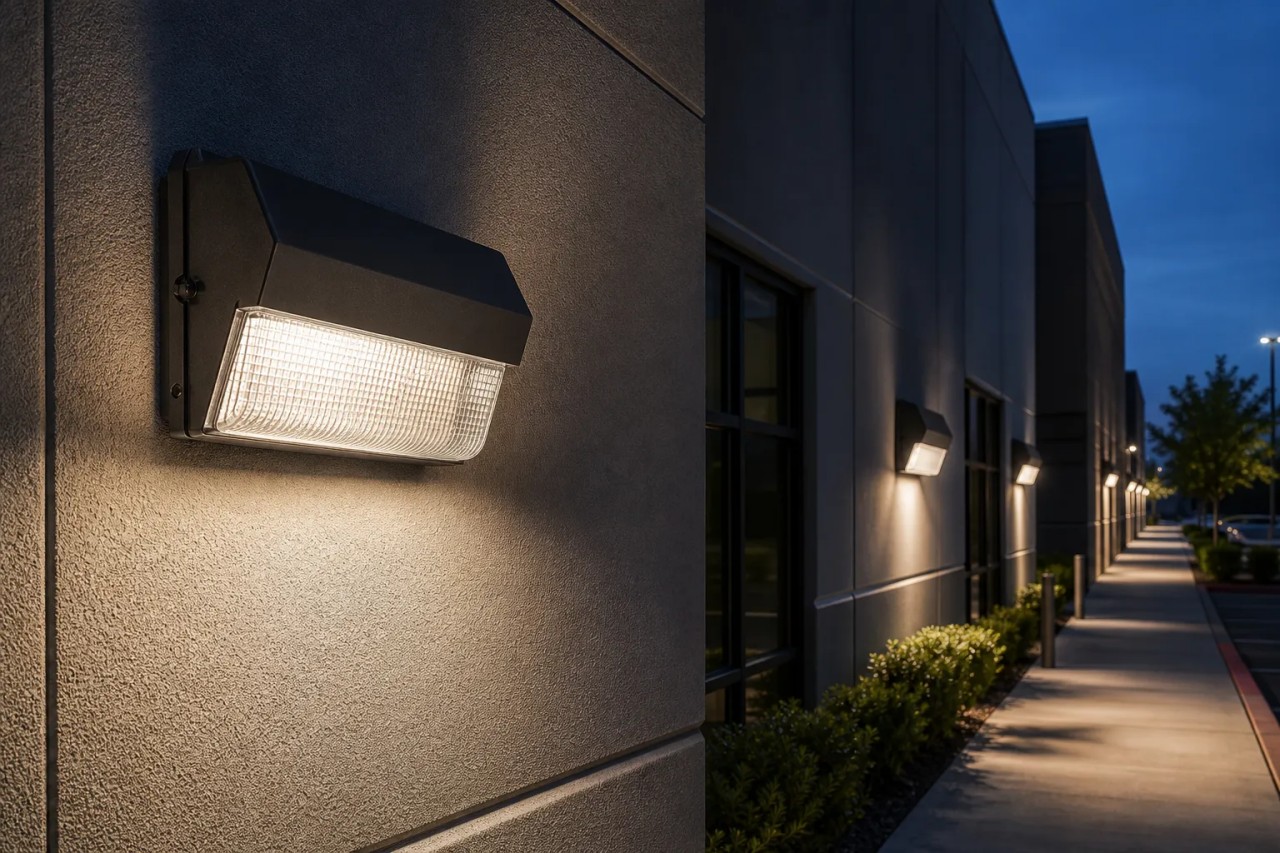
How do the glass components of building exterior wall lights cope with long-term rain and wind and sand?
Building exterior wall lights are subject to long-term rain erosion, wind and sand friction, dust deposition and adhesion of pollutants. Glass components should have stable surface hardness, good edge processing and reliable sealing surface to avoid cracking and water leakage due to edge chipping, scratches or assembly deformation.
In areas with heavy sandstorms or heavy pollution, the glass surface should be as smooth as possible with as few dead corners as possible to facilitate self-cleaning by rainwater and manual maintenance. For coastal, desert or high-rise building projects, you should also pay attention to the corrosion resistance of the metal frame, screws and sealing materials, because the glass itself is stable, but the failure of the surrounding structure will also affect the life of the complete luminaire.
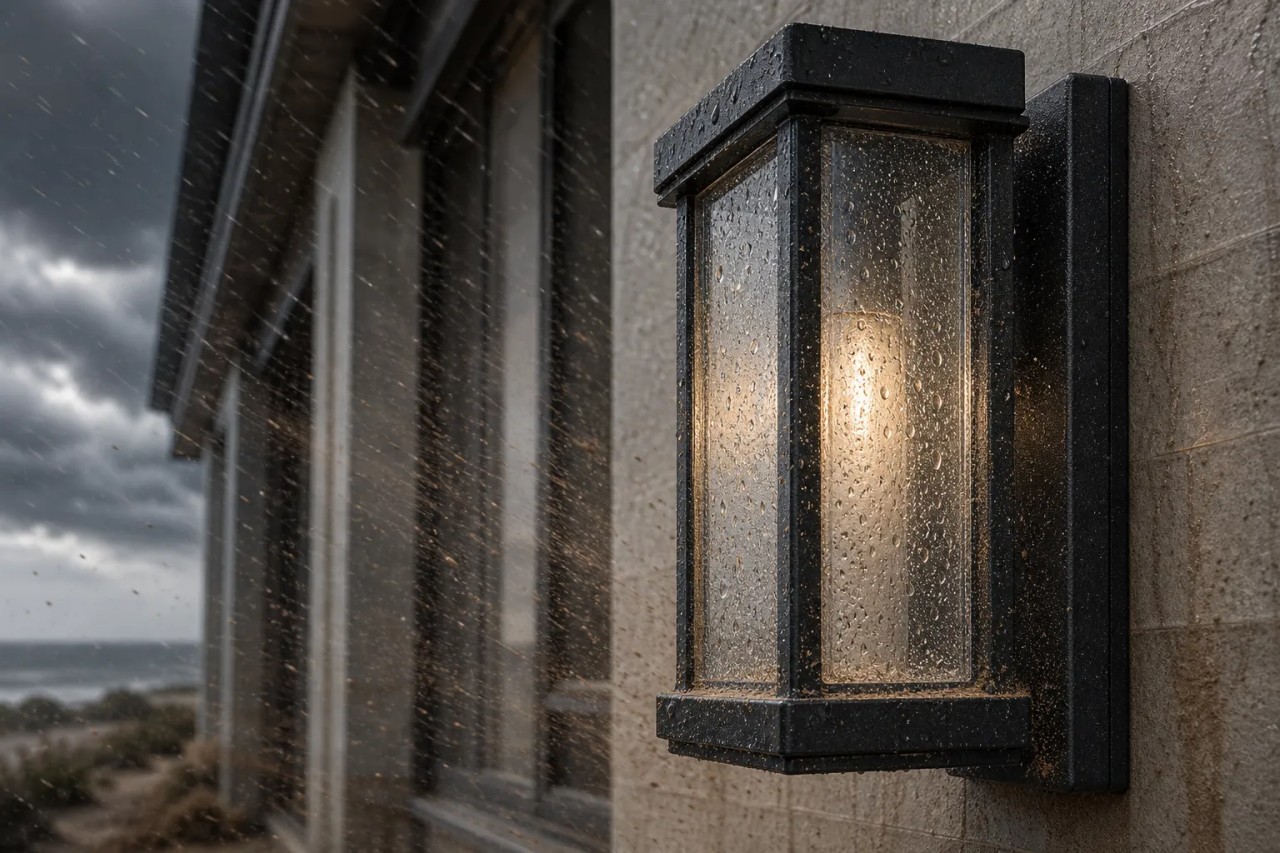
Will scratches on the glass surface of the wall washer affect the light spot on the wall?
Whether scratches on the glass surface of the wall washer affect the light spot depends on the scratch location, depth, direction and the projection distance of the luminaire. Slight and small scratches may not be obvious in ordinary floodlight, but when linear wall washing, narrow-angle projection or wall hitting at close range, scratches may cause stray light, bright lines, shadows or uneven local light spots.
Especially for long protective cover glass, if scratches appear continuously along the length, visible lines may be formed on the wall after lighting. Therefore, the surface of wall washer glass should be protected during production, packaging, transportation and assembly, and friction with hard particles should also be avoided during cleaning.
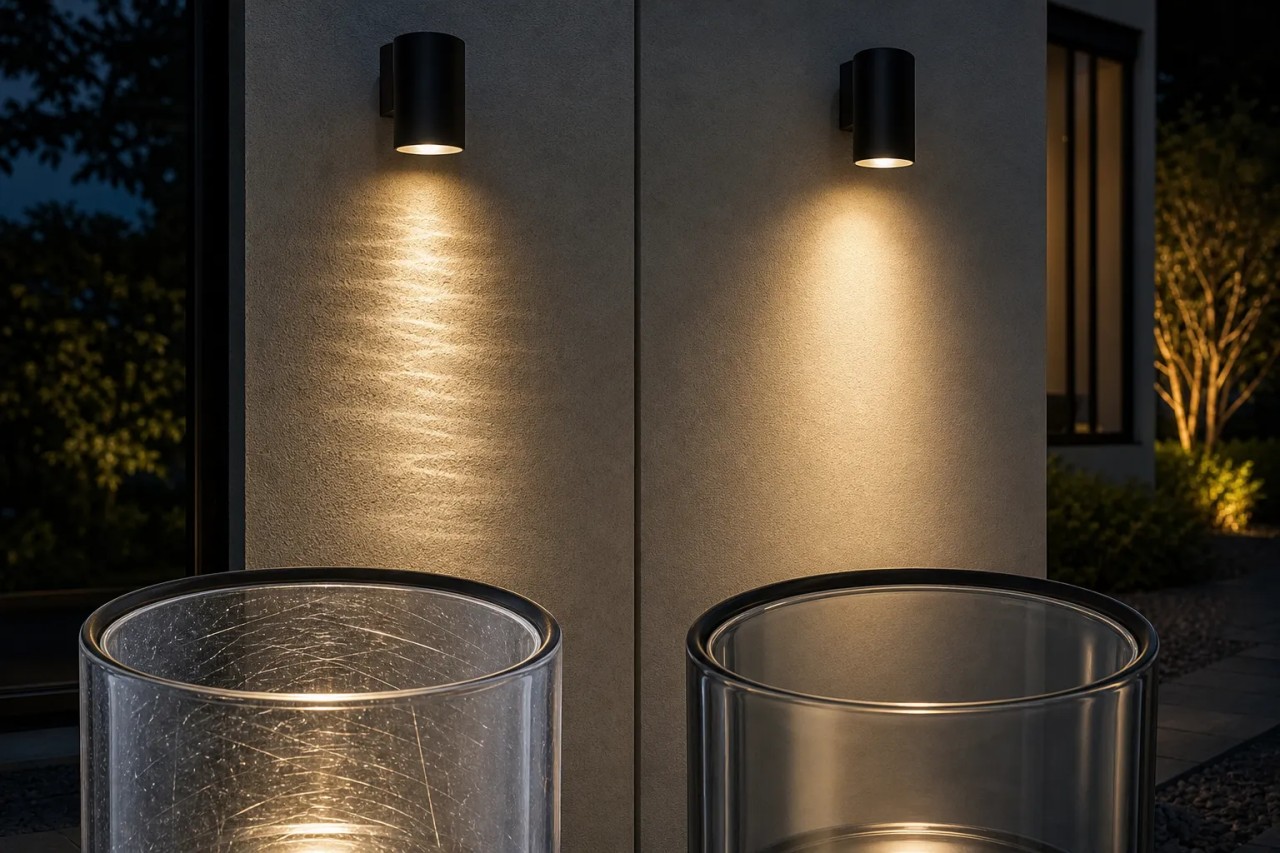
How do architectural lighting glass components cooperate with the luminaire structure to reduce glare, uplight and light pollution?
Reducing glare, uplight and light pollution in architectural lighting cannot be achieved by relying on glass components alone, but must be combined with lenses, sunshades, installation angles, luminaire power and control strategies. Protective cover glass or optical glass lenses can help reduce stray light and unwanted surface reflections through high light transmission, low reflection, moderate diffusion and stable flatness.
The core of DarkSky and low-glare design is to control the direction of the beam, avoid over-illumination, and reduce uplight and light spill. Glass components are one of the important components that affect the results, but the final effect needs to be confirmed through the complete optical design of the luminaire, on-site lighting and project requirements.
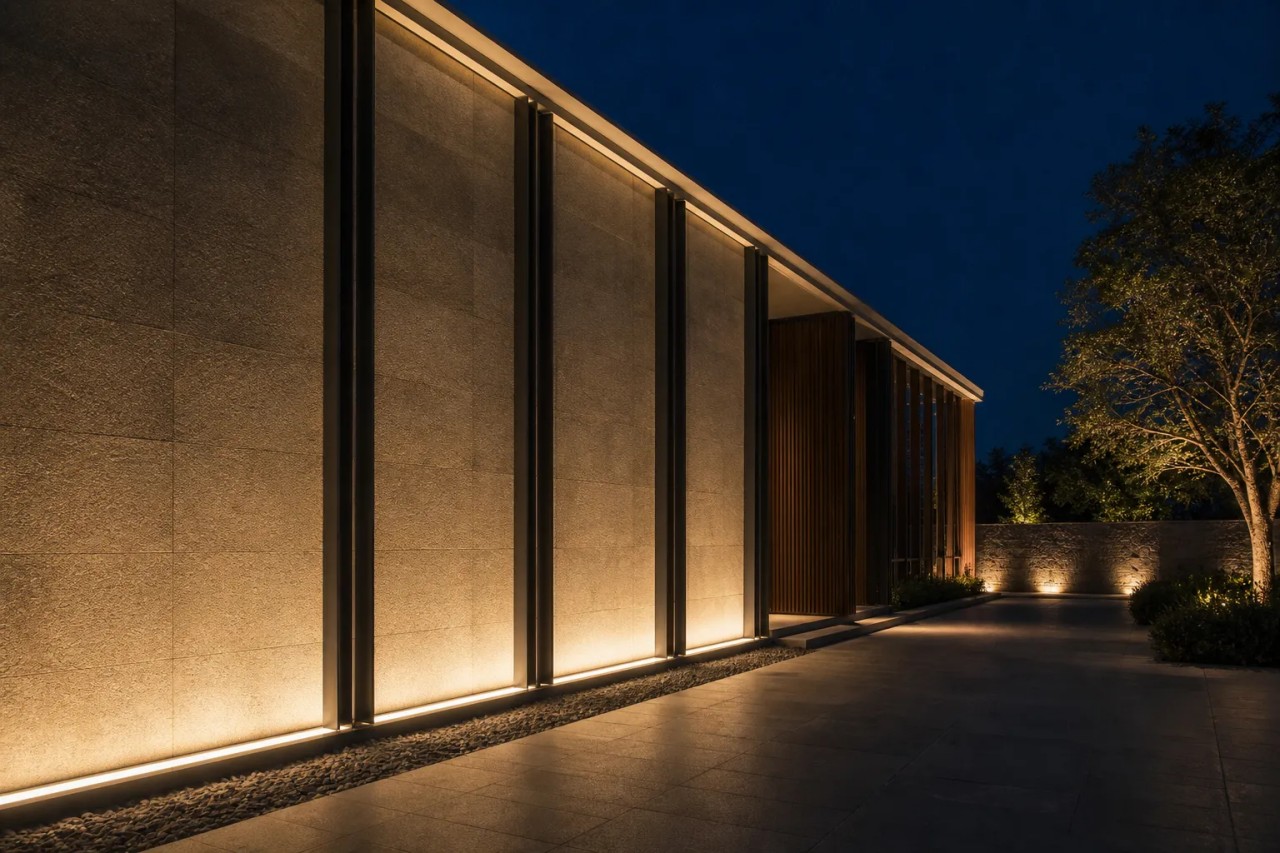
How should low-visibility protective cover glass be selected for minimalist outdoor architectural lighting?
Minimalist outdoor architectural lighting usually wants the luminaire to disappear into the facade, so the protective cover glass should be visually clean, flat and low-reflection. Clear or low-iron glass with controlled thickness, good flatness and neat edge processing is often more suitable than heavy textured or strongly colored glass, because it can protect the optical system without adding too much visual weight to the fixture. At the same time, low presence does not mean ignoring performance. The protective cover glass still needs to match the sealing structure, thermal expansion, mounting pressure and required optical effect of the complete luminaire. If glare control is important, the design may need internal shielding, lens control or a lightly diffused glass surface, and the final appearance should be checked with the actual housing color, facade material and night lighting effect.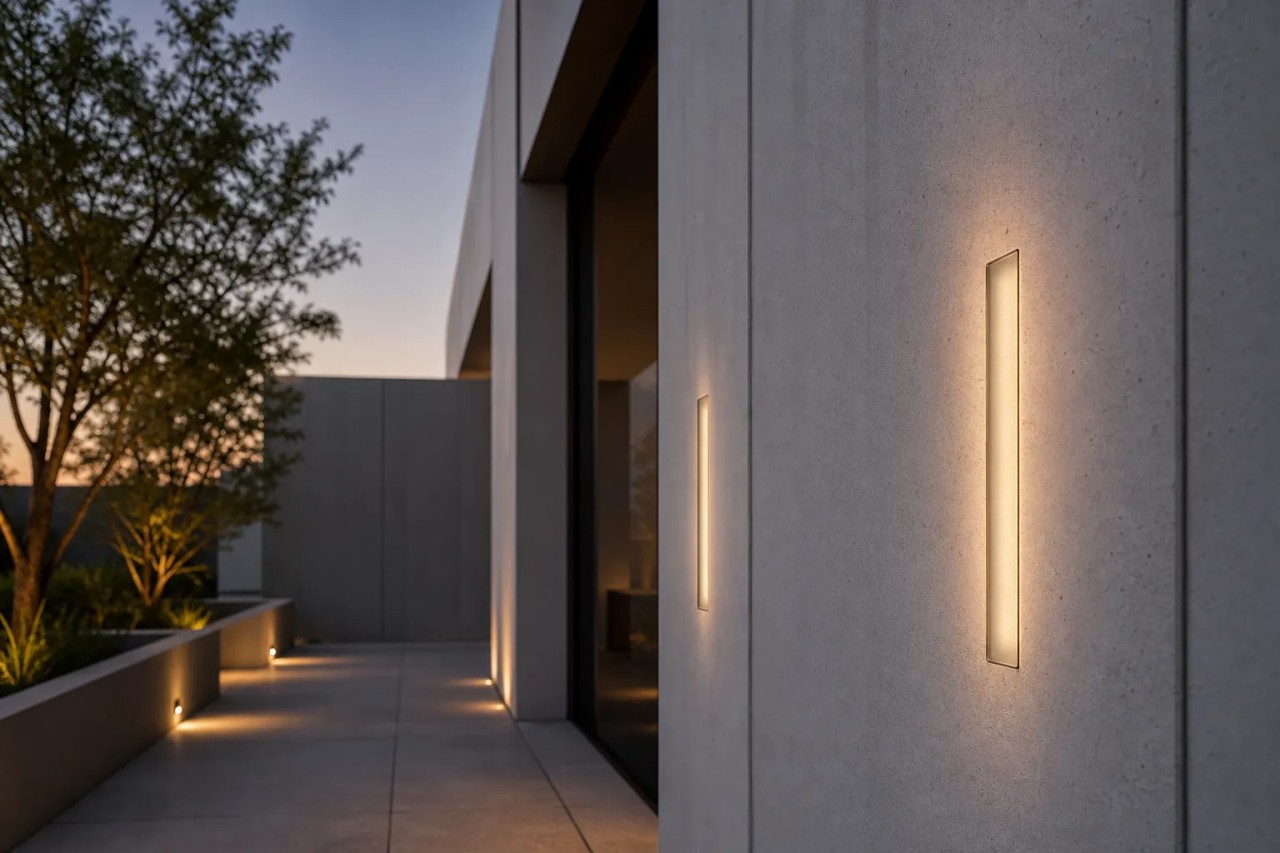
In large-scale construction projects, how does the batch color difference of glass components affect the overall facade effect?
Large-scale construction projects often use a large number of luminaires of the same type. If there are differences in color, light transmittance or haze between different batches of glass components, local areas that are brighter, darker, yellower or grayer may be formed on the facade after lighting. This difference may not be noticeable on a single part, but is amplified by the building surface when installed in rows.
Therefore, for batch projects, glass samples, material sources, color ranges, light transmittance and haze standards must be confirmed in advance. During production, materials should be supplied from the same batch and processed with the same process as much as possible, and optical consistency should be randomly checked before shipment. For high-end building facades, glass-component consistency and LED color tolerance are equally important.
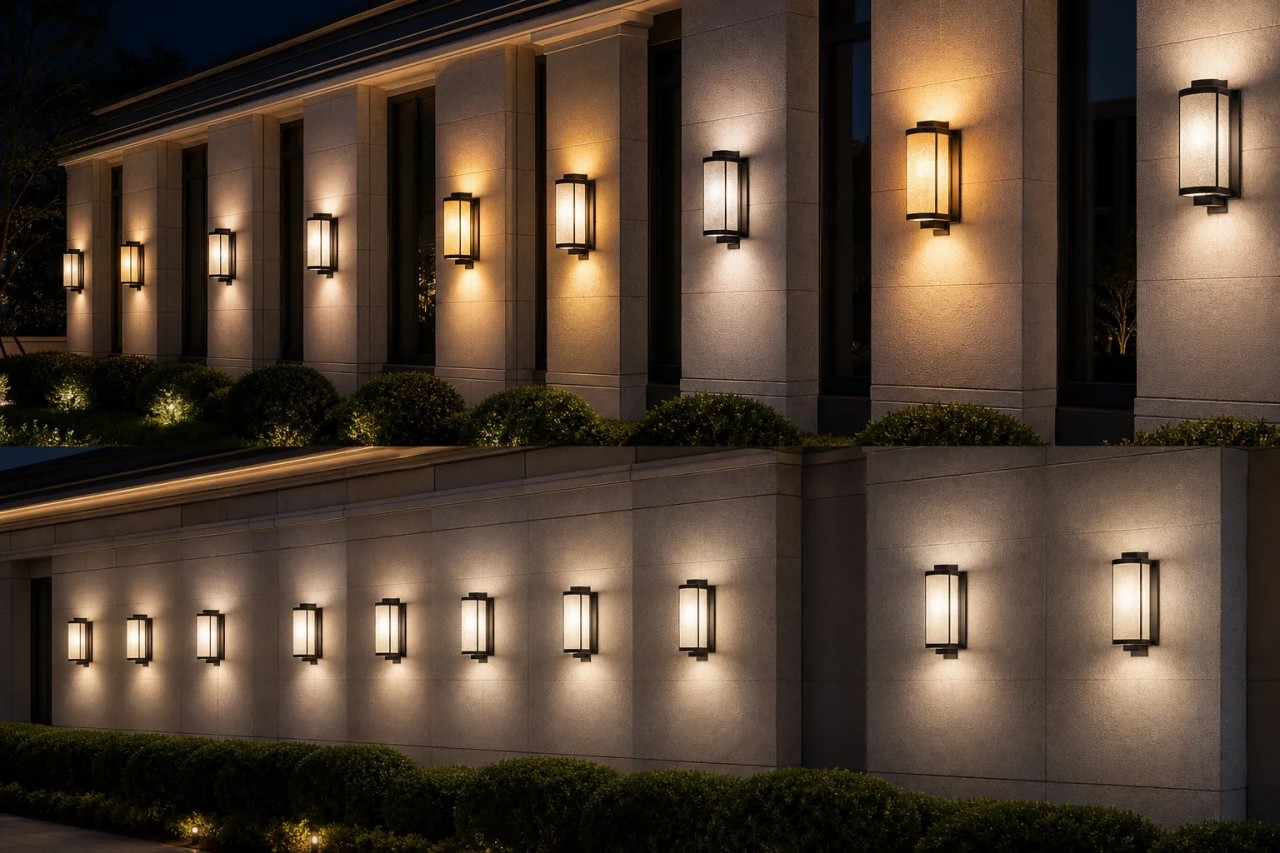
Why should the outdoor linear luminaire protective cover glass focus on controlling straightness and flatness?
Outdoor linear lights usually form a continuous light strip, and the straightness and flatness of the protective cover glass directly affect visual alignment, sealing pressure and light uniformity. If the cover is bowed, warped or inconsistent in width, the assembly may develop uneven gaps, inconsistent retaining-frame pressure, irregular sealing-adhesive beads or localized leakage paths.
Flatness variation can also change the local emission angle and create brightness variation along a continuous light band. Long sections of protective cover glass are particularly susceptible to deformation during transportation and assembly, so dimensional tolerances, flatness criteria, packaging support and installation requirements must be clearly defined.
Contact Us
Your feedback fuels our growth, and your questions drive our solutions.
We value your feedback, inquiries, and suggestions. Please feel free to get in touch with us
General inquiries
Please contact us via sales@bo-glass.com, and we will reply to you as soon as possible.
Interested to work with us
Drop your resume at info@bo-glass.com
and we will get back to you shortly.
Request a Custom Glass Quote
Tell us about your project or upload a drawing.
Your drawings remain confidential.
We uses the contact information you provide to us to contact you about our relevent content, products, and services.