
Garden, Path and Landscape Lighting Glass Guide
Garden, path, lawn, and courtyard luminaires are often installed close to eye level, where visible LED images, glare, dirt, color variation, and maintenance are immediately noticeable. This guide explains how clear glass, controlled frosted finishes, opal body glass, texture, color, shade geometry, and luminaire structure work together. It also separates decorative decisions from sealing and complete-luminaire responsibilities so that buyers can specify an appearance that remains practical outdoors.
Glass Components for Landscape Path, Garden, and Courtyard Lights
- Optical comparison
- Compare untreated clear glass, the same base glass with a specified frosted/acid-etched finish, and opal body glass for luminous transmittance, haze, CCT and Duv.
- Lit-sample control
- Use the same LED bin, drive current, warm-up state, camera exposure, distance and background for every before/after comparison.
- Static face seal
- Parker’s O-ring guidance gives 30% as a typical maximum static squeeze; actual compression must follow the selected profile, hardness and compound.
- Batch color
- Compare L*, a*, b* and ΔE00 using one illuminant, observer angle, instrument and retained master. There is no universal ΔE00 limit for decorative shades.
Should I choose clear glass, clear glass with a frosted finish, or opal glass for landscape path lights?
The selection should be based on viewing angle, LED-to-glass distance, target beam distribution and the role assigned to the glass. Clear soda-lime or borosilicate glass is suitable when an internal lens, reflector, louver or shield already controls the LED and the outer glass is used mainly for environmental protection. It normally creates the lowest optical loss, but it will not conceal exposed LED emitters or high-luminance reflector images. For low-mounted path lights viewed from the side, use clear glass only when the internal optical structure prevents a direct view of the source.
A frosted or acid-etched finish is a surface treatment, not a separate glass material. It introduces surface scattering and softens the sharp image of individual LEDs while retaining more directional output than heavily opal glass. For outdoor use, an internally treated surface with a smooth exterior is usually easier to maintain because the optical texture is protected from dirt, rain marks and repeated cleaning. The drawing should state the base glass, treated side, finish process, approved appearance range, haze and luminous-transmittance control method.
Opal glass is more appropriate when the design requires strong source hiding and uniform surface luminance, particularly for cylindrical or globe-shaped path lights viewed from several directions. Increasing opacity can reduce delivered lumens, shorten effective throw and broaden spill light. Select the opal level together with LED power, source spacing, glass wall thickness and luminaire spacing rather than from an unlit sample alone.
Prototype validation should compare the bare optical system, the luminaire with the selected glass and samples from more than one production lot. Record delivered luminous flux, visible LED imaging, surface-luminance uniformity, beam distribution, CCT and Duv shift, glass temperature and nighttime glare at the intended mounting height. The approved result should become the optical and appearance reference for production.
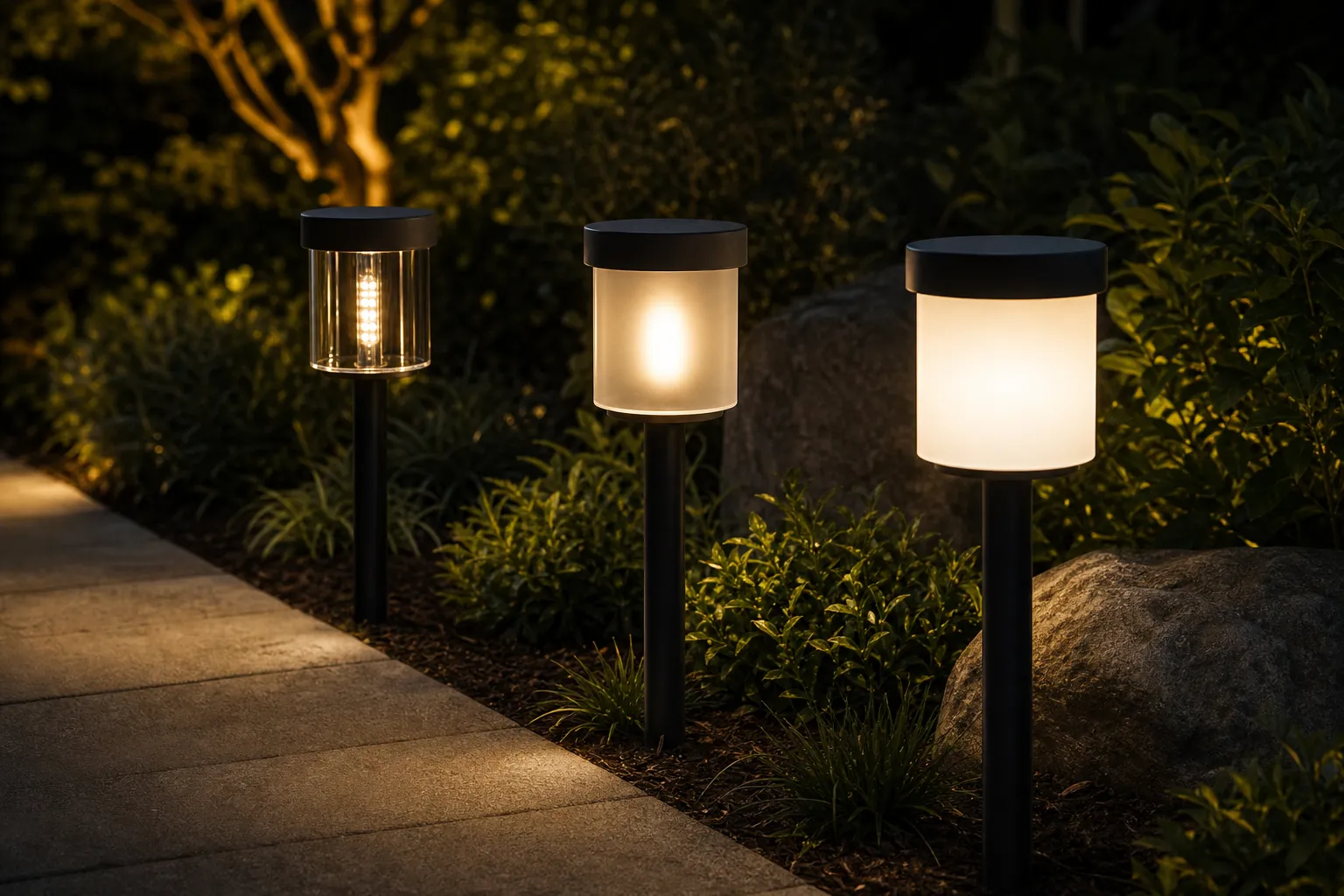
How can a garden-light glass shade provide soft illumination without excessive light loss?
To achieve soft light, do not simply make the glass whiter or thicker because this can waste luminous flux. Choose either clear soda-lime or borosilicate glass with a controlled internal frosted/acid-etched finish, or a light opal body glass, and define the required haze and luminous transmittance together.
Structurally, the LED light source can be moved back to increase the distance between the light source and the glass shade, or a reflector cup, internal diffuser and light shield can be added so that the light mixes before passing through the shade. The glass shade then contributes to diffusion without having to perform the entire optical function, reducing point-source glare while preserving useful output and visual depth.
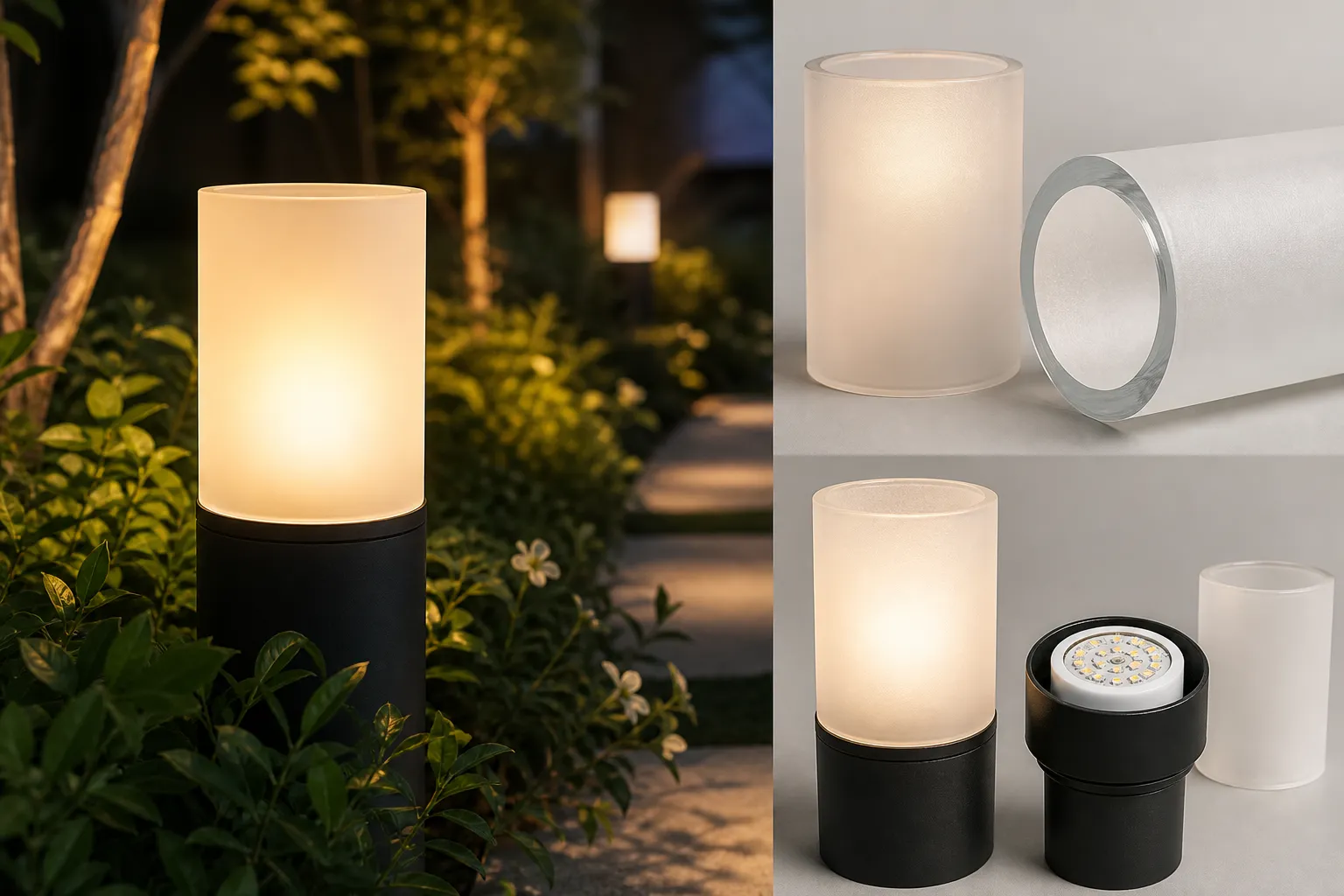
Why should we focus on glare control when using lawn luminaire glass shades?
Lawn luminaires are installed at a low height and are often viewed directly from the side or diagonally above. If the glass shade is too transparent and exposes the LED point sources, it can cause uncomfortable glare for pedestrians in courtyards, hotels and public landscapes.
Lawn-light glass shades may use a controlled frosted finish, opal body glass, molded texture, or internal shielding so that useful light reaches the ground and planting area without a direct view of high-luminance LEDs. A well-designed lawn luminaire should provide sufficient ground-level illumination without exposing the emitters or creating uncomfortable glare.
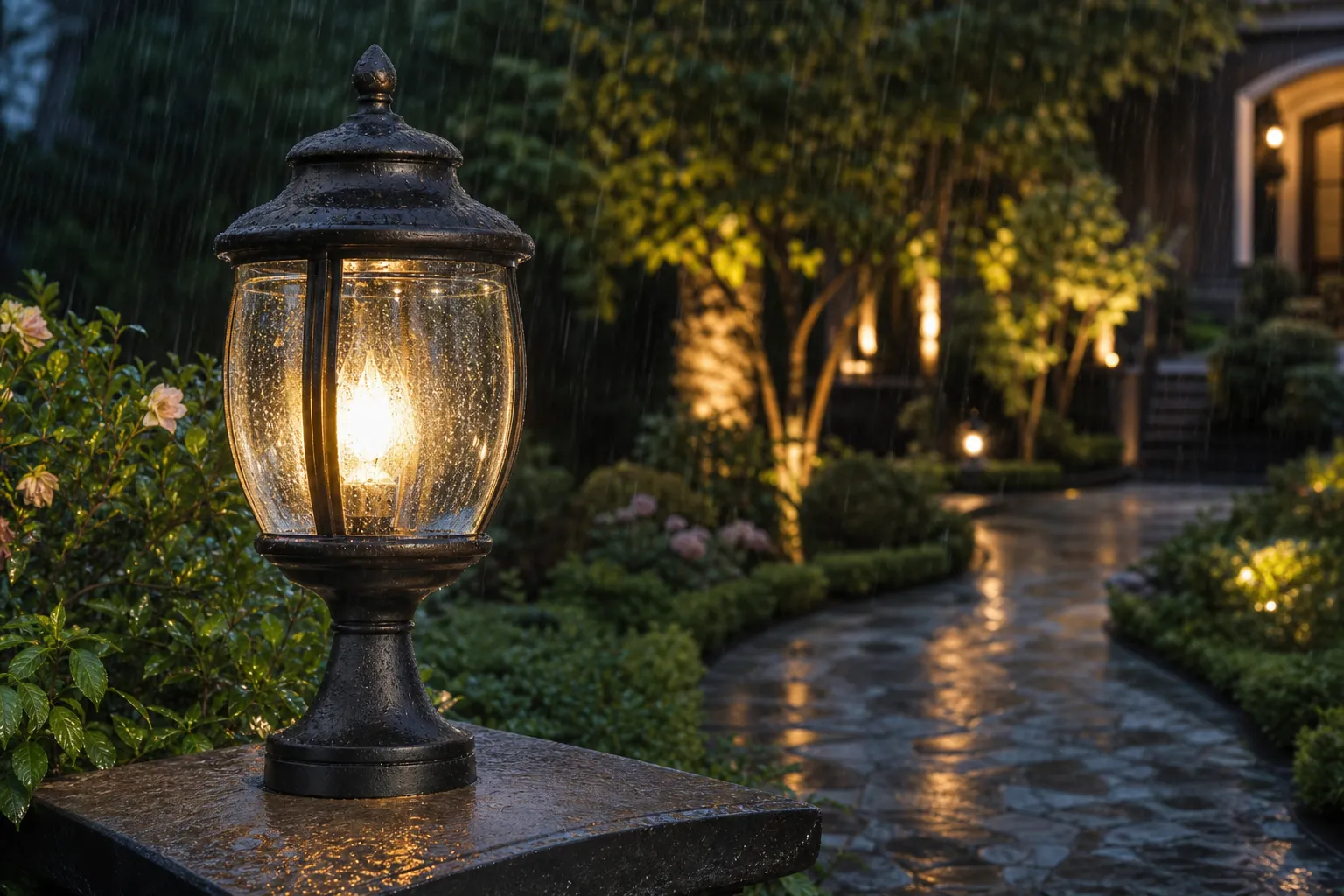
How can a garden-light glass shade combine decorative appeal with outdoor weather resistance?
Garden luminaire glass shades are usually both optical and appearance components. If you want a decorative effect, you can choose opal, amber, smoked, water-ripple, bubble, or embossed glass to give the luminaire a stronger style expression; but when using it outdoors, you should also pay attention to glass thickness, edge treatment, stress control and surface cleaning convenience.
For weather resistance, prioritize stable glass compositions and outdoor-suitable surface treatments, avoiding finishes that readily peel, fade or trap dirt. During assembly, provide appropriate clearance between the glass shade and metal housing, and use suitable gaskets, drainage and ventilation to reduce cracking, water ingress and fogging after thermal cycling.
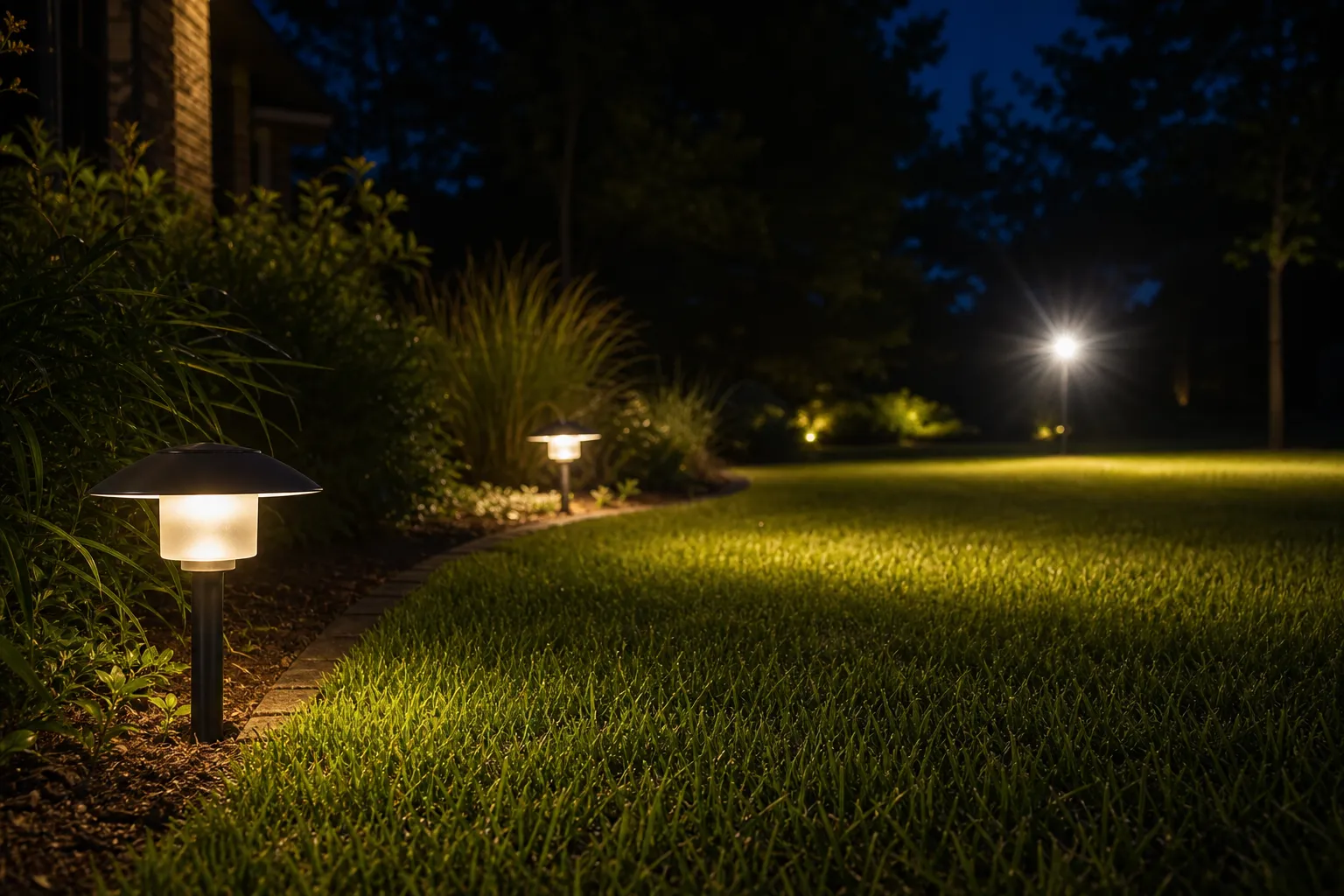
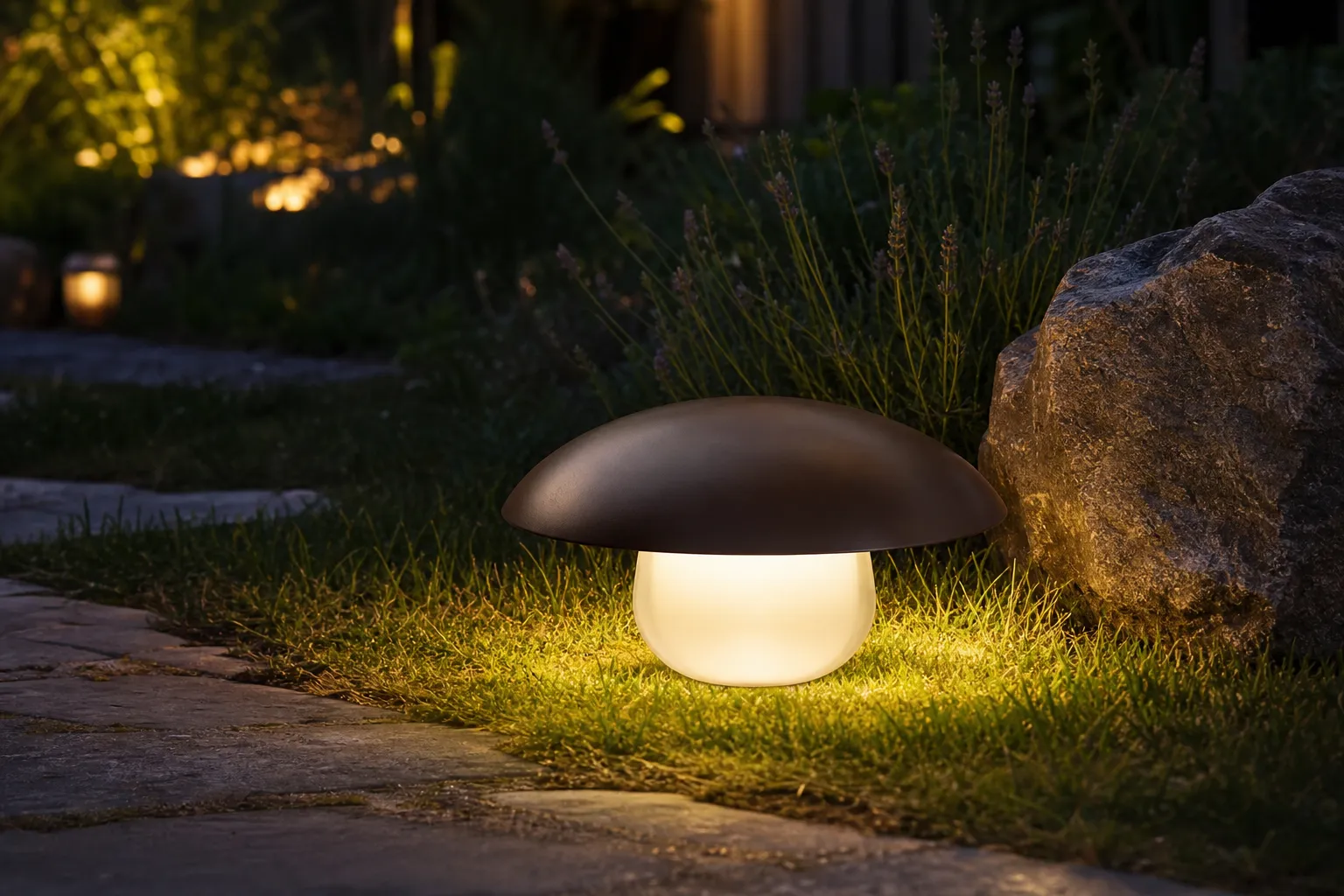
What glass-shade shape and haze are suitable for a mushroom luminaire?
Mushroom luminaires typically use a low, soft, downward or annular diffused landscape effect. The glass shade may be hemispherical, mushroom-shaped, dome-shaped or short-cylindrical. Its three-dimensional form contributes to the luminaire’s appearance while helping the light transition naturally into the surroundings.
In terms of haze, mushroom luminaires are generally not suitable for untreated clear glass unless there is a good light-shielding and reflective structure inside. Clear glass with a medium-to-high-haze internal frosted finish, opal glass or lightly textured glass are more common options for hiding LED images, reducing close-range glare and creating a more uniform halo.
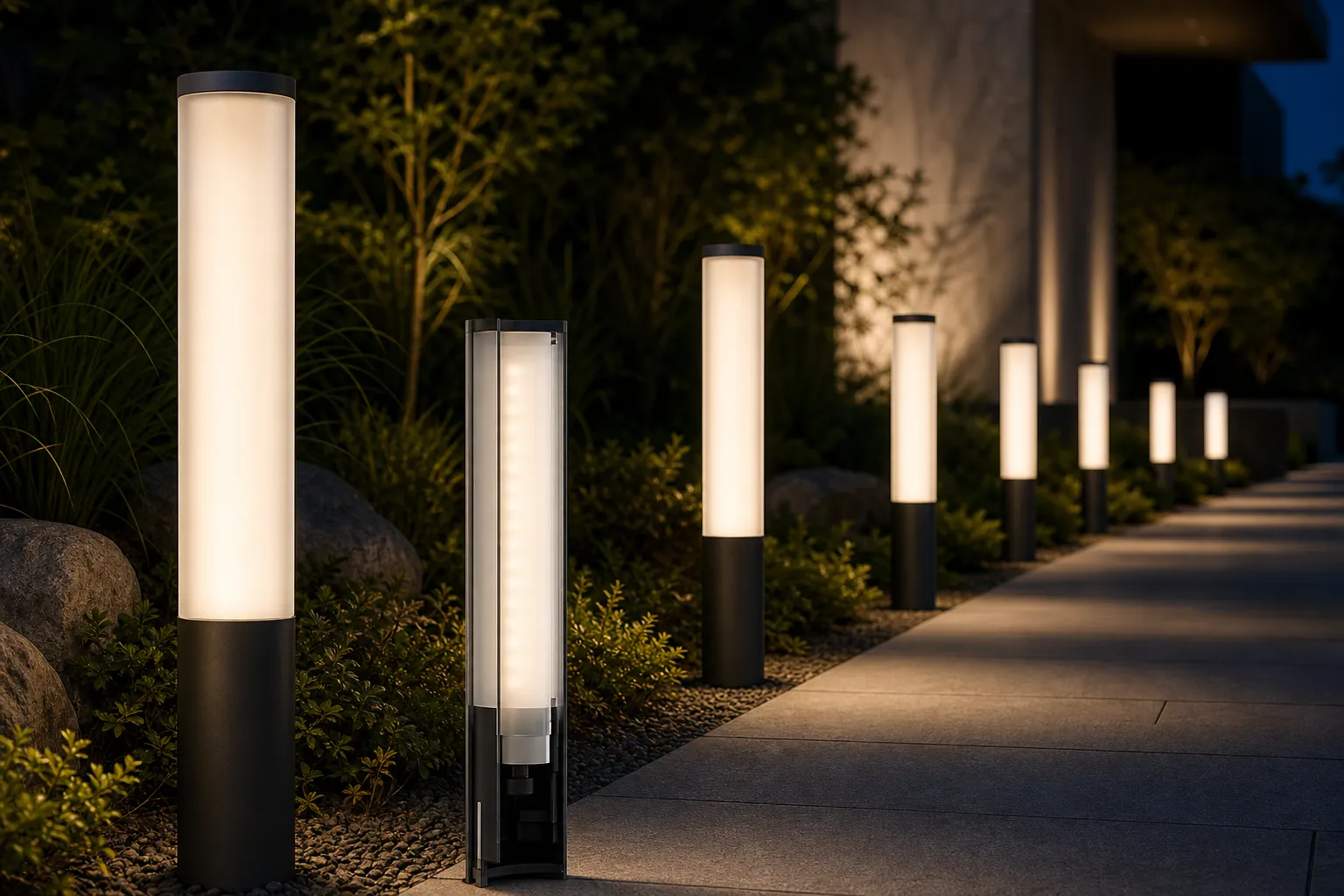
How can a cylindrical glass shade conceal LED point sources in a landscape column light?
A cylindrical glass shade can expose the internal light source from every viewing angle. Opal, frosted, internally sandblasted or finely textured glass can diffuse the light across the shade surface before it exits.
Internal diffusion tubes, reflective columns or shielding rings can also be used, or the LEDs can be hidden in the end caps so that light reaches the shade through reflection and secondary diffusion. The shade diameter, height and distance from the light source are important; small-diameter column luminaires generally require higher haze or an internal light-mixing structure.
Why are opal glass and clear glass with a frosted finish commonly used in outdoor garden lights?
Outdoor garden lights are often viewed at close range. Opal glass hides the source through its body composition, while clear soda-lime or borosilicate glass can be given a frosted or acid-etched surface to introduce scattering. Both can soften LED images, but they are different manufacturing routes and should not be treated as the same material category.
In addition, the opal and frosted effects can weaken the visibility of the internal structure and dust, making the luminaire tidier during the day and night. It should be noted that the light transmittance of opal glass is usually lower than that of clear glass. When selecting, the light source power, installation spacing and expected illumination should be combined to avoid sacrificing too much actual brightness for soft light.
Should modern garden lights use opal glass or clear glass with a frosted finish?
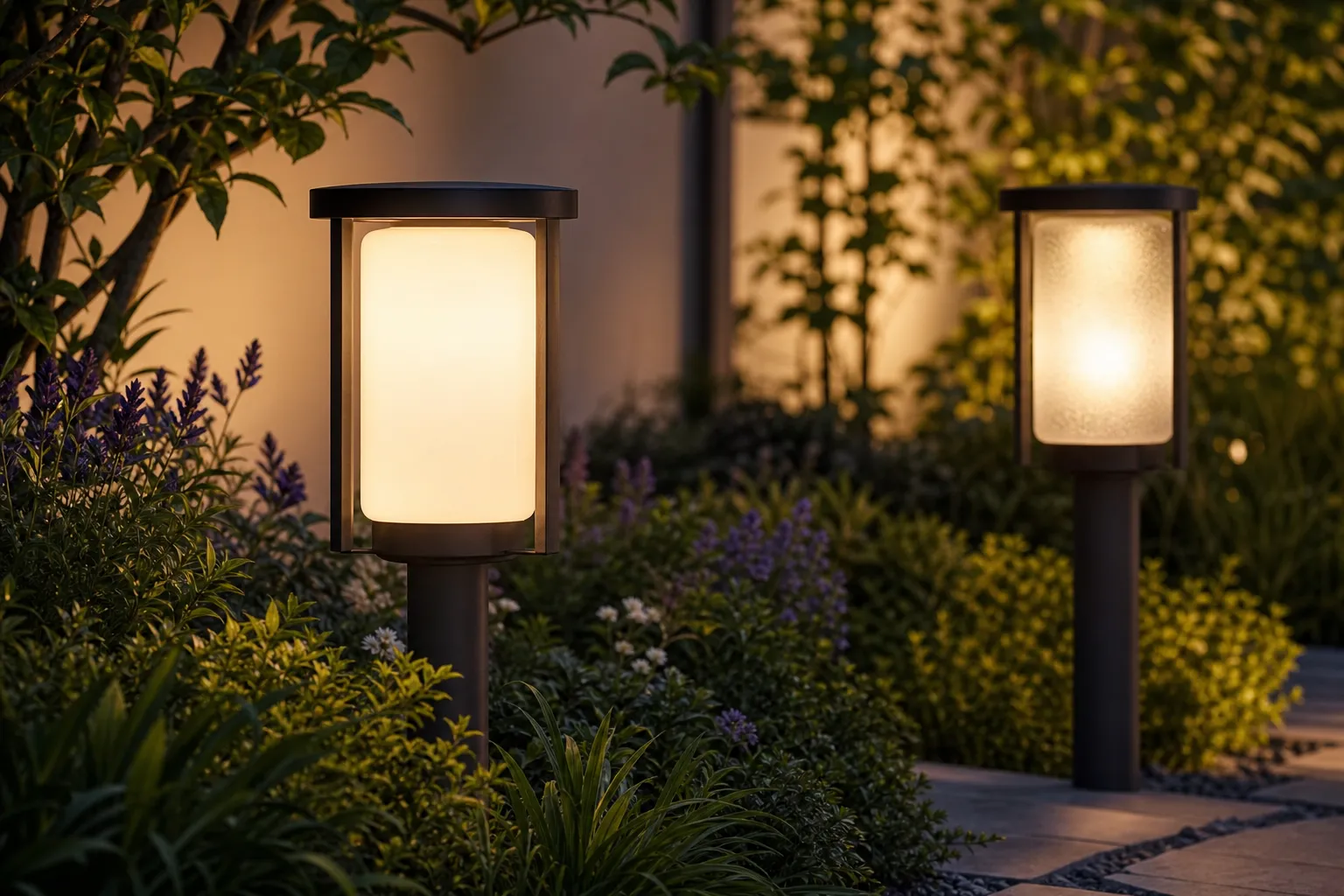
Opal glass and clear glass with an internal frosted or acid-etched finish are suitable for many modern garden lights, especially when the design emphasizes clean lines, source hiding and a soft visual atmosphere. Opal is a body-glass solution; frosting or acid etching is a surface process applied to a specified base glass. If the garden light is mainly ambient, opal glass or a controlled internal frosted finish is a practical direction. If it needs longer throw, higher illuminance or precise beam control, use clearer protective cover glass with an internal lens or shield. Compare haze, transmittance, wall thickness, source visibility and lit uniformity on the assembled sample.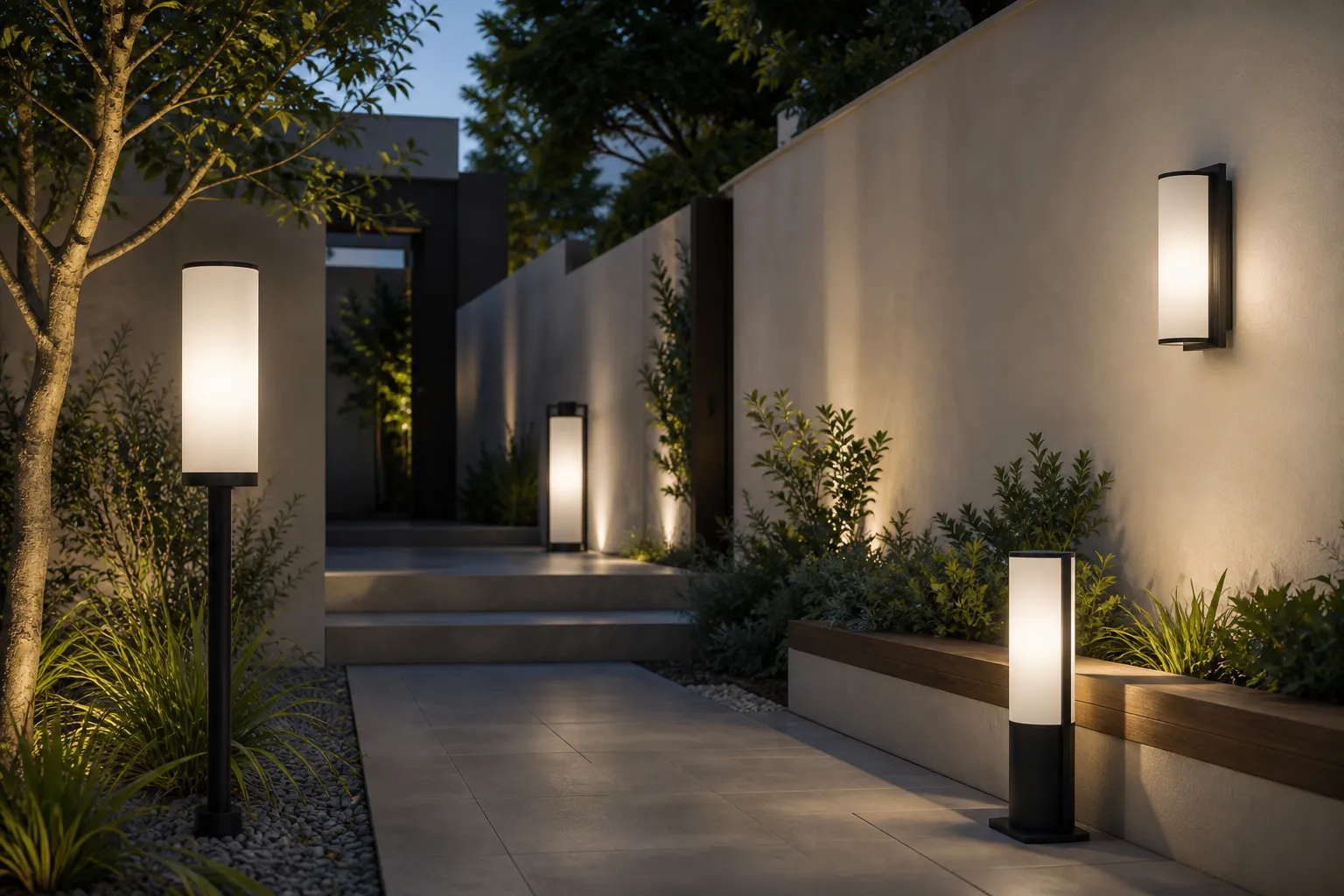
How can a smart garden light’s glass shade support both light transmission and wireless signals?
For smart garden lights, the glass shade must provide sufficient light transmission and diffusion while avoiding unnecessary metallized coatings or overly thick decorative layers that could interfere with wireless modules, sensors or indicator windows. Clear, frosted or lightly diffusing glass is generally easier to integrate with Wi-Fi, Bluetooth, Zigbee or low-voltage control modules than a fully metallized outer surface. Signal performance is still a whole-luminaire issue, not something the glass alone can guarantee. The antenna position, metal housing, driver layout, sensor window and sealing structure all need to be considered together. In custom development, it is better to reserve a non-metallic signal area, confirm glass thickness and coating type, and test the complete fixture in the real installation environment before mass production.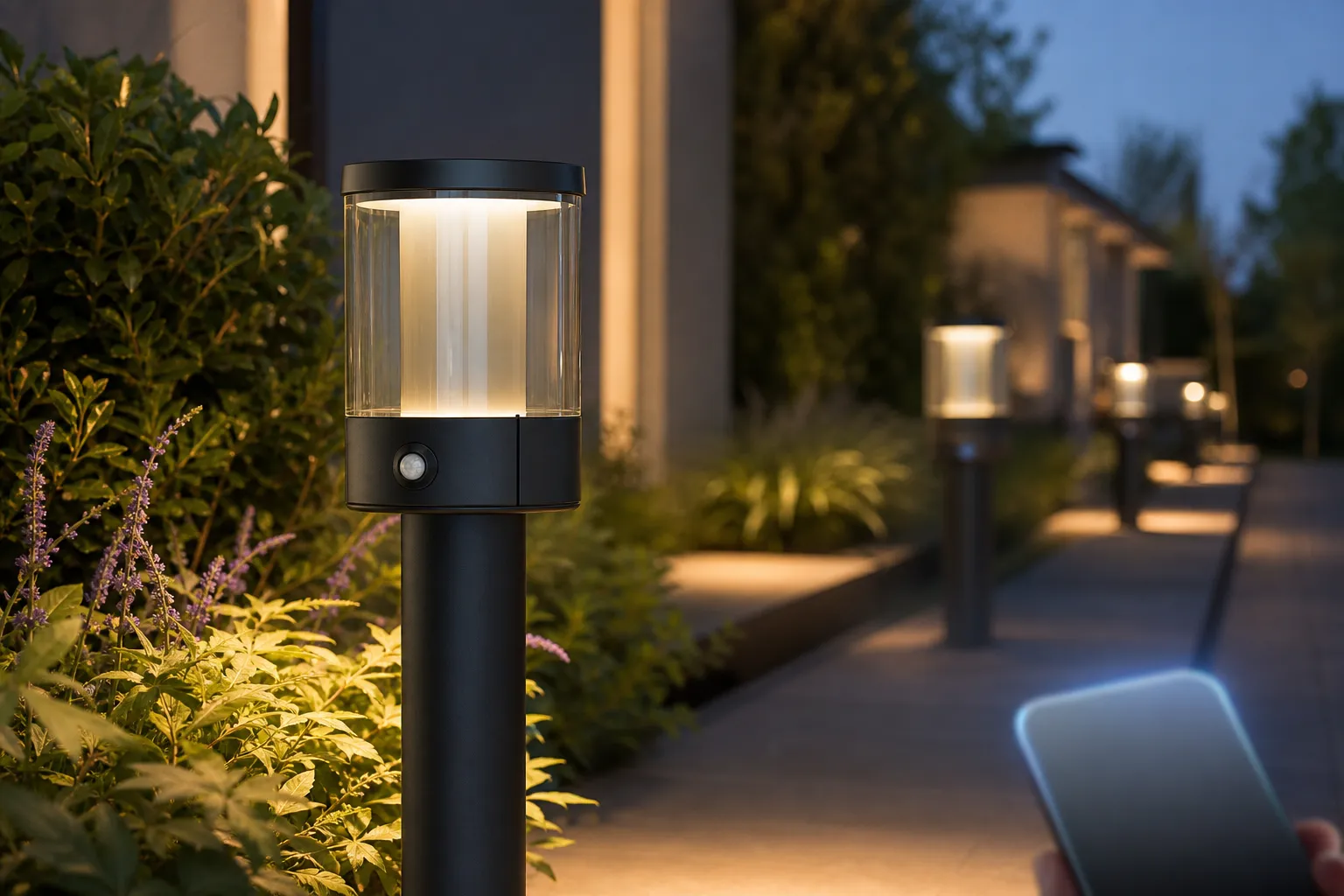
How does the color of landscape light glass affect the nighttime atmosphere and lighting effects?
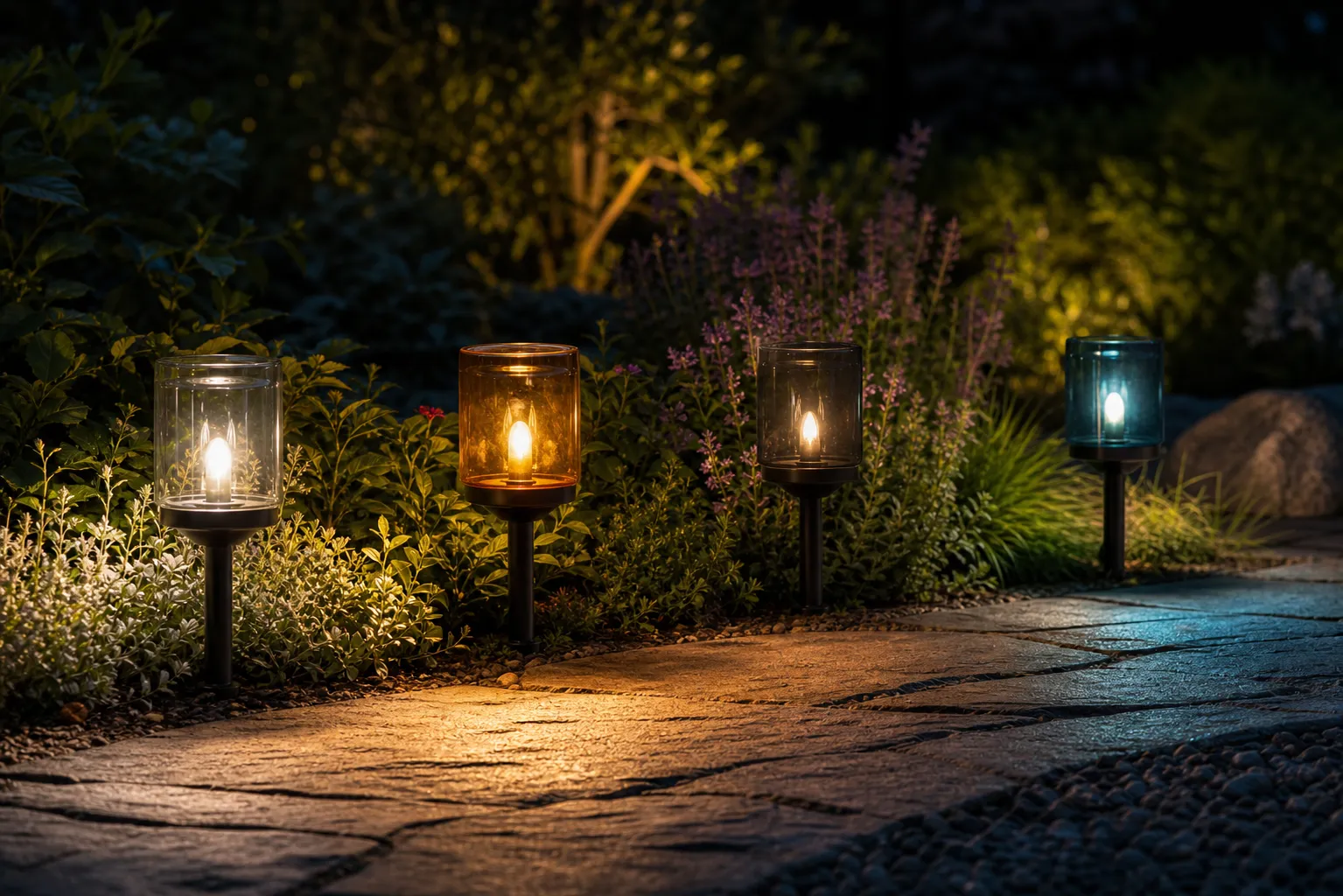
Glass color will directly change the visual temperature and spatial mood of the luminaire. Amber and brown glass will make the light appear warmer and are suitable for villas, hotels, courtyards and retro-style projects; smoked gray glass will have a more high-end feel during the day, but will reduce part of the brightness at night, making the light effect more restrained.
Colored glass will also change the original color temperature and color rendering effect of the LED. Especially strong-colored glass such as blue, green, and red will significantly affect the color of the object being illuminated. If a landscape project requires stable color temperature and real plant colors, the glass color should not be too heavy; if the main pursuit is decorative atmosphere, colored glass can be used to enhance the style, but the light effect of the sample must be confirmed in advance.
How can a path light’s glass shade prevent direct glare for pedestrians?
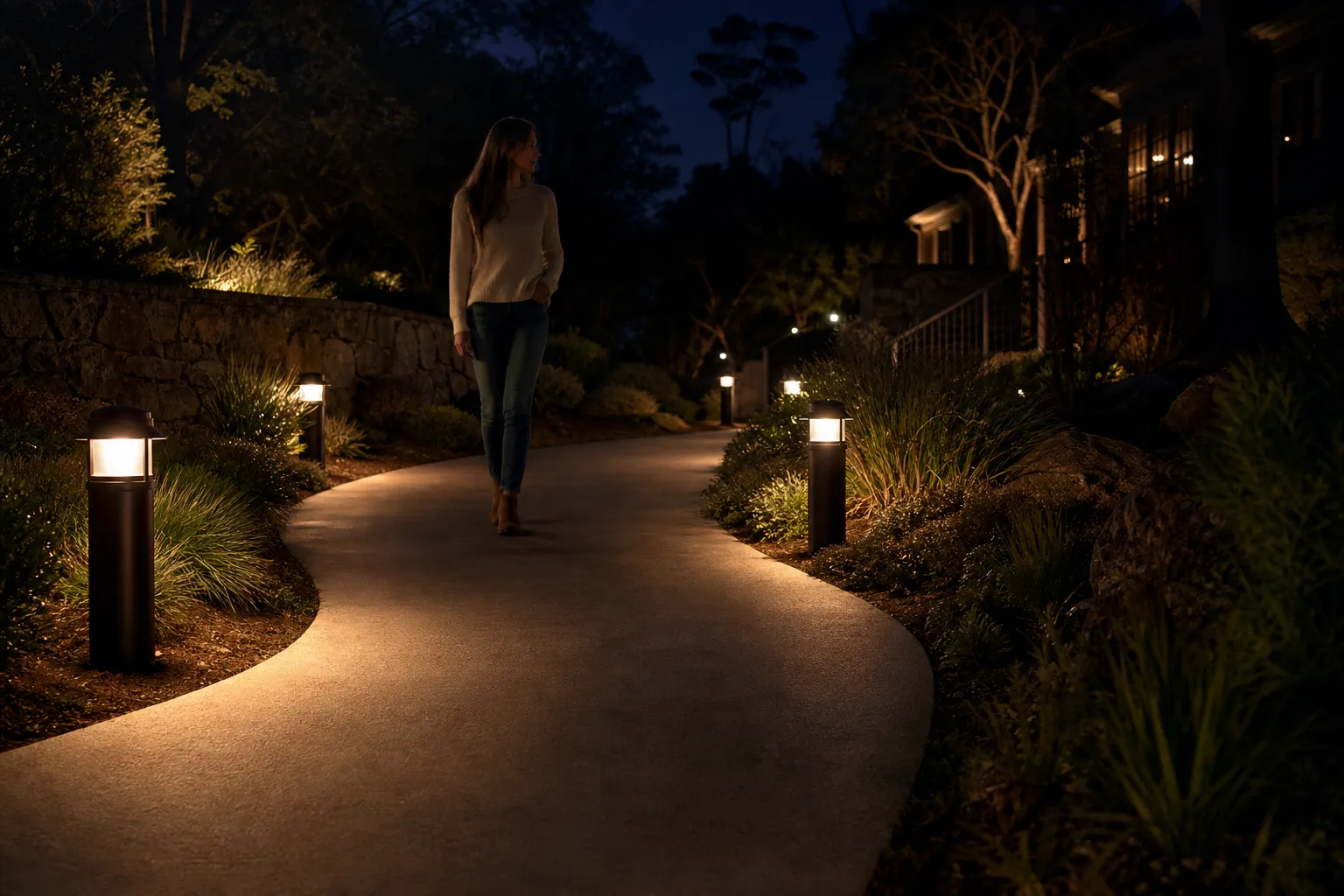
Path lights should direct most of their output toward the ground rather than horizontally into pedestrians’ eyes. A frosted, opal or embossed glass shade, optionally combined with masked areas, can soften the apparent brightness of the source and reduce direct glare.
The structure of the luminaire can be added with an upper cover, built-in reflector cup, downlighting light source or louver-type glare control design, so that the light can be reflected and diffused before leaving the luminaire. Pay attention to height and spacing when installing. Low path lights should not be too bright, otherwise even if the glass is soft, it may cause uncomfortable bright spots at close range.
Why is it easy for water, insects and dust to accumulate inside the glass shade of a garden luminaire?
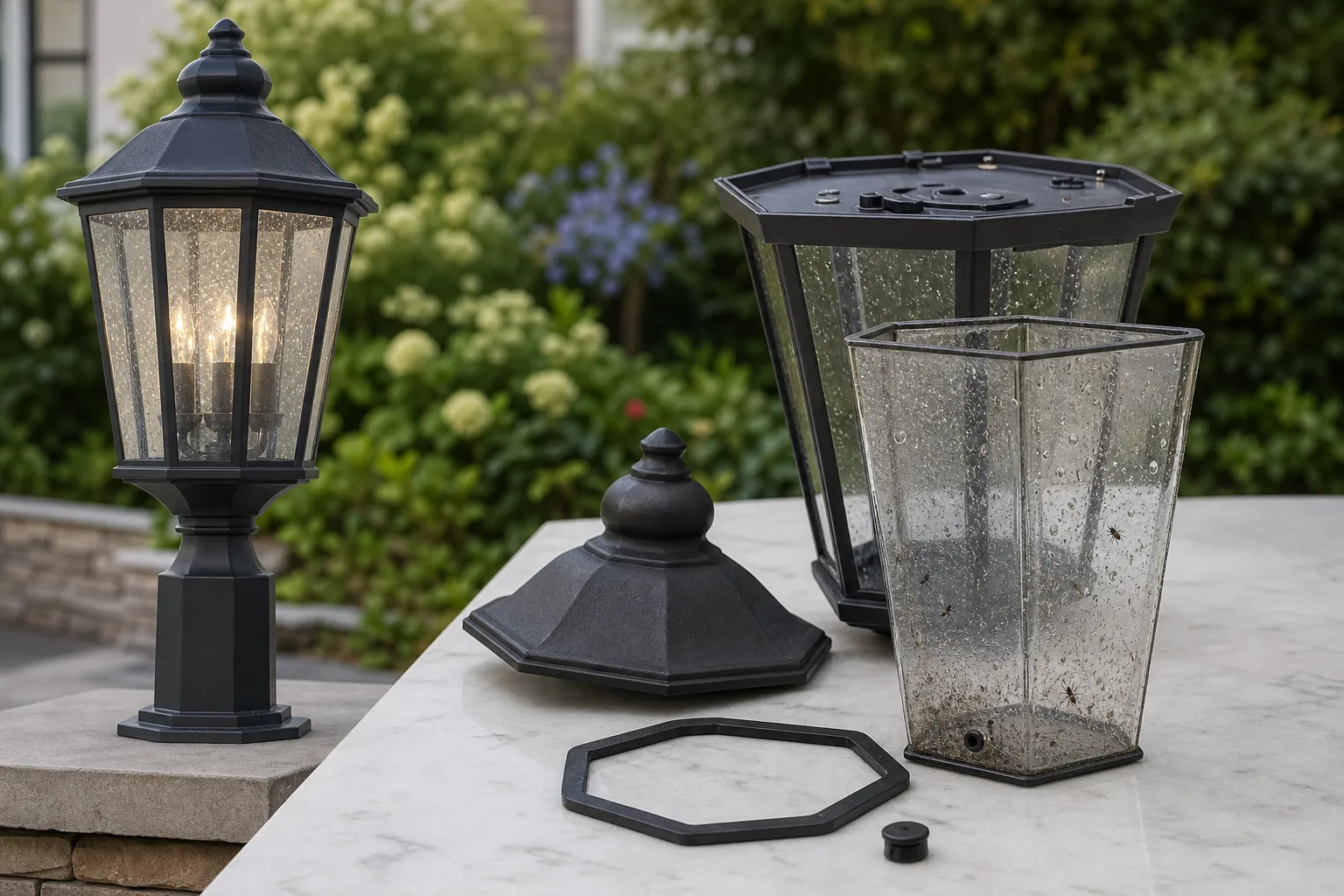
Garden lights remain outdoors for long periods, so water, insects, and dust inside the glass shade are usually not just a glass problem; they are caused by sealing, drainage, and ventilation design. Insufficient gasket compression, an uneven glass opening, loose housing seams, or poorly protected wire openings can allow rainwater and moisture to enter.
Insects and dust often enter through heat-dissipation holes, bottom gaps, cable entries, or assembly gaps. The design should distinguish between areas that need to be fully sealed and areas that need ventilation and drainage, so moisture does not enter and then become trapped. The glass opening size, edge flatness, and fit with the housing are key to reducing this problem.
How can landscape-lighting glass balance decorative appeal with ease of maintenance?
Highly decorative glass, such as deep embossed, water-ripple, bubble, colored, or complex custom-shaped glass, can improve the perceived quality of the luminaire, but it may also accumulate dust more easily, leave water marks, or be harder to keep consistent in mass production. Maintenance convenience requires a glass surface that is easy to clean, with fewer dead corners and a structure that is easy to remove and install.
Project selection should consider the installation location and maintenance conditions. For high-end hotels, villa entrances, and key landscape nodes, more expressive glass textures can be used; for large-area path lights, lawn lights, and public area luminaires, it is more suitable to choose glass solutions that resist staining, are easy to clean, and can be replaced consistently.
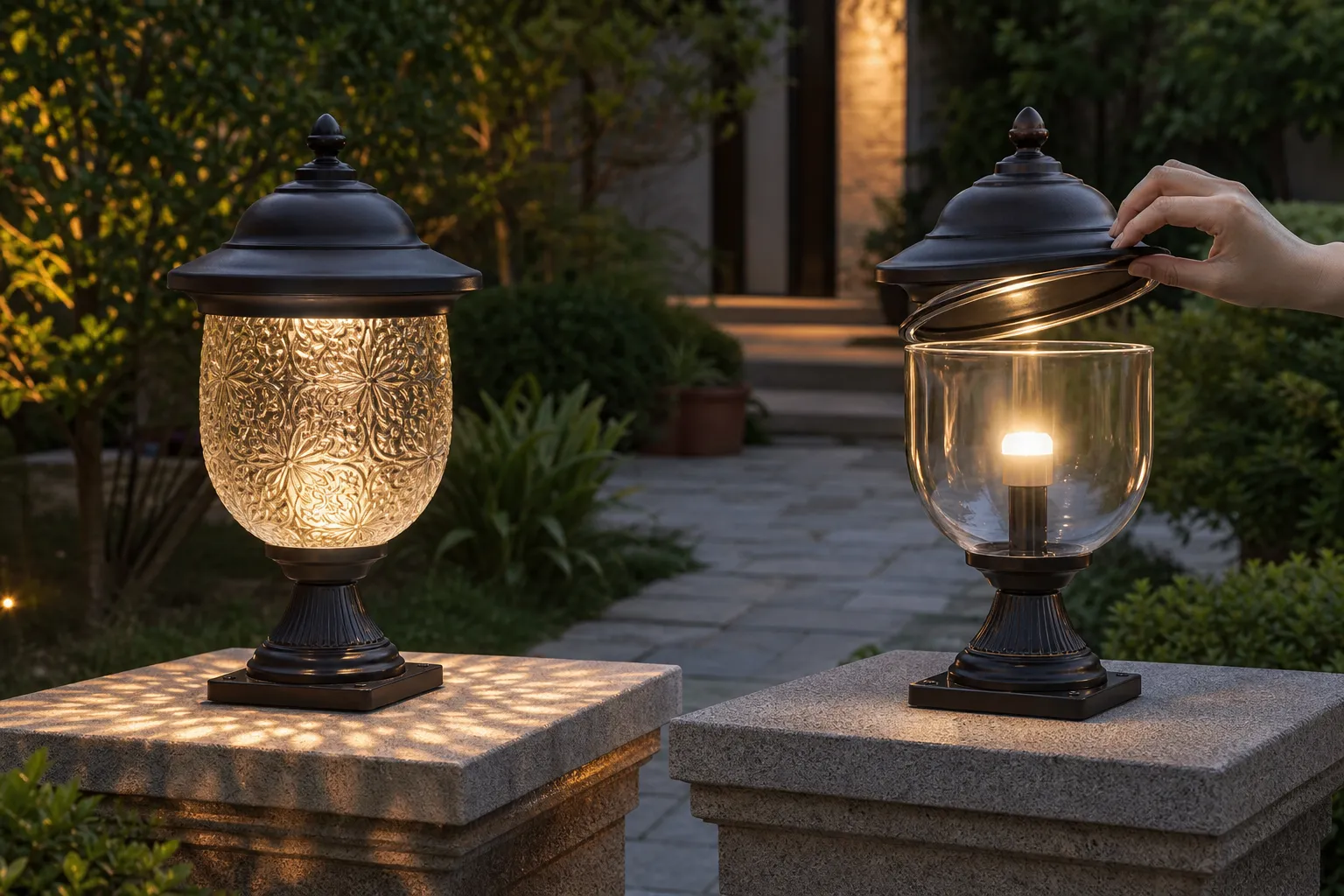
How can high-end courtyard projects enhance the quality of lighting fixtures through glass textures?
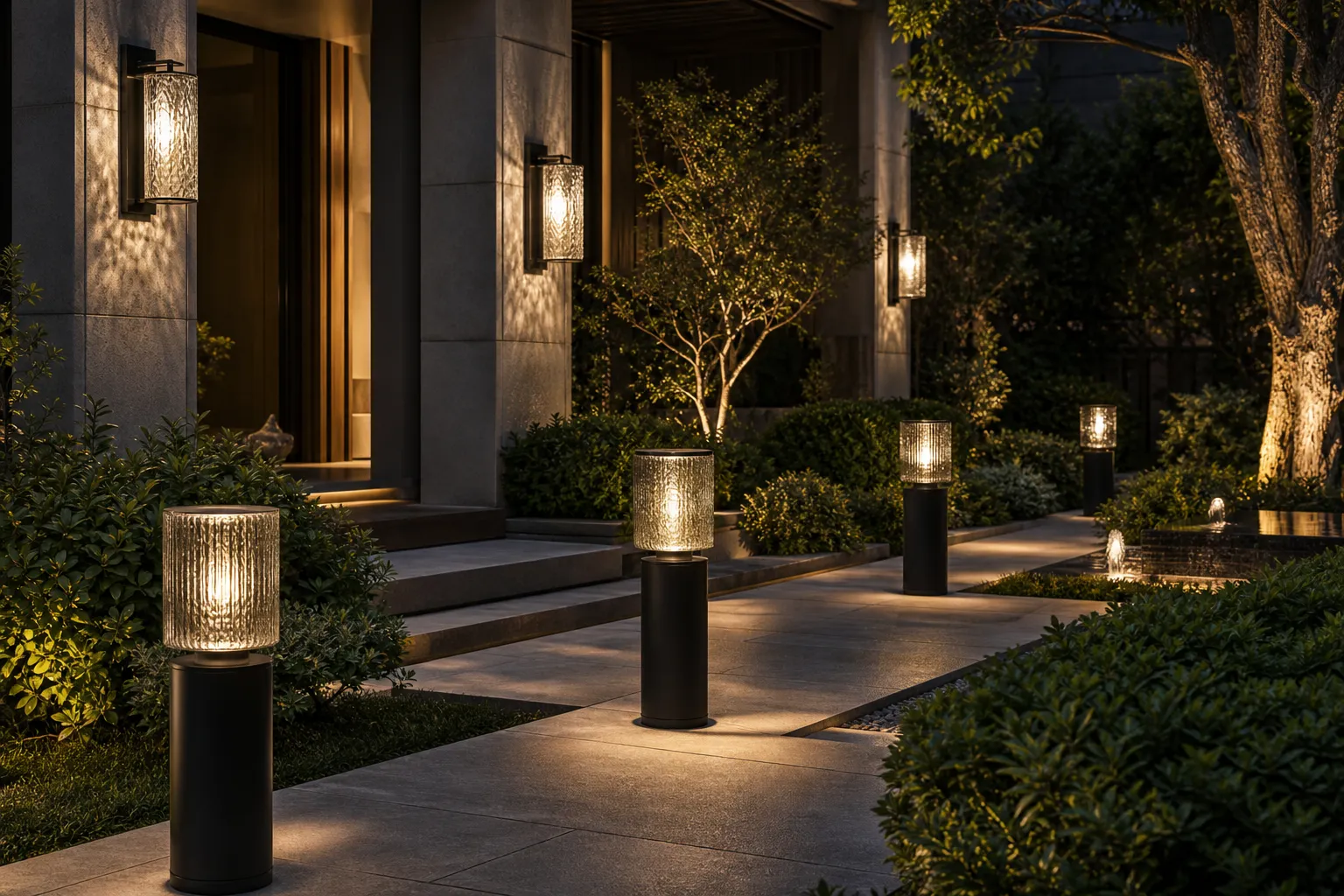
High-end courtyard projects can enhance the texture of luminaires through water ripples, vertical lines, cloth patterns, bubbles, hammer patterns, fine frosted or gradient fogged glass. These textures not only affect the look and feel of materials during the day, but also change the light and shadow levels at night, turning the luminaires from ordinary lighting products into part of the landscape.
When choosing textures avoid looking at just a static appearance, but also look at the effects of flare, glare and shadows when lit. A texture that is too deep may cause messy spots or difficulty in cleaning, while a texture that is too shallow may lack a sense of design. A safer approach is to use samples to test under real color temperature, real installation height and real background environment, and then determine the mass production texture and glass color.
Contact Us
Your feedback fuels our growth, and your questions drive our solutions.
We value your feedback, inquiries, and suggestions. Please feel free to get in touch with us
General inquiries
Please contact us via sales@bo-glass.com, and we will reply to you as soon as possible.
Interested to work with us
Drop your resume at info@bo-glass.com
and we will get back to you shortly.
Request a Custom Glass Quote
Tell us about your project or upload a drawing.
Your drawings remain confidential.
We uses the contact information you provide to us to contact you about our relevent content, products, and services.