
Molten Glass Pressing Services
What is Molten Glass Pressing?

Molten Glass Pressing Services: High-Volume Component Production
This efficient process enables high-volume manufacturing of stable borosilicate glass parts with consistent quality, rapid cycle times, and significant cost-efficiency for standard applications.
| High-Volume Powerhouse | Unmatched High-Volume Efficiency | Inherent Material Integrity & Lighting Quality | Exceptional Cost-Effectiveness for Commodity Parts | Broad Material Versatility & Application Range |
| Built for scale: 200K+ monthly units, running 24/7 from our furnaces for maximum output. | Integrated with continuous furnaces for 24/7 operation. | Fire-polished finish straight from the mold, eliminating secondary polishing. | Direct raw material use and high-speed production deliver the industry's lowest per-unit cost. | Works with soda-lime, borosilicate, and specialty glass direct from the melt. |
| Excels at high-speed production of complex, thin-walled components others can't make. | Rapid cycle times enable annual production of millions of units | Proper annealing creates stress-free, homogeneous glass for clarity and strength. | Significant reduction in material waste and secondary machining operations. | Perfect for high-volume lighting, household glassware, and industrial components |
Molten Glass Pressing Services

Soda-Lime Glass
Thermal Expansion (×10⁻⁶/K) :8.5 - 9.5
Softening Point (°C) :~700
Max Service Temp (°C):~120
Thermal Shock Resistance (ΔT °C):Low (~60)
Density (g/cm³): ~2.5
Mechanical Strength (MPa):~50-70
Acid Resistance (mg/cm²): Good (Class 2-3)
Alkali Resistance:Moderate
Transmission (Visible Light):> 90%
Key Characteristics:Low cost, easy to process
Typical Applications: Lighting globes, tableware, decorative items
Get a product quote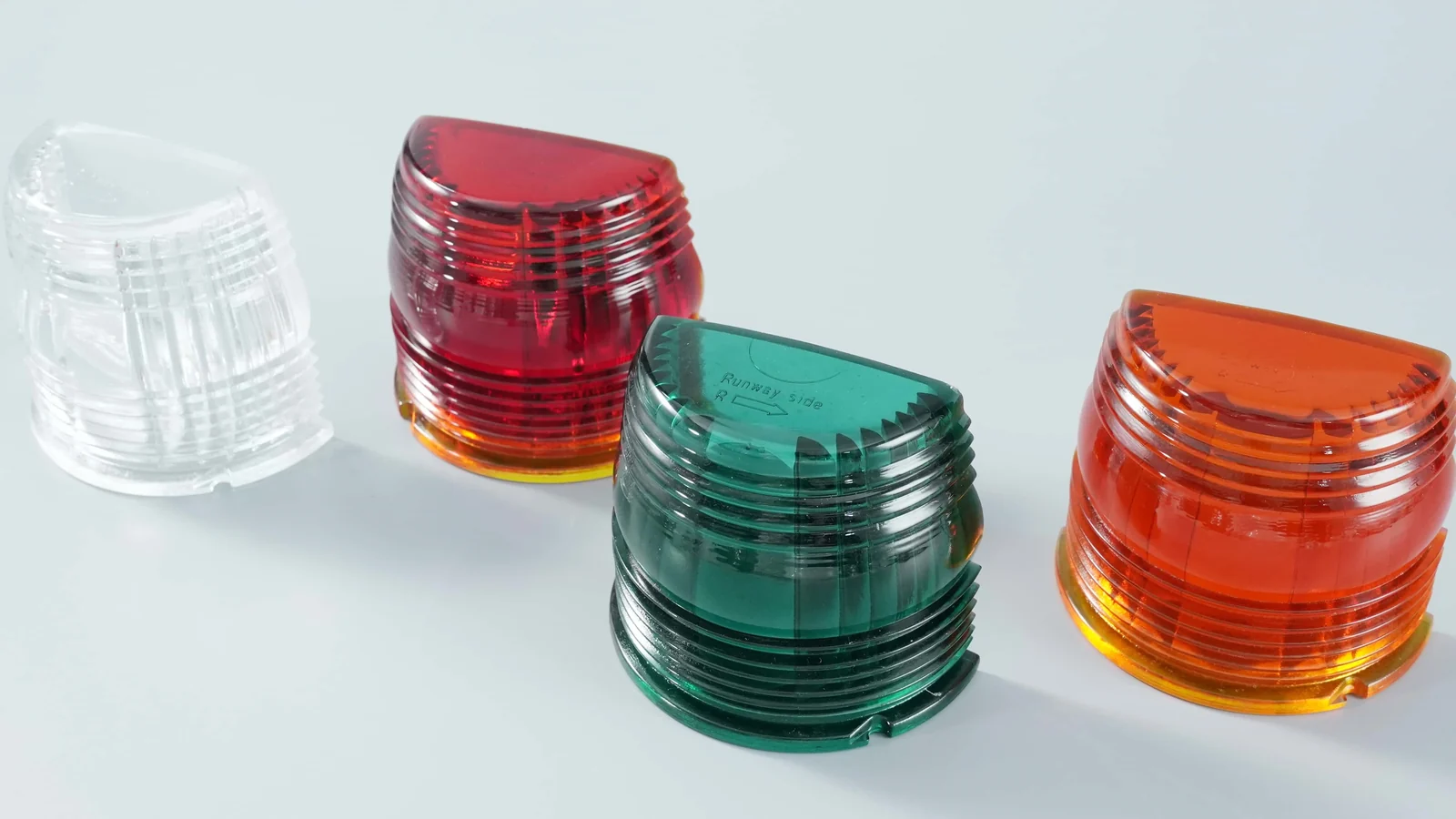
Borosilicate Glass for Pressed Parts
Grade selection. Specify the required grade, thermal expansion range, operating temperatures and heat-up or cool-down conditions when requesting a quote.
3.3 reference. SCHOTT DURAN® 3.3 technical data lists a mean linear expansion coefficient of 3.3 × 10⁻⁶ K−1 over 20–300 °C (ISO 7991). This tubing grade provides a reference. Confirm the formulation and data for the quoted pressed glass and validate the finished part under its service conditions.
See the borosilicate glass material guide and the pressed airfield lens project shown here.
Get a product quote
Colored Glass (General)
Thermal Expansion (×10⁻⁶/K) :~ Matches base glass type
Softening Point (°C) :Varies with additives
Max Service Temp (°C):~ Matches base glass type
Thermal Shock Resistance (ΔT °C):~ Matches base glass type
Density (g/cm³):Typically higher
Mechanical Strength (MPa):~ Matches base glass type
Acid Resistance (mg/cm²):~ Matches base glass type
Alkali Resistance:~ Matches base glass type
Transmission (Visible Light):Defined by colorant
Key Characteristics:Aesthetic/functional coloring
Typical Applications:Signal lenses, filters, architectural glass
Get a product quoteOur applications of glass processing technology
We are committed to providing our customers with one-stop solutions, from prototype development to mass production, by addressing the entire value chain of materials science, engineering design, and precision manufacturing. Our goal is to transform the ultimate performance of glass materials into a core competitive advantage for your products.

Precision Medical Prototypes & Labware Manufacturing

Glass lamp shade for outdoor lighting
Custom heat-resistant glass for outdoor lighting. From precise prototypes to full-scale production, we can assist you every step of the way.

Electronices&Home appliance instruments products Prototyping

Aerospace Glass
Accelerate your aerospace projects with custom glass components, from precision prototypes to volume production.
Glass Rod Hot Pressing vs. Molten Glass Mold Pressing
| Glass Rod Hot Pressing (Precision Glass Molding - PGM) | Molven Glass Mold Pressing (e.g., Gob & Pressing) | |
| Production Cost | precision molds: $1k-$5k. Low per-part cost at high volumes (>10k units). | molds: $1k-$5k. Very low per-part cost, ideal for ultra-high volume (millions). |
| Dimensional Accuracy | Achieves tight tolerances, e.g., diameter ±0.2 mm, center thickness ±0.2 mm. | Tolerances are looser, e.g., ±0.5 mm to ±1 mm, due to higher thermal shrinkage. |
| Build Size / Part Size | Small to Medium. Typically from Ø3 mm to Ø100 mm. Limited by mold heating/pressing force uniformity. | Medium to Large. Commonly from Ø30 mm up to Ø500+ mm (e.g., large lenses, glass lampshade). |
| Strengths | • Complex geometries (aspheres, micro-lenses) | • Extremely high production speed (seconds per part) |
| Strengths | • Optical surface finish (Ra < 10 nm) | • Cost-effective for simple shapes |
| Strengths | • Excellent material properties retention | • Ability to produce large, transparent parts |
| Strengths | • High repeatability | - |
| Min. Feature Size | Very Small. Capable of sub-micron features and lenslet arrays with pitches < 100 µm. | Larger. Limited by glass flow and rapid cooling. Typically, features no smaller than 0.5-1.0 mm. |
| Process Tolerance | Tightly controlled. Wavefront error < λ/4, precise refractive index control via annealing. | Looser control. Primarily for structural/container shape; optical homogeneity is not a priority. |
| Primary Applications | Aspheric lenses for cameras, laser scanners, medical endoscopes, AR/VR optics. | Bottles, jars, simple lenses (e.g., traffic lights), dishware, glass lamp shade. |
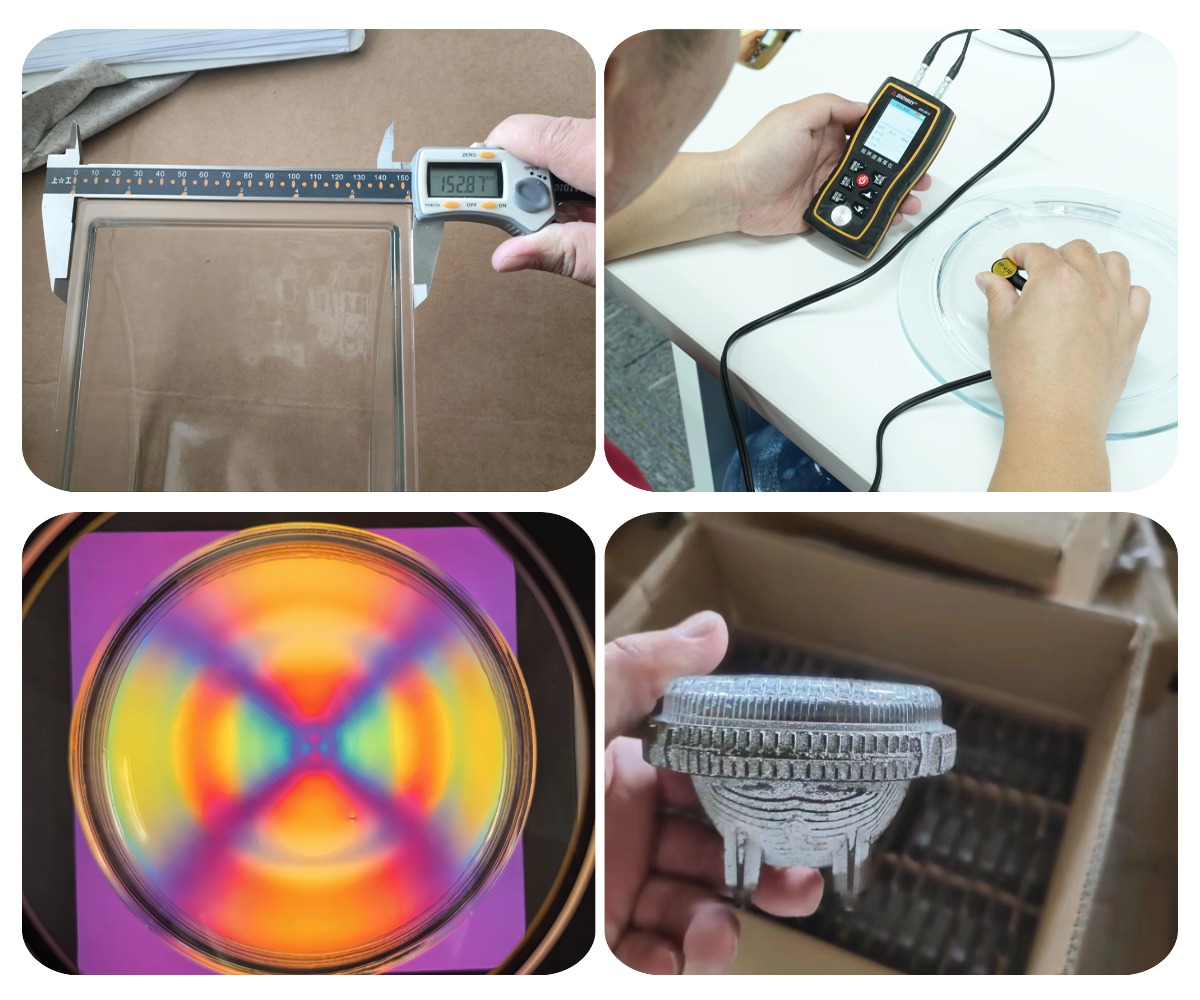
We manufacture pressed glass lenses to exceptional standards.
Optical Surfaces: Pristine, uniform finishes free from pits or cracks. Minimal mold contact marks are acceptable.
Dimensional Accuracy: Consistent contour and thickness within tight tolerance ranges.
Material Purity: High-grade optical materials ensure clarity and homogeneity.
Cleanliness: All lenses are thoroughly cleaned, free from residues or visible handling marks.
Advantages of Lens Pressing vs Drawbacks of Lens Pressing
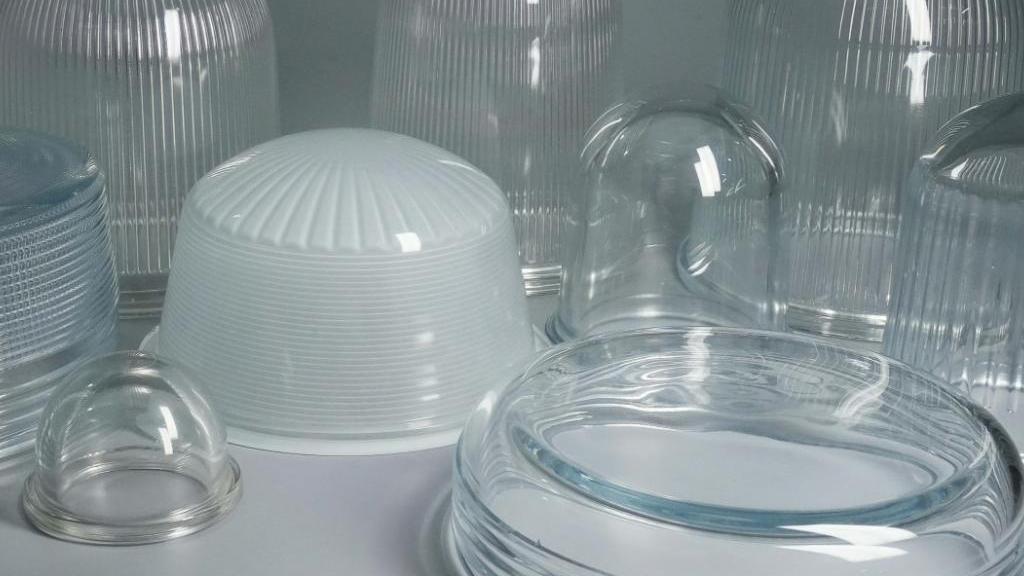
Advantages of Molten Glass Pressing
- Lowest per-unit cost for high-volume production runs.
- Mass production capable of over 100,000 units monthly.
- Fire-polished finish straight from the mold, no polishing needed.
- Stress-free, homogeneous glass ensures strength and clarity.
- Compatible with soda-lime and borosilicate glass types.
- Ideal for high-volume lenses, lighting globes, and simple parts.
Disadvantages of Molten Glass Pressing
- High initial mold costs ($800-$2,000+) require significant investment.
- Not suitable for highly complex optics with sharp corners.
- Wider tolerances (±0.5mm) than precision molding methods.
- Not economical for prototypes due to high mold costs.
- Only cost-effective for medium to large volume orders.
Our factory and our partner factories
BO-GLASS coordinates our core facility with a dedicated network of local specialists to deliver custom glass components. You benefit from our collective expertise while we manage all communication, quality control, and logistics for a seamless experience.


Molten Glass Pressing: Design for Manufacturability Guide
This guide outlines key technical parameters for designing components suitable for the Molten glass pressing process. Adhering to these guidelines ensures optimal manufacturability, performance, and cost-effectiveness.
Ensure Draft Angle
A minimum draft angle of 3 degrees is essential for all vertical walls. This taper is critical for facilitating the safe release of the glass component from the mold, effectively preventing it from sticking and breaking during the ejection process.
Control Wall Thickness
It is crucial to maintain a uniform wall thickness between 3mm and 15mm. Consistent thickness ensures even cooling and solidification throughout the part, which is fundamental to preventing internal stress concentrations and subsequent cracking.
Limit Recess Depth
Recessed features should be kept relatively shallow. Furthermore, all inside corners must incorporate a radius of no less than R1mm. This radius allows for smoother glass flow during pressing and helps avoid stress marks or ejection marks on the final product.
Follow Size Limits
To ensure compatibility with standard industrial pressing equipment, the maximum diameter of a pressed glass component should not exceed 500mm. Adhering to this size limit streamlines the manufacturing process and avoids the need for specialized, costly machinery.
Optimize Shape Ratio
Designs with a higher diameter-to-depth ratio are significantly easier to manufacture. A wider, shallower shape enables more uniform and complete glass flow within the mold cavity, resulting in a higher-quality pressed component.
Smooth All Transitions
All sharp transitions and intersections between surfaces must be smoothed with fillets of at least R2mm. These generous radii are vital for distributing stress that occurs during pressing and cooling, thereby drastically reducing the risk of fracture.
Consult Engineers Early
Engaging with manufacturing engineers during the initial design phase is highly recommended. Their early involvement ensures that the component is designed for optimal manufacturability from the start, preventing costly redesigns and production issues later on.
FAQ’s about molding pressed glass service
How much does molding pressed glass cost?
There are many factors that determine the cost of injection molding your custom parts. The three main expenses are tooling, materials and production. Find out how to reduce your manufacturing costs in our injection molding guide.
Who owns the pressed mold?
“Custom Mold Ownership: Customers retain full ownership of all custom-developed molds.
Proprietary Components: Any reusable, proprietary components developed by BO-GLASS remain our property.
Storage Period: Custom molds are stored at our facility for a minimum of two years.
Post-Storage: We will contact the customer to arrange for mold disposition after this period.
Mold Transfer: Molds can be transferred to any designated location at the customer’s request and expense.”
What is the available capacity/timeline for reorders?
In general, we have the RFQ ready within 24 hours. It takes 20 days to set up the mold and order and process the materials, and one day for packing and sending the order out to be shipped. The volume of your parts will determine the number of days required for manufacturing.
What ISO certifications do you have?
Our facility holds ISO 9001 and CE certifications, complemented by our proprietary technical patents. All materials used in production are supported by professional test reports from accredited laboratories. This integrated approach ensures you receive optimal pressed glass molding services backed by verified quality and technical excellence.
How long will you store my mold?
To place new orders using your existing molds, please contact your account manager or email us at: sales@bo-glass.com”
How BO-GLASS Custom mold pressed glass Service Works
We begin by creating CAD models and quality specifications based on your requirements. Corresponding molds and fixtures are precision-made via CNC machining. Sample units are then produced for your dimensional and quality approval before mass production proceeds. Finally, we provide inspection reports and handle all shipping arrangements.
How to Start with BO-GLASS Part Manufacturing
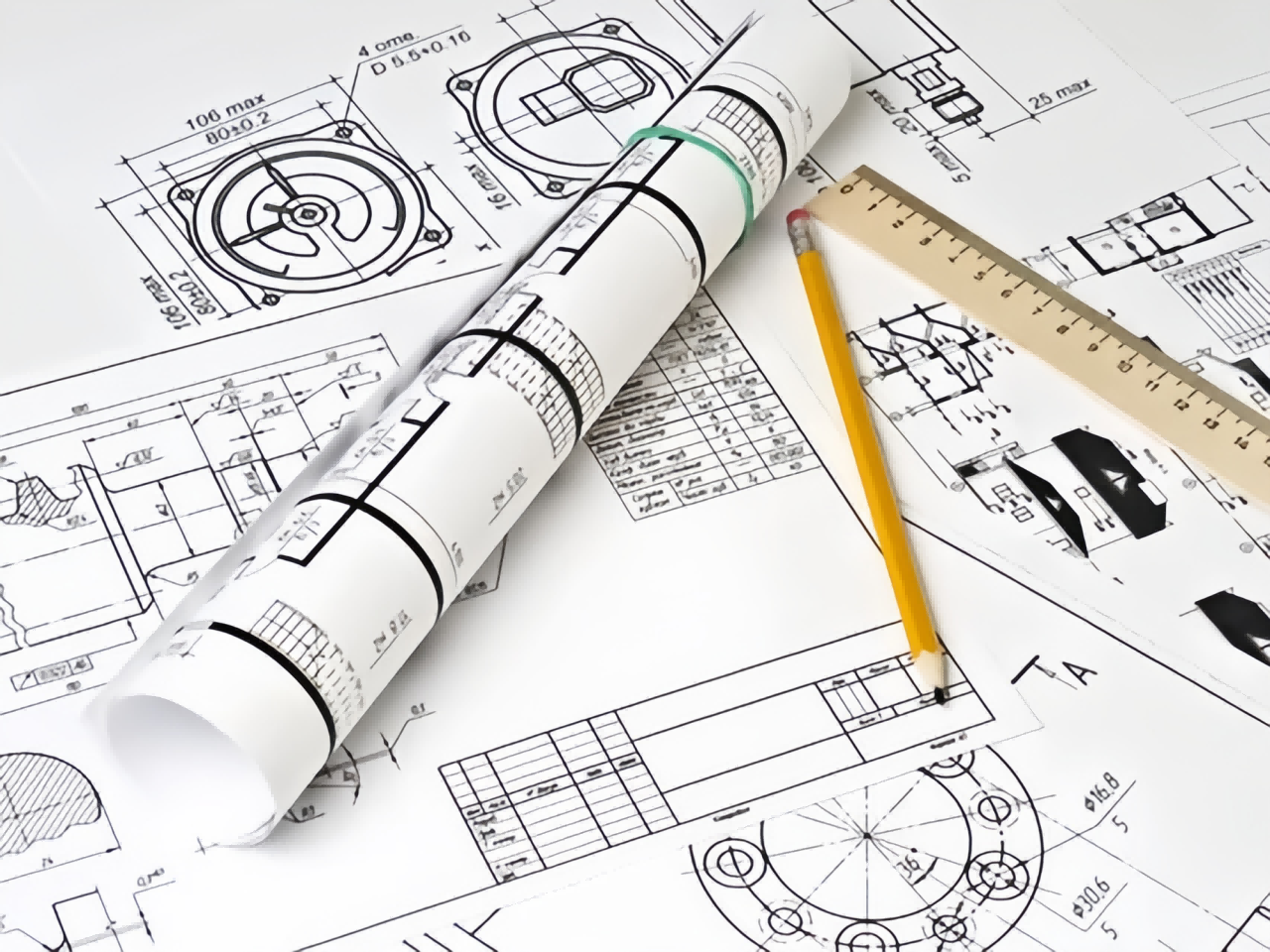
Submit your CAD files and technical drawings via email or WhatsApp. Our facility and local partner network support projects from rapid prototyping to full production. You will promptly receive a machining quotation or DFM feedback from our engineers to begin manufacturing.
Our other manufacturing capabilities
We can provide you with a variety of glass processing techniques.
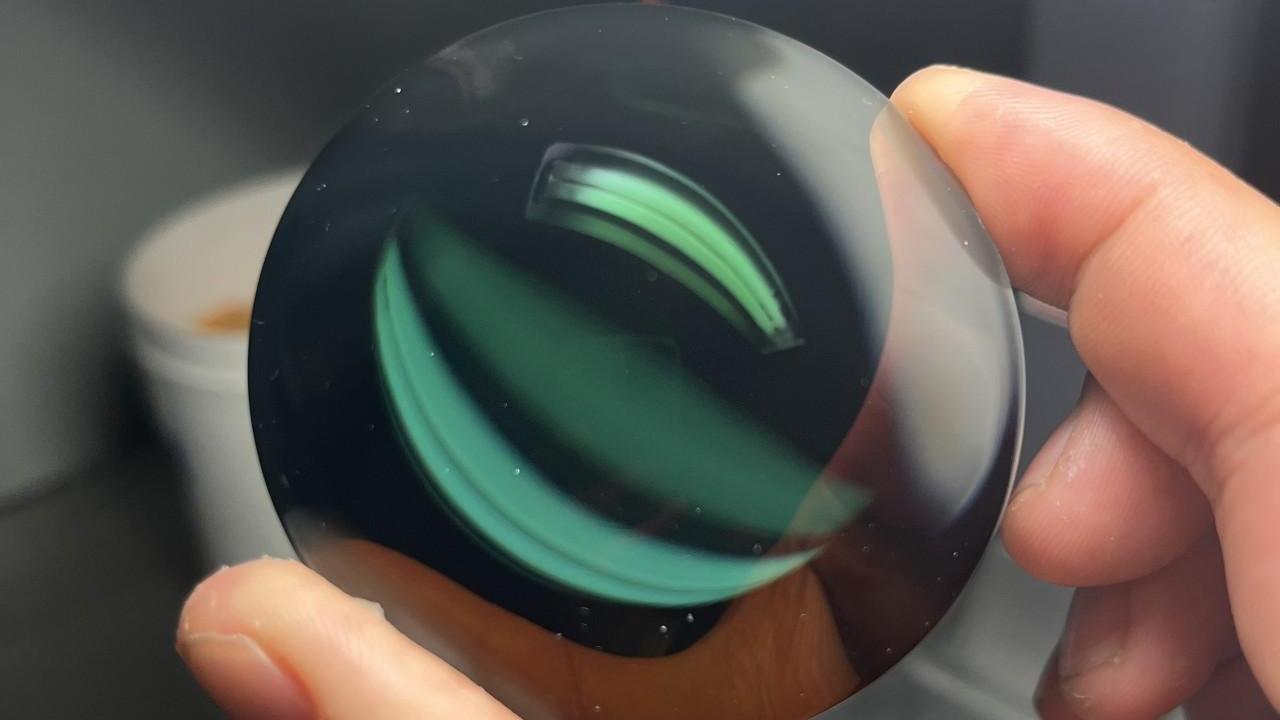
Glass Coatings for Enhanced Performance
Precision coatings upgrade glass for light, heat & durability control.
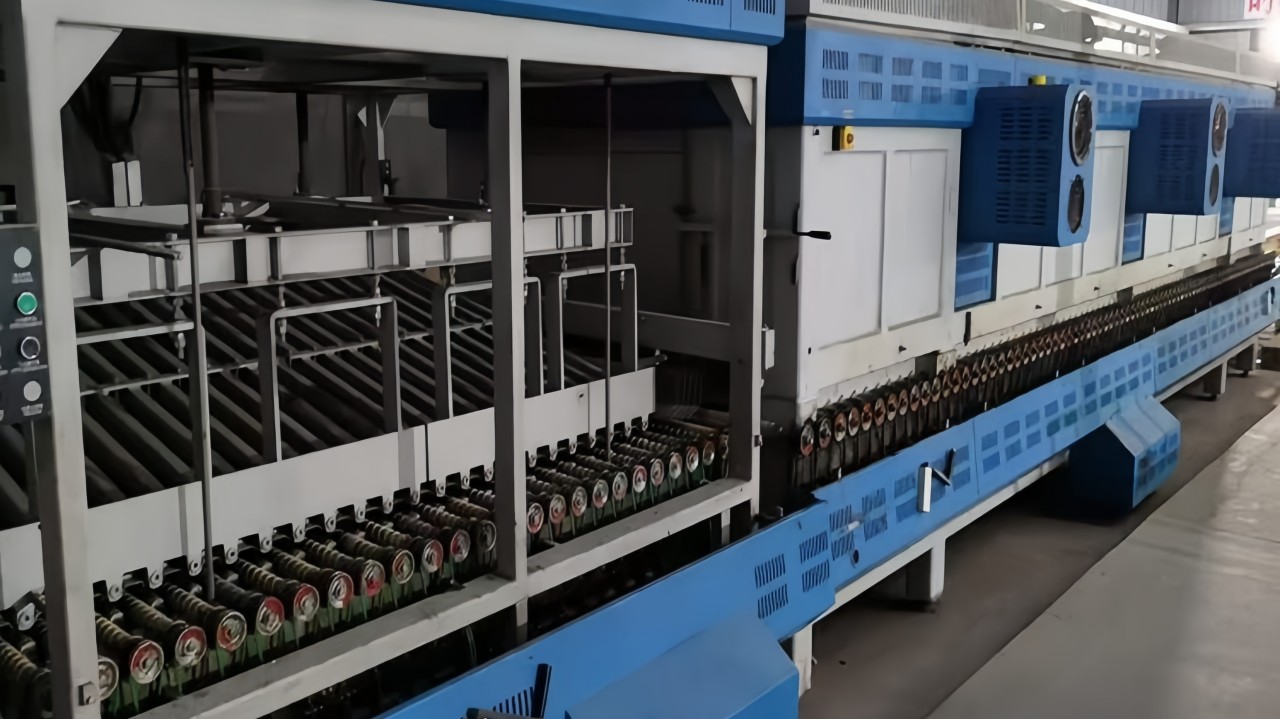
Chemical tempering service
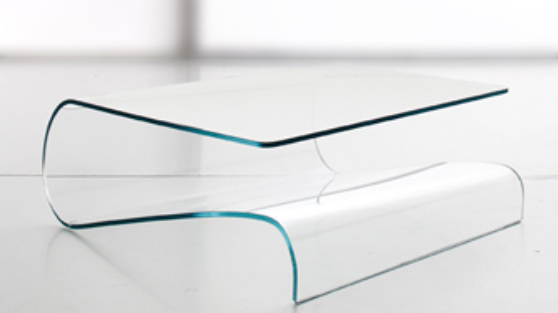
Custom Hot bend glass Services
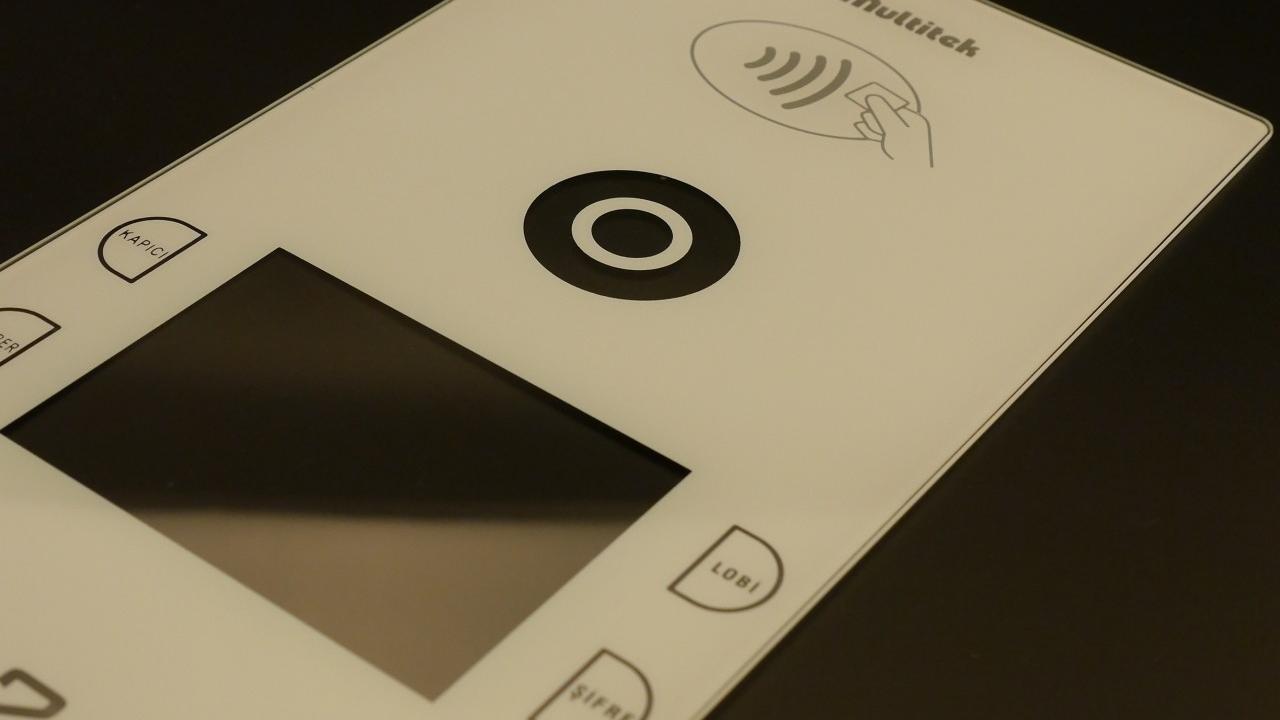
Silk Screened Glass service
Contact Us
Discuss Your Custom Glass Project
Share your drawing, photos or dimensions, together with the intended use and target quantity. We will review your requirements and discuss the next steps.
Sales Enquiries
Email sales@bo-glass.com with your part description, intended use and target quantity.
Send Your Design
Use the form to upload a drawing or describe an existing part. Mark critical dimensions and tell us which surfaces or features matter most.
Request a Custom Glass Quote
Upload a drawing or share dimensions, quantity, intended use and finish. Include any heat, pressure or chemical exposure.
Your drawings remain confidential.
We use the contact details you provide to respond to your enquiry. See our Privacy Policy for more information.