
What is a blurry version failure?
What causes blurring?
The reasons for the plate smearing during screen printing are complicated, and the main reasons are as follows.
(2) Reasons for workshop temperature, humidity, and ink properties: The screen printing workshop requires a temperature of about 20°C and low relative humidity. The volatile solvent in the ink will evaporate quickly, and the viscosity of the sleeve on the screen will be separated, thereby blocking the mesh. Another point that should be noted is that the plate-smearing phenomenon will occur if the downtime is too long. The longer the time, the more serious the plate smearing. If the ambient temperature is low and the ink has poor fluidity, it can easily cause plate smear.
(3) Reasons for the screen printing plate: It can be used only after it is rinsed with water and dried before use. If it is left for too long after it is made and is not printed in time, dust will adhere to it more or less during storage. If it is not washed during printing, it will cause the plate to smear.
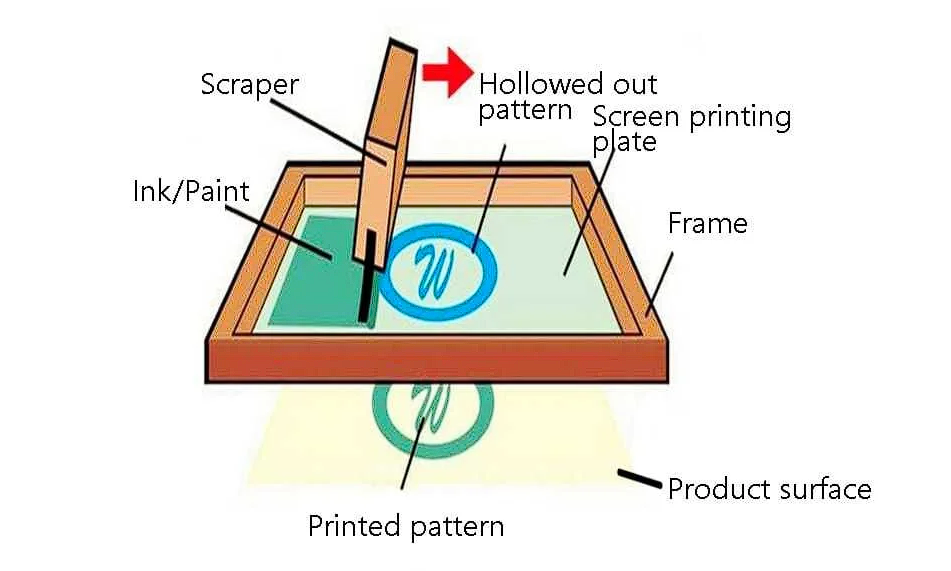
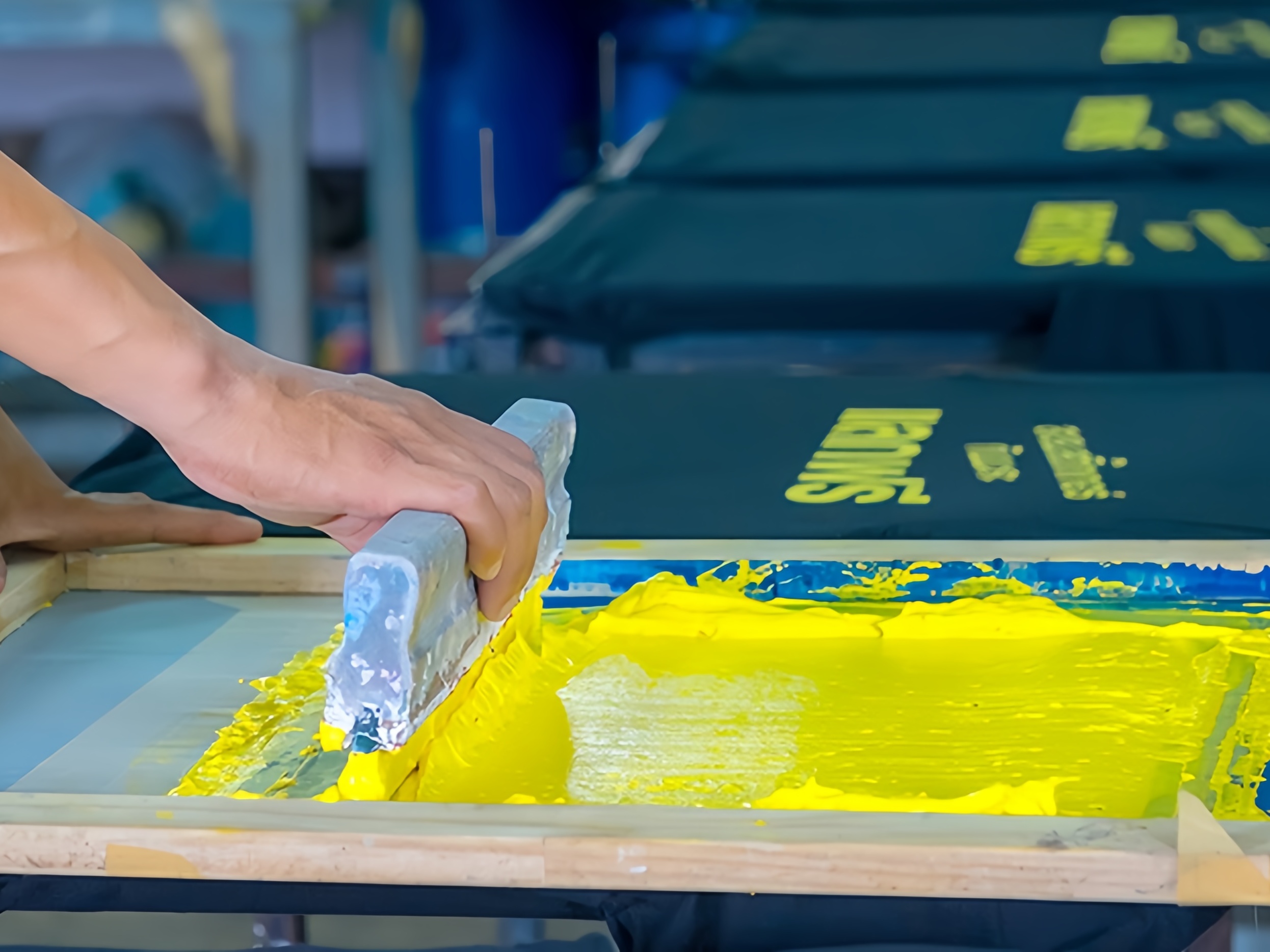
(4) Reasons for printing pressure: If the printing pressure is too enormous during the printing process, the scraper will bend. The scraper will not be in line contact with the screen printing plate and the glass but in surface contact. In this way, the ink cannot be scraped cleanly each time, and residual ink will be left. After a certain period, it will form a film and cause the plate to be blocked.
(5) Reasons for the improper gap between the screen printing plate and the glass: The gap between the screen printing plate and the glass cannot be too small. If the gap is too small, the screen printing plate cannot be separated from the glass after cutting and printing. When the screen printing plate is picked up, a certain amount of ink will stick to the bottom of the printing plate, which is also easy to cause the plate to be blocked.
(6) Reasons for ink: When the particles of pigments and other solid materials in the screen printing ink are significant, it is easy to block the mesh.
In addition, the mesh size and through-hole area of the selected screen are smaller than the particle size of the ink, making it difficult for the coarser particles of ink to pass through the mesh and cause the screen to be blocked. This is also one of the reasons. The blockage caused by the large particles of ink can be solved from the time of manufacturing the ink. The primary method is to control the fineness of the ink strictly.
How to deal with paste?
The oil base’s poor fluidity will also cause it to stick to the plate before it passes through the screen. To solve this problem, the fluidity of the ink can be improved by reducing the ink’s viscosity without affecting the printing quality.
If a plate sticking failure occurs, a suitable solvent should be selected for scrubbing according to the properties of the ink on the plate. When scrubbing, start from the middle of the printing surface and wipe gently outward. After brushing, the printing plate should be checked. If there is a defect, it should be repaired in time, and printing can be restarted after repair. It should be noted that each scrubbing will make the plate film thinner. If the plate film is seriously damaged during wiping, a new printing plate needs to be replaced for printing.
Contact Us
Your feedback fuels our growth, and your questions drive our solutions.
We value your feedback, inquiries, and suggestions. Please feel free to get in touch with us
General inquiries
Please contact us via sales@bo-glass.com, and we will reply to you as soon as possible.
Interested to work with us
Drop your resume at info@bo-glass.com
and we will get back to you shortly.
We uses the contact information you provide to us to contact you about our relevent content, products, and services.