
Micro-Textured Anti-Glare Glass Lenses for LED Lighting
Glare can turn a good LED fixture into an uncomfortable one.
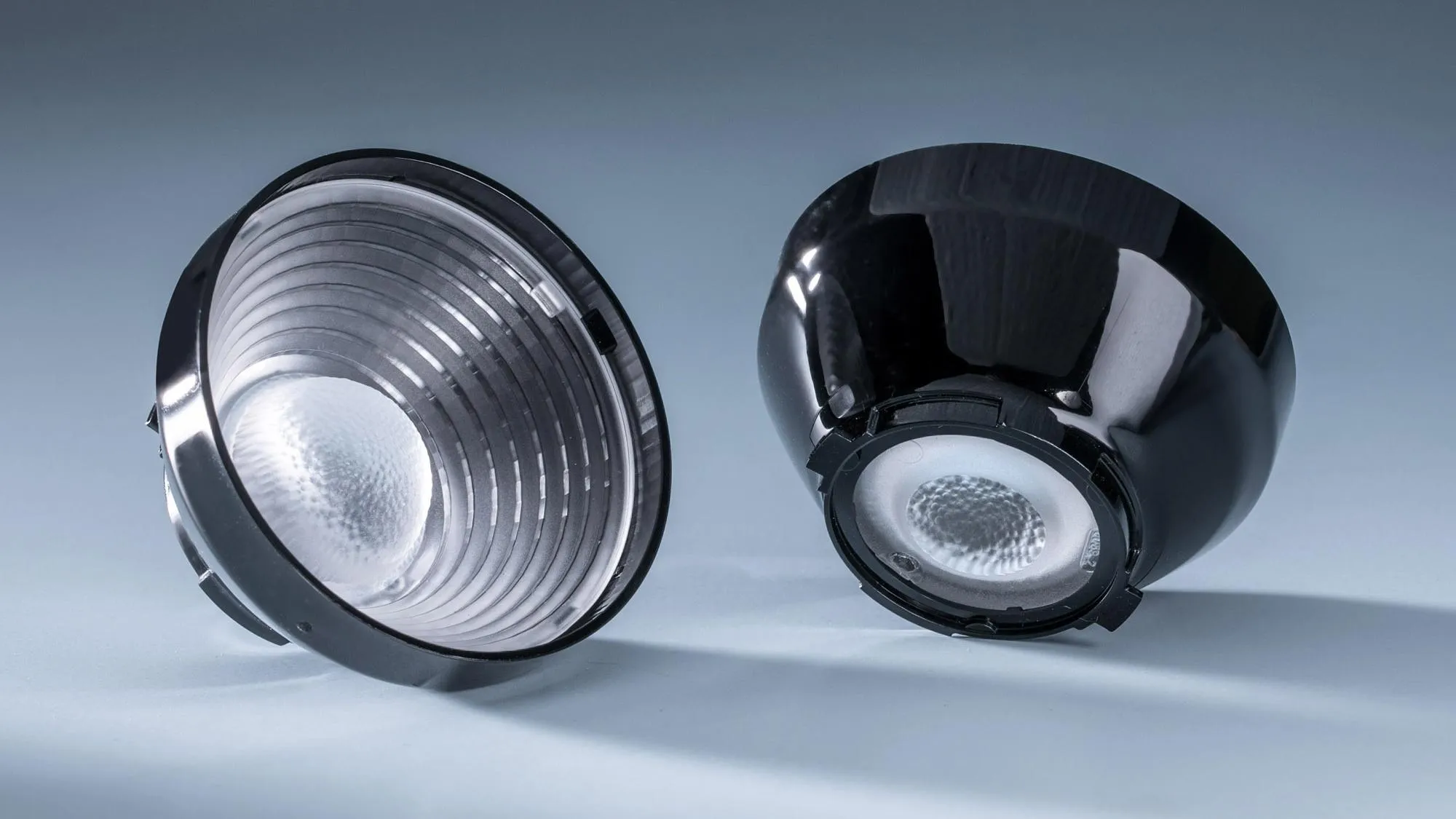
For warehouses, supermarkets, and commercial workspaces, brightness alone is not enough. A light has to be strong, but it also needs to feel comfortable. If the beam has a harsh edge, visible hotspots, or a sharp bright ring, people notice it immediately.
That was the problem this commercial lighting manufacturer brought to BO-Glass.
Their high-bay LED fixtures were powerful, but customers were complaining about eyestrain and uncomfortable brightness. The client had already tried diffuser films, frosted covers, and honeycomb louvres. Each option solved one problem but created another: too much light loss, uneven beam patterns, or higher assembly complexity.
They needed a better optical solution: a glass lens that could soften glare while keeping enough light intensity for real working environments.
Micro-Textured Anti-Glare Glass Lenses
The Challenge
The client’s existing lens used a simple convex optical shape.
It focused the light efficiently, but the beam edge was too sharp. At the outer area of the beam, a bright ring appeared, creating visual discomfort for people working under the fixtures.
The client needed a smoother beam transition, but they could not afford to lose too much brightness. In commercial lighting, every percentage of light output matters.
A standard frosted cover was too inefficient. A diffuser film reduced glare, but it also reduced output and made the fixture feel less premium. Honeycomb louvres helped with direct glare but changed the appearance and added extra parts.
The lens also had to fit into an existing plastic holder, so the outer diameter needed to stay within ±0.1 mm. The center thickness also had to be controlled because any thickness change could affect the focal length and beam angle.
The real challenge was not only making a textured surface. It was making a controlled micro-texture that could scatter light just enough, repeatably, at production scale.
Our Solution
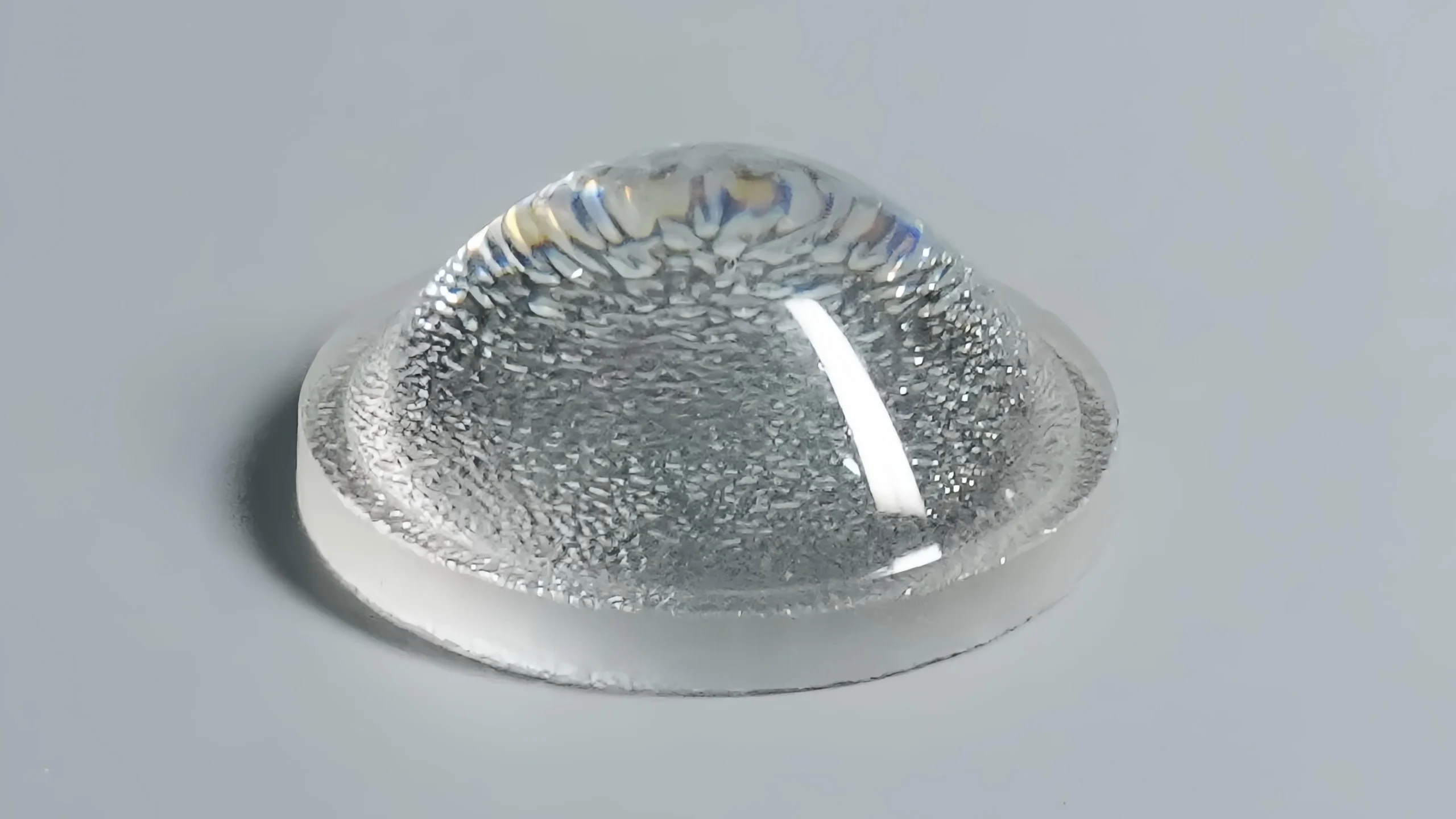
BO-Glass developed a micro-textured B270 glass lens with a fine orange-peel, leather-grain pattern on the LED-facing side.
Instead of using a separate diffuser or cover, we integrated the anti-glare function directly into the glass lens surface. This helped the client reduce glare while keeping the fixture compact, clean, and efficient.
B270 Optical Glass for Precision Moulding
We selected B270 optical glass for this project because it is well suited for precision moulded lenses.
B270 offers strong visible light transmission, good optical clarity, and excellent surface replication during hot moulding. It also flows well under heat, which makes it suitable for transferring fine surface detail from the mould to the glass.
The LED fixture did not operate under extreme heat, so B270 gave the best balance between optical quality, moulding performance, and production cost.
For BO-Glass, material selection is always tied to the application. In this case, the goal was not maximum heat resistance. The goal was controlled light diffusion, stable moulding, and repeatable anti-glare performance.
Controlled Orange-Peel Texture
The anti-glare effect came from a fine orange-peel texture on the flat side of the lens.
This was not a random rough surface. The texture had to be carefully controlled. The target pattern used small bumps around 20-30 microns high, spaced roughly 100-150 microns apart.
If the texture was too fine, the lens would not scatter enough light. If it was too coarse, visible grain could appear in the beam.
BO-Glass worked with the mould toolmakers to create the texture through photochemical etching. The mould steel was coated with photosensitive film, exposed with a random dot pattern, and then etched to the required depth.
We tested multiple plates before selecting the right etching time and texture depth.
This is where BO-Glass adds real value: we do not simply make glass parts. We help turn an optical idea into a controlled manufacturing process.
Hot Moulding with Vacuum Assist
During production, hot B270 glass was pressed into the mould at around 600°C.
The glass had to flow into the micro-textured mould surface so the orange-peel pattern could transfer cleanly. If the mould temperature was too low or unstable, the texture would become shallow and the anti-glare effect would weaken.
To solve this, BO-Glass adjusted the mould temperature profile using thermocouples inside the mould. We also added vacuum assist to help pull the glass into the fine texture cavities.
The top exit surface of the lens remained polished and smooth, while the bottom LED-facing surface carried the micro-texture. This allowed the lens to soften glare without losing control of the main beam direction.
Dimensional and Thickness Control
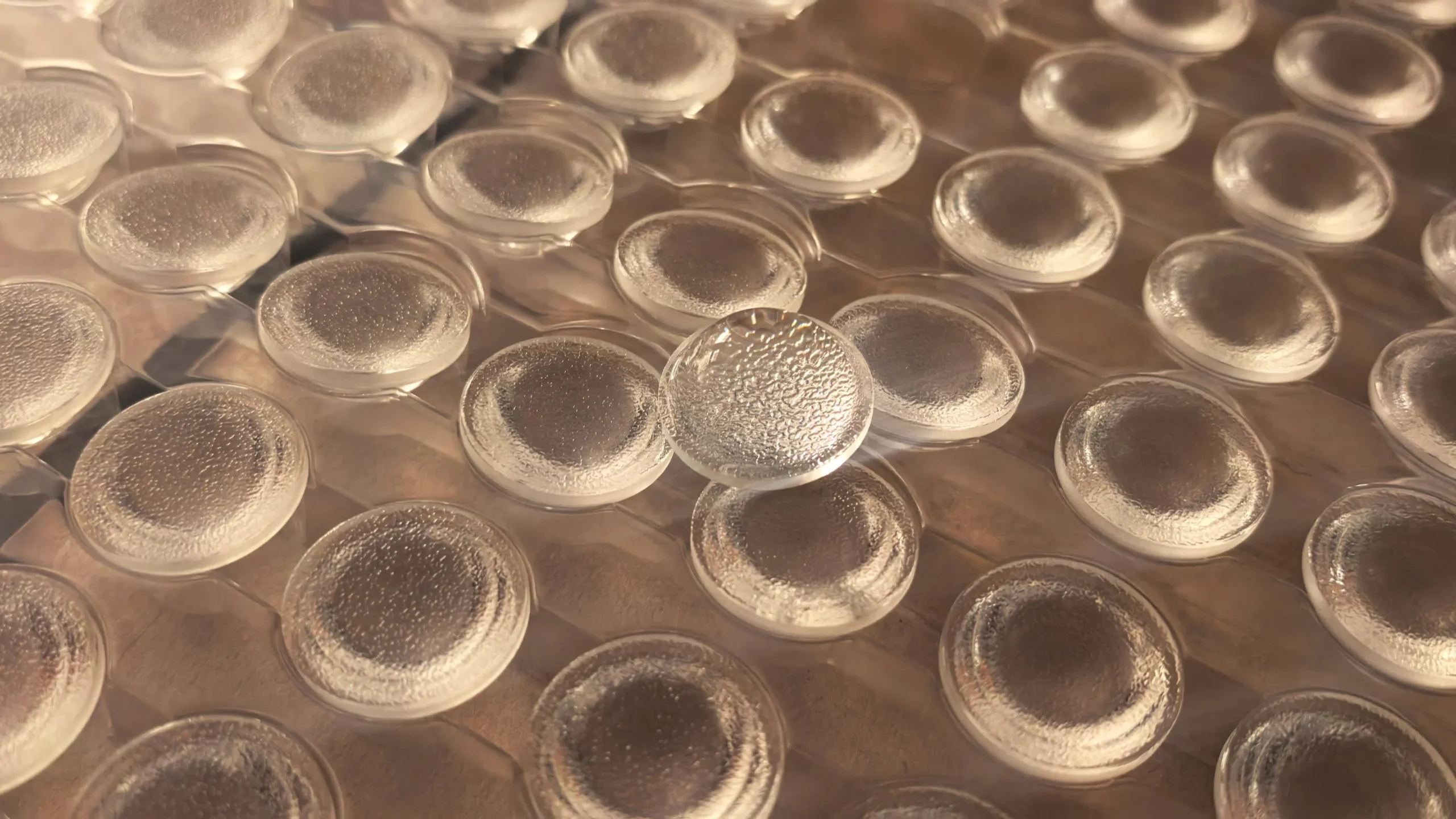
The lens had to snap into the client’s plastic holder, so mechanical accuracy was just as important as optical performance.
We controlled the outer diameter within ±0.1 mm by grinding the mould cavity accurately and stabilizing press pressure during production.
The center thickness was also held within ±0.1 mm. This was important because thickness changes could shift the focal length and affect the beam profile.
To control thickness, BO-Glass used a spacer ring in the mould to stop the press at the exact height.
This helped keep the lens consistent from batch to batch.
Optical Verification
The client tested the lenses on their standard LED module using a goniometer.
The results showed that the center intensity dropped by only 8%, which was acceptable because the beam became wider and more comfortable.
The hard edge and bright ring were replaced by a smoother fall-off. Hotspots, bright dots, and streaks were also reduced.
Most importantly, the Unified Glare Rating improved from 22 to 17. For commercial lighting, that is a meaningful improvement in visual comfort.
The client could now market the fixture as using anti-glare glass optics for more eye-friendly illumination.
Quality Control
BO-Glass inspected each production run to keep the texture and optical performance stable.
We measured surface roughness on the textured side with a profilometer. The required Ra range was 2-3 um.
We also inspected the surface under magnification to check for missing texture areas caused by air bubbles or poor mould filling.
For optical confirmation, five lenses from each batch were tested on an optical bench to verify beam uniformity.
We also performed a dry-heat test at 100°C for 24 hours to simulate long-term LED operating conditions. The B270 lenses showed no crazing and no yellowing.
The Result
The client was very satisfied with the test results.
The first order was 1,000 pieces. After three months, the client reordered 5,000 pieces and asked BO-Glass to develop a smaller version for a downlight product.
End users described the light as softer and more comfortable, which was exactly the feedback the client wanted.
The small orange-peel texture became a selling point in their product catalogue, where the fixture was promoted with anti-glare glass optics for eye-friendly illumination.
For the client, this project proved that glare control does not always require a separate diffuser, film, or louvre. A carefully engineered glass lens can solve the problem directly at the optical surface.
For BO-Glass, it showed how small surface details can create a big difference in real lighting comfort.
Why Choose BO-Glass?
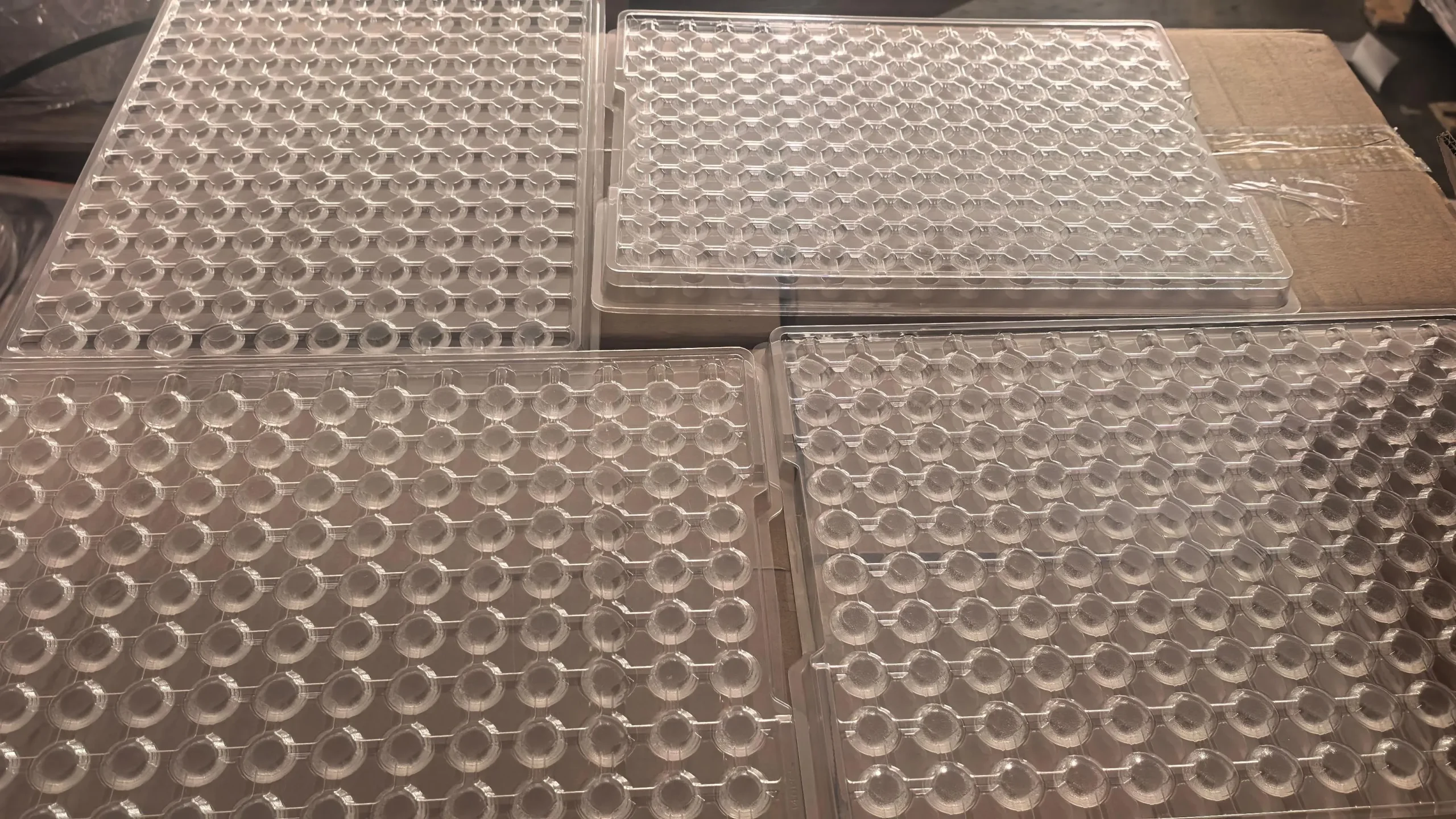
BO-Glass helped the client solve a common LED lighting problem without sacrificing the product’s efficiency or premium appearance.
With B270 optical glass, photochemical mould texturing, hot moulding, vacuum assist, dimensional control, surface roughness testing, goniometer measurement, and dry-heat validation, we delivered a lens that was both optical and practical.
Our strength is not only producing glass lenses. It is understanding how material, mould surface, micro-texture, beam profile, and production repeatability work together.
For LED lighting manufacturers facing glare complaints, harsh beam edges, or inefficient diffuser solutions, BO-Glass can develop custom glass optics that make the light softer, cleaner, and more comfortable while keeping the fixture commercially viable.
Contact Us
Your feedback fuels our growth, and your questions drive our solutions.
We value your feedback, inquiries, and suggestions. Please feel free to get in touch with us
General inquiries
Please contact us via sales@bo-glass.com, and we will reply to you as soon as possible.
Interested to work with us
Drop your resume at info@bo-glass.com
and we will get back to you shortly.
We uses the contact information you provide to us to contact you about our relevent content, products, and services.