
Custom Vintage Motorcycle Glass Lamp Lenses for Classic Restoration
A vintage motorcycle lamp lens is not just a replacement part. It carries the history and character of the original machine.
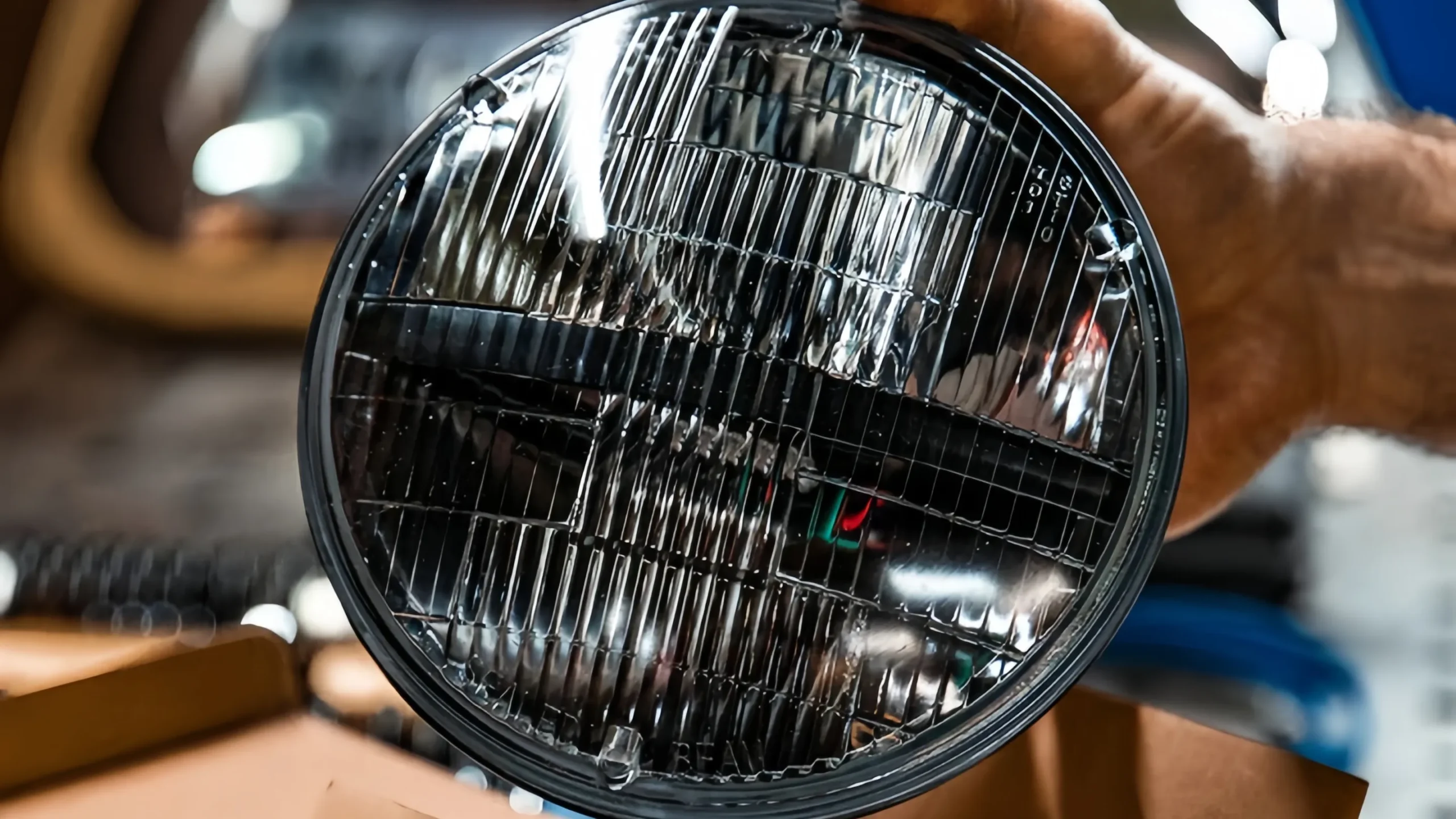
A US-based supplier of replacement parts for classic vehicles needed a small-batch manufacturing solution for vintage motorcycle glass lamp lenses. The original lenses featured distinctive ribs and molded optical details that needed to be reproduced from physical samples.
Modern plastic injection molding was unsuitable for the project because of its high tooling investment and large minimum order requirements. BO-Glass developed an adjustable pressed-glass production solution that combined reverse engineering, custom mold development, iterative sampling, and small-batch manufacturing.
Custom Vintage Motorcycle Glass Lamp Lenses
The Challenge
The client was not simply looking for a glass cover with a similar shape. The new lens had to reproduce the character of an original vintage motorcycle component while fitting the existing lamp assembly and supporting practical lighting performance. With no original production mold and only a physical sample available, BO-Glass needed to balance historical accuracy, optical function, dimensional consistency, and the economics of small-batch manufacturing.
Reproducing the Original Lens Design
The supplied reference lenses were original components manufactured decades ago. No complete technical drawings or production molds were available, so the product had to be recreated from the physical samples.
The new glass lenses needed to reproduce several important characteristics:
– The original overall shape and external dimensions
– The mounting profile required by the existing lamp assembly
– Molded ribs, flutes, prisms, and decorative details
– The depth and spacing of the surface pattern
– The period-correct appearance expected by restoration customers
– Suitable optical clarity and light transmission
Even small differences in the molded pattern could affect both the appearance of the lens and the way light passed through it.
Small Demand Across Multiple Designs
Vintage motorcycle replacement parts are typically required in relatively small quantities. Demand may be divided among different motorcycle models, production years, lamp shapes, and surface patterns.
This creates a manufacturing challenge for conventional high-volume suppliers. Plastic injection molding normally requires expensive tooling and large production runs before the cost becomes commercially reasonable.
The client needed a production method that could support hundreds of pieces rather than tens of thousands while still allowing future repeat orders.
Maintaining Period-Correct Authenticity
Classic motorcycle owners and restoration specialists pay close attention to the material and appearance of replacement components. A modern plastic substitute may provide a similar outline, but it cannot fully reproduce the weight, surface character, optical appearance, and tactile quality of the original glass lens.
The replacement lens therefore needed to look appropriate when installed on a restored motorcycle rather than appearing like a modern substitute.
Balancing Appearance and Function
The molded pattern was not purely decorative. Ribs and fluted details can influence light diffusion and distribution across the lens.
The finished component needed to combine:
– Accurate pattern reproduction
– Consistent glass thickness
– Suitable light transmission
– Smooth integration with the original lamp fitting
– Clean surfaces without obvious tooling marks
– Reliable dimensional consistency throughout the production batch
Our Solution
BO-Glass developed a sample-led pressed-glass manufacturing process combining original-part reverse engineering, custom mold development, iterative sampling, controlled manual pressing, and individual quality inspection.
Instead of treating the lens as a simple glass cover, we considered the complete restoration requirement: historical appearance, molded optical pattern, dimensional compatibility, glass clarity, mounting accuracy, and small-batch production all had to work together.
Reverse Engineering from the Original Sample
BO-Glass used the client’s original lens as the primary reference for mold development.
The team examined the lens profile, mounting area, overall curvature, edge geometry, and molded surface pattern. Critical dimensions and visible design details were translated into a manufacturable mold structure suitable for pressed-glass production.
Because the reference component was an aged original rather than a new technical drawing, the objective was to preserve its recognizable historical character while adapting the design to current manufacturing conditions.
Custom Mold Development
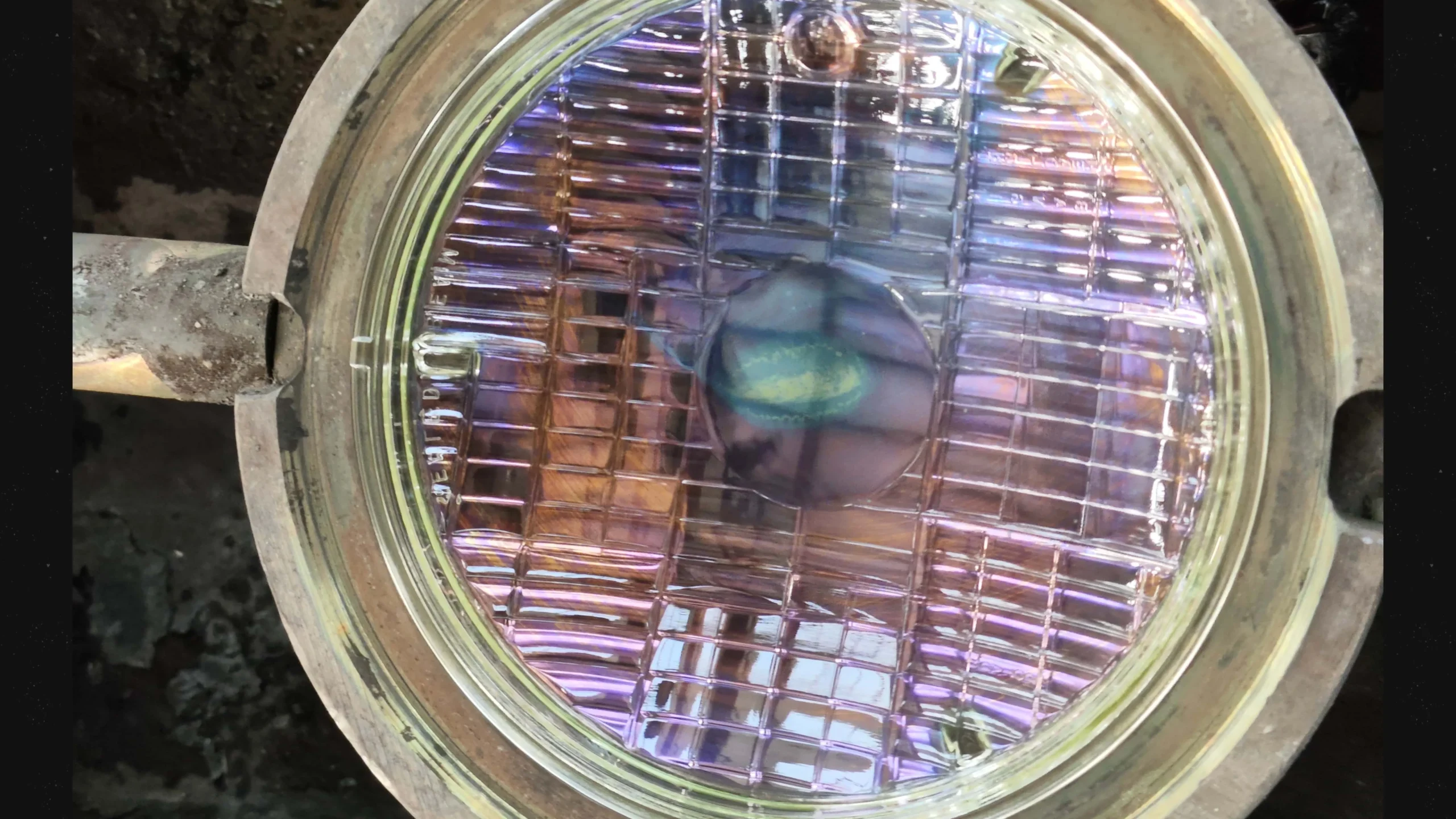
A dedicated metal mold was developed to reproduce the shape and molded pattern of the original motorcycle lamp lens.
Particular attention was given to:
– The profile of each rib or flute
– Pattern depth and spacing
– Curved transitions between design elements
– Edge radii and mounting dimensions
– Glass flow inside the mold cavity
– Areas where trapped air could affect the finished surface
The mold was designed for controlled adjustment so that individual features could be refined after each sampling round.
Iterative Sampling and Mold Adjustment
The first pressed-glass samples were compared with the original lens. Differences in pattern depth, spacing, curvature, edge definition, and overall dimensions were documented before the mold was modified.
The development process followed a repeatable cycle:
1. Produce a small sample batch.
2. Compare the samples with the original lens.
3. Check the overall dimensions and mounting profile.
4. Review the molded pattern and visible details.
5. Adjust the mold where necessary.
6. Produce a new sample for evaluation.
7. Continue until the final sample is approved.
This sample-first process allowed the design to be improved progressively without committing the client to a large production order before the lens had been confirmed.
Small-Batch Manual Glass Pressing
The approved lenses were manufactured using a small manual glass press.
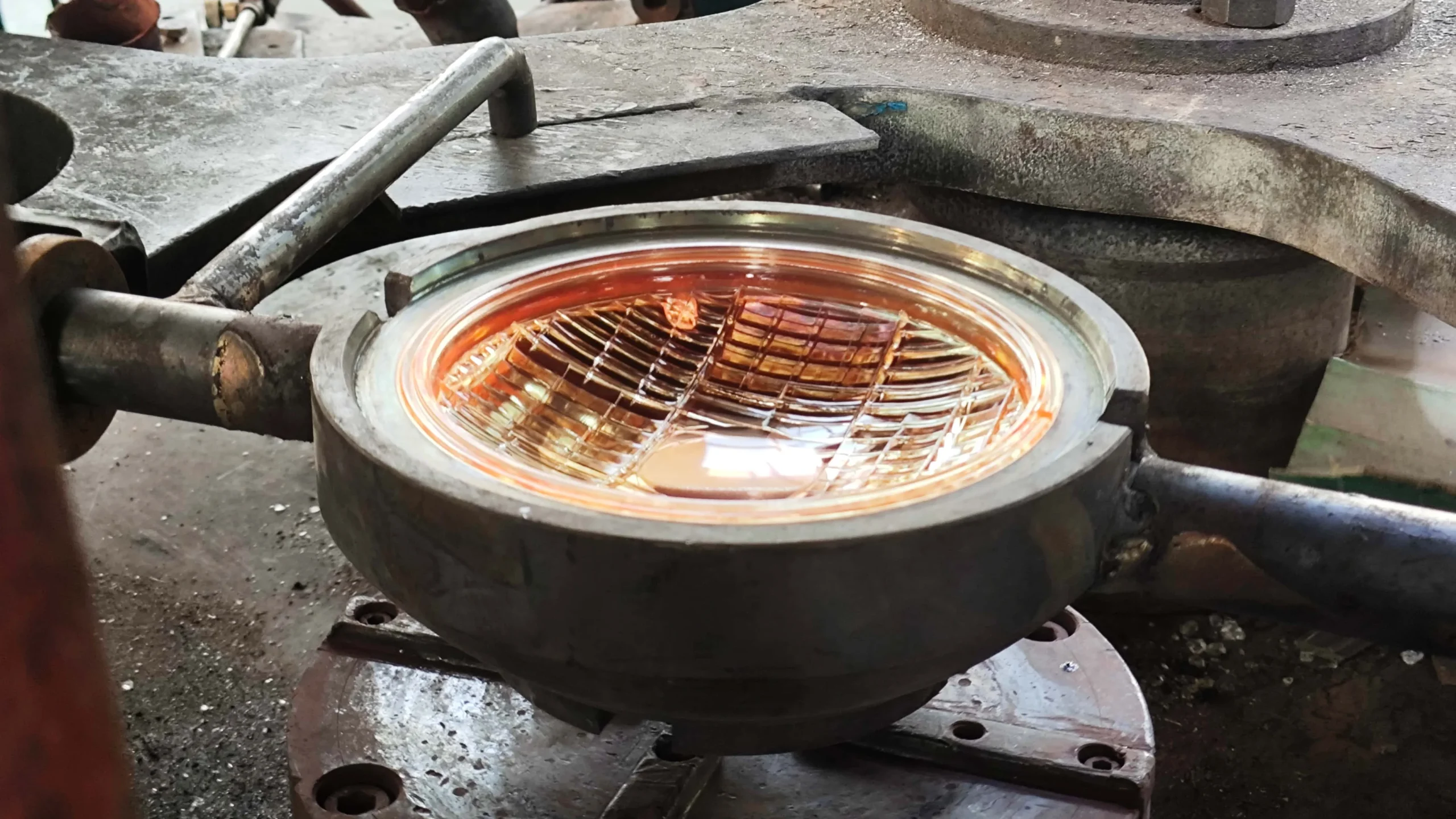
Molten glass was gathered and placed into the mold before pressure was applied to form the lens and reproduce its molded surface details. This production method is especially suitable for specialty projects involving limited quantities, multiple designs, and frequent mold changes.
Compared with highly automated mass-production equipment, the manual press provided the flexibility needed to:
– Produce economical small batches
– Change between different lens designs
– Test revised molds without large setup losses
– Adjust the process according to pattern complexity
– Support repeat orders for niche replacement parts
Process Control for Molded Details
The temperature of the glass, the quantity placed into the mold, the pressing pressure, and the timing of each cycle were controlled to help the molten glass fill the detailed pattern.
This was particularly important in areas containing narrow ribs, deep flutes, curved corners, or closely spaced decorative elements.
The process was refined during sampling and early production to improve pattern definition and reduce incomplete filling, trapped air, dimensional variation, and visible surface defects.
Individual Quality Inspection
Each finished lens was inspected under controlled lighting before approval.
The inspection focused on:
– Overall shape and dimensions
– Compatibility with the intended lamp fitting
– Accuracy of the molded pattern
– Pattern depth and definition
– Visible bubbles or inclusions
– Chips, cracks, and edge damage
– Surface marks and mold-related defects
– Glass clarity and visual consistency
– General appearance compared with the approved sample
Products that did not meet the agreed visual or dimensional standard were removed before packing
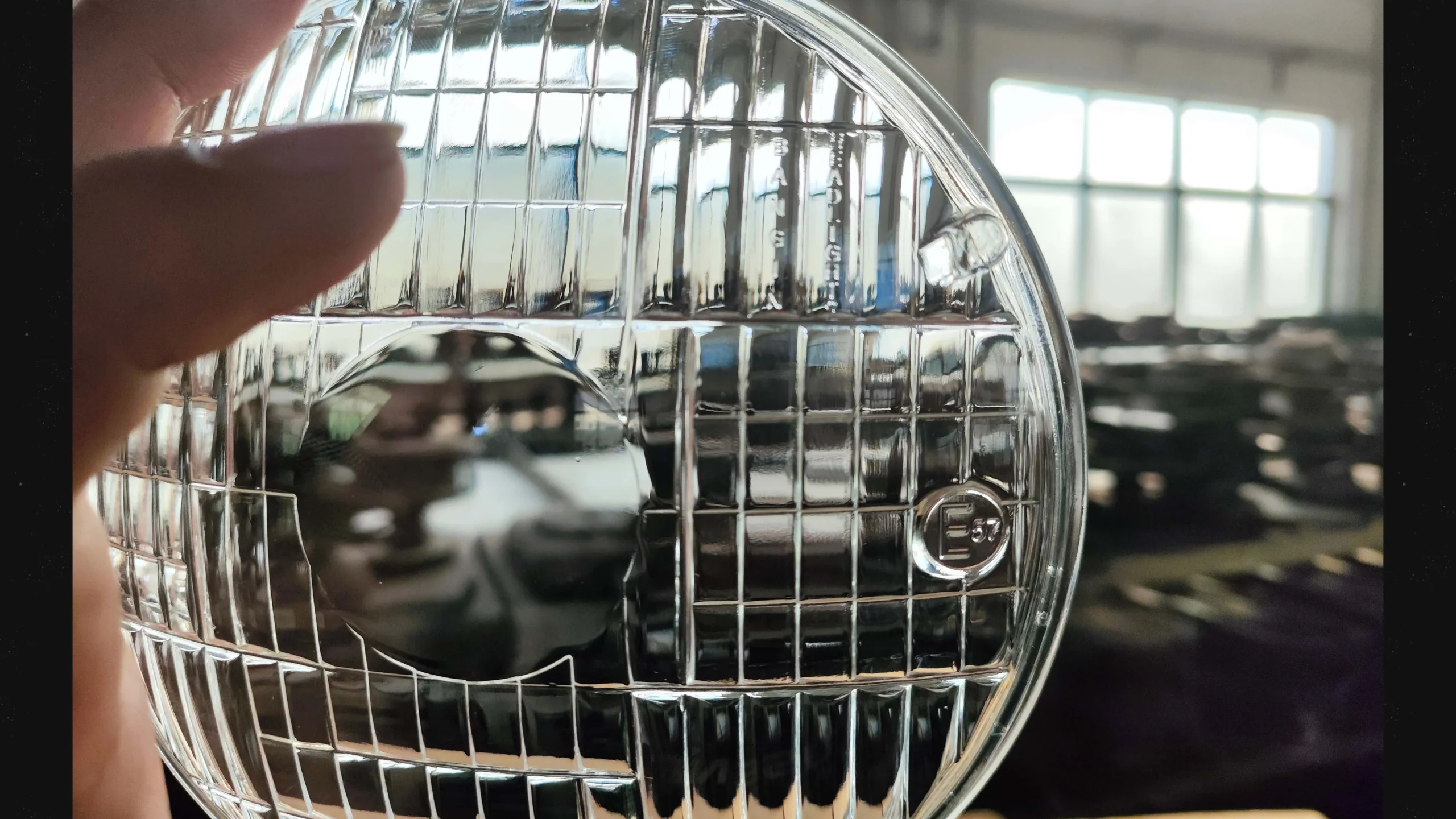
The Result
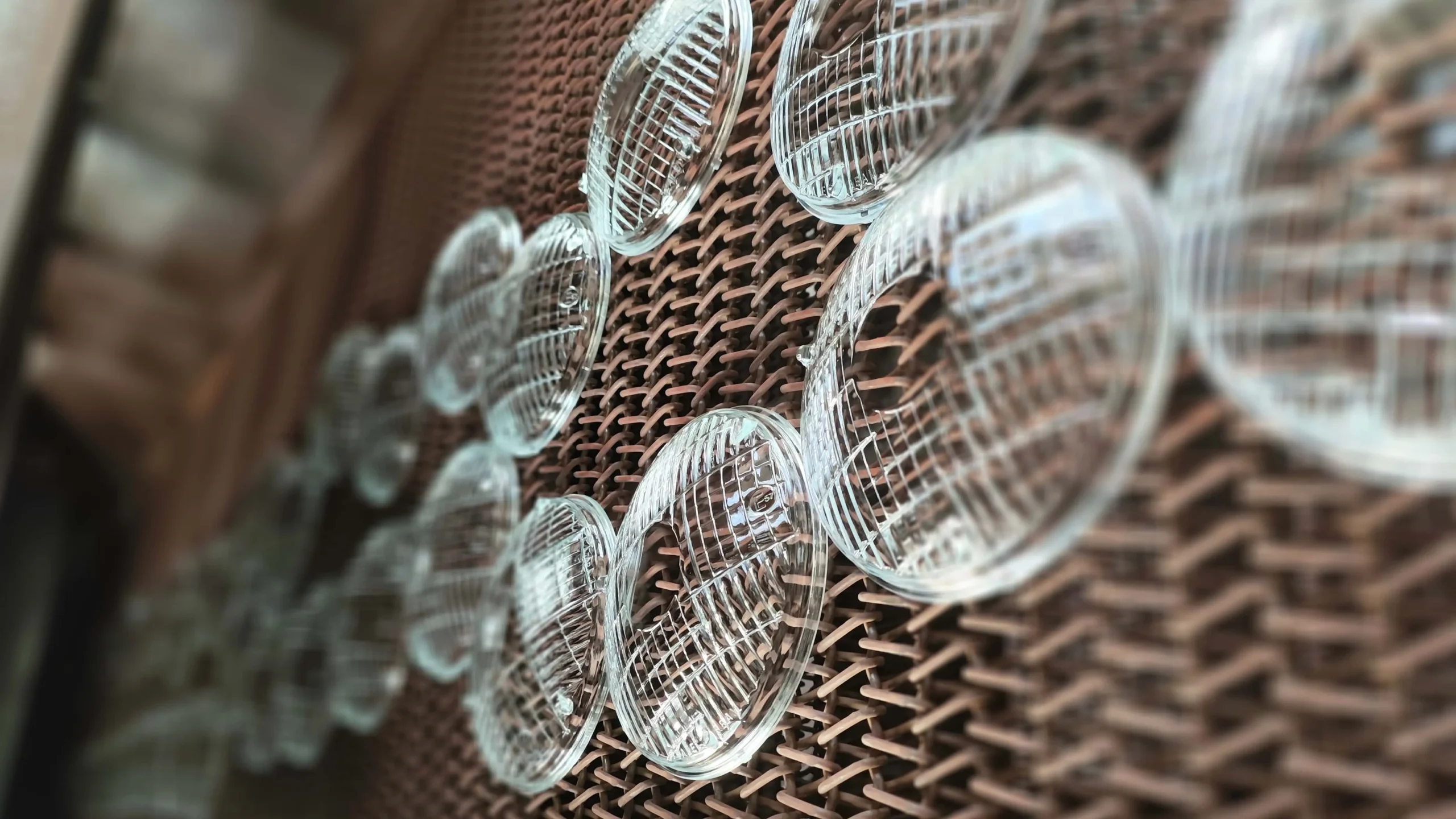
BO-Glass transformed an original vintage motorcycle lamp lens into a repeatable pressed-glass product suitable for small-batch replacement-part production.
The finished lens preserved the recognizable shape, molded pattern, optical character, and period-correct glass appearance of the original component. Its dimensions and mounting profile were developed around the existing lamp assembly, allowing the client to supply a restoration-oriented replacement rather than a visually mismatched modern substitute.
The adjustable mold and manual pressing process also gave the client a practical production route for future repeat orders. Instead of investing in high-cost tooling designed for mass production, the client gained access to a flexible solution aligned with the actual demand of the classic motorcycle market.
This project demonstrates how traditional glass-forming technology can remain highly valuable when the application requires historical authenticity, design flexibility, and economical production in limited quantities.
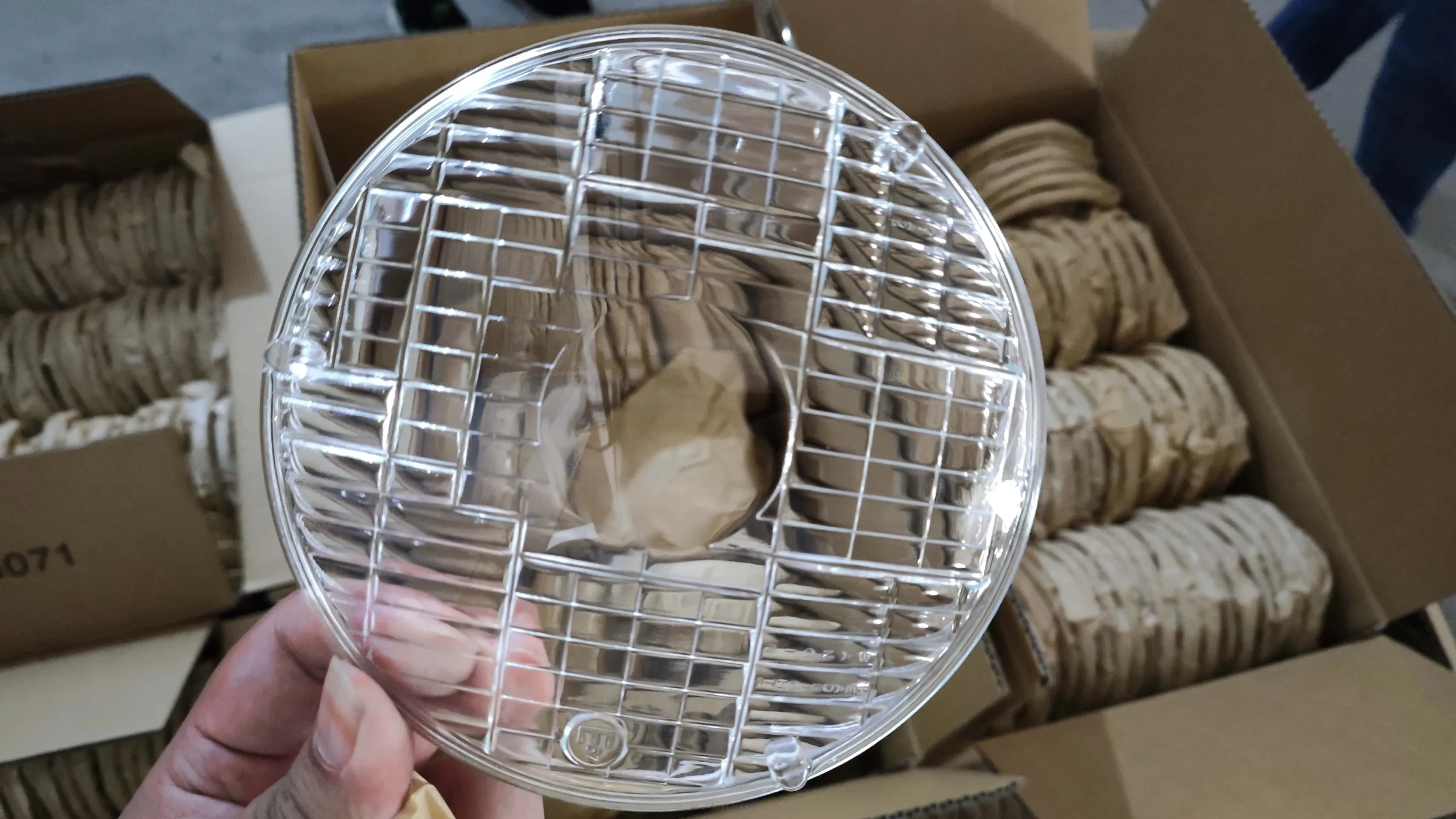
Why Choose BO-Glass?
Vintage motorcycle restoration projects often involve limited demand, missing technical drawings, discontinued tooling, and strict expectations for historical accuracy. These requirements are difficult to support through modern mass-production systems designed for standardized components and very large orders.
BO-Glass combines traditional pressed-glass craftsmanship with flexible mold development and sample-based production. Our manufacturing process is suitable for specialty glass components required in hundreds of pieces or limited repeat batches, helping clients avoid the high tooling costs and minimum quantities associated with plastic injection molding.
When technical drawings or historical molds are unavailable, we can use an original component as the reference for dimensional analysis, mold development, and sampling. The mold can then be modified progressively according to the sampling results, allowing details such as ribs, flutes, curves, edges, pattern depth, and mounting profiles to be refined before batch production.
Our experience with pressed glass helps us control the relationship between glass temperature, material quantity, mold structure, pressing pressure, and pattern complexity. This allows the finished lens to retain the weight, surface character, optical quality, scratch resistance, and period-correct appearance valued by classic motorcycle owners and professional restoration specialists.
Once the mold and approved sample have been established, additional batches can be scheduled according to actual market demand. This gives the client a practical way to maintain stock, support future replacement requirements, and reproduce other specialty lens designs without committing to mass-production volumes.
Each lens is inspected for dimensional consistency, molded pattern definition, glass clarity, visible defects, surface condition, and overall conformity with the approved sample before packing. BO-Glass supports restoration projects that require patience, craftsmanship, and close technical communication. Our goal is not simply to manufacture a glass part, but to preserve the visual identity and functional character of the original component.
Contact Us
Your feedback fuels our growth, and your questions drive our solutions.
We value your feedback, inquiries, and suggestions. Please feel free to get in touch with us
General inquiries
Please contact us via sales@bo-glass.com, and we will reply to you as soon as possible.
Interested to work with us
Drop your resume at info@bo-glass.com
and we will get back to you shortly.
We uses the contact information you provide to us to contact you about our relevent content, products, and services.