
Custom Large-Format Borosilicate Pharma Bottles for Small-Batch Production
Not every pharmaceutical bottle project needs millions of pieces.
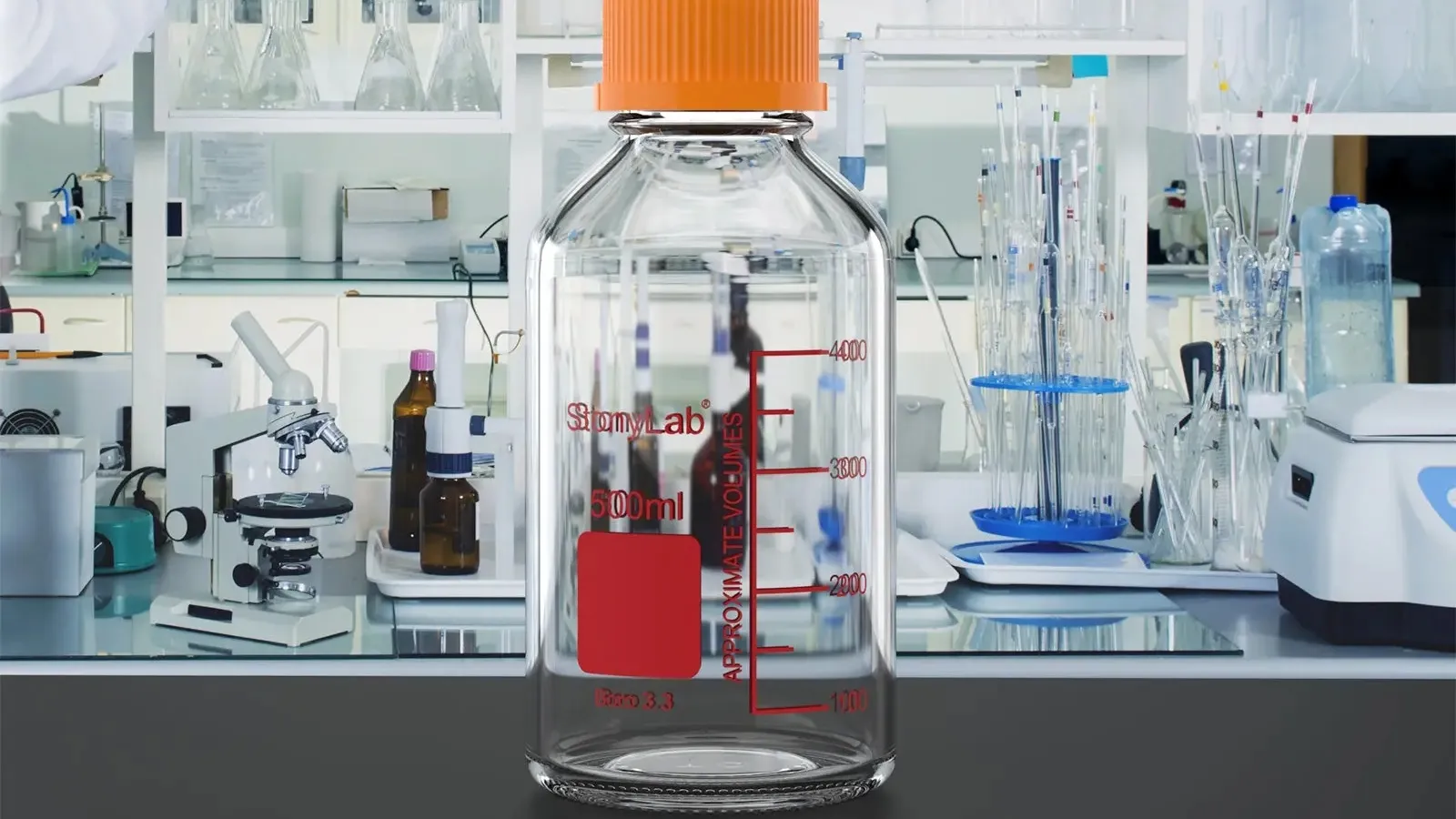
Some products are made in limited batches. Some are used for culture media, bulk reagents, sensitive biologicals, or specialty drugs. For these applications, the glass still has to meet serious pharmaceutical requirements, but the order quantity may be too small for large automated factories.
That was the problem this supplier from Indonesia brought to BO-Glass.
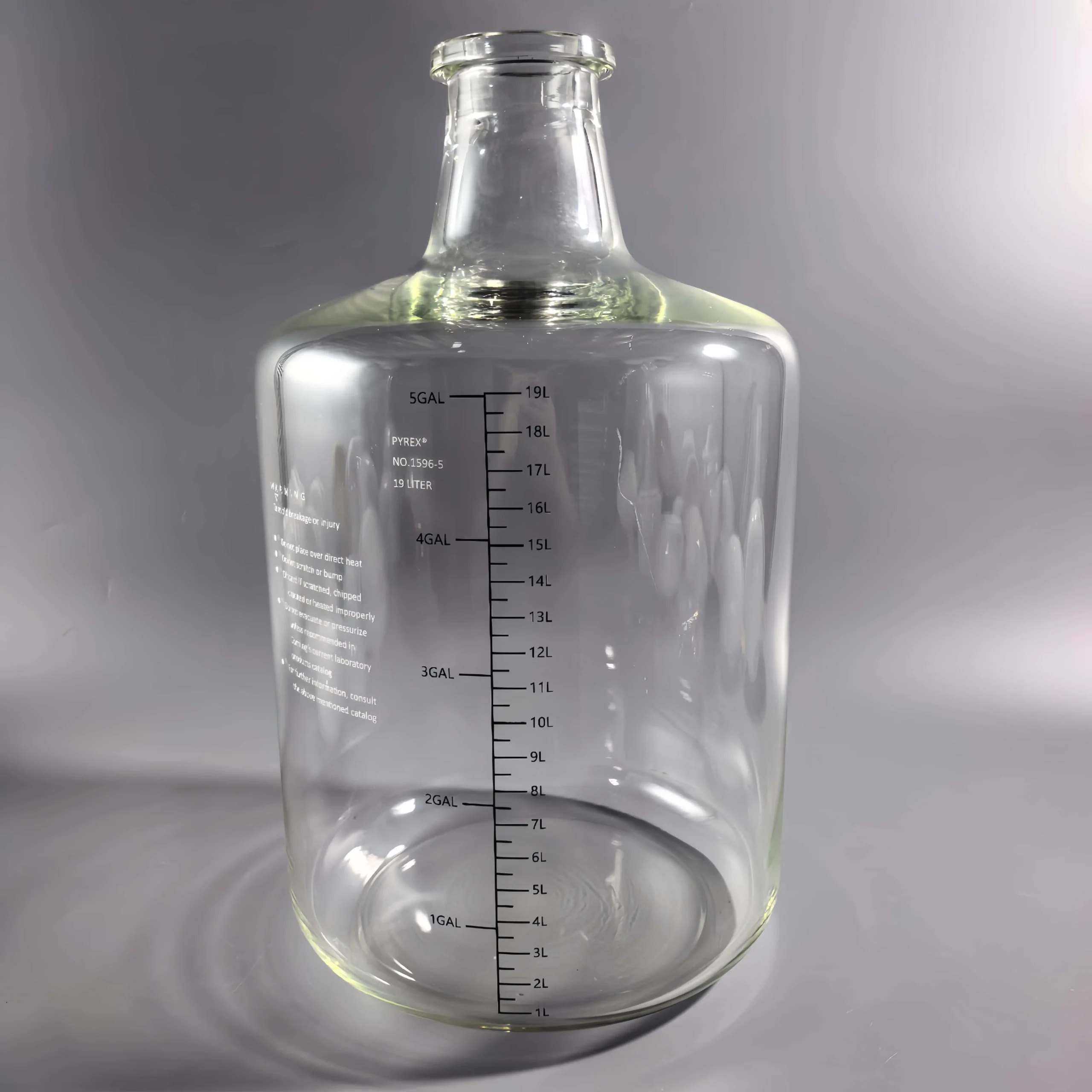
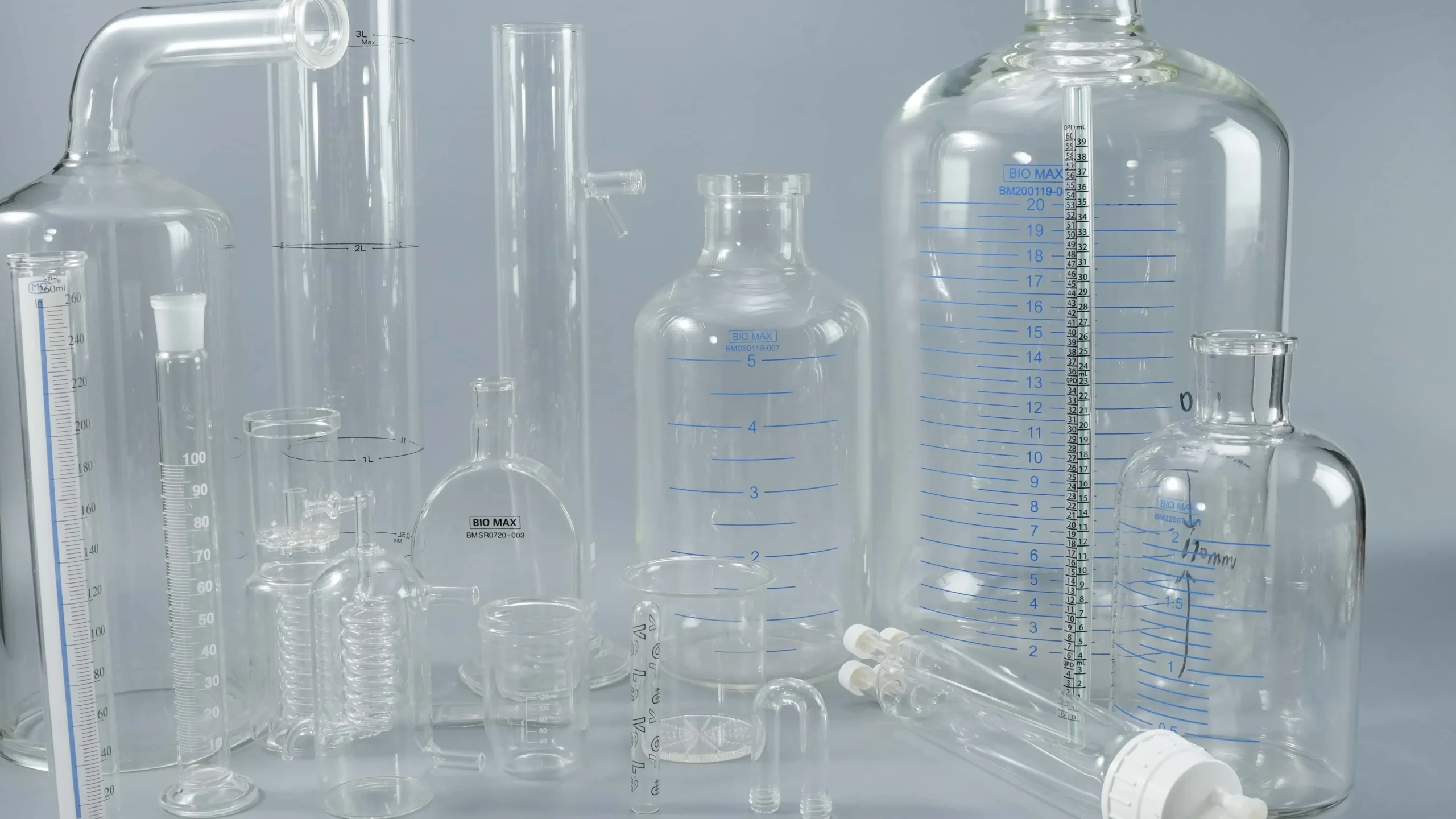
Their customer needed large 20,000 ml borosilicate bottles for pharmaceutical and laboratory use. The bottles had to meet Type I glass requirements, support both clear and amber versions, fit GL45 caps, survive sterilization, and be produced in small batches of only 100 to 200 pieces at a time.
Large automated glass plants refused the project because the volume was too low.
BO-Glass accepted it because this was exactly where skilled manual glassworking could solve a real production problem.
Large-Format Borosilicate Pharma Bottles
The Challenge
The client needed large borosilicate bottles for local pharmaceutical companies making injectable drugs, vaccines, sensitive biologicals, and bulk reagents.
Ordinary soda-lime glass was not suitable. It can leach alkali into stored liquid, changing pH and affecting drug stability. For pharmaceutical storage, neutral borosilicate glass is much safer because it offers strong chemical resistance and long-term stability.
The bottles also needed to handle autoclaving at 121°C without cracking.
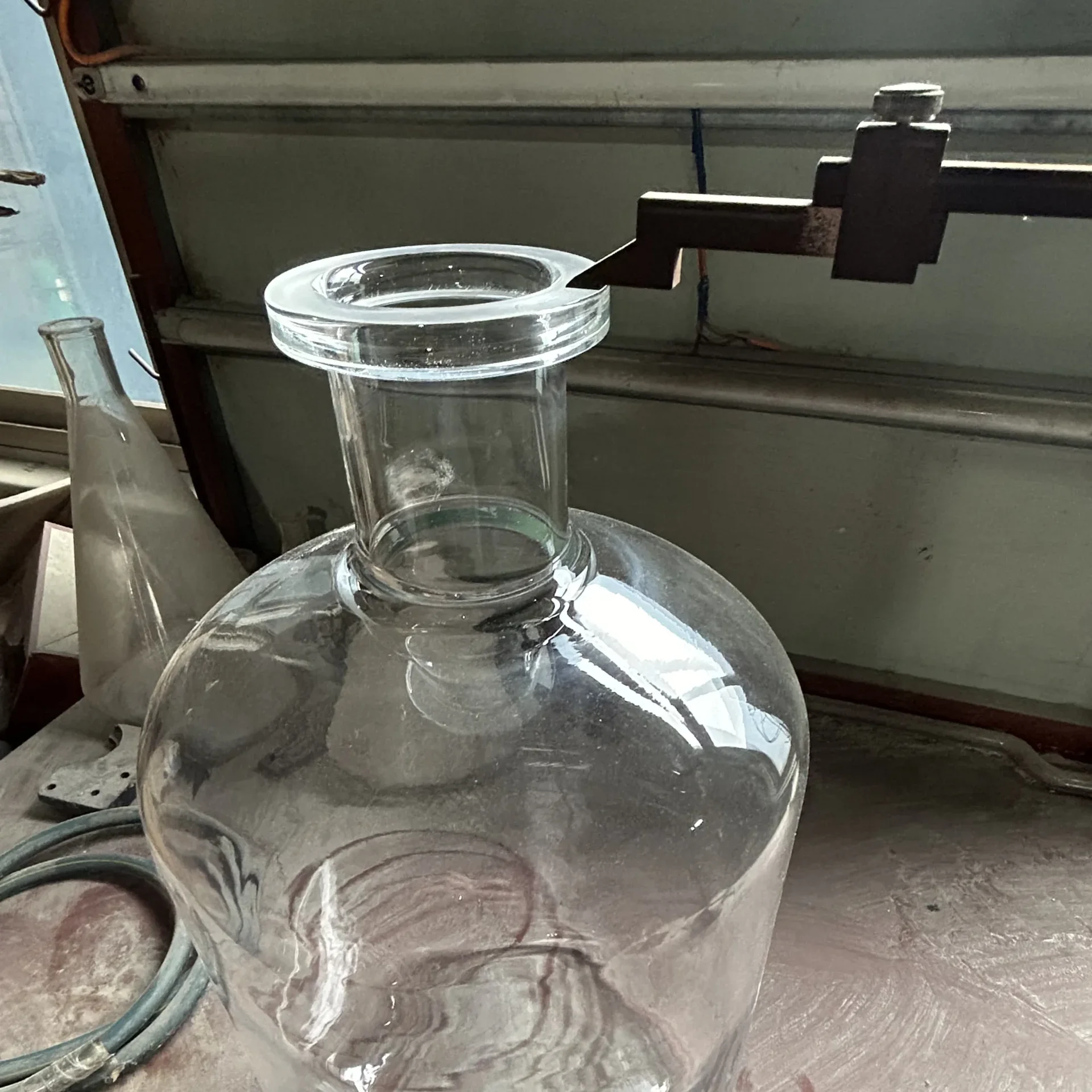
The size created another challenge. These were not small vials. The bottle was around 560 mm tall, with a body diameter of about 290 mm and a GL45 neck finish. The wall thickness had to stay uniform enough to avoid thermal stress during sterilization and handling.
The order quantity was also difficult for standard suppliers. The client needed about 150 pieces per batch, repeated every couple of months, but never enough to justify an automated production line.
The client needed a supplier who could combine pharmaceutical-level care with flexible small-batch production.
Our Solution
BO-Glass developed a manual high-borosilicate glass bottle production process using skilled glassblowing, custom moulds, lathe-based neck forming, annealing, cleaning, and strict inspection.
Instead of forcing the project into automated production, we matched the process to the real order volume and quality requirement.
Neutral Borosilicate Glass for Pharma Use
We selected neutral high-borosilicate glass because of its chemical resistance, thermal stability, and suitability for pharmaceutical and laboratory storage.
For drug storage, the glass must not affect the liquid inside. Neutral borosilicate helps reduce the risk of alkali leaching and supports long-term product stability.
It also performs well under autoclave sterilization, which was essential for the client’s application.
BO-Glass also supported both clear and amber glass. The amber version was needed for light-sensitive drugs that could degrade under UV exposure.
Manual Glassblowing for Small Batches
Each bottle started from a length of borosilicate tubing.
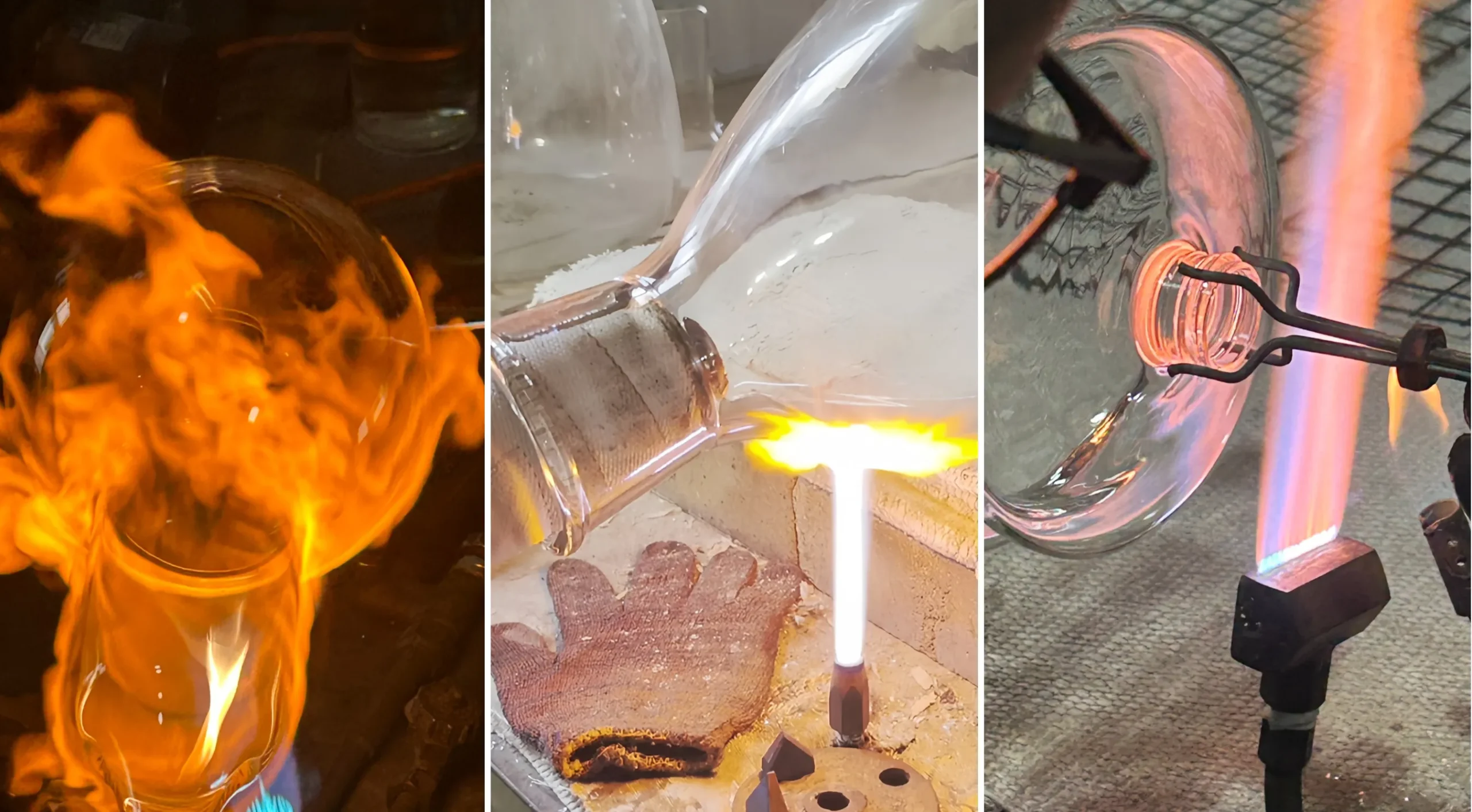
Our glassblower heated the tubing in a gas-oxygen furnace until the glass reached the correct working temperature, then formed the bottle body using a custom two-piece cast-iron mould.
This method allowed us to produce large bottles without requiring a full automated line. It also gave us flexibility to adjust size, color, and batch quantity according to the client’s real demand.
Each bottle took about 20 minutes to make. With two glassblowers working on the project, a 150-piece batch could be completed in about three days.
For BO-Glass, this is one of our strengths: we can take on small-batch projects that large factories often reject.
GL45 Neck Thread Forming
The neck was one of the most important parts of the bottle.
The client needed a GL45 thread that could fit standard laboratory and pharmaceutical caps.
This thread could not simply be blown into shape.
After the body was formed, the bottle was transferred to a lathe-based glassworking station. A lampworker heated the neck area with a small torch, then rolled the hot glass against a graphite former to create the external GL45 thread profile.
The thread was checked with a standard GL45 cap. If the cap did not screw on smoothly or showed wobble, the bottle was rejected. This step required real hand skill. A good thread is not only about dimensions. It has to feel right during closing and seal properly during use.
Annealing for Stress Relief
After forming, the bottles went through a controlled annealing cycle.
They were heated to 560°C, held for one hour, and then cooled slowly over about four hours.
This relieved internal stress and helped prevent breakage during autoclaving, thermal shock, and handling.
For large pharmaceutical bottles, annealing is not optional. Without it, even a clear-looking bottle can fail later under heat or pressure.
Fire-Polished Rim and Clean Sealing Surface
The top rim was fire-polished to create a smooth, clean sealing surface.
Even though the cap uses a liner, the glass rim still needs to be flat and consistent. If the rim is uneven, the seal may not hold properly.
BO-Glass used careful flame polishing to remove sharpness and improve the finish without distorting the neck.
This helped reduce leakage risk and gave the bottle a cleaner, more professional appearance.
Cleaning and Pharma-Style Handling
After inspection and finishing, the bottles were cleaned in an ultrasonic bath with deionized water.
They were then dried in a hot-air oven and packed in foam-lined boxes to prevent dust, fingerprints, and handling damage.
For this type of product, the production environment may not be a pharmaceutical cleanroom, but the mindset still matters. BO-Glass treated cleanliness, traceability, and packaging as part of the product quality.
Quality Control and Documentation
Every bottle was measured and inspected.
The body diameter was checked to stay around 290 ±2 mm. Wall thickness was measured at the bottom, middle, and shoulder. Any bottle with a section thinner than 5.0 mm was rejected.
The neck thread was tested with a standard GL45 cap for smooth fit and stable sealing.
Each batch also included a thermal shock test by moving one sample from 120°C hot water into cold water. No cracking or breakage was allowed.
For visual quality, bottles were inspected under strong light. Any bubble larger than 0.5 mm was rejected.
BO-Glass also sent samples to an independent lab for Type I glass chemical resistance testing. The results were within the required limits, giving the client documentation to support pharmaceutical use.
The Result
BO-Glass has supplied these large borosilicate bottles for more than two years.
The client has placed six repeat batches, each between 100 and 200 pieces, in both clear and amber glass.
Their pharmaceutical customers have been satisfied with the bottles, and the client has reported no complaints about leakage or breakage.
For the client, the biggest value was flexibility. They could order the quantity they actually needed without committing to massive production volumes or paying unreasonable tooling costs.
For BO-Glass, this project proved that manual glassblowing still has an important role in pharmaceutical and laboratory packaging, especially for large bottles, special sizes, and low-volume production.
Why Choose BO-Glass?
BO-Glass helped the client solve a problem that large automated factories did not want to handle.
The project required pharmaceutical-level quality, but the order quantity was too small for standard mass production. With manual borosilicate glassblowing, GL45 thread forming, annealing, inspection, cleaning, and batch documentation, we delivered bottles that met the client’s real needs.
Our strength is not only making glass bottles. It is knowing when manual production is the better answer.
For pharmaceutical suppliers, laboratory brands, reagent companies, and biotech manufacturers that need small-batch borosilicate bottles, amber glass options, custom sizes, or special neck finishes, BO-Glass can provide flexible glass packaging solutions with reliable quality and practical production quantities.
Contact Us
Your feedback fuels our growth, and your questions drive our solutions.
We value your feedback, inquiries, and suggestions. Please feel free to get in touch with us
General inquiries
Please contact us via sales@bo-glass.com, and we will reply to you as soon as possible.
Interested to work with us
Drop your resume at info@bo-glass.com
and we will get back to you shortly.
We uses the contact information you provide to us to contact you about our relevent content, products, and services.