
Borosilicate glass material overview
Chemical Durability and Corrosion Resistance of Borosilicate Glass
Borosilicate glass is useful where the glass surface must retain its clarity, dimensions or cleanliness during chemical exposure. A durability claim needs the glass grade, the exposed surface and the conditions of contact. Concentration, temperature, contact time and repeated cycles can change the result.
Water and Hydrolytic Resistance
During water exposure, hydrogen-bearing species from the solution can replace mobile ions near the glass surface. Extended exposure can alter the surface and release soluble constituents. Study of aqueous corrosion in a model borosilicate glass
Hydrolytic resistance quantifies the response to a defined water extraction test. ISO 720 measures alkali extracted from prepared glass grains at 121 °C and is intended for more resistant glasses, including borosilicates. ISO 719 uses grains at 98 °C. Specify the method with the class because the two classifications lack an exact conversion. ISO 720 · ISO 719
Ground grains expose fresh surfaces under a prescribed procedure. If the requirement is low leaching or clear appearance on a finished part, test the actual glass-contact surface with its forming, polishing, frosting or coating history.
Acid Resistance
Many borosilicate grades withstand a wide range of acids under defined conditions. Hydrofluoric acid attacks silicate glass, and hot, concentrated phosphoric acid can also cause appreciable attack. Pick the acid, concentration and maximum exposure temperature from the application. DIN 12116 assesses attack by boiling aqueous hydrochloric acid under its test conditions. Use the reported class as evidence for that method, then assess the actual medium separately if it is chemically different. DWK Life Sciences chemical resistance guidance · DIN 12116
Alkalis, Cleaning and Surface Change
Strong alkaline solutions can attack the glass network and remove material. Heat and repeated cleaning can make surface changes easier to observe. ISO 695 provides a defined test and classification using a boiling aqueous mixed-alkali solution. For a light cover that is cleaned on a schedule, include the cleaner’s working dilution, temperature, time before rinsing, water quality and drying procedure in the evaluation. Check for haze, loss of gloss and changes to any coating. ISO 695 · DWK glassware cleaning guidance
Consider humid storage and repeated condensation for parts that sit exposed or packaged before installation. A haze may come from residues left by evaporating droplets or from alteration of the glass surface. Record the as-received appearance, then compare it after the agreed cleaning procedure so a removable deposit can be distinguished from persistent surface change. Experimental study of borosilicate glass alteration in water and humid air
Evaluate the Finished Surface in Service
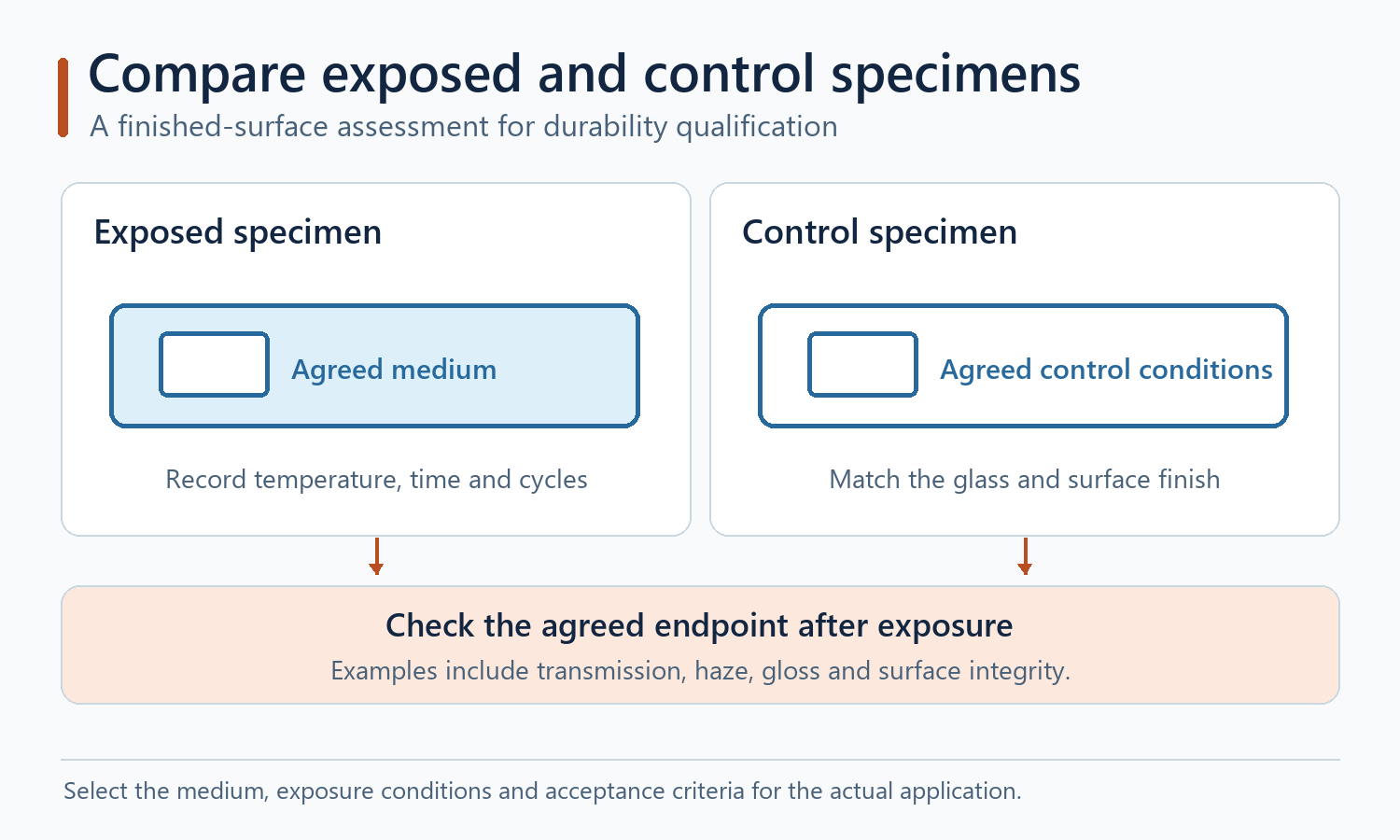
List each exposure, including processing fluid, condensation, storage residues and cleaning agents. Identify which faces, edges and interfaces will be wet and whether liquid can collect in a crevice. Choose an endpoint that matches the function. A clear protective window may need retained transmission and acceptable haze. A wetted vessel may need a limit on extractables or evidence of surface integrity. Record the exposure conditions, measurement setup and acceptance criteria. For repeated exposure, use finished specimens and include a baseline and an unexposed comparison sample.
Define the Exposure and the Measured Outcome
| Exposure | Define in the test plan | Example outcome to measure |
|---|---|---|
| Process liquid or acid | Actual composition, concentration, contact time and temperature | Surface change, mass change or extractables where relevant to use |
| Wash or alkaline cleaner | Working dilution, temperature, rinsing method and repeated cycles | Haze, gloss or visible surface change after rinsing and drying |
| Humid storage or condensation | Packaging condition, duration and exposure on edges or joints | Persistent haze or changes visible after the agreed cleaning procedure |
| Finished or coated glass in wet service | Exposed faces, finish, any coating and the contact sequence | Retained transmission, surface appearance or coating integrity |
References and Data Scope
The linked tests describe controlled material comparisons. Supplier guidance for a named grade applies to that glass under the stated conditions. Approve a finished component against the agreed exposure and functional results, including any surface finish or coating.