
Custom Milky-White High-Borosilicate Outdoor Garden Lamp Shades
An outdoor lamp shade is exposed to far more than light.
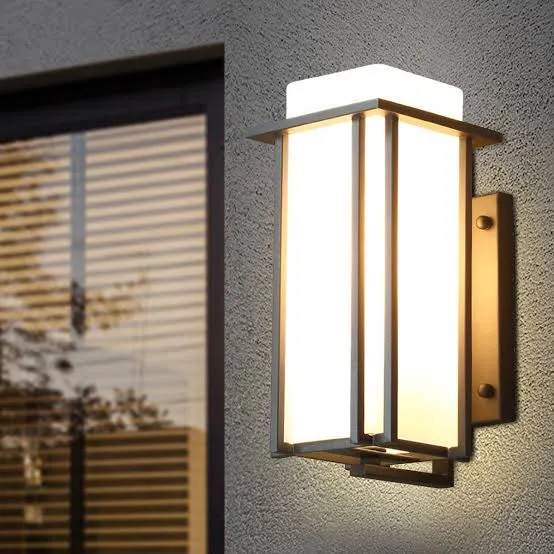
It must withstand temperature changes, rain, ultraviolet exposure, airborne pollutants, wind-driven particles, and the occasional impact that comes with daily outdoor use.
For this European lighting client, durability alone was not enough. The glass also needed to express the clean, quiet appearance associated with Nordic design.
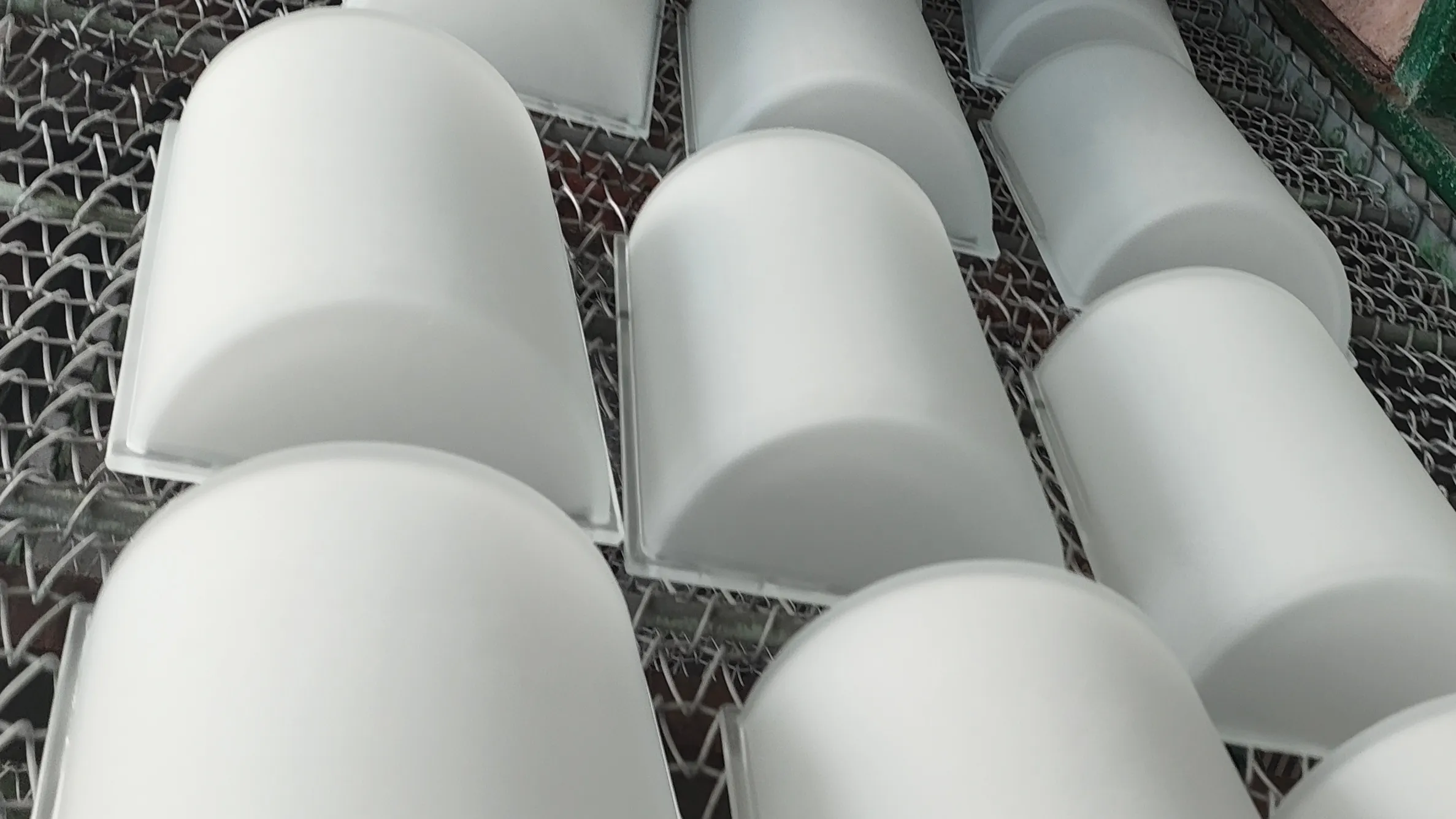
The project called for a rectangular outdoor garden lamp shade with a milky-white appearance and a refined frosted-matte surface. When illuminated, the shade needed to distribute light evenly without visible dust, dark spots, streaks, or coating defects.
The client also required long-term color stability, consistent dimensions, and production quality suitable for high-volume outdoor lighting projects.
BO-Glass therefore needed to combine durable engineered glass, precision molding, controlled sandblasting, clean-environment coating, and rigorous optical inspection within one repeatable production process.
Custom High-Borosilicate Outdoor Garden Lamp Shades
The Challenge
The first challenge was material selection.
Standard soda-lime glass is economical and suitable for many indoor lighting products, but outdoor garden lamps experience more demanding environmental conditions.
During winter, the glass may be exposed to sub-zero temperatures. In summer, direct sunlight can heat the fixture rapidly. Rain or snow may then cool the surface, creating sudden temperature changes.
The shade may also come into contact with moisture, airborne pollutants, cleaning products, bird droppings, sand, and wind-driven debris.
The client needed a glass material with better thermal-shock resistance, chemical durability, weatherability, and mechanical stability than conventional indoor glass.
The second challenge was the surface finish.
The client wanted a fine frosted appearance that would soften the light and support a minimalist Nordic aesthetic. The surface could not look rough, industrial, patchy, or heavily textured.
Acid etching is commonly used to frost standard glass, but high-borosilicate glass is specifically designed to resist chemical attack. This makes conventional etching inefficient and difficult to control.
The client also wanted a production process compatible with strict environmental expectations. A finishing method that generated difficult chemical waste was not the preferred solution.
The third challenge was the milky-white coating.
Any dust particle, pinhole, scratch, fingerprint, or uneven area trapped in the coating would become visible when the lamp was illuminated.
A surface that looked acceptable under ordinary factory lighting could reveal obvious dark spots when inspected from behind.
BO-Glass needed to create a durable outdoor component with the visual cleanliness of an interior design product.
Our Solution
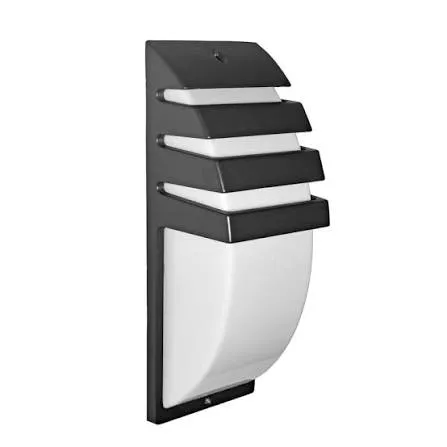
BO-Glass developed an industrial production process combining high-borosilicate glass, precision molding, controlled abrasive blasting, multi-stage cleaning, milky-white spray coating, calibrated curing, backlight inspection, and final dimensional verification.
Instead of treating the shade as a decorative cover, we treated it as an engineered outdoor light diffuser.
The glass material, matte texture, coating, geometry, and illuminated appearance all needed to work together.
High-Borosilicate Glass for Outdoor Durability
BO-Glass selected high-borosilicate glass as the base material.
Compared with conventional soda-lime glass, high-borosilicate glass has a lower coefficient of thermal expansion. This helps it remain more stable when outdoor temperatures change rapidly.
The material also offers strong resistance to water, many chemicals, and environmental contamination.
These properties made it suitable for garden and exterior lighting exposed to rain, snow, sunlight, seasonal temperature changes, and routine cleaning.
Its mechanical stability also supported the client’s requirement for resistance to wind-driven sand, debris, and accidental contact.
The material cost and melting requirements were higher than those of ordinary glass, but the improved outdoor performance justified the selection.
For the client, the objective was not simply to reduce the initial unit cost. It was to create a more dependable glass component for long-term exterior use.
Precision-Molded Rectangular Geometry
The shade used a clean rectangular form designed to integrate with modern outdoor lighting housings.
Simple geometry creates strict dimensional expectations.
If the length, width, thickness, corner radius, or mounting position varies, the glass may not sit correctly inside the fixture. A small distortion can also create uneven gaps that become obvious after installation.
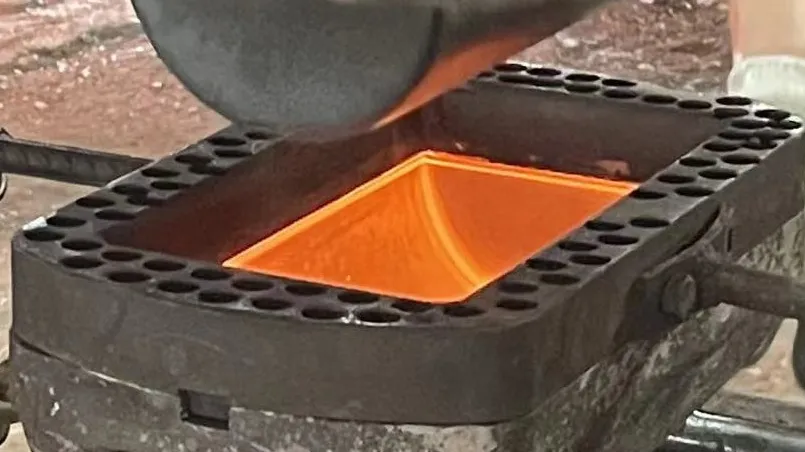
BO-Glass used precision molding to control the external dimensions, wall distribution, corner shape, squareness, and mounting features.
Process parameters were standardized so that each glass component could fit the corresponding fixture without rocking, excessive gaps, or forced assembly.
Dimensional gauges were used during production and before packing to verify the critical measurements.
This control was especially important for repeat orders. Replacement components produced in a later batch still needed to fit the original lighting structure.
Sandblasted Frosted-Matte Finish
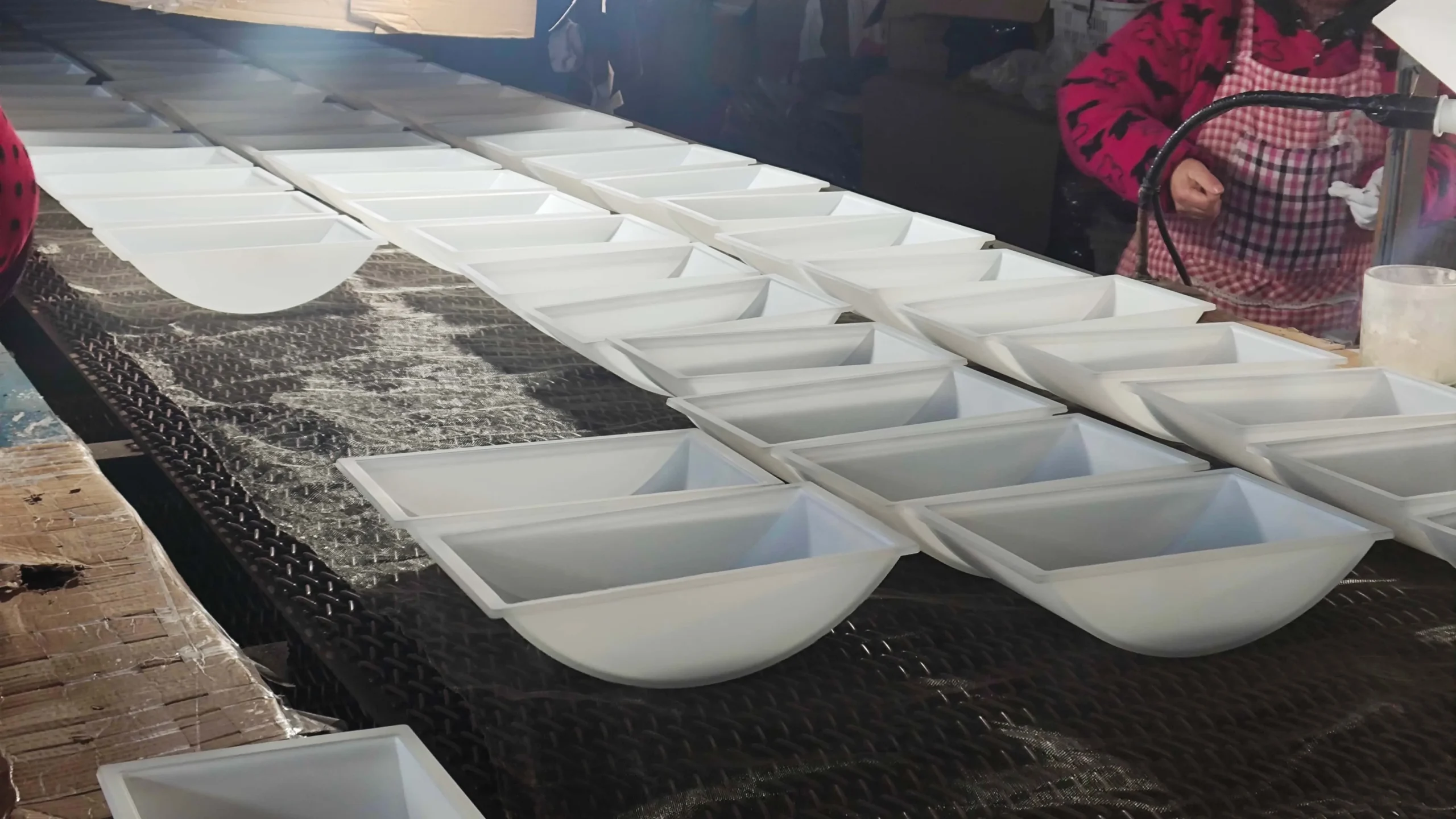
Because chemical etching was not the preferred solution, BO-Glass developed a controlled abrasive-blasting process.
Compressed air propelled fine abrasive particles against the glass surface, creating microscopic surface texture that scattered light and produced the required frosted appearance.
The difficulty was creating a finish that felt refined rather than industrial.
Abrasive particles that were too coarse produced a rough, visibly textured surface. Particles that were too fine created insufficient frosting and allowed too much direct light to pass through.
Air pressure, nozzle angle, nozzle distance, movement speed, coverage pattern, and blasting time also affected the final appearance.
BO-Glass standardized these parameters to reduce streaks, uneven patches, overlap marks, and texture variation.
The resulting surface delivered a fine satin-matte appearance suitable for clean Nordic outdoor lighting.
Abrasive Grit Testing and Surface Standardization
Before batch production, BO-Glass tested multiple abrasive grades.
The samples ranged from coarse industrial textures to very fine finishes with minimal frosting.
Each sample was evaluated for:
– Surface uniformity
– Visual fineness
– Hand feel
– Light diffusion
– Surface roughness
– Suitability for subsequent coating
– Compatibility with the client’s design direction
Coarse samples scattered light effectively but looked too rough for the product.
Ultra-fine samples felt smooth but did not provide enough diffusion.
The selected process produced a refined matte surface with a target roughness of approximately 200–300 nm.
This range provided the desired balance between elegant appearance, coating adhesion, and controlled light diffusion.
Once the client approved the sample, the blasting parameters were documented for repeat production.
Multi-Stage Surface Cleaning
A sandblasted surface contains microscopic texture that can trap abrasive residue, dust, oil, and other contaminants.
If these particles remain before coating, they can create visible defects in the finished product.
BO-Glass therefore introduced a multi-stage cleaning process.
Loose abrasive material was first removed from the glass surface. The pieces were then cleaned to eliminate oils and handling residue.
A final controlled air-cleaning stage removed fine dust immediately before coating.
Operators handled the prepared components carefully to avoid fingerprints or renewed contamination.
Strong inspection lighting was used before coating so that pieces with remaining dust or surface marks could be cleaned again.
This preparation stage was essential because coating cannot hide contamination. It makes contamination more visible.
Controlled Milky-White Coating
After sandblasting and cleaning, the glass received its milky-white coating.
The coating needed to create a uniform visual field when the lamp was illuminated. It also needed to bond securely to the textured glass surface and remain stable during outdoor use.
BO-Glass controlled the coating viscosity, spray pressure, nozzle size, application distance, spray pattern, and movement speed.
The goal was to avoid runs, pinholes, orange-peel texture, overspray, thin areas, and uneven color.
Coating took place in a controlled environment designed to minimize airborne dust.
Air filtration, controlled airflow, humidity management, equipment cleaning, and operator procedures all contributed to surface quality.
The coating system was selected for outdoor performance, including resistance to ultraviolet exposure, moisture, and long-term discoloration.
Calibrated Curing and Adhesion Control
The coating needed to cure at the correct temperature and for the correct amount of time.
Under-curing could leave the surface soft, poorly bonded, or vulnerable to damage.
Excessive curing could make the coating brittle or cause unwanted color change.
BO-Glass calibrated the curing cycle to achieve full adhesion without compromising the glass or the milky-white appearance.
Production samples were checked for coating hardness, adhesion, color consistency, and surface stability.
Batch records helped ensure that later production used the same coating and curing parameters as the approved samples.
This process reduced the risk of peeling, blistering, premature wear, and yellowing during outdoor use.
Full Backlight Inspection
The most important quality-control step was illuminated inspection.
After coating and curing, each shade was lit from behind or from within.
This revealed defects that might not be visible under normal factory lighting.
A dust particle appeared as a dark point. A pinhole became a bright spot. Uneven coating created patches or bands. Scratches, fingerprints, and surface contamination also became immediately visible.
BO-Glass used backlight inspection to evaluate:
– Coating uniformity
– Dust contamination
– Pinholes
– Scratches
– Color consistency
– Bright and dark areas
– Surface streaks
– Uneven frosting
– Wall-thickness variation
Pieces with repairable coating defects could be reworked according to defined procedures. Components with unacceptable glass or sandblasting defects were rejected.
The final acceptance standard was based on how the product looked when used, not only how it appeared while switched off.
Multi-Stage Quality Control
Quality inspection was built into every major production stage.
Raw glass components were checked for material quality, surface defects, and dimensional accuracy before finishing.
After sandblasting, the shades were inspected for texture consistency, streaks, patches, and incomplete coverage.
After cleaning, the surfaces were examined under strong light to confirm that dust, abrasive residue, fingerprints, and oils had been removed.
After coating and curing, each shade underwent full backlight inspection.
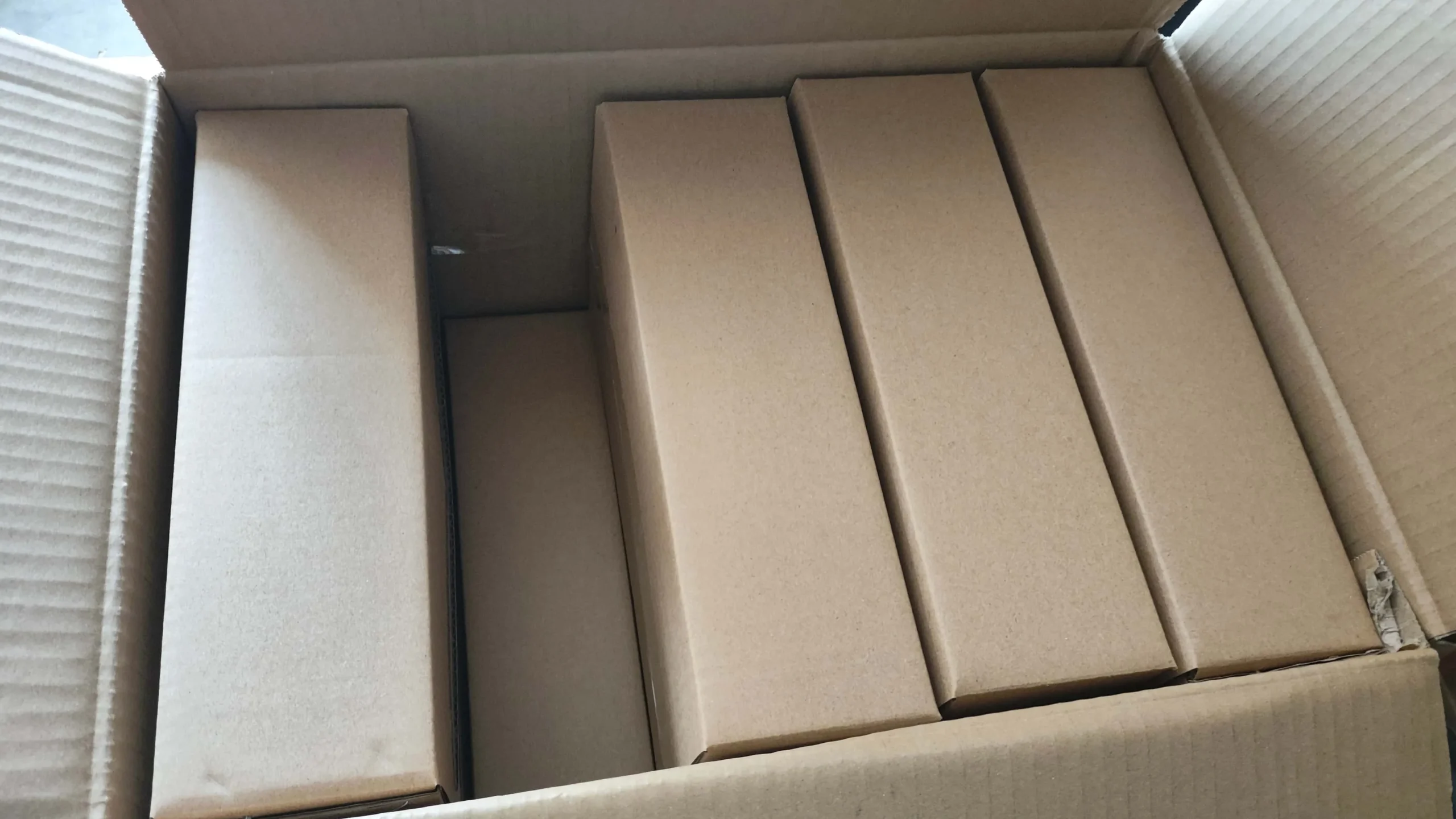
Before packing, the components were checked again for length, width, thickness, squareness, mounting features, surface condition, and overall color consistency.
This multi-stage approach prevented defects from moving unnecessarily into the next production step.
It also helped BO-Glass track recurring problems and improve process stability over time.
The Result
The completed lamp shade combined the durability of high-borosilicate glass with the clean milky-white appearance required for Nordic outdoor lighting.
The rectangular form integrated with modern garden and architectural fixtures, while the fine sandblasted texture softened the surface and supported a restrained, minimalist design.
When illuminated, the coating and frosted glass worked together to diffuse light and reduce direct glare.
The approved surface standard avoided the coarse, industrial appearance often associated with abrasive blasting. Instead, the final shade presented a refined satin-matte finish.
Multi-stage cleaning and controlled coating reduced visible dust, pinholes, fingerprints, and uneven color.
Full backlight inspection ensured that the final acceptance decision reflected the shade’s real performance inside an operating lamp.
For the client, the project delivered an engineered glass component capable of supporting outdoor durability, visual consistency, and repeat production.
For BO-Glass, the project demonstrated that a seemingly simple milky-white surface depends on careful control of the material, surface texture, cleaning environment, coating process, curing cycle, and optical inspection.
The final quality was not created by one finishing step. It was created by controlling every stage that came before it.
Why Choose BO-Glass?
BO-Glass helped the client solve the central challenge of this project: producing a clean, refined Nordic lighting component from a material selected for demanding outdoor performance.
High-borosilicate glass provided the necessary foundation, but material selection alone was not enough.
The shade still required precision molding, a carefully tested matte texture, contamination-free surface preparation, uniform outdoor coating, controlled curing, and inspection under actual illuminated conditions.
With engineered-glass experience, systematic process testing, documented production parameters, controlled finishing environments, and rigorous multi-stage quality inspection, BO-Glass delivered a repeatable solution for high-volume outdoor-lighting production.
For garden-lighting brands, architectural fixture manufacturers, landscape-lighting suppliers, and exterior-design projects, BO-Glass can develop custom high-borosilicate shades that combine weather resistance, soft light diffusion, clean geometry, and dependable batch consistency.
Contact Us
Your feedback fuels our growth, and your questions drive our solutions.
We value your feedback, inquiries, and suggestions. Please feel free to get in touch with us
General inquiries
Please contact us via sales@bo-glass.com, and we will reply to you as soon as possible.
Interested to work with us
Drop your resume at info@bo-glass.com
and we will get back to you shortly.
We uses the contact information you provide to us to contact you about our relevent content, products, and services.