
Custom Opal Glass Screw-Neck Globes for Zangra Lighting
A replacement glass globe is not just a spare part. It keeps a well-designed lamp in use
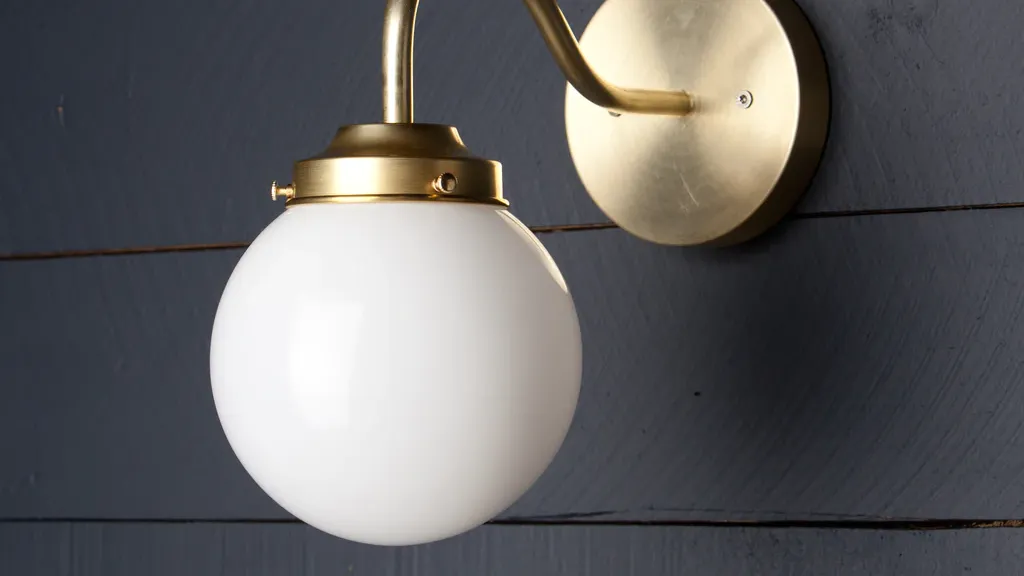
For Zangra, the glass shade had to do several things at once: soften the light, maintain a clean spherical silhouette, connect securely to the fixture, and fit naturally within the brand’s simple and authentic design language.
Zangra is a Belgian design label specializing in lighting and home decoration. Its products are supplied to architects, interior designers, contractors, resellers, hospitality projects, and private customers in different markets.
For this project, BO-Glass produced a custom opal glass globe with a precision screw-neck connection for Zangra’s lighting and replacement-glass collection.
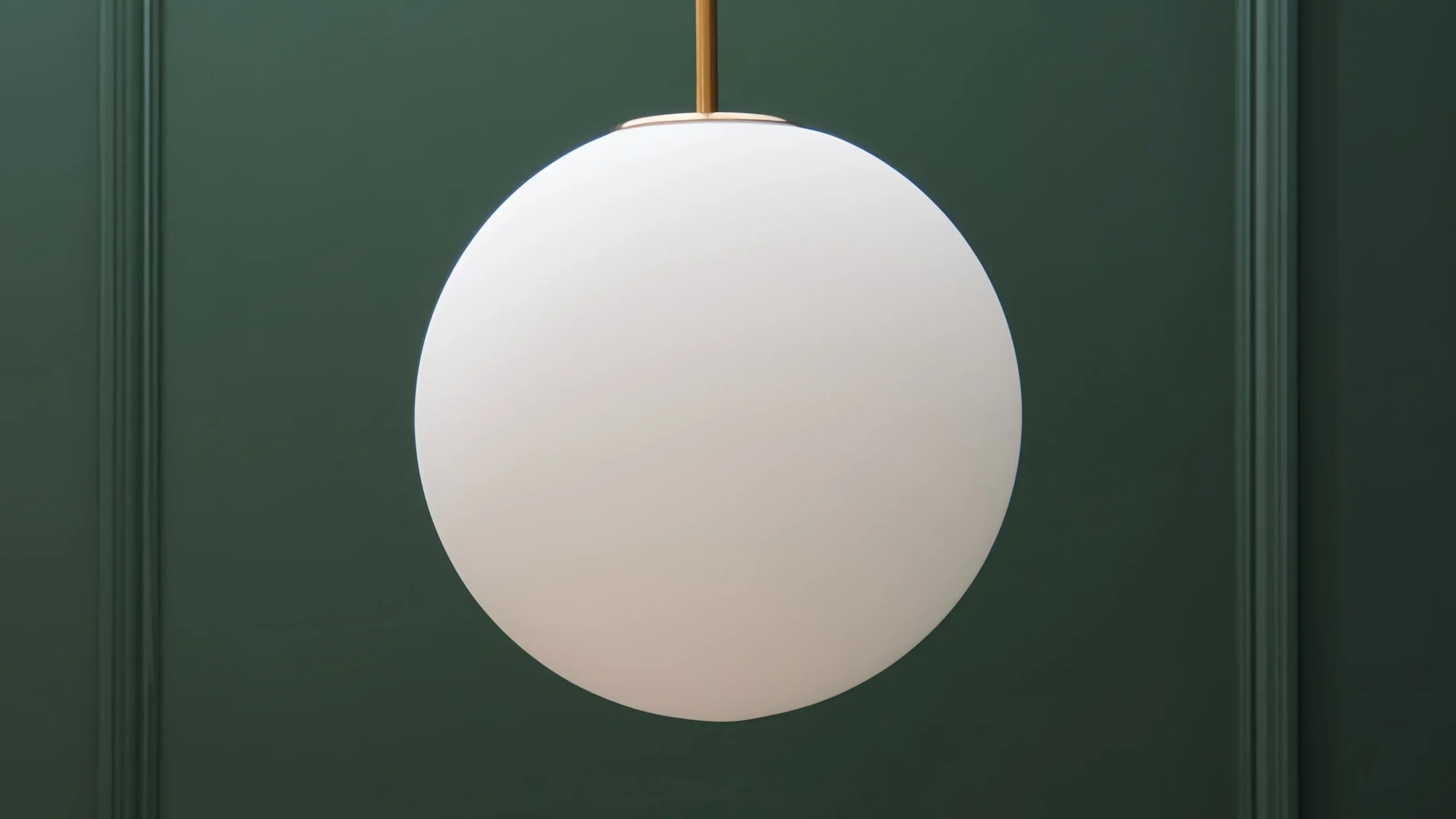
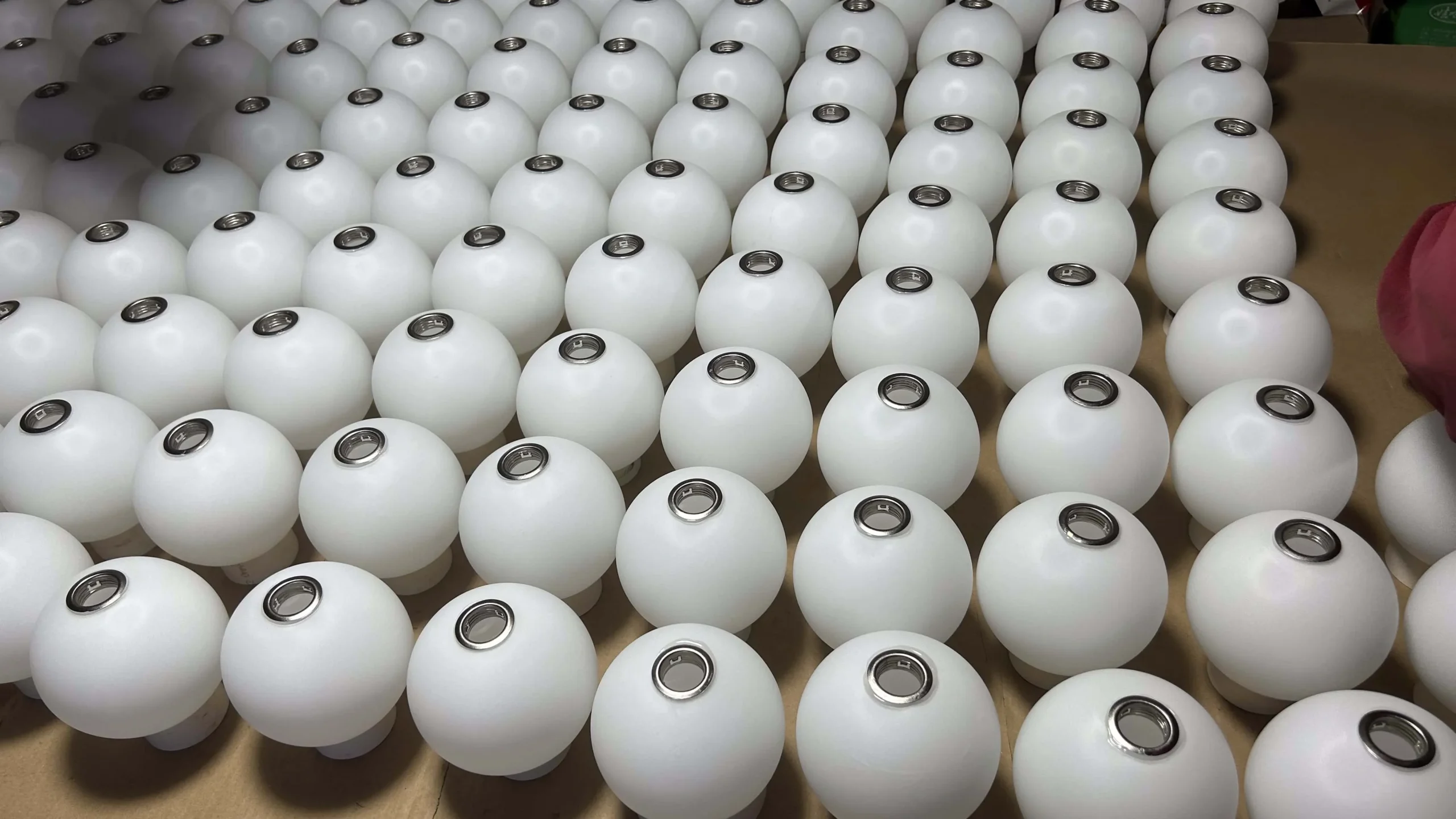
The finished globe measures approximately 150 mm in diameter and 125 mm in height. It uses a size M mounting system with an Ø84.5 mm screw thread and is designed for light bulbs up to approximately Ø70 mm.
The globe needed to work with Zangra’s porcelain, Bakelite, and brass lamp collections while delivering the smooth, diffused appearance expected from opal glass.
Custom Opal Glass Screw-Neck Globes for Zangra
The Challenge
The product looks simple: a white glass sphere with a short threaded neck.
Manufacturing it consistently is not simple.
The spherical body needed to remain round and visually balanced. Any distortion would become obvious when the globe was installed, particularly on minimalist fixtures where the shape of the glass is a major part of the design.
The opal color also had to remain consistent. If the glass was too transparent, the light bulb would become visible and create glare. If it was too opaque, the globe would block too much light and appear heavy.
Wall-thickness variation presented another challenge. Thin areas could produce bright spots, while thicker areas could create dark patches. When illuminated, these differences would interrupt the continuous glow expected from an opal glass globe.
The most demanding functional detail was the Ø84.5 mm threaded mounting neck.
Unlike a conventional open fitter held by screws, this globe connects directly to a compatible lamp base through its screw thread.
The thread diameter, profile, roundness, depth, and alignment all needed to match Zangra’s size M lighting system.
If the thread was too tight, the globe could become difficult to install or could be damaged by excessive force. If it was too loose, the globe might not sit securely on the lamp.
BO-Glass therefore needed to balance optical quality, spherical accuracy, threaded-neck precision, safe installation, and repeatable batch production.
Our Solution
BO-Glass developed a controlled production process combining opal glass preparation, mold-blown forming, threaded-neck shaping,
dimensional measurement, wall-thickness management, annealing, fitting inspection, and batch-level visual grading.
The glass globe was treated as both an optical diffuser and a precision replacement component.
Its appearance mattered, but its compatibility with the Zangra fixture system was equally important.
Controlled Opal Glass Appearance
The soft white appearance begins with the glass composition.
BO-Glass controlled the opal glass batch to achieve a milky-white finish that concealed the direct view of the bulb while allowing light to pass through the globe.
Pre-production samples were used to confirm the acceptable balance between opacity and light transmission.
The target was not completely opaque glass. The globe needed to create a soft, illuminated surface without becoming visually flat or blocking unnecessary light.
Batch consistency was also important. A customer replacing one globe on a multi-light installation should not receive a shade that looks significantly whiter, greyer, clearer, or darker than the other globes.
BO-Glass therefore monitored color and translucency across production batches to maintain a coordinated appearance.
Mold-Blown Spherical Forming
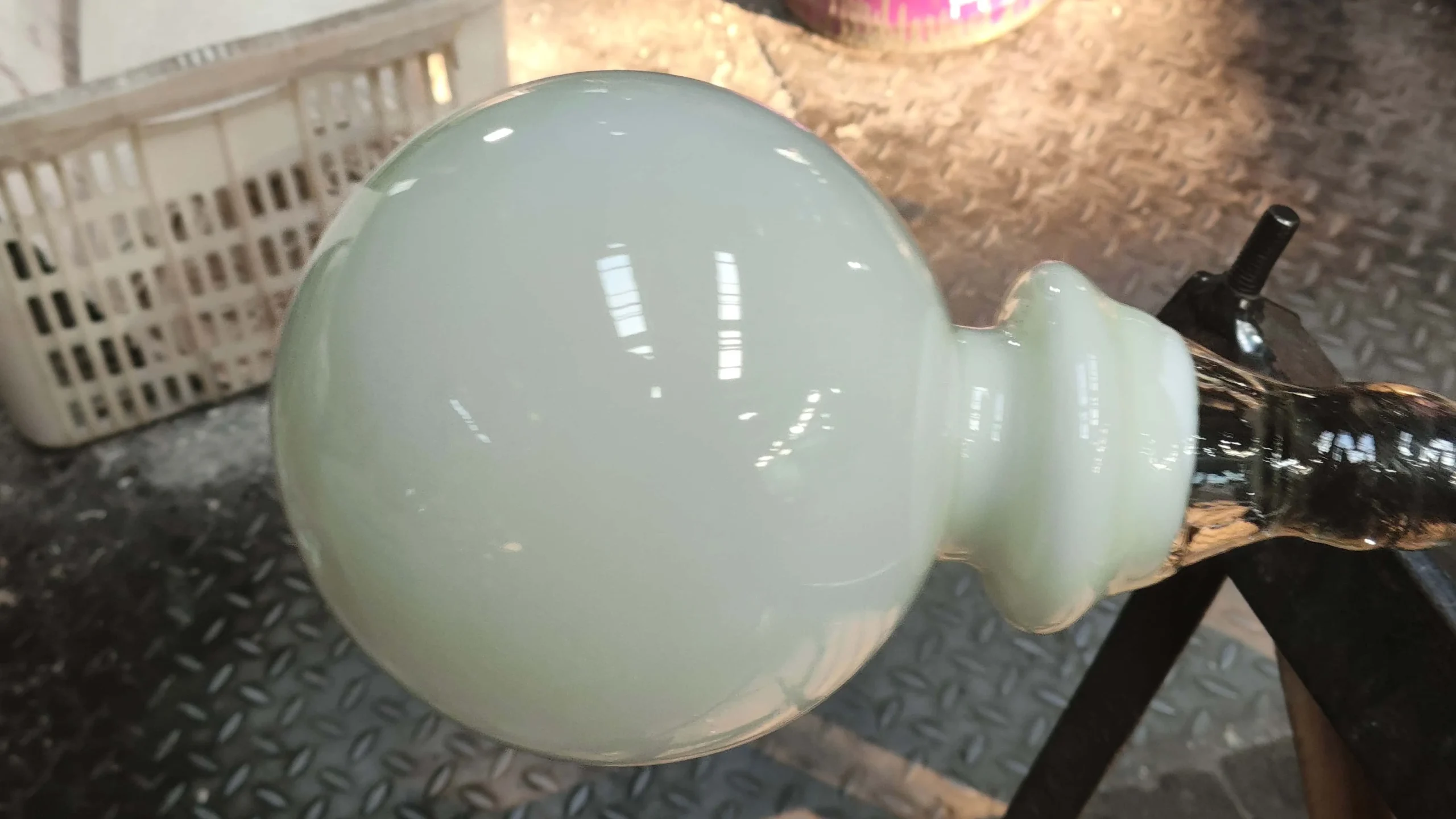
The globe was formed with a manually controlled mold-blown process.
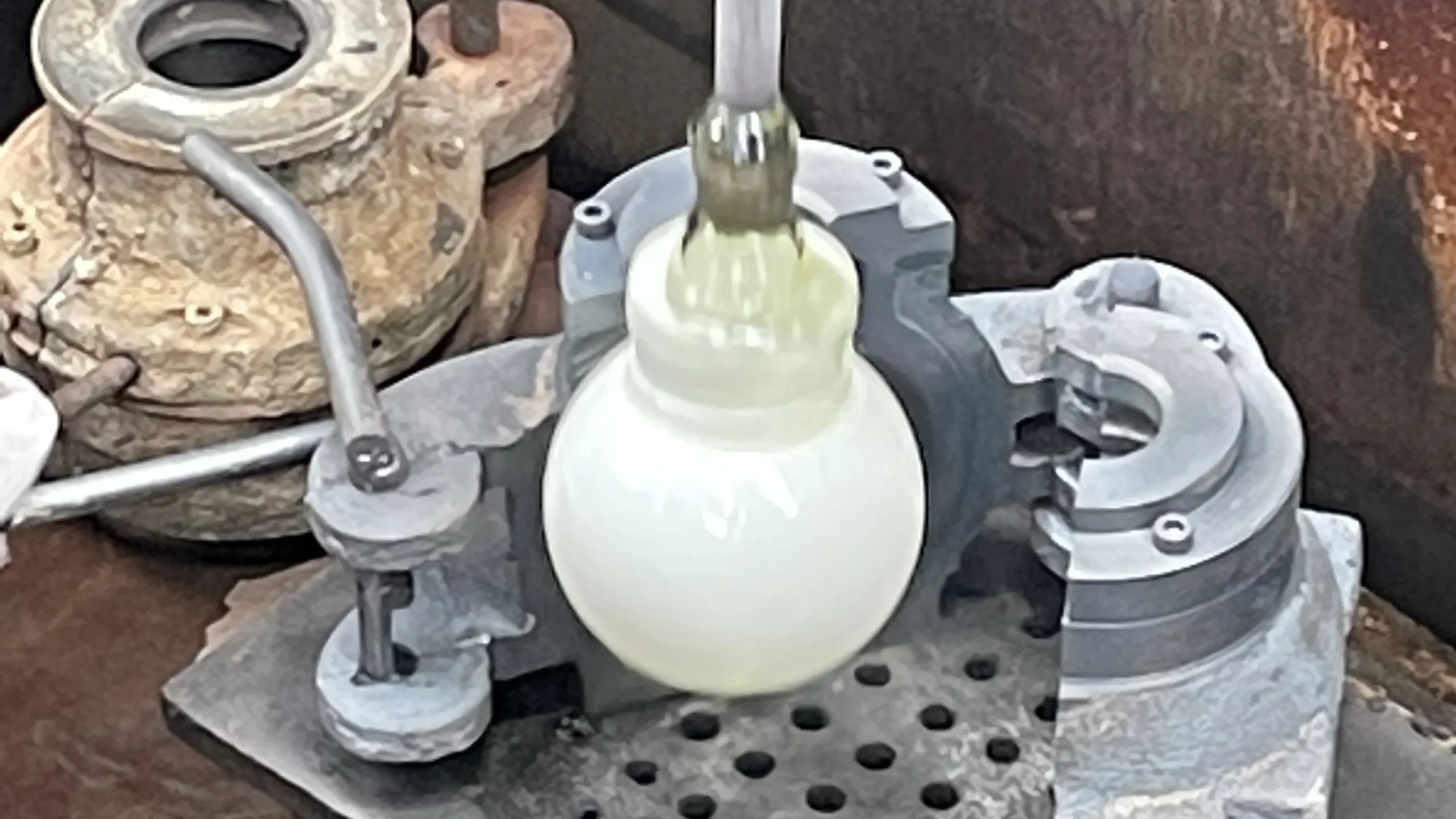
A measured amount of molten opal glass was gathered and introduced into the forming mold.
Air pressure expanded the glass against the mold surface, creating the spherical body and the beginning of the mounting neck.
The amount of glass, inflation pressure, forming temperature, mold condition, and forming time all affected the final result.
Too little glass could produce thin areas or an incomplete shape. Too much glass could make the globe heavy and create excessive thickness around the lower body or neck.
BO-Glass controlled the forming sequence to maintain the required 150 mm spherical profile while reducing flat areas, uneven curvature, sagging, and visible asymmetry.
The mold also helped improve consistency between pieces, which was essential for repeat production and replacement-part compatibility.
Ø84.5 mm Threaded-Neck Precision
The screw neck was the most important functional part of the globe.
The size M shades use an Ø84.5 mm screw connection. The mounting neck therefore needed to fit the corresponding porcelain, Bakelite, or brass lamp base without excessive force or looseness.
BO-Glass controlled the neck diameter, thread profile, concentricity, and transition between the neck and spherical body.
The neck had to remain centered on the globe. If it was angled or offset, the installed globe would appear tilted even if the spherical body itself was correctly formed.
Threaded openings were inspected with dimensional tools and compatible fitting gauges. Pieces that did not screw on smoothly or did not sit correctly against the fixture were separated before packing.
This fitting inspection helped ensure that the product functioned as a genuine replacement component rather than only matching the fixture visually.
Wall Thickness and Light Diffusion
A spherical opal globe must distribute light across its entire surface.
Uneven wall thickness can create bright areas, dark bands, and irregular shadows when the lamp is switched on.
BO-Glass controlled the glass gather and inflation sequence to distribute the material more evenly through the spherical body.
Particular attention was paid to the shoulder where the globe transitions into the neck. This area can become thicker during forming, producing a darker ring near the fixture if the material is not properly controlled.
The lower portion of the globe also required careful forming because gravity can pull the molten glass downward and create a heavier bottom section.
Wall-thickness inspection and illuminated visual checks helped confirm that the globe produced a balanced glow without obvious hotspots or distracting dark areas.
Annealing and Stress Control
After forming, each globe needed to cool gradually.
The spherical body, shoulder, and threaded neck do not always cool at the same rate. The neck contains a different concentration of glass and has a more complex shape than the main body.
If cooling occurs too quickly, internal stress can remain around the neck or shoulder. That stress may contribute to cracking during installation, shipping, or later use.
BO-Glass used a controlled annealing cycle to reduce residual stress throughout the globe.
The annealing process was especially important for a screw-mounted product because the neck experiences mechanical contact when the customer installs or removes the globe.
The goal was to produce a shade that could be fitted securely without placing unnecessary stress on the glass connection.
Quality Standards for Crafted Glass
Formed glass can contain small bubbles, subtle mold lines, or minor surface characteristics associated with the production process.
At the same time, replacement shades still need consistent dimensions, light performance, and mounting compatibility.
BO-Glass therefore distinguished acceptable production character from functional or visual defects.
Small characteristics that did not affect installation or normal illuminated appearance could be accepted. Strong distortion, unstable dimensions, poor thread fit, prominent surface damage, severe opacity variation, or visible stress cracks were rejected.
Inspection covered:
Globe diameter and height
Spherical roundness and symmetry
Opal color and translucency
Wall-thickness consistency
Thread diameter and profile
Neck concentricity
Installation and removal fit
Surface condition
Annealing-related cracks
Illuminated appearance
This approach preserved the authentic character of formed glass while maintaining the consistency required for a branded replacement product.
Batch Inspection and Protected Handling
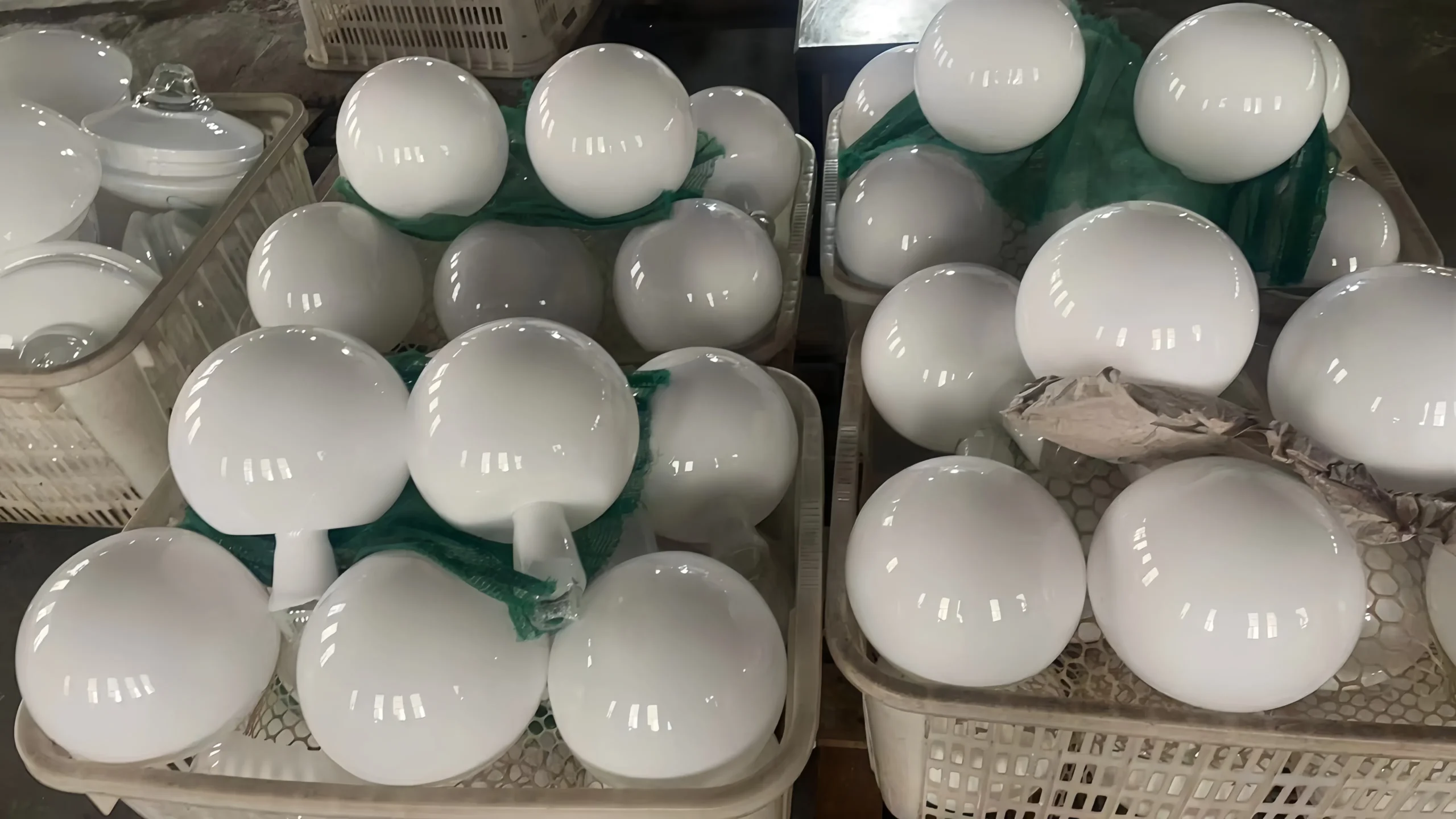
The globes were checked and organized in batches after forming and annealing.
Because the threaded neck is the most vulnerable and dimensionally important part of the shade, the globes were handled and stored in positions that reduced unnecessary contact between pieces.
Protective separators and organized trays helped prevent the glass bodies from striking one another during internal transport.
Before packing, the globes were checked for surface damage, neck defects, thread compatibility, and visible differences in color or shape.
This final batch review helped ensure that the shades arriving at the customer matched both the functional specification and the expected Zangra appearance.
Designed for Replacement and Longer Product Life
The glass globes were developed as replacement components, allowing customers to replace a damaged shade instead of discarding the entire lamp.
The size M Ø84.5 mm screw system supports compatibility across multiple fixtures, making the glass globe part of a modular lighting system rather than a permanently fixed component.
This approach gives the shade a practical role in extending the useful life of the lamp.
Glass also offers the advantage of being recyclable and suitable for long-term product applications.
For BO-Glass, the project was not simply about producing a decorative globe. It was about creating a replaceable, compatible, and durable component for a carefully designed lighting collection.
The Result
The completed opal glass globe gave Zangra the simple, functional appearance required for its lighting collection.
Its spherical white body paired naturally with the brand’s porcelain, Bakelite, and brass fixtures. When illuminated, the opal glass softened the direct view of the bulb and created a calm, diffused glow.
The Ø84.5 mm threaded neck allowed the globe to connect to Zangra’s size M fixture system and function as a replacement shade for compatible lamps.
Across batch production, BO-Glass controlled the globe diameter, height, neck alignment, thread fit, opacity, surface quality, and overall silhouette.
The result was a shade that looked visually minimal but incorporated careful control at every production stage.
For Zangra, the globe became more than a decorative cover. It supported the brand’s modular replacement system, helped extend the useful life of its lighting products, and gave customers a practical way to replace damaged glass without replacing the complete fixture.
For BO-Glass, the project demonstrated how a clean geometric form can require some of the most precise manufacturing work. When there are few decorative details, every variation in shape, color, fit, and light becomes visible.
Why Choose BO-Glass?
BO-Glass helped solve the central challenge of this project: combining the softness of opal glass with the precision of a screw-mounted replacement component.
A spherical glass shade may appear simple, but it cannot be uneven, poorly centered, excessively transparent, difficult to install, or inconsistent from one batch to the next.
With controlled opal glass preparation, mold-blown forming, spherical geometry management, threaded-neck measurement, compatible fitting gauges, wall-thickness inspection, annealing, illuminated quality control, and protected packing, BO-Glass produced a globe that supported both Zangra’s design identity and its functional lighting system.
For lighting brands, interior design companies, architectural suppliers, hospitality projects, and replacement-parts collections, BO-Glass can develop custom opal glass globes that combine soft illumination, precise fixture compatibility, and repeatable production quality.
Contact Us
Your feedback fuels our growth, and your questions drive our solutions.
We value your feedback, inquiries, and suggestions. Please feel free to get in touch with us
General inquiries
Please contact us via sales@bo-glass.com, and we will reply to you as soon as possible.
Interested to work with us
Drop your resume at info@bo-glass.com
and we will get back to you shortly.
We uses the contact information you provide to us to contact you about our relevent content, products, and services.