
Custom Borosilicate Lab Glassware for Research Experiments
Some experiments cannot be built from a catalogue.
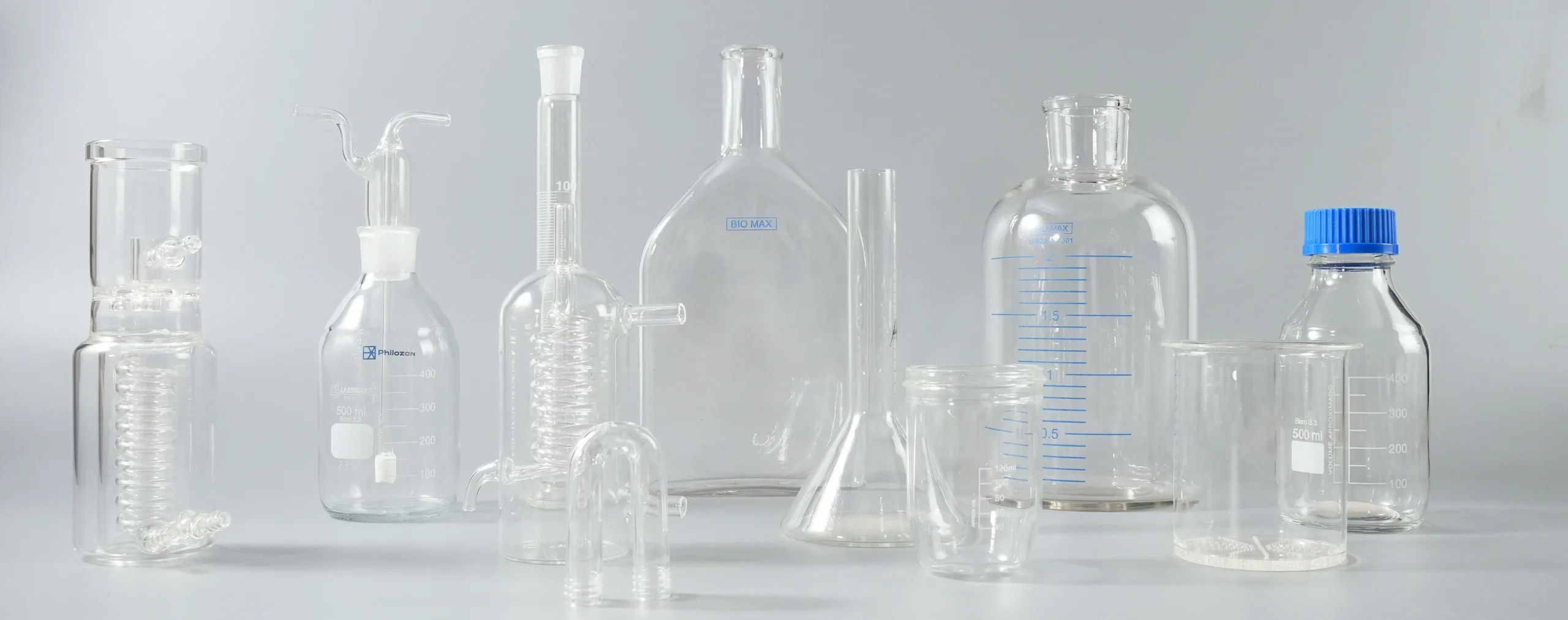
For research labs, standard glassware works most of the time. But when an experiment involves unusual angles, special ports, heated jackets, vacuum conditions, catalyst beds, or custom reaction paths, off-the-shelf flasks and tubes are often not enough.
That was the problem a research lab at a well-known UK university brought to BO-Glass.
They were setting up a high-temperature catalytic reaction experiment and needed a custom glass apparatus: a pear-shaped reaction flask, a 45° bent neck, two side ports for thermocouple probes, a ground-glass joint, a fritted disc at the bottom, and matching connecting tubes.
Large lab-glass suppliers could only offer standard catalogue parts. BO-Glass accepted the project because custom scientific glassware is exactly where skilled manual glassblowing matters.
Custom Borosilicate Lab Glassware
The Challenge
The client needed a reaction flask that did not exist in any standard catalogue.
The body was roughly pear-shaped, with about 200 ml capacity. The neck had to bend at 45°, and two side ports had to be placed at unusual angles for thermocouple probes.
The top needed to fit a standard 29/32 ground-glass stopper, but because the neck angle was custom, a premade joint could not simply be attached.
The flask also needed uniform wall thickness of about 1.5 mm. The experiment involved rapid heating and cooling, so uneven wall thickness could create thermal stress and cause cracking.
At the bottom, the client required a small fritted glass disc to support a catalyst bed. Sealing a sintered frit into the base was delicate because the porous frit and solid glass behave differently during heating.
The whole assembly also had to handle vacuum, chemical exposure, autoclaving, and repeated lab use.
The client needed more than a glass shape. They needed a functional research tool that matched their experimental design.
Our Solution
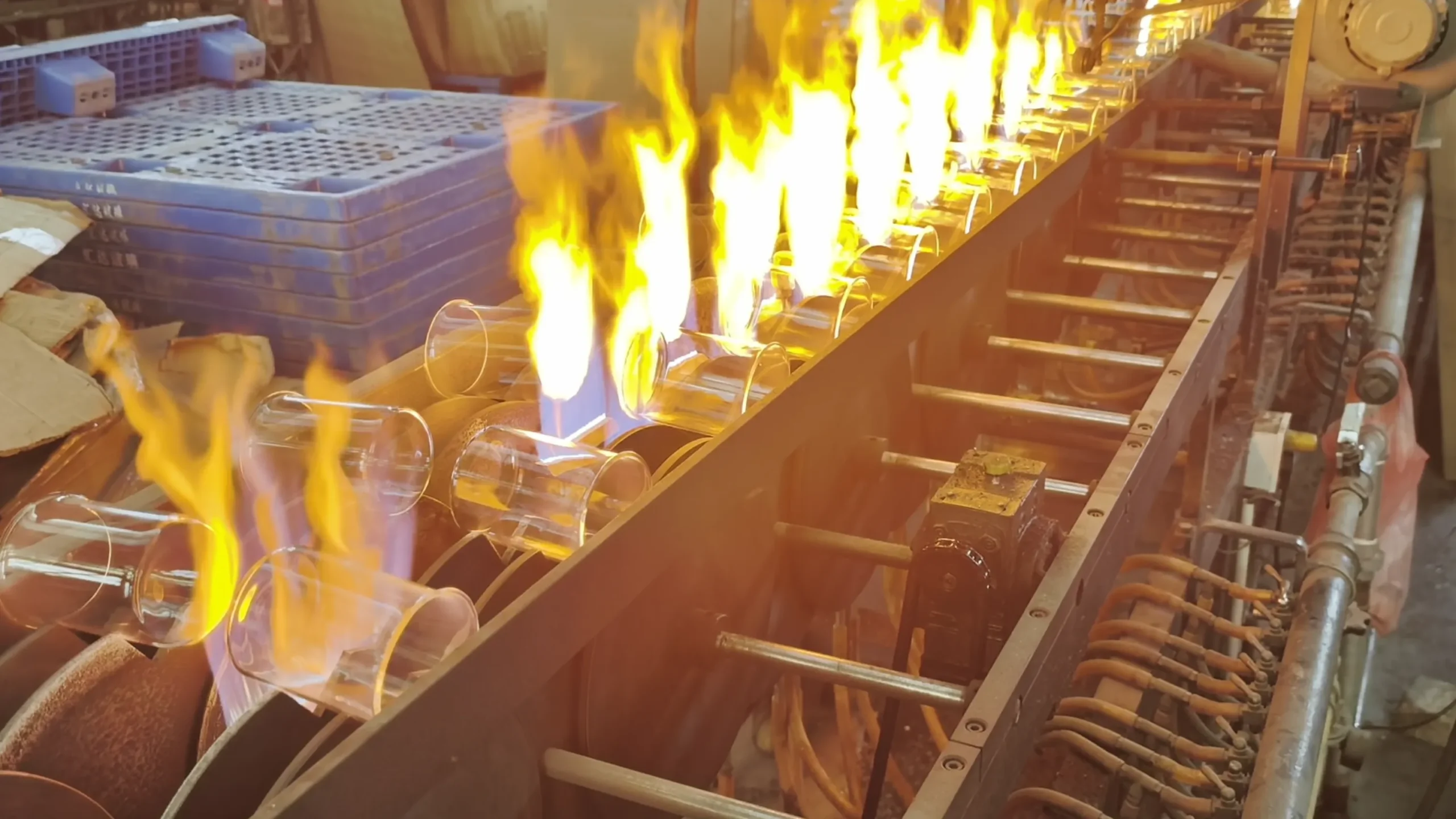
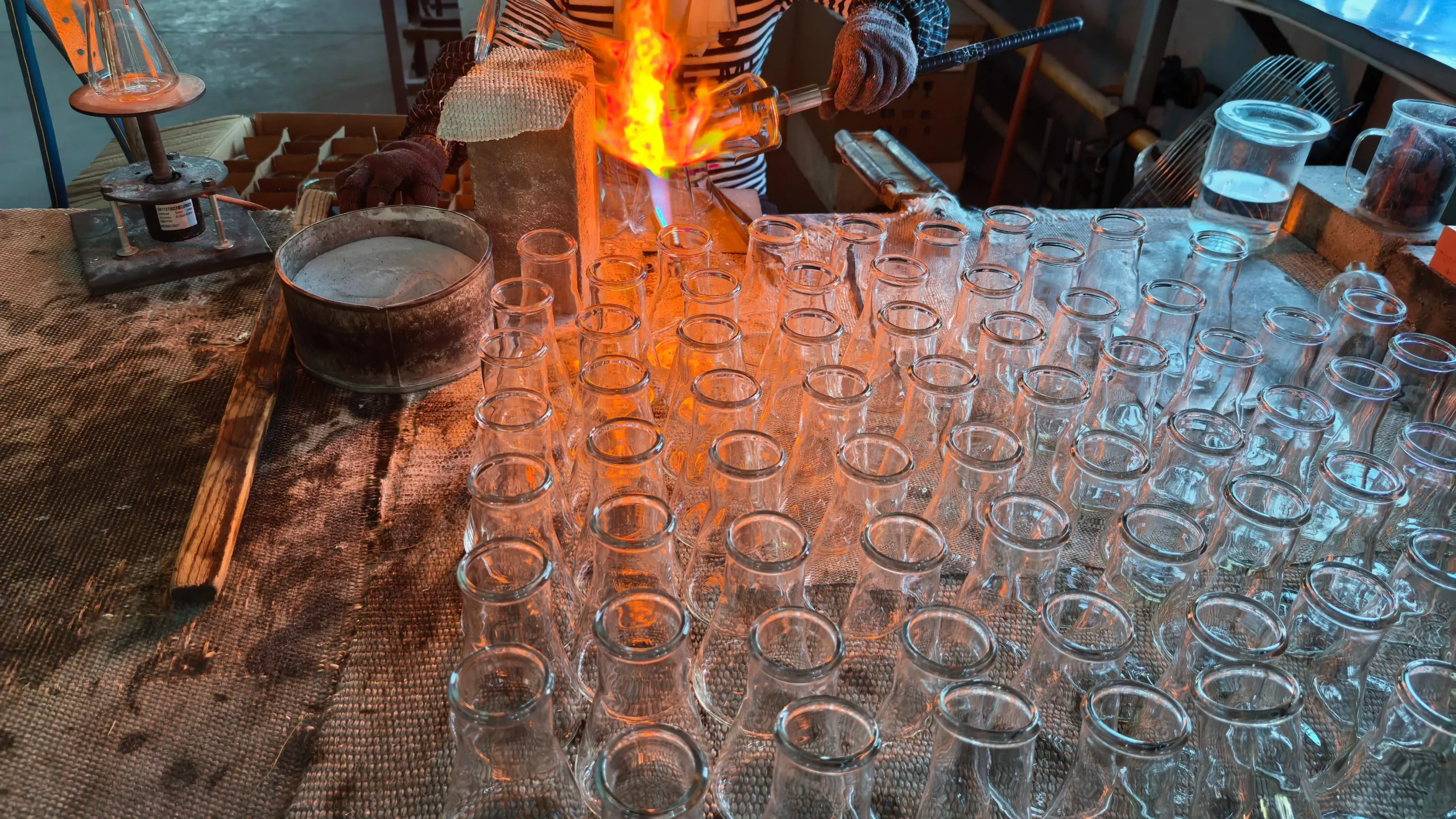
BO-Glass produced the custom apparatus by hand using verified borosilicate tubing, lathe glassworking, flame welding, ground-joint forming, frit sealing, annealing, leak testing, and clean handling.
Instead of trying to modify standard labware, we built the glass assembly around the researcher’s sketch and experimental requirements.
Verified Borosilicate Glass
We selected high-quality borosilicate glass tubing because of its low thermal expansion, chemical resistance, and suitability for laboratory work.
For high-temperature catalytic reactions, the glass had to resist thermal shock and avoid leaching unwanted material into the sample.
Borosilicate glass also allowed the apparatus to handle repeated heating, cooling, vacuum, and autoclaving.
BO-Glass uses verified borosilicate from reliable suppliers because research glassware cannot rely on unknown or low-grade material.
Hand-Blown Reaction Flask Body
The flask body was made from heavy-walled borosilicate tubing.
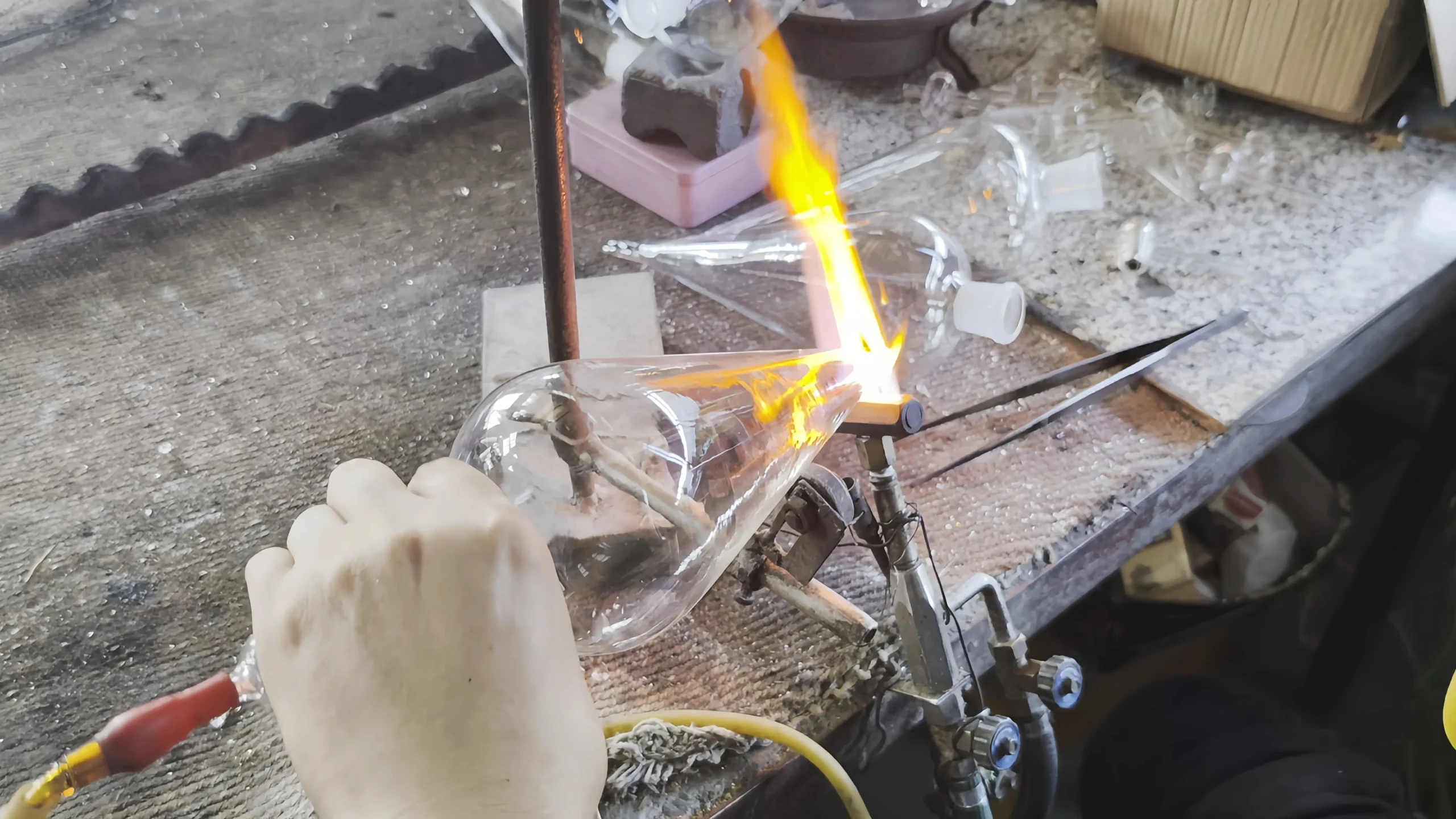
Our senior glassblower cut the tubing, mounted it on a lathe, heated it evenly, and shaped the pear body while blowing air into the glass.
This step required careful control. If the glass was not rotated evenly or the air pressure was not controlled, the body could become lopsided or uneven in thickness.
The goal was to create a flask body with stable shape, uniform wall thickness, and enough strength for rapid temperature changes.
45° Bent Neck
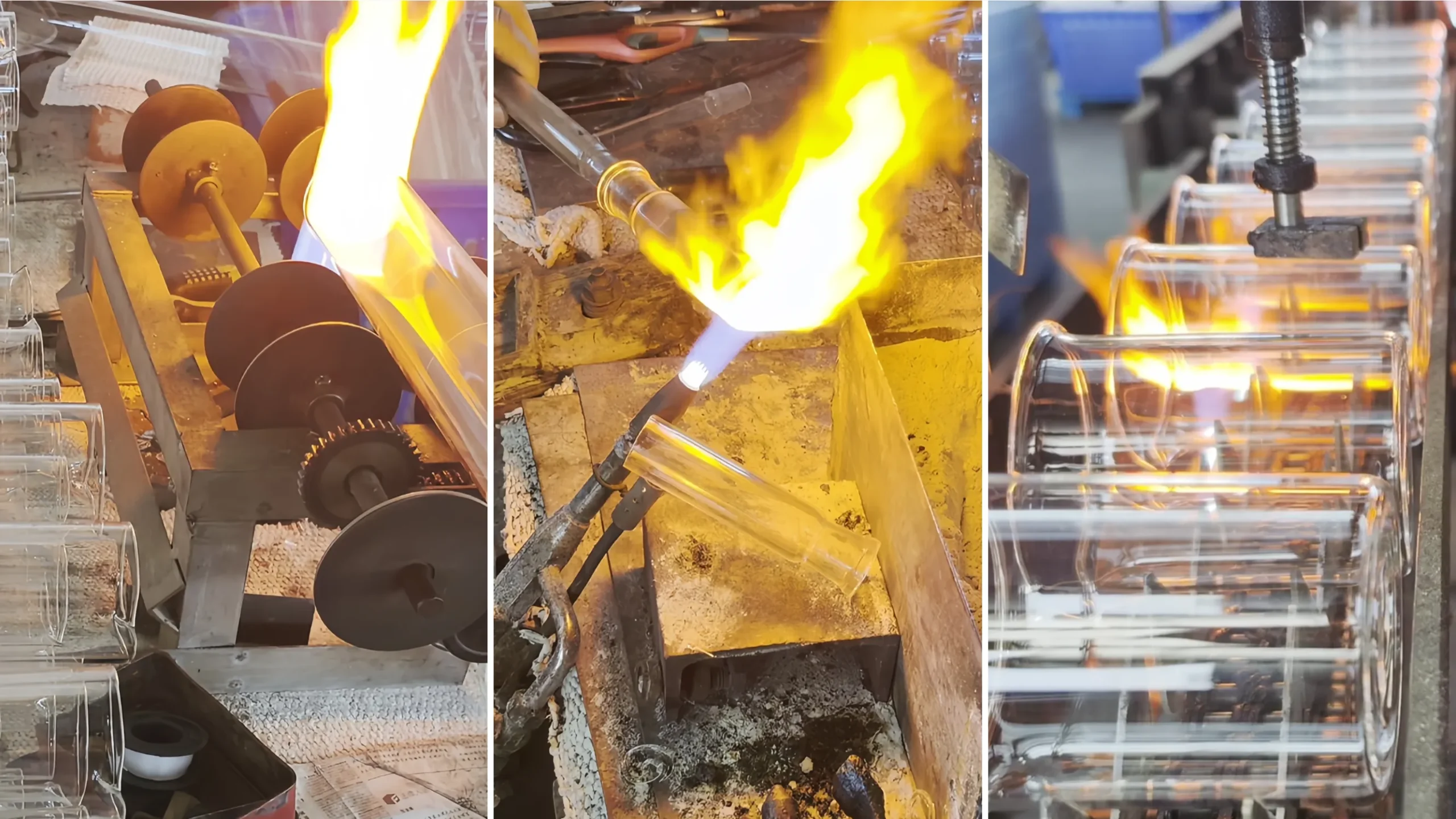
The bent neck was formed by heating the top section of the flask and bending it over a graphite jig.
The heat had to be localized so the neck could bend without causing the whole body to sag.
This allowed BO-Glass to create the 45° neck angle required by the client’s reaction setup.
For custom lab glassware, this kind of angle control is often the difference between a useful apparatus and a piece that cannot fit into the experimental rig.
Flame-Welded Side Ports
The two side ports were added after the main body was formed.
Small areas on the flask body were heated, and premade borosilicate tubes were flame-welded into place. After joining, a small amount of air was blown through the glass to smooth the joint from the inside.
Each joint was then annealed to relieve stress.
This helped create strong, clean ports for thermocouple probes without compromising the body of the flask.
Ground-Glass Joint and Stopper Fit
The top joint had to fit a 29/32 ground-glass stopper.
BO-Glass formed the taper by heating the neck and rolling it against a steel taper. The grinding surface was then cut with a diamond tool and finished carefully.
A sample stopper was used to check the fit repeatedly. If the stopper seated too tight or too loose, the joint was reworked.
For lab glassware, the ground joint is a functional sealing surface, not just a shape. It must fit properly under real lab conditions.
Fritted Disc Sealing
The bottom fritted disc was made from sintered glass particles and sealed into the base of the flask.
This step required careful temperature control. If the glass was too cold, the frit would not seal properly. If it was too hot, the pores could close and stop functioning as a filter.
BO-Glass heated the base and pressed the frit into place with a graphite plunger, while controlling heat to preserve porosity.
This gave the client a stable support for the catalyst bed.
Inspection, Leak Testing, and Cleaning
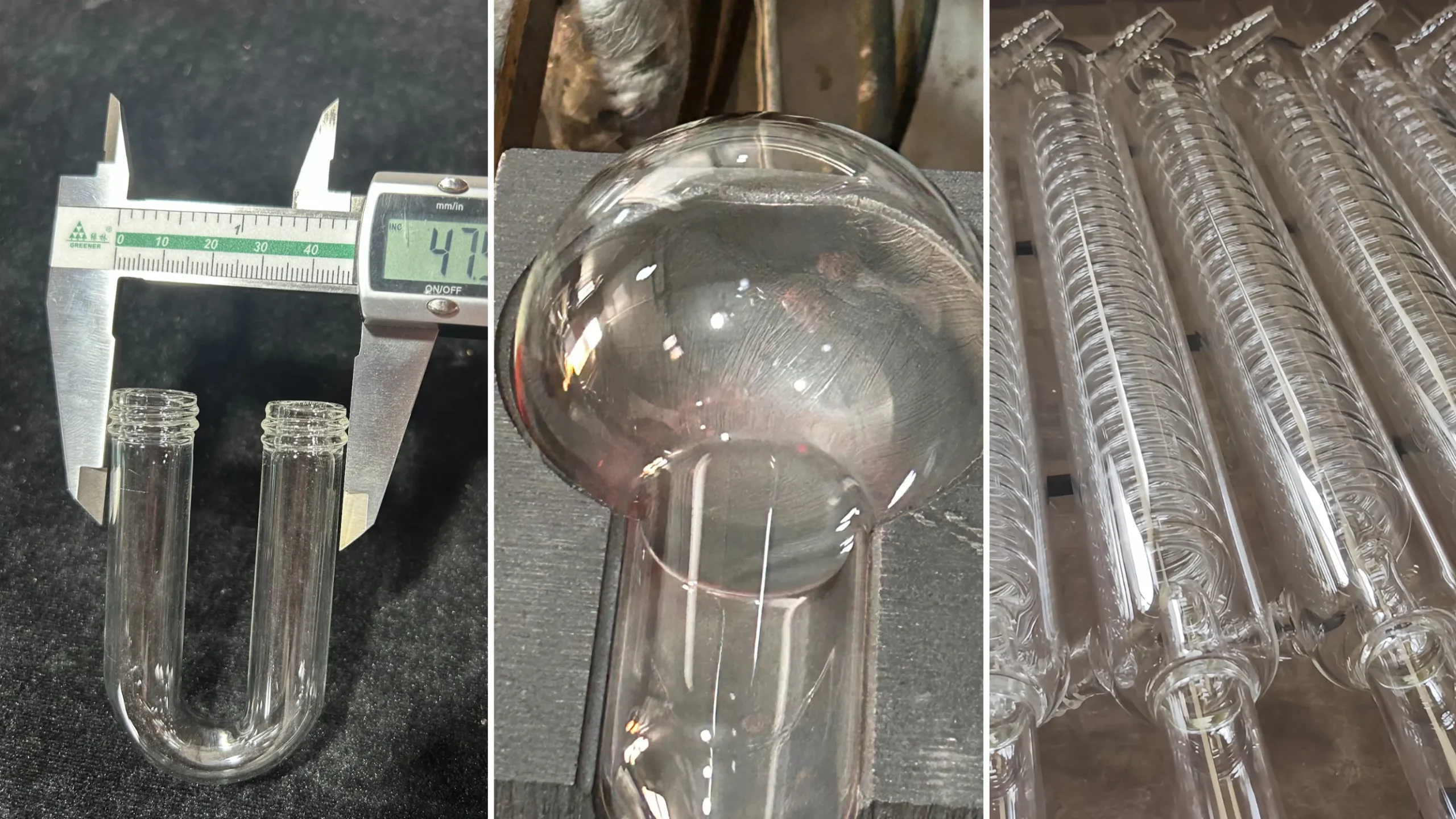
Every critical dimension was measured with calipers and profile gauges. The neck dimension had to stay within ±0.2 mm to seal correctly with the stopper.
Stress was checked using a polariscope. If colored stress bands appeared, the piece was re-annealed.
For leak testing, the ports were capped, the flask was submerged in water, and vacuum was applied. Any bubbles meant rejection or rework.
Finally, the assembly was cleaned in a mild acid bath, rinsed with deionized water, and dried in a clean-air cabinet.
BO-Glass treated cleanliness as part of performance because contamination can affect research results.
The Result
BO-Glass delivered the first custom flask and connecting tubes in about three weeks.
The client installed the apparatus in their experimental rig and confirmed that it worked perfectly. There were no leaks, no cracks, and the temperature profile matched their model.
Within one month, the lab ordered two more copies so they could run parallel experiments.
A year later, the same lab returned with a new design for a larger reactor with more ports, and BO-Glass produced that as well.
The volume is not large, around 20 pieces per year, but the relationship is steady because custom lab glassware depends on trust.
For the client, BO-Glass became the supplier they could call when the catalogue could not solve the problem.
Why Choose BO-Glass?
BO-Glass helped the client build a custom research apparatus that standard lab-glass suppliers would not make.
With skilled manual glassblowing, verified borosilicate tubing, custom bending, flame-welded ports, hand-formed ground joints, frit sealing, annealing, stress inspection, leak testing, and clean finishing, we delivered a functional glass system for a real experiment.
Our strength is not only making laboratory glassware. It is understanding how the glass must fit the experiment: the angle, the seal, the heat, the vacuum, the catalyst bed, and the cleanliness.
For universities, research institutes, chemistry labs, biotech teams, and industrial R&D groups, BO-Glass can produce custom borosilicate lab glassware when standard catalogue parts are not enough.
Contact Us
Your feedback fuels our growth, and your questions drive our solutions.
We value your feedback, inquiries, and suggestions. Please feel free to get in touch with us
General inquiries
Please contact us via sales@bo-glass.com, and we will reply to you as soon as possible.
Interested to work with us
Drop your resume at info@bo-glass.com
and we will get back to you shortly.
We uses the contact information you provide to us to contact you about our relevent content, products, and services.