
Large-Format Textured Glass Lenses for Stadium and Architectural Lighting
Large lenses need a different kind of process.
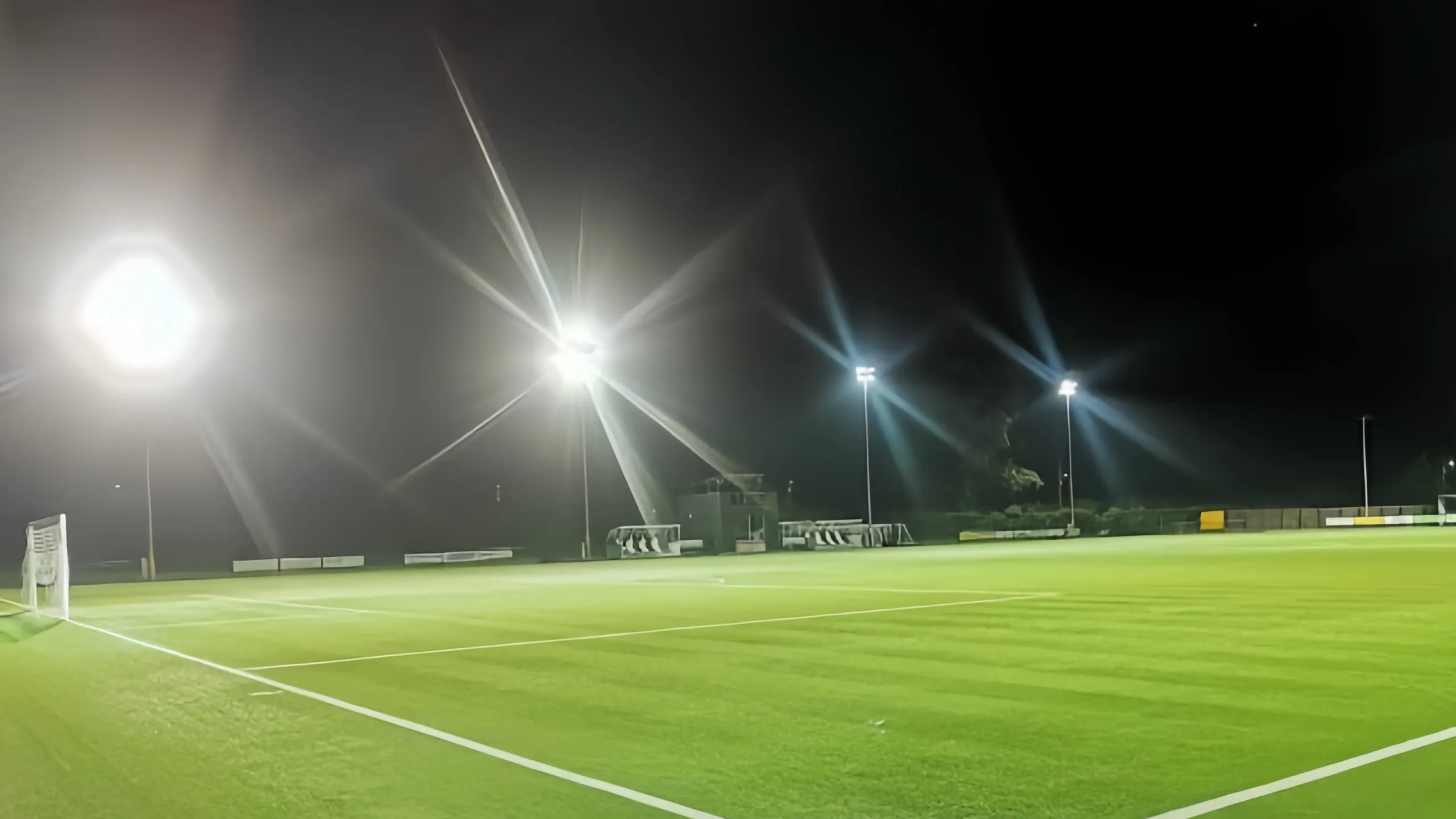
For stadium floodlights, concert lighting, bridge lighting, and high-end architectural fixtures, the lens often has to do two things at the same time: handle a large beam area and soften the light without creating hotspots.
That was the challenge this professional lighting client brought to BO-Glass.
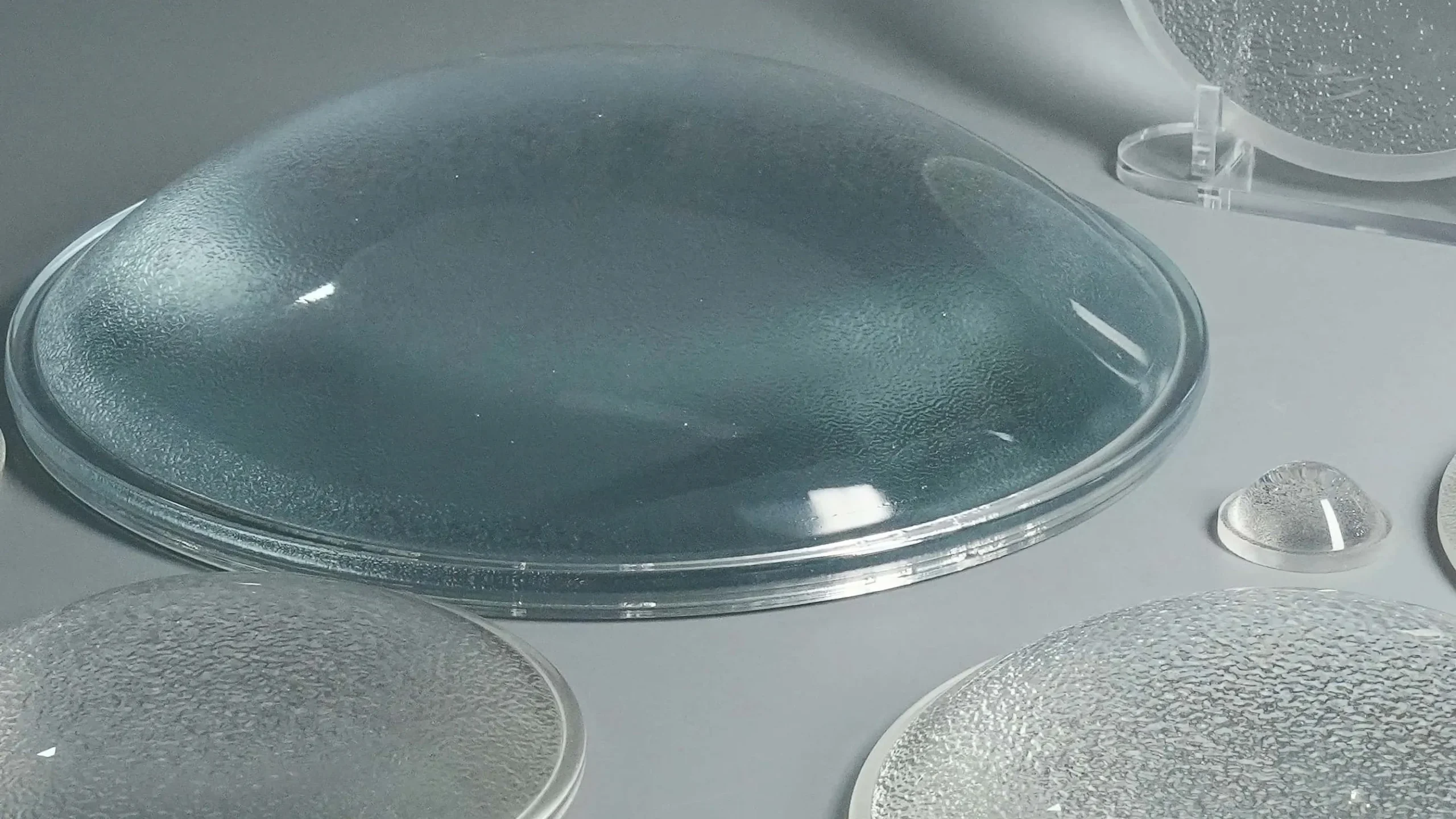
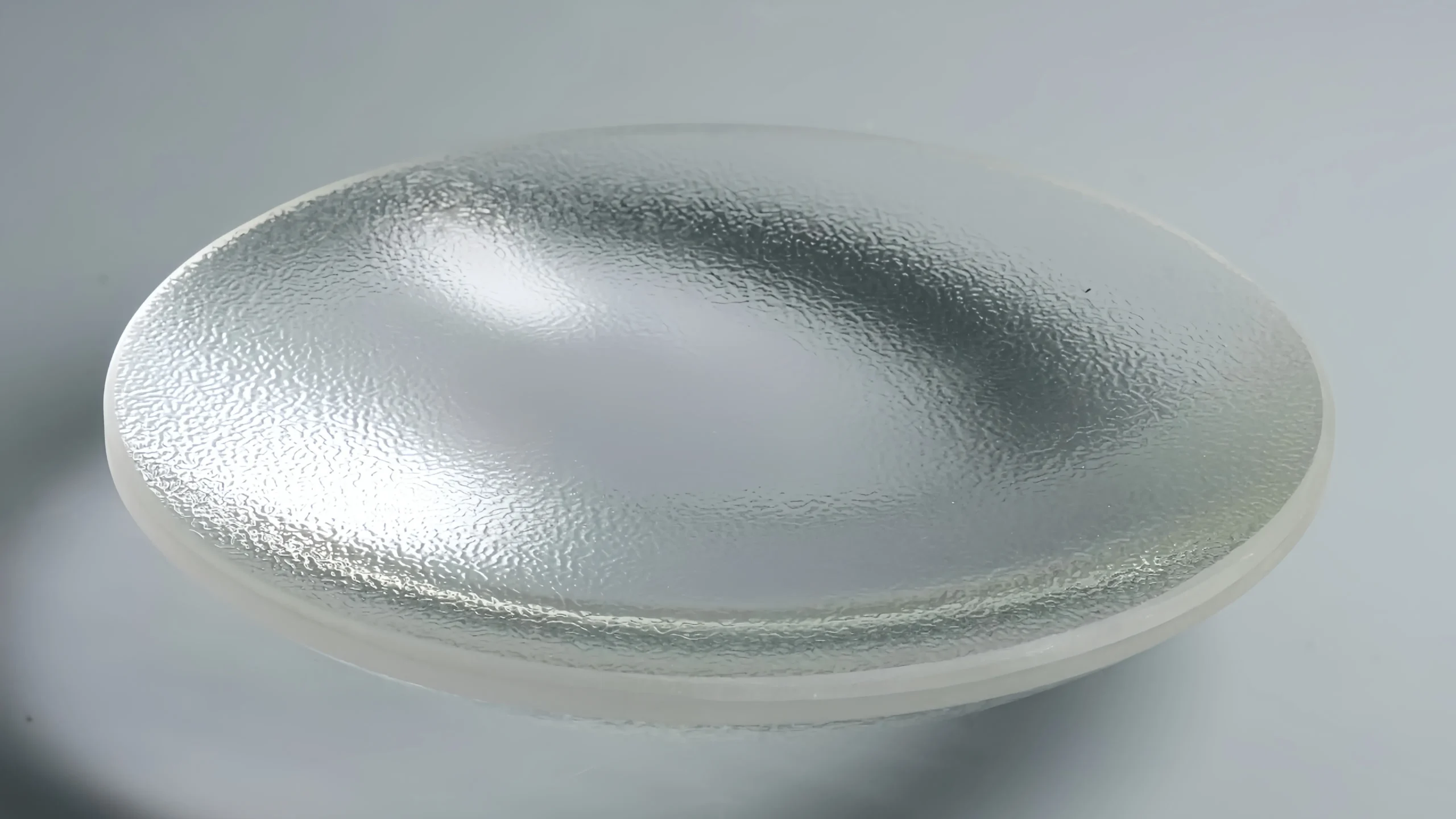
They needed 150 mm diameter textured glass lenses for a new generation of LED floodlights.
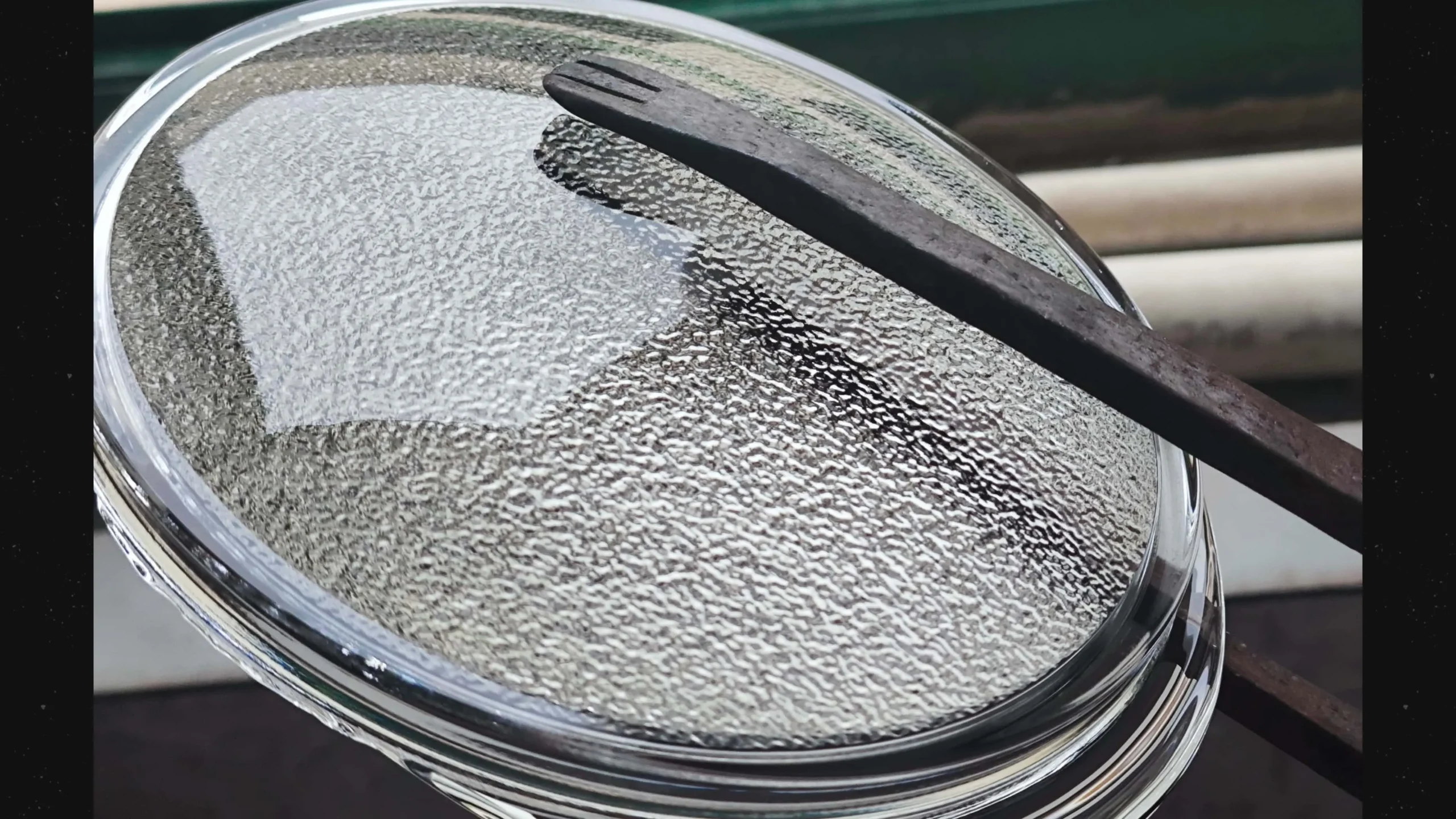
The lens required a fine orange-peel texture on the inner surface to smooth the beam and reduce visible hotspots.
The problem was size. Once a textured lens goes beyond 120 mm, automated pressing becomes difficult. The glass mass is larger, cooling becomes uneven, texture replication becomes less stable, and demoulding risk increases.
Three previous suppliers had already failed to produce acceptable samples.
Large-Format Textured Glass Lenses
The Challenge
A 150 mm glass lens is not simply a larger version of a small lens.
During pressing, hot glass flows from the center toward the edge. On a small lens, that flow is short and easier to control. On a large lens, the glass travels farther and cools at different speeds.
The edges cool faster than the center, which can create internal stress, warping, and uneven texture depth.
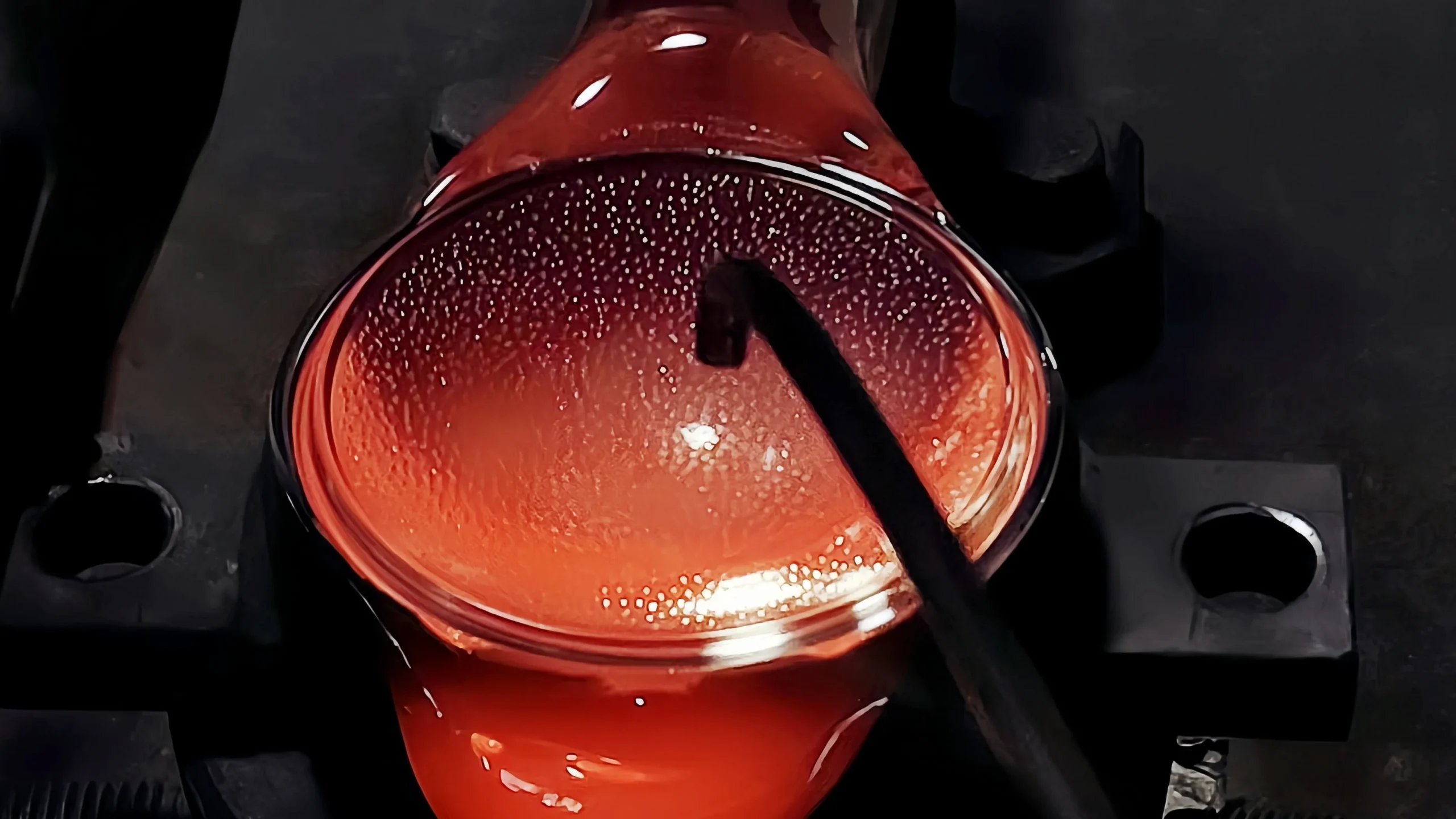
The orange-peel texture made the challenge even harder. If the glass was too hot, it filled the texture well but stuck to the mould. If it was too cool, the texture became shallow or patchy.
Demoulding was also risky. A large lens has much more contact area with the mould, creating high friction. Automated ejectors often push from the center, which can crack the part.
The client needed a supplier who could produce small batches of large textured lenses with stable quality, even when automated production was not practical.
Our Solution
BO-Glass used a controlled manual pressing process for this large-format textured lens.
Instead of forcing the part onto an automated line, we matched the production method to the product. For this kind of large, low-volume optical component, skilled manual control can be more reliable than automation.
Manual Hydraulic Pressing
We used manual hydraulic presses because they gave our operators better control over pressure, timing, and glass flow.
Each glass rod was hand-loaded and inspected before heating. This allowed us to check for bubbles, inclusions, or visible defects before pressing.
During pressing, the operator could adjust pressure by feel and hold the glass for a carefully controlled dwell time. Depending on the glass condition, the hold time ranged from about 8 to 15 seconds.
This flexibility helped us control texture replication and reduce sticking.
For BO-Glass, manual production does not mean casual production. It means experienced operators working with controlled tools, gauges, and inspection standards.
Orange-Peel Texture Replication
The fine orange-peel texture was chemically etched into the mould surface.
This texture had to transfer evenly across the full 150 mm lens surface. Any temperature difference could make one area too shallow and another too deep.
BO-Glass spent about two weeks testing different heating conditions and dwell times. After repeated trials, we found a stable process window that gave full texture replication without excessive mould sticking.
Because the mould temperature changed slightly during each run, our operators adjusted the process in real time.
This is one reason BO-Glass can take on difficult large-lens projects that standard automated lines often reject.Variable Draft Angle Mould Design
Fire Polishing and Hand Grinding
After pressing, each lens went through edge finishing.
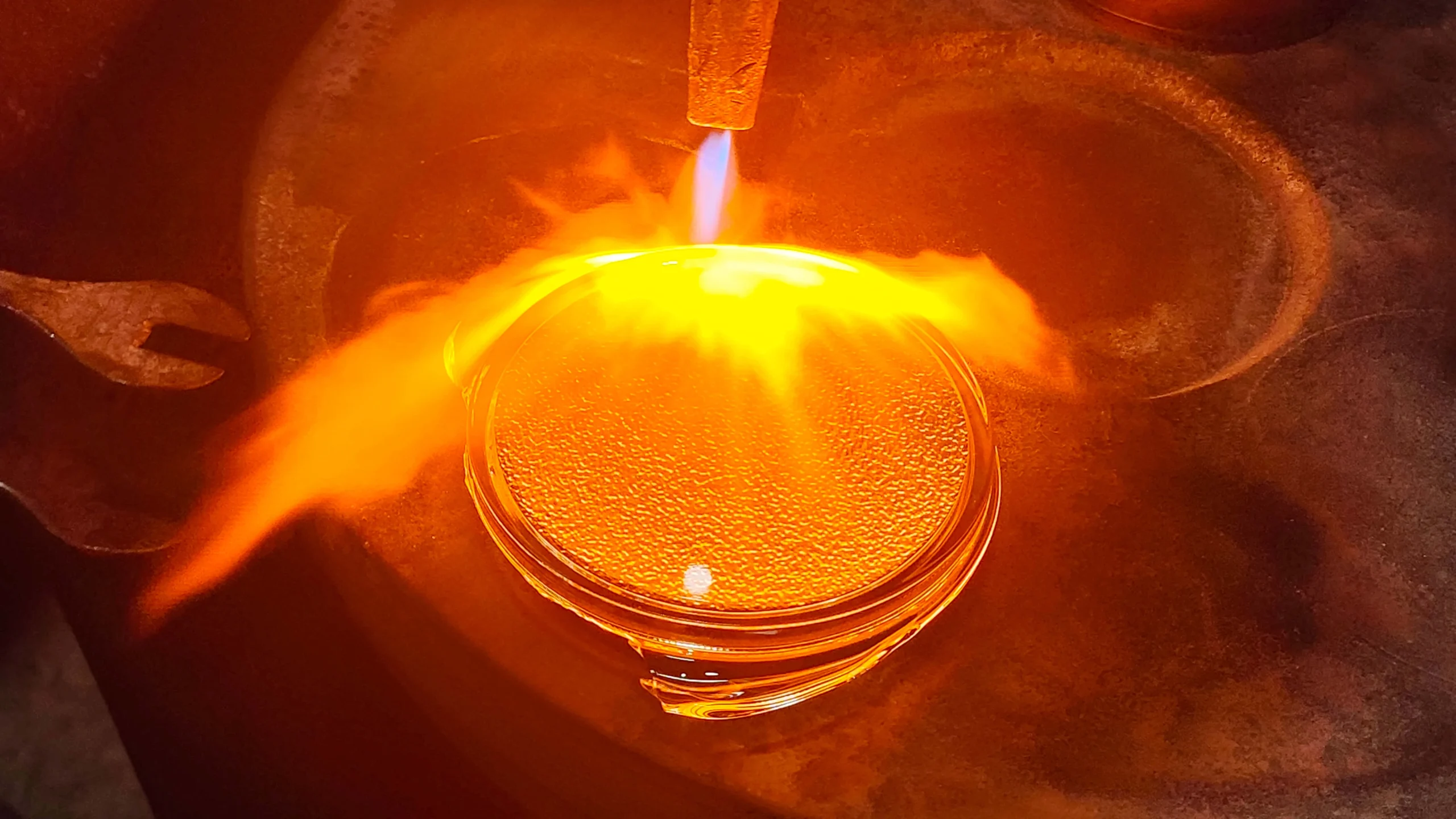
We used fire polishing to smooth the edge and reduce micro-cracks. This had to be done carefully because too much heat could distort the optical surface.
After that, each lens was hand-ground to meet the required outer diameter.
The client required 150.00 mm ±0.5 mm so the lens could fit the fixture housing correctly. Since large glass parts shrink slightly differently from piece to piece, we did not rely only on the mould. Each lens was measured and finished manually with diamond grinding and fine abrasive belts.
Each lens took about 20 minutes of careful edge grinding.
Inspection and Optical Checks
Every lens was checked for texture, transmission, dimensions, and beam quality.
Texture uniformity was measured at five points using a portable roughness meter. The required Ra range was 2-3 um.
Transmission was measured at 550 nm with a spectrophotometer. The lenses consistently delivered more than 90% transmission.
We also mounted sample lenses on a test fixture and projected the beam onto a wall. If hotspots, dark rings, or uneven beam areas appeared, the batch was rechecked.
OD, center thickness, and edge thickness were measured with digital calipers and micrometers.
The Result
BO-Glass produced the first 200 lenses with an 85% yield.
For this lens size and texture requirement, the result was already better than the client expected. After fine-tuning the heating and dwell time, later batches reached 92% yield.
The cost per lens was higher than a standard automated part, but automated suppliers would not take the project because the lens was large, difficult, and only required about 500 pieces per year.
For the client, BO-Glass provided something more useful than a low quote: a supplier who could actually make the part.
After the first successful batch, the client returned with a second project: a 200 mm version for a new architectural installation.
Why Choose BO-Glass?
BO-Glass helped the client solve a problem that automated production could not handle well.
Large-format textured lenses require process control, but they also require human judgement. The operator has to understand how the glass is flowing, how the mould is heating, and when the part is ready to release.
With manual hydraulic pressing, fire polishing, hand grinding, roughness testing, transmission measurement, and real beam inspection, BO-Glass delivered large lenses that were both carefully made and properly verified.
Our advantage is flexibility. We can take on large, specialized, low-volume optical glass projects that many automated factories avoid.
For stadium lighting, architectural lighting, concert lighting, and large LED floodlight applications, BO-Glass can develop custom textured glass lenses that smooth the beam, fit the housing, and make difficult projects possible.
Contact Us
Your feedback fuels our growth, and your questions drive our solutions.
We value your feedback, inquiries, and suggestions. Please feel free to get in touch with us
General inquiries
Please contact us via sales@bo-glass.com, and we will reply to you as soon as possible.
Interested to work with us
Drop your resume at info@bo-glass.com
and we will get back to you shortly.
We uses the contact information you provide to us to contact you about our relevent content, products, and services.