
Custom Glass TIR Lenses for High-Power LED Automotive Lighting
Plastic optics can work well, until heat, UV, and time start changing the beam.
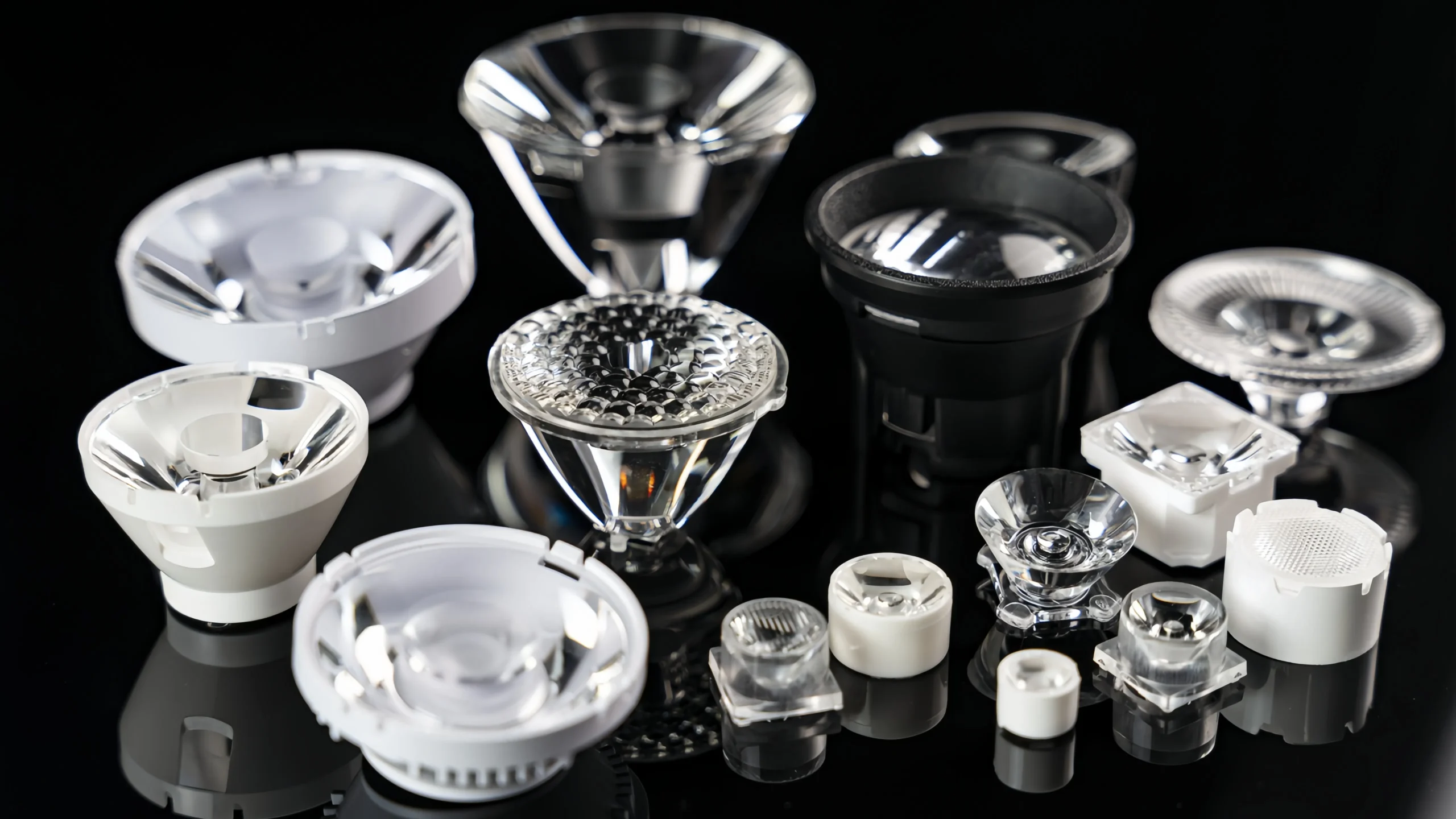
For high-power LED headlights, the lens has to do more than shape light on day one. It has to keep the same beam pattern after hot summers, thermal cycling, UV exposure, vibration, and years of use inside a demanding automotive environment.
That was the problem this premium automotive lighting supplier brought to BO-Glass.
Their existing polycarbonate TIR lenses were losing performance in the field. Some lenses yellowed. Some developed micro-cracks. Some lost beam focus after repeated heat exposure.
Acrylic was clearer at first, but it did not solve the heat-resistance problem.
The client needed a TIR lens that could survive high temperatures, resist UV aging, keep a sharp beam pattern, and still be practical for production.
Custom Glass TIR Lenses for LED Automotive Lighting
The Challenge
A TIR lens is not a simple optical cover.
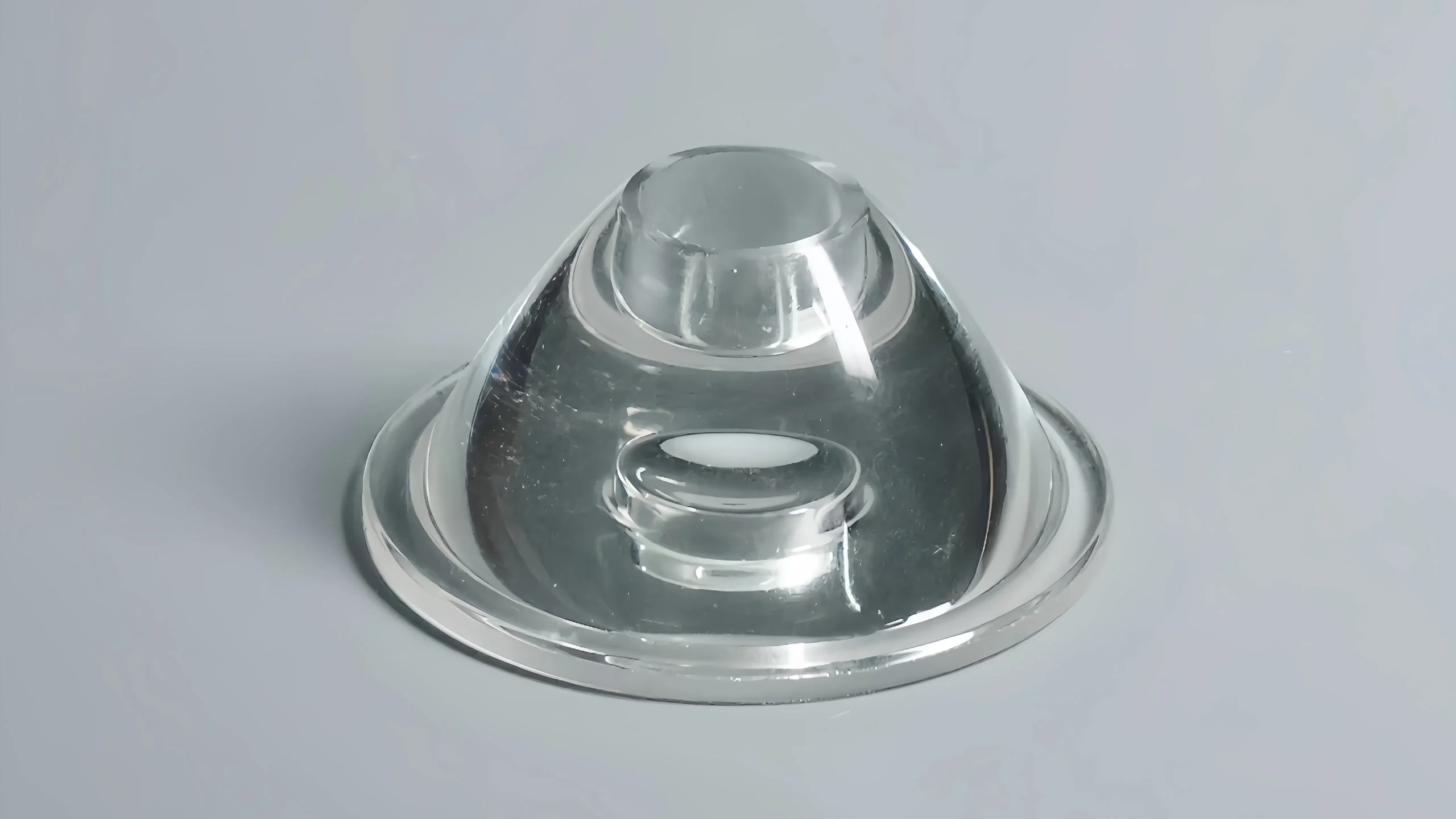
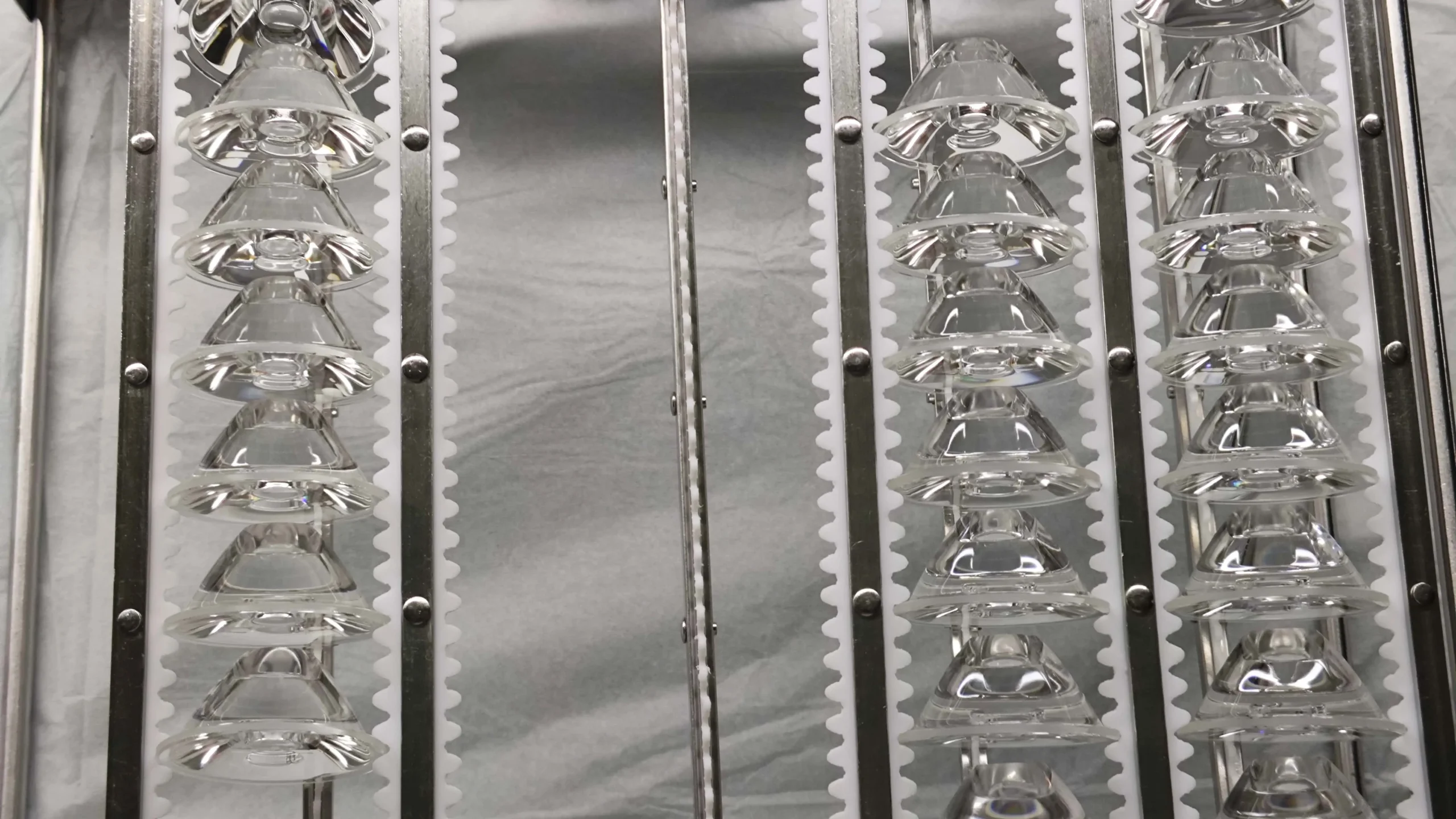
TIR stands for total internal reflection. The lens collects light from an LED chip, refracts it through the entry surface, reflects it internally from a precisely angled sidewall, and then sends it out through the front surface as a controlled beam.
This geometry makes TIR lenses powerful, but also difficult to manufacture in glass.
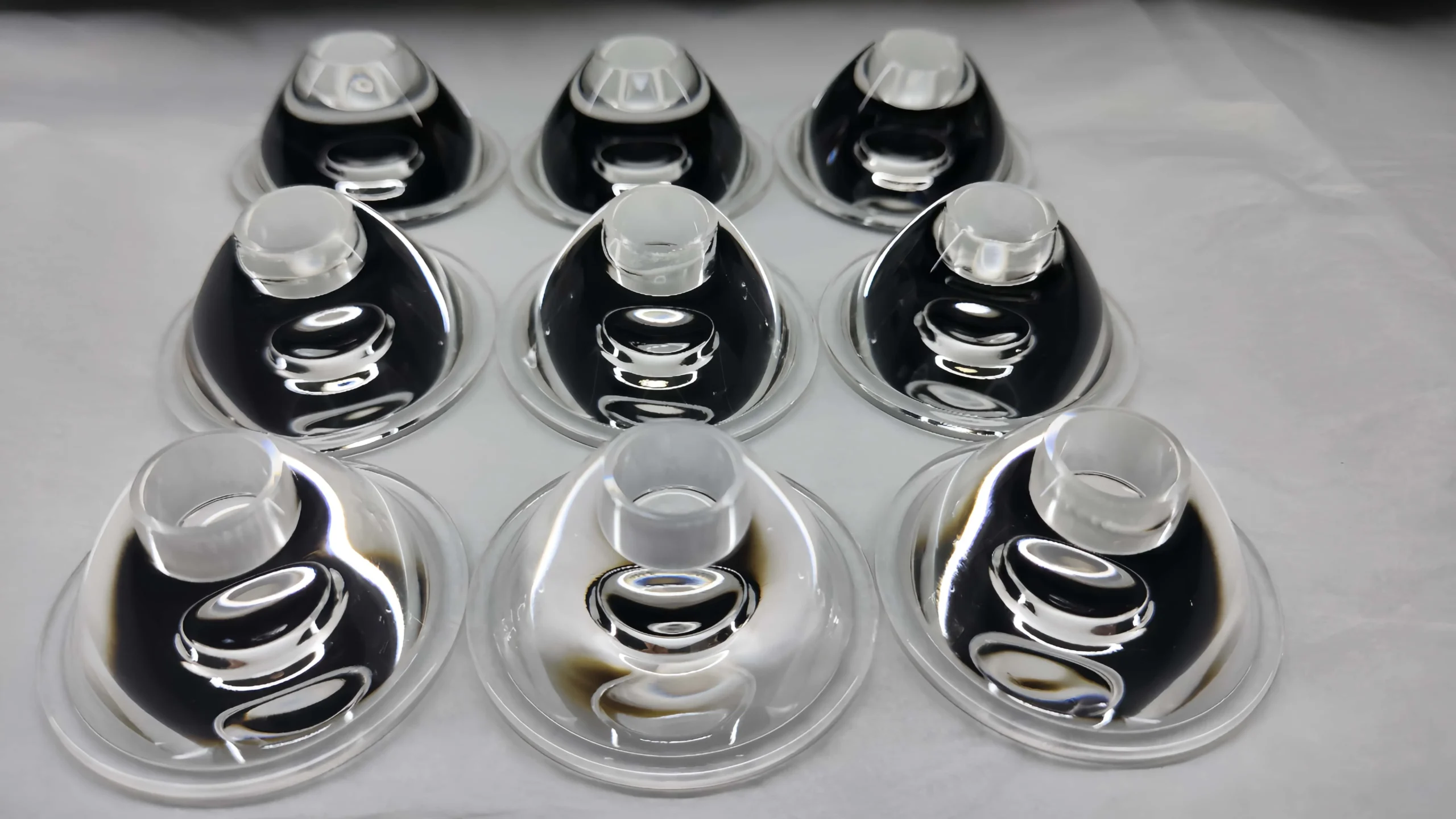
The client needed three beam types: a narrow 10° high-beam pattern, a 25° low-beam pattern, and an elliptical fog-lamp pattern. Each version required accurate optical surfaces and controlled micro-texture on the exit face.
The previous plastic lenses were easy to mould, but they could not survive the real working environment. The LED headlight units could reach up to 150°C near the LED junction.
Under heat and UV exposure, plastic lenses could yellow, crack, haze, or shift the beam.
Glass was the right direction, but the geometry created a major production problem.
The internal reflective sidewall and core structure made demoulding difficult. When hot glass cooled, it shrank tightly around the core pin. In the first trials, the glass gripped the mould so strongly that several core pins broke.
The client needed BO-Glass to solve both the optical performance problem and the manufacturing problem.
Our Solution
BO-Glass developed a custom hot-moulded glass TIR lens solution using B270-family optical glass, split-core mould design, precision surface texture, and strict beam validation.
Instead of copying a plastic injection-moulding design directly into glass, we rebuilt the process around glass behavior: shrinkage, release force, surface accuracy, thermal stability, and long-term optical performance.
B270-Family Optical Glass
We selected B270-family optical glass because it offered the right balance of visible light transmission, moulding behavior, optical clarity, and production practicality.
Compared with polycarbonate and acrylic, glass provides much stronger resistance to heat, UV exposure, scratching, and long-term aging.
While polycarbonate can soften or deform under high heat, the glass TIR lens remained stable at 200°C without deformation. After 5,000 hours of accelerated weathering, the sample showed no yellowing or crazing.
For automotive lighting, this stability matters.
A lens that changes color or shape over time does not just look worse. It changes the beam and can create warranty problems.
BO-Glass helped the client move from short-term plastic optics to a more durable glass optical solution.
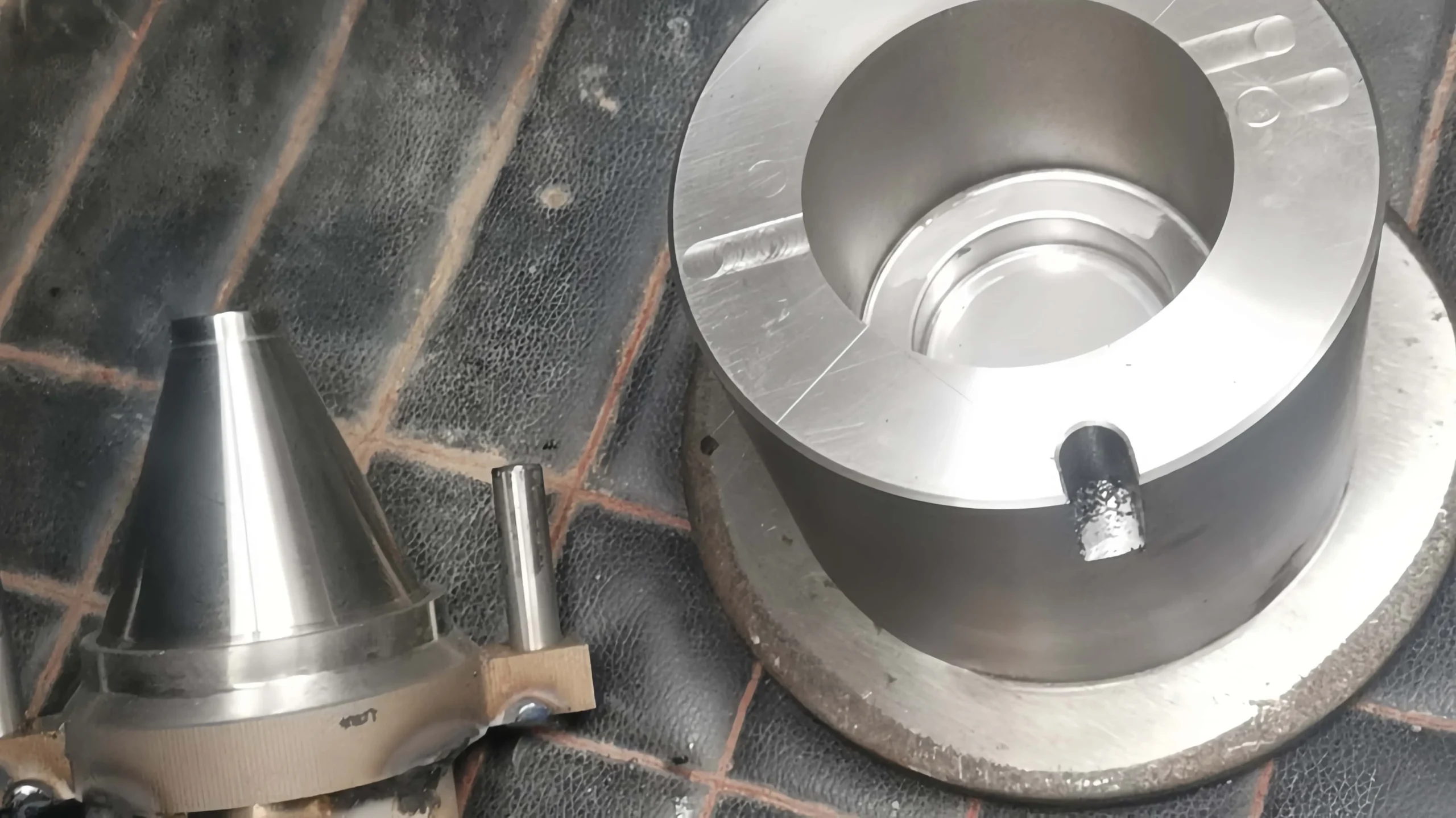
Split-Core Mould Design
The most difficult part was demoulding.
A standard solid core pin could form the internal TIR geometry, but after cooling, the glass shrank tightly around the pin. The release force was too high, and the mould could not survive stable production.
BO-Glass redesigned the mould with a split-core structure.
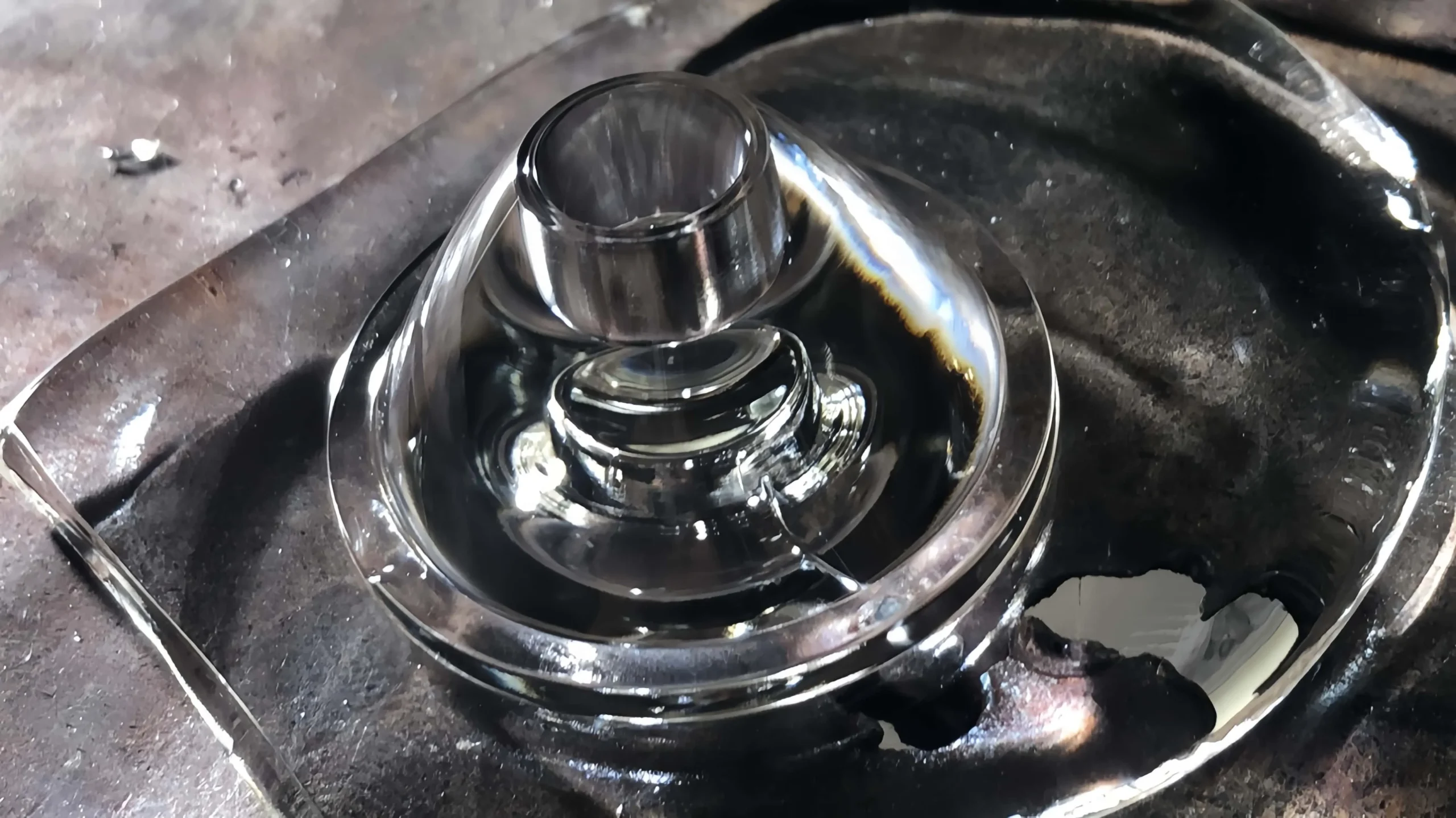
Instead of one solid core, we used four core segments that retract radially after pressing. The core collapses inward first, releasing the glass before the main ejector pushes the lens out.
This reduced mechanical locking and made it possible to release the complex TIR geometry without breaking the core or damaging the lens.
For BO-Glass, this is where real custom glass engineering matters. Complex optics do not fail only because of optical design. They often fail because the part cannot be released from the mould reliably.
Controlled Draft and Low-Friction Mould Surface
We also added a small 0.3° taper on the non-functional area near the base.
This tiny draft did not affect the reflective optical surface, but it helped the glass release more smoothly during ejection.
The mould cavity was finished with a polished diamond coating to reduce friction and avoid micro-scratches during release.
Although the coating added tooling cost, it extended mould life from around 500 shots to more than 10,000 shots. This improved production stability and reduced the long-term unit cost.
Micro-Texture for Custom Beam Patterns
The client needed more than one beam pattern.
For the high beam, low beam, and fog lamp versions, BO-Glass used laser-etched micro-structures on the mould surface to create controlled texture on the lens exit face.
These small dimples and ridges adjusted how light spread after leaving the lens. For the fog lamp version, the texture helped stretch the beam horizontally into an elliptical pattern.
The first texture trial created visible bands in the beam. BO-Glass adjusted the etch density and repeated the test. After four iterations, the beam became smooth and even, with no obvious hotspots.
This gave the client flexibility to build multiple lighting functions from the same glass TIR lens platform.
Thermal and Optical Validation
The sample lenses were tested in the client’s optical lab using their standard LED module.
Beam angle accuracy stayed within ±0.5° of the target. Transmission reached 91%, higher than the client’s plastic lenses, which were around 88%.
Beam uniformity variation was under 10%, which was excellent for a glass TIR lens.
After thermal cycling from -40°C to +150°C for 1,000 cycles, the lenses showed zero cracks and no shift in beam pattern.
The client also performed scratch testing. The glass surface showed only barely visible marks, while the plastic comparison sample became heavily hazed.
These results gave the client confidence that the glass TIR lens could solve the long-term degradation problem.
Yield Improvement
The first production run achieved only 55% good parts because of surface defects during release.
After the split-core redesign and mould coating, yield improved to 83%. After lowering the press temperature by 15°C to reduce sticking, yield reached 89%.
The client had expected anything above 80% to be acceptable, so BO-Glass exceeded the production target.
This is one of BO-Glass’s strengths: difficult moulded glass optics usually need iteration. We do not stop at the first problem. We adjust the mould, release, temperature, coating, and process until the part becomes realistic for production.
The Result
The client placed an initial 500-piece order for a pilot run with a German car manufacturer.
Six months later, the carmaker approved the design. BO-Glass then received a standing order for 2,000 units per month.
Today, BO-Glass produces more than 5,000 glass TIR lenses per month for the same client, covering five different beam patterns.
The client reported that warranty claims related to headlight degradation dropped close to zero.
Their customers also appreciated the sharp, stable beam that did not fade, yellow, or shift over time.
For the client, the project proved that glass TIR optics could solve a problem plastic could not: long-term beam stability under heat, UV, and real automotive use.
Why Choose BO-Glass?
BO-Glass helped the client solve one of the hardest challenges in glass optics: producing a complex TIR lens that could release from the mould cleanly and perform reliably in the field.
With B270-family optical glass, split-core tooling, polished mould coating, controlled draft, laser-etched micro-texture, thermal cycling, weathering tests, scratch testing, and beam validation, we delivered a glass lens that was stronger, clearer, and more stable than plastic alternatives.
Our strength is not only making glass lenses. It is understanding how optical design, mould release, material behavior, surface texture, and production yield all connect.
For automotive lighting, stage lighting, industrial LED fixtures, UV-curing lamps, and other high-power LED applications, BO-Glass can develop custom glass TIR lenses that keep the beam sharp when plastic optics cannot handle the heat.
Contact Us
Your feedback fuels our growth, and your questions drive our solutions.
We value your feedback, inquiries, and suggestions. Please feel free to get in touch with us
General inquiries
Please contact us via sales@bo-glass.com, and we will reply to you as soon as possible.
Interested to work with us
Drop your resume at info@bo-glass.com
and we will get back to you shortly.
We uses the contact information you provide to us to contact you about our relevent content, products, and services.