
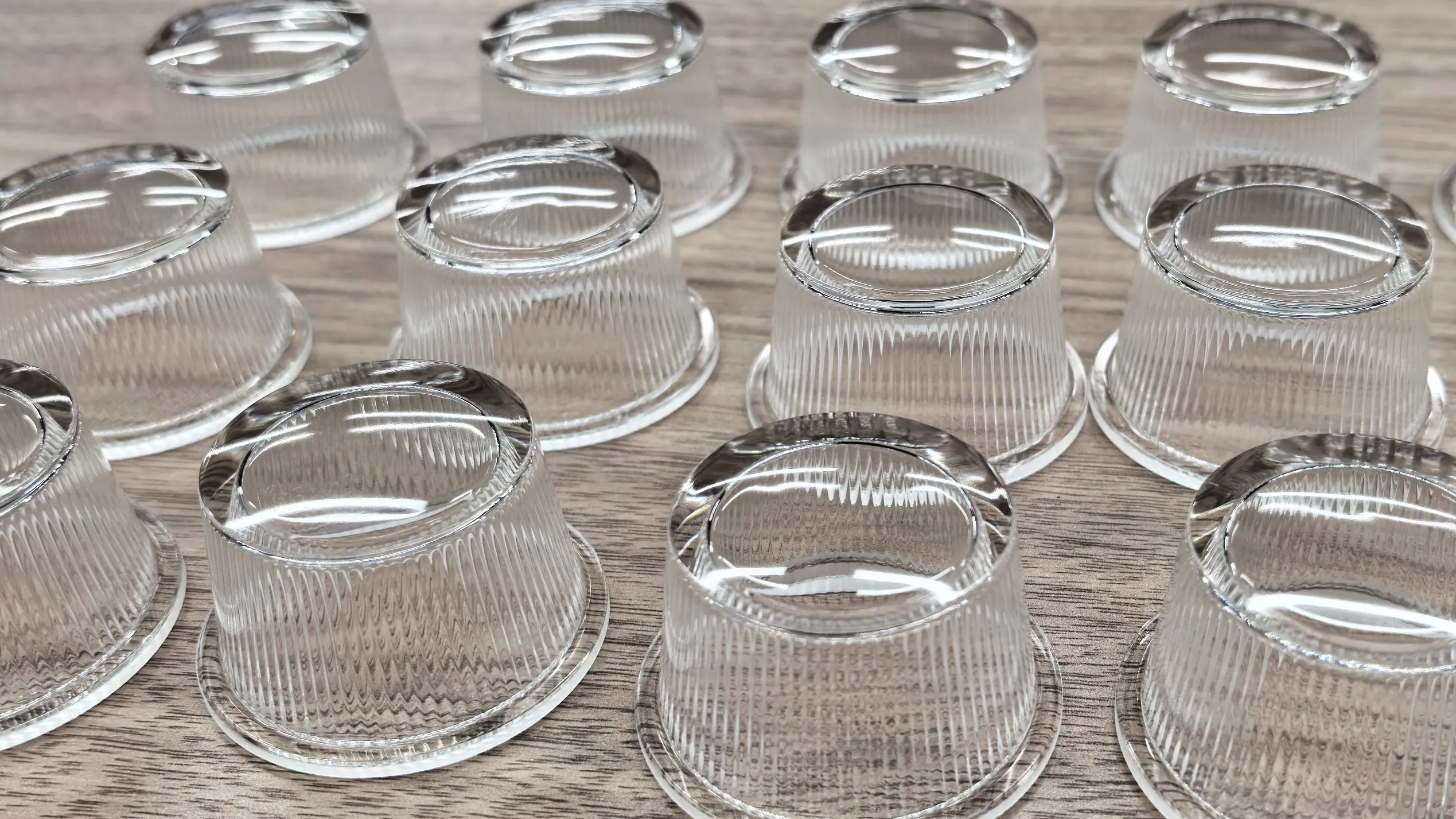
Explosion-Proof Sight Glass Domes for Harsh Industrial Environments
Some glass parts do not get an easy life.
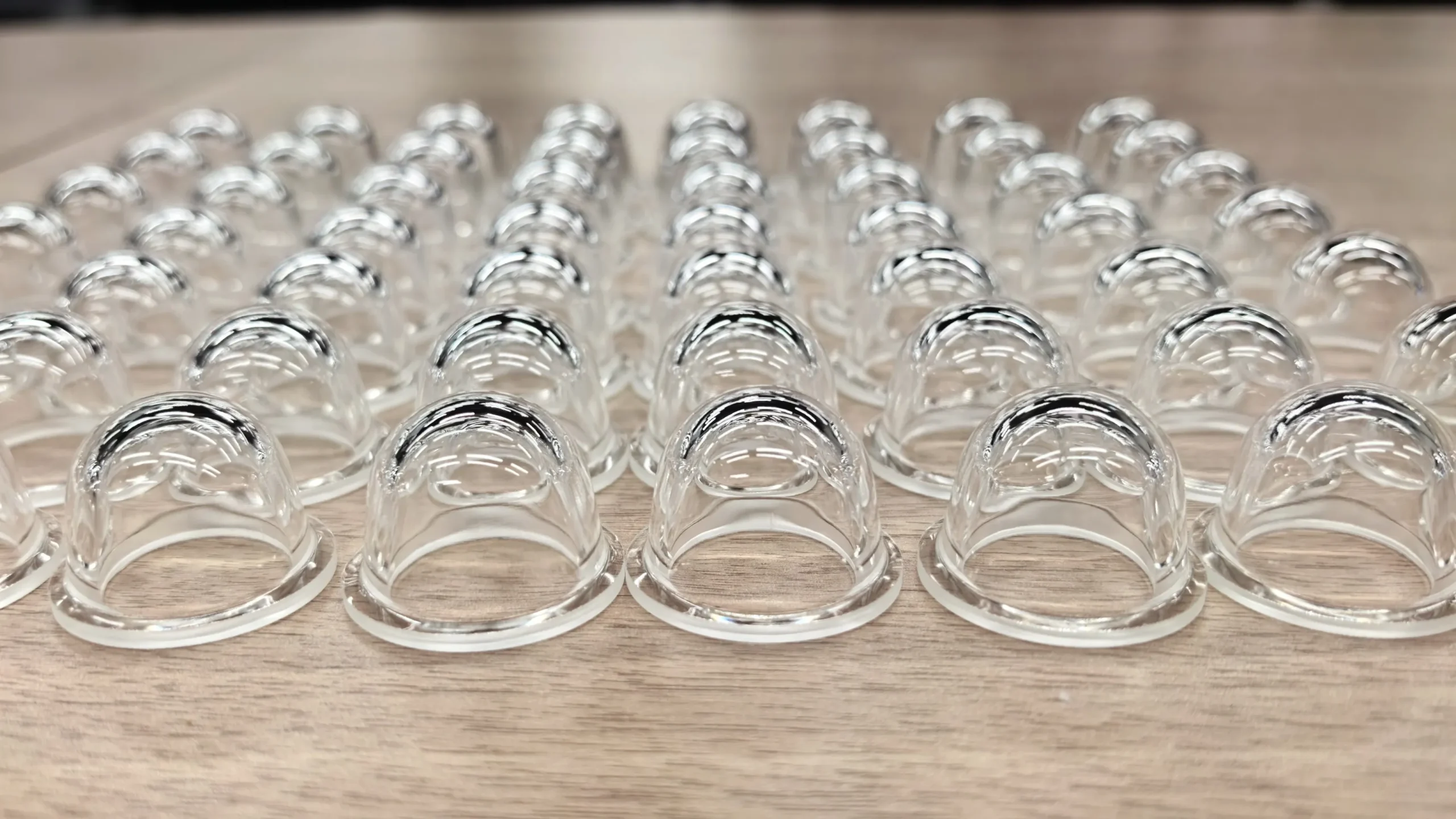
That was the challenge this European client brought to BO-Glass.
The client supplied protective sight glass domes for airport lighting, chemical plant sensors, and marine equipment. Their existing soda-lime sight glass domes were not stable enough. Some cracked under thermal shock. Some became cloudy after years outdoors. Some shattered under impact.
Others failed because the dimensions were not stable enough for the client’s existing housings.
They needed a tougher sight glass dome that could survive harsh environments, stay optically clear, fit the original mounting structure, and remain affordable for high-volume production.
Explosion-Proof Borosilicate Sight Glass Domes
The Challenge
The client’s old suppliers used traditional pressed soda-lime glass.
That process was fast and low-cost, but it created problems for demanding outdoor and industrial use. The parts often had internal stress, uneven thickness, surface micro-cracks, and optical distortion.
For airport lighting and industrial sensor domes, those defects are not acceptable. A cracked dome can expose the fixture. A cloudy dome can reduce light transmission or sensor accuracy. Poor flatness can affect sealing. A bad fit can cause leakage.
The client’s application environment was severe. The domes had to handle temperature swings from -40°C to +80°C, salt spray, outdoor weather, vibration, and accidental impact from tools, stones, or maintenance work.
The part also had to fit the client’s existing housings. The client did not want to redesign the mounting system, so outer diameter, thickness, flatness, and sealing surfaces all had to be tightly controlled.
BO-Glass needed to solve the problem through material selection, mould design, hot pressing control, release improvement, annealing, and strict testing.
Our Solution
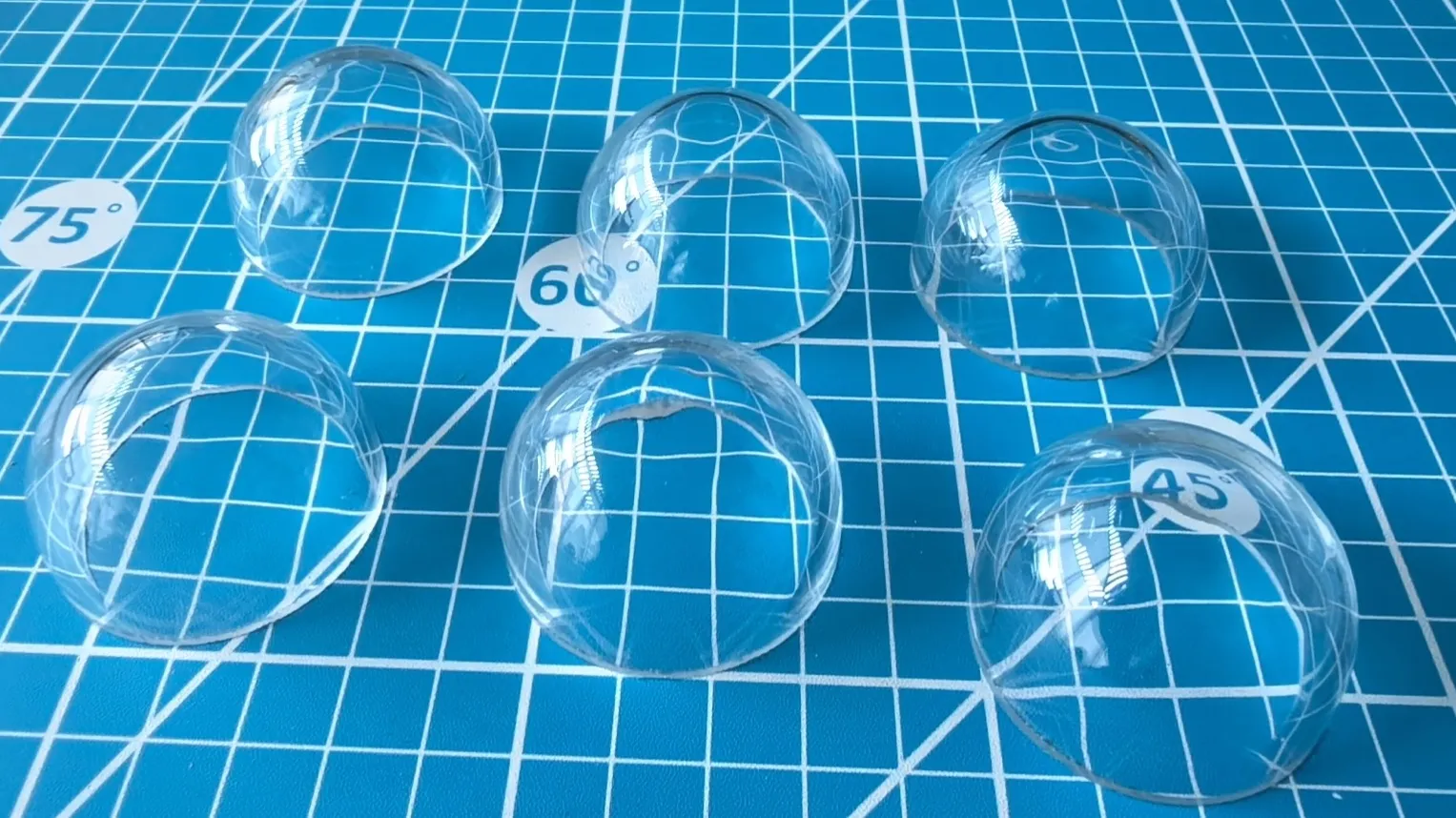
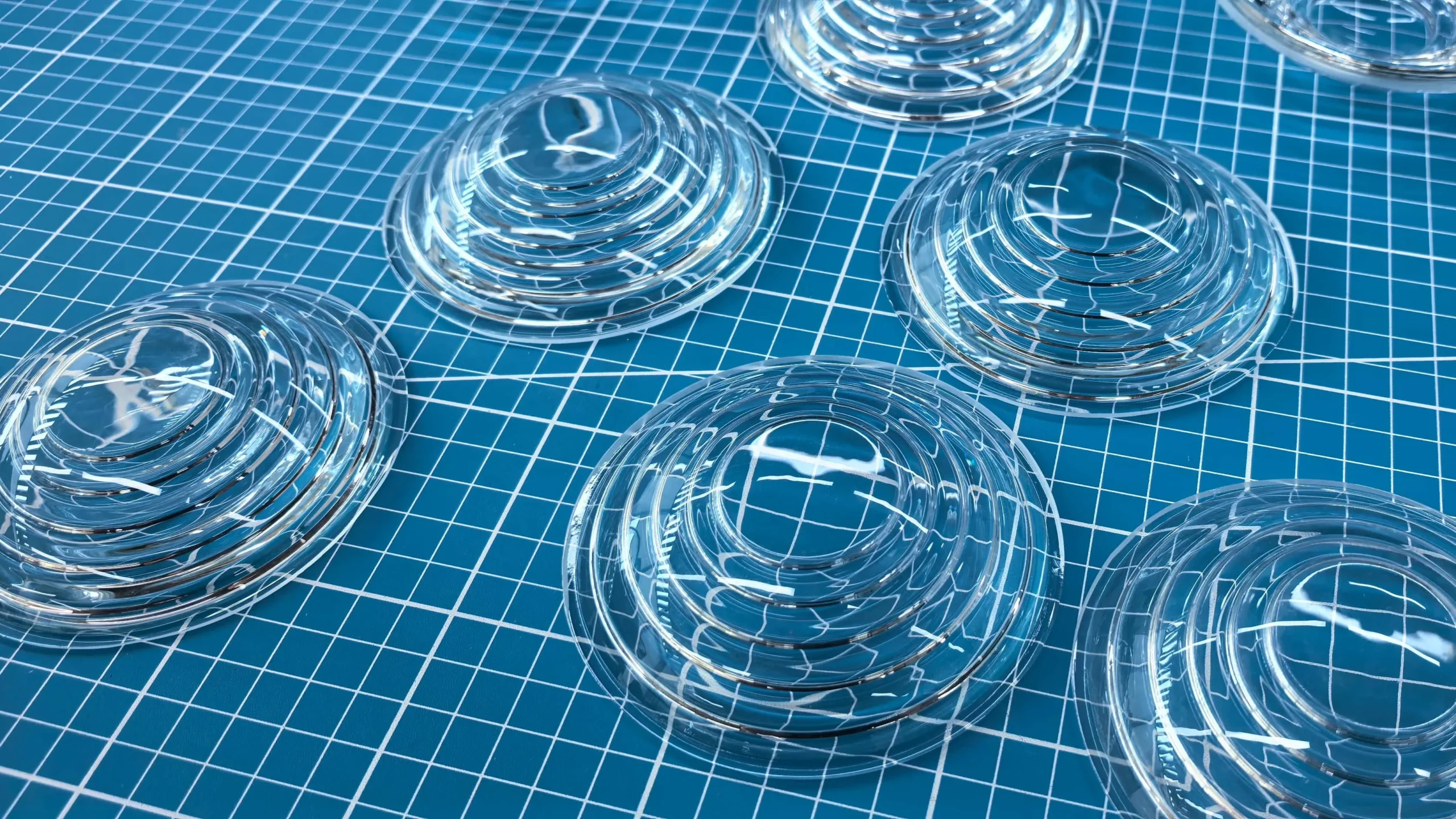
BO-Glass developed a hot-pressed high-borosilicate sight glass dome solution using precision-cut glass rod instead of ordinary molten glass gobs.
The goal was not only to make a clear glass disc. The dome had to survive impact, thermal shock, UV exposure, chemical environments, and long-term outdoor use while still fitting the customer’s housing accurately.
High-Borosilicate Glass Rod
We selected high-borosilicate glass rod because it offers better material homogeneity than ordinary pressed soda-lime glass.
Drawn borosilicate rod has fewer bubbles, better optical consistency, low thermal expansion, strong chemical resistance, and excellent thermal shock performance.
For explosion-proof domes, outdoor lighting covers, and industrial sensor domes, these properties matter. The glass must stay clear and stable even when the environment is working against it.
This is where BO-Glass adds value: we do not simply replace one glass shape with another.
We choose the glass material based on the real working conditions.
Hot Pressing Instead of Standard Gob Pressing
Instead of using a molten glass gob, we cut borosilicate rod into controlled blanks and heated each piece to the softening point before pressing.
This process gave us better control over clarity and material quality, but it also created new technical challenges.
In early testing, the first parts looked clear, but the outer diameter was 0.3 mm oversized and the thickness varied by 0.15 mm from edge to center. The client’s tolerance was only ±0.1 mm.
Some parts also stuck inside the mould, and others developed small cracks along the side wall.
BO-Glass adjusted the process step by step until the dimensions, release, and stress control became stable enough for production.
Variable Draft Angle Mould Design
The first major change was the mould design.
If the draft angle was too small, the hot-pressed glass stuck inside the mould. If the draft angle was too large, the sealing and optical surfaces could be affected.
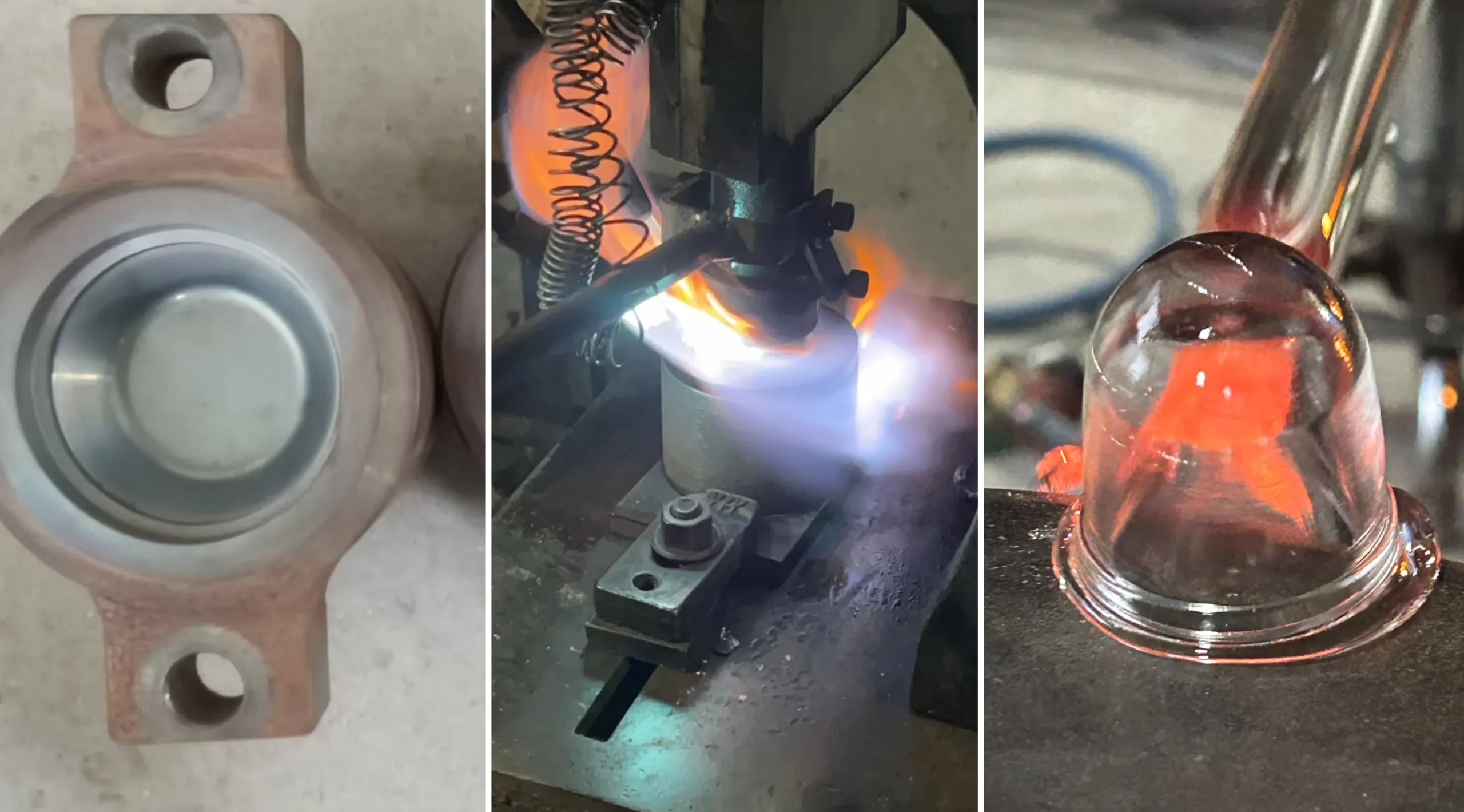
BO-Glass redesigned the mould with a variable draft angle: 2° on the straight side areas for better release, and 0.5° near the optical face where the dome needed to sit flush against a gasket.
This allowed the glass to release more cleanly without sacrificing the sealing surface.
Shrinkage Compensation
Borosilicate glass shrinks during cooling, so the mould cavity could not simply be made to final size.
After measuring the first test results, BO-Glass re-cut the mould cavity with shrinkage compensation. The cavity was enlarged by about 0.4% in every dimension to account for cooling shrinkage.
After this correction, the parts came out much closer to the required final dimensions.
This kind of adjustment is one reason customers choose BO-Glass for difficult glass components. We do not stop at the first failed trial. We measure, adjust, and stabilize the process.
Uniform Heating and Controlled Annealing
Edge cracking came from uneven cooling. The thin edges cooled faster than the thicker center, creating internal stress.
To solve this, BO-Glass added heating cartridges around the mould to keep the temperature more uniform during pressing.
After ejection, the parts were moved into a controlled annealing process. They were held at 550°C for 20 minutes and then cooled slowly.
This removed internal stress and eliminated the edge cracking problem.
For rugged protective sight glass domes, annealing is not optional. It is what allows the part to survive real use.
DLC-Coated Mould Surface
Sticking was another difficult problem.
BO-Glass tested several release methods, including boron nitride, graphite, and mica.
Some worked for a few shots but did not stay stable.
The final solution was a diamond-like carbon coating on the mould surface. DLC coating reduced friction, improved release, and extended mould life.
We also reduced the press pressure from 40 kN to 28 kN. The lower pressure still filled the shape properly, but it avoided forcing the glass into tiny mould undercuts that made release harder.
This combination gave us smooth release and stable surface quality over long production runs.
Optical and Mechanical Validation
BO-Glass tested each production batch to confirm both optical and mechanical performance.
Transmission was measured at 550 nm. The borosilicate domes consistently delivered more than 92% transmission, even after a 500-hour UV aging test.
For impact resistance, we dropped a 1 kg steel ball from 1.2 meters onto the dome. The glass survived 50 drops without cracking.
For thermal shock, the domes were moved from 100°C water into 0°C ice water. No failures occurred.
For dimensional accuracy, we used a CMM to measure outer diameter, thickness, and flatness. Final production held outer diameter to ±0.04 mm, thickness to ±0.05 mm, and flatness better than 0.05 mm across an 80 mm diameter.
The Result
The client tested the BO-Glass domes in their own laboratory and confirmed that every requirement was met.
Compared with their previous supplier’s rejection rate of around 50%, BO-Glass reduced the rejection rate to under 5%.
The domes also performed better in field trials. One airport in Scandinavia reported no failures after three winters, which was a major improvement over the client’s previous sight glass domes.
After visiting our production line and seeing the parts release cleanly from the mould, the client placed a standing order for 2,000 pieces per month.
They have also asked BO-Glass to develop a larger 120 mm version for a new marine radar project.
For the client, this project provided more than a glass dome. It gave them a protective dome they could install with confidence in airport, marine, and industrial environments.
Why Choose BO-Glass?
BO-Glass helped the client solve a problem that involved much more than glass clarity.
The part had to resist impact, thermal shock, UV exposure, chemical environments, and long-term outdoor use. It also had to fit existing housings, seal properly, and remain affordable for volume production.
With high-borosilicate glass rod, hot pressing, mould redesign, shrinkage compensation, DLC coating, controlled annealing, CMM inspection, UV aging, impact testing, and thermal shock validation, BO-Glass delivered a rugged sight glass dome that could survive real harsh environments.
Our strength is not only producing glass domes. It is understanding why protective glass fails, then building the process around solving those failure points.
For explosion-proof lighting, airport lighting, industrial sensors, marine equipment, and outdoor safety systems, BO-Glass can develop custom sight glass domes, optical domes, and dome lenses that stay clear, fit accurately, and perform when the environment is unforgiving.
Contact Us
Your feedback fuels our growth, and your questions drive our solutions.
We value your feedback, inquiries, and suggestions. Please feel free to get in touch with us
General inquiries
Please contact us via sales@bo-glass.com, and we will reply to you as soon as possible.
Interested to work with us
Drop your resume at info@bo-glass.com
and we will get back to you shortly.
We uses the contact information you provide to us to contact you about our relevent content, products, and services.