
Precision Hot-Moulded B270 Glass Lenses
For Modern LED Lighting
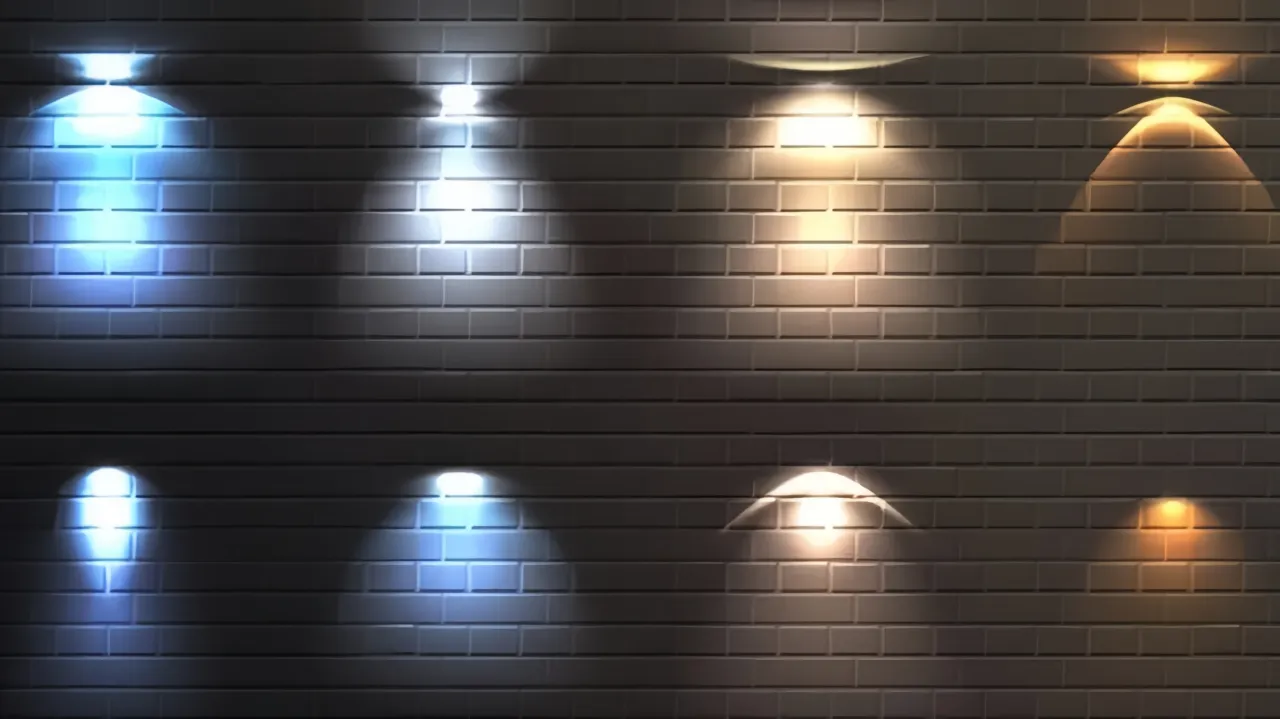
Precision Hot-Moulded B270 Glass Lenses
The Challenge
The client’s original lens was made by cutting, grinding, and polishing each optical surface one by one.
This process delivered accurate results, but each lens cost more than €50 and took around six weeks to produce. For a lighting product planned for thousands of units, that cost structure was not practical.
The technical requirement was also demanding. The lens needed an aspheric optical surface, not a simple spherical curve. If the surface shape shifted by only a few microns, the beam angle could move away from the target and create visible lighting problems.
For museum and retail lighting, beam quality matters. A hard edge, uneven fall-off, or small optical error can affect how artwork, displays, and interior spaces are seen.
The lens also had to fit into a plastic holder. The cylindrical outer diameter needed to stay within ±0.1 mm. If the lens was too small, it could loosen. If it was too large, it could jam during assembly.
The client needed a way to reduce cost without sacrificing optical quality.
Our Solution
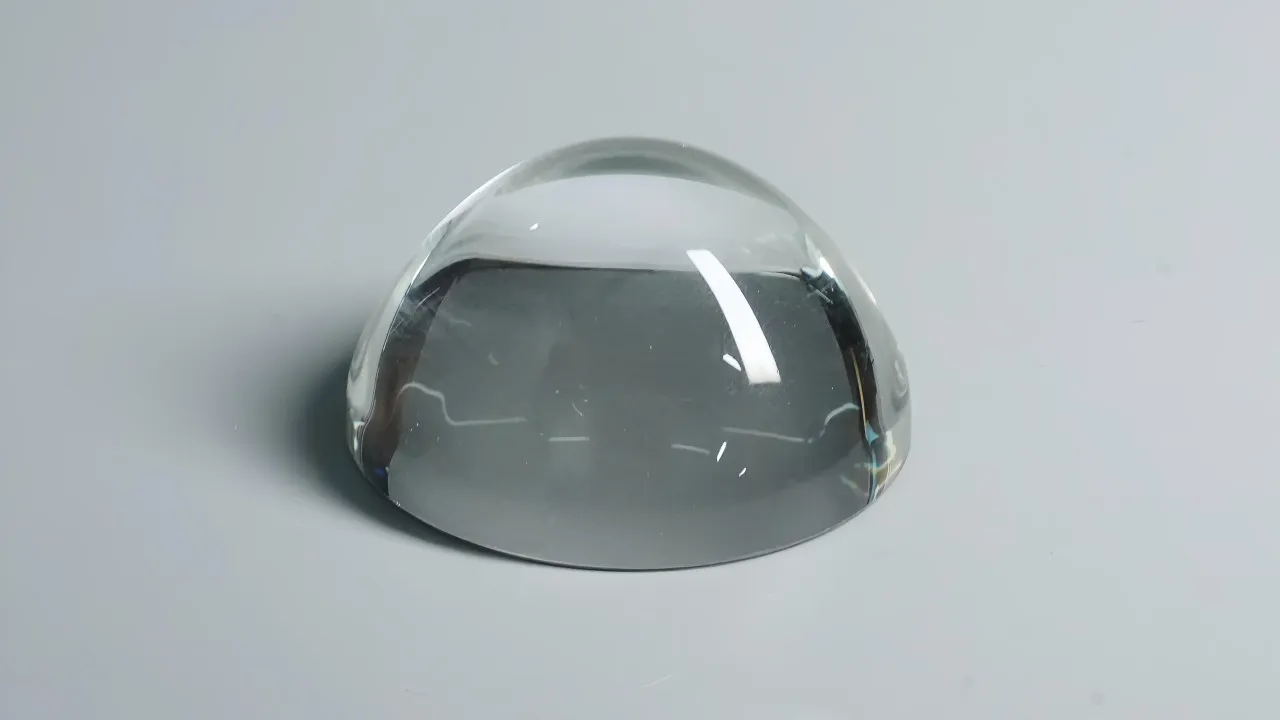
BO-Glass developed a precision hot-moulded B270 glass lens solution.
Instead of treating hot moulding as a simple low-cost replacement, we treated it as an engineering project. The goal was to reproduce the aspheric optical surface accurately, control shrinkage during cooling, protect the lens from internal stress, and make the process repeatable for volume production.
Choosing B270 Optical Glass
At the beginning, we compared high-borosilicate glass and B270 optical glass.
High-borosilicate glass offers excellent toughness and heat resistance, but this LED downlight did not operate under extreme temperature conditions. For this lens, optical replication and moulding efficiency were more important.
B270 was the better choice because it has strong optical clarity, good transmission, and a lower softening point. This allowed the glass to flow more effectively during hot pressing, while also reducing press temperature, improving mould life, and supporting faster cycle times.
BO-Glass recommended B270 after comparing transmission curves, thermal expansion data, and production feasibility with the client.
Aspheric Surface Accuracy
The most difficult part of the project was the aspheric surface.
An aspheric lens surface is mathematically defined. A small error in the mould can change the final beam angle and affect the light distribution. In cold grinding, operators can measure and adjust the surface during processing. In hot moulding, the mould must already include compensation for glass flow, shrinkage, and cooling distortion.
BO-Glass spent about three months on simulation using finite-element software to model glass flow and thermal gradients.
The first mould produced lenses with surface errors around ±8 microns. That was not enough for the client’s requirement. After adjusting the mould curvature based on the shrinkage pattern, we brought the surface error down to ±2 microns, within the client’s ±3 micron specification.
Precision Hot Moulding
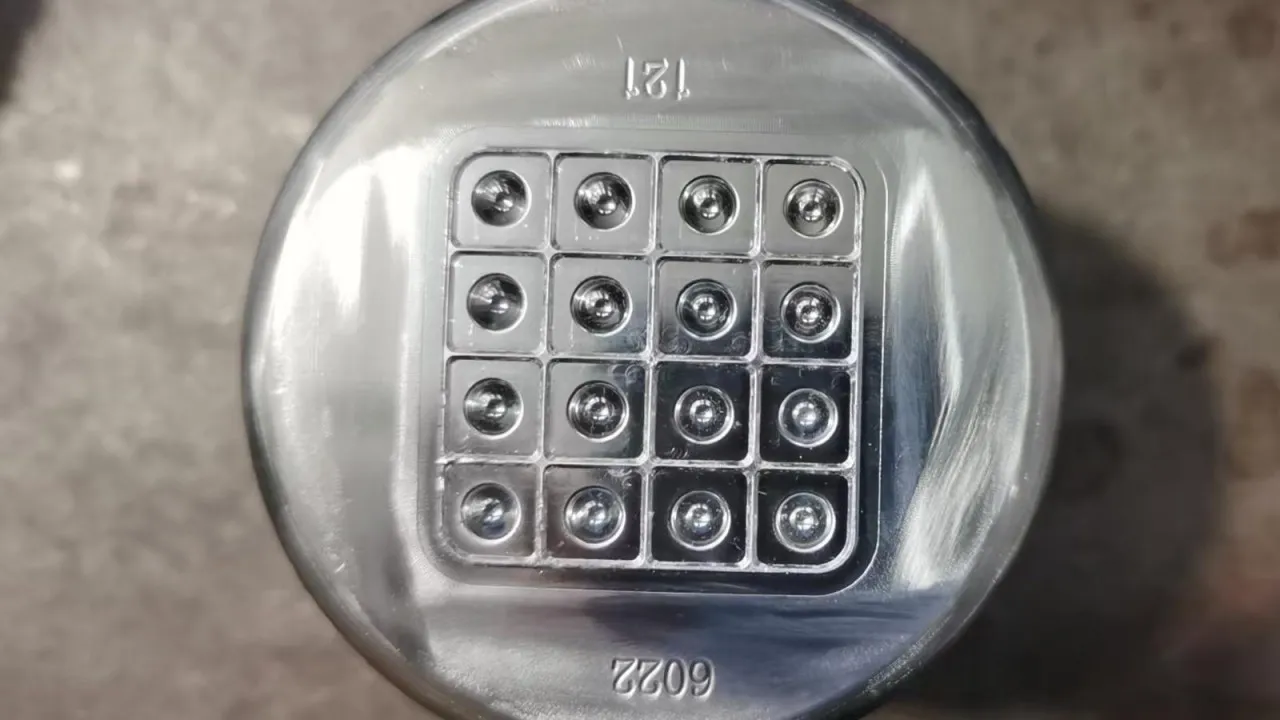
We used a special tungsten-carbide alloy mould designed for repeated high-temperature pressing.
The mould was built to reproduce the complex optical curve while maintaining surface quality during repeated production cycles. This allowed BO-Glass to move the lens away from expensive cold grinding and into a more scalable hot-moulded process.
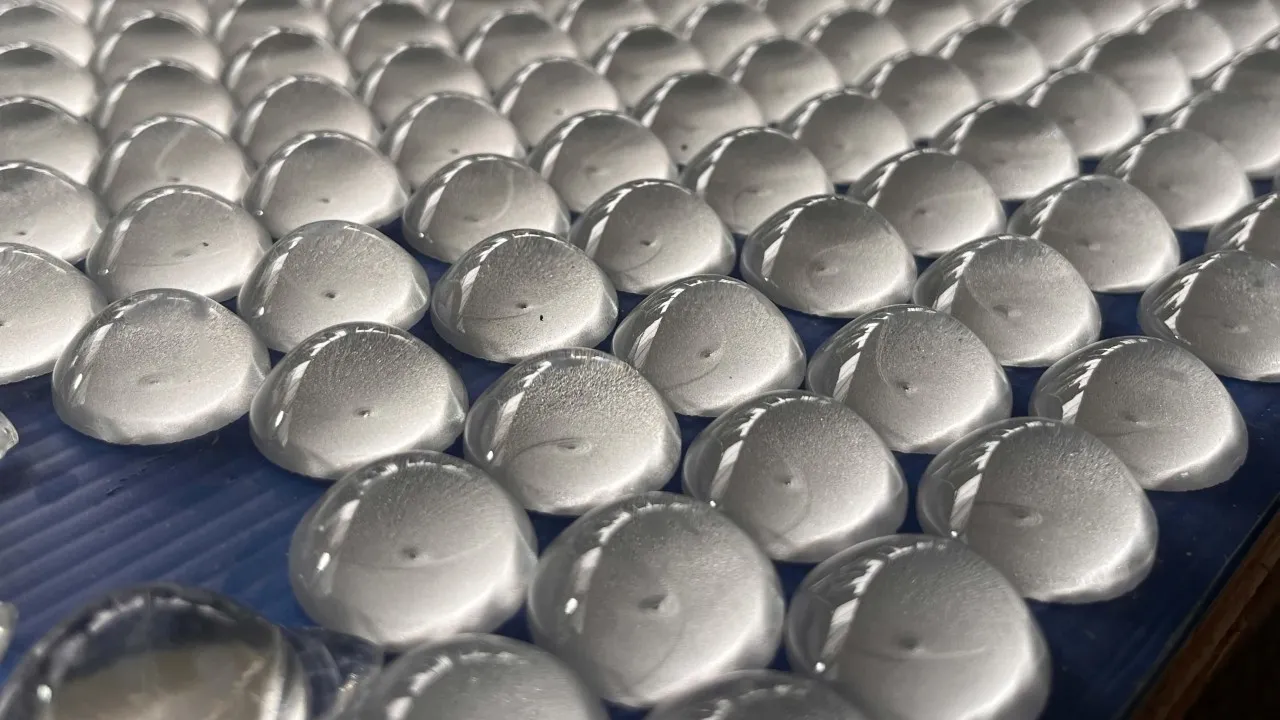
For volume production, we used a 4-cavity mould. Each press cycle produced four lenses, with a cycle time under two minutes.
This was the key to reducing the unit cost while keeping the lens commercially viable for a high-volume LED lighting product.
Dimensional Control and Annealing
Besides the optical surface, the lens also needed accurate mechanical dimensions.
The outer diameter had to stay within ±0.1 mm so the lens could snap securely into the plastic holder without looseness or assembly problems.
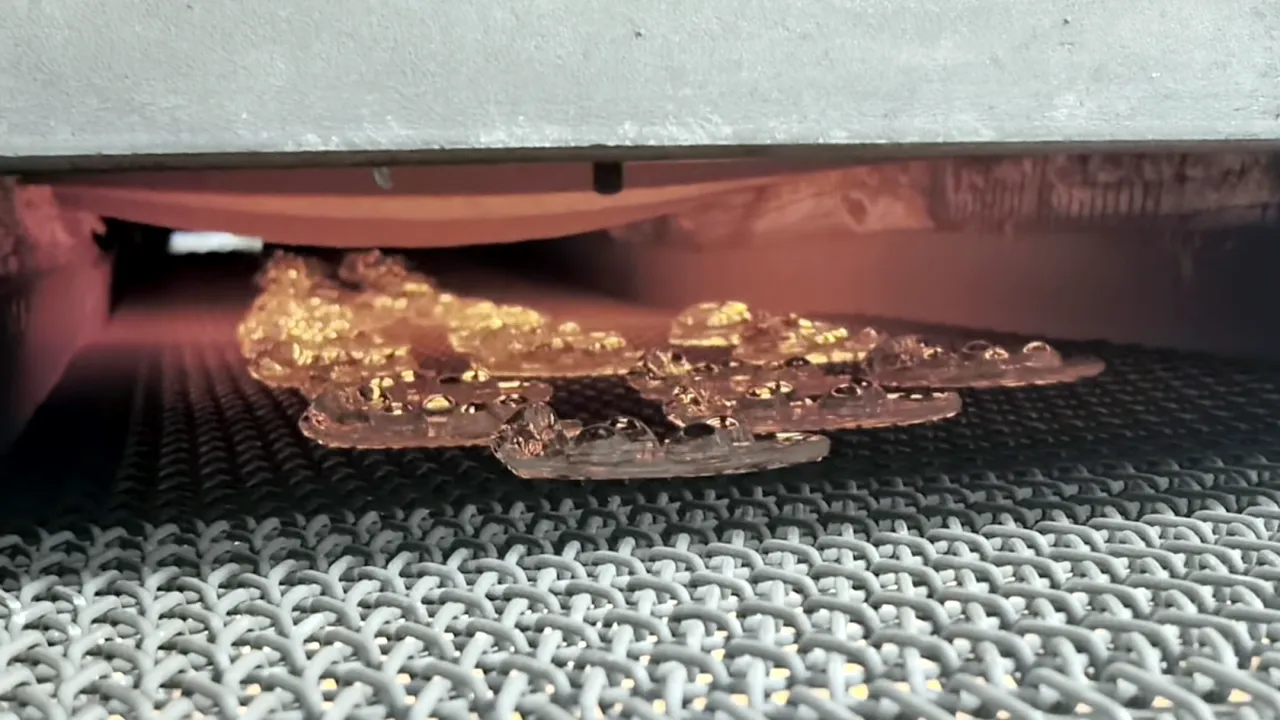
We controlled this by using a precision-ground mould cavity and keeping press temperature within ±2°C. After pressing, each lens went through a 4-hour annealing process to slowly release internal stress and reduce the risk of warping.
This step helped protect both optical performance and mechanical fit.
Quality Control
BO-Glass checked each production batch using both dimensional and optical testing.
We used a profile projector to measure outer diameter and thickness at multiple angles. We also tested sample lenses by mounting them onto LEDs, projecting the beam onto a screen, and measuring the light pattern with a goniometer.
This gave us a real performance check, not just a drawing-based inspection.
We also performed thermal shock testing by moving lenses from 85°C water into 20°C water. The B270 lenses passed without cracking.
For BO-Glass, this is where real value appears: we do not only make a glass part. We verify whether that part works in the customer’s final lighting system.
The Result
The client first received 50 sample lenses for optical testing.
They measured the beam profile, transmission, and thermal stability in their own system. The lenses passed the required tests, so the client placed a 500-piece trial order.
After six months of field use, the client reported zero failures.
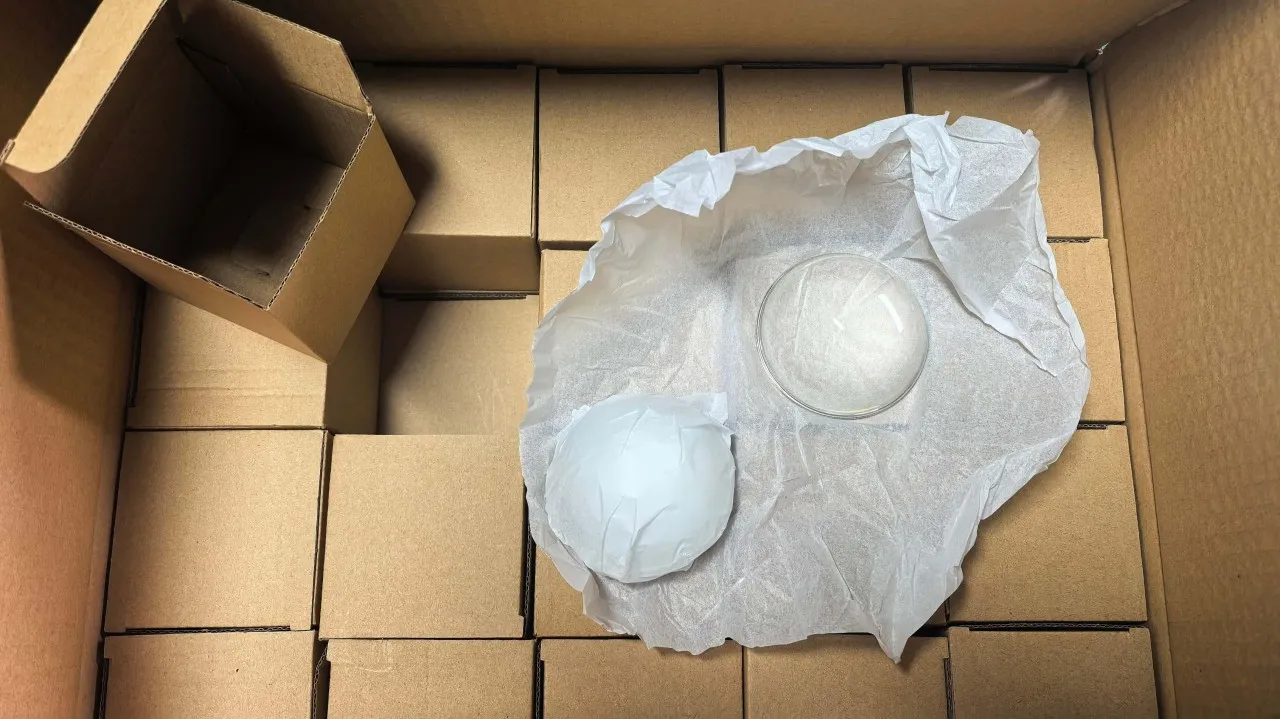
In volume production, the hot-moulded lens cost dropped from more than €50 per piece to around €8 per piece. Lead time also improved because the process no longer depended on grinding and polishing every surface one by one.
The client now buys these lenses from BO-Glass for the original downlight and has expanded cooperation to two other lighting product lines. Their own customers also responded well to the consistent beam quality, and the client’s lens orders have continued to grow.
For the client, this project proved that precision does not always have to mean high cost.
Why Choose BO-Glass?
BO-Glass helped the client solve a difficult balance: optical accuracy, production cost, lead time, and repeatable quality.
With B270 optical glass, precision hot moulding, aspheric mould compensation, controlled annealing, dimensional inspection, beam angle testing, and scalable mould design, we turned a costly lens into a practical production component.
Our advantage is not only that we can make glass lenses. It is that we understand how to choose the right process for the customer’s business goal. Sometimes cold grinding is necessary. Sometimes hot moulding is the smarter path.
For lighting manufacturers facing high lens costs, long lead times, or difficult optical requirements, BO-Glass can help develop custom glass lens solutions that are accurate, repeatable, and commercially viable.
Contact Us
Your feedback fuels our growth, and your questions drive our solutions.
We value your feedback, inquiries, and suggestions. Please feel free to get in touch with us
General inquiries
Please contact us via sales@bo-glass.com, and we will reply to you as soon as possible.
Interested to work with us
Drop your resume at info@bo-glass.com
and we will get back to you shortly.
We uses the contact information you provide to us to contact you about our relevent content, products, and services.