
Custom High-Borosilicate Glass LED Studio Light Diffuser Covers
It’s not just a protective cover.
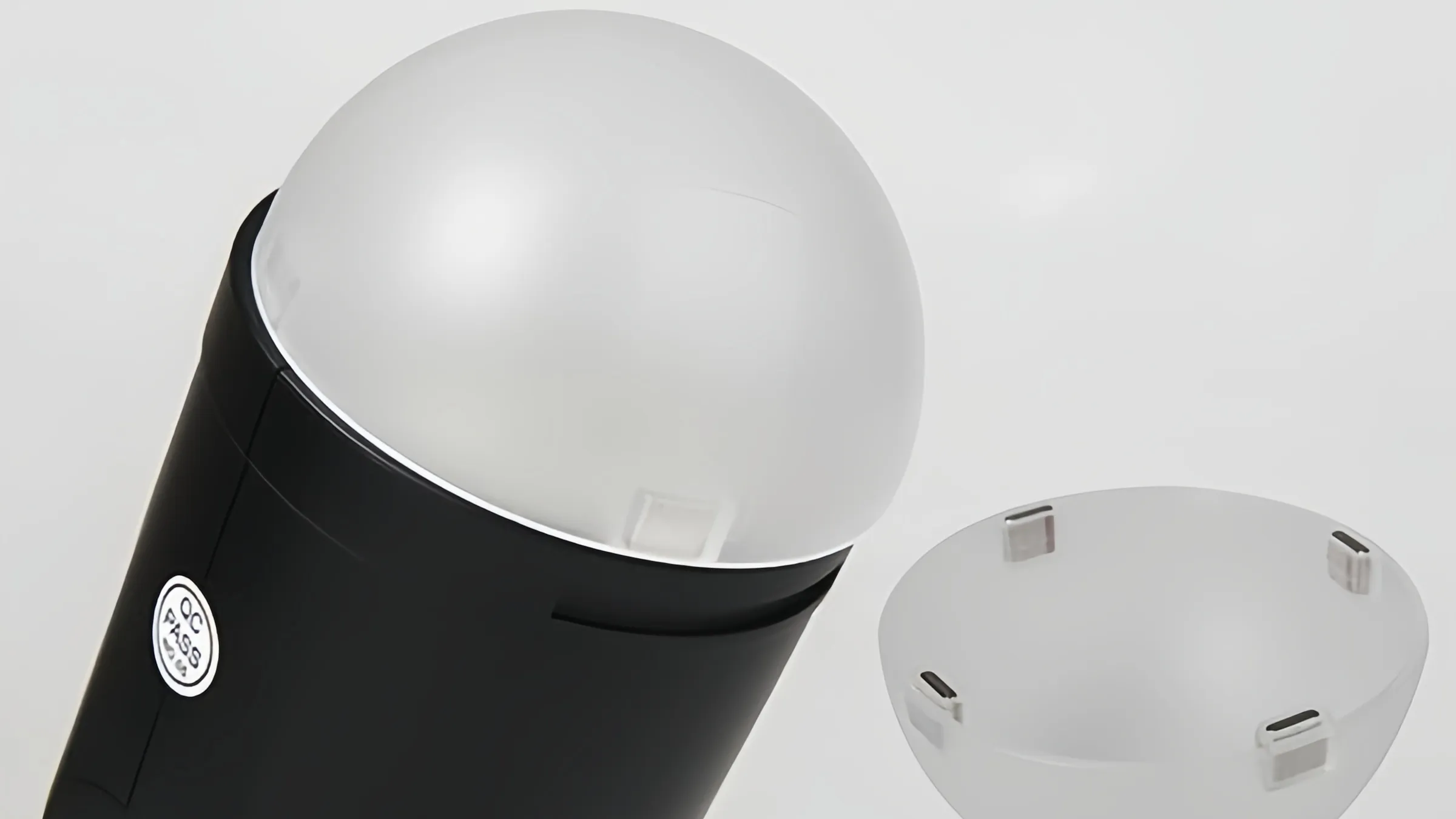
The client needed custom high-borosilicate glass diffuser covers for high-power LED studio lights. The covers had to protect the LED module, create a soft and uniform light output, and maintain stable performance during long working hours.
Custom High-Borosilicate Glass LED Studio Light Diffuser Covers
The Challenge
The client had tried standard glass covers before, but they kept running into two major problems.
The first issue was heat resistance. During long studio sessions, the LED array could reach surface temperatures of around 150-200°C. Ordinary soda-lime glass was not stable enough for this environment. After repeated use, the covers could develop micro-cracks, yellowing, or deformation.
The second issue was uneven light diffusion. Some sandblasted surfaces looked acceptable before assembly, but once the LED was turned on, the light showed visible hotspots and uneven brightness. For professional photography equipment, this kind of inconsistency directly affected the lighting quality.
Fit was another critical requirement. The diffuser cover had to match the precision-machined metal frame of the LED housing. The outer diameter, inner step, and thickness all had to stay within tight tolerance so the glass could sit securely against the rubber gasket and retaining ring without looseness, vibration, or assembly stress.
Our Solution
BO-Glass developed a custom high-borosilicate glass diffuser cover solution based on the client’s LED housing structure, optical requirements, and assembly process.
High-Borosilicate Glass for Heat Stability
We selected high-borosilicate glass because of its low thermal expansion, high softening point, and strong resistance to thermal shock.
Compared with standard glass, high-borosilicate glass is much more stable under repeated heating and cooling. This made it suitable for high-power LED studio lights that may run for long periods during photography or video production.
The material also offered high visible light transmission before sandblasting, helping the diffuser cover maintain brightness while still softening the LED output.
Hand-Blown Forming and Precision Cutting
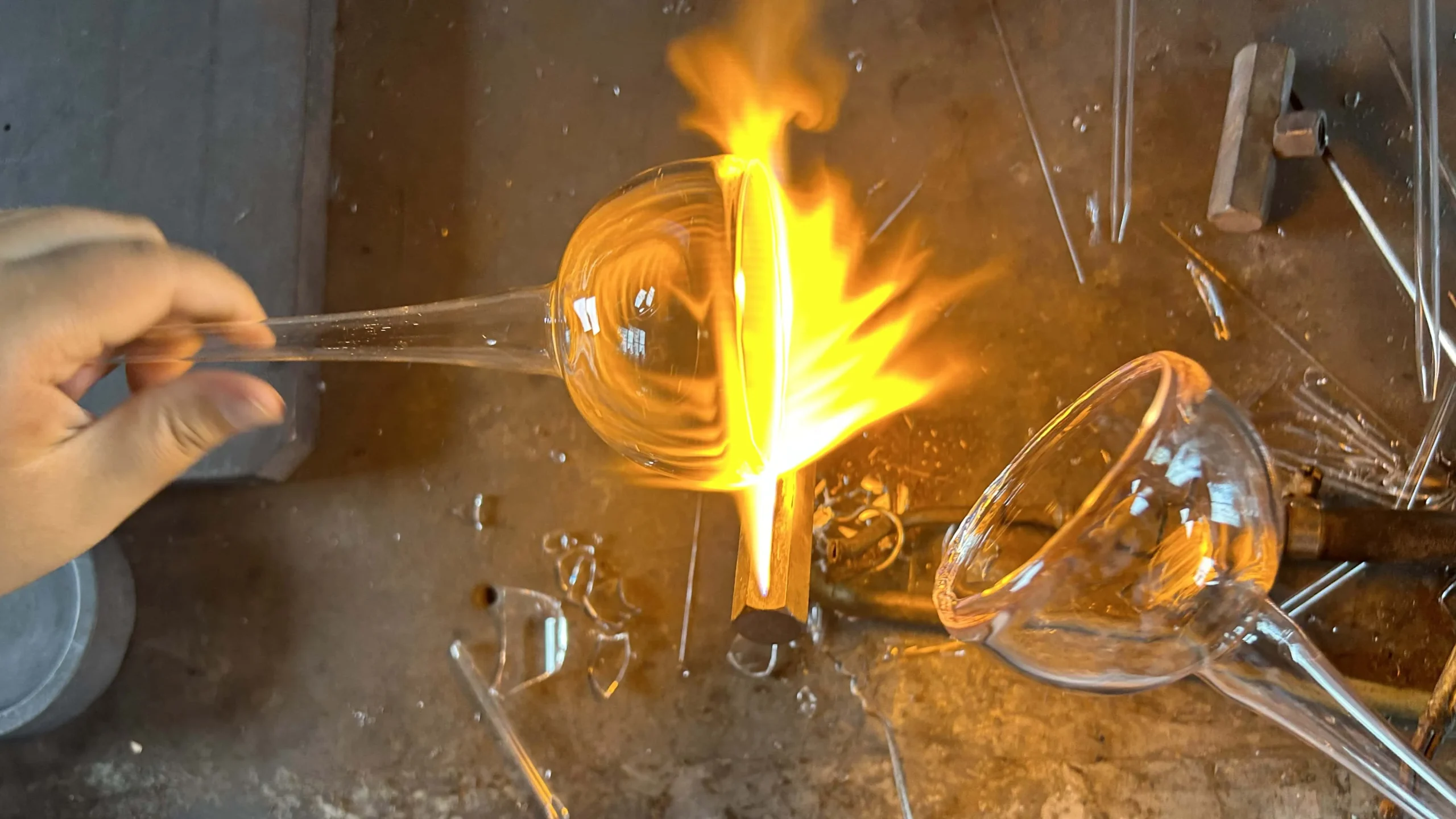
The diffuser covers were formed from high-borosilicate glass tubing. Our experienced glass workers heated the tubing, shaped it with custom tooling, and cut each piece to the required size.
This process allowed us to control the basic form while keeping enough flexibility for small design adjustments. For a custom studio light component, this was important because the glass had to match the client’s housing structure instead of forcing the client to redesign the fixture around a standard cover.
Hand Chamfering and Edge Profiling
After forming and cutting, each cover went through hand chamfering and edge profiling.
This step was critical because small chips or sharp edges can become weak points during thermal cycling. Our technicians used diamond grinding tools and water-cooled wheels to smooth the edge, control the profile, and reduce the risk of stress cracks.
The goal was not only to make the part look clean, but also to improve long-term reliability inside the LED light housing.
Controlled Sandblasted Diffusion Finish
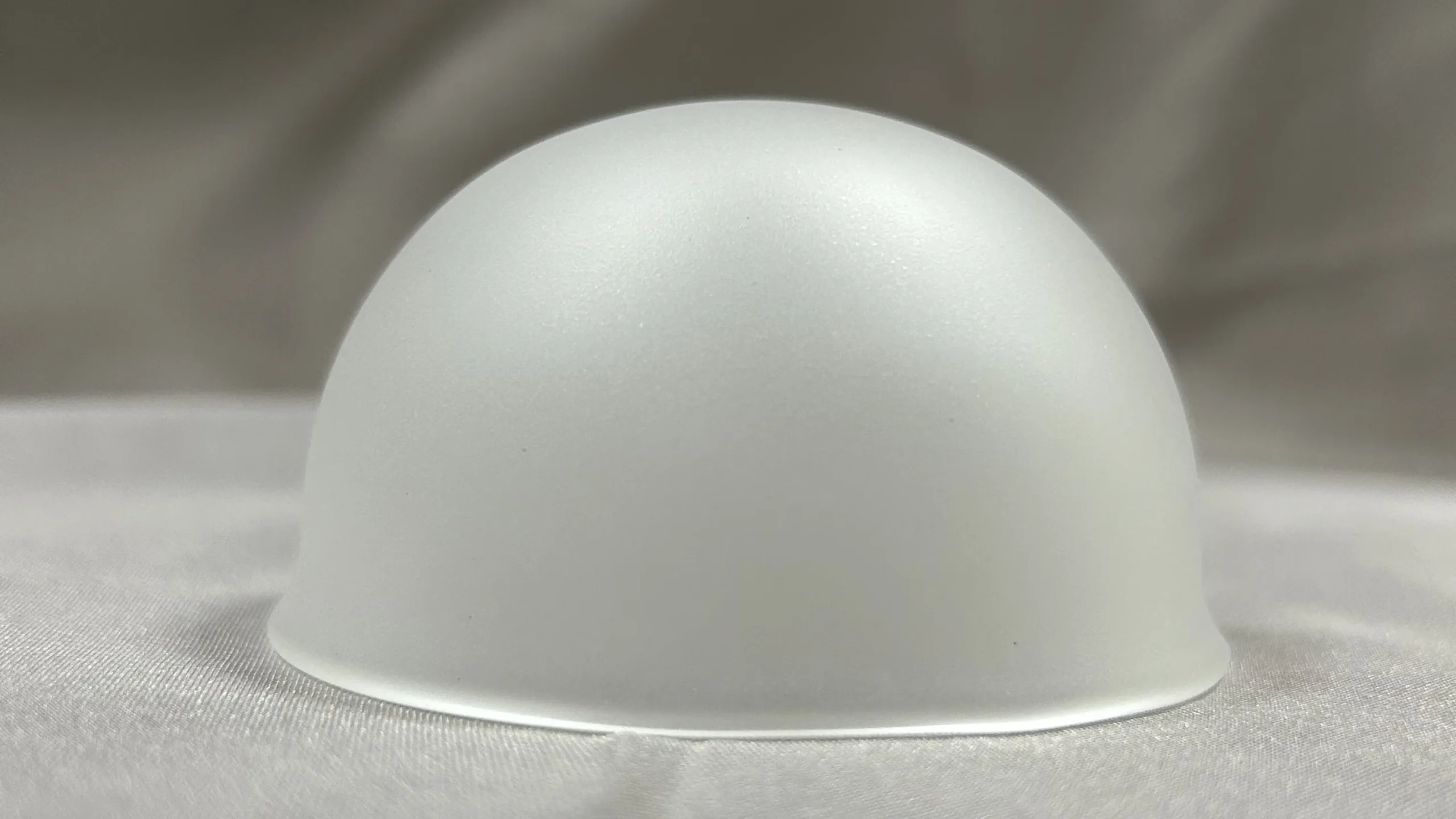
To create soft and uniform light diffusion, we applied a controlled sandblasted diffusion finish to the glass surface.
The process used 220-mesh alumina media under controlled pressure. Instead of relying on a rough, uneven surface treatment, our workers rotated and handled the covers carefully during sandblasting to keep the matte surface consistent across the light-emitting area.
The sandblasted diffusion finish helped reduce glare, soften direct LED brightness, and create a smoother lighting effect. Surface roughness was controlled around Ra 1.2-1.6 um to support stable diffusion while keeping light loss within the client’s target range.
Dimensional Inspection
Because the diffuser cover had to fit into a precision-machined metal frame, dimensional control was a key part of the project.
We checked the outer diameter, inner step, and thickness using dedicated inspection tools. Critical fit dimensions were measured at multiple positions, and only parts within the required ±0.10 mm tolerance were accepted for shipment.
This helped the client reduce assembly problems caused by loose fit, excessive tightness, or vibration after installation.
Thermal and Optical Validation
Before shipment, each batch was checked for both durability and light performance.
For thermal shock testing, diffuser covers were heated to 200°C and then immersed in 25°C water. No cracking or visible change was allowed.
For light performance, we verified that the sandblasted diffusion finish created a smooth light distribution without obvious intensity peaks. The result helped the client achieve a wide 180° diffusion effect while keeping total light transmission above the required 85% target.
The Result
The final high-borosilicate glass diffuser covers gave the client a more reliable solution for its professional LED studio lights.
The glass remained stable under high working temperatures. The sandblasted diffusion finish softened the LED output and reduced visible hotspots. The precise fit helped the cover sit securely inside the metal frame without vibration or assembly issues.
Compared with the client’s previous standard covers, the new diffuser covers helped extend service life, improve light uniformity, and reduce the risk of rejected parts during assembly.
For the client, this was not simply a glass cover. It became a functional optical component that protected the LED module, improved the final light quality, and supported the performance expected from professional studio lighting equipment.
Why Choose BO-Glass?
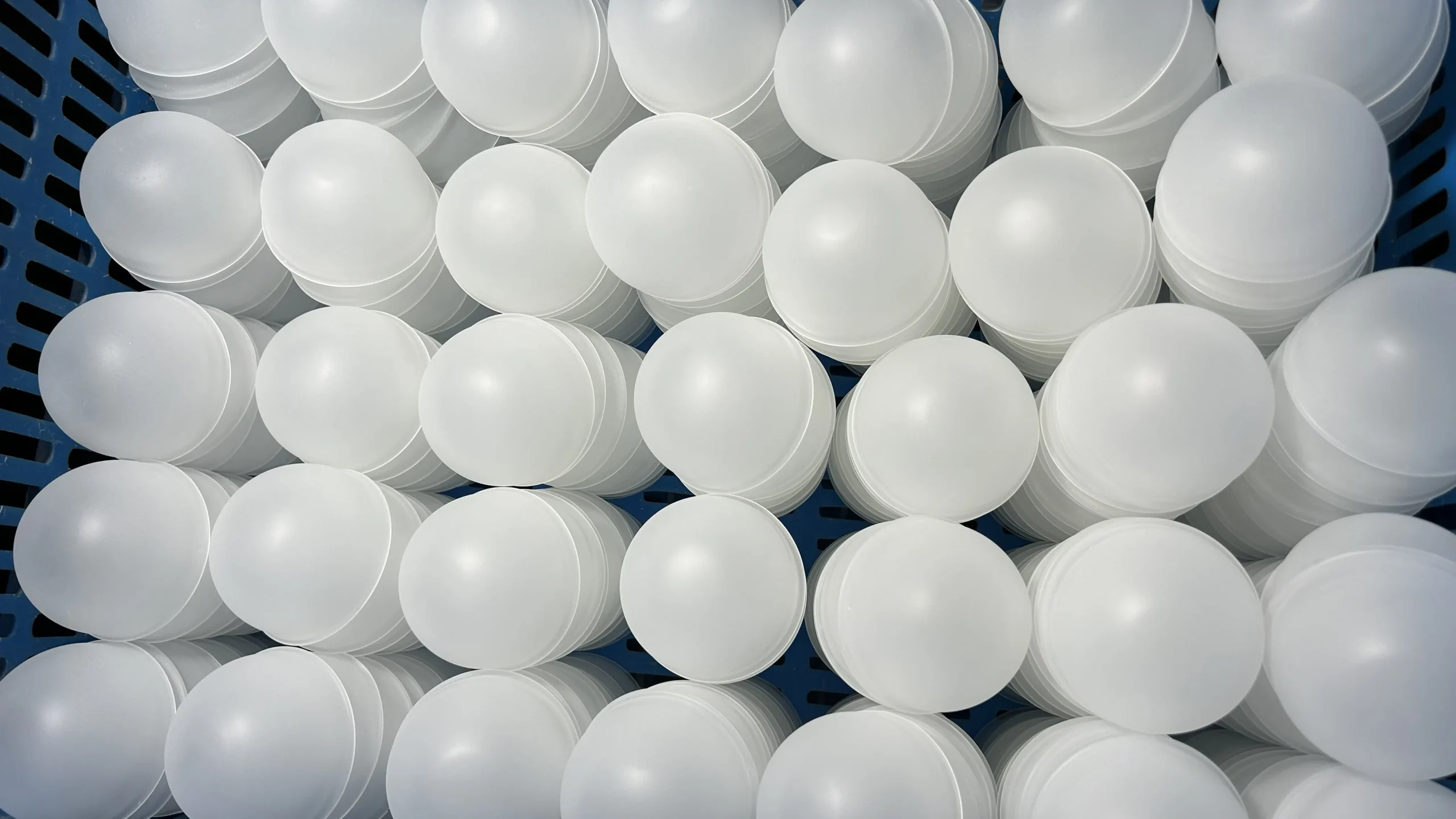
BO-Glass delivered custom high-borosilicate glass LED studio light diffuser covers that combined heat resistance, precise fit, and stable sandblasted diffusion.
With controlled forming, hand edge finishing, 220-mesh sandblasting, dimensional inspection, and thermal shock testing, we helped the client solve the problems of heat damage, uneven diffusion, hotspots, and assembly inconsistency.
For lighting manufacturers that need more than a standard glass cover, BO-Glass provides custom glass components built around real product performance, not just appearance.
Contact Us
Your feedback fuels our growth, and your questions drive our solutions.
We value your feedback, inquiries, and suggestions. Please feel free to get in touch with us
General inquiries
Please contact us via sales@bo-glass.com, and we will reply to you as soon as possible.
Interested to work with us
Drop your resume at info@bo-glass.com
and we will get back to you shortly.
We uses the contact information you provide to us to contact you about our relevent content, products, and services.