
Main methods of glass cutting
The main methods for cutting glass include high-pressure water cutting and mechanical cutting.
Waterjet cutting
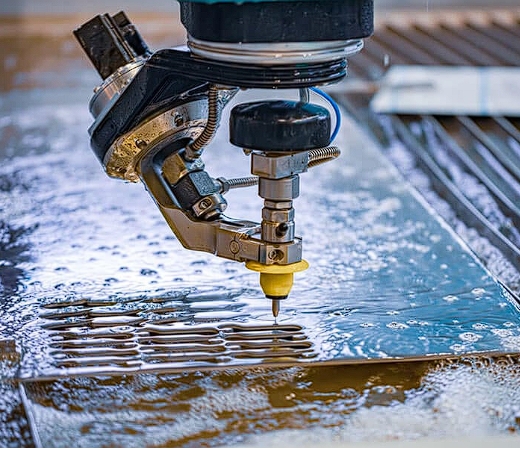
Waterjet cutting
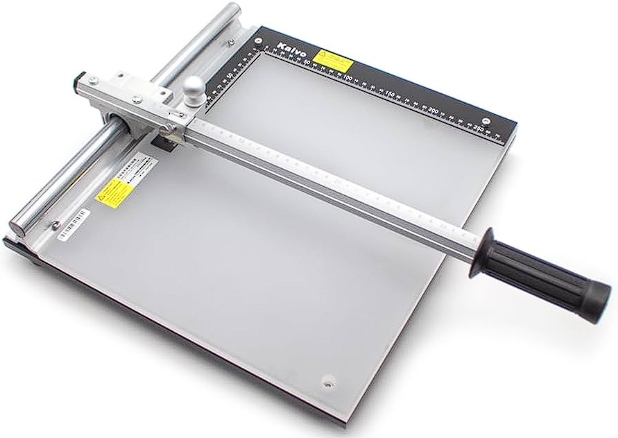
Manual glass cutting knife
Mechanical cutting
Manual cutting knife
Since the hardness of glass is very high, the early manual cutters were made by inlaying harder diamonds or artificial diamonds on brass and installing a handle to make a manual cutter. When cutting glass, hold the cutter, apply pressure to the glass surface at a certain angle with the diamond, and place the brass base against a ruler or template. The sharpness of the diamond and the high hardness of the edges form scratches on the glass surface, destroying the balance between the compressive stress in the vertical direction of the glass surface and the tensile stress in the middle, causing stress concentration in the glass. Then, apply pressure on both sides of the scratch on the glass surface, and the glass can be completely separated along the position of the scratch. The thicker the glass, the deeper the scratch to be cut, and the greater the pressure applied on both sides of the scratch when separating the glass.
Since artificial diamonds are expensive, they have been gradually replaced by high-hardness alloy materials with the improvement of metal smelting technology. The manual cutting knives currently used are all made of high-hardness alloys with a small wheel with an axial hole in the middle that can roll. The angle of the wheel rim is generally less than 120°. Applying a certain amount of pressure to the small wheel and rolling it on the glass surface to form continuous scratches can also separate the glass.
Manual cutting often uses some simple tools, such as glass cutters, push knife holders, rulers, templates, brushes, etc. Because the efficiency of manual cutting is too low, it is only suitable for small batches of glass cutting. In large-scale glass deep processing plants, it has been replaced by automatic cutting machines.
Automatic cutting machine
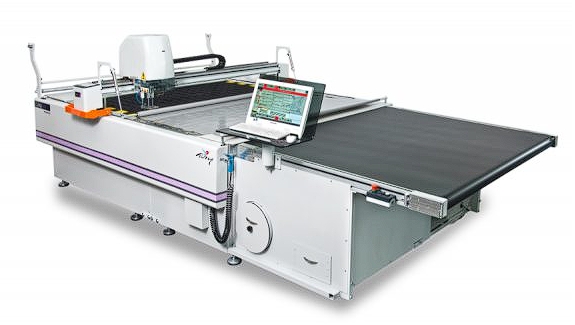
Automatic cutting machine
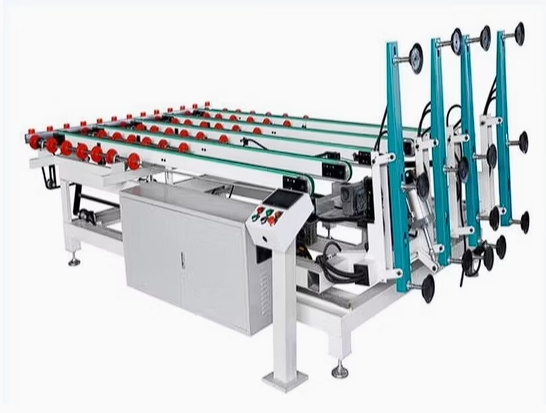
Unloading table
(1) Unloading table
The unloading table mainly comprises a hydraulic station, glass transmission roller, hollow system, oil cylinder, swing arm, and rubber suction cup. The working principle of the automatic unloading table of the cutting machine: When the automatic unloading table receives the control console signal, the hydraulic station works, the oil cylinder acts on the swing arm, and the swing arm rotates upward. When the swing arm is parallel to the original glass placed vertically and close to the glass, the suction cup on the swing arm is adsorbed on the glass. At this time, the vacuum pump starts to work, and the suction cup sucks the glass through a vacuum. After the suction cup reaches the set vacuum degree, the swing arm extracts the glass through the suction cup, so that the single glass is separated from other glasses. The swing arm flips and drops back to the initial position, and the suction cup deflates and blows air to release the glass. The glass is placed on the transmission roller and transported to the cutting table.
(2) Cutting table
The cutting table mainly comprises a cutting head, a cutting bridge, a conveyor belt, a positioning system, and a computer programming control system.
The conveyor belt is precisely positioned on the conveyor belt and the conveyor belt sends the original glass to be precisely positioned. The operator inputs the size and pattern to be cwhichhicher. The computer controls the servo motor to drive the cutting bridge and the cutting head. Any combination of movements on the cutting table causes the high-hardness cutting wheel installed on the cutting head to roll on the glass surface, forming continuous and uniform cuts of any shape. The size error of the cuts is generally required to be less than 0.5mm.
Generally, the pressure of the cutting wheel and the angle of the cutting wheel are different according to the thickness of the glass. The original glass is sent to the cutting table by the conveyor belt and is precisely positioned. The operator inputs the required cutting pattern into the computer, and the computer controls the servo motor to drive the cutting bridge and cutting head. The high-hardness cutting wheel installed on the cutting head rolls on the glass surface to form uniform and arbitrary-shaped cuts. The size error of the cuts is generally required to be less than 0.5mm.
Generally, the pressure of the cutting wheel and the angle of the cutting wheel are different according to the thickness of the glass. The thicker the glass, the greater the pressure applied by the cutting wheel to the glass surface and the greater the angle of the cutting wheel.
After cutting, the glass is transported to the breaking table by the conveyor belt.
(3) Breaking table
The breaking table consists of an air blower, a table, felt, a pneumatic connecting rod, a wooden top plate, etc.
The air blower is turned on, the glass is transferred to the breaking table, the air cushion holds up the glass, the staff moves the glass parallel to the middle of the top plate, the top plate is in an arc shape, the top plate pneumatic mechanism is started, the top plate is automatically positioned to break the glass. During the breaking process, the glass debris on the felt on the table should be removed at any time to prevent the glass from breaking.
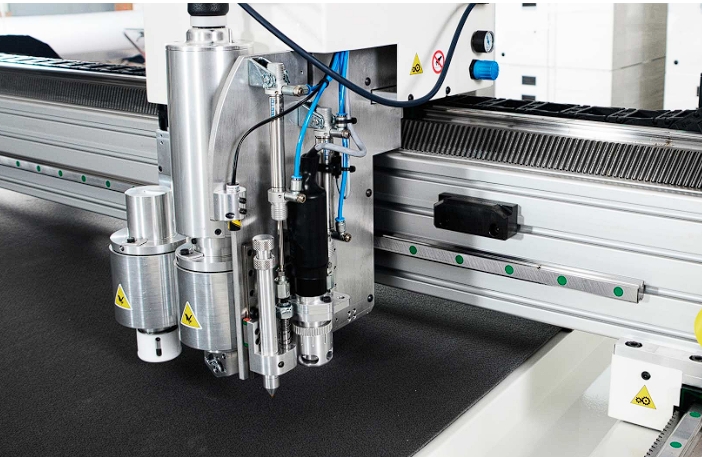
Cutting table
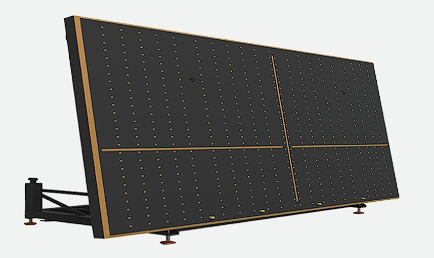
Breaking table
Flame cutting
In addition to the two main cutting methods mentioned above, flame cutting has its unique advantages in processing thick glass. There are several methods of flame cutting.
(1) Fusion
Fusion cutting is a method of using coal gas or other heat sources to cut off a certain part of the glass while melting it locally.
This method has been widely used in the manufacturing process of wine glasses and ampoule processing. Fusion cutting requires the flame to become a sharp flame through oxygenation. In order to make the glass melt better, high-heat-yielding fuel gas must be used.
(2) Rapid cooling
Rapid cooling is to heat the cylindrical glass rapidly in a narrow range along the circumference while rotating it, and contact the heated part with cooled cooling liquid to cut the glass with the help of thermal stress. The flame used for rapid cooling is a slit torch with hydrogen or city gas plus oxygen, and the cooling body is an object that is easy to cause the starting point of cracks, such as a grindstone, a metal round plate, etc. If the necessary heating time can be ensured, high-speed cutting can be achieved.
Explosion is a very familiar glass processing method. Use diamond or super-hard alloy to create a scratch on the glass, and then heat the damaged part, so that the crack expands and cuts. There are also methods that create a scratch during heating, and as the glass cools, the thermal stress causes the crack to expand and cut. The explosion can obtain the same mirror-like cut surface as the melting method.
(4) Laser processing
The method of melting and welding metal materials with high heat sources such as lasers, plasma jets, and electron beams can also cut glass.
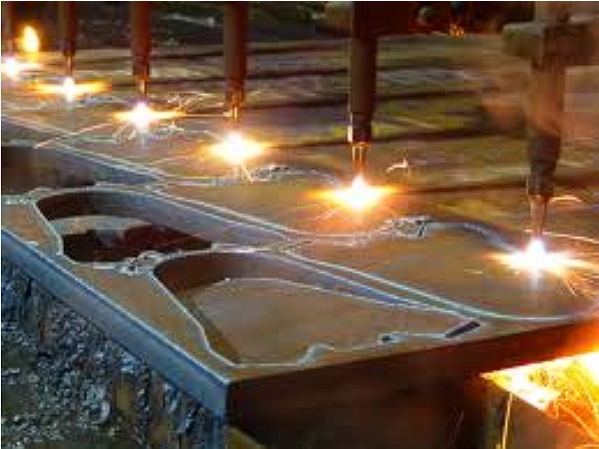
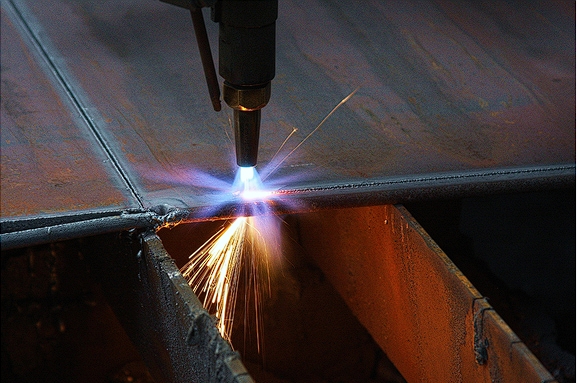
Horizontal laminated glass automatic cutting machine
The horizontal automatic cutting machine consists of two major parts: the cutting machine and the breaking machine. The structure of the former’s cutting table, cutting box, and other components is very similar to that of the glass automatic cutting machine. The characteristic of the cutting machine is that there are two installed on the upper and lower sides of the cutting table. The two cutting heads cut the upper and lower surfaces of the glass on the same vertical plane at the same time and direction, and the two knife marks are on the same vertical plane. There are two processes for breaking laminated glass: round breaking and hot breaking. The former’s breaking device is installed in the middle of the cutting table. The laminated glass with the knife marks is clamped on both sides of the force mold with plywood, and then the hydraulic device breaks the glass at the cut mark. The table is equipped with a stretching device. This stretching device pulls the glass apart at the break. The PVB film in the middle is broken, and the laminated glass is divided into two parts. Even for thick glass, the edges of the glass and the film are smooth and the size is precise.
This type of laminated glass automatic cutting machine can cut laminated glass with a film thickness of 4mm and a total thickness of 28mm, but it can only cut double-layer glass and is limited to straight-line cutting. Lifting equipment is often used to load large pieces of laminated glass onto the cutting table. When selecting equipment, it is necessary to consider equipping it with lifting equipment.
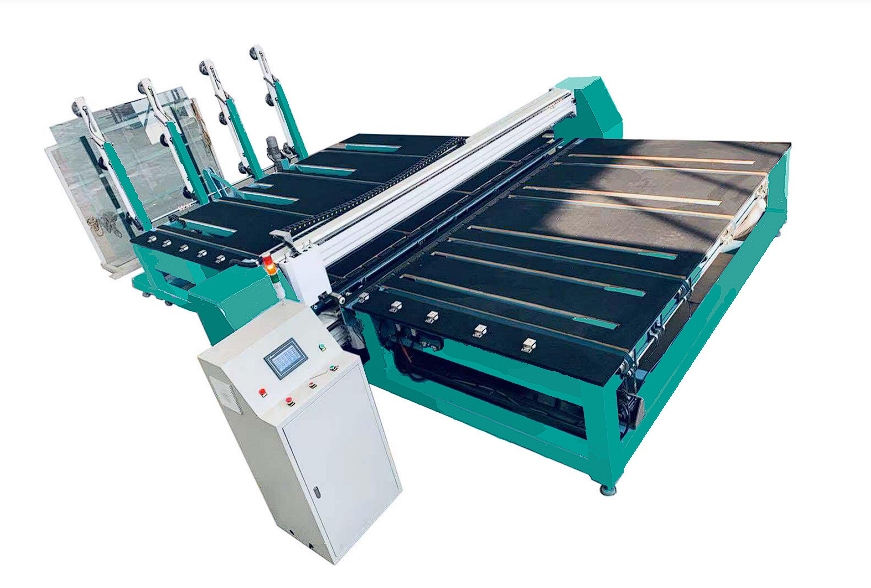
Horizontal laminated glass automatic cutting machine
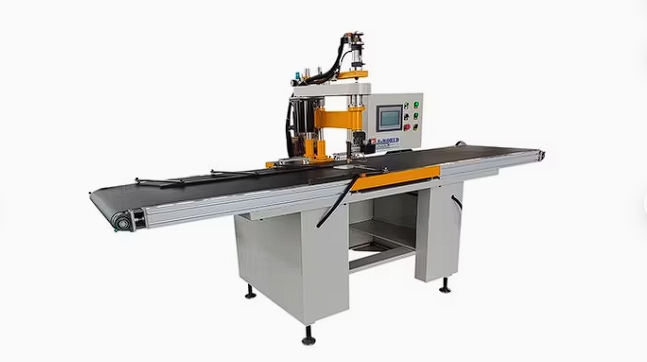
Glass Shape Cutting Machine
Glass Shape Cutting Machine
The airbox, fan cabinet, and electrical cabinet are made of steel and combined into a box structure. The fan cabinet houses a fan, which is connected to the air box and the workshop via pipes. A valve controls the airflow to create a consistent air cushion on the cutting table.
The feed rollers, coated with rubber, are mounted on the sides of the air box and assist in the smooth handling of glass. The cushion cutting table, located on top of the air box, consists of perforated aluminum plates, felt, positioning blocks, and rods. Air is forced through the small holes to create an air cushion that holds the glass securely in place for cutting.
Templates made of plywood are used to guide the cutting process. They are designed according to the required glass shapes and sizes and are mounted above the cutting table. The cutting arm, made of two aluminum sections, is connected to the template rack and can pivot, allowing the cutting head to move along the glass.
The cutting head holds the knife wheel, which cuts the glass as it rolls along the surface. The cutting head’s pressure is controlled by a handle, ensuring precise cuts. After cutting, the glass is moved to the breaking section for separation. This machine is known for its high precision, fast cutting speed, automatic layout optimization, and ease of maintenance, making it ideal for mass production of irregularly shaped glass.
Contact Us
Your feedback fuels our growth, and your questions drive our solutions.
We value your feedback, inquiries, and suggestions. Please feel free to get in touch with us
General inquiries
Please contact us via sales@bo-glass.com, and we will reply to you as soon as possible.
Interested to work with us
Drop your resume at info@bo-glass.com
and we will get back to you shortly.
We uses the contact information you provide to us to contact you about our relevent content, products, and services.