
What is the gas refining process for quartz glass?
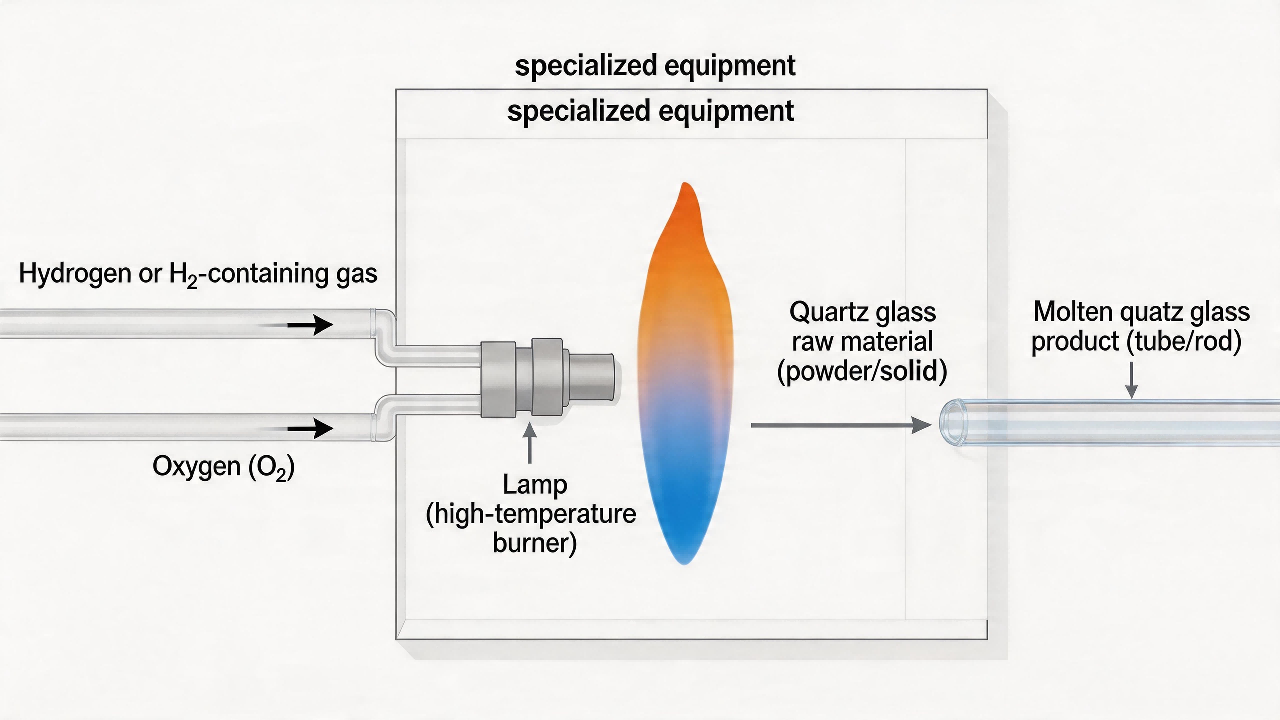
Powder gas refining directly into pipe or transparent crucible
Initially, large-diameter transparent quartz glass tubes and crucibles were produced by directly melting crystal powders using simple equipment. This process had the following features:
Advantages: Simple equipment, no need for secondary heating, lower comprehensive energy consumption.
Disadvantages: The resulting tubes had uneven dimensions and wavy surfaces.
Although this technique is largely obsolete, some manufacturers retain it for small batches or special products. The product quality heavily depends on the operator’s skill.
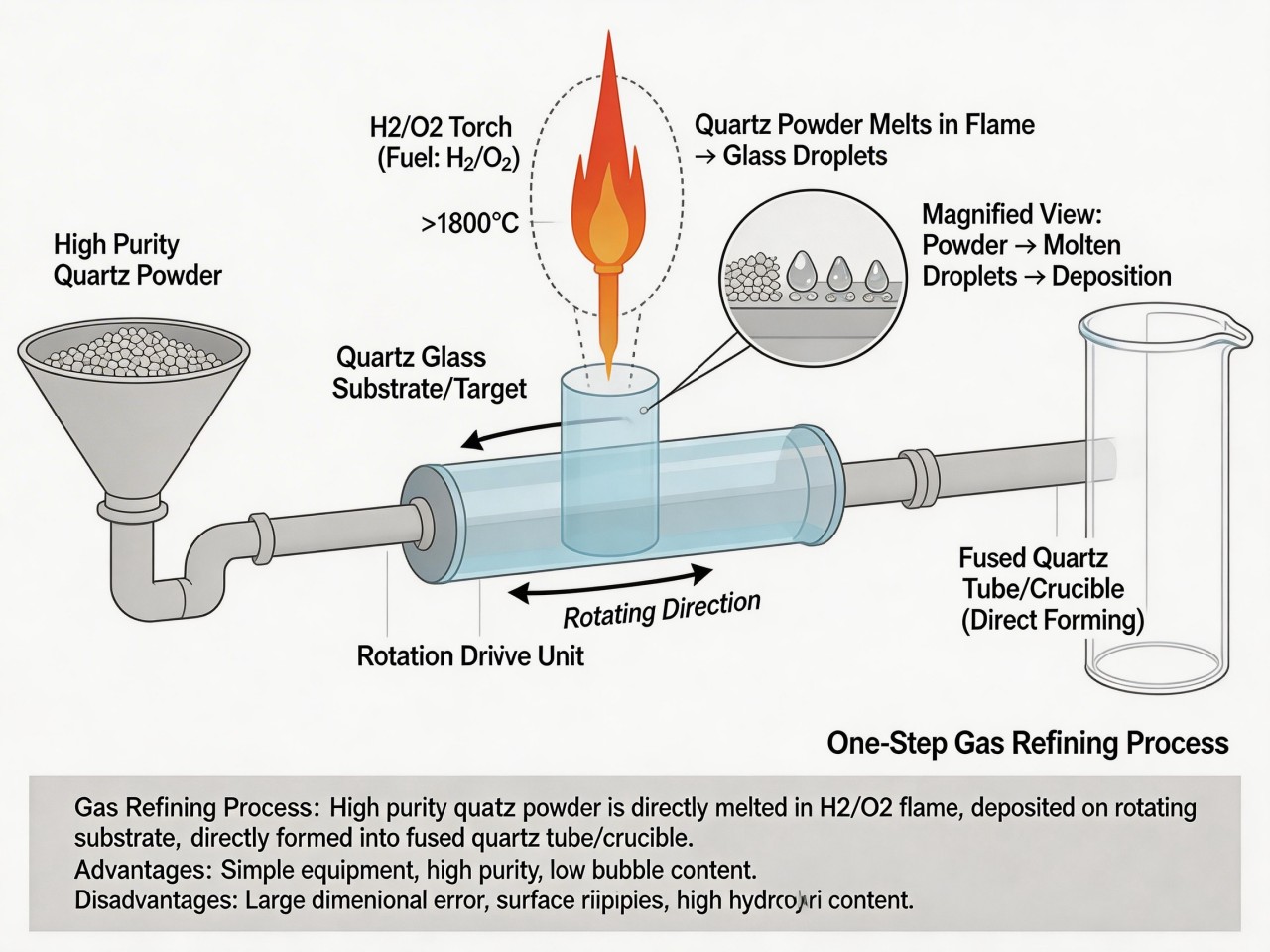
Vertical Quartz Glass Ingot-Making Process
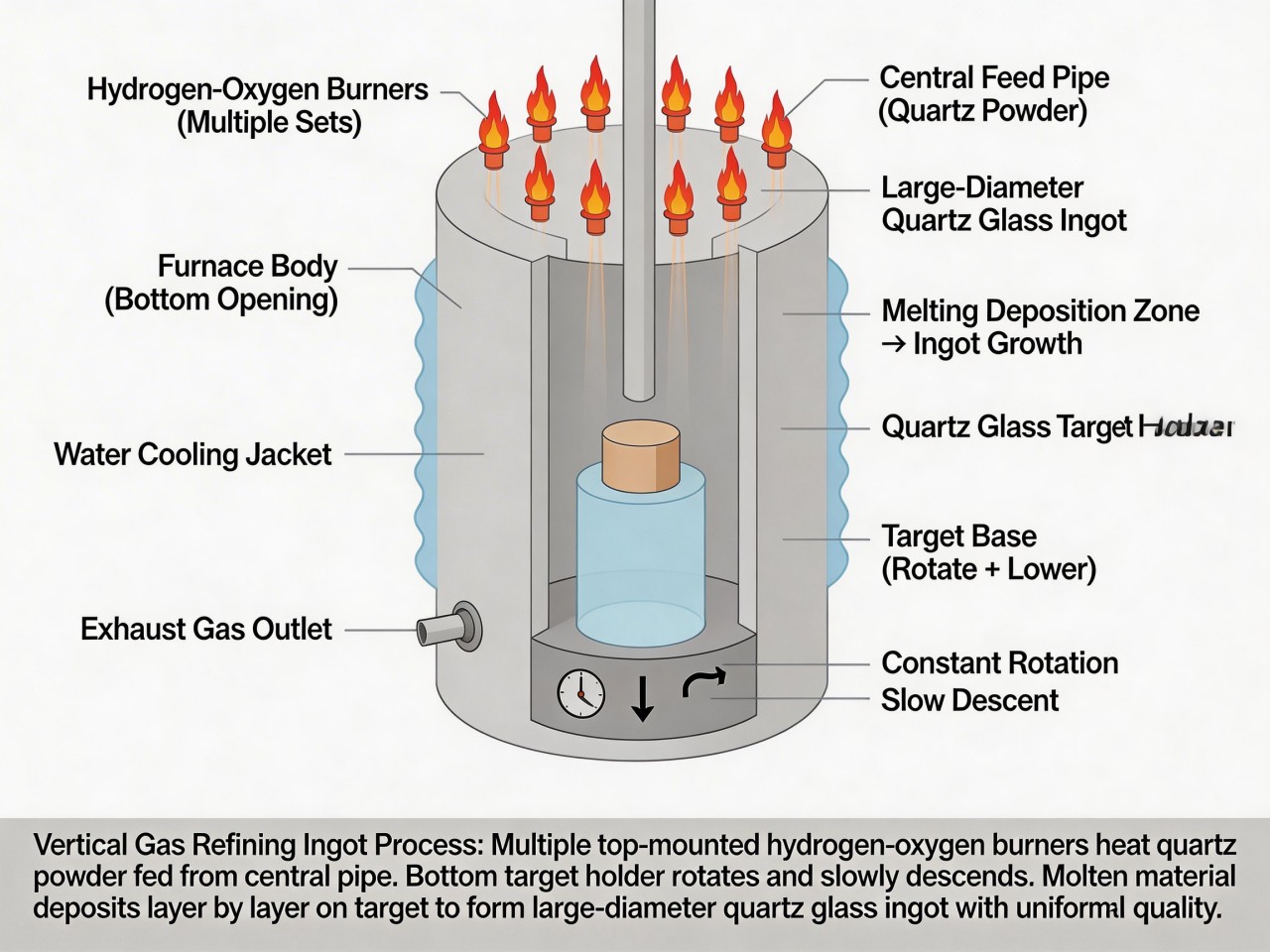
Principles of Vertical Ingot Making
Key process parameters include:
- Ingot Target Diameter (D) – Defines the size of the ingot.
- Temperature (T) – Comprising flame temperature (T₁), furnace temperature (T₂), and ingot surface temperature (T₃).
- Feeding Speed (M) – Determines material input.
- Descent Speed (V) – Ensures uniformity in the ingot shape.
- Gas Flow Rates (QH, Qo) – The ratio and flow of hydrogen and oxygen influence flame temperature and melting efficiency.
Process Control and Mathematical Model
Typical Parameters for a 200mm Diameter Ingot
- Regas Pressure: 0.6 MPa
- Drop Speed: 0.3 mm/min
- Furnace Temperature: 1600°C
- Oxygen Pressure: 0.6 MPa
- Feeding Amount: 20 g/min
- Hydrogen-Oxygen Ratio: ~2:1
- Furnace Mouth Diameter: 280 mm
Common Defects and Mitigation
Bubbles
| Chinese Bubble Standards | |||
|---|---|---|---|
| Bubble Diameter (mm) | Level 1 (Count) | Level 2 (Count) | Level 3 (Count) |
| 0.1–0.2 | 20 | 40 | 60 |
| 0.2–0.5 | 4 | 9 | 28 |
| >0.5 | 0 | 5 | 7 |
| German Bubble Standards | |
|---|---|
| Level | Bubble Diameter Range (mm²) |
| 0 | 0–0.03 |
| 1 | 0.03–0.10 |
| 2 | 0.10–0.25 |
| 3 | 0.25–0.50 |
| 4 | 0.50–1.00 |
| 5 | 1.00–2.00 |
| 6 | 2.00–4.00 |
| 7 | 4.00–8.00 |
| 8 | 8.00–16.00 |
Spot
| No. | Spot Color | Chemical Composition (Mass Fraction, %) | |||||
|---|---|---|---|---|---|---|---|
| Si | S | Cl | Ca | Fe | Al | ||
| 1 | Grayish White | 30.16 | 9.64 | 1.07 | 5.34 | 51.15 | |
| 2 | Grayish Brown | 39.76 | 2.56 | 3.31 | 52.02 | 1.14 | |
| 3 | Grayish Brown | 43.96 | 1.37 | 0.41 | 52.89 | 1.37 | |
| 4 | Grayish Brown | 45.49 | 52.91 | 0.75 | 0.85 | ||
| 5 | Black | 46.51 | 53.14 | 1.16 | |||
| 6 | Black | 45.96 | 52.86 | 0.35 | |||
Diameter expansion and contraction
Balancing Diameter and Quality
| Item | Furnace Temperature | Feed Rate | Descent Speed |
|---|---|---|---|
| Parameter Change | High | High | Fast |
| Parameter Change | Low | Low | Slow |
| Ingot Diameter | Large | Large | Small |
| Ingot Diameter | Small | Small | Large |
Factors Influencing Ingot Diameter
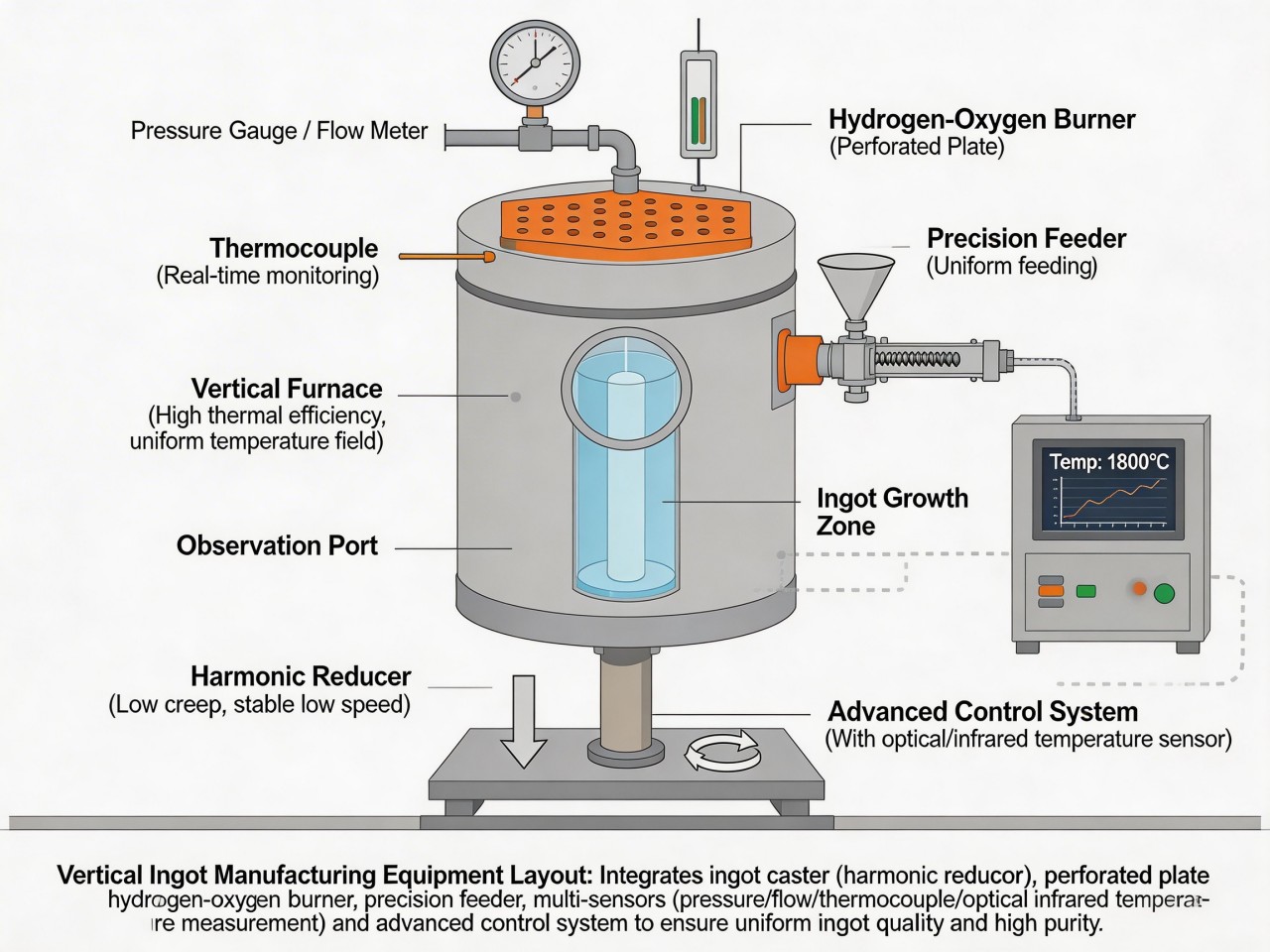
Equipment for Vertical Ingot Making
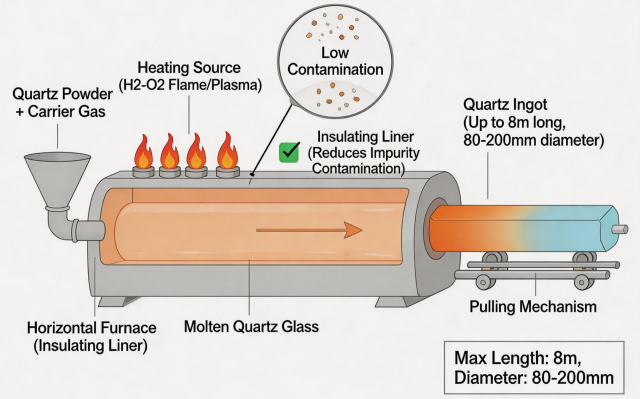
Horizontal weight making
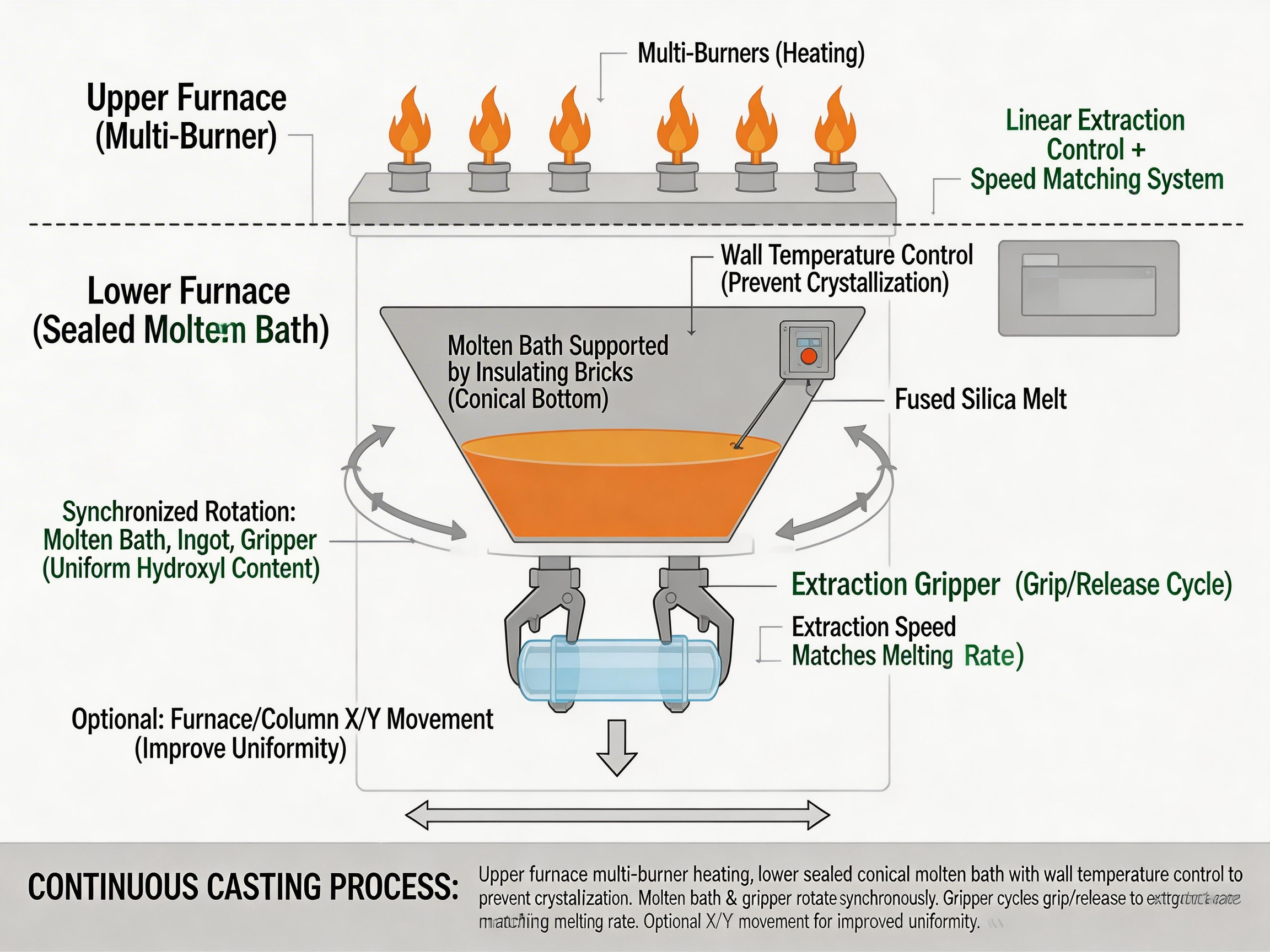
Continuous milling
Refractory Material Selection
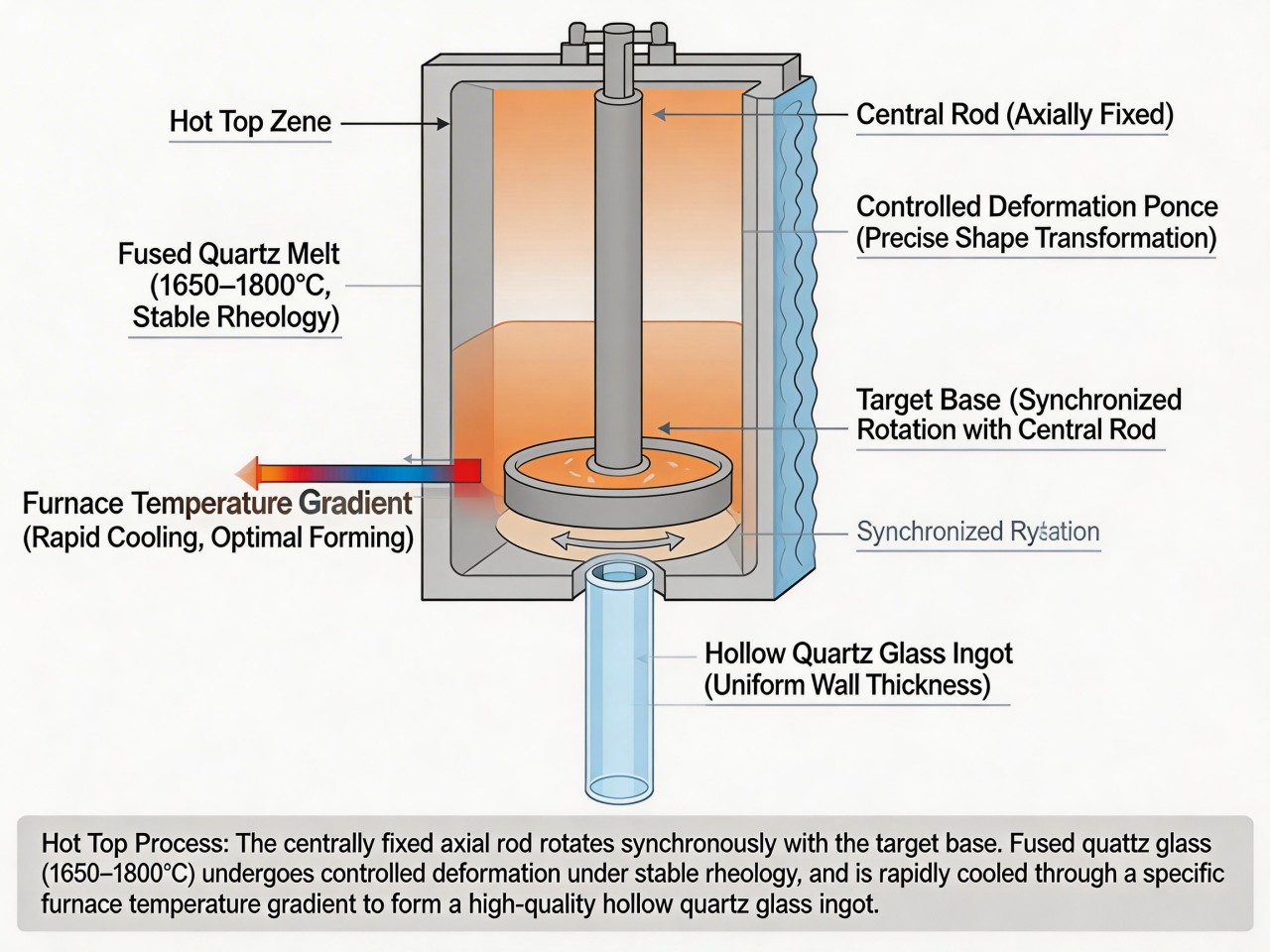
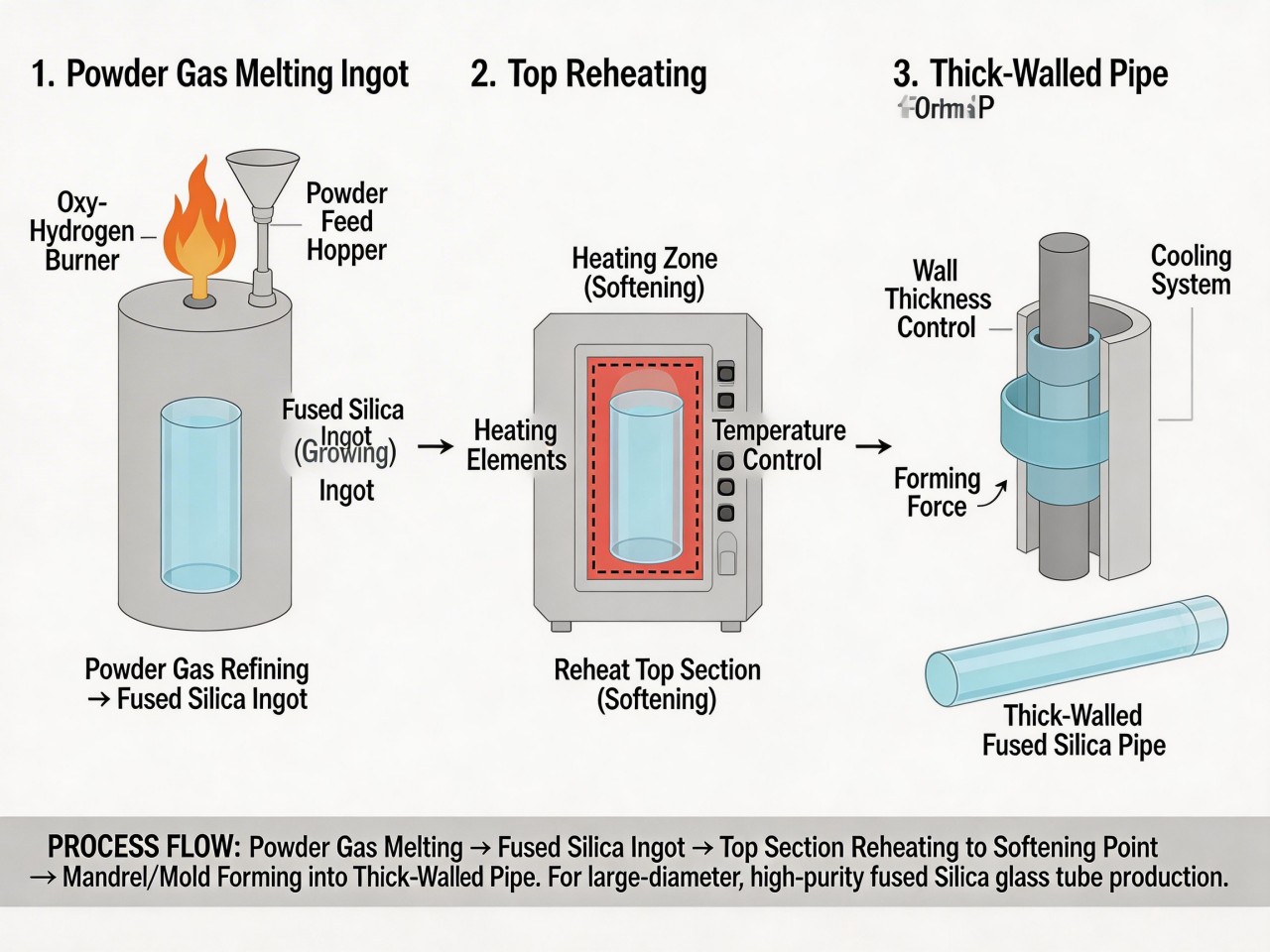
Hot-Top Process for Thick-Walled Tubes
| Manufacturing Method | Precision | Internal Quality | Energy Consumption | Equipment Complexity | Maximum Tube Dimensions (mm) |
|---|---|---|---|---|---|
| German Method | High | High | High | Complex | φ150×φ80×40 |
| French Method | Medium | Medium | High | Complex | φ165×φ75×15 |
| Chinese Method | Low | Medium | Low | Simple | φ165×φ70×20 |
Hot-Top Process Overview
Furnace Temperature Profiles
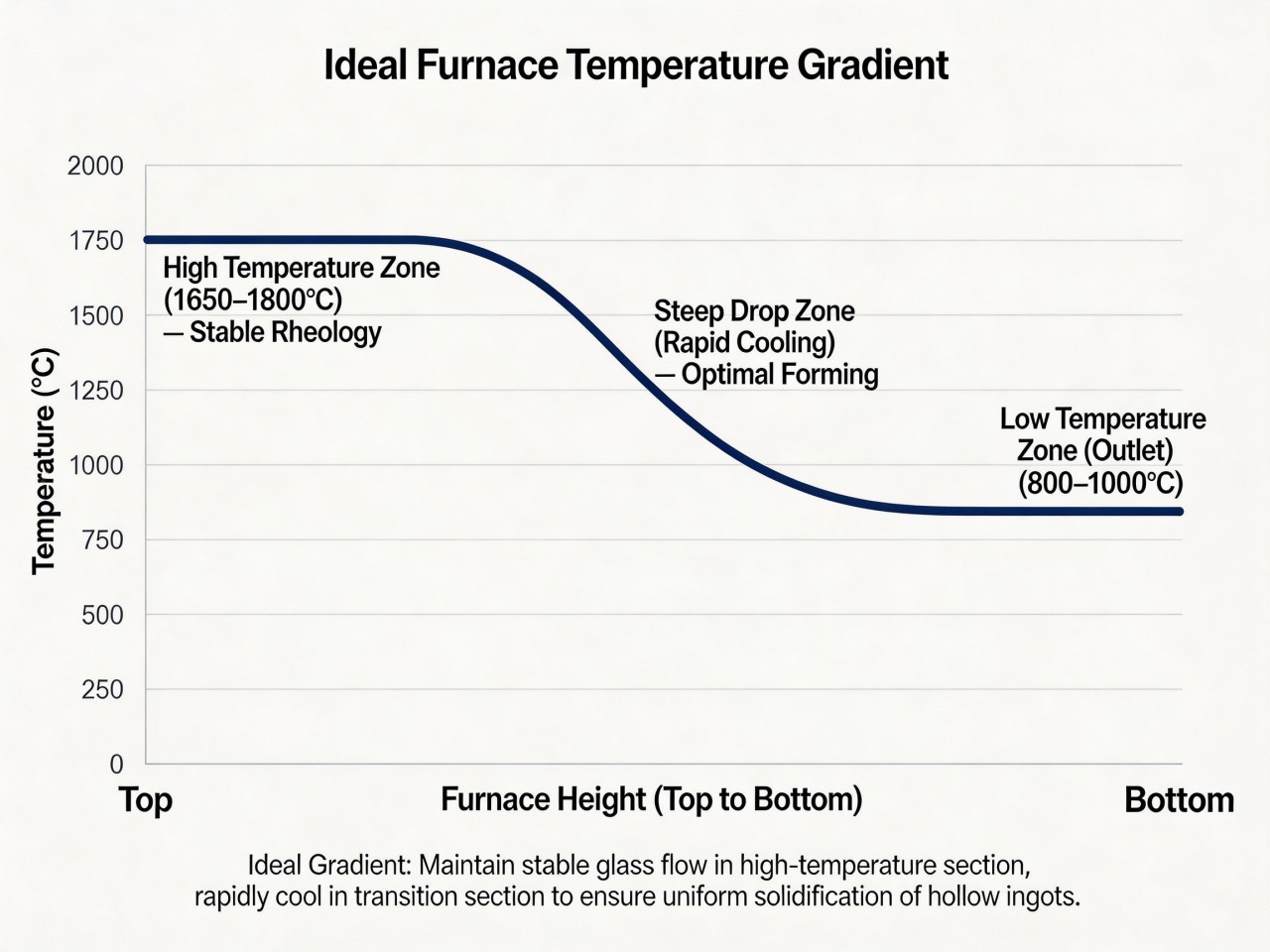
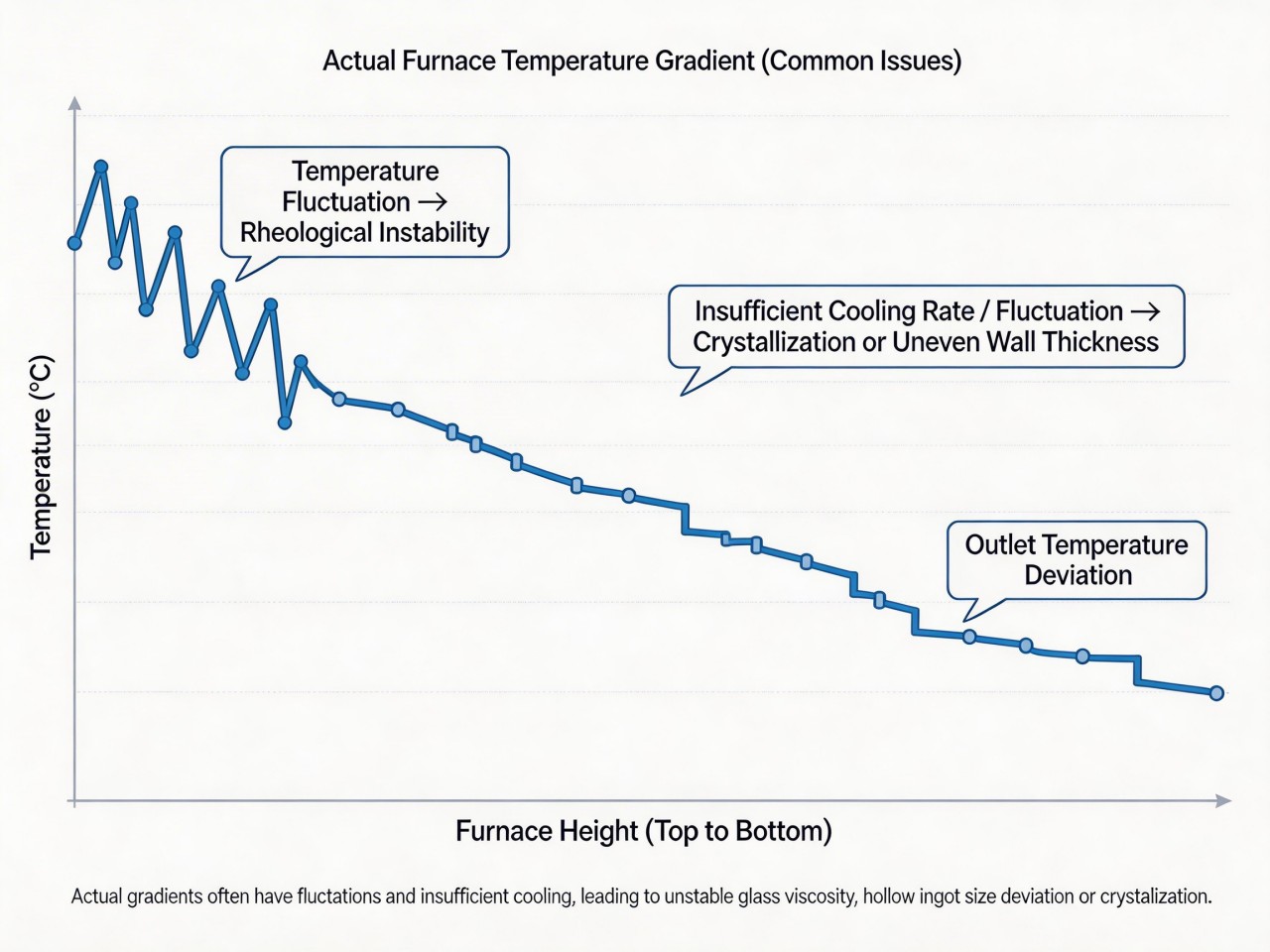
Ideal and actual furnace temperature field
The horizontal plane at the center of the observation hole is taken as the zero point, and H represents the axial distance from the zero point downward.
Powder gas refining ingot reheating top forming thick wall pipe process and equipment
Contact Us
Your feedback fuels our growth, and your questions drive our solutions.
We value your feedback, inquiries, and suggestions. Please feel free to get in touch with us
General inquiries
Please contact us via sales@bo-glass.com, and we will reply to you as soon as possible.
Interested to work with us
Drop your resume at info@bo-glass.com
and we will get back to you shortly.
We uses the contact information you provide to us to contact you about our relevent content, products, and services.