
Common quality problems of coated glass
Coated glass is widely used in architecture, automotive, and electronics industries, but several quality issues can arise during production. Here are some common problems:
Scratches or scrapes
Linear or strip-shaped scratches caused by relative sliding or friction between the coated glass surface and other more rigid materials are called scratches or abrasions. They are mainly manifested by increased light transmittance of the glass at the scratched or abraded part of the film surface falling off and becoming transparent. The shape is mostly irregular arc-shaped thin strips or strips. The causes of scratches or abrasions are:
(1) Production
Due to equipment or post-cleaning, there is a possibility of glass scratches in production, but such scratches are generally regular and linear, which can be controlled and inspected. In addition, the handling and packaging of coated glass during the production process may also cause scratches, and the original glass itself may also have scratches. However, objectively speaking, large pieces of coated glass are directly loaded online with a loading machine, so it is generally impossible to cause scratches. And since tempered coated glass is also directly loaded after the film is applied, the film surface generally does not contact other hard objects, so it usually does not cause scratches or abrasions.
(2) Cutting reasons
For example, the cutting ruler or tape measure is dragged on the glass film surface; the glass film surface is scratched during the wiping process due to sand or glass chips on the glass film surface; the glass film surface is cut with the coated surface facing down or not noticing that the last piece of each box is placed in the opposite direction, causing the glass film surface to rub against other objects and cause scratches.
For example, the cutting ruler or tape measure is dragged on the glass film surface; the glass film surface is scratched during the wiping process due to sand or glass chips on the glass film surface; the glass film surface is cut with the coated surface facing down or not noticing that the last piece of each box is placed in the opposite direction, causing the glass film surface to rub against other objects and cause scratches.
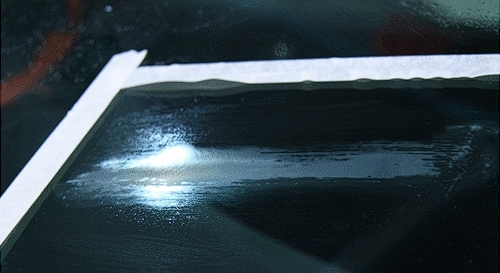
(3) Stacking and storage
After unpacking or cutting, the glass is not stacked as required, and there is no padding between the pieces, resulting in direct contact between the glasses. Due to sand or glass chips, scratches, or abrasions are caused during handling or transportation.
After unpacking or cutting, the glass is not stacked as required, and there is no padding between the pieces, resulting in direct contact between the glasses. Due to sand or glass chips, scratches, or abrasions are caused during handling or transportation.
(4) Installation and cleaning
Human factors cause scratches or abrasions caused by hard objects during gluing or installation; during cleaning, unclean or hard wipes are used, contaminants such as cement mortar are on the glass film surface, and incorrect cleaning methods are used.
Human factors cause scratches or abrasions caused by hard objects during gluing or installation; during cleaning, unclean or hard wipes are used, contaminants such as cement mortar are on the glass film surface, and incorrect cleaning methods are used.
Film peeling
The phenomenon of local film loss or film peeling on the surface of the coated glass film layer. It is mainly manifested as local light transmittance enhancement or complete film peeling. The film peeling morphology generally refers to point, mass, and sheet. There are strict standard controls for the film loss phenomenon generated during production. Generally speaking, the diameter of the film loss part is not allowed to be greater than 2.5mm.
There are many reasons for film loss, which are often difficult to define. The main reasons are as follows.
(1) Production
Due to the coating process, some needle-shaped film loss, called pinholes, may occur during production. This is unavoidable in the sputtering coating process itself. Film loss may also be caused by the coating of the original film itself or the equipment cleaning. The national standards have corresponding requirements and regulations for this. The products shipped are strictly inspected according to these regulations and are shipped only after they pass the inspection.
(2) Film peeling during transportation
After the glass is unpacked and transported or cut, no padding is placed between the pieces as required, or the padding is uneven, resulting in direct contact between the glass pieces. During the handling or transportation process, the glass and the glass film surface are directly rubbed against each other, causing film peeling. This type of film peeling is generally in the form of dots or clusters, and the traces of friction can be felt or checked by hand or inspection equipment.
(3) Corrosive film peeling
Due to cross-construction or incorrect methods, the glass film surface is exposed to acid, alkali, or oxidizing substances during cutting, stacking, construction, use, or cleaning. This contamination and corrosion result in film peeling, generally found on the film-peeling surface or on-site.
There are many reasons for film loss, which are often difficult to define. The main reasons are as follows.
(1) Production
Due to the coating process, some needle-shaped film loss, called pinholes, may occur during production. This is unavoidable in the sputtering coating process itself. Film loss may also be caused by the coating of the original film itself or the equipment cleaning. The national standards have corresponding requirements and regulations for this. The products shipped are strictly inspected according to these regulations and are shipped only after they pass the inspection.
(2) Film peeling during transportation
After the glass is unpacked and transported or cut, no padding is placed between the pieces as required, or the padding is uneven, resulting in direct contact between the glass pieces. During the handling or transportation process, the glass and the glass film surface are directly rubbed against each other, causing film peeling. This type of film peeling is generally in the form of dots or clusters, and the traces of friction can be felt or checked by hand or inspection equipment.
(3) Corrosive film peeling
Due to cross-construction or incorrect methods, the glass film surface is exposed to acid, alkali, or oxidizing substances during cutting, stacking, construction, use, or cleaning. This contamination and corrosion result in film peeling, generally found on the film-peeling surface or on-site.
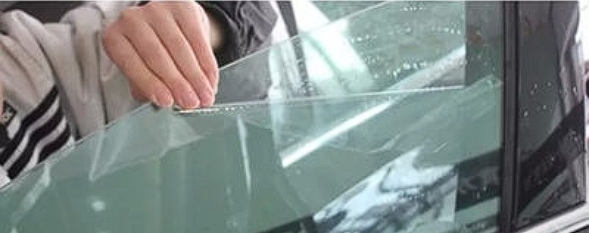
Film peeling
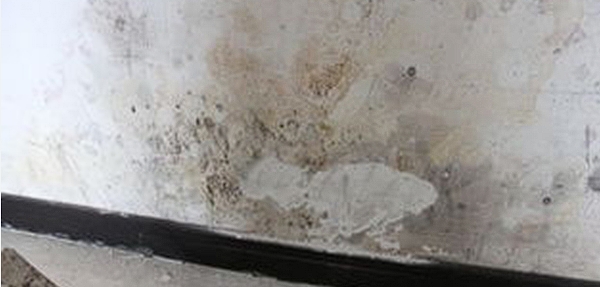
Glass mold
Spots or streaks
When viewed from the non-coated surface, the coated glass has irregular black spots or streaks. The original glass generally has mildew, paper texture, suction cup marks, tin stains, and watermarks.
Many cases of spots or streaks appear, mainly because the original glass had defects before coating or because of improper storage and use after coating.
(1) Production: Generally speaking, coated glass production will not produce these defects. The primary defects are mildew and paper texture on the original glass quality; suction cup marks and tin stains on the original glass itself; watermarks caused by improper cleaning of tempered or semi-tempered glass; and contamination of the original glass. These may cause spots or streaks on the glass products. (2) Storage and construction and installation
If the glass is left in a humid and unventilated environment for a long time or is placed outdoors in the sun and rain, it may become moldy or deteriorate and develop spots or streaks.
(3) Film layer pollution
Local contamination of the glass, resulting in spots or streaks, is also possible due to improper installation and cleaning. In addition, since the glass is not cleaned in time, dirt, such as dust and oil smoke, will adhere to the surface for a long time, and eventually, spots or streaks of pollution will appear because they cannot be cleaned off.
Many cases of spots or streaks appear, mainly because the original glass had defects before coating or because of improper storage and use after coating.
(1) Production: Generally speaking, coated glass production will not produce these defects. The primary defects are mildew and paper texture on the original glass quality; suction cup marks and tin stains on the original glass itself; watermarks caused by improper cleaning of tempered or semi-tempered glass; and contamination of the original glass. These may cause spots or streaks on the glass products. (2) Storage and construction and installation
If the glass is left in a humid and unventilated environment for a long time or is placed outdoors in the sun and rain, it may become moldy or deteriorate and develop spots or streaks.
(3) Film layer pollution
Local contamination of the glass, resulting in spots or streaks, is also possible due to improper installation and cleaning. In addition, since the glass is not cleaned in time, dirt, such as dust and oil smoke, will adhere to the surface for a long time, and eventually, spots or streaks of pollution will appear because they cannot be cleaned off.