
Artificial Blowing Molding Tools
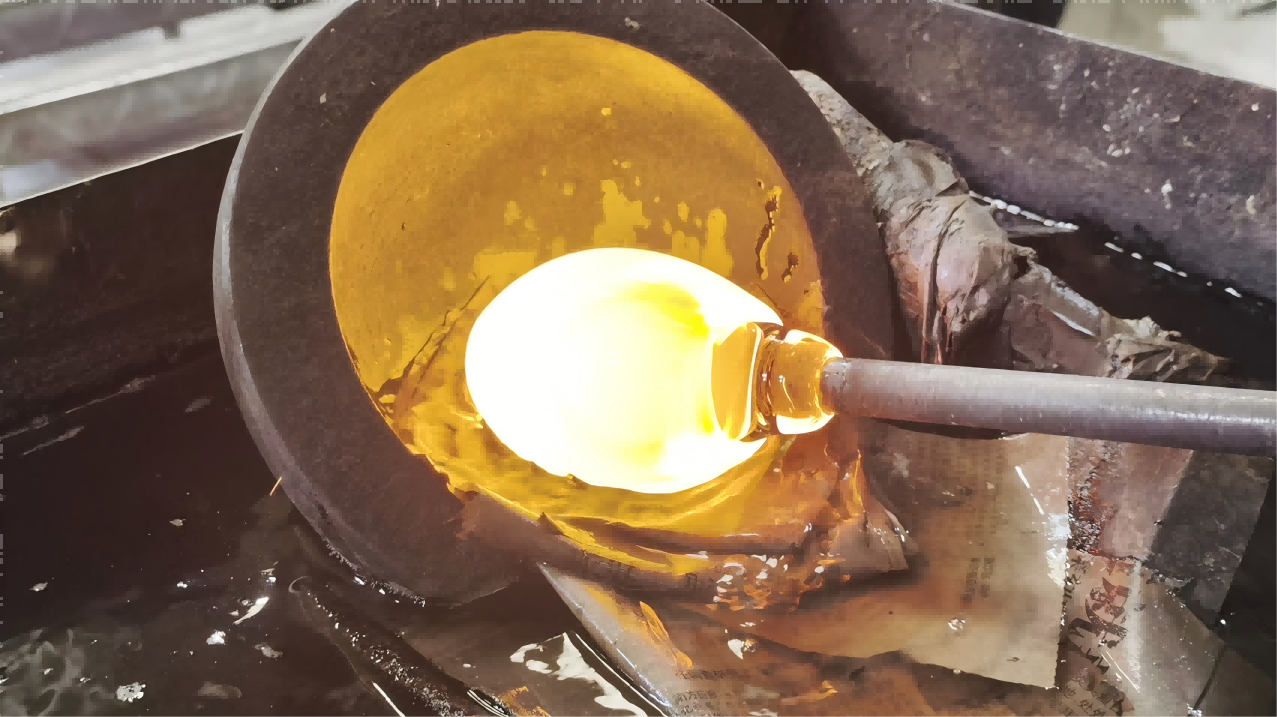
Figure 4-1 Front end of glass blowpipe
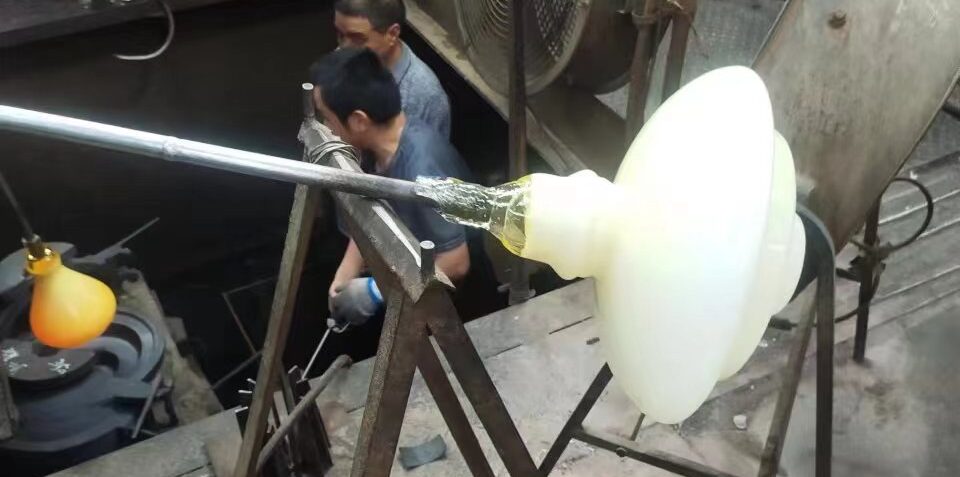
Figure 4-2 Glass Blowpipe
(2) Bubble drying machine Figures 4-4 are both bubble drying machines. the bubble drying machine shown in Figure 4-4 can have multiple blowpipes simultaneously. The bubble drying machine uses a small motor as the power source, which drives the disc to rotate through a chain so that the blowpipes rotate continuously and the bubble remains round. In this way, only one small bubble technician can easily control several blowpipes simultaneously to blow air, and the large bubble technician can take it away after it is shaped.
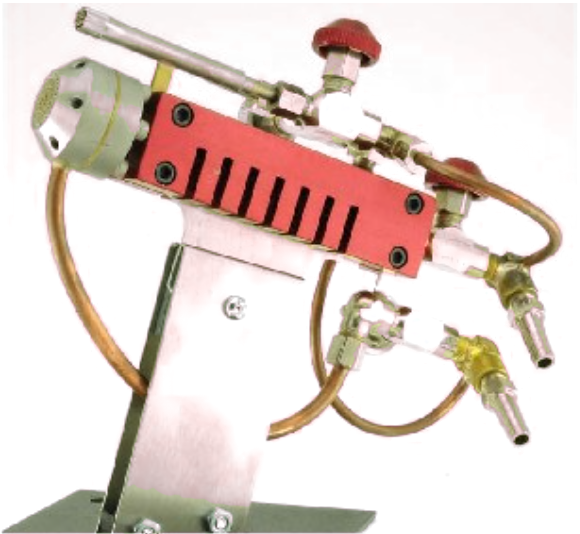
Figure 4-4 Drying and soaking machine
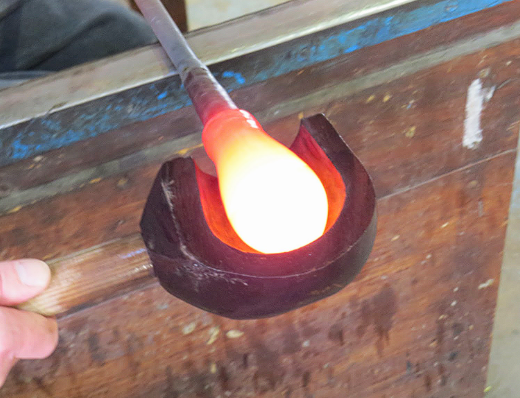
Figure 4-5 Cast iron rolling bowl rack
In actual production, the high temperature state of the oven only accounts for about 50% of the total production time. As shown in Figure 4-8, several oven openings are used simultaneously, and it must be ensured that the furnace is always in a high temperature state. The cavity space of the stove is ample, and the energy consumption is significant. The oven shown in Figure 4-9 avoids the above disadvantages. It uses solenoid valve control. When the blowpipe is placed on the bracket and starts using the oven, the solenoid valve is connected, the air and gas volumes are correctly proportioned, and the temperature rises. When the blowpipe leaves the bracket, the solenoid valve is disconnected. The air and gas volumes are reduced, and the temperature is lowered, achieving the goal of saving energy. This type of oven is mainly used to process the mouth of the product, so some factories simply use a “mouth-baking oven.”
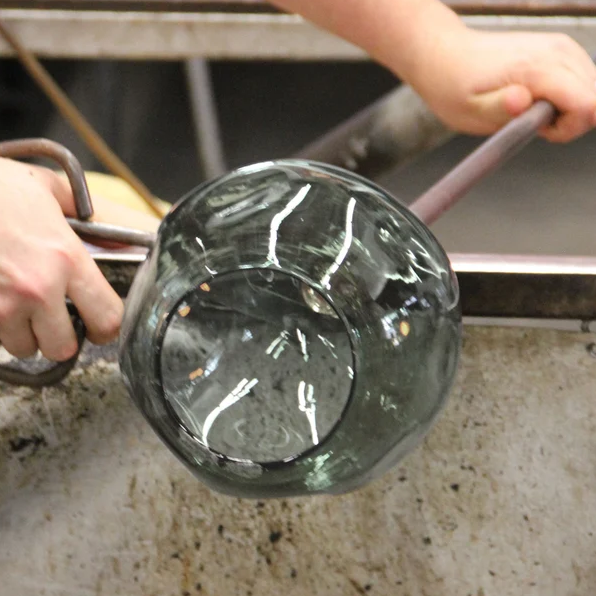
Figure 4-10 Scissors used to modify the mouth when blowing
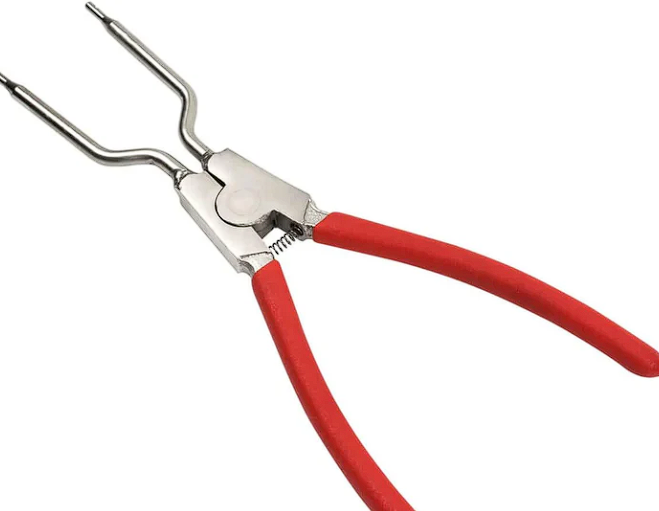
Figure 4-11 Pliers for flaring
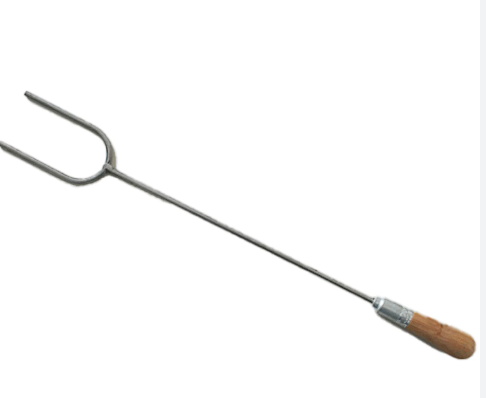
Figure 4-12 Forks used to feed products into the annealing kiln
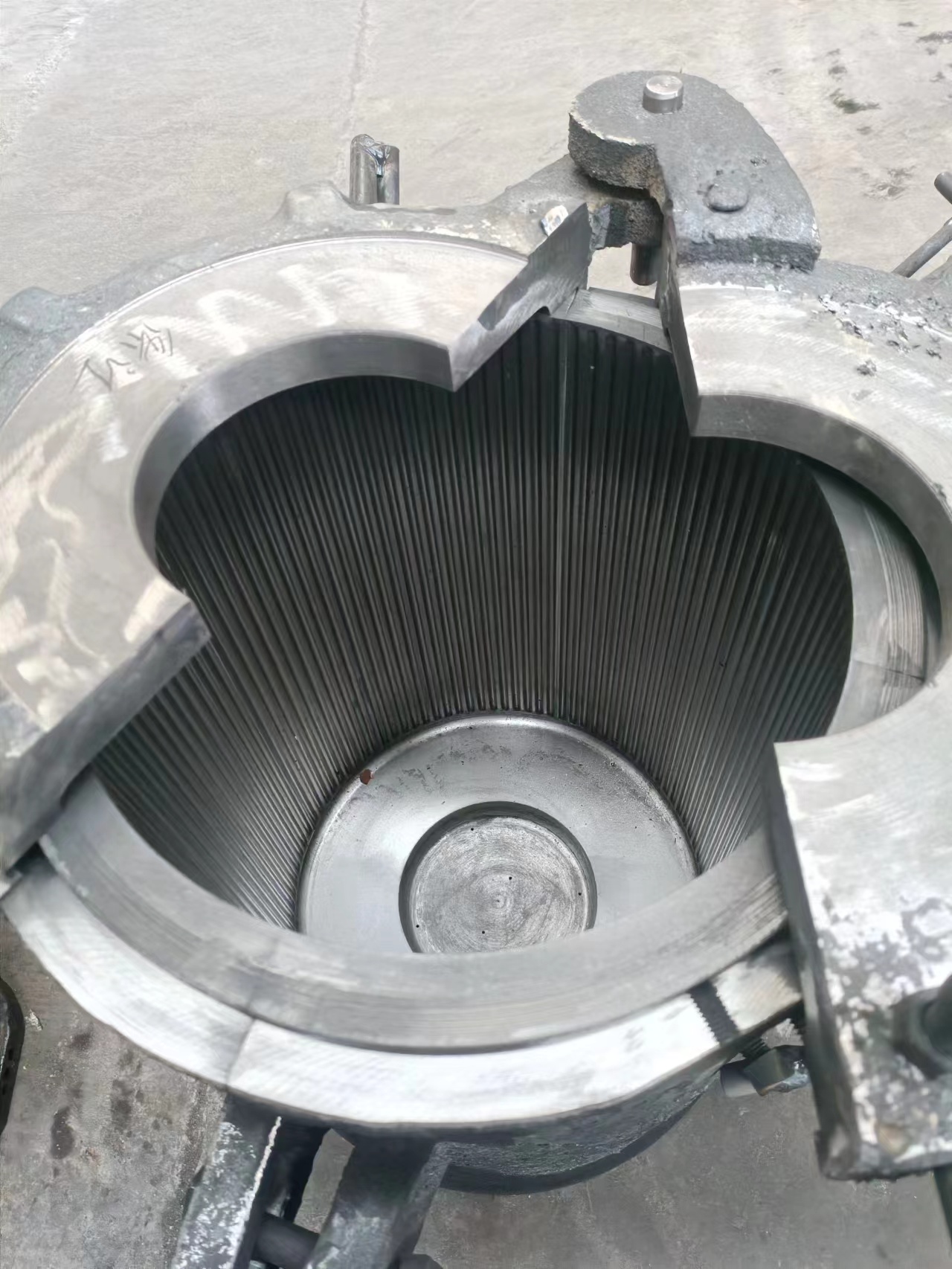
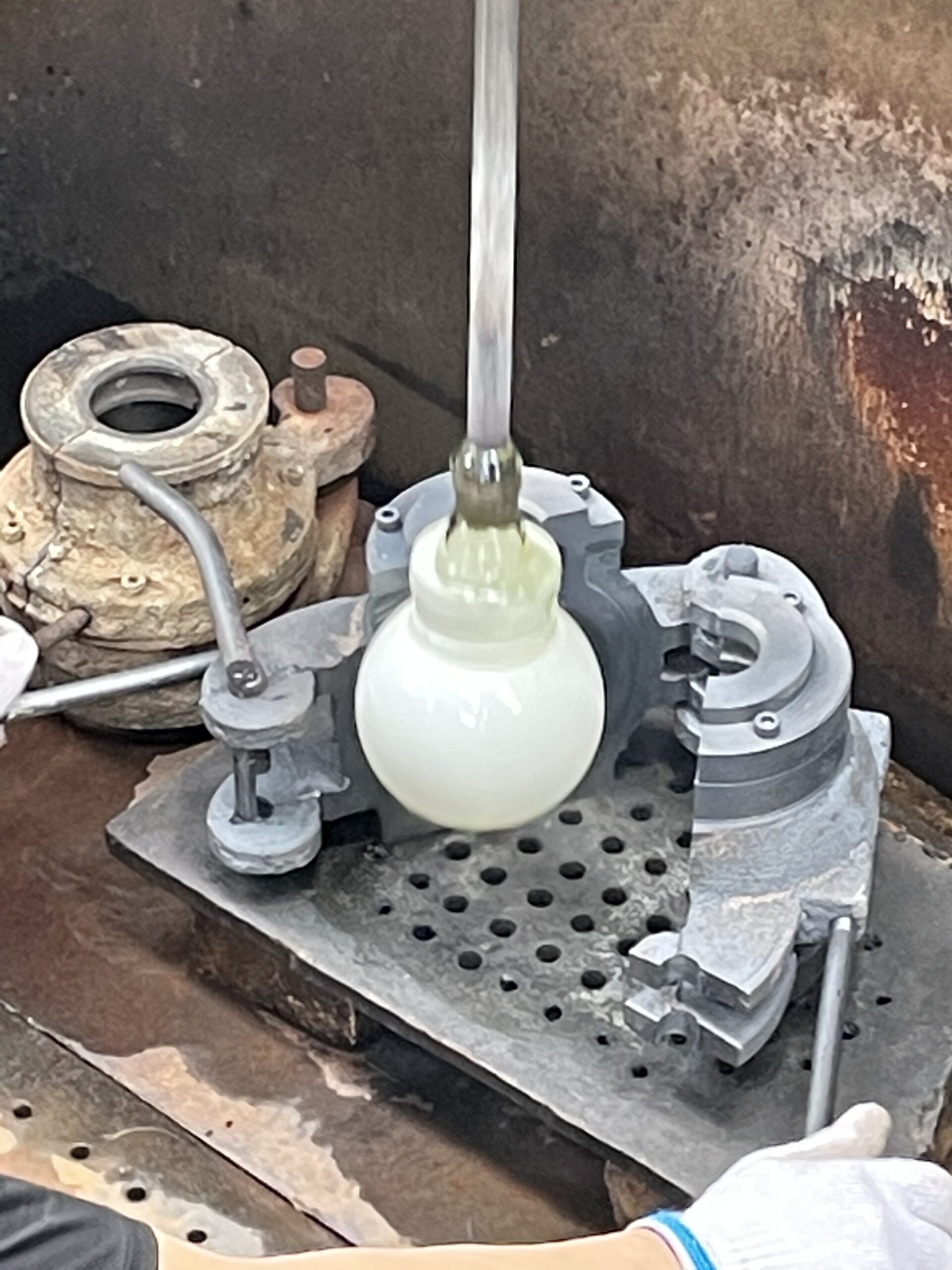
Hand-blown mold
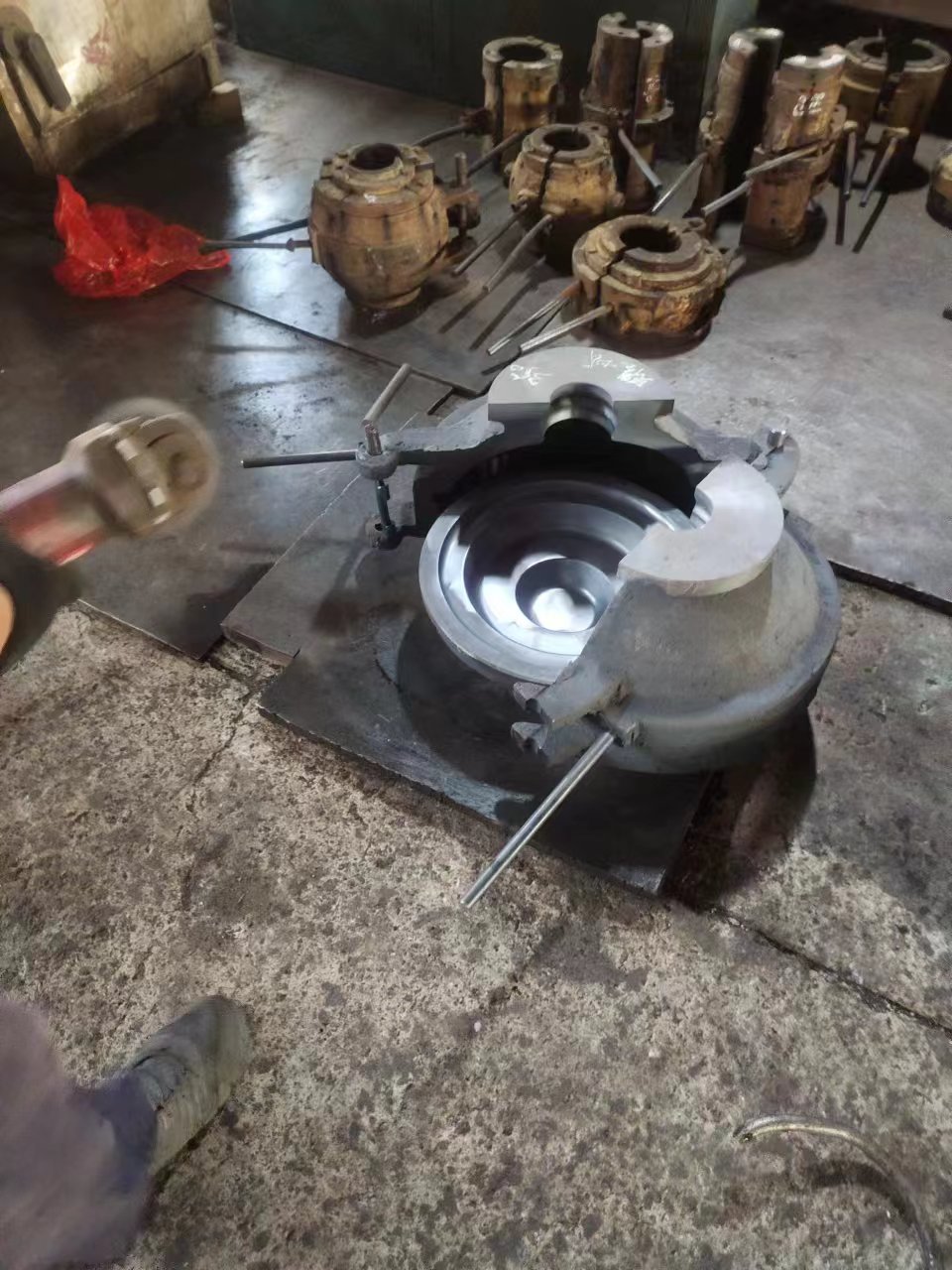
Metal moulds can be made by simple welding. For example, Figure A shows a prism made by welding a cut steel tube and a metal base plate. This mould design is simple and easy to make. Figure B shows another version, welded from flat metal sheets. These moulds can also evolve into more styles. The only limit is imagination. In addition, forged metal parts can be added to the mould design, such as the spiral mould in Figure C, which can be used to obtain more complex glass shapes.
Plate steel moulds offer endless design possibilities. Letters, patterns and other patterns can be engraved on the steel plate using a plasma torch, and other parts can be welded to the mould’s inner surface to form various complex texture layers. As long as there are no undercuts and the finished product can be easily removed, this mould can be used thousands of times with minor damage to the mould.
Preheating metal and graphite moulds during the blowing process is a good idea because cold moulds can absorb heat from hot glass, especially when the mould has large, flat areas. Be careful not to overheat, which may cause the glass to stick to the metal surface.
(A)
(B)
(C)
Contact Us
Your feedback fuels our growth, and your questions drive our solutions.
We value your feedback, inquiries, and suggestions. Please feel free to get in touch with us
General inquiries
Please contact us via sales@bo-glass.com, and we will reply to you as soon as possible.
Interested to work with us
Drop your resume at info@bo-glass.com
and we will get back to you shortly.
We uses the contact information you provide to us to contact you about our relevent content, products, and services.